Introduction
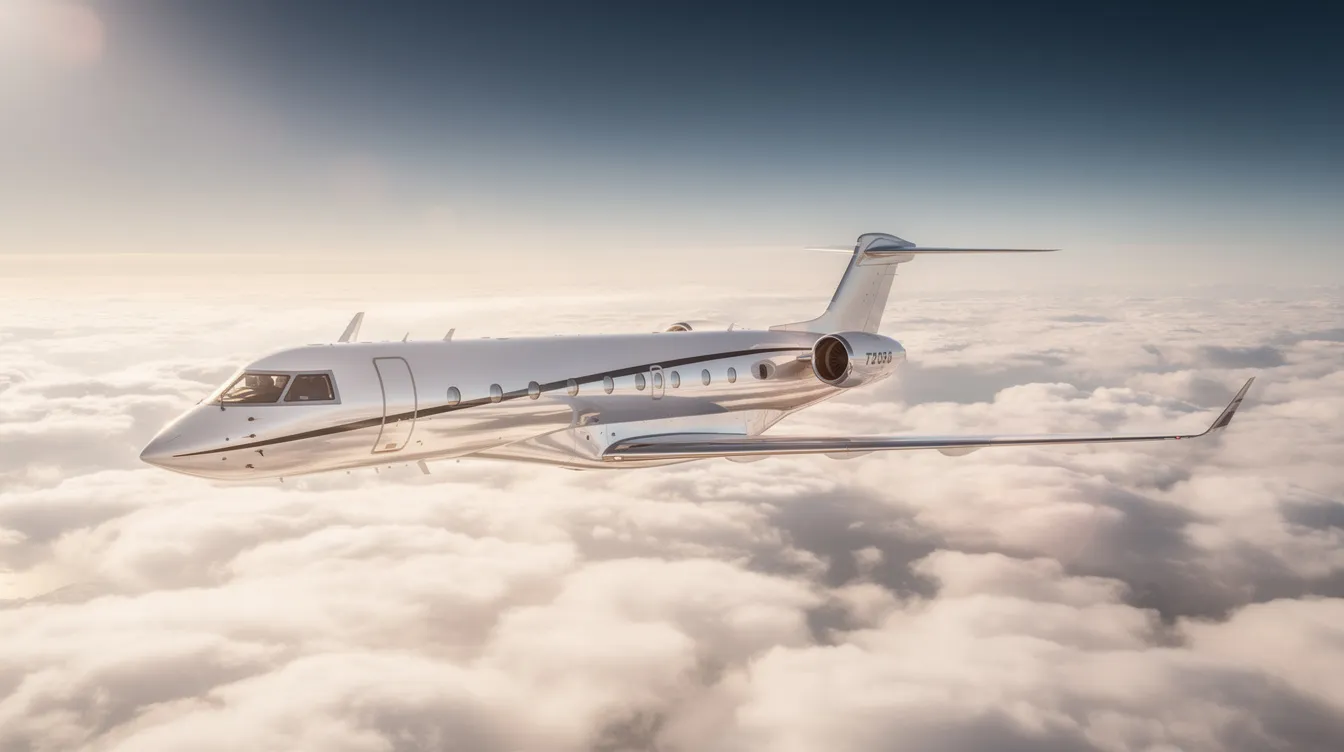
The jet engine is the defining technology behind modern air travel-and for private aviation in 2027, understanding how turbine power works is the key to unlocking a smarter, faster, and more sustainable way to fly. This guide explores how modern jet engines shape the BlackJet experience, from the physics of thrust generation to the Jet Card programs that put turbine-powered flight at your fingertips.
The Strategic Advantage of Jet Engines for Private Jet Travelers in 2027
The gap between conventional piston engines and modern turbofan engines is not merely technical-it is strategic. While piston-powered propeller aircraft are limited to speeds below 300 knots and altitudes under 20,000 feet, today's turbofan-powered private jets cruise at Mach 0.80–0.90 at altitudes up to 51,000 feet. For the executive or high-net-worth traveler, this difference translates directly into hours reclaimed, meetings attended, and deals closed.
Modern turbofan engines enable nonstop, high speed private flights that rewrite the calculus of long distance travel. A turbofan-powered ultra-long-range jet covers New York to London in roughly seven hours, or Los Angeles to Tokyo in approximately eleven-without the layovers, connections, and terminal queues that stretch commercial itineraries to 12–16 hours door-to-door. Turbofan engines enable direct routing, bypassing hub congestion and putting passengers on the most efficient path between any two points.
The result for a typical BlackJet member is a 30–50% reduction in door-to-door travel time, achieved by combining turbine engine capability with access to regional airports far closer to offices, homes, and meeting venues than congested commercial hubs.
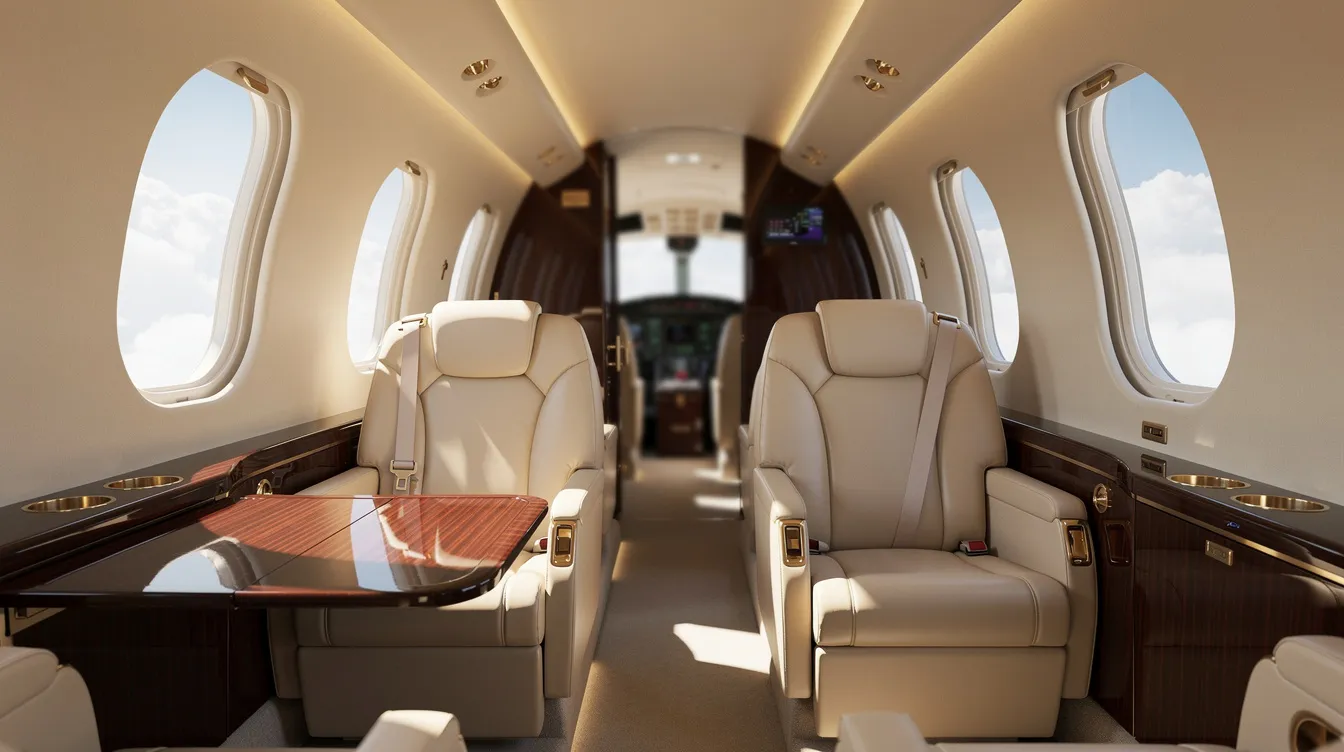
Privacy and productivity compound the advantage. High bypass turbofan engines dramatically reduce cabin noise and vibration compared with older engine types or commercial cabins. Secure phone calls, video conferences, and genuine rest become standard-not aspirational-when the cabin is designed around a whisper-quiet powerplant.
Consider this scenario: a CEO based in London departs a private airstrip near the city at 06:00, lands in Geneva by 07:15 for a morning board meeting, then boards a large-cabin jet at 12:30 for a nonstop transatlantic crossing, arriving in New York by 15:00 local time for an afternoon strategy session. Two cities, two continents, one working day. That is what modern turbine engines make possible-and what a BlackJet Jet Card and its broader premium private jet card programs are designed to deliver.
From Piston Engines to Jet Propulsion: Why Turbine Engines Won
The story of business aviation is, at its core, a story of engine evolution. Piston engines-the reciprocating powerplants that defined early flight-gave way to jet propulsion because turbine engines simply outperform them on every metric that matters for serious travel.
Piston engines power propeller aircraft with cruise speeds typically under 250–300 knots and service ceilings below roughly 20,000 feet. They deliver adequate performance for short hops of 100–300 nautical miles, but carry significant limitations:
Higher vibration levels and cabin noise
More frequent maintenance intervals
Reduced reliability at altitude and in adverse weather
Limited payload and range for business missions
Unlike piston engines, turbine engines-including turbojets, turbofans, turboprops, and turboshafts-compress air continuously, mix it with jet fuel, and burn it in a sustained flame that delivers smoother power, higher altitude capability, and dramatically better reliability. Fewer reciprocating parts mean less mechanical stress per flight hour, translating to longer intervals between overhauls and fewer unscheduled groundings.
The mission comparison is clear: piston aircraft handle weekend flights and local hops, while turbine-powered jets dominate coast-to-coast, transcontinental, and transoceanic missions. That is precisely why virtually every aircraft accessible through BlackJet's Jet Card programs is turbine-powered-prioritizing safety, altitude performance, speed, and passenger comfort over the marginal cost savings of piston propulsion.
How Jet Engines Work: The "Suck–Squeeze–Bang–Blow" Cycle
At the heart of every jet engine is a gas turbine engine running a continuous thermodynamic cycle known as the Brayton cycle. Understanding this cycle reveals why turbine engines are so effective at converting chemical energy into forward motion.
The entire process unfolds in four continuous phases:
Intake ("Suck"): Air enters through the air intake at the front of the engine. The incoming air is captured and directed into the compressor section.
Compression ("Squeeze"): Axial flow compressors and, in some smaller engines, centrifugal compressors raise the air pressure dramatically-modern engines achieve pressure ratios exceeding 50:1-producing high pressure air at elevated temperature. Jet engines compress incoming air before combustion to maximize energy extraction.
Combustion ("Bang"): Inside the combustion chamber, atomized jet fuel is injected into the compressed air stream and ignited. Combustion in jet engines occurs continuously, not in pulses as in piston engines. The fuel burns continuously, generating hot gases at temperatures exceeding 1,200 °C.
Exhaust ("Blow"): Those hot gases expand through turbine stages and exit at high velocity through the nozzle. The accelerated exhaust generates thrust-a direct application of Newton's Third Law of Motion. Jet engines operate on Newton's Third Law: for every action (hot gas expelled rearward), there is an equal and opposite reaction (the aircraft pushed forward).
Modern jet engines can spin over 10,000 times per minute in their high-pressure turbine sections, while operating at very high altitudes of 35,000–51,000 feet where business jets cruise. At these altitudes, thinner air reduces drag and cooler ambient temperatures improve cycle efficiency.
Most modern engines use FADEC-Full Authority Digital Engine Control-to manage fuel flow, engine temperature, and power settings continuously, ensuring efficient operation and safety margins at every phase of flight.
Inside a Modern Turbine Engine: Core Components Explained
All gas turbine engines share a set of core components engineered for high speed rotation, extreme temperatures, and sustained operation over thousands of flight hours. Understanding these components shows why modern engines are marvels of aerospace engineering and materials science.
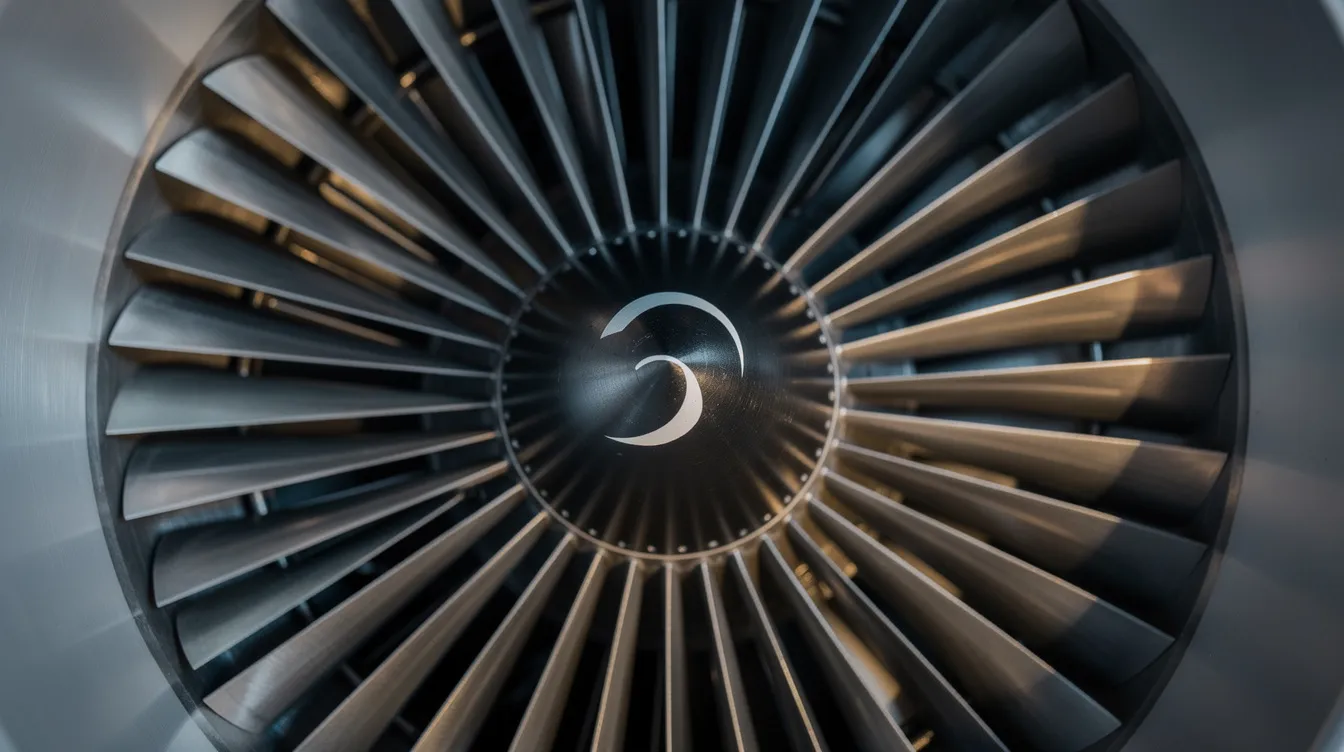
The Fan At the front of every turbofan engine sits a large fan that pulls in massive volumes of air. In high bypass turbofans, this fan generates a significant share of total thrust by accelerating bypass air around the engine core at moderate speed-a principle that maximizes propulsive efficiency.
Compressors Behind the fan, multiple stages of axial flow compressors-and occasionally a centrifugal stage in smaller engines-progressively raise the air pressure. Each stage features precision-machined rotating blades and stationary vanes. The blade tips operate at extraordinarily tight tolerances to minimize air leakage and maximize compression.
Combustion Chamber The combustion chamber is where the energy conversion happens. Atomized jet fuel mixes with compressed air, and combustion occurs in a controlled, continuous flame stabilized by carefully designed air flows and fuel injectors. Cooled liners prevent hotspots and ensure stable, even burning.
Turbine Stages Downstream of the combustor, high-pressure and low-pressure turbine stages extract energy from the hot gases to drive the compressor and fan via concentric shafts. Turbine blades are manufactured from advanced nickel superalloys-often as single-crystal castings-with internal cooling passages and ceramic thermal barrier coatings to survive extreme temperatures that would melt conventional metals.
Exhaust Nozzle The exhaust nozzle converts remaining thermal energy into kinetic energy, producing high-speed jet exhaust. In business jets optimized for subsonic speeds, nozzle geometries are tuned for cruise efficiency rather than raw speed.
Core Types of Jet Engines: Matching Engine Types to Missions
Jet engines are designed for various operational requirements, ranging from commercial flights to military applications. The mission profile-speed, range, altitude, runway length, noise constraints-dictates which engine type fits best.
Turbojet Engines The turbojet engine uses all incoming air to generate thrust from high-velocity exhaust. With no bypass air, turbojets produce very high exhaust velocity, making them efficient at supersonic speeds but noisy and fuel-hungry at subsonic cruise. Once dominant in military aviation, they are largely historical in business aviation today, though they remain relevant in military jets and select experimental programs.
Turbofan Engines Turbofan engines are the most common engines in commercial aviation and private jets alike. A large fan at the front accelerates bypass flow around the engine core. This bypass air generates thrust at lower exhaust velocity, improving fuel economy and dramatically reducing noise. Turbofans and turboprops are effective for subsonic speeds due to their design that maximizes efficiency at the cruise regimes where business jets operate.
Turboprop Engines Turboprop engines use a turbine to drive a propeller for efficient thrust at lower speeds-typically 250–350 knots. Turboprop engines are ideal for regional flights under 500 mph, offering excellent fuel economy on short sectors and the ability to use shorter runways. Aircraft like the Pilatus PC-12 and Beechcraft King Air serve regional and general aviation missions.
Turboshaft Engines Turboshaft engines power helicopters and provide shaft power to helicopter rotors rather than generating direct thrust. This engine type enables vertical lift and access to sites without runways-useful for remote transfers but outside the typical private jet mission.
Rocket, Ramjet, and Scramjet For completeness: rocket engines achieve high speeds and operate independently of air, carrying their own oxidizer. Ramjet engines compress air using forward speed instead of mechanical compressors, requiring no moving parts but needing a launch boost to operating speed. Scramjets keep airflow supersonic throughout the combustion chamber to enable hypersonic flight-technologies still largely in military and research domains, far from private aviation today.
BlackJet primarily utilizes turbofan-equipped jets across light, midsize, and large-cabin categories, selecting among the core types of jet engines while selected partners may deploy modern turboprops for ultra-short sectors where runway constraints or fuel efficiency make them the best tool for the mission.
Turbofan Engines: Why They Dominate Private and Business Jets
Turbofan engines are the workhorses of modern aviation and the backbone of BlackJet's fleet access. Their dominance is not accidental-it is an outcome of physics and modern engineering.
The core principle: propulsive efficiency is highest when a large mass of air is accelerated by a small amount, rather than a small mass accelerated to extreme speed. High-bypass turbofans move large volumes of bypass air at moderate velocity around the engine core, achieving superior thrust per unit of fuel burned. High-bypass turbofans reduce specific fuel consumption significantly compared with turbojets of equivalent thrust.
For private travelers, the benefits are tangible:
Quieter cabins: Turbofan engines provide quieter cabin environments than turbojets, with bypass air cushioning core exhaust noise-critical for work, calls, and rest at altitude.
Lower vibration: Smooth, continuous combustion and balanced rotor assemblies eliminate the pulsing vibration of piston-driven aircraft.
Extended range: Better fuel efficiency means more nautical miles per fuel load, enabling nonstop flights like New York–Dubai or London–Singapore.
Airport access: Turbofan engines allow access to thousands of regional airfields, letting members depart from facilities minutes rather than hours from their home or office.
Modern aviation prioritizes features like reliability, efficiency, and noise reduction in jet engine design-and turbofan engines deliver on all three. The GE Passport engine, powering the Bombardier Global 7500/8000, produces approximately 19,000 lbf of thrust, achieves about 3% better fuel burn than peers in its class, and meets Stage 4 noise regulations. The CF34 engine family has accumulated over 200 million flight hours with dispatch reliability between 99.96% and 99.99%.
High-bypass turbofans prioritize fuel efficiency and noise reduction by moving large volumes of bypass air-and that is precisely why nearly every jet in the BlackJet network runs on them.
High Speed vs Efficiency: Balancing Jet Engine Design
Every jet engine design represents a deliberate balance between maximum speed, fuel efficiency, noise, and operating cost for a specific mission profile. There is no single "best" engine-only the best engine for the job.
The physics is straightforward: propulsive efficiency peaks when exhaust velocity closely matches aircraft speed. High-bypass turbofans excel at subsonic speeds because they move large masses of air at moderate velocity, while turbojets produce very high exhaust velocity suited to supersonic speeds but wasteful at subsonic cruise. Turbojets are efficient at high speeds but less fuel-efficient at the Mach 0.80–0.90 range where business jets operate.
Fuel efficiency can vary significantly by engine type based on speed and operational conditions:
Engine Type | Optimal Speed Range | Best Mission |
|---|
Turboprop | 250–350 knots | Regional hops, short runways |
High-bypass turbofan | Mach 0.75–0.90 | Medium to ultra-long range |
Low-bypass turbofan/turbojet | Mach 1.0+ | Supersonic / military |
For BlackJet trip planning, this means matching aircraft and engine selection to each member's mission. A 40-minute regional hop may call for a light jet with efficient smaller turbofans. A seven-hour transatlantic crossing demands a large-cabin jet with high-bypass engines optimized for long-range cruise, a mission profile that significantly shapes any comprehensive private jet price list. The right match saves time, fuel, and cost-without compromise.
Jet Fuel and Modern Turbine Engines
Jet fuel is the high-energy-density kerosene-based fuel that powers the overwhelming majority of turbine engines worldwide, with multiple types of jet fuel optimized for different operating environments. Its properties-stability, predictable combustion characteristics, and performance at low temperatures-make it ideally suited for engines operating at extreme temperatures and very high altitudes.
Standard civil jet fuels fall into two primary categories:
Jet A: Used predominantly in the United States; freezing point of −40 °C.
Jet A-1: The global standard; lower freezing point of −47 °C, preferred for high-altitude intercontinental operations where fuel temperatures can drop significantly.
Specialty fuels like Jet B serve very cold climate operations, while military fuels differ in additives and handling protocols rather than core chemistry. All share kerosene's fundamental advantage: dense energy storage in a stable, pumpable liquid.
The sustainability frontier is Sustainable Aviation Fuel (SAF). SAF blends are compatible with existing jet engines without modifications-chemically similar to Jet A-1, they are true "drop-in" fuels. Many turbofan engines are certified for 100% neat sustainable aviation fuel, removing the need for blending entirely. BlackJet's commitment to carbon-neutral private aviation is directly supported by this engine-fuel compatibility, even for travelers prioritizing budget-friendly private aircraft options.
Jet Engines in the Jet Age: Key Historical Milestones
The jet age did not arrive overnight. It was built on decades of innovation that replaced steam power and piston-driven propellers with the continuous-combustion gas turbine, fundamentally reshaping modern air travel and global commerce.
The first gas turbine capable of sustained operation was built in 1903-a stationary unit, decades before flight applications. Frank Whittle patented the first turbojet engine in 1930 in the United Kingdom, envisioning an aviation technology that would outperform every piston alternative. Independently, Hans von Ohain developed parallel designs in Germany.
The Heinkel He 178 was the first turbojet aircraft, flying in 1939 and proving that jet propulsion could power manned flight. During World War II, the Messerschmitt Me 262 was the world's first operational jet fighter, demonstrating that military aircraft powered by jets could outrun any piston-engine plane in the sky. The British Gloster Meteor followed, cementing the turbojet's superiority.
Commercially, the Boeing 707 launched transatlantic jet service in 1958, shrinking the Atlantic from days to hours and making intercontinental business routine. The subsequent development of wide-body aircraft and large business jets through the 1960s and 1970s saw the transition from noisy, inefficient turbojets to high-bypass turbofan engines-the architecture that still dominates modern engines powering every category of private jet today.

Jet Engines vs Turboprop and Piston Aircraft in Business Aviation
Engine choice shapes mission capability, cost, comfort, and safety in private aviation. The comparison between piston, turboprop, and turbofan powerplants is not about which is "best"-it is about which is right for the mission.
Piston engines offer lower acquisition costs and simple mechanics, but deliver limited range, lower speeds, more vibration, reduced altitude capability, and constrained weather performance. They serve entry-level private travel and recreational flying-not the demands of consistent business operations, though they do overlap with many of the cheapest private jet options highlighted for first-time flyers.
Turboprop aircraft excel on short regional routes under 500 nautical miles and at airfields with shorter runways. They cruise at 250–350 knots with superior fuel economy at low speeds, making them cost-effective for point-to-point regional missions.
Turbofan-powered jets dominate medium- to long-range, high speed missions. A 2,000–4,000 nm nonstop business itinerary-say, New York to Los Angeles or London to Istanbul-clearly benefits from a turbofan jet's speed, altitude, and cabin comfort. For intercontinental flights, ultra-long-range jets with ranges exceeding 7,000 nm leave turboprops and pistons entirely behind, often overlapping with the segment that flies on the best private jets in the world.
BlackJet focuses on turbine-powered aircraft for its Jet Card and charter solutions and broader jet card membership pricing, prioritizing consistent engine performance, safety margins, and the cabin experience that executive and high-net-worth travelers expect.
Safety, Certification, and Reliability of Jet Engines in Private Aviation
Jet engines have a very good safety record-a record earned through some of the most rigorous testing and certification protocols in any industry. Modern jet engines undergo extensive testing before entering commercial service, ensuring that every component meets or exceeds the demanding standards set by regulators like the FAA (14 CFR Part 33) and EASA.
Certification testing for a turbine engine includes:
Bird-ingestion trials: Engines must pass bird-ingestion trials as part of certification. Modern jet engines can withstand bird strikes without catastrophic failure, demonstrated through controlled tests with standardized bird masses fired into operating engines.
Flame-out and relight: Verifying that engines can restart reliably at high altitudes and in cold conditions.
Endurance runs: Hundreds of hours at rated thrust to validate durability.
Blade containment: Confirming that if a turbine blade fails, the engine casing contains the debris. While uncontained failures can cause severe accidents in jet engines, modern containment engineering has made such events extremely rare.
Vibration and resonance validation: Ensuring no destructive harmonic frequencies at any operating point.
In service, engine performance is tracked through hours, cycles, hot-section inspections, oil analysis, and FADEC data logs. The CF34 engine family, for example, has recorded dispatch reliability between 99.96% and 99.99% across its fleet-meaning engine-caused delays or cancellations are near-zero events.
BlackJet's safety standards require partner operators to hold top third-party ratings such as ARG/US Platinum or Wyvern Wingman, and to maintain strict maintenance intervals and full record audits on every turbine engine in service.
Sustainable Jet Propulsion: Efficiency, SAF, and Carbon-Neutral Flights
Sustainability in private aviation is a core pillar of modern engineering-not a marketing afterthought. Advances in jet engine design-higher bypass ratios, improved compressor aerodynamics, lighter materials, and refined combustor geometry-continue to reduce specific fuel consumption and emissions per passenger-mile with each new engine generation.
The most significant near-term pathway to lower-carbon flight is Sustainable Aviation Fuel. SAF is produced from waste oils, biomass, or synthetic processes and is chemically similar to conventional Jet A-1. Sustainable aviation fuel can reduce lifecycle carbon emissions by up to 80% compared with conventional jet fuel-a transformative improvement. Gulfstream Aerospace flew the first transatlantic flight on neat sustainable aviation fuel in 2023, proving that existing turbine engines can operate entirely on SAF without performance compromise.
SAF adoption in business aviation is accelerating. IATA data shows global SAF production reached approximately 1.9 million tonnes in 2025, with capacity projected to grow substantially by 2030. Surveys indicate 89% of senior executives believe SAF use will increase significantly over the next five years.
BlackJet's sustainability approach is concrete: every Jet Card hour flown is carbon-neutral through verified offset programs, with a preference for operators whose turbine engines are SAF-ready or already using SAF blends where available. This is not aspiration-it is policy.
How Jet Engine Choice Shapes the BlackJet Experience
Engine technology is not an abstraction for BlackJet members-it directly defines range, speed, cabin comfort, airport access, and safety on every flight.
Light jets with smaller turbofan engines (approximately 2,000–4,000 lbf thrust each) are ideal for regional trips under two hours. They offer agility, quick turnarounds, and access to short runways near city centers.
Midsize and super-midsize jets carry more powerful turbofans (approximately 5,000–10,000+ lbf thrust), enabling coast-to-coast U.S. flights, intra-European routes, and transcontinental legs with stand-up cabins, more luggage capacity, and enhanced comfort.
Large-cabin, long-range jets-from manufacturers like Gulfstream, Bombardier, and Dassault-run high-thrust turbofans supporting 6,000–7,500+ nm nonstop range. Flights like New York–Dubai or London–Singapore become single-leg journeys, with full cabin amenities for work and rest.
BlackJet's Jet Card tiers map directly to these engine and aircraft categories, aligning with transparent jet card pricing structures and allowing members to match turbine engine performance to each specific mission-without the burden of owning a jet.
Jet Cards, Engine Types, and Choosing the Right Aircraft Class
BlackJet's Jet Card model lets members prepay for flight hours across multiple aircraft categories and engine types, eliminating the complexity and capital requirements of jet ownership.
Cards can be aligned with mission profiles, and understanding jet card cost per hour helps members optimize those choices:
Light-jet-heavy cards for frequent short hops (under 1,000 nm), often structured as 25 hour jet card programs for occasional regional flyers
Midsize-heavy cards for regular coast-to-coast U.S. or intra-Europe routes that pair well with 50 hour jet card options
Large-cabin options for frequent intercontinental missions, where a 100 hour jet card can lock in predictable access and pricing
Behind every category sits a specific turbine engine profile:
Aircraft Class | Engine Type | Typical Range | Passengers | Best Use Case |
|---|
Light jet | Small turbofan | 1,000–2,000 nm | 4–7 | Regional, city pairs under 2 hrs |
Midsize jet | Medium turbofan | 2,000–4,000 nm | 7–9 | Coast-to-coast, intra-Europe |
Large cabin | High-bypass turbofan | 5,000–7,500+ nm | 10–16 | Intercontinental, ultra-long range |
Turboprop | Turbine-driven propeller | 500–1,200 nm | 6–9 | Short regional, short runways |
BlackJet's advisors help members choose Jet Card structures based on real usage data, preferred routes, and comfort expectations tied to engine and aircraft capability-so every flight hour purchased delivers maximum value, particularly for frequent flyers comparing the best jet cards and their benefits.
Advanced Jet Engine Technology in 2027: FADEC, Materials, and Noise Control
Modern engineering keeps pushing turbine engines forward with digital control, advanced materials, and acoustic innovations that directly benefit private jet travelers.
FADEC serves as the "brain" of every modern turbine engine, managing thrust, fuel flow, compressor vane positions, start sequences, and engine limits in real time. It increases safety by preventing pilot-induced over-temperature or over-speed events, reduces workload, and optimizes fuel burn across every phase of flight.
Advanced materials have transformed engine durability. Single-crystal turbine blades, ceramic thermal barrier coatings, titanium compressor cases, and carbon composite fan blades permit higher operating temperatures, longer time between overhauls, and lighter overall engine weight. These advances in materials science directly reduce operating cost and improve reliability.
Noise control has advanced dramatically. Chevron nozzles, acoustic liners within nacelles, and refined fan blade geometries make modern aircraft significantly quieter-both inside the cabin and on the ground-compared with early jet age designs. Business jets with modern turbofan engines routinely meet or exceed Stage 4 and Stage 5 noise standards, enabling access to noise-sensitive airports and unrestricted scheduling.
For BlackJet members, these innovations translate to quieter cabins, smoother climbs, and more reliable scheduling stemming from fewer engine-related disruptions.
Private Jet Safety in Practice: How Engines Handle Weather and Extremes
Turbine engines are engineered to perform where piston engines struggle: in cold, icing conditions, turbulence, and hot-and-high airport environments. This resilience is built in by design and validated through certification, a key factor when comparing major providers and understanding NetJets jet card cost structures.
Anti-ice and de-ice systems protect engine inlets, fan blades, and compressor sections from dangerous ice buildup. Bleed air from the compressor or electrical heating elements ensure stable air flows into the engine core even in severe icing conditions.
Engines are tested for rapid temperature cycling-from ground-level heat exceeding 40 °C to cruise-level cold below −55 °C-and for relight capability at altitude after simulated flame-out. These tests ensure that air entering the engine at any condition produces reliable, stable thrust.
BlackJet's partner operators integrate engine performance data directly into flight planning, just as travelers considering how to buy a seat on a private jet must evaluate safety and performance alongside price. Takeoff thrust is calculated against weight, runway length, temperature, and density altitude. Conservative safety margins are enforced, and 24/7 operations teams monitor weather, airport conditions, and dispatch reliability to minimize disruptions and protect every flight.
Environmental and Noise Regulations: What They Mean for Private Jets
Every turbine engine operating in commercial aviation must meet emissions and noise standards set by ICAO, FAA, and EASA. These regulations are not optional-they define which engines and aircraft can operate at which airports, and when.
Community noise is a primary concern at business aviation airports near residential areas. High-bypass turbofan engines reduce noise footprint substantially, helping business jets comply with stringent noise contours and enabling access to airports that restrict louder aircraft. Modern business jets typically meet Stage 4 noise regulations or newer, with many qualifying for the more stringent Stage 5 standards.
CO₂ and NOx emission standards are tightening globally. Efficiency improvements in modern engines-higher bypass ratios, improved combustor design, reduced specific fuel consumption-directly support compliance without sacrificing engine performance.
BlackJet prefers modern, Stage 4 and Stage 5 noise-compliant aircraft and engines, allowing clients to use noise-sensitive airports and night slots where permitted. Proactive adoption of SAF blends and verified carbon offsets positions BlackJet members on the leading edge of responsible private aviation-meeting and exceeding regulatory expectations, even for those exploring unlimited private jet flight memberships.
FAQs: Jet Engines, Engine Types, and BlackJet Access
What type of jet engine powers most private jets?
High-bypass turbofan engines dominate private and business aviation. They offer the best combination of fuel efficiency, low noise, high-altitude performance, and reliability for missions ranging from regional hops to intercontinental flights.
How do turbine engines compare with piston engines in small aircraft?
Turbine engines deliver continuous combustion, greater durability at altitude, less vibration, and better weather handling. Piston engines cost less to acquire but are limited in speed, altitude, and mission range—making turbines the standard for serious business aviation.
Can private jets safely cross oceans?
Yes. Modern twin-turbofan jets are designed with redundancy and reliability that allow confident overwater operations. Engine dispatch reliability rates above 99.96%, combined with rigorous operator certification and BlackJet's vetting requirements, support safe oceanic crossings.
Can private jets use sustainable aviation fuel?
Absolutely. SAF blends are chemically similar to conventional jet fuel and compatible with modern turbine engines without modifications. Many engines are now certified for 100% neat SAF. BlackJet ensures every flight hour is carbon-neutral through verified offset programs and prioritizes SAF-ready operators, which can also support strategic planning around jet card tax deductions for qualifying business use.
What makes BlackJet's approach to engine safety different?
BlackJet partners exclusively with operators holding top-tier safety ratings—ARG/US Platinum and Wyvern Wingman—and enforces strict maintenance intervals, full FADEC data audits, and conservative dispatch protocols on every turbine engine in service.

Elevating Your Travel with BlackJet: Jet Engines as a Strategic Asset
Modern turbofan engines do not simply move aircraft from point to point. They define the caliber of travel available to those who refuse to compromise on time, safety, comfort, or environmental responsibility. From the thrust generation principles of Newton's Third Law to the advanced materials inside every turbine blade, the technology behind your flight is the result of decades of relentless aerospace engineering.
The advantages are clear: hours saved through direct routing and regional airport access, whisper-quiet cabins for work and rest, carbon-neutral operations backed by real offset programs and SAF-ready engines, and a safety record built on the most demanding certification standards in modern engineering.
BlackJet's Jet Card model puts all of this at your disposal-without the complexity, capital, or management burden of jet ownership. Predictable costs, curated turbine-powered fleet access, rigorous safety oversight, and genuine sustainability are built into every hour you fly.
Elevate your travel-effortlessly. Explore BlackJet's Jet Card programs and discover how refined, efficient, and responsible private flight becomes your new standard.


 Sign up with google
 Sign up with Apple