Introduction: Why Kerosene Still Matters in a Jet-Card World
Few substances have shaped modern civilization as quietly and completely as kerosene. Derived from crude oil through petroleum refining, this family of fuel oils spans a remarkable range - from the basic heating oil warming rural homes to the precision-engineered jet fuel powering a private flight from New York to London at 40,000 feet. It is kerosene, in one grade or another, that keeps lamps lit in off-grid villages, heats homes through brutal winters, and propels every turbine-driven aircraft in service today.
For those who fly privately, kerosene is more than an abstraction. The energy density and handling safety of kerosene-based jet fuel are what make on-demand private aviation - and programs like BlackJet's Jet Card - viable, efficient, and reliable. Understanding this fuel means understanding the foundation of the travel experience itself.
Here is what this article covers:
What kerosene is, its composition, physical properties, and key grades
How it is produced, from fractional distillation to emerging sustainable pathways
Its historic journey from whale-oil rival to global aviation fuel
Modern uses far beyond flying, from agriculture to the entertainment industry
Safety, health, sustainability, and how kerosene pricing affects Jet Card economics
How BlackJet turns kerosene power into seamless private jet access
What Is Kerosene? Composition, Properties, and Key Grades
Kerosene is a clear, low-viscosity liquid fraction obtained when crude petroleum undergoes distillation. It sits between gasoline (lighter) and diesel fuel (heavier) in the refining column, with a boiling point range between 150 °C and 300 °C. The word itself traces back to the Greek keros, meaning wax oil - a nod to its origins as a paraffin oil product. Sometimes called thin oil in trade jargon, kerosene is composed of hydrocarbon molecules with 6 to 20 carbon atoms, though it typically contains molecules with 10 to 16 carbon atoms in the most common grades.
Key physical properties and grades to know:
Energy content: kerosene yields roughly 135,000 BTU per gallon, with a lower heating value of 43.1 MJ/kg, making it one of the most energy-dense petroleum products available.
Density: 0.78–0.81 g/cm³ at standard conditions, lighter than diesel but heavier than gasoline.
Solubility: kerosene is insoluble in water but miscible with petroleum solvents, which underpins its use as a cleaning agent.
General-purpose grades: ASTM specifications define Grade 1-K (low sulfur, suitable for indoor lamps and heaters) and Grade 2-K (higher sulfur, for outdoor or vented applications). UK standards distinguish Class C1 and C2 heating oil similarly.
Aviation grades: Jet A, Jet A-1, and military JP grades are tightly specified kerosene-type fuel oils with controlled freezing points, flash points, sulfur limits, and additives - distinct from household heating oil. Each molecular formula range must meet rigorous product quality standards before reaching an aircraft wing.
How Kerosene Is Produced: From Petroleum Refining to the Wing
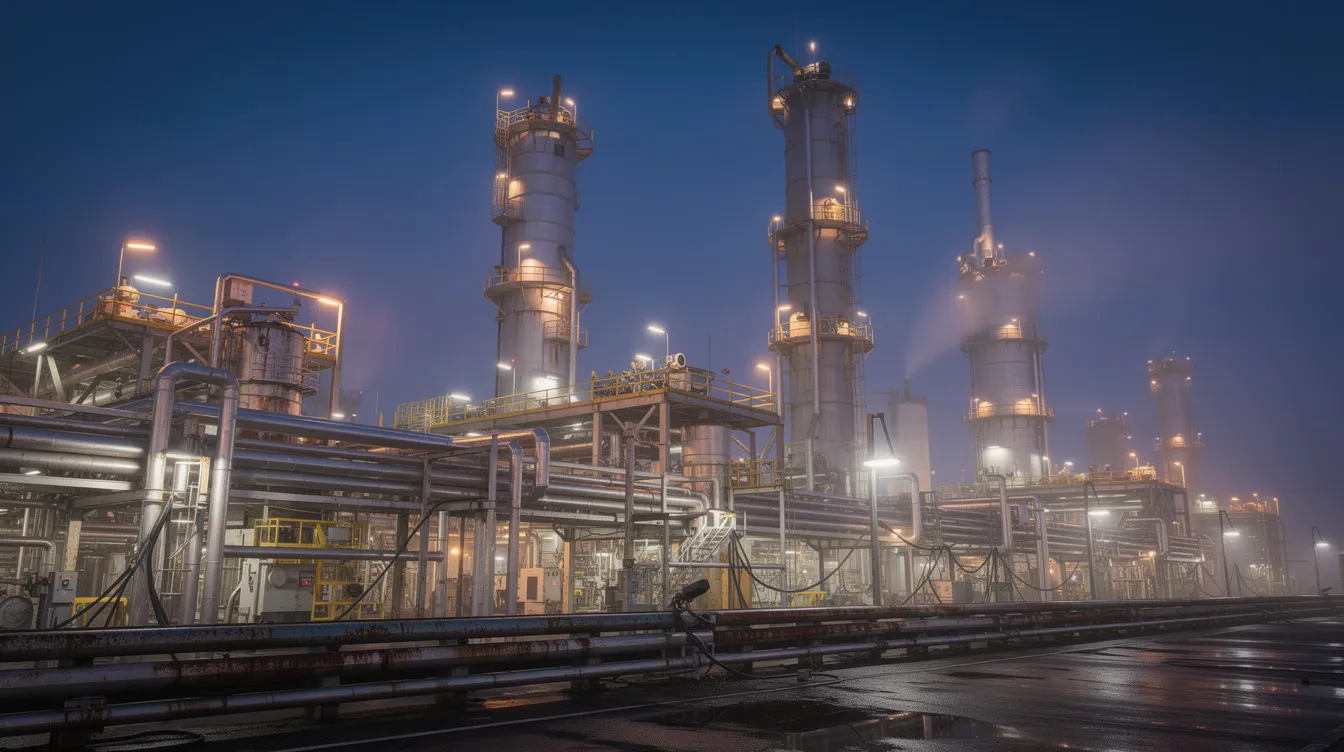
The production of kerosene begins with fractional distillation. Crude oil is heated in a distillation column, and its various compounds vaporize and condense at different heights. Lighter fractions - gas and naphtha - rise to the top. The kerosene cut condenses in the middle range, while diesel and heavy fuel oils collect lower. This distillation process is one of two methods used at scale; the other involves catalytic or thermal cracking, which breaks heavier hydrocarbons into lighter, more valuable products, including additional kerosene.
After the initial straight-run distillation, kerosene undergoes hydrotreating to remove sulfur, nitrogen, and unsaturated compounds. For aviation-grade production, wax content is tightly controlled to meet freezing-point specifications, and additives - antioxidants, static dissipators, cold-flow improvers - are blended in. In 1970, petroleum refining processed approximately 2.3 billion tons of crude oil globally, and kerosene production contributes to industrial pollution concerns that remain a priority for the petroleum industry today.
Historically, kerosene production shifted from coal to petroleum in the 1860s as petroleum hydrocarbons proved cheaper and more abundant. Industrial chemists refined the new process rapidly, and other producers worldwide followed. In recent years, innovators have demonstrated a new process for kerosene synthesis from captured carbon dioxide and water using solar energy - a "power-to-liquid" pathway that could deliver drop-in sustainable kerosene for aviation without fossil feedstocks.
Historic Role of Kerosene: From Whale Oil Rival to Global Heating Oil
The story of kerosene stretches back further than most realize. Kerosene was first distilled in the ninth century by the Persian scholar Rāzi, who documented the distillation of petroleum into usable lamp fuel. Centuries later, in 1846, the Canadian geologist Abraham Gesner coined the term "kerosene" as a trade name for a new lighting fuel he derived from coal tar and bitumen. His product burned brighter and more cleanly than whale oil, producing less of the smoky flame that plagued animal-fat lamps. Gesner gave a public demonstration of his coal oil lamp in Charlottetown, and demand surged.
The real inflection point came when the first oil well was drilled in Pennsylvania in 1859 at Drake Well, unlocking large-scale crude petroleum extraction. Kerosene quickly became the dominant product of the young petroleum industry - an excellent lamp fuel for indoor illumination and lighting lamps across North America and Europe. It was widely used for lighting before electric lights displaced it in cities during the late 19th century. In rural areas and off-grid communities, kerosene remained vital far longer, used for heating homes, cooking, and as lamp oil well into the 20th century. The rise of electricity gradually shifted kerosene's primary role from indoor lamps toward heating oil and, eventually, aviation.
Modern Uses of Kerosene Beyond Aviation
Today, kerosene is used across many industries and applications far beyond powering aircraft. Its versatility as a fuel, solvent, and heat source keeps it relevant even in an era of electrification.
Household and rural lighting: kerosene is utilized in traditional wick lanterns and lamps for lighting, and it can be used as a fuel in traditional oil lamps. In off-grid regions of Africa, Asia, and Latin America, communities - including Amish households in the U.S. - still rely on kerosene lamps as their primary light source.
Heating and cooking: kerosene is widely used in portable kerosene space heaters and stoves. Kerosene stoves and kerosene heaters serve as essential appliances in regions without reliable gas or electricity. It is commonly used in portable stoves for cooking, especially in developing economies.
Emergency backup: kerosene serves as a backup heating source during power outages and power failures. Portable kerosene heaters and lamps are standard emergency gear in rural areas prone to severe weather.
Agriculture and industry: kerosene is utilized in agricultural applications for crop drying and greenhouse heating. It is used as a cleaning solvent or degreaser in agriculture and industry - effective for metal parts, motorcycle chains, and even to clean bicycle components, because it dissolves oils and greases without damaging surfaces. On construction sites, portable kerosene-powered equipment provides heat and light where grid connections are unavailable.
Entertainment and performance: kerosene is often used in the entertainment industry for fire performances, including fire dancing and fire breathing. Safety concerns are significant, and professionals increasingly move toward specialized performance fuels.
Historical and folk uses: kerosene was once regarded as a folk remedy for various ailments - a practice health agencies now strongly discourage due to toxicity risks, including serious illness from ingestion or prolonged skin contact.
Kerosene in Aviation: Jet A, Jet A-1, and High-Performance Travel
The vast majority of modern aircraft - from wide-body airliners to the light jets and super-midsize cabins in BlackJet's fleet - run on kerosene-based jet fuel. Kerosene is the primary base for commercial and military jet fuels, and kerosene is used as a fuel for jet engines because of its unmatched combination of energy density, thermal stability, and safety at altitude; different types of jet fuel build on this core kerosene chemistry to suit specific aircraft and operating environments.
Two grades dominate commercial aviation:
Property | Jet A (mainly U.S.) | Jet A-1 (international) |
|---|
Flash point (min) | 38 °C | 38 °C |
Freezing point (max) | −40 °C | −47 °C |
Sulfur (max) | 0.30% | 0.30% |
Net heat of combustion | ~42.8 MJ/kg | ~42.8 MJ/kg |
Typical density | 0.80–0.84 kg/L | 0.80–0.84 kg/L |
Kerosene has a flash point ranging from 38 °C to 72 °C depending on grade - far higher than gasoline, making it safer to handle in bulk and less prone to accidental ignition. The lower flash point specification (between 37 °C and 65 °C for most grades) is why aviation kerosene is categorized as a flammable liquid with relatively controlled risk.
Every flight that BlackJet's Jet Card Members take relies on premium, tightly controlled kerosene-based jet fuel sourced from vetted suppliers and facilities that meet rigorous quality and safety standards, underpinning BlackJet's premium private jet card programs. For a business executive flying from New York to London on a super-midsize jet, Jet A-1's −47 °C freezing point ensures fuel remains fluid at extremely high-altitude temperatures — a non-negotiable for transatlantic range and reliability.
Worth noting: rocket-grade kerosene like RP-1 - the fuel that powered the Saturn V moon rocket and modern Falcon 9 boosters, combusted alongside liquid oxygen - demonstrates the extreme performance potential of refined kerosene. Private jets, of course, use aviation kerosene, not rocket fuels, but the shared heritage underscores how refined petroleum hydrocarbons remain unmatched for high-energy propulsion.
Safety, Handling, and Health: Using Kerosene Responsibly
Kerosene is less volatile than gasoline and generally safer to handle, but it remains a flammable liquid that demands respect. Kerosene's flash point is between 37 °C and 65 °C - high enough to avoid casual ignition, but kerosene vapors can ignite and should be kept away from open flames and ignition sources at all times.
Handling best practices:
Kerosene should be stored in approved, clearly labeled containers, away from heat and ignition sources
Kerosene heaters should always be used in well-ventilated areas to prevent carbon monoxide buildup
Never mix kerosene with gasoline or other fuels in the same tank
Kerosene should not be poured down drains or disposed of improperly - local hazardous-waste guidelines apply
Health considerations:
Kerosene can cause irritation if inhaled or in contact with skin; prolonged dermal exposure may affect blood parameters
Ingestion of kerosene can be fatal, particularly for children - secure storage is essential
The US NIOSH recommends a 100 mg/m³ exposure limit for kerosene vapor in workplace settings
Kerosene smoke contains harmful particulate matter, and kerosene smoke contains high levels of harmful particulate matter, including PM₂.₅, CO, NO₂, and polycyclic aromatic hydrocarbons
Kerosene use is associated with higher cancer risks in populations with chronic indoor exposure
Health agencies warn against prolonged indoor kerosene combustion, and the World Health Organization recommends stopping kerosene household use where cleaner alternatives exist
Kerosene is a significant fire risk; many fires globally are caused by improper kerosene storage and use
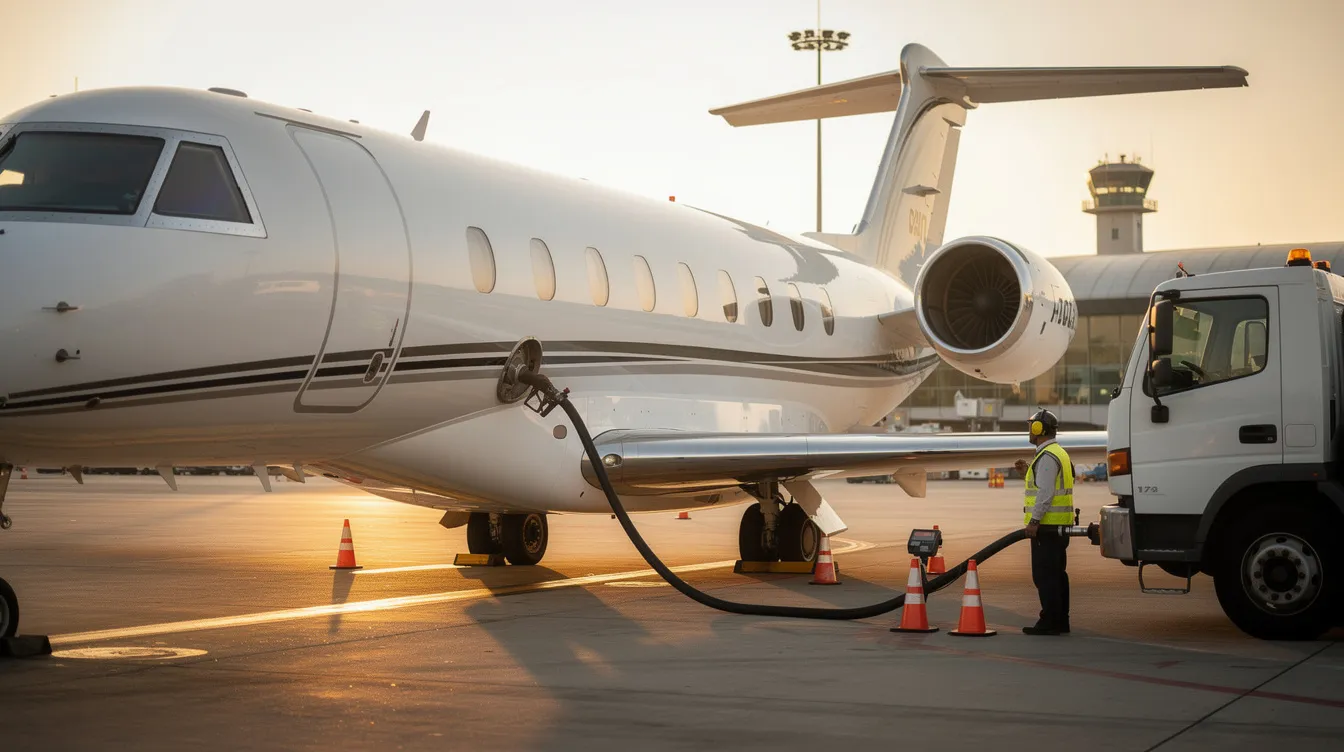
For fire performances in the entertainment industry, professionals use kerosene under strict safety protocols, often transitioning to refined performance fuels with lower aromatic content. From an aviation perspective, BlackJet works only with operators following strict fuel-handling and safety standards - including rigorous fuel testing, filtration, and bonding and grounding procedures during every refueling operation, which is especially critical on 16-seat private jets optimized for group travel.
Sustainability and the Future of Kerosene-Based Fuels
Conventional kerosene combustion releases CO₂ proportional to the carbon in the fuel. Aviation currently contributes around 4% of anthropogenic CO₂ emissions, and with rising global demand for air travel, decarbonizing kerosene-based fuels is a strategic priority for the entire industry.
Sustainable Aviation Fuels (SAFs) offer the most viable near-term pathway. These are bio-based or synthetic fuels blended with conventional kerosene to create "drop-in" formulations compatible with existing aircraft and infrastructure:
HEFA-SPK: waste oils and fats hydroprocessed into synthetic paraffinic kerosene, approved for blending up to 50%
Fischer-Tropsch (FT-SPK): biomass or waste gasified into syngas, then refined to jet fuel specifications
Alcohol-to-Jet (ATJ): ethanol or isobutanol converted through dehydration and oligomerization into kerosene-range hydrocarbons
Power-to-Liquid (PtL): renewable electricity generates hydrogen, which combines with captured CO₂ to synthesize kerosene - the most promising route for full carbon neutrality
In 2025, SAF supplied only about 0.6% of total global jet fuel demand. EU regulations under ReFuelEU mandate rising blending targets - 2% now, 6% by 2030, and 34% by 2040. Cost remains a barrier: HEFA fuels run roughly 3–4× conventional kerosene, and e-SAF can reach 6–7× higher.
BlackJet's commitment is clear: all flights are carbon-neutral through verified carbon offset and insetting programs. We actively prioritize operators and routes where SAF availability and other sources of emissions reductions are viable, giving Members a tangible way to fly responsibly without compromise.

Kerosene vs. Other Fuel Oils and Energy Options
How does kerosene stack up against other fuels? The distinctions matter whether you are heating a home or choosing how to cross an ocean.
Kerosene vs. diesel fuel: kerosene is lighter, less viscous, and cleaner-burning. It resists gelling in extreme cold better than diesel, which is why it is sometimes blended into diesel fuel for winter operations. Diesel offers slightly higher energy per gallon but produces more particulates.
Kerosene vs. heavy fuel oils: heavy fuel oils have far higher sulfur content and viscosity. Kerosene burns substantially cleaner and is suitable for indoor or precision applications where other fuels are not.
Kerosene vs. natural gas and electric heat pumps: in heating homes, natural gas and heat pumps increasingly outperform kerosene on emissions and, in many regions, cost. However, kerosene heating oil retains advantages in off-grid locations without gas pipelines or reliable electricity.
Aviation alternatives: hydrogen propulsion offers high gravimetric energy but faces cryogenic storage challenges, limited infrastructure, and certification barriers for large aircraft. Full-electric aircraft show promise for short regional routes but cannot match kerosene's energy density for long-haul or heavy-payload flights. For the foreseeable future, kerosene-derived jet fuel remains the backbone of global air travel - including premium private aviation offered by leading private jet companies - making optimization and decarbonization of this fuel especially important.
How Kerosene Pricing Affects Air Travel and Jet Cards
Kerosene-type jet fuel is typically one of the largest variable costs in aviation, often constituting 40–50% of total operating expenses. Its price is driven by crude oil markets, regional refining capacity, geopolitical disruptions, environmental taxes, and evolving SAF blending mandates.
In early 2026, EU jet fuel prices reportedly rose approximately 70% due to supply shortages linked to geopolitical conflict - a stark reminder of how fast the market can shift.
Commercial airlines pass fuel costs to consumers through fuel surcharges and ticket-price adjustments. Charter quotes fluctuate in real time.
BlackJet's Jet Card Members pre-purchase flight hours, giving them predictable access even in volatile fuel markets, a structure that invites comparison with competitors such as NetJets' jet card programs and costs. For many travelers, understanding jet card cost and membership pricing is key to evaluating this model, and BlackJet manages underlying kerosene-based fuel risk through our operator network, with transparent terms if adjustments apply.
Scenario: When global kerosene prices spiked sharply in 2022 during the Ukraine conflict, commercial fares jumped within weeks. Jet Card holders on prepaid programs experienced stable, pre-agreed rates - a strategic advantage that turns fuel volatility from a disruption into a non-event.
BlackJet: Turning Kerosene Power into Seamless Private Jet Access
Every concept explored in this article - from refining and product quality to safety protocols and sustainability - converges in the moment a BlackJet Member steps onto an aircraft. We handle the complexity of fuel sourcing, operator vetting, and carbon neutrality so that you experience only seamless, on-demand private jet travel.
BlackJet's Jet Card programs - including 25-hour, BlackJet 25+ Hour Jet Card solutions, and 50-hour options across multiple aircraft categories - leverage a network of certified operators using high-quality kerosene-based jet fuels, with transparent jet card pricing structures that emphasize predictability and value. Every operator in our network is vetted through proprietary safety certification, with 24/7 digital booking tools and real-time flight support as standard.
Use case: A business traveler needs to fly on short notice from Los Angeles to New York. With BlackJet, the booking takes minutes through our mobile platform. The super-midsize jet is fueled with premium Jet A, every leg is offset to net-zero emissions, and the traveler arrives five hours ahead of the best commercial connection - rested, productive, and without a single layover.
Discover how BlackJet can reshape your travel. Explore Jet Card membership or speak with our team about elevating every journey.

FAQs About Kerosene, Jet Fuel, and Private Aviation
Can I use kerosene heating oil in an aircraft?
No. Aviation jet fuels such as Jet A and Jet A-1 are kerosene-type distillates but with tightly controlled freezing points, flash points, and additive packages that household heating oil does not meet. Using non-aviation kerosene would breach safety, performance, and certification standards.
What distinguishes Jet A from Jet A-1?
The primary difference is freezing point: Jet A allows a maximum of −40 °C, while Jet A-1 requires −47 °C. Jet A-1 is used globally, especially for long-haul flights over cold or remote regions where paraffin wax crystallization at altitude could be catastrophic.
How does BlackJet ensure fuel quality and safety?
Every operator in our network must follow documented supplier and facility standards, including testing for freeze point, flash point, and contaminant levels, plus strict filtration and bonding and grounding during refueling. For frequent flyers, choosing among the best jet card options also means evaluating how rigorously providers uphold these safeguards—learn more about our safety and certification standards.
Is kerosene safe to use for home heating or lighting?
When used in approved kerosene heaters or lamps with proper ventilation, kerosene is manageable. However, health agencies warn that indoor combustion produces harmful particulate matter, and the WHO recommends transitioning to cleaner alternatives where possible.
What role do electric or hydrogen aircraft play in the future of private aviation?
Both technologies show promise for short-range and regional flights, but neither can currently match kerosene's energy density for long-haul or heavy-payload missions, especially as the newest generation of private jets continues to push range and efficiency. SAF-blended kerosene and other sources of renewable jet fuel remain the most practical path forward.
How do kerosene price swings affect Jet Card holders?
Fuel prices can shift dramatically due to crude oil volatility, supply chain disruptions, and regulatory changes. Jet Card programs that lock in prepaid hourly rates provide Members with cost predictability—especially at higher tiers like 100-hour jet card programs. BlackJet's model manages fuel risk through our operator network, with transparent adjustment terms if applicable.
How does private aviation address kerosene's environmental impact?
Through SAF adoption, verified carbon offsets, optimized routing, and reduced ground idle time—measures that are especially important for large long-range private jets with intercontinental missions. BlackJet ensures every flight is carbon-neutral, and we actively prioritize operators with access to sustainable fuel blends and advanced emissions-reduction practices.
Conclusion: Kerosene's Enduring Role in Modern Aviation and Beyond
Kerosene remains a cornerstone fuel that powers not only the engines of private jets but also a wide array of essential applications worldwide. From its historic roots as a cleaner alternative to whale oil for lighting to its critical role in today's high-performance aviation fuels, kerosene exemplifies the blend of tradition and cutting-edge technology. Its unique combination of energy density, safety, and versatility ensures it will stay relevant even as the industry advances toward sustainability.
For private jet travelers and Jet Card Members, understanding kerosene's properties and supply dynamics translates directly into a superior travel experience—seamless, reliable, and increasingly responsible—whether they charter entire aircraft or purchase individual seats on private jets. BlackJet’s commitment to carbon-neutral flights, rigorous safety standards, and innovative adoption of sustainable aviation fuels positions kerosene not just as a fuel but as a strategic asset in luxury travel, especially aboard the world’s best private jet models that define top-tier business and leisure flying.
As the aviation sector evolves, kerosene-based fuels will continue to adapt—blending with sustainable alternatives, benefiting from technological advances, and supporting the premium private aviation lifestyle across everything from light jets to the largest private jets for sale and charter. Whether heating a remote home, lighting a lantern, or cruising at 40,000 feet in a private jet configured for 20 passengers, kerosene’s legacy and future remain inseparably linked to human progress and the pursuit of effortless, premier travel.
Discover how BlackJet leverages the power of kerosene to elevate every journey, whether you’re chartering a 30-passenger private jet, arranging 50-passenger group travel in VIP airliners, or exploring premium UK private jets for sale and even ultra-luxury royal-style aircraft configurations. Explore Jet Card membership and experience the future of private aviation today.


 Sign up with google
 Sign up with Apple