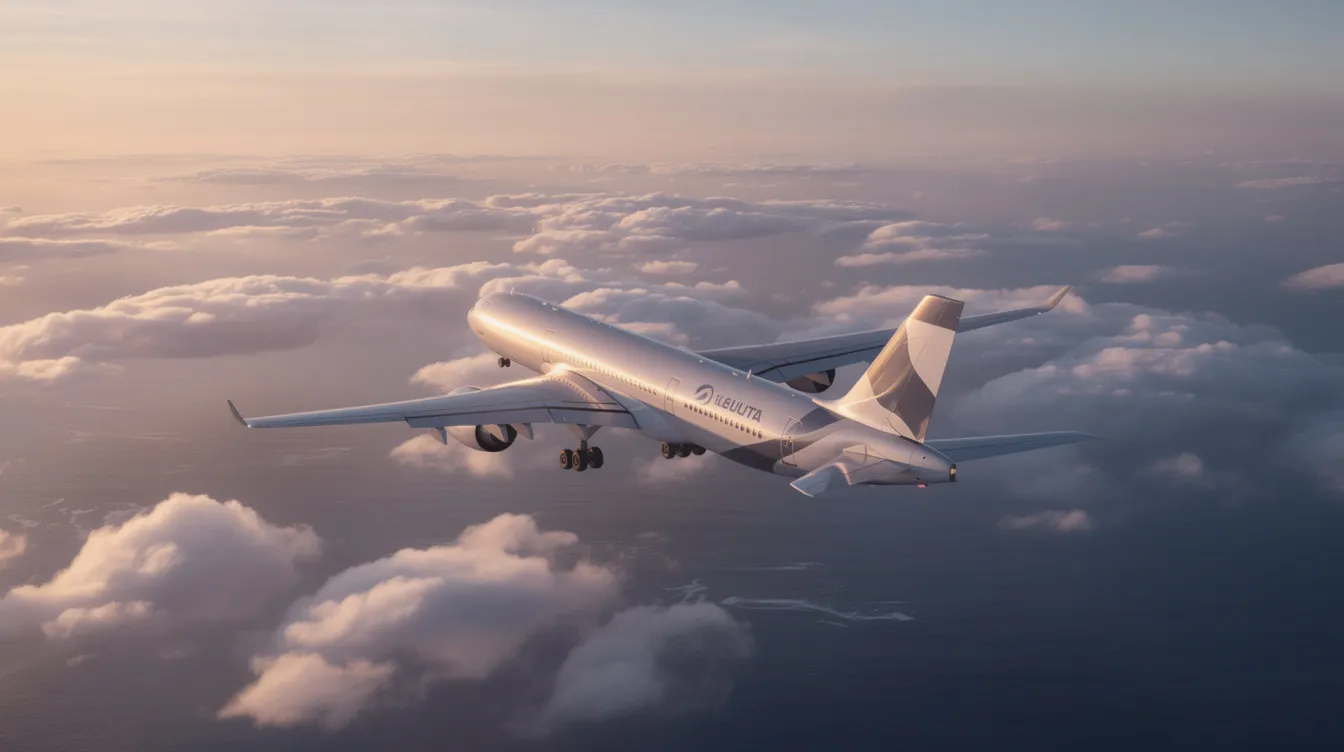
For executives and discerning travelers, knowing which airplane can fly the farthest without a stop is more than trivia—it is a strategic advantage that shapes how you move through the world.
Overview: What Is the Longest Range Passenger Aircraft Today?
The Airbus A350-900ULR is the longest-range commercial passenger jet currently in service, capable of flying over 9,700 nautical miles (approximately 18,000 km). Meanwhile, the A350-1000ULR is under development with a projected range of 10,000 nautical miles—close to 18,520 km—with its first flight completed on 2 June 2026 and deliveries expected by April 2027. Boeing's 777-8, part of the 777X family, aims to compete with a newly published range of roughly 9,500 nm once it enters production.
In aviation, "range" refers to the maximum distance a plane can fly under ideal conditions: standard passenger load, mandatory fuel reserves, and no adverse winds. This is far removed from record flights like the Rutan Voyager, which stretched endurance by stripping weight to the absolute minimum.
The A350-1000ULR targets nonstop Sydney–London and Sydney–New York missions lasting up to 22 hours.
Modern long-range business jets like the Gulfstream G800 (~8,200 nm) and Bombardier Global 8000 (~8,000 nm) offer comparable reach with far fewer seats and direct flights on intercontinental routes.
Private aviation appeals to high-net-worth leisure travelers seeking flexibility and luxury—fewer stops mean more time at your destination and greater control than commercial first class.
Top Longest-Range Passenger Aircraft in Service
Below is a comparison table of the flagship passenger aircraft that operate direct flights on the world's most demanding routes today—not experimental or military planes, but production models built for revenue service.
Aircraft Model | Maximum Range (nm/km) | Passenger Capacity (typical) | In-Service Status |
|---|
Airbus A350-900ULR / A350-1000 | 9,700+ nm / 18,000+ km (A350-900ULR); 10,000 nm / 18,520 km (A350-1000ULR, in development) | 170–250 (premium-heavy) | A350-900ULR: In service; A350-1000ULR: 2027 |
Boeing 777-8 (777X family) | ~9,500 nm / 17,600 km | 350–400 (three-class) | Expected 2027 |
Boeing 777-300ER | ~7,500 nm / 13,000+ km | 350–400 (three-class) | In service |
Boeing 787-9 | ~8,300 nm / 15,370 km | 250–325 (two-class) | In service |
Airbus A350-900 (baseline) | ~8,600 nm / 15,900 km | 250–325 (two-class) | In service |
Gulfstream G800 (business jet) | ~8,200 nm / 15,186 km | <19 | In service |
Bombardier Global 8000 (business jet) | ~8,000 nm / 14,816 km | <19 | In service |
Airbus A350-900ULR / A350-1000
The A350-900ULR entered service in October 2018 with Singapore Airlines. It utilizes a modified fuel system to increase fuel capacity by 24,000 liters, enabling ultra-long-haul routes like Singapore–Newark. More than 70% of the A350's airframe is made from advanced materials, and its engines are high-bypass Rolls-Royce Trent XWB turbofans. Fuel efficiency is enhanced by the advanced aerodynamics of the A350 design, while aerodynamic refinements further reduce drag over long distances. Typical seating runs 170–250 passengers in premium-heavy layouts.
Boeing 777-8 (777X family)
Not yet in service but expected to follow the 777-9, the 777-8 received a mid-2026 spec update boosting its published range to approximately 9,500 nm (~17,600 km). This new aircraft is designed to replace older long-haul widebodies and open previously unviable nonstop city pairs with three-class capacity around 350–400 passengers.
Boeing 777-300ER
A long-range, wide-body passenger aircraft in service since the mid-2000s, the 777-300ER can fly over 13,000 km (~7,500 nm). It is powered by two high-thrust jet engines and offers multiple cabin classes for passenger comfort. The Boeing 777-300ER is known for its fuel efficiency and remains a workhorse on routes like Dubai–Los Angeles, with three-class seating around 350–400.
Boeing 787-9 and Airbus A350-900 (baseline)
The 787-9 reaches approximately 8,300 nm (~15,370 km), while the A350-900 covers about 8,600 nm. Both aircraft types seat 250–325 in two-class layouts and are the efficient workhorses behind routes like Auckland–New York and Perth–London. Their stretched wings and composite construction deliver lower fuel burn and stronger cabin comfort than older competitors.
Compared to these airlines' flagships, business jets like the Gulfstream G800 or ultra-long-range private jets for sale such as the Global 8000 trade scale for privacy—fewer than 19 seats but a range that rivals or exceeds the 787-9.
Ultra-Long-Haul Routes: The Longest Direct Flights in the World
Below is a table summarizing the world's longest direct commercial flights, their distances, typical durations, and aircraft used.
Route | Distance (km) | Typical Duration | Aircraft Used |
|---|
Singapore (SIN) – New York (EWR/JFK) | 15,300–16,700 | 18–19 hours | Airbus A350-900ULR |
Perth (PER) – London (LHR) | ~14,500 | ~17 hours | Boeing 787-9 (current), Airbus A350-1000ULR (future) |
Auckland (AKL) – New York (JFK) | ~14,000 | ~17 hours | Boeing 787-9 |
Doha (DOH) – Auckland (AKL) | ~14,500 | ~17–18 hours | Boeing 777-200LR |
Singapore – New York
Approximately 15,300–16,700 km depending on routing, with flight durations reaching 18–19 hours on Singapore Airlines' A350-900ULR. The aircraft can achieve flight durations of up to 19 hours non-stop, and cabin configurations are biased heavily toward business and premium economy.
Perth – London
Qantas Project Sunrise uses the Boeing 787-9 on this ~14,500 km route today, with plans to switch to the A350-1000ULR by 2027 for even longer Australian direct flights to London and New York.
Auckland – New York
Air New Zealand flies this ~14,000 km leg on the 787-9, with a typical time of about 17 hours.
Doha – Auckland
One of the longest scheduled services in the world, operated by Qatar Airways on premium-heavy layouts.
Weather, winds, and weight restrictions sometimes force airlines to reduce passenger count or cargo—the max advertised range and real-world operations can differ. Ultra-long-haul flights require managing passenger fatigue effectively, making what happens in the cabin just as important as what is happening in the cockpit. A BlackJet Jet Card member, by contrast, might fly a private plane layout configured for rest, choosing a strategic refueling stop that adds stretching time and a morning meal on the ground.
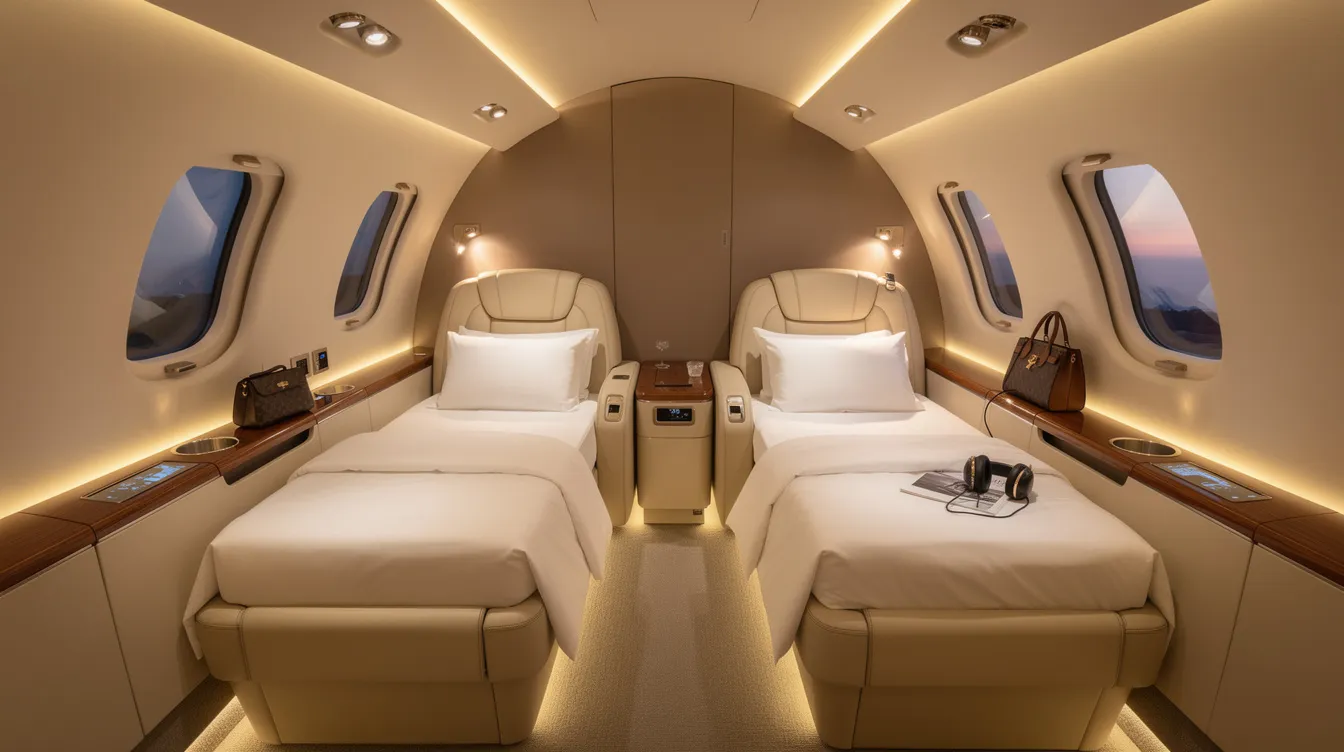
Cabin Experience and Cabin Altitude on the Longest Range Jets
Cabin Altitude and Comfort
The aircraft offers a passenger-focused cabin designed to enhance comfort on long flights. Cabin altitude pressure is lower than that of typical aircraft, improving passenger comfort: composite jets like the 787 and A350 maintain cabin altitude around 6,000 feet versus the 8,000-foot norm on older planes, which reduces fatigue and turbulence-related discomfort in the air.
Business Jet Cabin Features
Cutting-edge business jets like the Bombardier Global 8000 and other newest private jets target cabin altitudes as low as approximately 2,900 feet—closer to sea level and a sense of being on the ground rather than at cruising altitude.
Commercial vs. Private Jet Experience
On commercial ultra-long-haul flights, airlines use premium-heavy configurations: business suites, limited or no standard economy on select segments. For private jets, fully flat beds, bespoke catering, and customized cabins on top 16-seat private jets mean a BlackJet client can fly an overnight transatlantic mission and step off ready for a Friday morning board meeting.
Cabin Technology Enhancements
Quieter cabins, LED mood lighting timed to the destination time zone, and advanced HEPA air filtration all contribute to faster recovery—features that make longer flights feel shorter.
Range vs. Real-World Operations: What Actually Limits How Far You Can Fly?
Brochure range is a manufacturer's best-case model. Real flights face constraints that no spec sheet can eliminate. Key constraints include:
Payload vs. fuel trade-off: Higher passenger and cargo loads reduce maximum range on both commercial passenger aircraft and private jets. Airlines sometimes receive fewer passengers to carry enough fuel for the longest legs.
Wind and routing: Headwinds can slow groundspeed dramatically—seasonal variations on polar routes mean some city pairs are only viable nonstop in one direction. Detours around restricted airspace add distances and delays.
Regulatory safety: Fuel reserve rules, ETOPS certification for extended overwater operations, and alternate landing airport requirements all demand extra fuel beyond what pure range calculations suggest.
Operational choices: Airlines may schedule a tech stop or choose a slightly shorter city pair when making the economics work. A Jet Card member with BlackJet might opt for a planned refueling stop—combining crew rest, a meal on the ground, and use of a preferred FBO—turning a constraint into a competitive advantage, much like a traveler using a 25-hour jet card to balance flexibility and cost.
Frequently Asked Questions (FAQs)
What is the longest range passenger jet currently in service?
The Airbus A350-900ULR holds the title for the longest-range passenger jet in commercial service, capable of flying over 9,700 nautical miles (about 18,000 km) nonstop.
How does the Airbus A350-1000ULR compare to the A350-900ULR?
The A350-1000ULR is an extended version under development with a projected range of 10,000 nautical miles (approximately 18,520 km), designed to cover ultra-long-haul routes like Sydney to London nonstop.
What factors limit the maximum range of long-haul flights?
Real-world range is limited by payload versus fuel trade-offs, wind and routing conditions, regulatory safety requirements like fuel reserves and alternate airports, and operational choices such as planned refueling stops.
How do private jets compare to commercial aircraft in terms of range?
Modern long-range business jets like the Gulfstream G800 and Bombardier Global 8000 offer ranges up to 8,200 nautical miles, competing with some commercial jets but with fewer seats and highly personalized service.
What advantages do Jet Card programs offer for long-range travel?
Jet Card programs provide prepaid access to a variety of private jets, allowing travelers to choose the right aircraft for each mission with fixed hourly rates, 24/7 support, and flexibility to avoid commercial airport hassles.
How does cabin altitude affect passenger comfort on ultra-long-haul flights?
Lower cabin altitude pressure in aircraft like the A350 and 787 reduces fatigue and discomfort by simulating a lower altitude environment, improving passenger recovery and comfort during long flights.
Are there sustainable options in long-range private aviation?
Yes, many private aviation providers, including BlackJet, offer carbon-neutral flights and sustainable aviation fuel options to reduce environmental impact without compromising luxury or convenience.
What safety measures are important for long-range private jet travel?
Safety is paramount, with top-tier operators audited for maintenance standards, crew training, and certifications required for extended overwater and night operations, ensuring reliable and secure flights.
When will the Boeing 777-8 enter service?
The Boeing 777-8, part of the 777X family with a range of approximately 9,500 nautical miles, is expected to enter service around 2027.
How do ultra-long-haul routes impact scheduling and passenger experience?
Ultra-long-haul flights can last up to 19 hours, requiring careful management of passenger fatigue, cabin comfort features like mood lighting and HEPA filtration, and sometimes strategic refueling stops to optimize rest and recovery.
Private Jets, Jet Cards, and the Future of Long-Range Air Travel
Being able to depart on your schedule, fly direct when possible, and avoid congested hubs is not a luxury—it is a competitive edge. For executives and UHNW travelers, range is what separates a good trip from a great one.
Modern long-range business jets like the Gulfstream G800, Bombardier Global 8000, and Dassault Falcon 10X offer ranges that compete with some airliners—but with fewer than 19 seats and highly personalized service. Many of the largest private jets for sale push this even further with expansive cabins, while the Global 8000 is designed to fly at supersonic speeds with sustainable fuel, signaling what production models may look like in years ahead.
Jet card programs provide prepaid access to private jets with various cabin types. BlackJet's Jet Card programs, including its 25+ Hour Jet Card, let you select the right aircraft for each mission—midsize for regional hops, large-cabin for transoceanic direct flights—with fixed-rate hours and 24/7 support.
Safety remains non-negotiable: BlackJet partners exclusively with top-tier operators audited for maintenance standards and crew training, which is critical on long overwater sectors and night operations, similar to the rigor seen at the top private jet companies.
Sustainability is built in. Carbon-neutral flights and options for sustainable aviation fuel align with the industry's trajectory. Concorde was retired in 2003 after decades of service, and Aerion planned a Mach 4+ commercial airliner before collapsing—a story of setbacks and renewed ambition in faster passenger flight. Yet the post-supersonic era is happening now: United Airlines plans to offer supersonic routes by 2029, and Boom Supersonic's Overture jet aims for Mach-2.2 speeds, with test flight programs already underway. Among the best private jets in the world, China's aviation manufacturers also have stretched ambitions in this space.
Whether your next mission takes you from New York to London or Sydney to Tokyo, the right aircraft and the right access model make all the difference. BlackJet's premium private jet cards and programs span options from understanding jet card cost per hour to evaluating overall jet card pricing and jet card cost guides, along with comparisons like NetJets jet card cost and Flexjet jet card cost. You can also explore structures such as a 25-hour jet card or 50-hour jet card cost, decide when to buy a seat on a private jet, or even look at cheapest private jet options for specific missions. For larger groups, consider specialized guides on the best private jet for 15 passengers, the best private jet for 50 passengers, or curated lists of the largest private jets for sale. Explore BlackJet's Jet Card programs to discover how seamless long-range private travel can reshape the way you move through the world.


 Sign up with google
 Sign up with Apple