
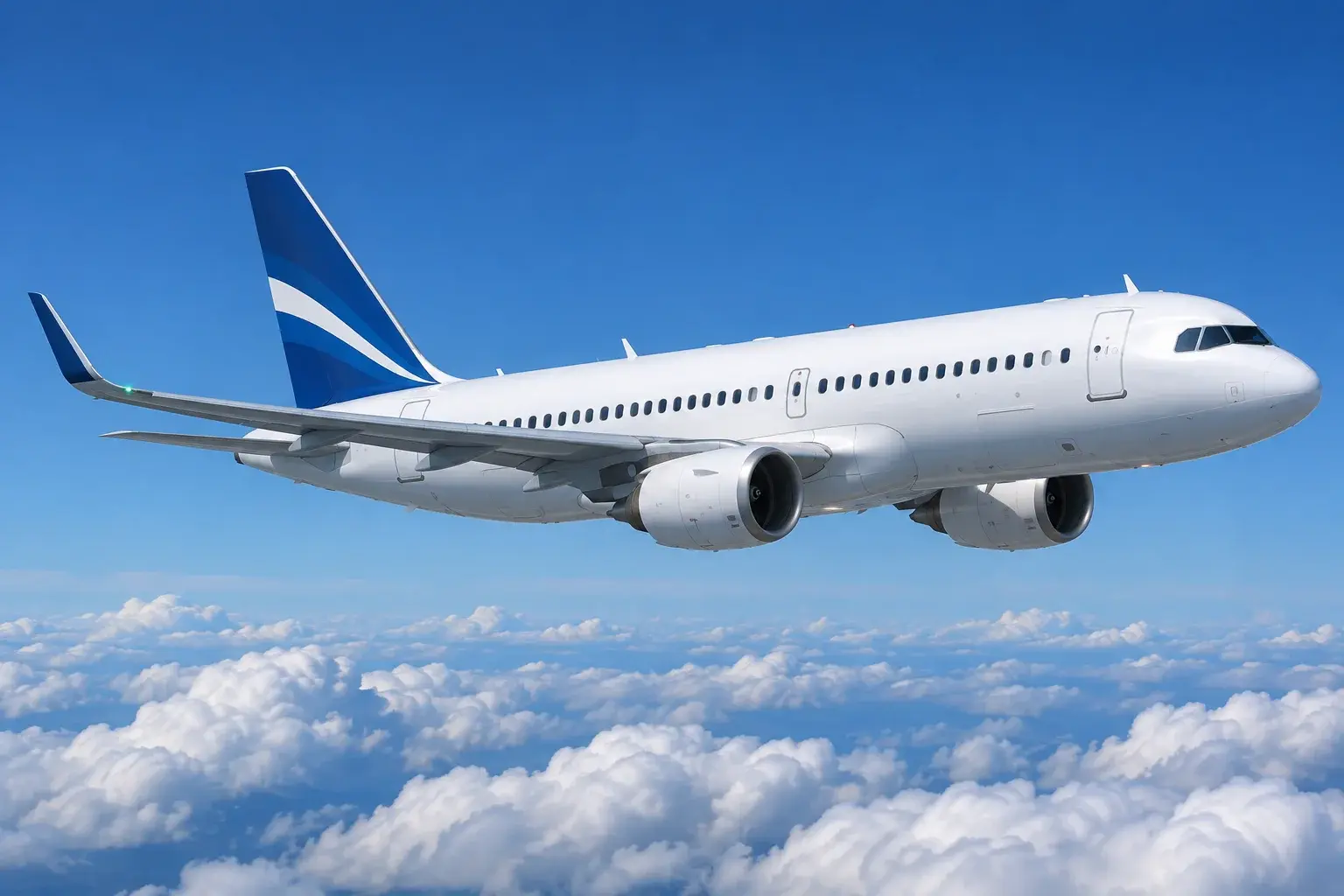
The max airplane program remains one of aviation's defining stories in 2027. After a worldwide grounding, sweeping redesigns, and the tightest regulatory scrutiny in commercial history, Boeing's 737 MAX family is back—and understanding it gives discerning travelers a strategic edge.
The term “MAX airplane” refers to Boeing's 737 MAX family of single-aisle commercial jets, including the MAX 7, MAX 8, MAX 9, and MAX 10 variants.
Strategic overview: Why the 737 MAX matters in 2027
The Boeing 737 MAX is not just another plane. It is the backbone of single-aisle operations for airlines around the world, rebuilt under safety regimes no aircraft family has faced before. For airline customers flying economy or business class on major city pairs, the MAX delivers low seat-mile costs and reliable schedules. For high-net-worth travelers and executives, the picture is more nuanced.
Understanding both the MAX 8 and MAX 10 helps you recognize when a commercial seat makes perfect sense—and when a Jet Card through a company like BlackJet gives you a strategic advantage. Commercial MAX flights save cost per person on simple nonstop routes. Private jets, by contrast, can cut two to three hours of ground time per trip by bypassing security, boarding queues, and congested terminals, while offering access to thousands of smaller airports that MAX jets never serve.
In 2027, the choice is not either-or. It is about deploying the right aircraft for each mission.
From grounding to renewed trust: Safety reforms on the Boeing 737 MAX
The history is well known. Lion Air Flight 610 in October 2018 and Ethiopian Airlines Flight 302 in March 2019—two crashes that killed a combined 346 people. The root problem was MCAS, a flight control system designed to push the nose down in certain conditions. It relied on a single sensor, could activate repeatedly, and overwhelmed pilots who had not been trained on its behavior. The Federal Aviation Administration grounded Boeing's 737 MAX jets for over a year.
The FAA's proposed fixes go beyond the software issues. MCAS now depends on two sensors instead of one. Its authority is limited so pilots can always override it manually, and it will not activate more than once per event. Additional wiring changes, flight control computer updates, and improved cockpit alerts were mandated by airworthiness directives. FAA Administrator Steve Dickson personally completed a test flight of the redesigned aircraft in September 2020 before clearing its return to service.
Pilots must undergo simulator training before flying the MAX again—a requirement enforced by regulators globally. EASA independently declared the MAX safe for European operations in January 2021. By 2027, the FAA's review has raised the bar on global aviation safety, and the FAA's relationship with Boeing operates under far more rigorous oversight than at any point in history.
BlackJet's partner operators apply a parallel philosophy. Beyond regulatory baselines, every operator in the network undergoes vetting through standards like ARGUS Platinum and Wyvern Wingman, with minimum pilot hours and recurrent simulator checks that hold crews to thresholds above what regulators require, reflecting the broader realities of private jet travel safety standards.
Inside the MAX family: 737 MAX 7, MAX 8, MAX 9, and MAX 10 explained
The 737 MAX is not one airplane—it is a series of four variants, each designed for a different market.
The MAX 7 is the smallest, finally certified by the FAA in mid-2026 after years of review. It seats roughly 138 to 153 passengers in two-class layouts with a range near 3,800 nautical miles, making it suited for thinner regional routes or hot-and-high airports where runway performance matters.
The MAX 8 is the workhorse. It typically seats 162 to 178 passengers in two classes, or up to roughly 210 in high-density configurations. With a range of 3,550 nautical miles, the MAX 8 can handle transatlantic sectors—airlines like United and Air Canada operate it on routes exceeding seven hours and 3,200 miles.
The MAX 9 is an intermediate stretched version positioned for higher-capacity domestic and medium-haul operations, with range similar to the MAX 8.
The larger variant, the MAX 10, is the head of the family in terms of capacity. The Boeing 737 MAX 10 is 43.8 meters long and can carry up to 230 passengers in a single-class layout, or 188 to 204 in two-class. Its range of 3,300 nautical miles is a bit shorter than the MAX 8, but Boeing's 737 MAX 10 competes directly with the Airbus A321neo on dense city pairs where filling every seat is the goal.
737 MAX variant comparison
Variant | Typical capacity | Approximate range | Best suited to |
|---|---|---|---|
MAX 7 | 138–153 passengers in a two-class layout | About 3,800 nautical miles | Thinner regional routes and airports where runway performance matters |
MAX 8 | 162–178 passengers in two classes; up to about 210 in high-density layouts | 3,550 nautical miles | Short-haul, transcontinental, and some transatlantic sectors |
MAX 9 | Higher capacity than the MAX 8 | Similar to the MAX 8 | Higher-capacity domestic and medium-haul routes |
MAX 10 | 188–204 passengers in two classes; up to 230 in a single-class layout | 3,300 nautical miles | High-demand routes where seat capacity is the priority |
Engineering for efficiency: Design choices that shape how the MAX flies
Longer does not mean further. The MAX 10's stretched fuselage adds weight without proportionally increasing fuel volume, so its range is squeezed compared to the MAX 8. Boeing solved a key problem—the longer length risked tail strikes during rotation—by designing a telescoping main landing gear that extends approximately 9.5 inches during takeoff to maintain clearance, then retracts into the existing wheel well to preserve fleet commonality.
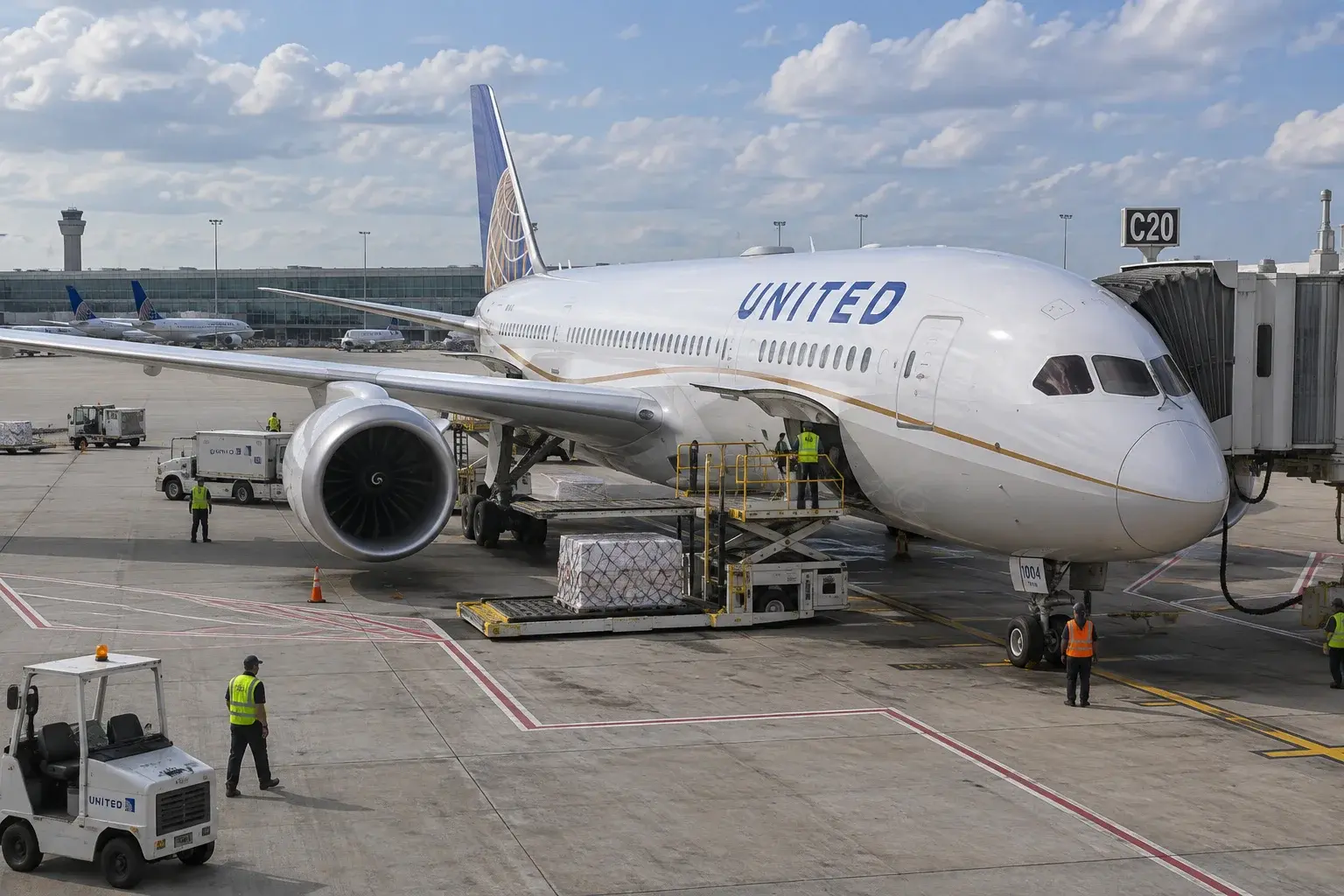
All MAX variants are built around CFM International LEAP-1B engines and advanced wing aerodynamics—split-scimitar winglets, refined nacelles—that Boeing reports deliver roughly 20 percent lower fuel burn than prior-generation 737NG models. Jet engines operate more efficiently in the colder ambient air of the upper atmosphere, and flying higher generally improves fuel efficiency due to lower aerodynamic drag. At 35,000 feet, air density is roughly a quarter of sea-level density, which means higher true airspeed is needed to generate lift in thinner air. Thinner air also reduces engine thrust and decreases the effectiveness of flight control surfaces, which is why understanding how high a private jet flies versus commercial helps explain differences in ride quality and routing.
Most commercial airliners have a maximum operating altitude between 39,000 and 43,000 feet, while most modern airliners hold a maximum certified operating altitude between 41,000 and 45,100 feet. Typical cruising altitudes for commercial airliners range from 31,000 to 38,000 feet, keeping aircraft above most convective weather and turbulence when flying above 35,000 feet. Aircraft are certified to specific ceilings based on structural design and cabin pressurization systems—the fuselage must maintain cabin pressure equivalent to 6,000 to 8,000 feet for passenger comfort and safety. Narrowing speed margins at high altitudes create an area known as the coffin corner, where the gap between stall speed and maximum speed shrinks. Air traffic control and weather conditions also influence the cruising altitude assigned to any given flight.
Private jets, by contrast, can reach maximum certified altitudes of up to 51,000 feet depending on engine power and design, often placing them above commercial traffic and turbulence—one reason business jet travelers report smoother rides and often experience less disruptive turbulence on private jets.
The MAX 10 has the lowest seat-mile cost of any single-aisle airplane, making it the choice for airlines operating high-volume routes where every seat counts. BlackJet fleet categories—light, midsize, super-midsize, and large cabin—prioritize range flexibility, runway performance at smaller airports, and private cabin comfort rather than maximum seat density, aligning with the broader types of private jets for different travelers.
How airlines actually use the 737 MAX in 2027
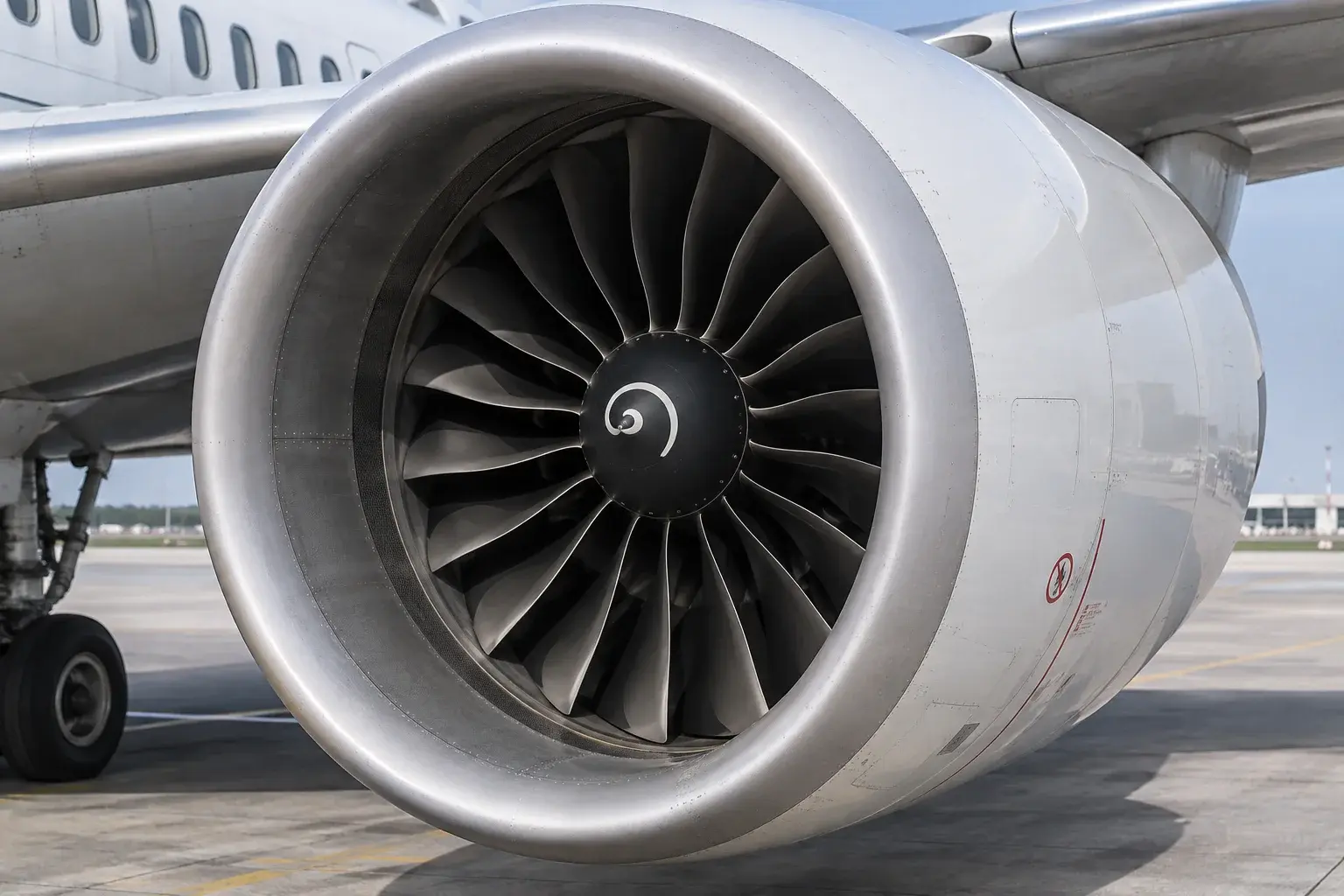
Airlines operate the MAX 8 across a spectrum: short hops like Dallas to Houston, transcon segments, and even transatlantic sectors like Dublin to the East Coast of the United States at the upper end of its 3,550-nautical-mile range. The MAX 10 is poised for high-demand, medium-range routes—New York to Miami, London to Athens, Tokyo to Sapporo—where slot constraints and boarding volume make filling 200-plus seats almost guaranteed, while premium group travelers may instead opt for large private jets for up to 50 passengers when privacy and customization outweigh per-seat economics.
Many carriers run mixed fleets of MAX 8 and MAX 10. The MAX 8 handles longer or thinner sectors; the MAX 10 covers peak-demand city pairs. Certification and delivery delays meant the MAX 10 launched later than planned, but by late 2026 and into 2027 it is increasingly common across North American, European, and Asia-Pacific fleets.
For passengers, the trade-off is clear. Boarding and deplaning with 200 people takes time. A person flying a MAX 8 in business class from London to New York saves money versus a private charter, but surrenders schedule flexibility and spends hours in ground processing; comparing that trade-off starts with understanding jet card cost per hour on the private side. A BlackJet large-cabin charter on the same city pair can fly from a private terminal, skip security entirely, and deliver passengers door-to-door up to three hours faster—a point that matters most to people who travel on compressed timelines and are weighing whether chartering a private jet is worth it overall.
737 MAX, sustainability, and how it compares with private jets
The MAX family is more fuel-efficient per seat than older 737s—Boeing reports roughly 20 percent lower CO₂ emissions per passenger-kilometer. Airlines pair MAX operations with sustainable aviation fuel trials and carbon offset programs, especially on flagship routes across Europe and North America, while high-end travelers weigh whether chartering a private jet is worth it once time savings and route flexibility are factored in.
The comparison with private jets is nuanced. A full MAX 8 carrying 178 passengers generates far less CO₂ per person than a midsize private jet emitting roughly 2.6 tons per hour with six passengers aboard. But when a private flight replaces multiple commercial legs, overnight hotel stays, and ground transfers—or when a full cabin of eight to twelve travelers flies together—the environmental gap narrows significantly.
BlackJet's commitment in 2027 is straightforward: every flight is carbon neutral at no extra cost through verified offset programs, with growing SAF availability across partner operators, and a range of jet card options for frequent flyers tailored to different mission profiles. Technology trends—hybrid-electric concepts, lighter materials, improved aerodynamics—will continue tightening emissions for both commercial and private aviation beyond this date, even as travelers look to more affordable private jet options to balance cost with sustainability.
When a 737 MAX makes sense—and when BlackJet is the smarter choice
A 737 MAX commercial flight is the logical choice for a simple nonstop between major hubs at a fixed time, when privacy and schedule control are not priorities. The MAX 10's unmatched seat-mile economics make economy and premium economy fares on dense routes genuinely expensive to beat.
BlackJet becomes the smarter choice when the itinerary gets complex, especially for travelers whose usage patterns might justify a 100 hour jet card program. Consider an executive who needs to fly from New York to Chicago for a morning board meeting, then onward to Dallas by evening; a 50 hour jet card structure can align well with that kind of recurring travel. Piecing together commercial legs on MAX-based schedules means connections, delays, and lost hours. A BlackJet midsize or super-midsize jet completes both legs in a single day with time to spare. Similarly, a family traveling to a remote ski destination served only by a short runway and a small regional airport simply cannot get there on a 737 MAX, which is where chartering aircraft for 100-passenger-scale groups or smaller bespoke charters can transform logistics.
Both commercial MAX flights and BlackJet's partner operations run under rigorous regulatory regimes. BlackJet adds its own layer—operator vetting, pilot experience thresholds, and safety standards that subscribe to frameworks beyond what regulators require. The end result is not a competition between commercial and private; it is a way of using each where it delivers the most value, with tools like a comprehensive guide to jet card cost helping travelers quantify that value over time. Explore BlackJet's Jet Card options to see how both worlds connect, including the dedicated BlackJet 25+ Hour Jet Card for travelers who value fixed rates and access to larger cabins.
Key milestones: 737 MAX test flights, certifications, and what's next
The 737 MAX program's milestones read like a file of modern aviation's most scrutinized chapter. The MAX 7's first test flight near Seattle marked a pivotal point for Boeing, and after nearly a decade of review the FAA finally granted its amended type certificate in mid-2026. Boeing publicly launched the MAX 10 at its facility in Renton, Washington on November 22, 2019, framing it as the line's flagship high-capacity variant—a date reported widely and remembered as a declaration of intent.
Ongoing oversight through the mid-2020s has made certification a continuous process, not a one-time event. Incremental software, training, and documentation updates continue month after month, with regulators treating every change as an opportunity to comment and verify.
The Boeing versus Airbus rivalry shapes the market backdrop. Airbus holds a 64 percent share of the narrow-body jet market and plans to ramp up A320neo production to 47 jets per month. Boeing's 737 MAX 10 has secured 550 orders from 20 airline customers, keeping it firmly in the race. For BlackJet members, this competition drives fleet renewal across airlines they connect to and from, raising efficiency and safety expectations across the entire industry, just as competition among the world's top private jets drives innovation in range, comfort, and sustainability on the private side.
Frequently asked questions about the Boeing 737 MAX
What does “MAX airplane” mean?
“MAX airplane” commonly refers to Boeing’s 737 MAX family of single-aisle commercial jets. Its variants include the MAX 7, MAX 8, MAX 9, and MAX 10, each designed for different passenger capacities and route requirements.
Is the Boeing 737 MAX safe to fly in 2027?
The MAX returned to service after regulators required software and hardware changes, pilot simulator training, and additional oversight. The FAA and other aviation authorities review compliance with their requirements. Travelers can check with their airline for the aircraft assigned to a flight and current operational information.
What is the difference between the 737 MAX 8 and MAX 10?
The MAX 8 typically carries 162 to 178 passengers and has a range of up to 3,550 nautical miles. The longer MAX 10 can carry up to 230 passengers in a single-class layout and has a range of about 3,300 nautical miles. The MAX 8 is better suited to longer sectors, while the MAX 10 is designed for high-demand routes where seat capacity matters.
How does a commercial MAX flight compare with private jet travel?
A commercial MAX flight can offer strong per-seat value on a scheduled nonstop route between major airports. Private aviation offers greater control over departure times, access to more airports, and a private cabin. A Jet Card provides prepaid access without the cost and responsibilities of owning an aircraft; the right option depends on the itinerary, group size, schedule, and budget.
Are private jet flights more sustainable than 737 MAX flights?
A full commercial airliner generally produces lower emissions per passenger than a lightly occupied private jet. Private aviation’s impact varies with aircraft, occupancy, and route. BlackJet states that its flights are carbon neutral through verified offsets at no extra cost, while sustainable aviation fuel availability depends on the operator and airport.
How BlackJet fits into a world of MAX airplanes
In 2027, the Boeing 737 MAX family underpins thousands of commercial flights each day. BlackJet exists to solve a different set of problems—the ones that start where airline networks end.
BlackJet's Jet Card programs—available in 25-hour and 50-hour options—offer guaranteed access to vetted aircraft categories, from light jets for short hops to large-cabin jets for transcontinental missions, making it easier to compare against incumbents like NetJets jet card pricing and structure. Digital booking runs around the clock with real-time support and transparent pricing grounded in a clear jet card pricing structure, a contrast to navigating fare classes and schedules across multiple MAX operators.
Every BlackJet flight is carbon neutral as standard. Every partner operator is vetted beyond regulatory baselines. And every member gains the power to choose intelligently—commercial when it fits, private when it matters, supported by BlackJet's broader premium private jet card programs and charter solutions.
The smartest travelers in 2027 do not pick one mode of travel. They hold both options and deploy each strategically.
Elevate your travel—effortlessly. Explore BlackJet's Jet Card programs and discover how refined, flexible, carbon-neutral private flight becomes your new standard.