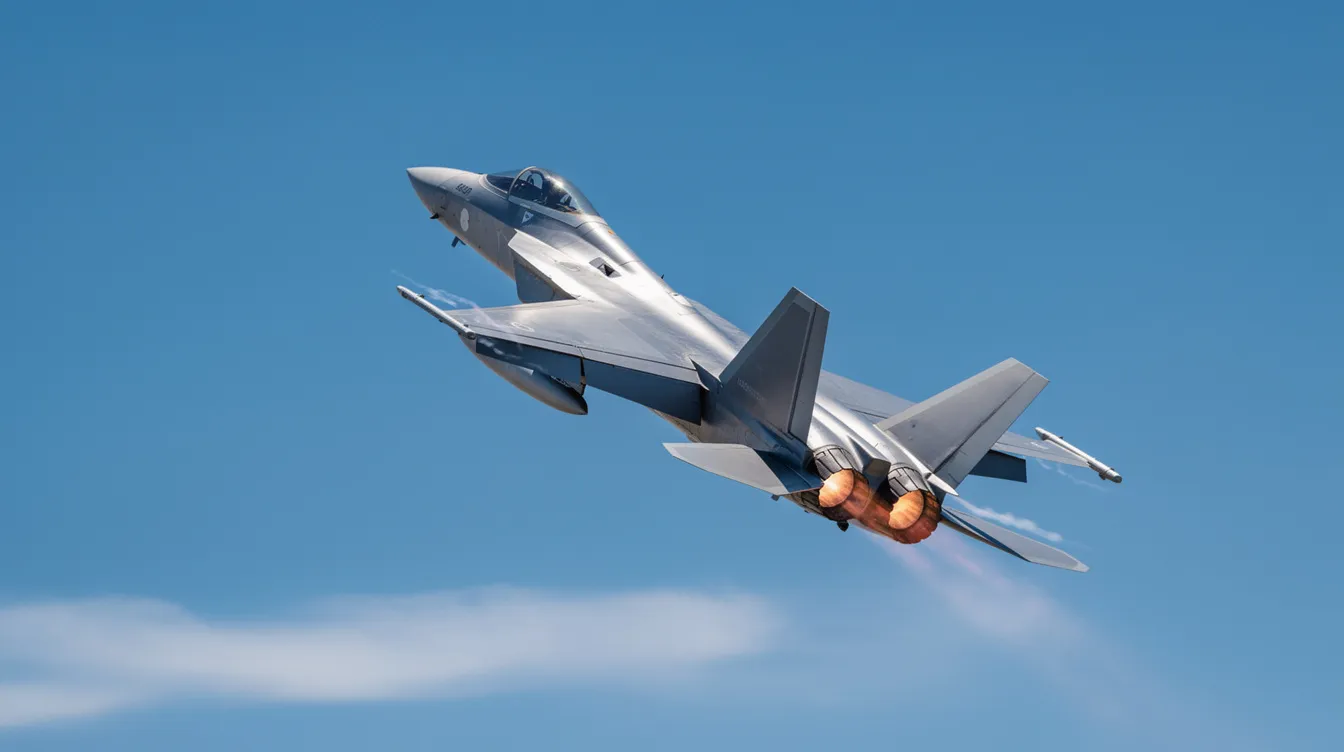
The technology behind modern jet fighter aircraft does more than shape national defense—it defines what precision, readiness, and control look like at the highest level. For executives and high-net-worth travelers, the parallels are striking: the same engineering principles that enable a fighter pilot to dominate contested skies now underpin the private aviation experience you rely on.
This article explores the evolution, technology, and missions of modern jet fighter aircraft, and reveals how their innovations shape the private aviation experience for executives and high-net-worth travelers. Whether you are an aviation enthusiast or a discerning flyer, understanding these advancements offers insight into both national defense and the future of luxury travel.
Executive Overview: Why Modern Fighter Jets Matter to Today's Traveler
Air superiority is the doctrine of controlling the skies before the adversary even knows you are there. Air dominance means owning the tempo-deciding when, where, and how engagements unfold. For a discerning traveler, the calculus is remarkably similar. You don't wait in line. You don't yield control of your schedule to an airline hub-and-spoke system. You fly on your terms.
Consider the timeline. A USAF Quick Reaction Alert unit can scramble an F-22 Raptor from hangar to airborne in under fifteen minutes, with advanced systems and procedures added over time to sharpen readiness-mission planned, systems armed, pilot strapped in. A BlackJet Jet Card member arranging a last-minute New York-to-London or Dubai-to-Geneva flight experiences a civilian version of that same operational urgency: booking confirmed through 24/7 digital tools, aircraft positioned, crew briefed, customs coordinated-all dramatically faster than any commercial alternative. Jet Card programs offer prepaid access to private jets, and BlackJet offers both 25-hour and 50-hour Jet Card options designed for exactly this kind of responsive deployment, built on its broader premium private jet card programs and a deep understanding of jet card membership pricing.
The strategic advantages translate directly:
Prestige through precision-not ostentatious display, but the quiet confidence of total schedule control.
Technology as an enabler, from real-time weather routing to digital booking platforms that mirror the situational awareness of a modern cockpit.
Time recaptured-hours that commercial aviation wastes in connections, security queues, and delays.
Core Missions of Modern Fighter Jets and Air Superiority in 2026
Contemporary air forces build their fleets around layered capabilities designed for modern air combat across diverse threat environments. Each aircraft type serves a specific role, and together they form an integrated system.
Air superiority fighters like the F-22 Raptor secure control of the skies using stealth, supercruise, and beyond-visual-range missiles. The F-15 Eagle is an air superiority fighter that has anchored the USAF for decades. The Su-35S offers formidable range and agility but lacks stealth.
Multirole fighters perform both air-to-air and air-to-ground missions. The F-35 Lightning II, Rafale, and Eurofighter Typhoon shift seamlessly between precision strike and aerial engagement.
Long range strike and escort missions demand high internal fuel, aerial refueling, and the endurance to operate deep behind enemy lines. The F-15EX and carrier-capable F-35C fill these roles, just as ultra-long-range business aircraft fill the niche for best long range private jets for sale in the civilian market.
Electronic warfare jets like the EA-18G Growler disrupt enemy radar and communications, supporting allies in suppression of enemy air defenses and navy carrier-based operations.
The A-10 Thunderbolt II provides close air support for ground troops, while strategic bombers deliver heavy payloads against ground targets.
Drones and autonomous "loyal wingman" platforms now operate alongside manned fighters, extending reach and survivability in contested skies.
Modern jet fighters must balance speed, maneuverability, and advanced sensors for combat success-a requirement that has shaped every generation of aircraft built since World War II.
From World War II to the Jet Age: How Fighters Became "Modern"
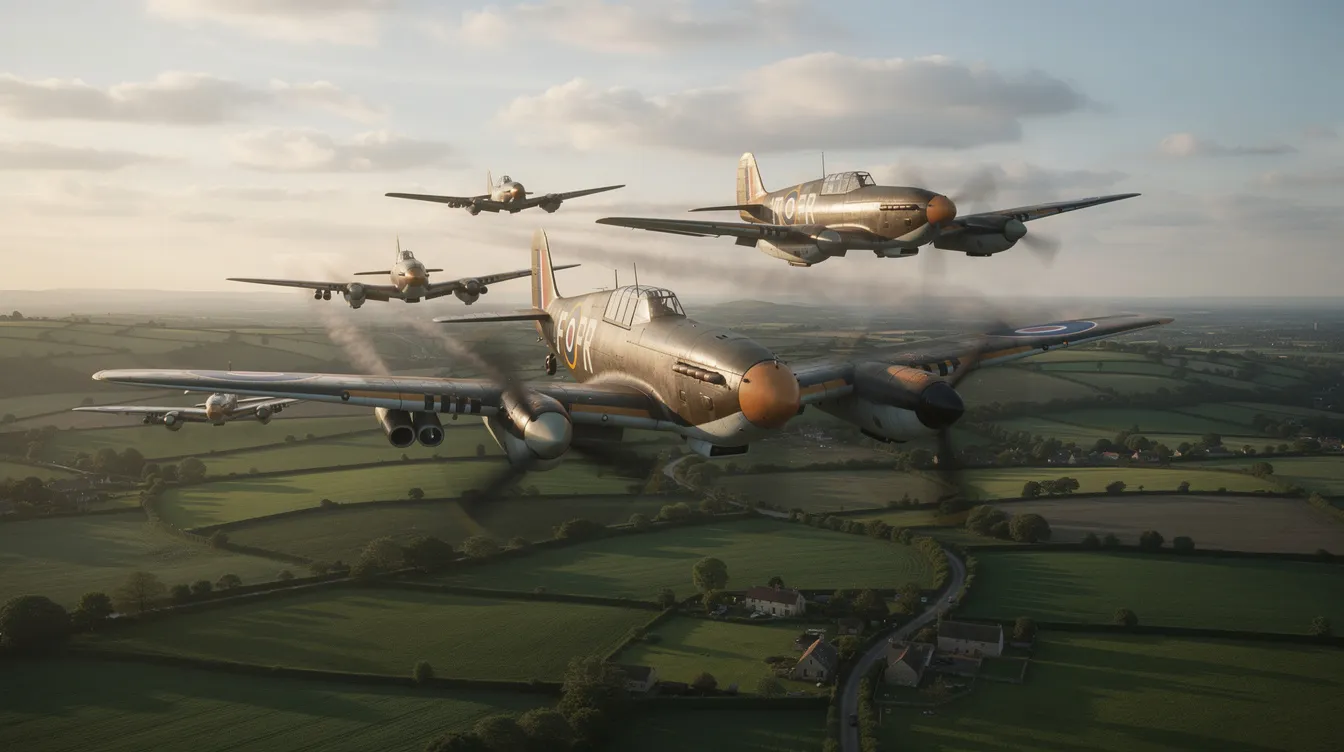
The history of air combat is a history of accelerating innovation. Piston-engine fighters of World War II-the P-51 Mustang, Bf 109, Spitfire-proved that air superiority was not optional. The Battle of Britain and the strategic bombing campaigns over Europe demonstrated that without escort fighters, bombers were fatally vulnerable.
The jet age arrived in September 1944 with the German Me 262 and the British Gloster Meteor, which showed the speed advantage of jet propulsion but suffered from primitive avionics and limited reliability. The Korean War forced jet-versus-jet combat into the open, with the F-86 Sabre and MiG-15 clashing at near-Mach speeds, introducing afterburners, swept wings, and early missiles, technologies that would eventually influence today’s best long range private jets for sale built for nonstop intercontinental missions.
Key eras and their defining leaps:
1950s–1960s: Guided missiles replace guns as primary weapons; radar fire control matures.
Vietnam War and Arab–Israeli wars: Missile-only doctrine fails at close range, restoring the gun and balanced air combat training.
1970s–1990s: Fly-by-wire controls, relaxed stability, and multirole flexibility define fourth-generation fighters.
Modern jet fighters are categorized by generations based on technology advancements-each era building on lessons paid for in combat, much as the latest newest private jet innovations reflect iterative advances in range, safety, and cabin technology.
Fourth, Fifth, and Sixth-Generation Fighters: Capabilities and Examples
Modern jet fighters are categorized by generations based on technology advancements. The term "generation" is a convention used by analysts and air forces rather than an official standard, but it provides a useful framework for understanding capabilities.
Fourth-generation fighters (F-16C/D, F/A-18C/D, MiG-29, Su-27) introduced digital avionics, superior maneuverability, and multirole flexibility. The F-16 Fighting Falcon has over 2,100 units in operation worldwide-a legacy of proven adaptability, mirrored in how many UK private jets for sale adapt military-grade engineering for business travel.
4.5-generation fighters incorporate advanced radars but lack full stealth characteristics. The F-16V with its APG-83 AESA radar, Rafale F4, and Eurofighter Typhoon Tranche 3 represent this bridge, adding options like conformal fuel tanks and modern weapons integration—an evolutionary approach similar to upgrading private jets for sale under 10 million with new avionics and efficiency improvements.
Fifth generation fighters focus on stealth and sensor fusion. The F-22 can supercruise at Mach 1.8 without afterburner. The F-35 has a radar cross-section equivalent to a golf ball. The Chengdu J-20, designed in Japan's regional competitor China, has a weapons payload of 24,000 lbs. The Su-57 rounds out this class. Fifth-generation fighters use radar-absorbent materials to reduce detectability, and low-observable stealth minimizes radar cross-sections to evade detection. Fifth-generation stealth fighters feature advanced AESA radars and sensor fusion capabilities. Modern jet fighter aircraft rely on fifth-generation capabilities as the benchmark.
Sixth-generation programs are now in development. The USAF awarded Boeing the NGAD contract for the F-47; only limited details are public, but the program is expected to field around 200 manned fighters alongside over 1,000 collaborative combat aircraft, clarifying its intended scale and role and echoing the rapid pace of newest private jet innovation in the civilian sector. The UK–Italy–Japan GCAP/Tempest targets service by 2035 to replace the Typhoon. The Franco–German–Spanish FCAS aims further ahead into the 2040s. These future platforms will integrate AI, directed energy weapons, and adaptive cycle engines.
Key Design Pillars: Stealth, Sensors, Engines, and Networked Warfare
Modern fighters are systems-of-systems where airframe, propulsion, sensors, and networks function as a unified whole. Stealth characteristics are fundamental to modern air combat effectiveness, but they represent only one pillar of a much broader architecture.
Stealth: Faceted surfaces, internal weapons bays, edge alignment, and radar-absorbent coatings reduce detection. Infrared signature management further enhances survivability.
Sensors: Active electronically scanned array radars provide high-resolution mapping and fast target acquisition. Sensor fusion aggregates data from multiple sensors into a single tactical picture that helps identify and prioritize threats. Helmet-mounted display systems project flight data directly onto the pilot's visor, enabling pilots to "see through" the aircraft. Modern fighters are now considered flying sensor networks rather than just aircraft, much as leading business aviation providers like NetJets leverage advanced avionics across fleets discussed in NetJets jet card cost guides.
Propulsion: High-performance turbofan engines provide thrust, efficiency, and supercruise capability. Thrust vectoring enhances maneuverability particularly at high angles of attack. Adaptive cycle engines under development for the future promise optimized performance across flight regimes, while related future systems are also being designed to support weapons or vehicles traveling at five times the speed of sound—the same pursuit of performance that defines the top 10 best private jets in today’s business aviation market.
Controls: Fly-by-wire technology enhances the control of modern jet fighters. Fly-by-wire systems make rapid flight control adjustments for stability and agility, replacing mechanical linkages with electronic precision.
Networking: Networked communications allow fighters to share information securely during missions via data links like Link-16 and MADL. Network-centric warfare enables real-time sharing of targeting data among aircraft, making every fighter a node in a larger combat cloud essential for air dominance in complex theaters.
Modern Air Combat in Practice: Case Studies and Tactics
Modern air combat unfolds nothing like the cinematic dogfights most people imagine. Engagements typically begin at long range-detection via networked sensors, identification through data links, and beyond-visual-range missile shots-often before the adversary even knows a fight has started. Sensor fusion in fifth-generation fighters presents a cohesive view of the battle environment, compressing decision timelines.
Key tactical themes shaping how pilots fight and how air forces train today:
See first, shoot first, win first-early detection through stealth and sensors decides outcomes before merge.
Sensor fusion over raw speed or maneuver-combining radar, infrared, and electronic warfare data gives a decisive edge.
Electronic warfare and spectrum dominance-jamming, deception, and secure communications shape the battlefield.
Manned-unmanned teaming-loyal wingman drones extend reach and absorb risk ahead of manned platforms.
Adaptability under contested operations-multirole planning, countermeasures, and signature management keep options open.
These operational lessons reinforce the same principles that define elite private aviation: redundancy, meticulous planning, and disciplined risk management.
From Combat to Cabin: How Fighter Jet Technology Shapes Private Aviation
Military jet technology influences civilian aircraft design in ways most travelers never see but always feel. Fly-by-wire controls that originated in fighters now deliver smoother handling in business jets. Advanced avionics from military jets improve civilian flight safety through glass cockpits, synthetic vision, and terrain awareness systems. Military innovations enhance civilian engine efficiency and performance, yielding quieter, longer-range, more fuel-efficient private jets that increasingly resemble the newest private jet models in their blend of technology, comfort, and sustainability.
Civilian aircraft benefit from military-developed navigation systems-GPS integration, inertial navigation, and collision-avoidance technology all trace their lineage to combat aircraft programs, and these systems now underpin many types of private jets for every traveler across the modern business aviation fleet. Even stealth technology from military jets influences civilian aircraft design through composite materials and aerodynamic refinements that reduce drag and noise.
The mission differs-fighter jets aim for air superiority and lethality, while private jets prioritize passenger comfort and schedule control-but the engineering DNA is shared across everything from small private jets for luxury travel to the cheapest private jet options that open business aviation to a wider audience. Private aviation safety relies on checklists and standard operating procedures, a discipline inherited directly from air force maintenance culture. The same rigor that certifies a privately owned military jet for flight informs how top-tier operators maintain their fleets, whether they operate large-cabin aircraft or focus on the best small private aircraft optimized for specific missions.
BlackJet Jet Cards: Precision Access Inspired by Military Readiness
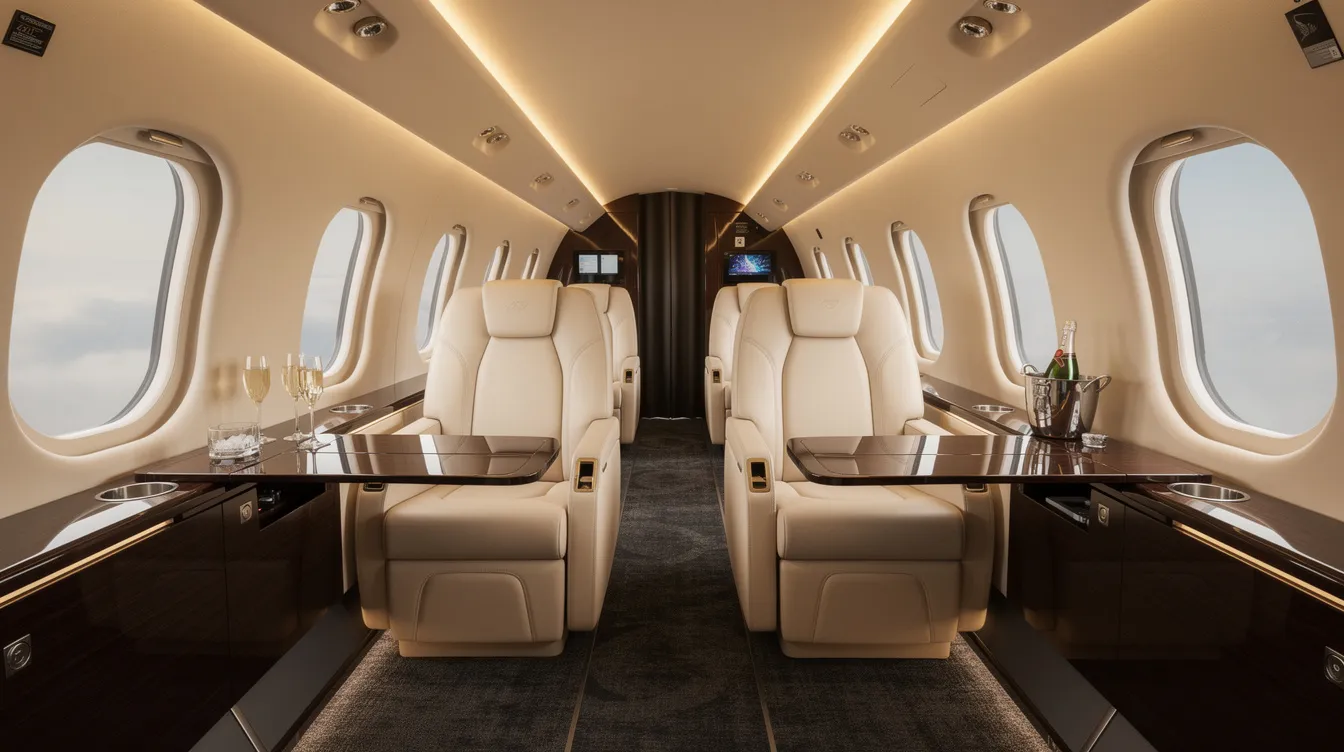
BlackJet's Jet Card model is built around readiness and rapid deployment-principles borrowed directly from how an air force prepares assets for immediate tasking. Instead of scrambling fighters, you're deploying a vetted aircraft to respond to your schedule, whether you fly a 25- or 50-hour program today or are evaluating a 100 hour jet card cost guide for even greater flexibility.
Jet Card programs simplify booking and reduce ownership complexity. Prepaid 25-hour and 50-hour blocks provide guaranteed availability across multiple cabin classes, and many clients benchmark these against broader 50 hour jet card cost data and comprehensive jet card pricing guides before committing.
Jet Card members benefit from 24/7 digital booking tools that function like a private operations center-real-time support, automated notifications, and data-driven dispatch.
Contingency management mirrors fighter operations: alternative routing, aircraft substitution, and weather analysis keep your mission on track.
Consider a scenario: a CEO needs an urgent transatlantic trip during a winter storm in September. BlackJet leverages its vetted fleet, real-time weather systems, and backup aircraft positioning to deliver the flight-no different in spirit from an operations center rerouting assets around a threat. Compared to ad hoc charter, a Jet Card offers cost predictability and priority access, which is why many travelers evaluate jet card cost per hour when comparing programs and seek out the best jet cards for frequent flyers to maximize value. Compared to full ownership, it eliminates hangar fees, crew management, and maintenance planning while preserving the same on-demand availability.
Frequently Asked Questions (FAQs) about Modern Jet Fighter Aircraft and Private Aviation
What defines an air superiority fighter?
An air superiority fighter is built to gain and hold control of airspace by defeating enemy fighters. Its primary mission is air combat rather than ground attack or bombing.
How do multirole fighters differ from attack aircraft?
Multirole fighters perform both air-to-air and air-to-ground missions, providing flexibility. Attack aircraft focus primarily on ground attack and close air support for troops.
Can civilians fly in fighter jets?
In limited cases, civilians may fly in demilitarized trainer or experience aircraft under strict safety protocols. Operational military fighters are restricted to military personnel.
Can private jets match fighter jet speed?
Private jets are not designed to match the supersonic speeds of fighter jets. Fighters prioritize performance and combat capabilities, while private jets focus on comfort, range, and safety.
How does military technology influence private jets?
Military aviation innovations in avionics, engine efficiency, navigation, and materials have influenced civilian aircraft design, improving safety, performance, and comfort in private jets.
How does BlackJet ensure safety compared to commercial airlines?
BlackJet uses rigorous operator vetting, certification standards, third-party safety audits, and real-time support to maintain safety levels comparable to commercial aviation.
What are the benefits of BlackJet Jet Card programs?
Jet Card programs provide prepaid, guaranteed access to private jets with simplified booking, 24/7 support, and carbon-neutral flights, offering flexibility and cost predictability.
How do sustainable aviation practices impact private jet travel?
Sustainable aviation initiatives like carbon offsetting reduce the environmental impact of private flights, allowing travelers to fly responsibly without compromising convenience or luxury.
What role does technology play in modern private aviation?
Technology enables real-time booking, weather routing, operational transparency, and safety monitoring, paralleling the advanced systems used in modern fighter jets.
Why are Boeing and other aerospace companies important in jet fighter development?
Companies like Boeing develop and manufacture advanced fighter aircraft and propulsion systems, driving innovation that benefits both military and civilian aviation sectors.
Safety, Sustainability, and Technology: A Military-Grade Mindset for Private Flyers
Elite air forces and elite private aviation programs share three pillars: safety, discipline, and continuous improvement. Sustainable aviation and carbon offsetting are important considerations for the future of aviation-and BlackJet treats them as present-tense obligations, not aspirations.
BlackJet uses vetted operators meeting private aviation safety benchmarks, paralleling how air forces certify squadrons before granting combat status. Safety is strengthened through independent verification and audits using standards like ARG/US and Wyvern, whether the trip involves light jets or large private jets for 20 passengers.
Experienced crews undergo recurrent training to reduce operational risk-the same commitment to trainers and proficiency checks that keeps fighter pilots sharp across decades of service, and that underpins the safety standards highlighted in many best jet card for frequent flyers comparisons.
Every BlackJet flight is carbon neutral through offset programs supporting verified climate projects. This reflects a forward-looking view of sustainable aviation that matches the precision and confidence BlackJet brings to every other detail, even for travelers focused on budget-friendly private aircraft options and more economical mission profiles.
Digital booking tools and real-time operational technology give clients situational clarity comparable to what pilots experience in modern cockpits-full awareness, total control, zero guesswork.
The languages of air combat and private aviation may differ, but the underlying grammar is identical: preparation defeats uncertainty, redundancy defeats failure, and technology amplifies human judgment.
Discover how BlackJet can reshape your travel with the same readiness, safety, and precision that define the world's most advanced air forces. Explore BlackJet Jet Card membership and experience what it means to fly with military-grade confidence.


 Sign up with google
 Sign up with Apple