For high-net-worth individuals and executives, private jet access is a strategic advantage—not merely a luxury indulgence. The ability to fly on your schedule, access smaller airports, and avoid waiting in lines or delays common with commercial air travel translates directly into business agility and quality of life. Yet the question of how to acquire this access deserves careful analysis before signing a purchase agreement.
Why “Private Jet for Purchase” Isn’t Always the Smartest Move
Consider what a private jet for purchase actually demands: a $7–$25 million outlay for a midsize to large aircraft, plus $1–$3 million annually in operating costs covering crew, hangar, insurance, maintenance, and fuel. For someone flying 25–50 hours per year, this represents a staggering cost per flight hour that ownership cannot justify.
The private jet buying process is often complex, involving multiple steps—much like a high-end real estate transaction. Each step, from mission analysis and pre-buy inspections to closing procedures, requires careful attention to ensure a smooth acquisition. Engaging experts such as aviation brokers and lawyers is critical to avoid pitfalls and save money throughout this intricate process. Typically, completing a private jet transaction takes six to eight weeks, during which financing arrangements are often secured, covering 70–85% of the purchase price with down payments ranging from 15–30%.
A New York–London executive flying 60–80 hours annually illustrates the math perfectly. Owning even a pre-owned midsize jet would mean $1.5–$2.5 million in yearly overhead for limited utilization. A 50-hour BlackJet Jet Card, by contrast, delivers the same access at a fraction of the commitment—without aircraft depreciation, crew management, or downtime risks.
The strategic value is clear: private travel cuts total journey time by 2–3 hours per trip compared to commercial first class, factoring in security, connections, and ground transport. Private aviation opens access to over 5,000 U.S. airports versus roughly 500 served by scheduled airlines. BlackJet provides this advantage through carbon-neutral flights, safety-certified operators, and 24/7 digital booking—positioning its premium private jet card programs as the modern alternative to purchase.
Understanding Private Jet Purchase Options in 2026
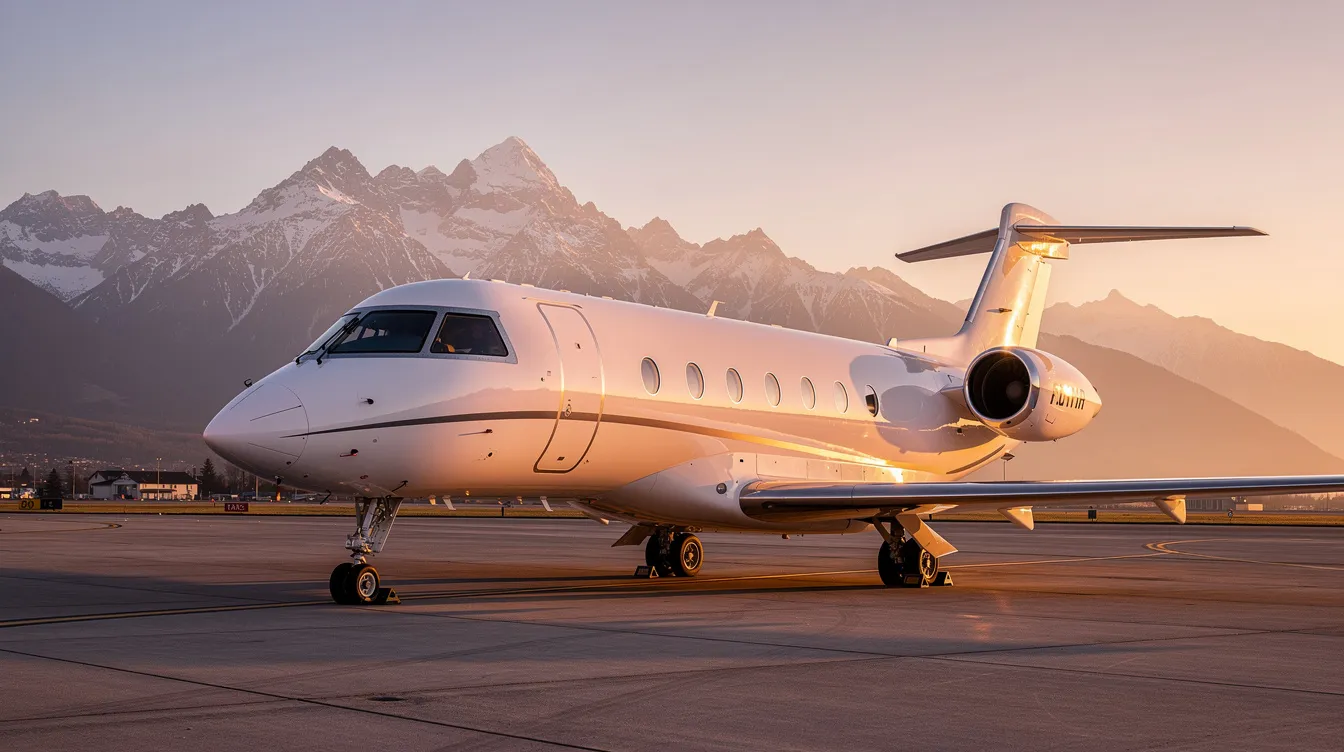
In 2026, searching “private jets for sale” reveals more than outright acquisition. The market now encompasses full ownership, fractional ownership, and prepaid Jet Card access—each serving different utilization profiles. Many companies also offer specialized services to assist with aircraft acquisitions and trading, guiding buyers through the acquisition process, vetting, and negotiations.
Concrete 2026 price ranges for new aircraft begin with very light jets like the Cirrus Vision Jet SF50 around $2.5–3.5 million. Light jets such as the Cessna Citation M2 Gen2 range from $5–6 million, while midsize options like the Embraer Praetor 500 or Citation Latitude reach $18–20 million. Large-cabin jets including the Gulfstream G600 or Bombardier Global 6500 exceed $50 million, with ultra-long-range models pushing past $75 million; understanding the broader private jet price list and access models is essential context for buyers.
Post-pandemic demand initially spiked pre-owned prices by 20–30%, but the market has stabilized as inventory from fractional programs and charter operators increased. This shift accelerated flexible programs designed to eliminate capital lock-up. Buyers flying under approximately 150 hours yearly—representing 70–80% of private aviation users—are financially superior with jet cards or on-demand charter rather than aircraft purchase.
The total number of private jets in operation worldwide is approximately 24,270 as of July 2024, reflecting the growing accessibility and popularity of private aviation, which is also pushing for more sustainable practices.
Full Ownership: What Buying a Private Jet Really Involves
Acquisition Costs
Full ownership delivers maximum control over scheduling, customization, and aircraft selection. It also requires the deepest financial and operational commitment of any access model.
Acquisition costs vary dramatically: a 2026 pre-owned Cessna Citation CJ3+ runs approximately $7–8 million, while a new Gulfstream G700 exceeds $75 million. Financing typically carries 4–6% interest rates, with title transfers and escrow processes managed through specialized brokers. Pre-owned jets provide a lower initial investment but may incur higher maintenance costs than new jets.
Multiple ownership structures exist, including sole ownership, LLCs, and trusts, which help manage liability and confidentiality. Business owners may offset private jet costs by making the aircraft available for charter when not in use, creating potential revenue streams to balance expenses.
A pre-purchase inspection (PPI) is critical in the acquisition process to identify any hidden damage or needed repairs.
Annual Fixed Costs
Annual fixed costs aggregate $500,000–$1.5 million regardless of flight hours, including:
Hangar: $60,000–$150,000
Crew salaries: Captain $120,000–$220,000, First Officer $80,000–$150,000
Insurance: $25,000–$80,000
Pilot training and recurrent simulators: $30,000+ per pilot
Inspection fees and regulatory compliance costs
Variable Costs
Variable costs add significantly per flight hour:
Fuel: $1,800–$4,000 depending on aircraft size
Maintenance reserves and repairs: $500–$1,500 per hour
Landing and handling fees: $300–$1,000 per stop
Owners must manage cash flow carefully, as these substantial ongoing operating costs extend well beyond the initial purchase price.
Regulatory Responsibilities and Safety Standards
Private jet operators are required to adhere to strict safety standards set by aviation authorities, including the Federal Aviation Administration (FAA) in the United States, which mandates regular inspections and maintenance to ensure compliance. The International Business Aviation Council (IBAC) offers a safety management system (SMS) framework that operators can implement to enhance safety practices and risk management. Many operators also participate in recognized safety programs such as ARGUS Platinum and Wyvern Wingman, ensuring audited maintenance records and experienced, ATP-rated pilots.
Real-Time Flight Support and Mobile Booking Platforms
Real-time flight support services are essential for private jet travelers, providing immediate assistance for any issues during a flight. This includes tracking flight status, managing itinerary changes, and coordinating ground services to ensure seamless travel. Many private aviation companies offer 24/7 real-time support to enhance the overall experience.
Mobile booking platforms allow users to book flights quickly and conveniently from smartphones or tablets, often featuring real-time availability, instant booking confirmations, and itinerary management on the go. This technology makes private jet travel more accessible and efficient, contrasting sharply with the complexities of managing owned aircraft logistics.
Depreciation and Resale Considerations
Depreciation alone erodes 5–10% of the purchase price annually, with some aircraft losing 40–50% of value in the first five years. When considering the full lifecycle of ownership, it’s important to evaluate trade and selling options, as factors such as pre-buy inspections, operational risks, and market demand can significantly impact resale value and the ease of selling or trading your aircraft, especially if you are exploring premium private jets for sale in the UK or other specific markets.
Tax considerations for private jet ownership can be complex, with potential benefits for business usage, such as bonus depreciation.
BlackJet’s model eliminates these burdens entirely. Clients pay only for actual flight hours through a Jet Card, avoiding aircraft depreciation, staffing gaps, inspection groundings, and regulatory complexity.
Alternatives to Buying: Jet Cards, Fractional Ownership, and Charter
For travelers flying 25–200 hours annually, asset-light alternatives consistently outperform full purchase on both economics and flexibility. These programs represent the fastest-growing segment of private aviation.
Jet card programs offer prepaid blocks of flight hours on designated aircraft types at fixed hourly rates, providing flexibility for frequent travelers.
Fractional Ownership
Fractional ownership offers a middle ground: purchasing a 1/8 share of a midsize jet like the Embraer Praetor 500 costs $1–2 million upfront, plus $100,000–$200,000 in monthly management fees and $5,000–$8,000 per occupied hour. This yields approximately 50–100 hours of annual access but locks owners into a single fleet type with shared availability during peak travel periods, which is why many frequent flyers compare fractional programs with the best jet cards for frequent travelers before committing.
On-Demand Charter
On-demand charter provides zero commitment, with customers selecting specific aircraft and routes per trip. Typical hourly rates range from $3,000–$4,500 for light jets to $6,000–$10,000 for midsize and $8,000–$12,000+ for large-cabin. However, repositioning fees of 10–20% and variable pricing tied to demand and fuel costs reduce predictability, particularly for travelers who might otherwise simply buy a seat on a private jet via shared or semi-private services.
Jet Cards
Jet cards deliver the optimal balance for most frequent flyers. Jet card programs offer prepaid blocks of flight hours on designated aircraft types at fixed hourly rates, providing flexibility for frequent travelers.BlackJet’s 25-hour and 50-hour prepaid blocks offer fixed hourly rates across cabin categories, guaranteed availability within 24–48 hours on most routes, and no repositioning fees on the core network, aligning closely with broader market jet card cost and membership pricing structures.
For someone flying 40 hours annually, a 50-hour BlackJet Jet Card totals approximately $300,000–$400,000, depending on cabin selection—versus $1.2 million or more in ownership overhead, including fixed costs, variable expenses, and depreciation. Readers evaluating this option can benefit from a deeper look at the 50-hour jet card cost and value. Critically, BlackJet members can select light jets for regional hops and large-cabin aircraft for transoceanic flights without maintaining multiple airframes.
Comparison Table
Access Model | Upfront Cost | Ongoing Fees | Hourly Rate | Flexibility/Commitment |
|---|
Fractional Ownership | $1–2M (1/8 share) | $100k–$200k/month + $5k–$8k/hr | Locked to fleet type | 50–100 hrs/year, shared access |
On-Demand Charter | None | None | $3k–$12k+ | Per trip, variable pricing |
Jet Cards | Prepaid block ($300k–$400k for 50 hrs) | None (fixed hourly rate) | Fixed by cabin size | 25–50+ hrs/year, high flexibility |
Choosing the Right Aircraft Category (Even If You Don’t Buy)
Understanding aircraft classes is essential whether you purchase or access through programs. The right aircraft for each mission maximizes comfort, efficiency, and value.
Very Light and Light Jets
Very Light Jets (VLJs) are the most budget-friendly jets on the market, designed for efficiency and affordability, making them perfect for short-haul flights. VLJs and light jets—including HondaJet, Cessna Citation M2, Beechcraft, Hawker variants, and Embraer Phenom 300—serve 2–6 passengers on trips under approximately 1,500 nautical miles.
Light jets, including the Cessna Citation Mustang and Embraer Phenom 100, strike an ideal balance of luxury, comfort, and affordability, making them perfect choices for business travel or family trips. The Embraer Phenom 100, in particular, is known for being easy to operate, with user-friendly systems and manageable maintenance, making it especially suitable for owners. Travelers with tighter budgets can also explore the cheapest private aircraft options. These aircraft excel for regional business travel with a maximum range sufficient for routes like Miami–New York or Los Angeles–Denver.
Midsize and Super-Midsize Jets
Midsize jets, like the Challenger 350 and Citation Latitude, expand the mission envelope to approximately 2,500 to 3,000 nautical miles, providing enhanced productivity features at higher operating costs. Midsize and super-midsize jets—such as Citation Latitude, Bombardier Challenger 3500, and Gulfstream G280—accommodate 6–9 passengers with range for U.S. coast-to-coast or intra-European flights. Turboprop alternatives may suffice for shorter distances at lower cost.
Large-Cabin, Long-Range Jets
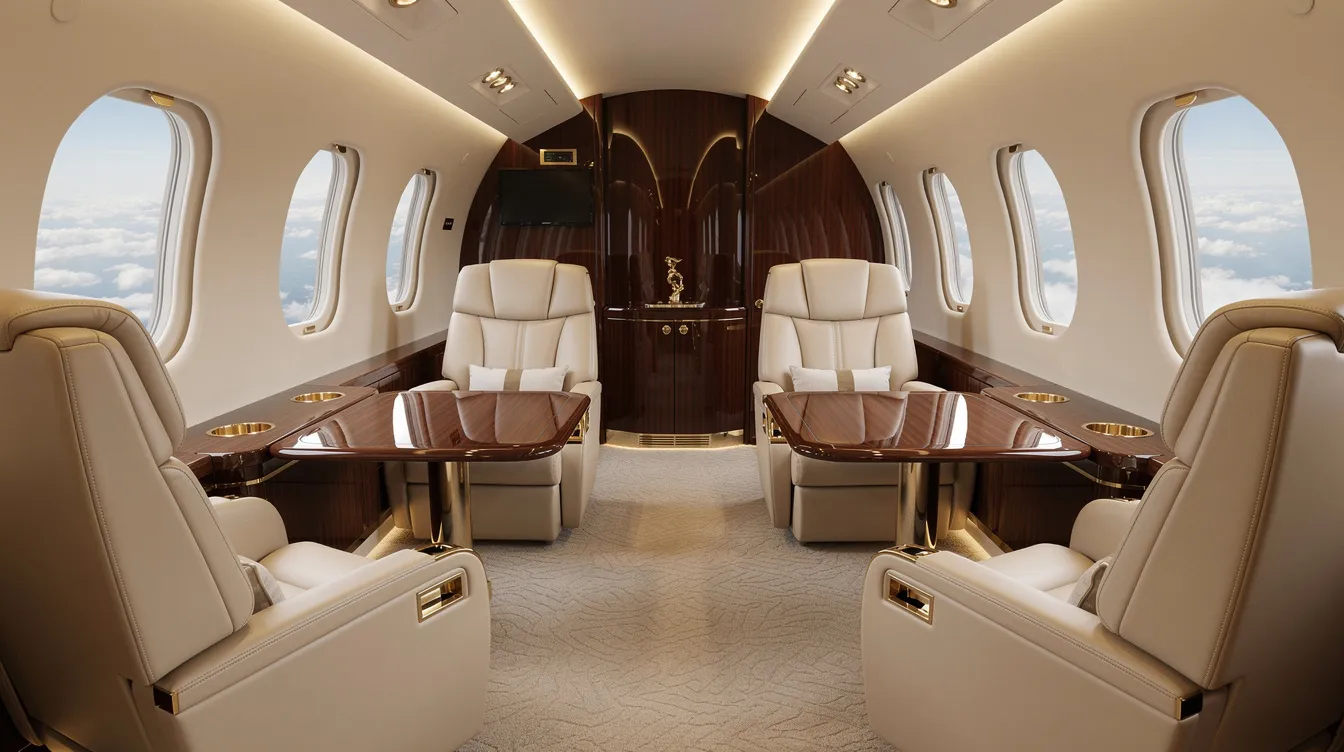
Large-cabin jets, such as the Gulfstream G550 and Global 6000, deliver the range and cabin volume necessary for transcontinental flights, though they come with significantly higher operating costs. Large-cabin, long-range jets—including Gulfstream G600, Dassault Falcon 8X, and Global 7500—carry 10–14 passengers with lie-flat beds and premium galleys. These aircraft enable nonstop New York–Dubai or London–Singapore missions, often featuring Rolls-Royce CorporateCare or APU-enrolled service programs ensuring reliability, and they sit squarely among the best long-range private jets for sale.
Example Scenarios
Consider two scenarios: A family of six flying Aspen–Los Angeles regularly (700 nautical miles) thrives on light or midsize jets for quick 2-hour hops, avoiding Denver connections. A board team flying New York–London monthly (3,000 nautical miles) demands large-cabin aircraft for productivity during 7-hour crossings.
BlackJet Jet Card members select the appropriate cabin size per trip through the mobile platform, mirroring the flexibility of a diverse owned fleet without the capital expense of acquiring multiple aircraft.
Safety, Sustainability, and Technology: The New Standard in Private Jet Access
Safety
For sophisticated travelers, safety, sustainability, and technology now matter as much as the aircraft itself. These factors differentiate premium access programs from basic charter.
Safety represents BlackJet’s foundation. Every operator in the network meets leading third-party standards—ARGUS Platinum, Wyvern Wingman, or IS-BAO certification. Many private jet operators participate in safety programs such as the Air Charter Safety Foundation (ACSF) and the ARGUS Platinum rating, which assess and certify the safety practices of aviation companies, ensuring they meet high safety standards. This ensures audited maintenance records, experienced ATP-rated pilots with 10,000+ flight hours, and fatigue-risk management systems. Clients can view safety certificates directly in-app before confirming any flight. Additionally, adherence to FAA regulations mandates regular inspections and maintenance, reinforcing operational safety.
Sustainability
Sustainability has become non-negotiable for conscious travelers. All BlackJet flights are carbon neutral as standard, using verified carbon offsets at no additional cost. Carbon offset programs are becoming a common practice in the aviation industry, allowing companies and individuals to compensate for their carbon emissions by investing in environmental projects. The company partners on sustainable aviation fuel initiatives as the industry targets 10% SAF blends by 2030 per ICAO guidelines. Transparent reporting allows clients to track their environmental impact.
Technology
Technology transforms the booking experience. BlackJet’s 24/7 digital platform—mobile and web—delivers instant quotes, aircraft selection, and real-time tracking. Mobile booking platforms include features such as real-time availability, instant booking confirmations, and itinerary management on the go, making private jet travel more accessible and seamless. A dedicated concierge team handles complex multi-leg itineraries requiring human expertise.
Consider booking a Zurich–Dubai flight: the BlackJet app completes the process in under 10 minutes, displaying aircraft options, safety certifications, and automatic emissions offsets. Contrast this with personally managing an owned jet’s compliance, crew scheduling, and delivery logistics across borders—complexities that the BlackJet 25+ Hour Jet Card is specifically designed to remove.
BlackJet Jet Card vs Buying a Private Jet
Jet Card Features
For travelers flying 25–200 hours annually, a direct comparison between purchase and BlackJet membership reveals clear advantages for the Jet Card model.
BlackJet’s 25-hour and 50-hour Jet Cards offer prepaid blocks with fixed hourly rates across cabin categories. Guaranteed availability, no repositioning fees on typical routes, and transparent terms eliminate the uncertainty of ad-hoc charter, and they compare favorably with broader market 25-hour jet card offerings and costs. Google any competing program—BlackJet’s combination of flexibility and value stands apart.
Cost Comparison Example
Concrete comparison for 75 annual flight hours:
Light jet ownership: $5–8 million acquisition + $1.2 million/year operating costs, including 40% unused capacity
BlackJet alternative: 50-hour Jet Card ($300,000–$350,000) + 25 pay-as-you-go hours ($150,000) = approximately $500,000 total, which sits well below typical 100-hour jet card cost structures while preserving flexibility
The savings exceed $700,000 annually while eliminating 5–7% depreciation ($300,000–$500,000 value erosion), downtime risk (10–20% fleet unavailability for maintenance), and exposure to unscheduled costs.
Built-in Benefits
Built-in benefits include carbon-neutral flights, vetted operators, optional bespoke catering, and 24/7 live human support for last-minute changes. Members' scale usage goes up or down year-to-year without liquidating assets or renegotiating contracts.
How to Decide: Framework for Buyers and Frequent Flyers
Key Decision Factors
The buy-versus-access decision requires honest assessment of several factors beyond budget alone. Begin by answering these questions:
Projected annual flight hours for 2026–2028
Typical trip distances: Regional under 1,500nm or international beyond 3,000nm
Desired cabin size and passenger count requirements
Tolerance for asset risk, including depreciation and maintenance surprises
Interest in sustainability and carbon-neutral operations
Lifetime Value Considerations
For most individuals and executives flying under 200 hours annually, a Jet Card or membership proves more economical and lower-risk than purchasing outright. Understanding jet card pricing structures and fees helps clarify that ownership’s breakeven threshold sits around 300–400 hours—a utilization level few private travelers reach.
Owning a private jet is generally recommended if you fly over 350-400+ hours per year.
Expert Guidance
Consider lifetime value: business agility, reduced travel friction, and enhanced privacy improve outcomes beyond simple cost comparison. A BlackJet aviation advisor can model different scenarios—ownership, fractional, or Jet Card—based on your actual 12-month itinerary data, ensuring the recommendation fits your specific requirements.
Frequently Asked Questions About Private Jets for Purchase and Jet Cards
Is it better to buy a jet or use a Jet Card if I fly under 100 hours a year?
Jet cards deliver 50–70% savings versus ownership for sub-100-hour travelers. Without fixed costs eating into your budget regardless of usage, you pay only for flights taken while avoiding depreciation and regulatory burdens, and a detailed look at jet card cost and pricing can quantify those savings.
What aircraft can I access through BlackJet if I don’t own one?
BlackJet provides access across light jets (Citation M2, Phenom 300), midsize (Citation Latitude, Praetor 500), and large-cabin (Gulfstream G600, Global 6500) from vetted operator inventory, including models that rank among the largest private jets for sale and charter. Select the right aircraft for each mission without commitment to a single type.
How does BlackJet ensure safety if I don’t control the aircraft myself?
Every operator holds ARGUS Platinum, Wyvern Wingman, or IS-BAO certification. Pilots are ATP-rated with extensive experience, maintenance records are audited, and safety documentation is visible in-app before booking.
Are BlackJet flights really carbon neutral?
Yes. All flights include verified carbon offsets at no additional cost, with transparent reporting. BlackJet also partners on sustainable aviation fuel initiatives as SAF availability expands.
How fast can I book a flight with BlackJet compared to arranging my own jet?
The mobile platform completes bookings in under 10 minutes versus days of crew coordination, FBO arrangements, and flight planning required for owned aircraft, a marked contrast with some of the top private jet companies that still rely heavily on phone- or broker-based processes.
Conclusion: Access the Power of a Private Jet Without the Weight of Ownership
While buying a private jet makes sense for ultra-high-utilization owners flying 400+ hours annually, most discerning travelers achieve superior flexibility and economics through Jet Card access. The strategic advantages remain identical—time savings over commercial, access to thousands of airports, privacy, and customization—without capital lock-up, depreciation, or operational complexity.
BlackJet delivers guaranteed safety standards, carbon-neutral travel as standard, and technology that makes booking effortless. Explore BlackJet Jet Card membership or speak with an aviation advisor to discover how smart access can reshape your 2026–2027 travel strategy.


 Sign up with google
 Sign up with Apple