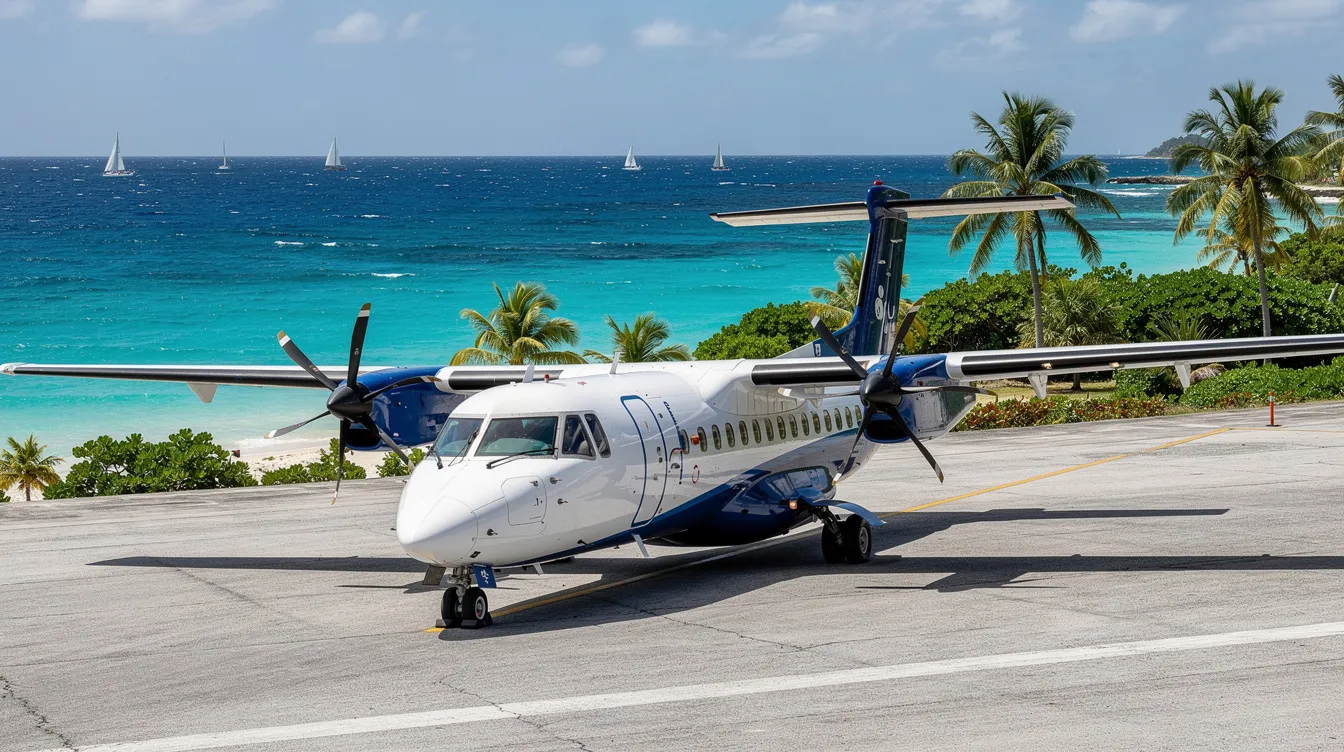
Private aviation is not a monolith. The smartest travel strategies in 2026 match the right aircraft type to each leg of a journey - and for regional, remote, and cost-conscious missions, propeller-driven aircraft remain an indispensable part of that equation. Here is why modern turboprops deserve a place in every serious private flyer's playbook.
Key Takeaways for Private Flyers in 2026
Modern turboprops and advanced piston engines keep propeller aircraft highly relevant for regional private aviation, even as light jets and larger business jets continue to evolve.
Propeller planes can use up to 50% less fuel than jets on sub-800 nm routes, directly supporting carbon-neutral strategies and lowering operating costs.
Approximately 34% of airports globally rely on turboprop aircraft, meaning propeller planes provide access to remote locations jets cannot serve - roughly one-third of the world's airfields.
On flights under 500–800 nm, door-to-door travel times between turboprops and jets often differ by only 15–30 minutes, yet cost and emissions diverge significantly.
BlackJet members typically combine jets and modern turboprops within a single Jet Card travel strategy, using each aircraft type where it is most time- and cost-effective.
What Is a Propeller Driven Aircraft and Why It Still Matters for Elite Travelers
A propeller-driven aircraft is any airplane where primary thrust comes from one or more propellers, powered either by piston engines or turboprop engines. Propeller planes are powered by piston or turboprop engines, and both categories remain essential across aviation - from training fleets to executive turboprop charters.
Piston vs Turboprop Roles
The distinction matters. Classic piston-engine propeller aircraft - like the Cessna 172, introduced in 1956 - typically cruise under 200 mph and serve mainly light, general aviation roles. Modern turboprops such as the Pilatus PC-12 NGX and Beechcraft King Air 350i cruise at around 300 knots (550 km h), bridging the gap between pistons and light jets that reach 400–470 knots. On short legs, door-to-door time can be remarkably similar.
Versatility and Access
Propeller-driven aircraft excel in versatility and economy at lower altitudes. They typically have lower operating costs than jets, deliver superior short-field performance, and can operate into secondary and remote airports near private estates, resorts, and industrial sites. Propeller planes are also often used for agricultural operations and cargo transport, underscoring their adaptability. Propeller-driven aircraft generally operate at lower speeds and altitudes compared to jets, but that trade-off unlocks access that jet aircraft simply cannot match.
BlackJet Fleet Integration
BlackJet uses propeller-driven aircraft as part of a curated fleet mix, giving members precision-matched aircraft - propeller planes or jets - for each segment of a trip, within a broader suite of premium private jet card and charter services.
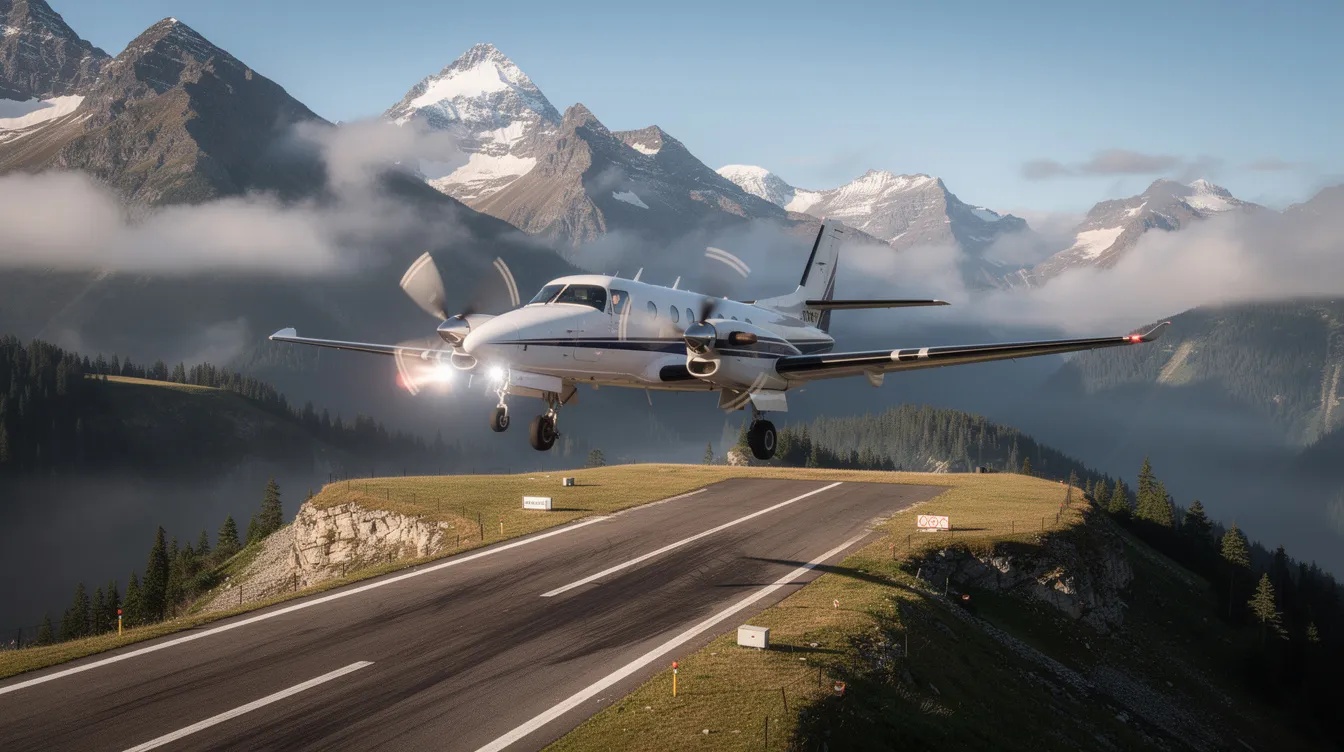
How Propeller Aircraft Generate Thrust: From Spinning Wings to Forward Motion
Propeller-driven aircraft rely on a spinning propeller to generate thrust. Each propeller blade is effectively a rotating wing - spinning wings that produce aerodynamic forces perpendicular to their motion. Because the blade is angled, that lift translates into forward force, pushing the aircraft forward. By Newton's third law, accelerating air rearward creates equal and opposite thrust.
Blade pitch and angle of attack on each section of the blade determine how much air is accelerated. Designers twist each blade along its length: near the hub, rotary motion is slower, so the blade is set at a steeper optimal angle; near the blade tips, speed is higher, and the angle is reduced to avoid inefficiency. This twist maintains efficient lift distribution from root to tip.
Constant speed propellers automatically vary blade pitch to keep engine RPM nearly constant across every flight phase - climb, cruise, and descent. This propeller control system maximizes propeller efficiency without constant pilot input. Propellers generate high static thrust, which is particularly valuable for short-field takeoff and landing capabilities.
Modern turboprops often feature scimitar-shaped propeller blades with swept blade tips to cut noise and increase propeller efficiency. These designs matter for executive cabins and noise-sensitive airports, where vibration compared to older designs has been dramatically reduced.
Blade Pitch, Fixed Pitch vs Constant Speed: How Control Translates into Performance
Blade pitch is the geometric angle of the propeller blade relative to the plane of rotation. It directly affects acceleration, climb rate, and cruise fuel efficiency.
Fixed pitch propellers, common on many training and simple piston aircraft like older Cessna 150/152 variants, are optimized for one regime:
Fine pitch (low angle): Best for takeoff and climb - moves more air at low speed, but wastes energy at cruise.
Coarse pitch (high angle): Better for high-speed cruise - less thrust at low speed, more efficient at higher airspeeds.
Fixed pitch designs force a compromise. Variable pitch propellers solve this by allowing pilots - or automated systems - to adjust blade angle for each flight phase.
With constant speed propellers, pilots set a desired RPM using the propeller lever. A governor automatically adjusts blade pitch to maintain that RPM as power and airspeed change. The result: reduced pilot workload, improved fuel efficiency, and engine protection. The piston engine or turboprop engine stays in its ideal power band, avoiding over-revving or excessive stress.
In modern single-engine turboprop aircraft, FADEC-style electronic controls manage propeller engines and blade pitch automatically. These advanced avionics systems increase safety, reduce pilot error, and ensure the propulsion system operates within precise limits at every phase of flight.
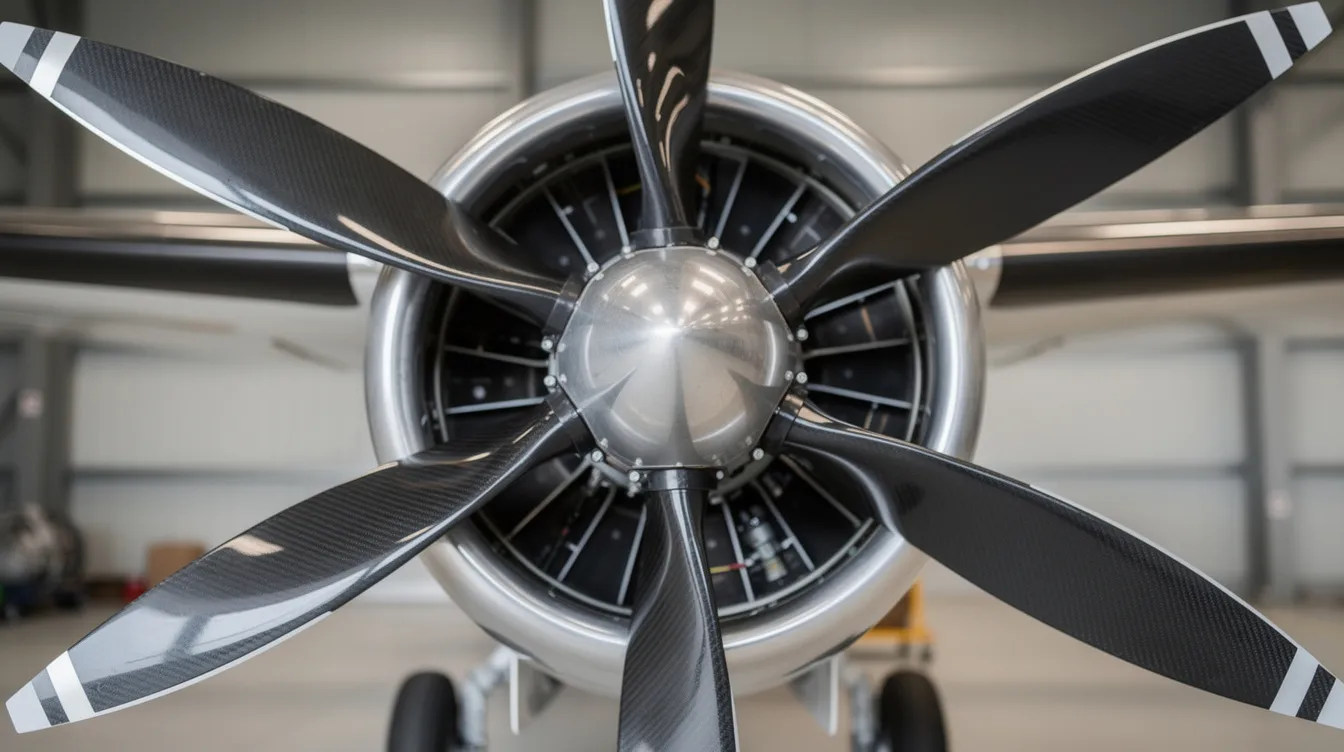
Propeller Design Choices: Diameter, Blade Count, and Materials
Aircraft design decisions around propellers involve direct trade-offs between thrust, noise, and efficiency.
Diameter: Larger-diameter propellers move more air per revolution, generating more thrust at lower RPM. However, when blade tips approach transonic speeds, drag and noise spike. Designers balance diameter against RPM limits.
Blade count: Higher-powered turboprop engines - like those on the ATR 72-600 or Dash 8-400 - often require four, five, or six blades to absorb engine power while keeping tip speeds manageable. The PC-12 NGX uses a five-blade composite constant-speed propeller. More blades reduce per-blade loading, smoothing vibration compared to fewer, larger blades.
Materials: Early propellers were wood, then aluminum alloy. Today, composite materials (carbon and glass fiber) dominate executive turboprops. Composites offer strength, reduced vibration, corrosion resistance, and the ability to form refined blade tip shapes - all critical for the cabin comfort private aviation clients expect.
Propeller engines generate more noise and vibration than jet engines by nature, but composite constant speed propellers paired with cabin insulation bring modern turboprops remarkably close to jet-quiet environments. During World War II, propeller technology advanced rapidly- counter-rotating propellers on military aircraft, for instance, addressed torque and asymmetric thrust - and those lessons inform today's designs. Even human-powered aircraft experiments have explored propeller propulsion fundamentals that carry over into modern engineering.
Engines Behind the Propeller: Piston Engines vs Modern Turboprops
Two categories of propeller engines serve private and business aviation, each suited to different missions within the BlackJet ecosystem.
Piston Engines
Piston engines are reciprocating internal combustion engines, usually air-cooled and running on avgas. Piston engines are standard for smaller, single-engine training aircraft and light owner-flown models like the Cirrus SR22. Piston engines typically cruise under 200 mph and are most efficient at lower altitudes and speeds, making them ideal for local hops under 300–400 nm. Piston-engine propeller aircraft typically cost less to acquire and maintain than jets, but piston engines have shorter maintenance intervals than turboprop engines and carry limitations regarding speed and maximum range compared to jets.
Turboprop Engines
Turboprop engines are gas turbine engine cores turning a shaft through a reduction gearbox, driving constant speed propellers. Turboprop engines deliver more power for their weight than piston engines. Popular charter workhorses include the Pilatus PC-12 (fuel burn approximately 66 gallons per hour) and the Beechcraft King Air 350i (burning roughly 136 gallons per hour). Turboprop engines typically cruise at around 300 knots (550 km h) at FL250–FL310, bridging the gap between pistons and light jets while offering robust reliability.
Efficiency Improvements
Modern turboprop engines improve fuel efficiency by 3% over previous models, and emerging powerplants like the General Electric Catalyst promise even greater gains. Turboprop engines can operate from runways as short as 1,100 meters, a capability no light jet can match.
For BlackJet members, turboprops are typically the propeller-driven aircraft of choice - the cabin size, speed, and safety standards align with business-aviation expectations and can be among the most affordable private aviation options for regional missions.
Propeller Effects on Handling, Safety, and Pilot Technique
Propeller forces influence how a propeller plane handles, especially during takeoff and climb. Understanding these aerodynamic forces is essential for safe operations.
On a single-engine turboprop or single-prop piston aircraft, torque reaction from the spinning propeller tends to roll the aircraft in the opposite direction. Pilots counter this with coordinated rudder input. P-factor - asymmetric blade loading at high angles of attack - creates yaw, particularly at low speed and high power. Slipstream effects wrap around the fuselage, pushing tail surfaces and adding another yaw component.
For aircraft with two propellers, some designs use counter-rotating propellers spinning in opposite directions to cancel torque and reduce asymmetric thrust effects. On multi-engine propeller-driven aircraft, if one engine fails, asymmetric thrust demands immediate corrective action. Pilots train extensively on engine-out procedures, minimum control speed (Vmc), and feathering - rotating the failed propeller's blades to minimize drag and produce less thrust on the dead side. A turboprop handles these scenarios predictably when the pilot follows trained procedures.
BlackJet charter pilots receive recurrent training in these propeller-specific dynamics. Engine redundancy on twin-engine turboprops adds a further safety layer. Operator standards are aligned with business jet operations - same rigor, same oversight.
Operational Advantages of Propeller Aircraft for Private and Business Travel
Propeller aircraft are a strategic tool for regional, remote, and time-sensitive missions - not a compromise, especially when you compare their flexibility and economics to chartering traditional private jets.
Short Runway Operations
Turboprop aircraft can operate from runways as short as 1,100 meters, and many can handle rough surfaces including gravel and grass. The PC-12 NGX requires only about 2,485 feet for takeoff over a 50-foot obstacle. Propeller aircraft can operate from unpaved airstrips, increasing their accessibility dramatically.
Remote Access
This opens access to remote islands, ski resorts, vineyards, ranches, and industrial sites where jets and many light jets cannot land. Reinforced landing gear on many turboprops enables operations from semi-prepared surfaces.
Regional Connectivity
Propeller aircraft are advantageous for connecting small towns to larger cities and are fuel-efficient at lower speeds and shorter distances. Propeller aircraft are highly fuel-efficient below 400 knots. They typically require shorter takeoff and landing distances compared to jet aircraft.
Consider the economics:
Metric | Turboprop (PC-12 NGX) | Light Jet (Phenom 300E) |
|---|
Fuel burn per hour | ~66–77 gal | ~150–180 gal |
Cruise speed | ~290 KTAS | ~450 KTAS |
Runway required | ~2,485 ft | ~5,000+ ft |
CO₂ per hour | ~600–800 kg | ~1,800–2,000 kg |
On legs under about 500–800 nm, the door-to-door time difference is frequently only 15–30 minutes - because propeller planes use closer airports, board faster, and eliminate lengthy ground transfers. Propeller aircraft can operate efficiently at low speeds and are suitable for regional flights. Executive turboprops offer club seating, fold-out tables, and baggage compartments large enough for skis, golf bags, or medical equipment.
When to Choose a Jet vs. a Propeller Aircraft with BlackJet
The choice between a jet and a propeller aircraft depends on distance, runway length, passenger count, schedule, and environmental goals.
Choose a propeller-driven turboprop when:
Flights are typically under 500–800 nautical miles
The destination has a short or remote runway
Cost-efficiency and sustainability are priorities
Turboprop aircraft are ideal for regional routes under 1,500 km
Choose a light jet or larger jet aircraft when:
Routes exceed roughly 800–1,000 nautical miles
Jet aircraft are built for high-speed cruising and higher altitudes where maximum speed and altitude materially shorten travel time (430–470 knots and above)
Passenger count or cabin comfort requirements exceed turboprop capacity.
Propeller aircraft are slower than jet aircraft, limiting long-haul travel. They often have limitations regarding speed and maximum range compared to jets. But on the right mission, that trade-off is negligible.
BlackJet's Jet Card model lets members seamlessly mix aircraft types across a multi-leg itinerary, applying the same transparent jet card pricing structure across both jets and turboprops. For example:
Executive commuter: Weekly Boston–Washington,n D.C. (~240 nm) via King Air 350i, using a closer airfield to avoid congestion at major hubs — a profile well-suited to analyzing 100-hour jet card cost structures for frequent travel.
Family vacation: Midsize jet from New York to the Caribbean, then a single turboprop for the final hop to a short-field island resort, a pattern that aligns with 25-hour jet card usage for seasonal travel.
Investor site visit: Jet to Denver, then a propeller-powered turboprop to an elevated, short-field mountain airstrip for mine or ranch inspections, where a 50-hour jet card program can balance regular site visits and ad hoc trips.
Economics, Sustainability, and Carbon-Neutral Propeller Operations
Propeller aircraft are a core lever for sustainable, cost-conscious private travel - not merely a budget alternative to jets.
Fuel Efficiency
Turboprops can use up to 50% less fuel than jets on comparable short sectors. Turboprops burn approximately 37% less fuel than regional jets on equivalent routes. On average, turboprops consume around 80 gallons per hour versus 187 for light jets - a difference that compounds across hundreds of annual flight hours.
Environmental Impact
Turboprop aircraft emit fewer CO₂ emissions than regional jets, and turboprops have about 26% lower overall environmental impact than jets when accounting for full lifecycle factors.
Many modern turboprops are certified to use Sustainable Aviation Fuel (SAF), further reducing lifecycle CO₂ emissions when SAF is available. BlackJet's carbon-neutral commitment means 100% of emissions from both propeller planes and jets are offset via verified environmental projects, at no extra cost to members. Choosing a propeller-driven aircraft where it fits the mission reduces baseline emissions before offsets, aligning travel with corporate ESG targets and personal sustainability values.
Cost Comparison
For Jet Card holders, lower fuel consumption directly translates to lower operating costs and more value from prepaid hours on regional missions, especially when you understand jet card cost per hour across different aircraft categories. The economics are straightforward: a PC-12 NGX operated 300 hours per year carries direct variable costs near US$330,000 - often less than half the equivalent in a light jet.
Safety, Certification, and Maintenance Standards for Propeller Driven Aircraft
Professionally operated propeller aircraft in business aviation are held to the same regulatory and safety standards as jets. Certification standards apply equally to propeller and jet aircraft.
Regulatory Standards
Key regulatory frameworks include:
FAA Part 135 (United States): Governs charter operations for both turboprops and jets - crew training, maintenance, insurance, airworthiness
EASA Air Ops (Europe): Equivalent safety requirements for commercial air transport
FAA Parts 33 and 35: Specifically cover turbine engines and propeller certification, including instructions for continued airworthiness
Safety standards for propeller planes are governed by FAA regulations that mandate rigorous oversight.
Safety Records
The Pilatus PC-12 has a fatal accident rate of 0.23 per 100,000 flight hours - a record that reflects both robust aircraft design and disciplined operator culture. Modern turboprops maintain excellent safety records through rigorous oversight.
Maintenance Focus
Maintenance focus areas specific to propeller planes include regular inspections covering blade tracking and gearbox monitoring, vibration checks, hub inspections, and adherence to overhaul intervals for both the engine and the constant speed propeller. Advanced engine monitoring systems - trend monitoring, automated alerts, FADEC diagnostics - detect issues early and enhance safety across every flight phase.
BlackJet partners only with operators that meet or exceed industry-leading safety standards and third-party audits (Wyvern, ARG/US, IS-BAO), applying the same vetting criteria to propeller aircraft as to light jets and larger jets, similar to the rigorous expectations frequent flyers have of the best jet card programs.
Frequently Asked Questions About Propeller-Driven Aircraft
What is a propeller-driven aircraft?
A propeller-driven aircraft uses one or more rotating propellers to generate thrust. Its propeller may be powered by a piston engine or a turboprop engine, which uses a gas turbine engine to turn the propeller through a reduction gearbox.
Are turboprops slower than jets?
Yes. Turboprops typically cruise around 300 knots (550 km/h), while light jets often cruise at 400–470 knots. On short regional trips, however, access to smaller airports can reduce ground-transfer time and narrow the difference in total door-to-door travel time.
What routes are best suited to turboprop aircraft?
Turboprops are well suited to regional routes under 1,500 km, especially when a destination has a short runway or limited infrastructure. They can connect smaller towns with larger cities and reach remote locations that jets cannot serve.
Can propeller-driven aircraft use short or unpaved runways?
Many turboprops can operate from runways as short as 1,100 meters, and appropriately equipped aircraft can use approved gravel or grass airstrips. Operators assess runway condition, aircraft performance, weather, and payload before each flight.
Are propeller aircraft safe for private travel?
Propeller and jet aircraft are subject to applicable aviation certification and operating regulations. Safety also depends on the operator’s maintenance practices, crew training, and flight planning. BlackJet vets partner operators and applies rigorous standards across aircraft types; inspections can include blade tracking and gearbox monitoring.
Are turboprops more fuel-efficient than jets?
On comparable short routes, turboprops can use up to 50% less fuel than jets and generally emit fewer CO₂ emissions than regional jets. Their lower speed and runway flexibility make them an efficient choice when they suit the mission. BlackJet also offsets 100% of flight emissions for members at no additional cost.
How can BlackJet members use turboprops with a Jet Card?
BlackJet Jet Cards provide access to private jets across cabin classes, while vetted turboprop partners can be arranged when a trip calls for short-field or remote-airport access. Members can combine a jet for a longer segment with a turboprop for the final leg, supported by digital booking tools and real-time assistance.
Integrating Propeller Aircraft into a BlackJet Jet Card Travel Strategy
For Jet Card members, incorporating propeller aircraft into an annual travel plan is straightforward - and strategically rewarding.
BlackJet's digital platform and real-time support team recommend propeller or jet options based on mission profile, runway performance, passenger count, and baggage requirements, while keeping overall Jet Card membership pricing predictable. The system accounts for runway length at origin and destination, distance, weather, and scheduling to suggest the ideal aircraft type for each leg.
Typical patterns include, for members comparing turboprops to other aircraft categories on a broader private jet price list:
Jets for ultra-long-range transcontinental or intercontinental segments
Propeller-driven turboprops for last-mile access to short or remote airfields near final destinations
Mixed itineraries where a midsize jet covers the long haul and a propeller plane handles the final approach to a countryside estate, mountain lodge, or island retreat.
Aircraft category choices - propeller aircraft versus jets - are built into pricing scenarios so members can see the economic and sustainability impact of each option before confirming, especially when using a structured product like the BlackJet 25+ Hour Jet Card. Every decision is transparent, data-driven, and aligned with the member's priorities.
Elevate your travel - strategically. With BlackJet, private flight adapts to your mission, not the other way around. Our Jet Card programs combine the reach of modern jets with the precision of propeller-driven turboprops - complete with rigorous safety, carbon-neutral performance, and unmatched flexibility. Explore BlackJet's Jet Card programs and consult with an aviation advisor on how to best combine modern turboprops and jets for your personal or corporate travel strategy.


 Sign up with google
 Sign up with Apple