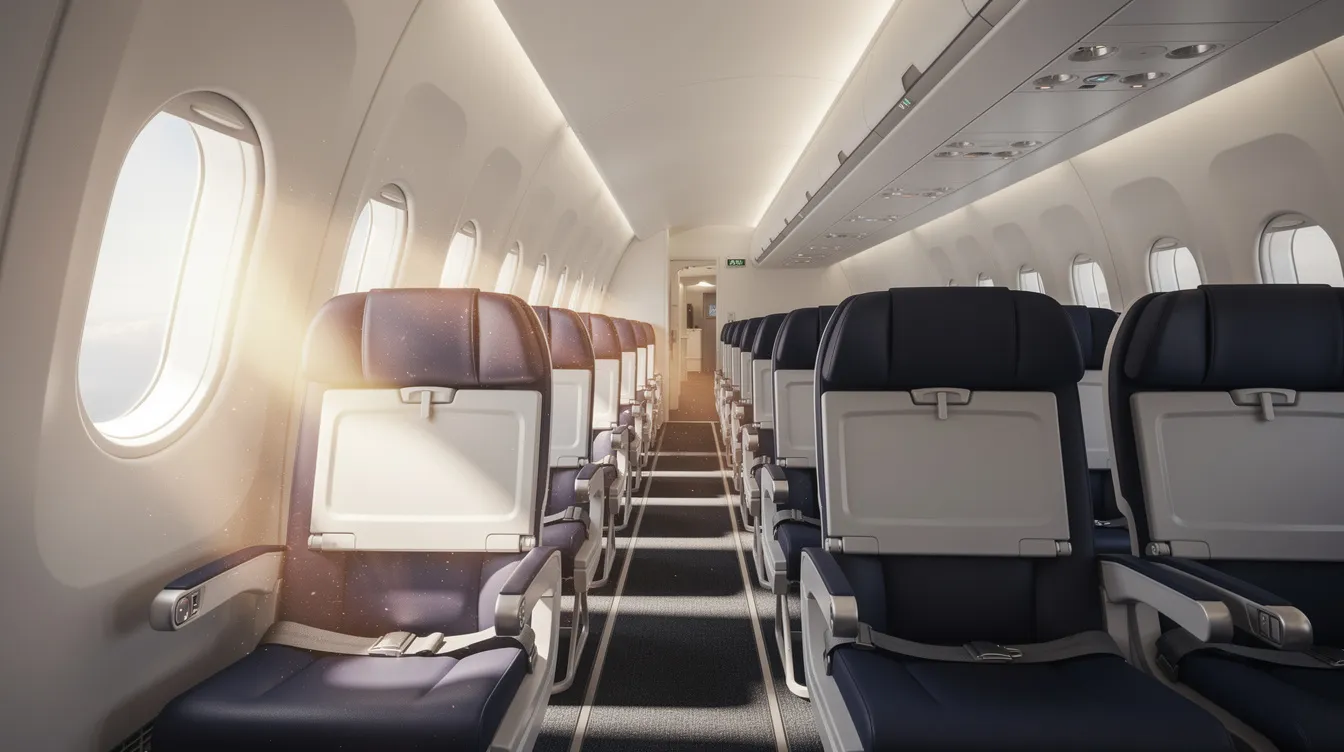
Every seasoned traveler has a seat preference. For many, that preference is seat F—the seat that is usually the right-side window seat in economy on narrow-body aircraft such as the Boeing 737-800 or Airbus A320, with the views and wall to lean against that frequent flyers want on a red-eye. But seat F is not always a window seat, and on some wide-body aircraft or regional jets it may be positioned differently or not appear at all.
For business travelers and high-net-worth leisure flyers who care about comfort, productivity, and a more efficient trip, that distinction matters. This guide looks at what seat F means across different aircraft, how its location affects views, noise, and overall comfort, how right-side and left-side window seats compare, and when moving beyond commercial seat selection to options like BlackJet’s Jet Card can deliver a better travel experience.
What "Seat F" Usually Means on a Plane
Airplanes organize seats using numbers for the rows and letters for the position within each row. On most modern narrow-body aircraft, seat F is typically a window seat located on the right side of the aircraft. In economy class on a standard single-aisle plane, the layout often features 3-3 configurations with seat F as a window-making it one of the most requested positions for passengers who want to sit by the glass.
On a Boeing 737-800 or Airbus A320 in standard 3-3 economy, seat letters run A–B–C (left) and D–E–F (right). Seat F is the right-side window seat.
On regional jets with 2-2 layouts (like the Embraer E175), seat F may not exist at all. Letters often stop at D.
On wide-body aircraft such as the Boeing 777 in 3-4-3 configuration, seat F falls in the center block-not beside a window. The same applies to many Airbus A350 layouts.
Is Seat F a Window Seat? How to Decode Different Aircraft Layouts
Seat F is not universally a window seat. The answer depends entirely on the aircraft type and how airlines configure their cabins. Here is how the most common layouts break down:
Boeing 737-800 / 737 MAX 8: Rows labeled A through F with A and F by the plane window; C and D as aisles. Seat F is a confirmed right-side window seat.
Airbus A320neo / A321neo in 3-3: Same A–F pattern, making seat F a right-side window every time in standard economy layouts.
Embraer E175 / E190 in 2-2: Seats are typically labeled A–D. There is no seat F in these aircraft.
Boeing 777 (3-4-3): The A–K pattern places F as an inner or aisle seat in the middle block-no view whatsoever.
Airbus A350 (3-3-3): Seat F may be an aisle in the center section rather than a window.
Airlines may use non-standard layouts in first or business class, further affecting typical seat assignments. Pre-flight checks of specific airline seating charts are important for confirming window seat positions before you pick your spot.
Best and Worst Seat F Locations: Plane Window Views, Noise, and Comfort
Not all seat F positions are equal. Some offer sweeping views and quiet cabins; others place you next to a galley door with engine drone overhead. Travel etiquette on flights is a contentious topic online, and where you sit shapes much of the experience.
Forward of the wing (rows 5–10 on many 737/A320 layouts) delivers quieter flying and more dramatic forward and downward plane window views-ideal for landing photography, though travelers moving large groups often compare that experience with private jets for 20 passengers or even the largest private jets for sale where everyone gets a prime view.
Over the wing provides a smoother ride through turbulence and dramatic flap-and-engine views for aviation enthusiasts, though ground visibility is partially blocked.
Exit-row seat F on eligible aircraft offers extra legroom, but features fixed armrests and sometimes limited recline, which contrasts sharply with private jets for 50 passengers where aisle access and recline are built into the cabin design.
The last 2–3 rows on a 737-800 place seat F directly beside lavatories and galleys-foot traffic, noise, and smells are constant, especially on a summer flight.
On rear-engine aircraft still flying in some markets, vibration and cabin noise near the engines are noticeably higher, which is one reason larger groups sometimes skip commercial altogether in favor of 16 seat private jet options with quieter, more insulated cabins.
On wide-bodies where you expect a window but seat F faces a blank center-block wall, the disappointment is real.
Many travelers prefer to swap like-for-like seats only, so trading a middle for a window seat rarely works. Passengers often refuse to swap seats for couples, and families often create mid-air disputes over seat swapping. Public shaming sometimes follows when people decline a swap-yet more comments on social media won't change the reality that the person who booked seat F first has every right to keep it, which is why frequent flyers often gravitate toward the best jet cards for frequent travelers to avoid the seat-swap drama altogether.
Even the best seat F in commercial flying cannot match the privacy, space, or quiet of a private plane layout. For high-net-worth travelers, the math shifts quickly toward the largest private jets for sale and charter, where dedicated bedrooms, lounges, and conference areas redefine what a window seat can be.
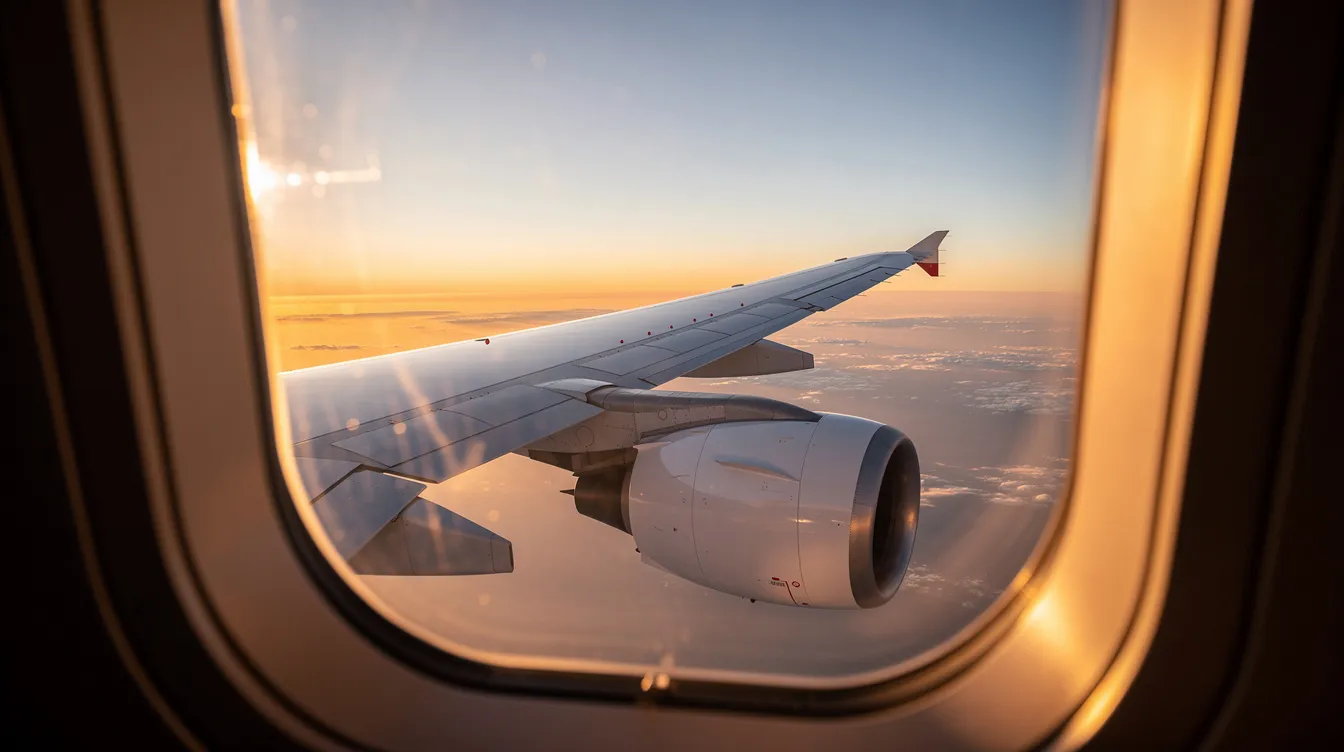
Right-Side vs Left-Side Window Seats: Which Side Has the Better View?
Seat F sits on the right side of the aircraft, and view quality depends on route, sun position, and aircraft approach paths, which affect the best window seat choice for any given flight.
On a 10:00 a.m. New York to Los Angeles flight, strong south-side sun can create intense glare through right-side windows. For people working on a screen, a shaded left-side seat may be more functional as a flying office.
At PMO (Palermo), the left side offers the best views during landing, with Montagna Longa, Pizzo Montanello, and the Golfo di Castellammare coastline often coming into view. The right side mostly shows open sea until touchdown, which matters if you plan to capture a picture of Sicily.
Morning and evening arrivals provide the best lighting for views on either side, turning ordinary approaches into golden-hour content.
On European short-haul routes operated by A320-family jets-like Paris to Nice or Milan to Palermo-a right-side window seat can deliver coastline and alpine views depending on direction of travel, but some travelers now compare that experience to simply buying a seat on a private jet for the same city pairs.
Winter flights at higher latitudes, where the sun lingers along one side for hours, can offer prolonged scenic light through seat F-wonder at the landscape is part of the appeal, and it’s the same instinct that leads some flyers to research 10 million dollar private jet options with oversized windows and skylights.
Photographers and content creators should verify that seat F is a true window seat (not misaligned or partially blocked by the cabin wall) and that the wing position won't obstruct their intended shots. In English-language aviation forums, this is one of the most discussed pre-flight checks a traveler can make, especially among those who also follow the most expensive private jet options for inspiration.
From Seat F to the Front of the Jet: How BlackJet Redefines the "Best Seat"
There is a point where optimizing a single seat letter on a commercial flight stops making sense. For executives and frequent flyers, BlackJet's Jet Card programs shift the question from "which seat?" to "which aircraft?" The broader suite of premium private jet card options puts cabin layout, aircraft type, and schedule fully under your control.
BlackJet offers 25-hour and 50-hour Jet Cards that give prepaid access across multiple aircraft categories-light, midsize, super-midsize, and large cabin jets-for both regional hops (New York to Boston) and transatlantic missions. The dedicated BlackJet 25+ Hour Jet Card is designed specifically for travelers who want predictable pricing across those cabin sizes.
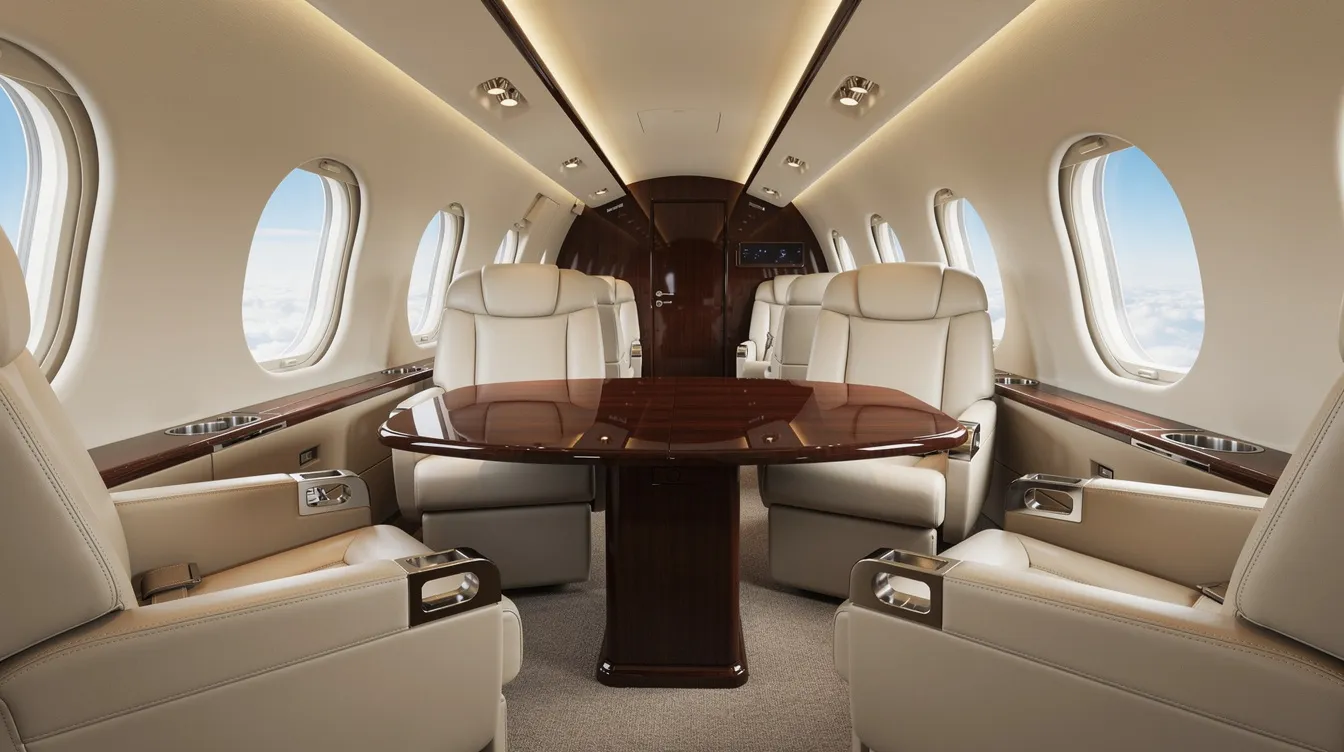
No middle seats, no seat letters. Every seat in a private cabin has direct access to a window and aisle. Members choose which side they sit on, whether the layout features club seating, divans, or a work-focused table arrangement.
BlackJet works exclusively with operators meeting stringent third-party safety standards such as ARG/US and Wyvern, and every flight undergoes a proprietary safety review. This is the difference between hoping for a calm cabin in seat F and having a crew curated for your specific mission.
The 24/7 digital booking platform lets members secure a jet in hours. Real-time support teams manage routing, weather, and last-minute schedule changes-no risk of losing your preferred seat on a rebooked flight.
Every BlackJet flight is carbon neutral by default, with emissions offset automatically at no extra cost. Travelers upgrade from seat F to a private jet without abandoning environmental responsibility, and many start by exploring the cheapest private jet options that still meet their comfort and sustainability expectations.
Example: a New York to Miami executive who once obsessed over securing seat F on a Friday evening commercial flight from York's JFK now uses a 25-hour Jet Card to depart from Teterboro at 4:30 p.m., skip the airport security line entirely, and work at a table-style window seat in a midsize jet cabin, applying many of the same fly private cheap strategies that make private aviation more accessible. The day is reclaimed.
Frequently Asked Questions About Seat F on a Plane
Q1: Is seat F always a window seat?
No, seat F is typically a right-side window seat on narrow-body aircraft like the Boeing 737 and Airbus A320, but on wide-body planes or some business class layouts, it may be an aisle or middle seat.
Q2: How can I confirm if seat F has a window on my flight?
Check your airline’s seating chart or use third-party seat map apps before booking. This helps avoid surprises, especially on wide-body aircraft.
Q3: Does seat F offer better views than other seats?
On many narrow-body planes, seat F offers excellent right-side views. However, the quality of the view depends on the flight path, time of day, and approach direction.
Q4: Are there comfort differences for seat F depending on the row?
Yes. Seats forward of the wing are generally quieter and offer better views, while those near galleys or lavatories can be noisy and less comfortable.
Q5: What are the advantages of choosing private jet travel over commercial seat F?
Private jets offer guaranteed window and aisle access, spacious cabins without seat letters, personalized service, and carbon-neutral flights, eliminating the compromises of commercial flying.
Q6: Can I swap seat F with another passenger if I want a different seat?
Seat swapping can be tricky. Many passengers prefer like-for-like swaps, and couples or families often resist moving. It’s best to choose your seat early or consider private jet options to avoid such hassles.
Q7: How does BlackJet’s Jet Card program improve the travel experience compared to commercial flights?
BlackJet’s Jet Card offers prepaid access to a fleet of private jets with flexible scheduling, proprietary safety certification, 24/7 support, and carbon-neutral flights, elevating comfort and convenience beyond typical commercial seat selection.
Q8: Does the side of the plane (right vs left) affect the view from seat F?
Yes. Seat F is on the right side, and depending on route and sun position, the left side may sometimes offer better lighting or scenic views, such as at Palermo (PMO) airport.
Q9: How can frequent flyers avoid the stress of seat selection and schedule changes?
Frequent flyers benefit from private jet programs like BlackJet’s Jet Card, which provide control over aircraft choice, cabin layout, and schedule, removing the uncertainty of commercial seat assignments.
Q10: Is flying private more sustainable than commercial flights?
BlackJet ensures every private jet flight is carbon neutral by offsetting emissions at no extra cost, making private aviation a responsible choice for environmentally conscious travelers.
Seat F Window Seat FAQs and When to Consider Private Jet Access Instead
This section is a quick-reference wrap-up for travelers deciding between optimizing seat F on commercial flights and stepping into private aviation with BlackJet.
Seat F is not always a window seat. On narrow-body aircraft it usually is; on wide-bodies it often is not. Always check the airline's seat map before you post your booking confirmation, and if you’re flying often enough to worry about it every week, start comparing 50 hour jet card cost and value as an alternative.
Use your airline's app or a third-party seat map to determine if seat F is over the wing, near a lavatory, or by an emergency exit-these features affect noise, legroom, and comfort on any flight, just as understanding 100 hour jet card cost details affects which private program fits your travel profile.
Seat F is generally quieter forward of the wing on 737 and A320 aircraft; it tends to be noisier near rear-mounted engines or galleys. Told simply: row number matters as much as the letter, just as jet card cost per hour matters as much as the total hours when you compare private aviation programs.
When frequent flying, schedule changes, and seat-selection stress start eroding productivity, a Jet Card becomes a strategic offer rather than a luxury, especially once you understand overall jet card cost and pricing structures.
Executives flying routes like Los Angeles to San Francisco or London to Geneva multiple times per month reclaim hours by departing from private terminals-no couple of hours lost in the terminal, no fighting for a good window, and a clear grasp of jet card pricing, costs, and benefits before they commit.
Light jets cover regional flights up to roughly 1,500 nautical miles. Super-midsize and large cabin jets handle coast-to-coast US or transatlantic legs, where every seat has window access without compromise, and understanding the main types of private jets for every traveler helps match aircraft to mission.
When seat letters start dictating your schedule, it may be time to rethink the flight itself. Explore BlackJet Jet Card membership to turn seat F concerns into fully private cabin control-no letters, no surprises, just elevated travel designed around you, much like travelers who evaluate Flexjet jet card cost and options before committing to a long-term solution.
Conclusion: Elevate Your Travel Beyond Seat F
Choosing seat F on a plane often symbolizes a desire for the best window views and comfort within the constraints of commercial aviation. However, as this guide illustrates, seat F’s value varies widely depending on aircraft type, layout, and flight path. For frequent travelers, executives, and high-net-worth individuals, the limitations of commercial seating—seat swaps, cramped spaces, and unpredictable comfort—highlight the strategic advantage of private jet access.
BlackJet’s Jet Card programs redefine what it means to have the "best seat" by offering personalized control over aircraft choice, cabin layout, and schedule, combined with uncompromising safety and sustainability standards. Whether flying regional routes or transatlantic, members enjoy guaranteed window and aisle access, spacious cabins, and seamless digital booking with real-time support. Learn more about our Jet Card programs and explore the classes of aircraft available.
For those who value time, privacy, and a premium experience beyond the traditional seat letter, upgrading from seat F on a commercial flight to a BlackJet private jet is more than luxury—it’s a strategic investment in productivity and comfort. Discover how BlackJet can reshape your travel experience and turn every journey into an effortless, premier flight tailored just for you by visiting our private jet charter page and understanding our commitment to sustainable aviation.


 Sign up with google
 Sign up with Apple