
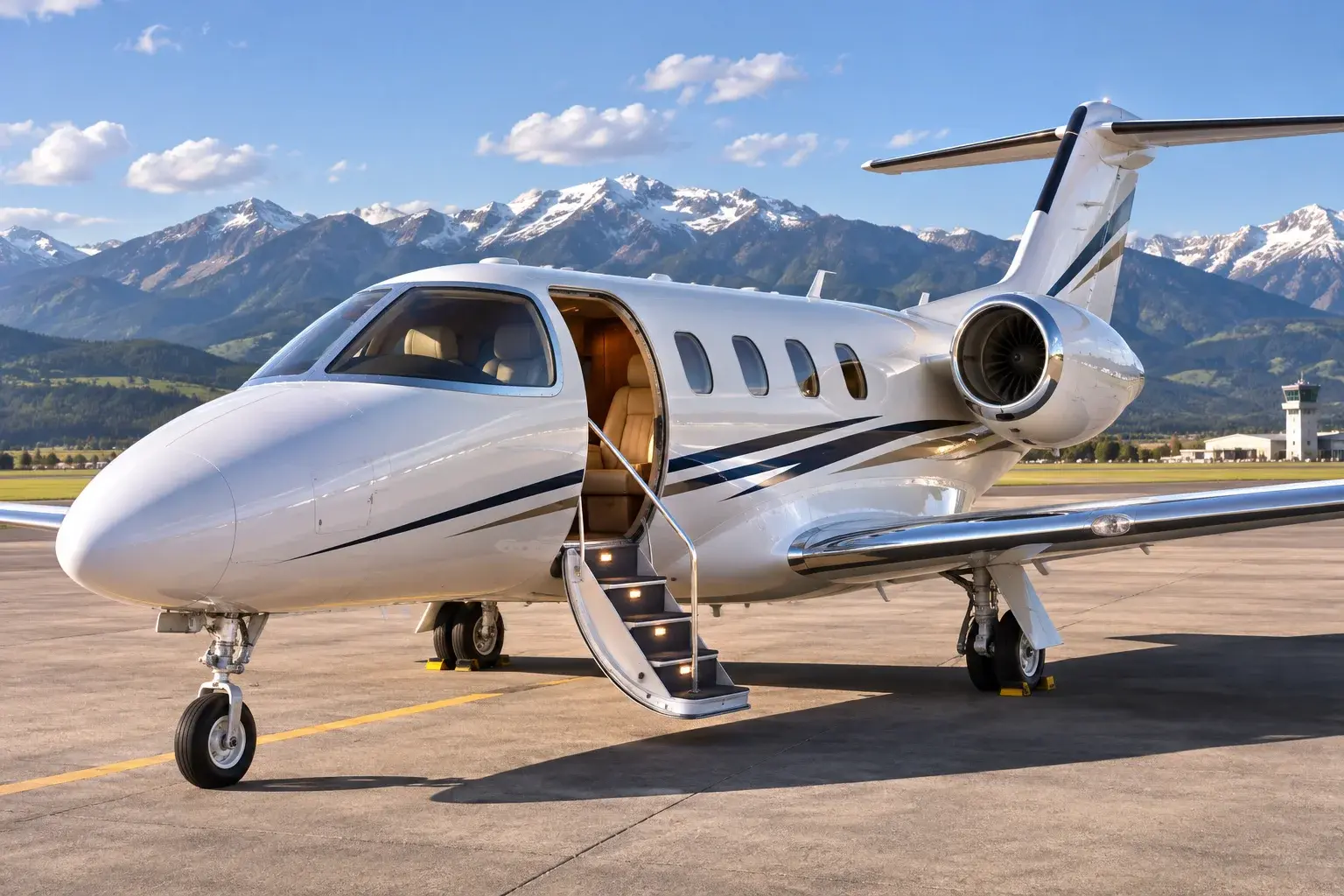
Why Small Boeing Planes Matter for Today's Private Traveler
In 2027, the calculus of business travel has shifted. For executives and high-net-worth travelers, the question is no longer whether private aviation makes sense - it is why anyone would still accept the friction of commercial departures on a Boeing narrowbody when a right-sized small plane can deliver a superior result in half the time.
Consider a New York–Chicago trip. On a commercial Boeing 737, the journey typically consumes five to six hours door-to-door once you factor in check-in, security screening, hub taxi times, and ground transport on the far end. A private light jet covers the same city pair in roughly three to three and a half hours, departing on your schedule from a secondary airport minutes from Midtown.
Boeing primarily builds medium-to-large commercial airliners and heavy military aircraft. The company does not manufacture traditional small general-aviation aircraft. Its smallest commercial planes belong to its single-aisle lineup, and Boeing's smaller planes primarily serve short- to medium-haul passenger flights. For private travelers, the actual small plane that replaces a commercial Boeing seat is typically a light jet, a turboprop, or a very light jet - categories readily available through BlackJet's Jet Card programs.
This article walks through the aviation history of Boeing's most compact airliners, the modern Boeing Business Jet conversions that serve heads of state and corporations, and how BlackJet pairs you with the ideal small plane for every mission - without the costs of owning a Boeing.
A Brief Look at Boeing's Aviation History with "Small" Airliners
Boeing's story in the skies began decades before jumbo jets and widebody flagships. The company's earliest aircraft were genuinely small planes - compact mail carriers and regional passenger ships that created the concept of scheduled air travel across the American West and Midwest.
The Boeing Model 40A made its first flight on May 20, 1927, and became the first Boeing aircraft to carry paying passengers - just two riders alongside a ton of airmail on the San Francisco–Chicago corridor (boeing.com). The Model 80, a trimotor manufactured in the late 1920s, expanded capacity to roughly 12–18 passengers, and the Boeing 247 - first flown in 1933 - transformed regional air transport with all-metal construction, faster speed, and new reliability. These airplanes connected business hubs across the Pacific Northwest and the field of Midwest commerce in a way that feels remarkably similar to today's most popular private jet routes: Seattle–Portland, Chicago–Minneapolis, San Francisco–Los Angeles.
For aviation enthusiasts, it is fun to note that these predecessor aircraft covered distances well within the range of a modern light jet. The world of commercial flight was, in those early years, a small plane world.
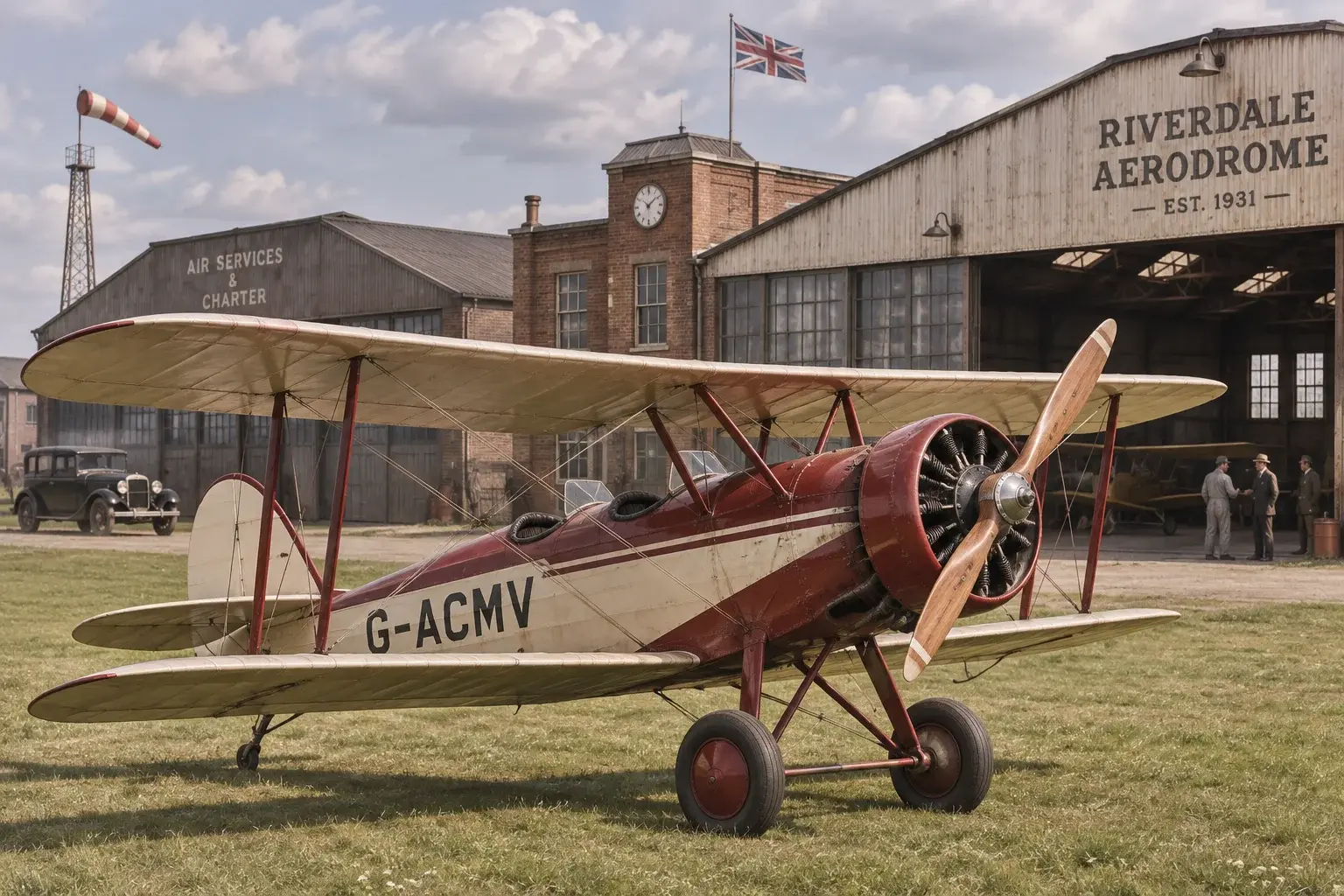
The Smallest of the Classic Boeing Jets: 707, 727, 737 Originals
The dawn of the jet age brought Boeing airliners that felt enormous in their decade but are now considered compact compared to the 777 or 787. These classic models are a sign of how quickly aviation performance evolves.
The Boeing 707-120 completed its first flight on December 20, 1957, with typical seating under 180 passengers and a range of approximately 3,500 nautical miles (goairports.org). It opened transcontinental business travel and created premium cabins long before modern widebodies.
The Boeing 727-100, first flown February 9, 1963, was designed for shorter runways and regional airports - a trijet airliner with roughly 106–125 seats and a range of about 2,250 nautical miles. It was the bridge between large airliners and what private travelers now do by charter.
The original Boeing 737-100 and 737-200 (first flight April and August 1967, respectively) were truly small Boeing planes by today's standards. The 737-200 seated around 85–120 passengers, carried a range of roughly 1,500–2,000 nautical miles, and was equipped with a rugged gravel kit enabling operations on unpaved runways - impressive capabilities for reaching remote destinations that pilots still comment on today.
Model | First Flight | Seats (Typical) | Approx. Range |
|---|---|---|---|
707-120 | December 1957 | ~150–180 | ~3,500 nm |
727-100 | February 1963 | ~106–125 | ~2,250 nm |
737-100/-200 | April/August 1967 | ~85–120 | ~1,500–2,000 nm |
These aircraft connected secondary cities and business centers - routes like Dallas–Nashville or Denver–Albuquerque - in much the same way BlackJet members now fly city pairs by light and midsize jets, drawing on a broad range of types of private jets.
The 737 Family: When a "Small" Airliner Becomes a Private Jet
The Boeing 737 is the best-selling airliner in history, and its variations span four generations: Original (-100/-200, 1960s), Classic (-300/-400/-500, 1980s), Next Generation (-600 to -900, late 1990s), and MAX (737 MAX 7/8/9/10, with the MAX 8 first flight in 2016). Boeing's smaller commercial aircraft generally feature narrowbody designs, and the 737 MAX family is Boeing's smallest active commercial jetliner family, leveraging aerodynamics and modern technology for fuel efficiency on short- to medium-haul routes.
The 737-700, whose maiden flight took place in February 1997, is used for high-frequency domestic flights by airlines worldwide (boeing.mediaroom.com). It is also the basis for the original Boeing Business Jet - essentially an upgraded version of the airliner, stripped of economy rows and rebuilt with VIP suites. The Boeing 717 is a smaller short-haul aircraft that is no longer in production, leaving the 737 as Boeing's primary narrowbody platform.
For most BlackJet members, a BBJ or comparable long-range aircraft is reserved for specific intercontinental missions. Day-to-day travel - the week-in, week-out hops - is better served by small private jets where costs, airport flexibility, and door-to-door speed create a clear advantage.
Boeing Business Jets (BBJ): The "Small" Boeing for Private Ownership
Boeing Business Jets are customized VIP versions of Boeing airliners, designed for 8–50 passengers with private suites, conference rooms, and lounges that feel more like a comfortable penthouse than an airliner cabin. The original BBJ, based on the 737-700, was launched in 1996 with first deliveries in 1998–1999 and a range of approximately 6,000 nautical miles in VIP configuration - far beyond its airline counterpart thanks to lighter passenger loads and added fuel capacity.
Since inception, Boeing has accumulated roughly 260 orders across all BBJ variations, with about 142 narrowbody BBJs in service by mid-2023 (asianskygroup.com). The BBJ2 (737- 800-based) and BBJ MAX 7/8 represent newer, more fuel-efficient additions. Industry forecasts show combined narrowbody BBJ and ACJ deliveries staying flat at about five units per year through 2030 (flightplan.forecastinternational.com), meaning the market for these fantastic machines is exclusive but limited.
Owning a BBJ means multi-million-dollar acquisition and operating costs. BlackJet's vetted operator network mirrors the same safety and certification standards applied to BBJ operators - giving members access to comparable rigor without the ownership burden.
Small Plane Alternatives to Boeing: Light Jets and Turboprops You Actually Fly
Here is a key reality: for most private travelers, the small plane that replaces a commercial Boeing flight is not a Boeing at all. These other aircraft are purpose-built for missions where operating an airliner - even a BBJ - would be impractical. Boeing does not manufacture traditional small general-aviation aircraft, so the market is populated by specialists, and choosing among the best small private aircraft for each mission becomes a key strategic decision.
The Cessna 172, which has been built more than any other aircraft, costs between $150,000 and $400,000 and offers a range of 800 miles - ideal for training and personal flight but not executive travel. The Icon A5, priced between $300,000 and $375,000, can land on both water and land and features a full-plane parachute for emergencies, though its range of roughly 320 miles limits it to recreational use. The Cirrus SR22 is known as the "plane with the parachute," another popular model in the personal aviation field.
For business missions, the Beechcraft G36 Bonanza - originally designed in 1947 and produced since that year - ranges from $750,000 to $1 million with a range of just under 700 miles. The Eclipse 550 typically costs just under $3 million and handles roughly 1,200 miles of range, giving it short-hop capability and illustrating how budget-friendly private aircraft options can still deliver serious performance. The Embraer Phenom 100 is usually around $4.5 million with a range of 1,350 miles, making it an easy search result for anyone comparing very light jets and asking what the cheapest private jet options look like in practice. The Learjet 70, priced at $12 million, can achieve a range of over 2,200 miles. And at the top of the market, the Gulfstream 650 costs between $39 million and $65 million, delivering intercontinental reach with impressive performance.
Category | Example Model | Seats | Range | Ideal Use Case |
|---|---|---|---|---|
Personal / Training | Cessna 172 | 2–4 | ~800 mi | Learn to fly, short personal trips |
Amphibious Sport | Icon A5 | 2 | ~320 mi | Recreational, water access |
Piston Single | Beechcraft G36 Bonanza | 4–6 | ~700 mi | Owner-flown business hops |
Very Light Jet | Eclipse 550 | 4–6 | ~1,200 mi | Short business travel |
Very Light Jet | Embraer Phenom 100 | 4–6 | ~1,350 mi | Regional executive shuttle |
Light Jet | Learjet 70 | 6–8 | ~2,200+ mi | Medium-range executive travel |
Ultra-Long Range | Gulfstream 650 | 12–16 | ~7,000+ mi | Intercontinental, head-of-state |
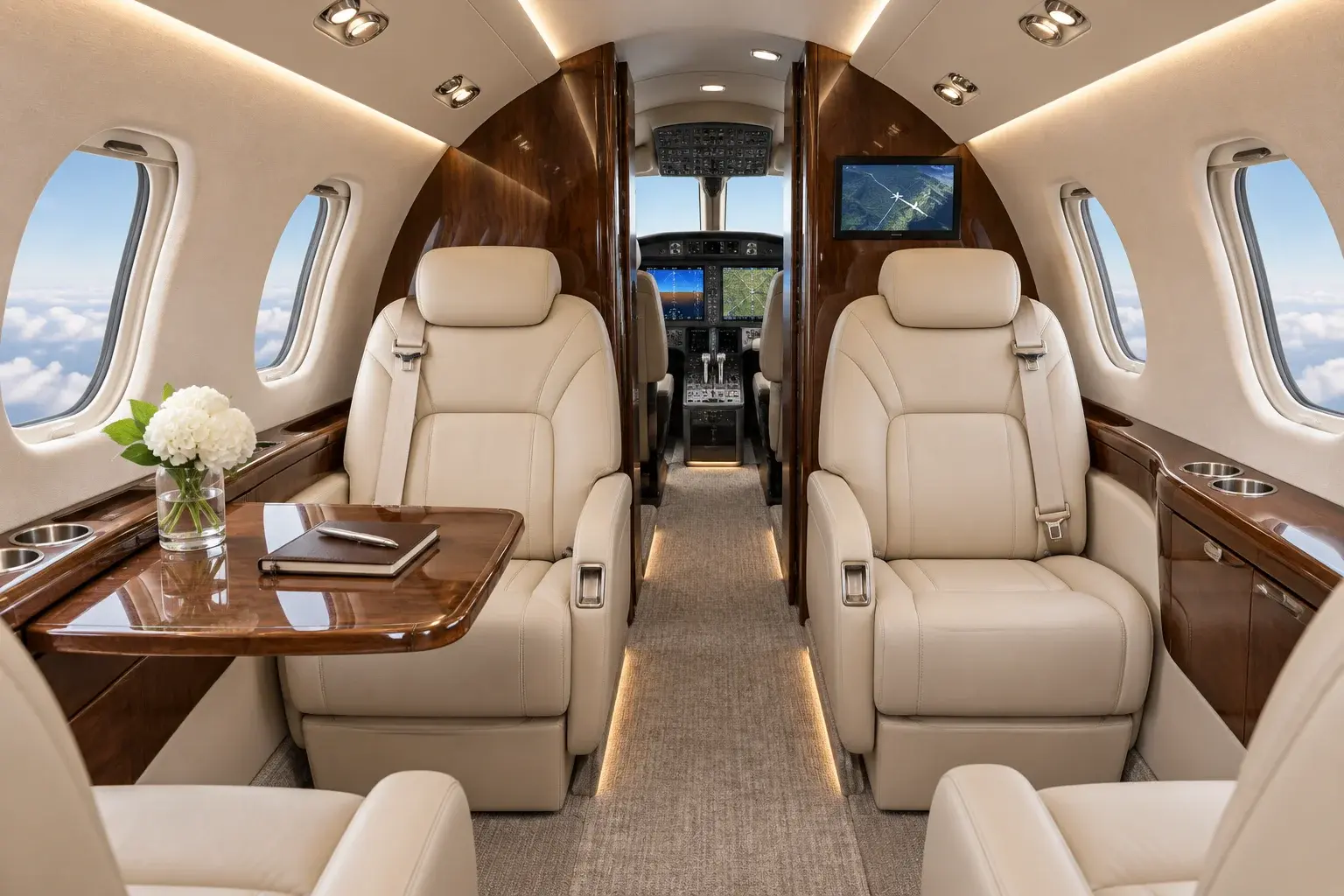
From First Flight to Private Jet Lifestyle: How BlackJet Uses This Heritage
From the earliest Boeing first flights of the 1930s to today's on-demand private jet ecosystem, the arc of aviation bends toward personalization. BlackJet leverages a diverse fleet of small plane options - VLJs, light jets, midsize jets, and select large-cabin aircraft - to replicate and improve upon the point-to-point routes once pioneered by small Boeing airliners, all under its premium private jet card programs.
Through the BlackJet 25 Jet Card or 50 Jet Card, members buy prepaid hours across multiple aircraft categories instead of owning a single airplane, and can compare 25-hour jet card features and costs against 50-hour jet card pricing and value to match their travel patterns. Consider a scenario shown in many member itineraries 1 month ago: a BlackJet member flying Los Angeles to Seattle - a route historically flown by 727s and 737s - now completed door-to-door in a light jet with a flexible departure time and minimal ground delays. A business executive hitting three cities in a single day (LA → San Francisco → Seattle → Portland) operates on a schedule that no airline can handle, giving them hours back every week.
Safety, Certification, and the Technology Behind Modern Small Planes
Trust in Boeing's safety legacy runs deep, and that same culture of rigorous certification extends to private aviation. Every aircraft in BlackJet's ecosystem is operated by FAA- or EASA-certified operators that meet or exceed the standards used by airlines flying Boeing fleets.
BlackJet prioritizes operators holding third-party certifications such as ARGUS Platinum, Wyvern Wingman, and IS-BAO, pairing these standards with clear guidance on understanding private jet sizes so travelers match safety with the right cabin class. Pilots undergo airline-standard simulator recurrent training. Modern small planes are equipped with glass cockpits, enhanced vision systems, TCAS, and advanced weather radar - technology borrowed directly from larger jets.
BlackJet's non-negotiable safety pillars:
FAA/EASA type certification for every aircraft
Third-party audits (ARGUS, Wyvern, IS-BAO)
Airline-grade pilot training with simulator recurrency
OEM-aligned maintenance programs
Modern avionics and collision-avoidance systems
Sustainable Aviation: Carbon-Neutral Flights vs. Traditional Boeing Operations
Aviation carries a carbon cost that must be addressed - not ignored. A lightly loaded Boeing 737 on a short sector can produce poor per-seat emissions when many seats fly empty. A right-sized small plane with full load achieves significantly lower emissions per passenger mile, and that difference matters compared to commercial operations.
In 2027, BlackJet delivers carbon-neutral flights by default through high-efficiency aircraft selection, optimized routing that minimizes repositioning, and verified sustainable aviation fuel and carbon-offset partnerships, whether you are flying a compact light jet or a large private jet for 20 passengers on a special mission. Technological improvements - geared turbofans, advanced propeller design in turboprops, lighter composite materials - continue to reduce fuel burn across every category in the fleet, while smarter access models and jet card pricing structures help optimize both cost and sustainability outcomes. BlackJet's mobile booking tools further cut waste by consolidating scheduling and avoiding unnecessary ferry legs.
Choosing the Right Small Plane Instead of a Commercial Boeing Flight
If you currently fly commercial on Boeing aircraft and are exploring private access, four decision factors create your ideal match, starting with understanding the types of private jets for every traveler:
Distance and route - Regional hops under 1,000 nm favor VLJs or light jets. Transcontinental or international legs may call for a midsize or large-cabin jet.
Passengers and luggage - Two executives with carry-ons need a different aircraft than a family of eight with ski gear.
Airport access - Secondary airfields closer to your destination mean faster ground transfers; smaller aircraft operate from runways that a 737 cannot land on anymore, and smart use of Jet Card cost structures lets you take advantage of that flexibility predictably.
Inflight productivity or privacy - Confidential meetings in the air require a comfortable, enclosed cabin - a reason many travelers leave commercial behind permanently.
Through BlackJet's Jet Card, you do not buy or operate one aircraft. You select the optimal small plane per trip, supported by real-time aviation specialists who learn your preferences over time, much like the best jet card programs for frequent flyers emphasize tailored matching rather than one-size-fits-all access.
Frequently Asked Questions About Small Boeing Planes
What is the smallest Boeing commercial airplane?
The Boeing 737 MAX family is Boeing’s smallest active commercial jetliner family. Boeing’s smallest commercial aircraft are narrowbody airliners designed primarily for short- to medium-haul routes; the company does not build traditional small general-aviation planes.
Does Boeing still make the 717?
No. The Boeing 717 was a smaller short-haul aircraft, but production has ended. Boeing’s current narrowbody lineup is centered on the 737 family.
Can a private traveler fly on a small Boeing plane?
Yes. Travelers may book a seat on a commercial Boeing narrowbody or access a Boeing Business Jet (BBJ) through specialized charter arrangements. A BBJ offers a much larger cabin and higher operating costs than most private travelers need. For regional trips, a light jet or turboprop is often a more practical private-aviation choice.
What is a good small-plane alternative to a Boeing flight?
The right aircraft depends on passenger count, route length, luggage, and airport access. A very light or light jet can suit a short business trip, while a midsize cabin may be better for longer routes or more passengers. A BlackJet Jet Card lets members select from multiple aircraft categories rather than owning one aircraft.
How do private aviation safety standards compare?
Safety depends on the aircraft, operator, crew, maintenance, and oversight—not simply whether a plane is small or large. Look for properly certified operators, audited safety programs such as ARGUS, Wyvern, or IS-BAO, recurrent pilot training, and documented maintenance procedures. BlackJet prioritizes vetted operators and established certification standards.
Are small private-plane flights carbon neutral?
BlackJet states that its Jet Card flights are carbon neutral, supported by measures including efficient aircraft selection, routing, and carbon-offset partnerships. Ask the provider how emissions are calculated and what verification applies to any offsets or sustainable aviation fuel claims.
How to Access Premium Small Planes with BlackJet (Without Owning a Boeing)
Owning or converting a Boeing into a BBJ is a commitment measured in tens of millions of dollars. BlackJet offers a different model - one that feels effortless because the complexity stays behind the scenes, even for heavy users who might otherwise consider a 100-hour jet card and its costs.
Prepaid hours: 25-hour, 50-hour, or custom blocks at fixed hourly rates across multiple cabin categories, structured around transparent jet card pricing.
24/7 mobile booking: Select date, route, and preferred cabin class. BlackJet presents vetted aircraft options with safety checks and carbon-neutral routing confirmed before you board, similar to modern platforms that explain how to buy a seat on a private jet.
Seamless ground coordination: Car transfers, FBO arrangements, and real-time flight support - all handled, whether you're flying between U.S. hubs or booking private jet charters in Karachi.
Replace a twice-monthly commercial Boeing 737 commute - say, New York to Miami - with a light jet on a 50-hour Jet Card, using guides to 50 hour jet card cost and value to benchmark your savings. The means to reclaim ten or more hours per month, plus the privacy and reliability that no airline can share, is no longer reserved for those who can buy a jet outright.
Elevate your travel - effortlessly. With BlackJet, private flight is accessible on your terms through Jet Card programs built on rigorous safety, carbon-neutral performance, and unmatched flexibility, whether you're comparing NetJets jet card costs, exploring premium UK private jets for sale, or planning large-group travel for up to 50 passengers. Discover how BlackJet can replace your next Boeing flight with a tailored small-plane experience.