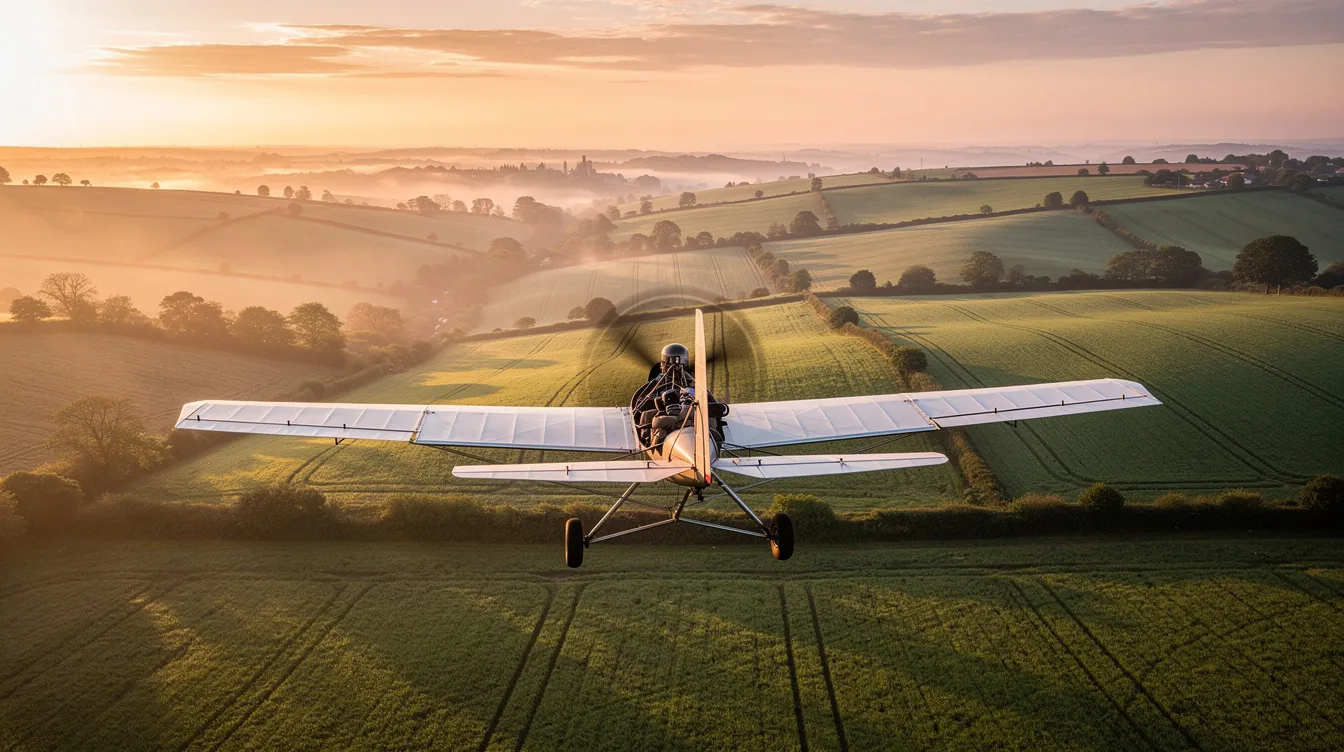
Strip flying down to its barest elements and you get this: one pilot, one single seat, a few gallons of fuel, and nothing between you and the sky but a fabric wing and open air. That is the world of the smallest ultralight aircraft, where recreational flying means launching from a grass strip at dawn and landing back home before the coffee gets cold.
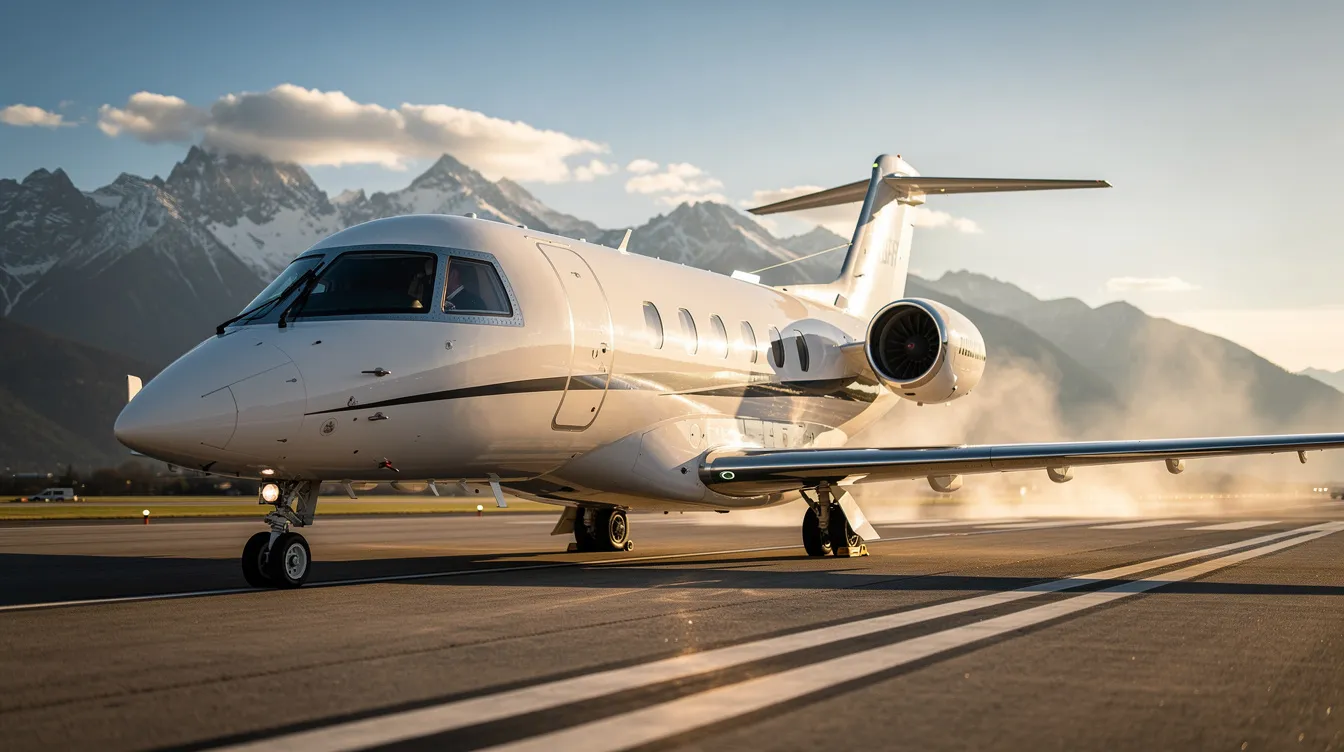
At the opposite end of the spectrum sits the private jet experience. Same core promise of freedom from airline schedules and crowds, delivered through professionally crewed light aircraft, turboprops, and jets with climate-controlled cabins and intercontinental range. Both worlds share a belief that personal aircraft ownership, or access, beats standing in a terminal line.
Under FAA Part 103, many ultralights let enthusiasts fly without a pilot license, while high-net-worth travelers and executives typically opt for solutions like the BlackJet Jet Card and membership programs for missions where safety certification, passenger capacity, and schedule reliability matter.
This article identifies the smallest practical ultralight aircraft available in 2026, explains what "smallest" really means in terms of weight, footprint, and regulations, and shows when a tiny plane makes sense versus chartering a jet.
Key Takeaways: The Smallest Ultralight Aircraft In 2026
The smallest ultralight aircraft are defined by strict FAA Part 103 regulations limiting empty weight to 254 pounds, fuel capacity to 5 gallons, and speed to 63 mph, with single-seat operation only.
Leading fixed-wing ultralights like the Aerolite 103, Kolb Firefly, and Hummel Ultracruiser balance minimal weight with practical features such as folding wings or all-metal construction.
Powered paragliders and paramotor trikes represent the absolute smallest ultralight category by weight and portability but differ significantly in flight experience and capabilities.
Ultralights offer affordable, low-operating-cost recreational flying but lack passenger capacity, night flying, and cross-country range, making them unsuitable for business or time-critical travel.
Transitioning from ultralights to light sport aircraft and then to professionally operated turboprops and jets aligns with increasing travel complexity, safety, and comfort demands.
BlackJet's Jet Card membership programs provide a complementary solution for executives seeking reliable, certified private jet access beyond the limits of ultralight aviation.
Sustainability and technology trends shape both ends of the spectrum—ultralights benefit from minimal fuel use and emerging electric options, while private jets focus on carbon-neutral flights and advanced avionics.
Choosing the smallest ultralight depends on mission priorities: pure recreation and DIY satisfaction versus practical transportation needs requiring certification, passenger capacity, and schedule flexibility.
Defining "Smallest" In Ultralight Aviation: Weight, Wingspan, And Regulations
"Smallest ultralight aircraft" is not a marketing phrase; it refers to measurable specifications under federal aviation regulation Part 103. The FAA defines a powered ultralight vehicle by four hard limits:
Empty weight cannot exceed 254 pounds (115 kg), excluding floats and safety devices for catastrophic deployment
Fuel capacity is limited to a maximum of 5 U.S. gallons
Top speed must not exceed 55 knots (63 mph) in level flight at full power
The power-off stall speed must not exceed 24 knots (about 28 mph)
FAA Part 103 allows only single-seat ultralights; no passenger seat, no exceptions.
"Smallest" in practice means the lightest empty weight and most compact physical footprint that still allows an average-sized pilot (170 to 200 lb) to fly safely within structural margins. Wingspan, fuselage length, and whether the wings fold for transport all factor into footprint.
The term "ultralight" differs by jurisdiction. In microlight aviation circles across Europe, regulations often allow gross weights of 450 to 600 kg and two-seat configurations, with a license required. A light sport aircraft in the U.S. permits up to roughly 1,320 lb gross weight, two seats, and higher speed, but demands at least a sport pilot certificate. Among the very smallest designs are powered parachutes, paramotor trikes, and fixed-wing planes like the Aerolite 103, Kolb Firefly, and Hummel Ultracruiser.
Regulation Snapshot: FAA Part 103 vs Light Sport Aircraft Rules
Part 103 is the legal framework that makes "no pilot license required" ultralight aviation possible in the United States. Pilots of ultralight aircraft in the U.S. do not need a pilot license or medical certificate, and ultralights do not require registration or airworthiness certificates, per EAA's Part 103 overview.
Beyond weight and speed, Part 103 imposes operational limits:
Day VFR conditions only; ultralights can only operate in day VFR conditions
Night flying is prohibited unless equipped with proper lights
No flying over congested areas or assemblies of people
No passengers; strictly solo operation
Entry into Class B, C, D, or E airspace requires ATC permission
No commercial operations (no compensation or hire)
Light Sport Aircraft occupy a different tier. LSA maximum takeoff weight runs to roughly 1,320 lb for landplanes. Light Sport Aircraft can carry more than one occupant. Speed limits reach approximately 120 knots. Light Sport Aircraft require a Sport Pilot certificate to operate, plus a medical self-certification or valid driver's license in lieu of a formal medical certificate. Flight training and periodic proficiency checks are mandatory.
Europe and other regions categorize microlight aircraft with gross weight allowances of 450 to 600 kg, enabling somewhat larger small planes than the U.S. allows under Part 103, but with licensing requirements.
BlackJet's fleet operates under professional commercial standards and advanced safety oversight, several regulatory tiers above either Part 103 or LSA. Understanding these categories helps travelers see how regulations scale with aircraft size, speed, and passenger count.
The Current Contenders: Smallest Practical Fixed-Wing Ultralight Aircraft
No single model holds an official "smallest ultralight" title, but several well-known designs are widely regarded as the lightest and most compact usable fixed-wing Part 103 planes.
Aerolite 103 is a popular ultralight aircraft model: a fabric-on-frame, high-wing pusher with typical empty weight around 240 to 252 lb depending on engine and customization options. It has won Grand Champion Ultralight at Oshkosh and remains one of the most-flown Part 103 designs in the U.S.
Kolb Firefly features folding wings that reduce its width to about 5 feet 9 inches, making it storable in a standard garage. Empty weight sits near 253 lb with a Rotax 447 engine.
Hummel Ultracruiser is an all-metal ultralight aircraft with a low-wing layout, achieving roughly 249 lb empty weight when built with a half-VW conversion engine.
Minimax 103 variants use wood-and-fabric construction targeting approximately 240 lb empty weight. Kits start around $11,500 without engine.
Quicksilver MX103 is known for its open cockpit design, with fully assembled versions starting as low as $18,000.
Some models add floats for water operations. Amphibious ultralights can land on water and land, though less than 5% of ultralights sold are amphibious.
Ultra-minimal paramotor trikes and powered hang glider wings can weigh well under 150 lb airframe-only, but most discussions of "smallest ultralight airplane" center on fixed-wing models. The sections below judge "smallest" by empty weight, storage footprint, and how close each design runs to the 254 lb ceiling.
Deep Dive: Aerolite 103, Benchmark Minimalist Fixed-Wing Ultralight
Terry Raber designed the Aerolite 103 in 1996, combining features from several earlier ultralights into a single high-wing pusher platform. The prototype flew on October 6, 1996, and the aircraft debuted at Oshkosh in 1997. After Aero-Works paused production in 2005, U-Fly-It acquired the design and revived manufacturing in 2013, adding improvements like aluminum fuel tanks and electric power drivetrain options.
Core specifications for a Part 103-compliant build:
Empty weight: 235 to 254 lb, depending on engine and options
Configuration: single seat, open or partially enclosed cockpit, aluminum tube structure with Dacron fabric covering
Wingspan: approximately 26 feet 10 inches; wing area about 121 sq ft
Common engines: 28 to 40 hp two-stroke (Hirth F-33, 2si 460-F35), plus emerging electric powerplants
Cruise speed: 45 to 55 mph; range roughly 60 to 100 miles on 5 gallons of fuel
Takeoff roll: 150 to 200 feet on grass
Ultralight aircraft often utilize lightweight construction materials like aluminum tubing and fabric, and the Aerolite 103 exemplifies that approach. With no electrics by default, basic instrumentation, and careful component selection, the design keeps weight below 254 lb. Ultralight aircraft often have short takeoff and landing distances, allowing operation from small fields; the Aerolite thrives on private grass strips far from controlled airports. Handling is described as docile, which suits new ultralight pilots.
Aerolite 103 kits start at about $23,000 for the airframe; fully assembled Aerolite 103 planes start at about $28,000. Build hours for the airframe run 60 to 80 hours, excluding engine and instruments. Even the cheapest light sport aircraft typically costs $100,000 or more by comparison.
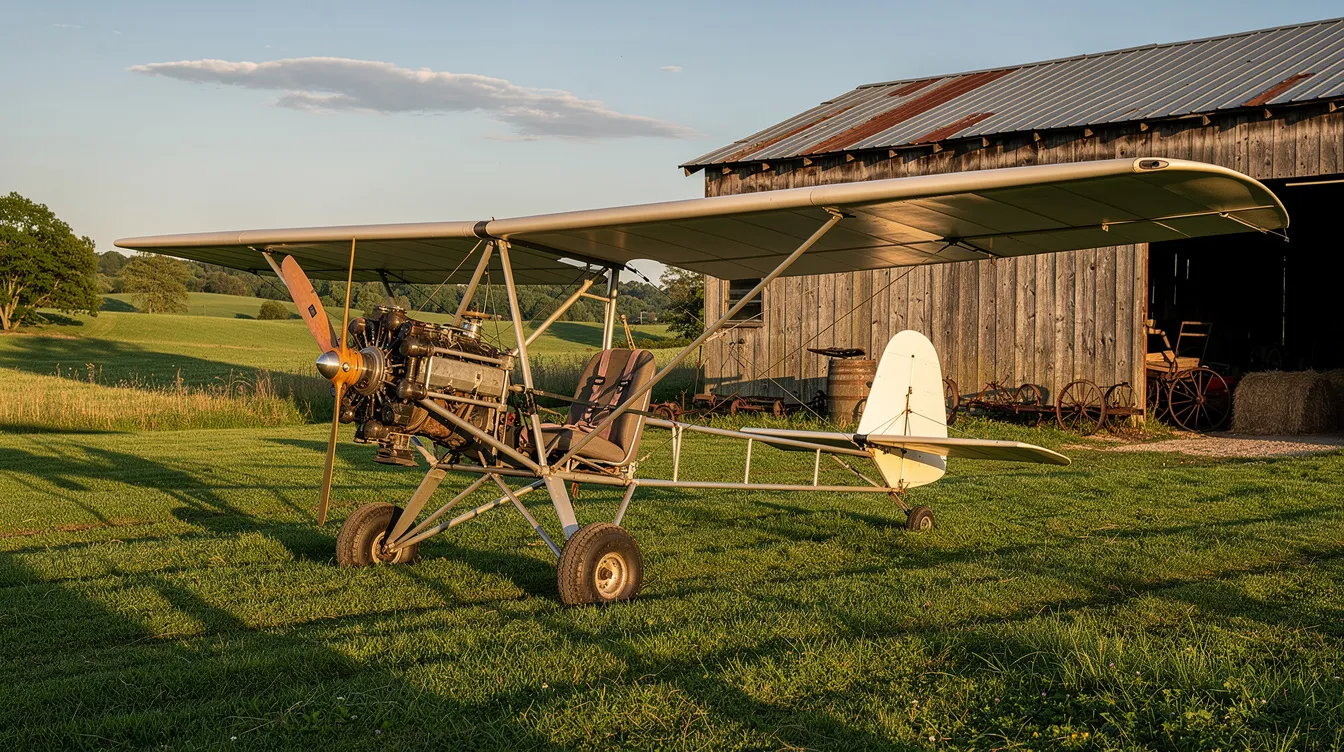
Deep Dive: Kolb Firefly, Tiny Folding-Wing Ultralight For Storage-Limited Pilots
The Kolb Firefly is frequently cited among the smallest practical fixed-wing ultralights because of its folding wings and compact dimensions. Owners who lack hangar space can fold the wings and tow the aircraft on a small trailer or roll it into a standard two-car garage.
Key attributes:
Empty weight: approximately 253 lb with the Rotax 447 (about 40 hp); lighter with a Rotax 277 or similar engine with fewer hours of runtime per overhaul
Layout: high-wing pusher, welded 4130 chrome-moly steel fuselage cage, aluminum tube tailboom, fabric covering
Folded width: roughly 5 feet 9 inches; full wingspan about 22 feet; length approximately 19 feet 6 inches
Cruise speed: 60 to 70 mph; stall speed at or just under Part 103's 24-knot limit
Rate of climb: approximately 1,000 feet per minute at sea level
Takeoff roll: about 150 feet
Compared with the Aerolite 103, the Firefly trades aesthetic polish for rapid fold-up convenience and a very small storage footprint. The steel fuselage cage provides more structural protection around the pilot than many tube-and-fabric designs.
Kolb Firefly quick build kit versions start at $17,270, excluding the engine. Standard kits require more build hours, ranging from about 150 hours for basic kits to 375 hours with additional options. Used Fireflys with engines included occasionally appear for around $30,000. The typical buyer is a rural property owner or back-field strip enthusiast who values DIY craftsmanship and minimal recurring cost.
Deep Dive: Hummel Ultracruiser And Other Micro "Real Airplane" Ultralights
The Hummel Ultracruiser answers a specific question: can you build an all-metal, low-wing personal aircraft that looks and handles like a classic small plane while staying under 254 lb?
The answer, with discipline, is yes. The Ultracruiser uses sheet aluminum construction throughout, with a cockpit width of about 23.5 inches and a wingspan of 25 feet. When built with a 37 hp half-VW conversion engine, empty weight lands near 249 lb. Stall speed and cruise speed both fall within Part 103 limits. Build time from the kit runs approximately 420 hours. Hummel Ultracruiser quick build kits cost $28,442, excluding the engine.
All-metal construction offers durability and better weather resilience than fabric or wood, but the weight penalty is real. Every rivet and skin panel counts against the 254 lb ceiling, and builders must weigh their engine, instruments, and paint choices against compliance.
Other aircraft in this micro-airplane category include:
Minimax 103 variants: wood truss fuselage with fabric covering, targeting around 240 lb empty weight, cruise approximately 55 mph, kits from about $11,500 without engine
Legal Eagle variants: steel tube fuselage with tube-and-fabric wings, often built in the 245 to 260 lb range; some exceed Part 103 limits and fall into the Experimental Amateur-Built category, requiring a private pilot license
The trade-off across all these models is consistent: all-metal sophistication and durability versus the weight savings of wood-and-fabric or tube-and-fabric. For pilots who want more power and two-seat capacity, the step up to a light sport aircraft is the natural path.
Are Powered Paragliders And Paramotor Trikes The Truly Smallest Ultralights?
If "smallest ultralight aircraft" includes every powered flying device under Part 103, then powered paragliders and lightweight trikes hold the title by a wide margin.
A backpack paramotor unit often weighs 50 to 80 lb. The pilot wears the motor frame, clips into a harness, inflates a fabric paraglider wing, and foot-launches from flat ground. There is no fuselage, no wheels (in many configurations), and no structure beyond the motor cage and wing. The entire system fits in a car trunk or closet. Single-seat paramotor trikes and powered parachute carts add a wheeled frame but still land well below 254 lb in minimalist builds.
Ultralight pilots still tend to differentiate between "ultralight planes" and powered paragliders for practical reasons:
PPG cruise speeds run about 25 to 30 mph, limiting range and wind tolerance
Missions center on local sightseeing, typically within a few miles of launch
Training, safety considerations, and handling differ from three-axis fixed-wing control; closer in character to a hang glider than to a small plane.
Gliders and rotorcraft occupy yet other categories within Part 103
On a strict weight and volume basis, PPG systems are the smallest Part 103 aircraft. For adventurous individuals drawn to the lowest possible cost and most portable setup, they are compelling. For pilots who want fixed-wing handling, faster cruise, and a more conventional flight envelope, models like the Aerolite 103 or Kolb Firefly remain the standard.
Safety, Training, And Insurance: How Small Is Too Small For Comfort?
Extreme minimalism has real safety and comfort implications. Ultralight aircraft are usually best flown in calm conditions due to sensitivity to turbulence; low mass and low inertia mean that gusts affect the aircraft more than they would a heavier Cessna 172 or LSA.
Part 103 does not mandate a pilot license, medical certificate, or formal flight training. Responsible ultralight pilots typically do all three anyway:
Take structured instruction with a qualified flight instructor through organizations like EAA or USPPA
Learn basic meteorology, uncontrolled airspace procedures, and emergency protocols
Practice conservative decisions around wind, thermals, and density altitude, which can cripple climb performance on hot days at high altitude.e
Ultralight aircraft feature open or partially enclosed cockpits for immersive flying experiences, but that also means exposure to wind chill, rain, and fatigue. Instrumentation is typically minimal: an altimeter, an airspeed indicator, and little else. Most Part 103 planes lack a ballistic parachute system by default, though some owners add one as extra weight allows.
Insurance is another friction point. Many ultralights operate without insurance because they lack certification. Insurers who do cover Part 103 aircraft scrutinize pilot training hours, aircraft type, and compliance history. The most experimental or homebuilt designs are harder to insure than mainstream kits following manufacturer guidelines.
By contrast, professionally operated light jets and turboprops fly under commercial safety standards with trained crews, advanced avionics, and robust insurance frameworks. For travelers who need more than weekend recreation, that gap matters.
Cost, Ownership, And DIY: How Much The Smallest Ultralight Really Saves You
Low operating costs are a key advantage of ultralight aircraft ownership. For pilots willing to build, maintain, and operate their own planes, the economics are hard to beat anywhere else in aviation.
Acquisition cost ranges for new Part 103 kits:
Aerolite 103 airframe kit: starts at about $23,000; fully assembled from about $28,000
Kolb Firefly quick build kit: from $17,270, excluding engine
Hummel Ultracruiser quick build kit: $28,442, excluding engine
Minimax 103 base kit: approximately $11,500 without engine
Quicksilver MX103 fully assembled: from about $18,000
Engines, propellers, instruments, and covering add $5,000 to $15,000 depending on powerplant choice. Used ultralights sometimes sell for under $10,000, but carry refurbishment risk and potential Part 103 non-compliance from added extra weight.
Operating costs stay low. Fuel burn for typical two-stroke engines runs 2 to 4 gallons per hour, and fuel efficiency at those consumption rates keeps per-hour cost well under $20 in fuel alone. Maintenance is owner-performed; there are no mandatory annual inspections, no pressurization systems, no complex hydraulics. Storage flexibility further reduces overhead: folding wings on a Kolb Firefly eliminate the need for expensive hangar space, and many ultralights live on trailers or in garages.
The trade-off is time and capability. Build hours range from 60 (Aerolite airframe) to 420 (Hummel Ultracruiser). The finished product cannot carry a passenger, cannot fly at night, and cannot operate in bad weather. For trips beyond 100 miles, multiple cities in one day, or reliable schedules, understanding Jet Card membership pricing and costs is key, and a Jet Card membership or charter delivers more utility per dollar than any ultralight can.
Mission Profile: What The Smallest Ultralights Can And Cannot Do
The smallest ultralight aircraft are optimized for one mission: short, local recreational flying in benign weather, from rural or private strips.
What they handle well:
Solo sightseeing within 30 to 60 miles of home base; ultralight aircraft typically cruise between 25 to 55 knots for sightseeing
Low-and-slow flight with open-air visibility, ideal for aerial photography or landscape appreciation
Operating from short grass runways, farm fields (where legal), or dedicated ultralight areas
Affordable weekend flying with minimal preparation
What they cannot do:
Carry passengers (Part 103 is strictly single seat)
Fly at night or under instrument flight rules
Support cross-country flights across multiple cities, international travel, or weather-flexible schedules
Ultralight aircraft have limited range and speed, making them unsuitable for long-distance travel
A weekend hobbyist in rural Florida might launch an Aerolite 103 at dawn, fly 60 miles across wetlands at 500 feet, and return before mid-morning. That same person, needing to reach Chicago for a Monday board meeting, would not consider the ultralight. The executive books a same-day departure on a light jet through a Jet Card, arriving in a climate-controlled cabin with a briefcase and a schedule that holds regardless of surface wind.
For serious transportation where time translates to revenue, the smallest ultralight is a supplement, not a substitute, for capable light aircraft or private jet access.
From Ultralight Hobby To Private Jet Strategy: When To Step Up In Aircraft Class
Many aviators start with ultralights or light sport aircraft and move into certified planes and jet solutions as travel needs change. The progression path often looks like this:
Part 103 ultralight: no pilot license needed, solo recreational flying, minimal cost
Sport pilot certificate and two-seat LSA: carrying a passenger, cross-country flights up to a few hundred miles, pilot training and medical self-certification required
Private pilot license and four-seat light aircraft: Cessna 172, Piper Archer, family trips, longer range
Professionally operated turboprops and light jets: for business or international travel with schedule certainty, professional crews, and safety certification
Executives and high-net-worth individuals often bypass ownership of the smallest aircraft entirely. They rent or train in LSAs for proficiency and enjoyment, then rely on jet cards or on-demand charter for real transportation missions.
BlackJet's Jet Card programs fit naturally here. A pilot who flies a 250-lb ultralight from a back-field strip on Saturday mornings might hold a 25-hour or 50-hour Jet Card for Monday departures. BlackJet provides consistent cabin comfort across multiple aircraft categories, safety screening under ARGUS, Wyvern, and IS-BAO-style standards, and carbon-neutral operations that no ultralight or owner-flown Cessna can match at scale.
The two worlds are not in competition. They serve different purposes in the same person's life.
Technology And Sustainability: From Micro Ultralights To Carbon-Neutral Private Jets
Both ends of the aviation spectrum are converging around fuel efficiency and environmental responsibility, but via different methods.
Ultralights contribute to sustainability through sheer minimalism. Engines burn 2 to 4 gallons per hour; fuel per pilot-mile is favorable compared with almost any other aircraft. Electric ultralight concepts are emerging: U-Fly-It now offers electric power drivetrain options for the Aerolite 103, though battery energy density still limits range to roughly 30 to 50 miles per charge. As battery technology improves beyond 300 Wh/kg, electric fixed-wing ultralights with 50- to 80-mile range become plausible. The physical footprint of ultralight operations requires minimal infrastructure, reducing airfield environmental impact.
At the premium end, BlackJet and comparable operators take a different path. Modern small private jets for luxury travel and turboprops optimize fuel per passenger-mile versus older fleets. Carbon-neutral flights through verified offsets are a standard policy, not an add-on, and questions about how safe private jets really are are answered through rigorous maintenance, pilot training, and third-party oversight. Growing availability of Sustainable Aviation Fuel in charter networks lowers lifecycle emissions further.
Technology diverges, too. Most ultralights operate with analog panels: an altimeter, an airspeed indicator, maybe a handheld GPS. Modern business jets carry synthetic vision, ADS-B, autothrottle, and advanced avionics that enable safe IFR operations in weather that would ground any ultralight. A pilot might enjoy the raw stick-and-rudder feel of a 250-lb plane on weekends, then rely on affordable small private planes and light jets or an autothrottle-equipped jet for a complex IFR business trip booked through a mobile platform.
Frequently Asked Questions About the Smallest Ultralight Aircraft
What defines the smallest ultralight aircraft under FAA regulations?
The smallest ultralight aircraft are defined by FAA Part 103 as single-seat vehicles with an empty weight under 254 pounds, fuel capacity limited to 5 gallons, a top speed not exceeding 63 mph, and a power-off stall speed below 24 knots. These strict limits ensure minimal weight and speed for safety and regulatory compliance.
Do I need a pilot license to fly an ultralight aircraft?
In the United States, no pilot license or medical certificate is required to operate a Part 103 ultralight aircraft. However, responsible pilots pursue formal training to ensure safety and proficiency.
Can ultralight aircraft carry passengers or fly at night?
No. Ultralights are strictly single-seat with no passengers allowed, and night flying is prohibited unless the aircraft is equipped with proper lighting, which is rare for ultralights.
How do ultralights compare to light sport aircraft (LSA)?
Ultralights are lighter, slower, and limited to single occupancy without certification requirements. LSAs allow two seats, higher weights and speeds, require a Sport Pilot certificate, and have broader operational capabilities.
What are typical costs to acquire and operate the smallest ultralight aircraft?
Entry-level kits like the Aerolite 103 start around $23,000 for the airframe, with fully assembled versions from about $28,000. Operating costs are low, with fuel consumption around 2 to 4 gallons per hour and minimal maintenance overhead, making ultralights an affordable recreational option.
Are electric ultralight aircraft available?
Yes, emerging electric powertrain options exist for models like the Aerolite 103, offering quiet, emissions-free flight with limited range (around 30 to 50 miles) due to current battery technology constraints.
When should I consider upgrading from an ultralight to a private jet or turboprop?
If your travel needs include passengers, longer distances, night or IFR flying, or time-critical schedules, stepping up to professionally operated turboprops or private jets accessed via Jet Cards or charter services provides greater safety, comfort, and flexibility.
How does BlackJet complement ultralight flying?
BlackJet’s Jet Card programs offer certified, professionally crewed private jet access with advanced safety protocols and carbon-neutral flights, serving as the ideal solution for business or luxury travel beyond ultralight capabilities.
Choosing Your Path: Is The Smallest Ultralight Aircraft Right For You?
There is no single winner. As of 2026, the Aerolite 103, Kolb Firefly, and Hummel Ultracruiser rank among the smallest realistic fixed-wing ultralight aircraft available, with powered paragliders and paramotor trikes even smaller in weight and volume.
Your decision depends on what you need from flying:
Pure recreational flying, minimal cost, DIY satisfaction: a Part 103 ultralight is hard to beat. Budget $15,000 to $30,000 depending on model and whether you buy kits or ready-to-fly, invest the build hours, and operate from a grass strip on your property or a nearby field.
Carry family, fly hundreds of miles: earn a sport pilot certificate or private pilot license, step into a two-seat LSA or four-seat certified plane, and use guides to the best small private aircraft for different needs or the cheapest private aircraft and budget-friendly options to navigate higher cost, regulations, and maintenance.
Time-critical regional or international travel: prioritize professionally flown turboprops and light jets via a Jet Card or charter model, weighing when chartering a private jet is worth it, where safety, schedule control, and cabin comfort are non-negotiable.
Many BlackJet clients keep both worlds running. A tiny ultralight for Saturday sunrise flights from a back pasture. A BlackJet membership, sometimes structured as a 100-hour Jet Card for frequent travel, for Monday board meetings in another city. The two sit at opposite ends of the same spectrum: personal flight, tailored to mission.
As regulations evolve and technology advances, expect lighter electric ultralights on one side and cleaner, smarter private jets on the other, set against a global fleet of tens of thousands of private jets worldwide. The spectrum of how personal flight fits into a high-performance lifestyle keeps expanding, from ultralights on one end to tailored private jet access via comprehensive Jet Card pricing guides, unlimited private jet membership concepts, and the cheapest private jet options for new entrants, plus niche programs such as Flexjet Jet Card pricing and options, NetJets Jet Card cost structures, and large private jets for 20 passengers. Explore where you land on it.


 Sign up with google
 Sign up with Apple