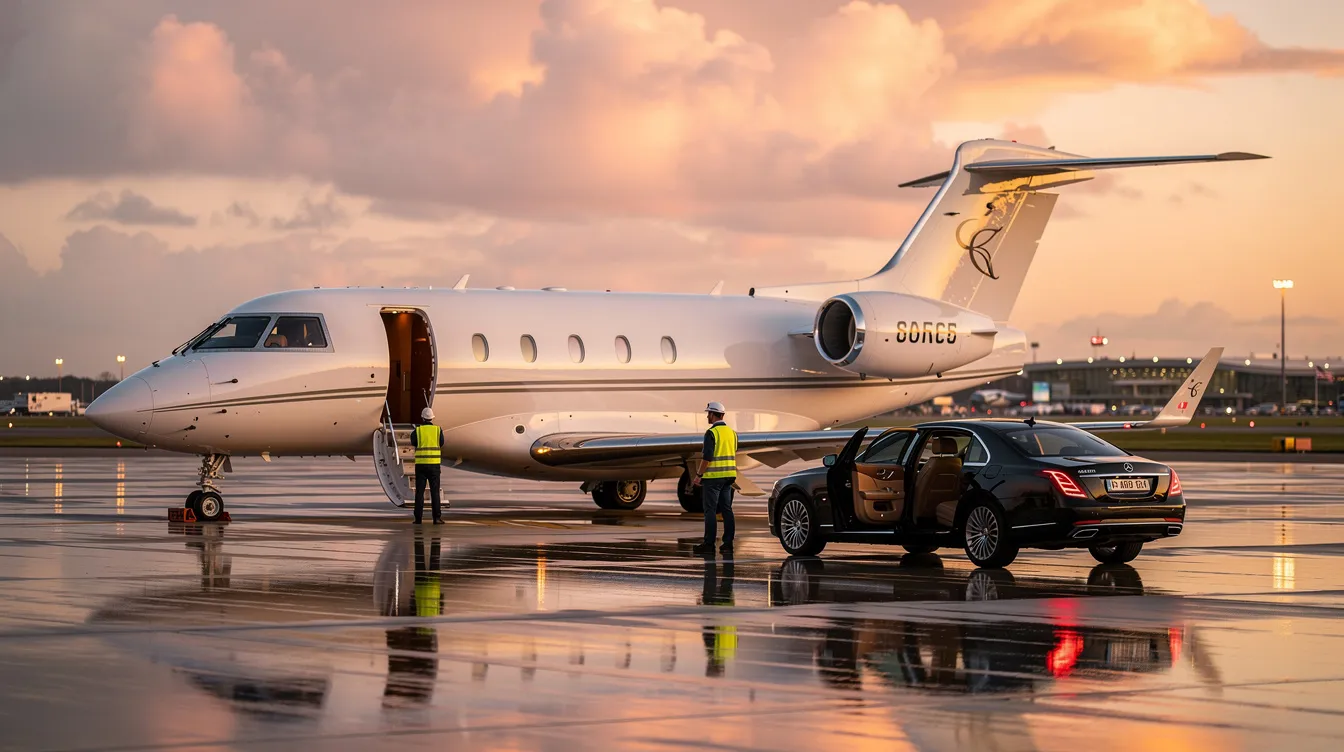
For executives, founders, and discerning families, private jet travel represents more than luxury—it’s a calculated decision to reclaim time, control, and productivity. This guide is designed for executives, business leaders, and families considering private jet travel for business or leisure. Understanding the strategic and practical aspects of private jet travel can help you make informed decisions, maximize value, and elevate your travel experience. This guide explores how BlackJet Jet Cards transform the way you fly, from strategic advantages to practical logistics.
Why Travel in a Private Jet Is a Strategic Advantage
Consider a New York to Los Angeles business trip. Commercial air travel in first class involves 3-4 hours of airport processing—check-in, security lines, boarding—plus a 5-6 hour flight, totaling 10-12 hours door-to-door. Commercial air travel often comes with rigid schedules, delays, and cramped conditions, making it less flexible and comfortable than private jet travel. A private jet cuts this to 6-7 hours: arrive 15-30 minutes before departure at a private terminal, board in minutes, and land closer to your final destination.
Private air travel is fundamentally about control. You set the schedule rather than adapting to commercial timetables. Confidential discussions happen in a closed cabin, not surrounded by strangers. In-flight Wi-Fi supports uninterrupted productivity, allowing you to spend your time more efficiently—something commercial airlines often deliver inconsistently.
The multi-city advantage illustrates what commercial travel cannot match. A private flight enables Dallas to Denver (1.5 hours), then Denver to San Francisco (2 hours), with a same-day return—under 10 flying hours across three destinations. Private jets can access over 5,000 airports in the U.S., while commercial airlines are limited to roughly 500 major hubs. Travelers can spend less than half the time on logistics compared to commercial air travel. Commercial routing would require overnight stays and 20+ hours of travel time due to hub connections.
BlackJet positions itself as a premier provider through its 25+ Hour Jet Card membership. With prepaid hour tiers (25 or 50 hours across cabin classes), members gain predictable pricing, 24/7 access to aircraft from turboprops to heavy jets, and guaranteed availability without the repositioning fees common in charter arrangements.
Private aviation demand remains high due to its ability to save time by bypassing crowded commercial hubs.
Commercial flights are significantly cheaper per seat because costs are distributed among hundreds of passengers.
Aspect | Commercial Air Travel | Private Jet Travel |
|---|
Airport Processing Time | 3-4 hours | 15-30 minutes |
Flight Duration (NY to LA) | 5-6 hours | 5-6 hours (direct) |
Total Door-to-Door Time | 10-12 hours | 6-7 hours |
Schedule Flexibility | Limited | Complete control |
Airport Access | ~500 major hubs | 5,000+ airports, including remote |
Privacy | Low | High (closed cabin) |
In-flight Productivity | Limited Wi-Fi, crowded | High-speed Wi-Fi, private space |
Cost per Seat | Lower (distributed cost) | Higher (full aircraft cost) |
How Private Jet Travel Works Today
Booking Process
Your journey begins with BlackJet’s app-based platform. Search real-time availability, select exact departure times, confirm booking, and receive automated FBO details—often within minutes. Mobile booking platforms for private jet travel allow users to book flights quickly and conveniently from their smartphones or tablets, providing flexibility and ease of access. Many mobile booking platforms offer features such as real-time flight tracking, instant quotes, and the ability to customize flight itineraries, enhancing the overall travel experience.
A Jet Card provides prepaid guaranteed access to aircraft in specified categories without ownership. Booking a charter jet involves renting an entire aircraft and its crew, providing total control over the travel experience.
Arrival at the FBO
Upon arrival at the Fixed-Base Operator, the experience diverges entirely from commercial airports. At facilities like Teterboro near New York or Van Nuys in Los Angeles, you enter quiet lounges with plush seating, complimentary beverages, and direct ramp views. There are no lines. Boarding occurs within 15 minutes of scheduled departure, and you walk directly to your aircraft. Fixed base operators (FBOs) play a crucial role in safety and operational standards, serving as the departure and arrival points for private jets and ensuring staff are vetted and regulations are followed. The Transportation Security Administration (TSA) has specific recommendations for FBOs that include security protocols for pilots, crew, and aircraft mechanics to ensure safety during private flights.
Pricing Models
On-demand charter means paying per leg with variable pricing. Jet Card membership pricing in private aviation is primarily driven by the hourly rate of the aircraft, which includes the jet, crew, and fuel. Booking a charter jet involves renting an entire aircraft and its crew, providing total control over the travel experience, along with the convenience and premium features associated with charter flights. A Jet Card, by contrast, provides prepaid guaranteed access to aircraft in specified categories without ownership. BlackJet’s model offers fixed hourly rates and priority during peak periods.
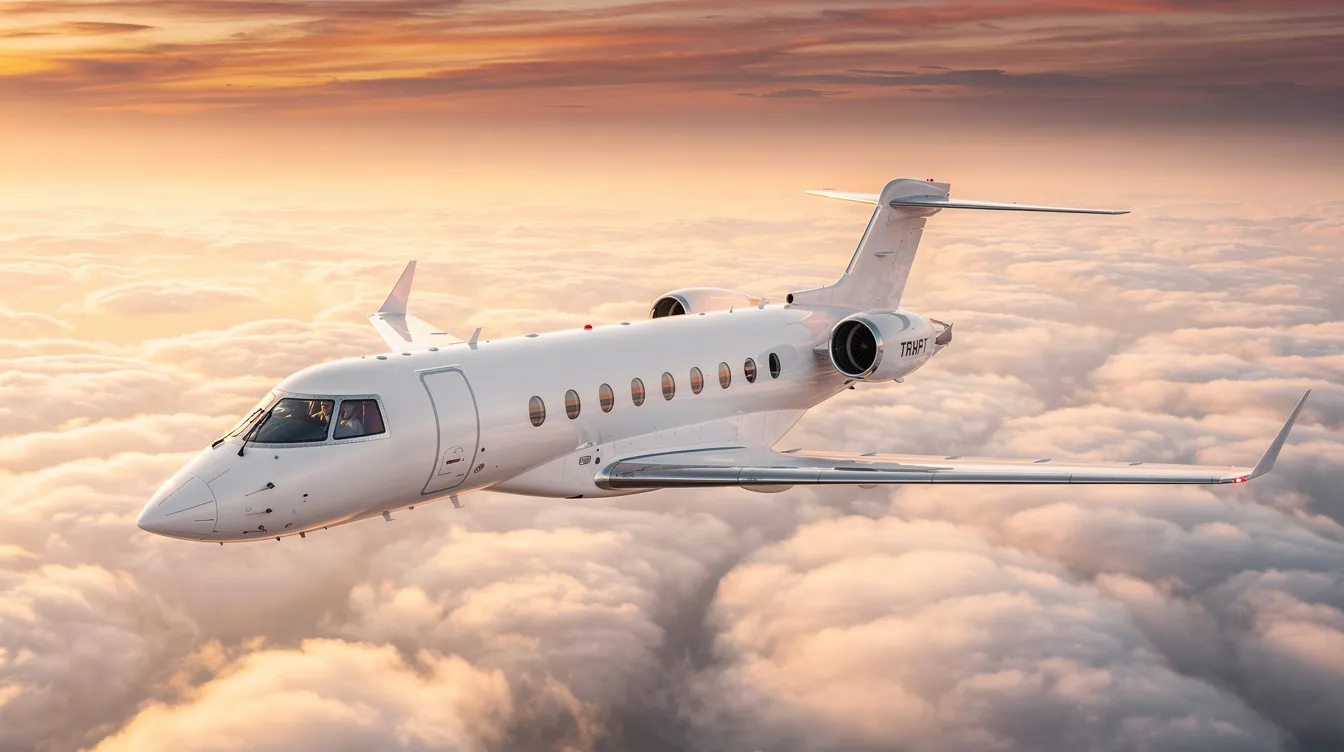
Booking timelines vary by urgency. The timeline for booking a private jet can range from months in advance to as little as two hours before departure. Travelers can book private flights as late as 24 hours before departure, allowing for flexibility in travel plans, although last-minute bookings may require additional time for aircraft preparation. Same-day flights work for urgent domestic travel if aircraft are available. Most planned trips book 24-72 hours ahead. For peak holiday periods—Christmas, July Riviera travel, ski season—7-14 days advance notice helps secure aircraft and avoid surcharges.
Private jet operators often assign a dedicated account manager to each client, who remains available for real-time communication and assistance throughout the booking process and during the flight. Many jet card programs offer flexibility in terms of flight scheduling, allowing users to book flights on short notice and adjust itineraries as needed.
Business Travel in a Private Jet
Sample Itinerary
A Chicago-based CEO using BlackJet departs at 7 AM for Detroit (1-hour light jet), lands at a plant-adjacent airport, conducts a 2-hour meeting, then flies to St. Louis (1.5 hours). By 3 PM, business concludes. By 5 PM, she’s back in Chicago—total door-to-door under 12 hours. Commercial airlines would require 4+ hour connections and slot restrictions, making this specific trip impossible within a single day.
In-Flight Productivity
High-speed in-flight Wi-Fi (up to 100Mbps on midsize and heavy jets) enables video calls and secure document review. Aviation experts design cabins as mobile offices: club seating with fold-out tables, multiple power outlets, and enclosed spaces for confidential board presentations. Private jets can offer superior comfort, often featuring custom layouts and plush seating that can convert into beds.
Health and Safety
The time-value calculation frames private flights as an investment. Saving 4 executive hours valued at $2,000/hour ($8,000 total) on a $20,000 midsize round-trip often yields positive ROI and can justify figures commonly seen across a comprehensive private jet price list. Private flights involve significantly fewer touchpoints and smaller passenger counts, reducing exposure to germs. Access to 5,000+ smaller U.S. airports—versus 500 commercial hubs—means landing at White Plains (15 miles from Midtown Manhattan versus JFK’s 45) or London Farnborough (45 minutes to the City versus Heathrow’s 90).
Private jets are subject to the same safety regulations as commercial jets, as outlined by the Federal Aviation Administration (FAA), which mandates that all aircraft must be well-maintained and operated by trained pilots and staff. Charter companies often have their own vetting processes for staff and crew, which can include checking the experience of pilots and how the company ensures private jets are safe and comfortable for passengers.
Aircraft Category | Range (miles) | Typical Passengers | Ideal Use Case |
|---|
Turboprop | 600-1,000 | 6-9 | Regional travel, short distances |
Light Jet | Up to 1,500 | 4-8 | Short trips, domestic flights |
Midsize Jet | ~2,450 | 6-9 | Cross-country flights, e.g., NY-LA |
Heavy Jet | Up to 7,000 | 12-16 | Long-haul international travel |
Leisure Travel in a Private Jet
Family Travel Example
Picture a family of six flying from London to Nice for a July 2026 Riviera vacation. Every moment of travel in a private jet is designed to be savored, from the instant you arrive at the FBO to the final touchdown. Departing 20 minutes after arrival at the FBO, skipping queues critical when traveling with children, accommodating paddleboards and golf clubs, and landing closer to villas—total travel time 2.5 hours versus commercial’s 6+ hours with security and connections.
Ski Trip Example
For a New York to Jackson Hole ski group in January, a super-midsize jet hauls 8 sets of skis and a pet in-cabin, landing at JAC with direct resort access unavailable commercially without connections. These leisure scenarios reveal all the benefits of flying private, including the ability to explore exclusive destinations around the world with seamless, personalized service.
Onboard Amenities
Private aviation offers personalized amenities, including gourmet catering, flexible baggage rules, and the ability to bring pets. BlackJet Jet Cards enable weekend getaways with fixed pricing. Depart Dallas Friday afternoon for Aspen (2.5 hours), return Sunday evening—no peak surcharges, no uncertainty. During boarding and departure, safety procedures are paramount, with seat belt requirements and attentive crew ensuring a smooth takeoff and passenger comfort. Onboard comforts include catered meals from local sources, adjustable lighting and temperature (68-78°F), and lie-flat configurations on longer flights.
Understanding Aircraft Categories & Cabin Classes
BlackJet accesses aircraft across the spectrum, matching the right aircraft to your specific trip.
Turboprops (e.g., Pilatus PC-12): Range up to 1,800 nm, 6-9 passengers. Ideal for regional travel and short distances, such as New York to Washington (1.5 hrs).
Light Jets (e.g., Citation CJ3+): Range up to 2,000 nm, 6-8 passengers. Suitable for short trips and domestic flights, like New York to Miami (2.5-3 hrs).
Midsize Jets (e.g., Hawker 800XP): Range up to 2,600 nm, 8 passengers. Perfect for cross-country flights, such as Los Angeles to Chicago.
Super-Midsize Jets (e.g., Challenger 350): Range up to 3,200 nm, 8-10 passengers. Great for longer routes, like New York to London (6.5 hrs).
Heavy Jets (e.g., Gulfstream G650): Range up to 7,000 nm, 12-16 passengers. Designed for long-haul international travel, such as Los Angeles to Honolulu or transatlantic flights.
Advisors match aircraft to profile: 4 passengers with 2 golf bags fit a light jet, while 10 passengers with 8 skis require super-midsize capability for shorter runways like Aspen’s 7,000 feet.
BlackJet Jet Cards vs Charter vs Ownership
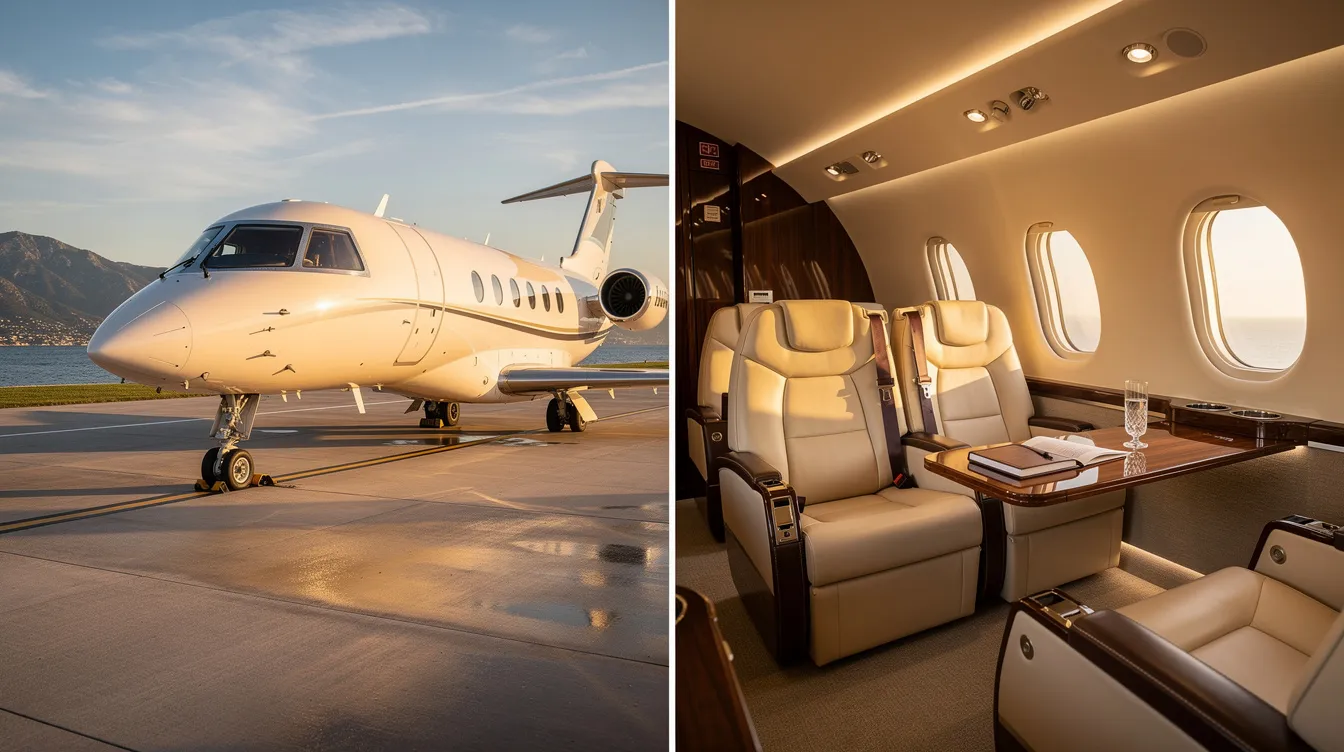
Three access models define private aviation. On-demand charter means paying per trip with variable pricing ($5,000-$15,000/hour) plus repositioning fees, often adding 20-50%. This is typically referred to as a charter jet service, offering flexibility, convenience, and premium onboard amenities for private travelers. Jet cards provide prepaid access to private jets, allowing travelers to book flights without the need for ownership or long-term commitments. Jet Card membership provides prepaid hours with fixed terms. Full ownership requires $5-75M acquisition plus $1-4M annual fixed costs for flight crew, hangar, and maintenance.
Model | Cost Range | Commitment | Availability | Benefits |
|---|
On-demand Charter | $5,000-$15,000/hour + fees | None | Variable (~70%) | Flexibility, pay per flight |
Jet Card | ~$250,000 (25-hour tier) | Prepaid hours | High (~95%) | Fixed rates, priority access |
Ownership | $5M-$75M + $1M-$4M/year | Full ownership | Full | Total control, asset ownership |
BlackJet Jet Card tiers—25 or 50 hours across cabin classes—suit travelers flying 20-40 hours annually. A 25-hour jet card at approximately $250,000 delivers predictable cost versus charter volatility that might reach $350,000 for equivalent flights. Jet card programs offer flexibility in flight scheduling, allowing users to book flights on short notice and adjust itineraries as needed. Jet card holders also enjoy additional benefits such as access to a variety of aircraft types, personalized service, and the ability to travel to smaller airports not serviced by commercial airlines.
Practical benefits include locked-in rates without fuel surcharges, priority access during peaks (Christmas–New Year, Art Basel Miami), simplified billing, and no empty-leg hunting. For frequent flyers, choosing among the best jet cards for regular travelers ensures ownership-level reliability without buying an aircraft. Ownership suits 100+ annual hours, but Jet Cards avoid capital tie-up while delivering 95% availability versus charter’s 70% during high-demand periods.
For most profiles, Jet Cards offer ownership-level access without ownership-level commitment, and understanding overall jet card pricing structures alongside detailed jet card membership costs helps determine the right fit.
Safety, Certification, and Risk Management in Private Aviation
Safety is the primary non-negotiable pillar at BlackJet—before comfort, before speed, before convenience.
BlackJet partners exclusively with operators meeting or exceeding ARGUS Platinum and Wyvern Wingman certifications, plus IS-BAO Stages 1-3 for safety management systems. These audits cover 98% of top operators, ensuring incident rates below 0.1 per 100,000 hours.
Pilot requirements are concrete: 5,000-10,000+ total flight hours minimum, type ratings for specific aircraft (e.g., 100 hours on a G650), recurrent simulator training every 6 months, and two-pilot crews standard.
Consider a winter Los Angeles to Aspen flight. Pre-flight planning includes runway condition analysis, alternate airport identification (such as Rifle/CPR), de-icing protocols with Type IV fluid, and advanced navigation technology including TAWS and EVS. These operational checks ensure you land safely regardless of mountain weather.
Passengers on private jets must go through security checks, but the process is generally faster and less stringent than on commercial flights, allowing for greater convenience while still adhering to safety protocols.
Sustainability and Carbon-Neutral Private Jet Travel
Private aviation carries environmental responsibility. The aviation industry is responsible for approximately 2-3% of global carbon emissions, prompting a push for more sustainable practices. Many private aviation companies are adopting carbon offset programs to help travelers mitigate their carbon footprint when flying.
BlackJet addresses this directly: every flight is carbon neutral by default, at no extra cost to members, while also making private aviation more accessible through cheaper private jet options and efficient access models.
The process tracks fuel consumption (e.g., 500 gallons/hour for midsize = 10 tons CO2), then purchases verified credits through Gold Standard or VCS programs. Projects include reforestation (Panama), renewable energy (wind farms in India), and direct air capture technology from providers like Climeworks.
Sustainable aviation fuel (SAF) cuts lifecycle emissions up to 80%. BlackJet prioritizes operators and airports offering SAF access—currently available at SFO, LHR, and expanding to 10 billion gallons globally by 2030—while also highlighting the cheapest private aircraft options for travelers seeking budget-conscious but sustainable solutions.
Technology & the BlackJet Digital Experience
BlackJet’s mobile platform and web interface deliver instant trip estimates, real-time aircraft availability across a global network, and secure profile management for passenger preferences and flight details, mirroring many of the app-based steps involved when you buy a seat on a private jet.
Real-time support means push notifications on schedule changes, crew profiles, weather advisories, and ground-transfer coordination—all embedded in the app experience. Private jet charter companies typically provide 24/7 real-time support to assist clients with any inquiries or changes to their travel plans, ensuring a seamless experience.
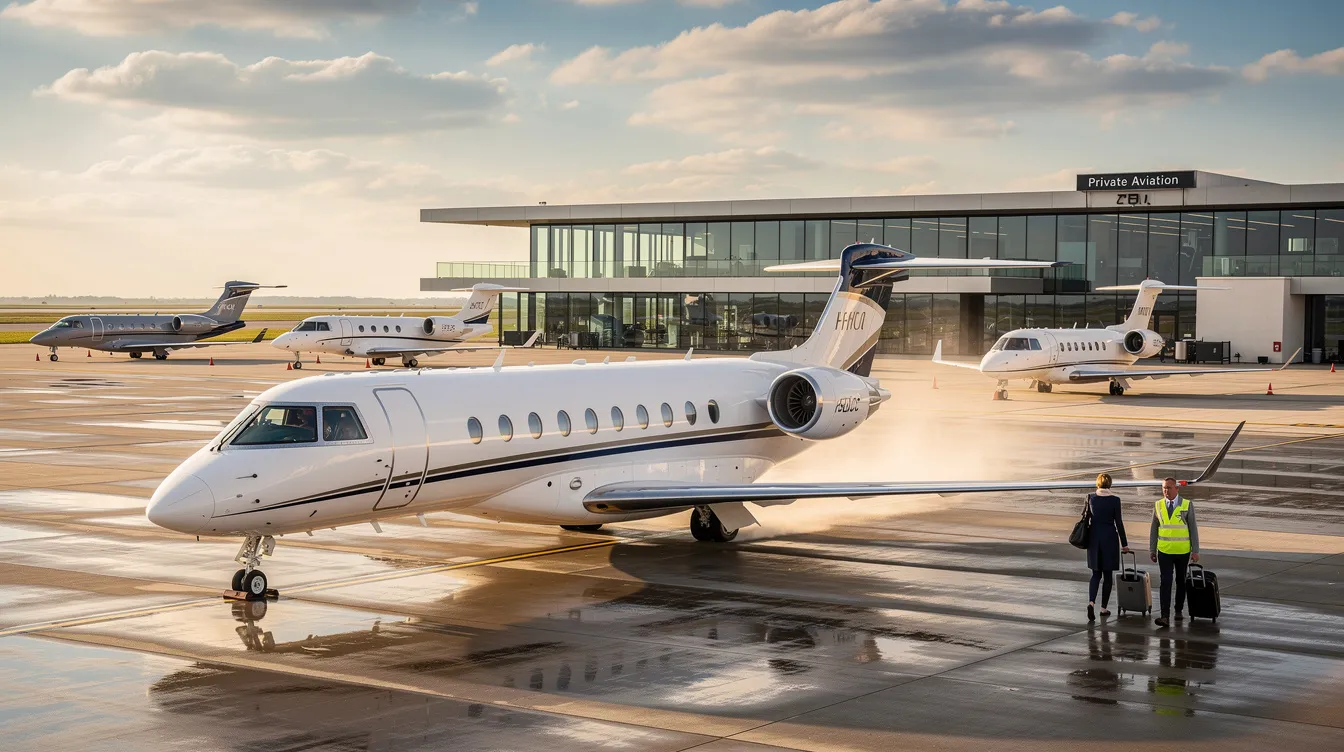
A practical example: you book a London–Zurich flight the evening before a board meeting, adjust departure time by 30 minutes via the app, and receive driver details and FBO directions automatically. No phone calls, no waiting.
Data security receives equal attention: AES-256 encryption, zero-knowledge authentication, GDPR-compliant minimal sharing, and private itineraries visible only to authorized assistants and family members. Double-check any detail from anywhere, anytime.
Practical Considerations When You Travel in a Private Jet
Arrival and Security
Arrive 15-30 minutes before departure.
For domestic flights, a REAL ID is required (mandatory post-May 2025).
Travelers should note that a Federal Excise Tax (FET) of 7.5% applies to all domestic U.S. flights.
International flights require passports.
Customs and immigration are processed through private terminals, with CBP preclearance available at facilities like Teterboro.
Baggage and Pets
Baggage capacity scales by aircraft:
Light jets accommodate 10-20 soft duffels.
Midsize and heavy jets handle 30-50 pieces, including skis (up to 200” linear) and golf clubs.
Smaller jets require flexible luggage; expect extra time for oversized adventure gear on a small plane.
Pet policies allow in-cabin travel for animals under 75 pounds with proper documentation (USDA certificates, EU Pet Passport, current vaccines).
Larger pets fly crated.
Cabin preparation includes blankets, water, and temperature control.
Catering
Catering requests—from Danieli in New York to kosher options in London—require 24-48 hours' notice.
Specify dietary requirements (gluten-free, vegan) early.
Expect $500-2,000 per flight depending on complexity.
Booking Timelines
FAQ: Key Questions About Traveling in a Private Jet
How much does it cost to travel in a private jet from New York to Miami?
Expect $25,000-$35,000 for a light jet (2.5 hours, 6 passengers). Pricing varies by demand, aircraft type, and booking lead time. BlackJet Jet Cards lock in rates to avoid volatility.
Are private jets safer than commercial airlines?
Private aviation under ARGUS/Wyvern certification demonstrates excellent safety records—0.04 fatal incidents per 100,000 departures. Advanced technology, lower cabin density, and rigorous pilot requirements contribute to this record.
How far in advance should I book a private jet flight?
Same-day booking works for urgent domestic flights if aircraft are available. Most clients book 24-72 hours ahead. Peak holidays (Christmas, ski season) benefit from 7-14 days advance planning.
Can I work securely on confidential documents while flying private?
Yes. Enclosed cabins eliminate eavesdroppers, encrypted Wi-Fi supports secure communications, and no person outside your party boards the aircraft.
What is the minimum commitment for a BlackJet Jet Card?
BlackJet offers 25-hour entry tiers (approximately $250,000 for light/midsize access), providing flexibility without full ownership commitment.
Is a Private Jet Right for Your Travel Profile?
Occasional leisure travelers (10-20 hours/year) may find charter sufficient. Frequent regional business flyers (30-50 hours) gain 20-30% savings and consistency through Jet Cards versus variable charter pricing. Global executives flying 100+ hours benefit from Jet Card flexibility over ownership’s capital demands.
A useful rule: if you fly more than 25 hours annually, a Jet Card becomes more efficient than an ad-hoc charter. Evaluating jet card cost per hour against your schedule lets you quantify this advantage. Map your typical year—monthly New York to Florida weekends plus quarterly Europe trips equals roughly 40 hours and 200+ hours saved versus commercial options. Consider destinations, passengers, baggage, and whether you embark often enough to justify membership.
Elevate Your Travel with BlackJet
BlackJet Jet Cards represent a strategic partnership, not simply a service. Predictable pricing, rigorous safety standards meeting every certification benchmark, carbon-neutral flights as standard, and an advanced digital platform combine to deliver private jet journeys without ownership complexity.
Explore BlackJet Jet Card options to discover how private aviation reshapes your travel. For heavier users, a detailed 100-hour jet card cost guide can help frame long-term value. Schedule a consultation to compare your current travel pattern against a tailored solution. Whether your next flight serves a board meeting in Zurich or a family adventure across Africa, fly on your own terms—reclaim the hours, preserve the privacy, and expect seamless travel from the sky to wherever you land.
Conclusion: Discover the BlackJet Difference
Traveling in a private jet is no longer just a luxury; it is a strategic advantage that offers unmatched convenience, safety, and sustainability. BlackJet stands at the forefront of this evolution, combining many private jets across cabin classes with proprietary certification and carbon-neutral flights to deliver an elevated experience. With BlackJet’s seamless mobile booking platform and 24/7 real-time support, you gain more space to relax, flexibility to adapt your itinerary, and access to exclusive destinations beyond the reach of commercial airlines.
Visit www.blackjet.com to explore how BlackJet can transform your travel lifestyle and compare options like a 50-hour jet card for frequent flyers. Join a discerning community of travelers who value time, privacy, and impeccable service. Elevate your journey—because with BlackJet, how you travel truly does matter.


 Sign up with google
 Sign up with Apple