Private jet access is not simply a luxury. For executives managing multi-city schedules, business travelers, high-net-worth individuals, and anyone interested in private aviation technology, it is a strategic instrument. This article is for business travelers, executives, and anyone interested in private aviation technology. We cover turbojet engine fundamentals, their impact on private jet travel, and how BlackJet leverages this technology for members.
Understanding turbojet technology matters for private travel because it directly influences speed, efficiency, and flexibility—key factors that define the value of private aviation. By grasping how these engines work and what sets them apart, travelers can make informed decisions about their travel options and maximize the benefits of private jet access.
This article unpacks how turbojet engine technology translates into real-world travel advantage, clears up common misconceptions around the term "turbo jet," and explains how BlackJet's Jet Card programs convert certified engine power into predictable, carbon-neutral mobility.
What Is a Turbo Jet and Why Does It Matter for Modern Private Travel
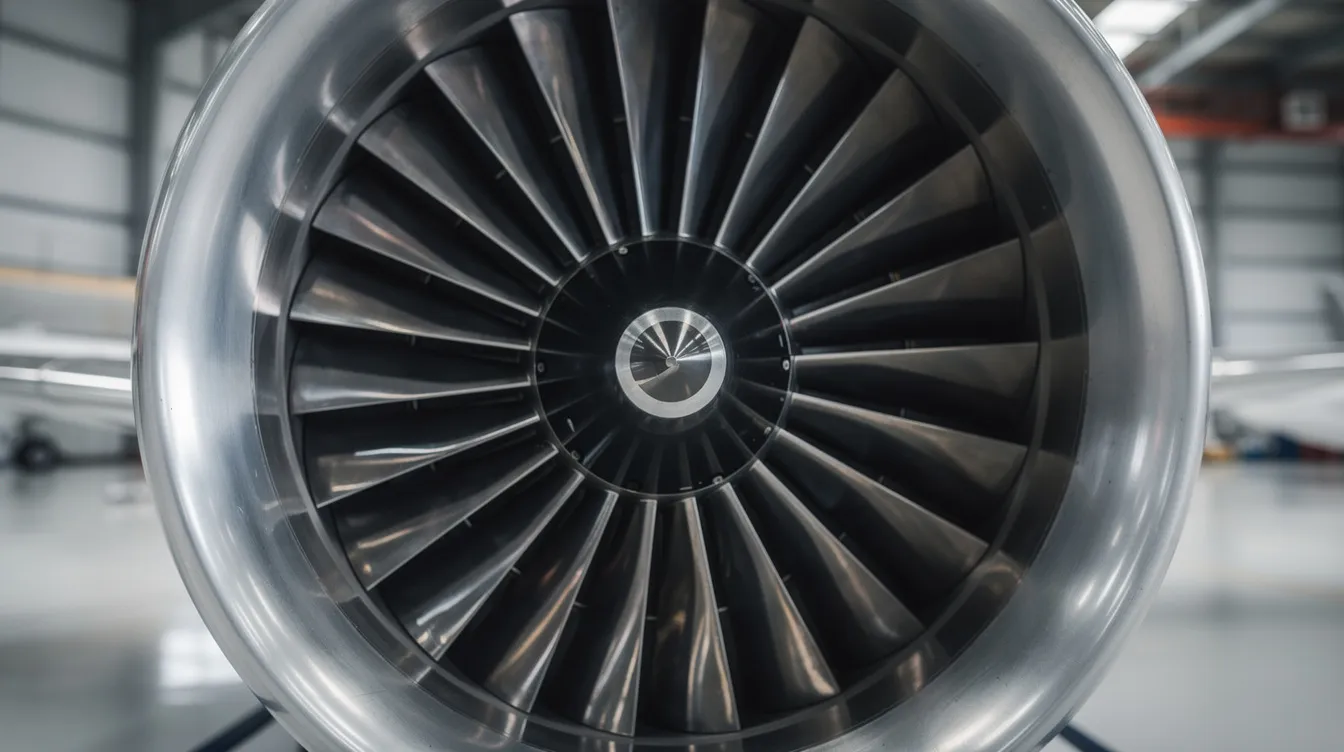
The turbojet engine is the earliest type of gas turbine engine developed for aviation. It produces thrust by accelerating a small volume of air to extreme velocities—every ounce of intake air passes through the compressor, combustion chamber, and turbine before exiting as high-speed exhaust. Turbojet engines lack the bypass fan found in turbofan engines, which means there is no secondary stream of cooler air flowing around the core. This makes turbojets compact, with a small cross-sectional area that allows integration into low-drag designs suited for high-speed flight.
Today, turbojets are primarily used in military fighter aircraft and missiles, where supersonic performance matters more than fuel economy. Turbofans are now standard for commercial airliners and business jets due to better fuel efficiency at subsonic cruise speeds. Turboprops, meanwhile, drive propellers and serve shorter, slower routes.
But the lineage of the turbojet engine lives on in every modern business jet—and it matters for private travel in concrete ways:
Speed: Business jets powered by advanced turbofan engines cruise at Mach 0.85–0.90, covering transatlantic distances nonstop. A private flight from New York to London takes roughly 6.5–7 hours eastbound. A commercial business-class itinerary on the same route, including early arrival, security, and ground transfers, consumes 9–10 hours door to door—a difference of 2–3 hours each way.
Range: Modern engines enable nonstop segments that eliminate layovers. Los Angeles to Vancouver drops from 5–6 hours commercial to roughly 2.5–3 hours private.
Schedule control: Departure on your terms, from airports closer to your origin and destination, with boarding times measured in minutes rather than hours.
BlackJet leverages these turbojet and turbofan-powered aircraft to provide fast, reliable access across North America, Europe, and other countries—turning engine performance into a measurable advantage for members who cannot afford to waste time.
How Turbojet Engine Performance Translates into Real-World Itineraries
Understanding how a turbojet engine works does not require an engineering degree. In simple terms, air enters the engine intake, is squeezed to higher pressure in the compressor stages, mixes with fuel in the combustion chamber, ignites, and the resulting hot gas expands through the turbine and out the exhaust nozzle to provide thrust. Turbojet engines operate on a continuous cycle of intake, compression, combustion, and exhaust—a thermodynamic process known as the Brayton cycle. The net thrust of a turbojet is primarily from the air flow accelerated through this cycle.
Several performance characteristics matter for travelers. Turbojet efficiency increases with higher overall pressure ratios, and raising turbine temperature increases jet velocity. Turbojet thrust increases with Mach number, making the design naturally suited for supersonic flight. Turbojets operate most efficiently at high-subsonic and supersonic airspeeds above Mach 2.5, and they can perform at high altitudes where other engines may struggle.
Turbojet engines are usually suited for supersonic speeds, where turbofans lose efficiency. While pure turbojets are designed for high-speed flight, the turbofan descendants used in modern business jets carry forward many of these principles at optimized subsonic cruise.
Turbojet Performance on Key Routes
Here is what that means on real routes:
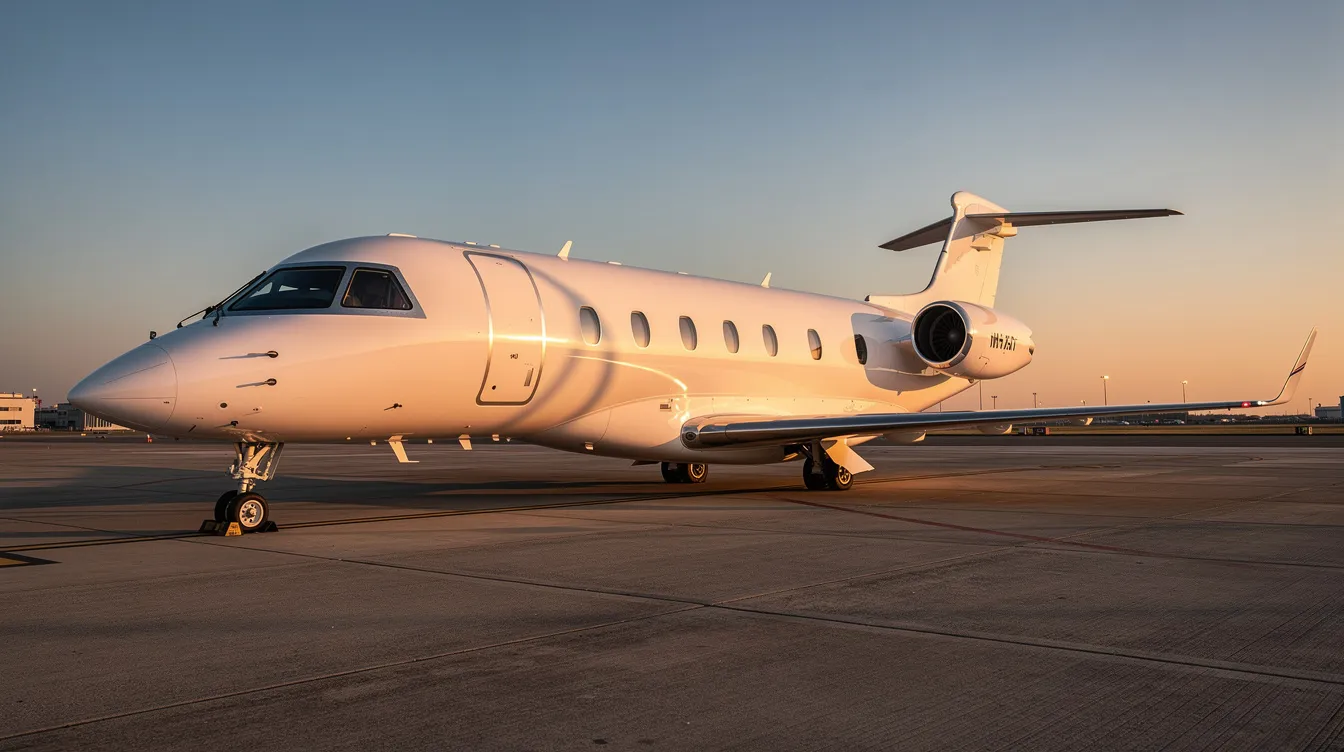
New York to London nonstop: A Gulfstream G600 equipped with twin PW815GA turbofan engines producing ~15,680 lb of thrust each cruises at up to Mach 0.90. Its range of approximately 6,600 nautical miles covers this route with reserves to spare. A BlackJet member departs from a regional FBO, boards 20 minutes before departure, and arrives having saved roughly 120–130 minutes compared to a commercial door-to-door itinerary.
Los Angeles to Dallas same-day: A midsize turbofan jet covers this in about 2–2.5 hours. An executive departs midday, attends an afternoon board meeting, and returns that evening—impossible on a commercial schedule without an overnight stay.
Historical context: The turbojet era of the late 1940s through the 1960s—from early fighters to the Concorde—proved that gas turbine propulsion could reshape travel. Decades of advancement in materials, aerodynamics, and digital engine control have distilled that raw speed into the efficient, long-range business jets available today.
Turbo Jet Power vs Pressure Washer Power: Understanding Pressure, Flow, and Misconceptions
The phrase "turbo jet" appears in places far removed from aviation. Search for it online,e and you will hear about a product called the Turbo Jet Power Washer—a garden hose attachment that claims to turn any hose into a power washer. The marketing is appealing: it connects to any garden hose, has a built-in pressure chamber for increased water flow, and includes two nozzles for different spray patterns—a jet-stream nozzle and a fan-spray nozzle. The Turbo Jet Power Washer is made with durable aluminum and brass fittings, is lighter than traditional pressure washers, and is designed for outdoor cleaning tasks like car washing, patio cleaning, and siding. It promises to turn any hose into a power washer capable of handling dirt, dust, and debris on your driveway, lawn, yard, brick, window, and concrete surfaces around the house.
The reality, according to user reviews, is less dramatic. Users report it provides less pressure than a standard hose nozzle, let alone equaling the blast of a $400–$500 gasoline pressure washer rated at 2,500–3,000 psi. For serious patio cleaning or washing a garage floor, the gadget falls short. The lesson is clear: clever marketing language does not equal certified performance.
In aviation, the stakes of that gap between promise and delivery are orders of magnitude higher.
Turbojet Engines vs. Power Washers: Key Differences
Turbojet Engine (Aviation) | Turbo Jet Power Washer (Consumer Gadget) |
|---|
Generates tens of thousands of pounds of thrust through controlled combustion of aviation fuel at extreme temperatures | Manipulates water pressure at the end of a garden hose |
Performance is measured in thrust (pounds-force), specific fuel consumption, certified climb rates, and validated range under real-world conditions | Performance is measured in psi and gallons per minute |
Certified, tested, and maintained to rigorous aviation standards | Marketed with consumer claims, not subject to aviation-level certification |
Used for global mobility and high-speed travel | Used for household cleaning tasks |
BlackJet selects aircraft and engine combinations based on validated performance data—published cruise speeds, payload-range charts, dispatch reliability metrics—not "gadget-level" marketing claims. When a member books a flight, the aircraft's capabilities have been tested, certified, and maintained to standards that consumer accessories never approach.
From Runway to Destination: How BlackJet Uses Turbojet Aircraft Across Cabin Classes
BlackJet's Jet Card model gives members prepaid access to private jets across multiple cabin types. With 25-hour Jet Card options and 50-hour Jet Card programs, customers purchase blocks of flight time at fixed or capped hourly rates, then book flights 24/7 through digital tools and real-time human support. The aircraft selection is matched to each mission: engine performance, range, cabin space, and passenger count all factor into which plane meets a member at the FBO.
Light and Midsize Turbojet Aircraft for Regional Missions
Light jets carry 4–7 passengers with ranges of roughly 1,000–2,500 nautical miles, making them ideal for regional missions. Popular models from recent years include the Cessna Citation CJ4 Gen2, Embraer Phenom 300E, and Citation XLS+. These aircraft are powered by compact turbofan engines that deliver efficient climb and cruise performance on legs like Chicago–Toronto, Paris–Geneva, or Dallas–Denver, illustrating many of the considerations covered in our guide to the best small private aircraft for different missions.
Their key advantage is access. Small private jets and midsize jets operate from smaller airports with shorter runways, often located closer to city centers or suburban offices than major hubs. A BlackJet member flying from a private FBO skips the congestion of O'Hare or CDG, arriving 15–20 minutes before departure rather than two hours. Fuel burn per hour is lower than that of larger aircraft, keeping price per leg competitive for short-haul travel. For a pro traveling several times a month regionally, these aircraft handle the workload without excess.
Super-Midsize and Large-Cabin Jets for Intercontinental Travel
When the mission requires crossing oceans or continents nonstop or accommodating larger groups, more powerful turbofan engines and large-cabin private jets for around 20 passengers deliver. Aircraft like the Gulfstream G500 (range ~5,500 NM, cruise Mach 0.85+), Dassault Falcon 8X (~6,450 NM), VIP airliners and other private jets for up to 50 passengers, and Bombardier Global 6500 (~6,600 NM) turn multi-leg commercial itineraries into single, efficient segments.
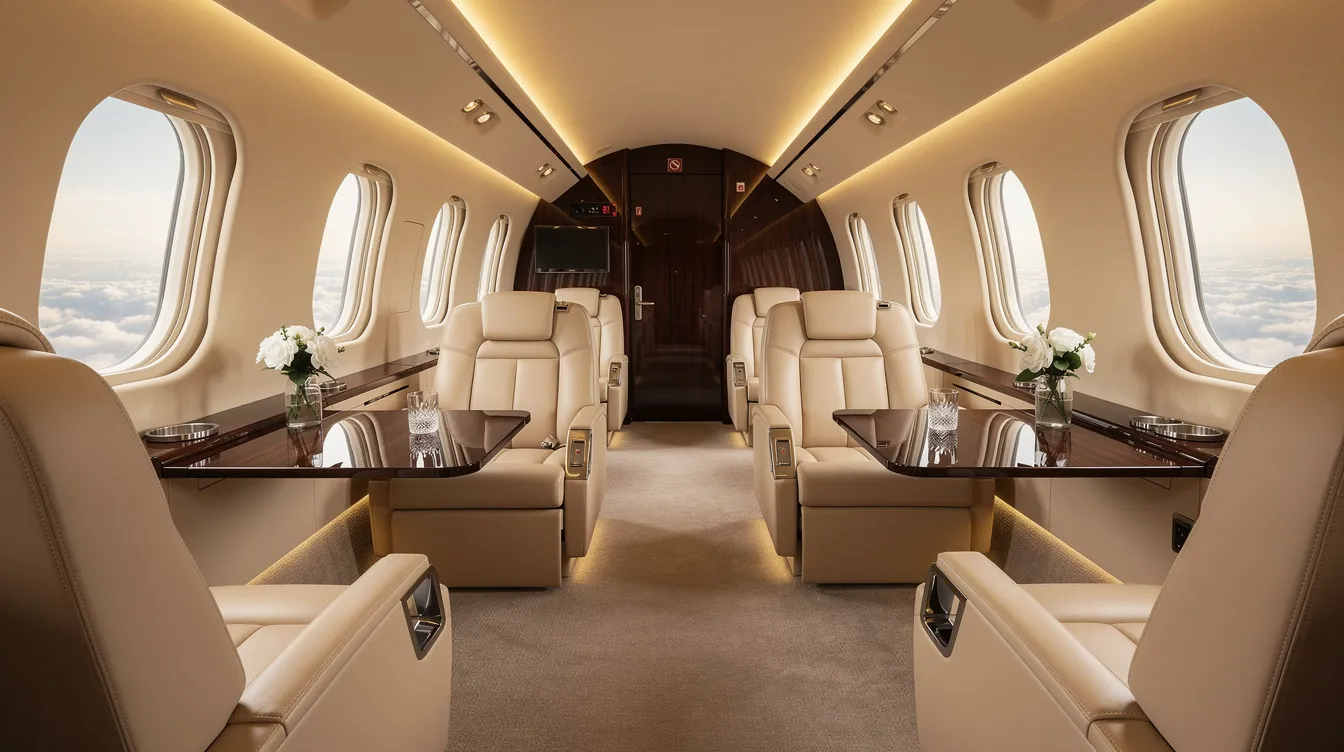
Miami to São Paulo: A large-cabin jet covers this ~4,200 NM leg nonstop in approximately 8 hours, with cabin altitude maintained under 4,000 feet for comfort. Commercial alternatives involve connections through hubs and up to 14 hours of total travel.
London to Dubai: Roughly 3,000 NM nonstop on a super-midsize jet, arriving at a private terminal rather than navigating the sprawl of a major international airport.
Family trip, London to Nice: A lightweight super-midsize jet departs Farnborough on Friday evening and lands in Nice in under two hours, delivering the family to their weekend retreat with the majority of Friday evening intact.
These aircraft carry higher hourly costs, but the installation of time savings, comfort, and schedule certainty justifies the investment for executives and families who value every hour.
Safety, Certification, and Advanced Control Systems in Turbojet Operations
Modern turbofan and turbojet engines rely on FADEC—Full Authority Digital Engine Control—systems that manage fuel flow, compressor staging, and turbine temperature with precision no human pilot could replicate manually. These control systems optimize thrust delivery, protect against overspeed or overtemp conditions, and reduce pilot workload to enhance safety margins, building on core principles shared across the main types of jet engines.
Beyond the engine itself, continuous health monitoring tracks vibration, oil debris, and performance trends in real time. If a component shows early signs of fatigue, maintenance happens proactively—before it becomes a report on an incident page.
Certifications: BlackJet partners exclusively with operators holding recognized safety audits such as ARG/US Platinum or Gold, Wyvern Wingman, or IS-BAO certification. These audits verify training, maintenance standards, and operational protocols across the U.S., Europe, and other countries.
Historical techniques: Turbojets can use afterburning for thrust augmentation—a technique where additional fuel is injected into the exhaust stream for a dramatic increase in thrust. Water and methanol injection served similar purposes in early military aircraft. These methods are not used on civil business jets; they violate noise, emissions, and maintenance constraints. Turbojet engines have high noise levels due to high-velocity exhaust, which is another reason civil aviation moved to quieter turbofan designs.
Pre-flight checks: Engine inspections include borescope examinations of turbine blades and compressor components, trend monitoring of exhaust gas temperature and fuel consumption, and scheduled overhauls per manufacturer guidelines. Every inspection is documented, every finding addressed before the aircraft returns to service.
Why Engine Reliability Matters More Than Raw Thrust in Private Travel
Headline specs—maximum thrust, peak RPM, top Mach number—grab attention. But what a traveler actually needs is dispatch reliability: the percentage of scheduled flights that depart without mechanical delay. Redundancy matters too; twin-engine business jets provide a built-in safety margin that single-engine designs cannot match.
Consider the contrast:
A consumer Turbo Jet Blower can reach speeds of 800,000 RPM, according to its marketing. Impressive on a stock product page, irrelevant to whether it will run reliably after six months of use.
Certified aircraft engines, by comparison, operate within carefully managed hour limits and cycle counts, with on-condition maintenance programs guided by FADEC data and trend analysis.
BlackJet evaluates fleet partners on engine in-flight shutdown rates, unscheduled maintenance events, airflow consistency at altitude, and age of powerplants. These reliability metrics determine schedule certainty for members far more than a few extra pounds of thrust on a spec sheet.
Efficiency and Sustainability: From Turbojet Fuel Burn to Carbon-Neutral Flights
High fuel consumption is a well-known disadvantage of turbojet engines, and turbojet engines are relatively inefficient at lower speeds and altitudes. Turboprops may be more efficient than turbojets at low speeds and altitudes, which is why they serve short regional routes.
Since the 1960s, turbofan development—higher pressure ratios, advanced turbine materials like single-crystal superalloys and ceramic matrix composites, aerodynamic refinements including winglets—has dramatically reduced fuel burn per passenger-mile in business aviation, which also influences how operators think about jet card cost per hour when matching aircraft to missions.
Sustainability Initiatives
BlackJet's carbon-neutral commitment works in concrete terms and aligns with the broader push toward more affordable, efficient private jet options:
Fuel burn per flight hour is calculated using known emission factors (kg CO₂ per kg of fuel burned).
Total emissions are summed per trip, and the balance is offset through verified projects—reforestation initiatives and renewable energy installations certified by standards such as VCS or Gold Standard.
This is not an abstract promise; it is an auditable process.
Sustainable aviation fuel (SAF) adoption is accelerating. As of 2026, certain FBOs in North America and Europe offer blends of up to 35% SAF, reducing lifecycle carbon emissions at the point of delivery. BlackJet works with partner operators who participate in these programs where available.
A pressure washer makes its power visible—a clean patio, a spotless driveway. Aircraft emissions are invisible but measurable. Accountability in private aviation means publishing the numbers, not hiding behind vague language.
Balancing Performance and Responsibility in Engine Choice
Choosing the right aircraft for a given mission is not just about speed—it is about energy efficiency. A modern light jet on a 2-hour New York–Miami leg burns significantly less fuel than an older, heavier midsize aircraft covering the same route. Understanding private jet sizes and categories and the different types of private jets for each traveler profile helps frame these trade-offs. BlackJet's flight advisors use aircraft performance data and routing tools to recommend options that optimize both time and environmental impact.
For a 25-hour Jet Card member flying New York–Miami monthly, selecting a fuel-efficient light jet over a legacy midsize aircraft can reduce annual CO₂ output by a meaningful margin. That is a practical decision, not an abstract gesture—and it is the kind of guidance BlackJet provides as standard.
Practical Use Cases for BlackJet Members
Private aviation powered by modern jet engines supports a range of lifestyles. Here are scenarios drawn from the kind of itineraries BlackJet members actually fly:
Same-day multi-city executive travel: A managing director needs to attend a morning meeting in Frankfurt and an afternoon session in Milan, returning to London by evening. Using a private jet, she departs London at 6:30 AM, lands in Frankfurt by 8:00 AM, conducts her meeting, departs at 11:00 AM for Milan, arrives by noon, and is back at Farnborough by 8:00 PM. On commercial flights, this itinerary would require an overnight stay and at least two connection windows.
Weekend family retreat: A couple flies from London to Nice on Friday evening, returning Sunday. Private departure from a smaller London airport means no two-hour queue at Heathrow. More weekends were enjoyed and fewer weekends were wasted.
Onboard productivity: Quiet cabins, lower cabin altitude, stable environments, and Wi-Fi connectivity turn flight time into working hours. A guy who loses three hours to a commercial layover loses those hours permanently. A BlackJet member working from a private cabin at 41,000 feet does not.
Reimagining Everyday Tasks: From Car Washing to Car Travel
People upgrade from a garden hose to a power washer because they want more pressure, faster results, and less effort on tasks like wash routines for their car, driveway, or patio. The analogy holds for travel: upgrading from commercial to BlackJet unlocks a higher level of productivity and control over your schedule.
A Turbo Jet Power Washer cannot truly rival a professional pressure washer for cleaning brick or siding—users have passed judgment on that in numerous reviews. But BlackJet's network of professional operators genuinely rivals or surpasses commercial first class for time saved and comfort delivered. Think of a delayed commercial flight after a long day as scrubbing a concrete driveway with a weak hose—exhausting and inefficient. An on-time private departure is the satisfying blast of a properly rated machine: the job gets done, and you move on.
Choosing the Right Kind of "Turbo Jet": Gadgets vs. Global Access
The term "turbo jet" spans a confusing range of products. Garden hose nozzles, patio cleaners, handheld blowers, hair-dryer style car dryers, and patented leaf-clearing accessories for your lawn and yard all borrow the name. These are lightweight consumer gadgets at a price point under $100–$300, designed for visible but limited force on household tasks around the house and garage. Images on their product page suggest professional-grade results; the reality, as many customers in England and elsewhere have noted in November reviews and beyond, is more modest.
Genuine turbojet and turbofan engines powering business aircraft operate on an entirely different scale: certified over 10,000+ hours, producing tens of thousands of pounds of thrust, subject to rigorous safety and environmental regulation, with consequences of failure that demand absolute quality in every component. The installation, maintenance, and oversight of these engines involve standards that no consumer gadget will ever need.
BlackJet is focused on the latter. Real turbojet power translated into global mobility—not household accessories. In plain comparison: a consumer "Turbo Jet" product cleans your driveway for the price of a garden hose attachment. A BlackJet Jet Card opens access to a global network of certified aircraft that can reach virtually any destination, with the safety, speed, and comfort that consumer gadgets cannot begin to equal.
How BlackJet Jet Cards Turn Turbojet Power into Everyday Utility
The core Jet Card concept is straightforward: members purchase prepaid blocks of flight hours—typically 25 or 50 hours—credited toward flights across multiple aircraft categories. Our broader guide to Jet Card cost and membership pricing explains how these programs are structured, while a deeper dive into Jet Card pricing components breaks down hourly rates, fees, and value. Industry rates in 2026 range from approximately $5,000–$7,500/hr for light jets to significantly higher rates for large-cabin aircraft, with specific structures detailed in our guides to 100-hour Jet Card costs and 50-hour Jet Card value and pricing.
Booking: 24/7 digital tools handle standard requests. For complex, multi-leg international trips, real-time human support manages aircraft matching, overflight permits, and customs logistics—and for those comparing models, it's helpful to contrast Jet Cards with unlimited private jet flight memberships.
Lead times: Non-peak days allow shorter notice; high-demand periods or rare large-cabin aircraft benefit from booking, and frequent flyers weighing different programs can refer to our overview of the best Jet Cards for regular travelers.
Aircraft matching: Members choose outcomes—departure time, cabin size, range—and BlackJet matches them to the optimal aircraft, especially within structured options like the BlackJet 25+ Hour Jet Card. The engine performance and category selection are abstracted; you define where and when, BlackJet handles the how.
Regional reach: Membership spans the U.S., Europe, and selected other countries through vetted operator partners.
Jet Cards vs. Ownership, Charter, and Commercial First Class
Option | Pros | Cons |
|---|
Ownership | Full control, always-available aircraft | High up-front capital, ongoing crew/hangar costs, depreciation, and regulatory burden |
Ad-hoc Charter | Flexibility, no long-term commitment | Variable pricing, repositioning fees, and no guaranteed availability |
Jet Card | Price predictability, priority access, and no ownership burden informed by clear Jet Card cost per hour benchmarks | Higher per-hour cost than some charters, but offset by reliability and convenience |
Commercial First | Lower per-seat cost when compared with some providers like NetJets Jet Card programs | Rigid schedules, hub-and-spoke routing, lengthy ground procedures, and no privacy |
Total journey time on a BlackJet Jet Card flight is consistently shorter, with the ability to use secondary airports and convert flight time into productive work or genuine rest.
Frequently Asked Questions About Turbo Jets and BlackJet Access
What is a turbojet engine in simple terms?\
A turbojet engine is a type of gas turbine that draws in air, compresses it, mixes it with fuel, ignites it, and expels the resulting hot exhaust at high velocity to produce thrust. It operates on the Brayton cycle and is the simplest form of jet engine. Unlike turbofans, it has no bypass fan—all air goes through the core.
Are turbojet engines still used, or are they all turbofans now?\
Pure turbojet engines are now limited primarily to military aircraft and missiles, where supersonic performance at high altitude is the priority. Civil aviation—including business jets—uses turbofan engines almost exclusively, benefiting from their superior fuel efficiency and lower noise at subsonic speeds.
How does BlackJet ensure engine and aircraft safety?\
BlackJet partners only with operators holding recognized safety certifications such as ARG/US, Wyvern, or IS-BAO audits. Engine maintenance programs follow OEM requirements, with FADEC-driven health monitoring, borescope inspections of blades, trend analysis, and scheduled overhauls. Dispatch reliability and leak-free operational records are key selection criteria.
How are my flights carbon neutral?\
Fuel burn per flight is calculated using standard emission factors. Total CO₂ output is balanced through verified offset projects—such as reforestation or renewable energy—certified by VCS or Gold Standard. SAF is used where available from partner FBOs, further reducing lifecycle emissions.
How far in advance do I need to book with a Jet Card?\
Many flights can be booked with short notice, especially on light and midsize jets during non-peak periods. For large-cabin or ultra-long-range aircraft, or during high-demand events, booking several days to a week ahead is recommended.
Can I fly to smaller airports closer to my home or office?\
Yes. Light and midsize jets access airports with shorter runways and private FBOs that major airlines cannot serve. This often places you minutes from your final destination rather than an hour's drive from a major hub.
Can I use my hours for flights in other countries?\
Absolutely. BlackJet coordinates with vetted international operators, handling overflight permits, customs, and local regulatory requirements so your hours work seamlessly across borders.
Is BlackJet a seller of Turbo Jet power washer nozzles or lawn equipment?\
No. BlackJet is a private aviation company. We have no connection to consumer "Turbo Jet" branded garden hose nozzles, blowers, or cleaning accessories. Our business is certified private jet access through Jet Card programs.
Conclusion: Elevate Your Travel with Authentic Turbojet Power
Real turbojet and turbofan power is about global mobility, not a blast of water from a hose attachment. It is about reaching London from New York in under seven hours, attending meetings in two cities on the same day, and arriving rested because your cabin altitude was lower than any commercial aircraft can offer. BlackJet's Jet Card programs deliver this access with rigorous safety standards, carbon-neutral performance, and the flexibility to fly on your terms, without the burden of aircraft ownership.
Discover how BlackJet can reshape your travel. Explore our Jet Card programs and experience what authentic turbojet power delivers—effortlessly, sustainably, and on your schedule.


 Sign up with google
 Sign up with Apple