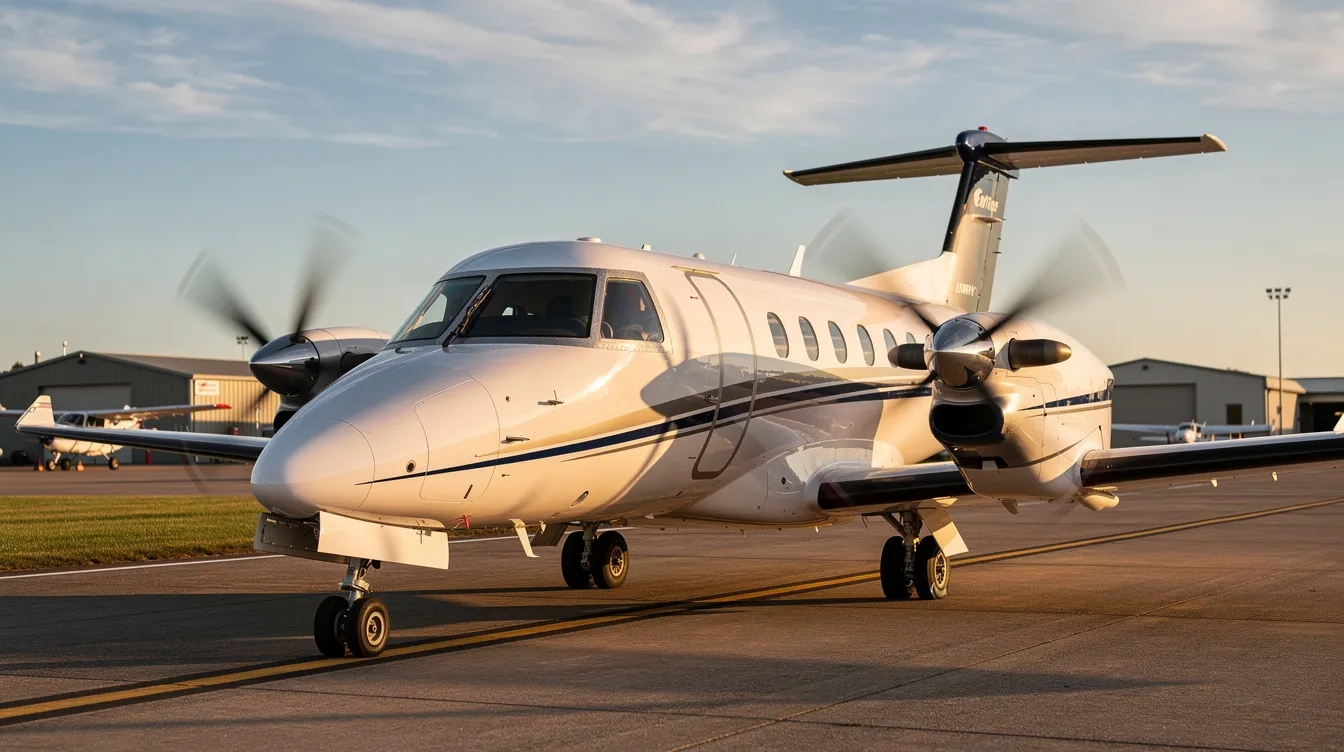
For high-net-worth travelers and corporate executives, the turboprop private jet isn’t a compromise—it’s a precision tool. When the mission calls for regional access, runway flexibility, and door-to-door efficiency, these aircraft outperform light jets in ways that matter most: total travel time, airport proximity, and operating costs.
Why Turboprop Private Jets Are a Strategic Advantage
Consider a New York to Nantucket trip. Commercial business class routes you through Boston Logan, followed by a 2-3 hour drive or ferry. Total journey: 5-6 hours. A turboprop private plane from Teterboro lands directly at ACK’s 3,200-foot runway in under 90 minutes of flight time—cutting your door-to-door travel to under 3 hours.
This isn’t about budget. It’s about access.
BlackJet members book modern turboprops directly through their premium private jet card programs, with carbon-neutral flights and 24/7 digital support. An executive team recently used a King Air 350 for a same-day New York to Martha’s Vineyard site visit, accessing MVY’s short runway where most jets simply cannot land.
Key advantages of turboprop aircraft for regional missions:
Time savings: Land closer to your final destination, eliminating ground transfers
Airport access: Operate from over 7,000 smaller airports inaccessible to most jets, including runways as short as 3,200 feet, enabling access to remote or unpaved airfields
Cost efficiency: 30-50% lower charter rates than comparable light jets, with turboprop charters generally 10%–40% cheaper for short-range journeys under two hours
Sustainability: 10-60% better fuel efficiency on routes under 600 nm, burning 40% to 50% less fuel than similarly sized light jets, especially on short routes
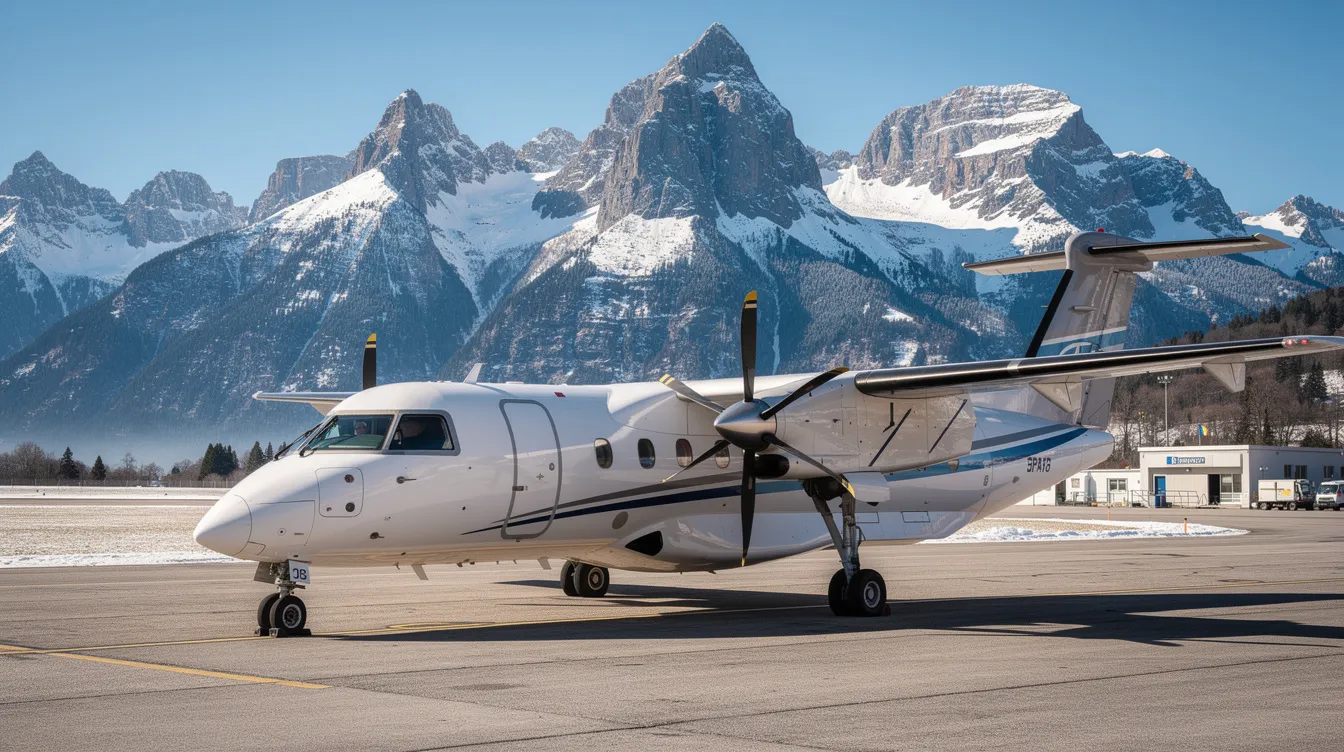
What Is a Turboprop Private Jet and When to Choose One
A turboprop uses a gas turbine engine to drive propellers via a reduction gearbox. Unlike jet engines, which generate thrust directly from exhaust gases, turboprop planes use gas turbines to turn propellers, making them more efficient for regional missions. Unlike piston aircraft that rely on reciprocating engines with lower reliability and altitude limits, turboprop airplanes deliver jet-like performance optimized for speeds below 450 knots.
Turboprop aircraft are generally smaller, more fuel-efficient, and slower than pure jet-engine planes. Typical private turboprops generally seat between six and eight passengers, offering smaller cabins compared to larger jet alternatives. They typically cruise around 300–350 mph, while private jets can exceed 600 mph. Despite this, for missions under 300–400 nautical miles, the time difference between a turboprop and a jet is often marginal, typically 15–40 minutes.
Private turboprops excel on regional routes between 150-800 nautical miles—think Paris to Geneva (370 nm, 1.5-hour block time) or Miami to Nassau (180 nm, under one hour). Their maximum range usually spans 1,000 to 1,500 miles, less than midsize or heavy jets designed for transcontinental travel. For routes under 600-800 nm, they often beat light jets on total trip efficiency despite lower cruise speeds.
BlackJet deploys turboprops for business hops, second-home trips, and resort access where runway length limits jet operations, fitting perfectly within the best small private aircraft options for regional missions.
When a turboprop makes sense:
Routes under 700-800 nm where climb/descent dominate the flight profile
Destinations with short runways (3,200-4,000 ft)
Secondary or remote airports near your actual destination
Budget priorities favoring per-passenger value
ESG goals requiring lower emissions
Weather profiles favoring lower altitudes (smoother rides below 25,000 ft)
Performance, Range & Operating Profile of Modern Turboprops
Most turboprops cruise between 250-330 knots (290-380 mph) with ranges of 800-1,800 nautical miles. The Pilatus PC-12 NGX achieves 285 KTAS with approximately 1,845 nm range, while the King Air 350i hits 310 KTAS with 1,700-1,800 nm capability.
Turboprops fly at typical cruising altitudes around 25,000-31,000 feet, with most models capped at service ceilings between 25,000 and 30,000 feet, often flying through weather rather than above it. Twin-engine models like the Beechcraft King Air series can climb into the low-mid 30,000s.
Performance reality check:
Block time (gate-to-gate) often rivals jets on 250-500 nm legs
Direct routing to closer airports eliminates positioning inefficiencies
Optimized for climb/descent-dominated routes where fuel burn advantages compound
Short-Field Performance & Runway Access
This is where turboprop aircraft excel. Many models operate safely from runways around 3,200-4,000 feet, where jets often need 5,000 feet or more.
The PC-12 NGX demonstrates this capability dramatically: takeoff over 50 feet in roughly 793 meters (2,600 ft) and landing in about 661 meters (2,170 ft). This enables operations at challenging destinations where jets simply cannot go.
Turboprops can access around 10 times more airports in the US than scheduled airlines, allowing them to reach remote communities without airline service and with short or unpaved runways.
Mission-enabling airfields:
Aspen (KASE): 7,000 ft runway at 7,820 ft elevation
Telluride (KTEX): 6,900 ft runway in mountainous terrain
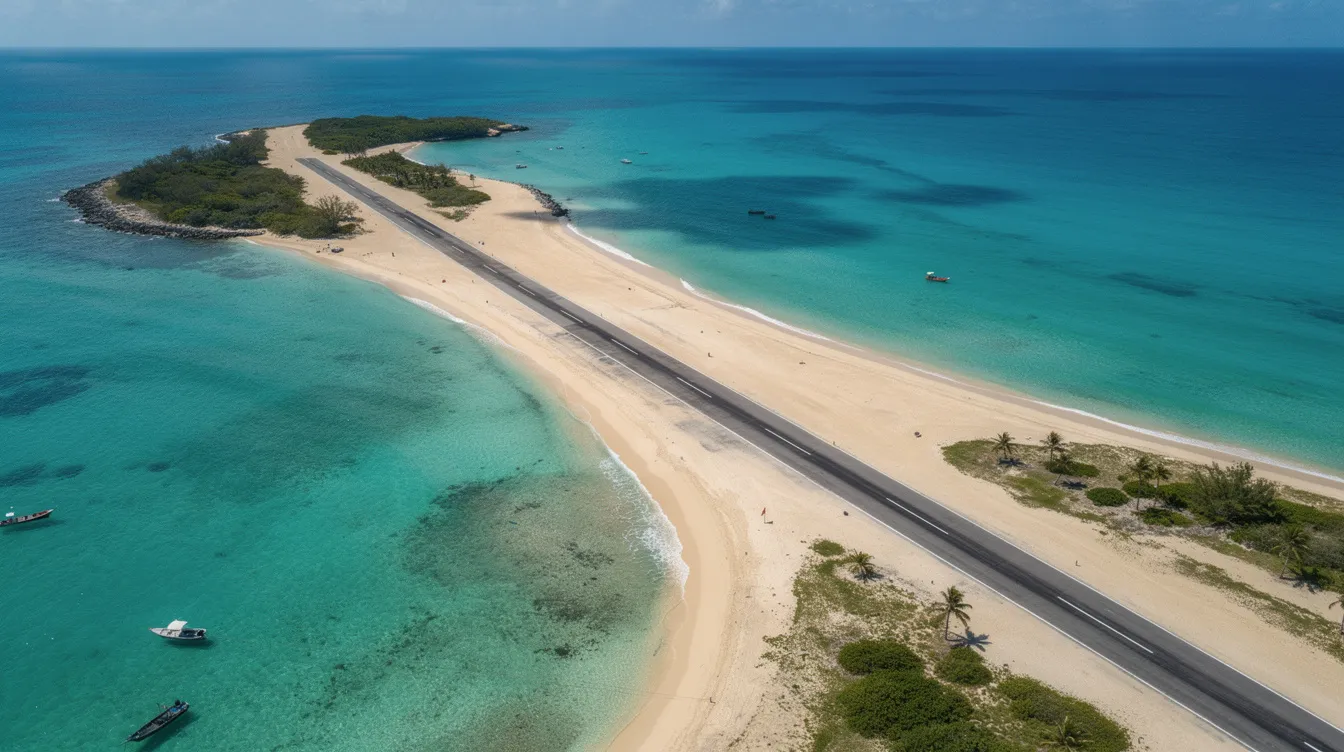
Bahamas island strips and Greek coastal airfields
Private estate runways and remote lodges
BlackJet recommends turboprop charter for ski resorts, coastal communities, and private airstrips, translating into itineraries that save 1-3 hours daily for travelers evaluating whether chartering a private jet is worth it.
Cabin Environment, Payload & Comfort
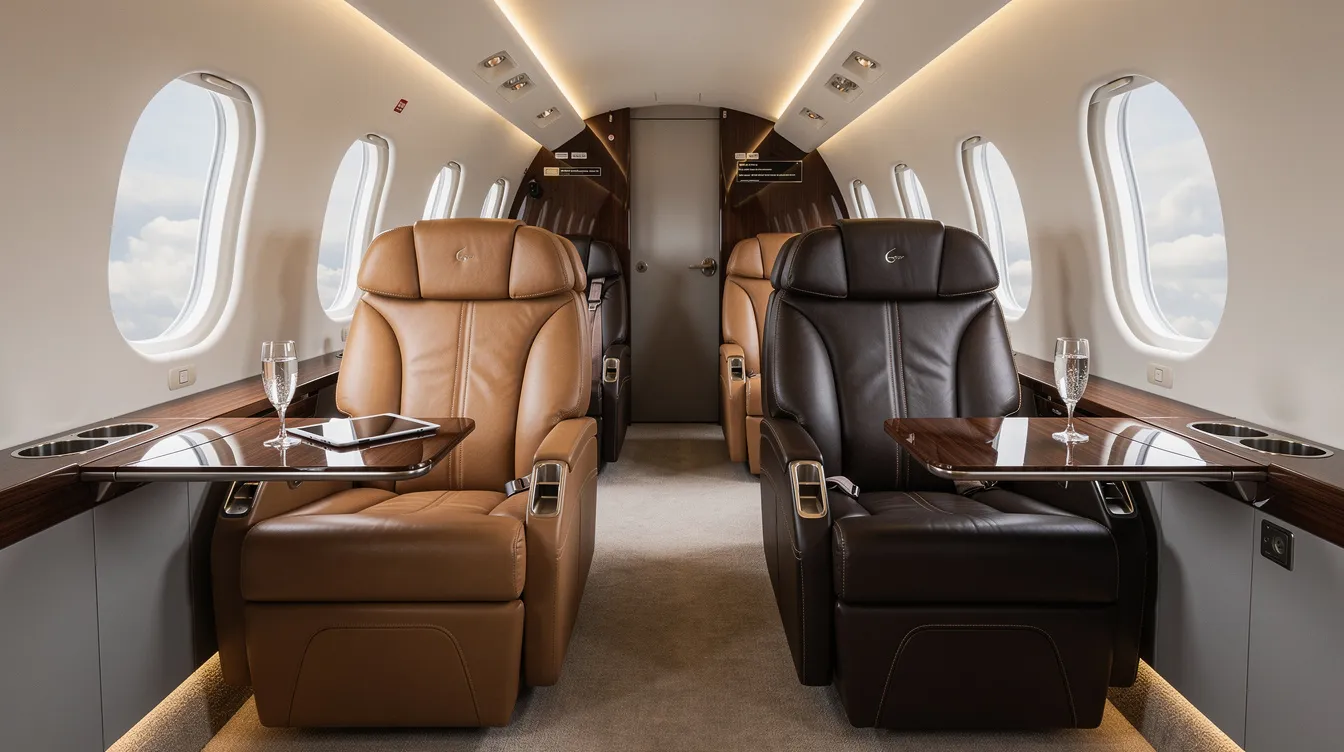
Executive turboprops seat 6-8 passengers in club configurations with work tables, divans, and generous storage. The aircraft cabin in popular models rivals light jets for comfort.
Modern noise-reduction technology—including active cancellation, Hartzell Raptor five-blade propellers, and upgraded insulation—brings cabin sound levels surprisingly close to jet standards, though turboprops can be noisier and vibrate more due to the external propeller system compared to the enclosed engines of a traditional jet.
Cabin features on BlackJet network aircraft:
Spacious cabins with leather executive seating
In-flight Wi-Fi on many models
USB and power outlets
Catering comparable to light jets
PC-12’s large cargo door accommodates skis, golf bags, and bulky gear for 6-8 passengers, with a higher weight capacity for bulky items than light jets
Think light-jet level comfort with superior payload flexibility for families or teams carrying equipment.
Why Turboprops Are a Smart Alternative to Light Jets
The smartest travelers and flight departments practice mission-matched aircraft selection. On many 250-500 nm routes, total travel time in a turboprop rivals or beats a jet by using closer airports.
Consider: New York Teterboro to Nantucket in a PC-12 takes about 1.5 hours flight time with minimal ground transfer. A jet into Boston Logan plus the drive to Nantucket? Over 3 hours total. The turboprop wins on time and costs 30-50% less.
Operating and charter costs for turboprops run significantly lower than comparable light jets on regional routes while maintaining executive-level cabin quality. This makes private flights accessible for more missions and aligns with broader benchmarks on how much it costs to charter a small plane.
Block Time Reality & Airport Choice
“Block time” measures gate-to-gate travel. Adding ground transfers and landing closer to your destination saves 1-3 hours per day.
Real-world examples:
Route | Turboprop Option | Alternative | Time Saved |
|---|
London City–Jersey | King Air, under 1 hour | Heathrow commercial, 2+ hours | ~1.5 hours |
LA–Santa Barbara | 30-minute flight | Highway 101, 2 hours | ~1.5 hours |
Denver–Aspen | Direct turboprop | Drive I-70 in winter | 2-3 hours |
BlackJet advisors help members choose the closest viable airport to their home, office, resort, or factory.
Fuel Efficiency, Cost & ESG Advantages
Turboprops deliver 10-60% better fuel efficiency than similar-size jets on sectors under 500-600 nm.
Concrete numbers:
Pilatus PC-12: 50-100 gallons per hour
Typical light jet: 200+ gph on similar legs
CO₂ reduction: 15-20% lower per seat-mile
Lower fuel burn drives lower operating costs and significantly reduced emissions per passenger-mile. For ESG-focused corporations, turboprops materially reduce carbon footprint on frequent regional shuttle routes.
Modern PT6A engines accept 50% SAF blends, and BlackJet offsets ensure all private aircraft flights are carbon-neutral.
Turboprop Charter Pricing, Jet Cards & BlackJet Economics
Turboprops represent the most economical option for 4-9 passengers on regional travel without sacrificing safety or privacy, sitting alongside other affordable private jet and turboprop options.
2024 Price Ranges & Key Cost Drivers
Typical 2024 turboprop charter rates starting around $2,000-2,500 per flight hour for premium models like the Beechcraft King Air 250, scaling to $3,500+ for newer or larger aircraft like the PC-12 NGX. Compare this to light jets at $4,000-6,000+ per hour.
Pricing factors:
Specific aircraft type and age
Region and repositioning requirements
Peak vs off-peak scheduling
Advance booking windows
BlackJet’s flight support team presents side-by-side turboprop vs light jet options so members can weigh cost vs speed for each mission.
Per-Passenger Value & Use Cases
Consider the math: 6 executives flying Boston to Toronto (approximately 400 nm) at $12,000 total equals $2,000 per head. Last-minute business class? Often $1,500+ per seat plus significantly more travel time.
Value scenarios:
Family of 8 from Miami to Exuma with skis and gear: spacious interiors designed for bulky items
Legal team doing same-day depositions: privacy for confidential discussions
Corporate retreat group: keeps passengers comfortable while avoiding commercial hassles
Turboprops are often the entry point into business aviation for groups seeking more than first class without needing medium-haul flights on midsize jets.
BlackJet Jet Card Advantages for Turboprop Flyers
BlackJet’s Jet Card programs (25-hour or 50-hour blocks) provide prepaid access to turboprops and jets with predictable hourly rates, following industry best practices in jet card pricing structures and cost transparency.
BlackJet’s dedicated 25+ Hour Jet Card for midsize and larger jets complements turboprop flying for longer missions.
Member benefits:
24-72 hour booking windows
No ownership, crew, or maintenance responsibilities
Digital booking via mobile and web platforms
Real-time support for flight details and changes
Carbon-neutral flights at no additional cost
Operational flexibility across turboprops and jets
Request an instant quote through BlackJet’s platform and receive options tailored to your route.
Safety, Certification & Technology in Turboprop Private Jets
Professionally operated turboprops achieve safety records comparable to jets when flown under Part 135 commercial rules with trained crews. Most charter turboprops fly with two pilots, even when the aircraft holds single-pilot certification.
BlackJet partners only with operators meeting rigorous safety benchmarks, including ARGUS, Wyvern, and IS-BAO audits where applicable.
Proven Airframes & Engine Reliability
The Beechcraft King Air series has accumulated decades of service across corporate, government, and medical roles worldwide. Pilatus PC-12 fleets serve charter, corporate, and air ambulance operations across North America, Europe, and Australia.
The Pratt & Whitney PT6A engine family represents tens of millions of cumulative flight hours with global support infrastructure—parts availability, maintenance expertise, and validated reliability across climates.
Twin vs Single Engine Turboprops
Twin-engine models like King Air 250/350 offer redundancy that some passengers prefer. Single-engine turboprop aircraft like the PC-12 and Cessna Caravan meet strict reliability and icing certification standards for commercial operations.
Engine-out performance and emergency procedures are thoroughly trained scenarios for all crews. BlackJet advisors help members select based on mission requirements and comfort level, not assumptions.
Modern Avionics & Operational Practices
Today’s turboprops feature advanced avionics including:
Glass cockpits (Garmin G3000, Collins Pro Line Fusion)
Synthetic vision and terrain awareness (TAWS)
Weather radar and advanced autopilots
Emergency descent modes and envelope protection
Standard crew practices include recurrent simulator training, rest rules, and conservative go/no-go decisions. Digital flight operations and predictive maintenance achieve 99%+ dispatch reliability.
Sustainability & Fuel Efficiency: Turboprops as a Greener Choice
Turboprops represent naturally efficient platforms for regional private aviation with lower fuel burn and emissions compared to jets on shorter flights.
Quantified Emissions Advantage
On 250-400 nm routes, turboprops burn roughly 15-20% less fuel per seat-mile than comparable light jets when loaded efficiently.
Simple comparison: PC-12 burning 55-70 gph versus a typical light jet at 180-220 gph on similar sectors yields substantial CO₂ differences. When aircraft fly at or near seating capacity, emissions per passenger drop significantly.
SAF Compatibility & Carbon Offsets
Many PT6A variants are certified for up to 50% SAF blends, reducing lifecycle emissions versus conventional Jet A while remaining drop-in compatible.
BlackJet’s verified carbon offset programs cover remaining emissions, achieving carbon-neutral status on all member flights automatically.
Noise Footprint & Community Impact
Modern turboprops operate with lower thrust and advanced propeller blades that reduce community noise. This lower profile supports better relationships with smaller regional airports and surrounding neighborhoods—critical for long-term access to secondary fields.
Top Turboprop Private Planes in the BlackJet Network
Not all turboprops are equal. BlackJet curates preferred aircraft based on safety, reliability, cabin comfort, and mission versatility.
Pilatus PC-12 / PC-12 NGX
Seating 6-8 passengers with a large cargo door, the PC-12 cruises around 285 KTAS with a range of up to 1,845 nm. Use cases include remote ranches, island strips, and ski resorts with short or unpaved runways.
Position: The “Swiss Army knife” of private aviation for family and adventure trips.
Beechcraft King Air 250 / 350
These twin-engine corporate workhorses seat 6-8 passengers in double-club layouts. Cruise figures reach 310-320 KTAS with ranges of 1,500-1,800 nm.
Position: Ideal for executive shuttles, multi-city business days, and trips where redundancy matters.
Piaggio Avanti P180 / Avanti EVO
Distinctive Italian design with near-jet speeds (380-400 KTAS) and a stand-up cabin size comparable to some midsize jets.
Position: High-performance European city pairs where clients want speed with a unique aesthetic.
Cessna 208B Grand Caravan
A single-engine workhorse known for rugged short-field capability and flexible seating (6-8 passengers typical).
Position: Island hopping, lodge access, and group adventure trips where destination access trumps pure luxury.
Typical Routes, Use Cases & Sample Itineraries
Popular turboprops dominate many regional corridors. Key mission types include business shuttles, second-home travel, corporate site visits, and special events.
Business Travel Examples
Chicago Midway to Indianapolis: King Air 250 with 4-person legal team—morning departure, midday business meetings, evening return flight without overnight
Frankfurt to Prague: PC-12 for executive roadshow, landing closer to the city center than commercial options
Private cabin discussions, no security lines, aircraft waiting for return flight.
Leisure, Island & Resort Access
Miami Opa-locka to Harbour Island: Family of 6 in PC-12 with pets, golf clubs, and beach gear landing on a short island strip
London to Chambery or Denver to Aspen: Beechcraft King taking skiers directly, avoiding longer flights via major hubs or winter highway drives
Turboprops make remote destinations feel as accessible as major airports.
Corporate Shuttles & Special Missions
Weekly turboprop shuttles connecting headquarters to regional sites (Milan-Toulouse, Houston-Lafayette) move engineers and managers with consistent schedules and predictable costs.
BlackJet can design recurring shuttle solutions within its membership framework for clients with ongoing regional travel needs, a model that pairs well with best-in-class jet card programs for frequent flyers.
Turboprop vs Jet: Choosing the Right Aircraft for Your Mission
The choice should be driven by distance, runway constraints, passenger count, schedule, and budget—not prestige alone. Sophisticated travelers blend both: turboprops for regional hops, jets for long-range missions.
When to Choose a Turboprop
Routes under 700-800 nm
Short or unimproved runways are required
Frequent trips to smaller airports
Multiple short legs in one day
Heightened sustainability goals
Example: New York to Aspen or Los Angeles to Tahoe, where airport options favor turboprops.
When a Jet Is the Better Fit
Missions over 1,000-1,200 nm
Transcontinental or transatlantic routes
Need to cruise above 40,000 ft
Severe weather requires higher climb performance
BlackJet’s Jet Card provides access to light, midsize, and large-cabin jets for these missions, complementing turboprop use and mirroring many value drivers found in broader 50-hour jet card cost analyses.
Comfort & Safety Considerations
Top-tier turboprops now offer cabin experiences overlapping with many models of light jets: leather seating, noise reduction, connectivity, and catering. On 60-90 minute regional legs, comfort differences are modest.
Under commercial safety frameworks, both jets and turboprops achieve exceptional safety with professional crews and audited operators. Choosing a turboprop is not a compromise.
FAQs About Turboprop Private Jets with BlackJet
How many passengers can a typical turboprop carry?
Executive types like PC-12 and King Air seat 6-8 passengers. Commuter configurations (Beechcraft 1900D) accommodate up to 19. BlackJet most commonly sources 6-8 seat configurations with enclosed lavatories on larger models.
Are turboprops noisy compared with jets?
Older models were louder, but popular models like King Air 350i and PC-12 NGX use noise-reduction technology bringing cabin sound close to many light jets. Still, turboprops can vibrate more due to external propellers.
Can turboprops fly in bad weather and icing?
Yes. Full certification for known icing, de-icing boots, heated props, modern weather radar, and conservative dispatch decisions by partner operators.
How much luggage can we bring?
General rule: 1 medium suitcase per passenger plus hand luggage for 6-8 passengers. PC-12’s large cargo door handles skis, golf bags, and bulky items.
Do turboprops feel less luxurious than jets?
BlackJet-sourced turboprops feature private cabins, leather club seating, Wi-Fi on most models, and tailored catering—service comparable to private jets.
How does BlackJet make flights carbon-neutral?
A combination of fuel-efficient aircraft, SAF where available, and verified carbon offset projects is automatically applied for all members.
Conclusion: Elevate Your Regional Travel with BlackJet
For strategic travelers, turboprop private planes represent precision—not compromise. When your mission demands access to more airports, lower emissions, and efficient economics on regional routes, these aircraft deliver advantages that jets cannot match.
BlackJet offers curated turboprop access through flexible Jet Card programs: rigorous safety oversight, carbon-neutral flights, and seamless booking across both turboprops and jets, built on principles outlined in our broader guide to understanding jet card cost and membership value. Match aircraft to mission, not prestige to ego.
Explore how BlackJet can reshape your regional travel. Speak with a BlackJet advisor about your typical routes, or request a turboprop vs jet comparison for your next first flight into a challenging destination.


 Sign up with google
 Sign up with Apple