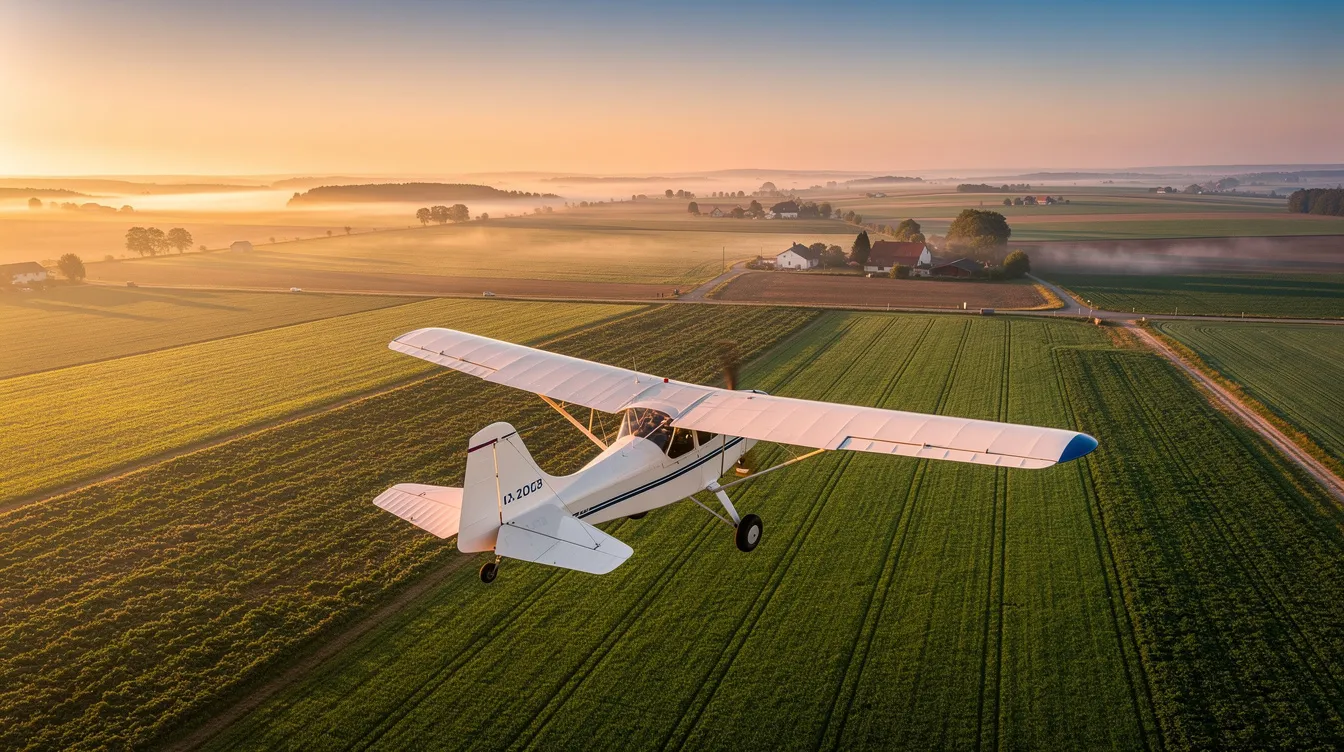
For many aviation enthusiasts, the appeal of ultralight flying is immediate and visceral: low cost, minimal regulation, and the purest form of personal flight imaginable. But one question surfaces before every cross-country plan or weekend adventure: how far can you actually go? Understanding ultralight range is the difference between a confident flight and a fuel-starved emergency. This guide breaks down every variable that determines how far ultralight aircraft fly, compares real-world numbers across popular models, and explains when stepping up to light sport aircraft or private jets becomes the smarter move.
Ultralight Range in One Glance
Most U.S. powered ultralights flying under FAA Part 103 carry a maximum of five U.S. gallons of fuel. On that single tank, ultralights typically fly short distances of 50 to 150 miles in real-world conditions. Efficient outliers push that number considerably higher.
Here is how three representative aircraft compare:
Beaujon Enduro - Burns roughly 1 gallon per hour at economy cruise (~55 mph). Practical range in still air: approximately 250–325 statute miles.
Aerolite 103 - Cruise speed around 55–63 mph, fuel burn ~2–2.5 gallons per hour. Real-world range with reserves: roughly 80–120 statute miles.
"Typical" Part 103 ultralight - 2.0 gph burn at ~50 mph cruise. Usable range with a 30-minute reserve: approximately 100 statute miles.
By contrast, light sport aircraft carry 20–40 gallons and routinely cover 400–700 statute miles. Private jets cover 1,000 to 3,000 nautical miles nonstop, depending on cabin class. For time-critical, multi-city trips, BlackJet's clients rely on private jets, sometimes choosing the cheapest private aircraft options or charter models that fit their budget, while keeping ultralights for local recreational flying and weekend fun.
What Determines Ultralight Range?
An aircraft's range is never a single number on a spec sheet. It emerges from the interaction of fuel capacity, specific fuel consumption, cruise speed, weather, and the reserves you keep.
Key drivers include:
Fuel capacity - Capped at 5 U.S. gallons under Part 103, this is the hard ceiling.
Fuel burn - Ultralight aircraft consume 1.5 to 3 gallons of fuel per hour, depending on engine, drag, and power setting.
Cruise speed - Faster flight burns more fuel per mile. A Part 103 ultralight at top speed of 63 mph drinks fuel faster than one loafing at 45 mph.
Reserve requirements - Prudent practice calls for at least 30 minutes of fuel after landing. That reserve eats directly into your usable range.
Wind - Headwinds and tailwinds can shift effective range by 20–40 miles on a two- to three-hour ultralight flight.
Operating costs are low, typically $7 to $15 per hour for fuel, but that budget-friendly burn rate still limits how far five gallons will carry you. Consider the math: at 2.0 gph and 50 mph, subtracting a 30-minute fuel reserve leaves about 2 hours of usable flight-roughly 100 miles of ground distance. Ultralight pilots should always plan conservatively, treating theoretical maximums as ceilings they never actually reach.
FAA Part 103: The 5-Gallon Rule That Caps Ultralight Range
The FAA's Part 103 defines the boundaries that every Part 103 ultralight must respect. The regulation's fuel capacity limit-not engine power-is the primary constraint on range.
Core Part 103 numbers relevant to range:
Fuel capacity must not exceed 5 U.S. gallons
Maximum empty weight of 254 pounds (powered), excluding floats and safety devices
Top speed in level flight limited to 55 knots calibrated airspeed (approximately 63 mph)
Power-off stall speed must not exceed 24 knots CAS
Single-seat operation only-ultralights cannot carry passengers
Daytime VFR conditions only; night flying is prohibited unless equipped with proper lights
No pilot license, medical certificate, registration, or airworthiness certificate required
Ultralights cannot exceed 254 pounds empty weight-they must weigh under 254 pounds. This maximum empty weight constraint directly affects range because heavier aircraft require more power to maintain cruise speed, which increases fuel burn. Similarly, the stall speed limit influences wing sizing: larger wings provide lower stall speeds but also generate more drag, which again erodes fuel efficiency.
The freedom of Part 103 is real-no pilot license is required for FAA-compliant ultralights, and ultralights do not require registration or airworthiness certificates. But that freedom comes packaged with strict operational limits. Adding floats, heavy gear, or extra weight to amphibious ultralights can push the aircraft beyond the 254-pound threshold, moving it into light sport aircraft or Experimental categories with different rules.
Real-World Range Examples: From Enduro to Aerolite 103
Herbert Beaujon's Enduro stands as the efficiency benchmark. With a fuel burn of roughly 0.95 gallons per hour on a small ~16 hp engine, the Enduro stretches its 5-gallon tank to approximately 5 hours of endurance. At economy cruise speed, that translates to a practical range around 325 statute miles in still air-remarkable for a machine built around minimalism.
The Aerolite 103 occupies more typical territory. Cruising at 45–55 mph and burning around 2–2.5 gph, it delivers a real-world range of approximately 80–120 miles on 5 gallons with a 30-minute fuel reserve. This is the kind of range most ultralight pilots actually experience.
Other representative models fill out the picture. The Kolb FireFly, a popular Part 103 design with an empty weight sitting near the 254-pound limit, offers performance comparable to the Aerolite-roughly 80–110 miles of practical range. DIY ultralight aircraft kits like the Minimax 103 achieve similar numbers, depending on engine choice and builder skill. Used aircraft can be found under $10,000, while new ultralight kits typically cost between $15,000 and $35,000. Ready-to-fly ultralights usually range from $25,000 to $50,000.
Builders and designers often trade pure range for climb performance and short-field capability. A wing optimized for STOL operations increases drag at cruise, raising fuel burn and shortening practical range. The best ultralight aircraft for range are not necessarily the best for backcountry strip flying- mission-driven design.
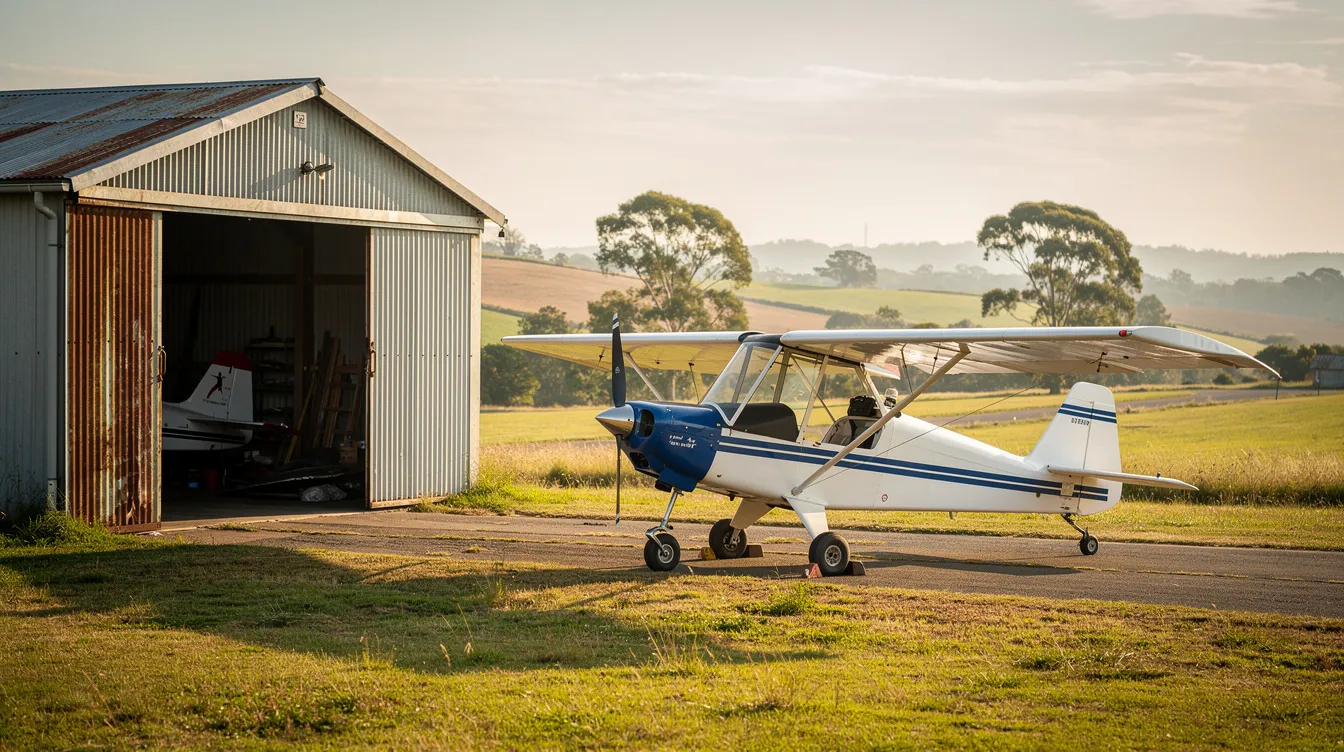
Typical Ultralight Range vs "Brochure" Claims
Manufacturer range figures assume ideal conditions: a brand-new engine running at lean economy cruise, zero wind, and the pilot willing to burn nearly every drop of fuel. Real flying rarely cooperates.
A realistic planning scenario looks like this: start with 5 gallons total. Subtract 30–45 minutes of fuel for reserves (roughly 1–1.25 gallons at 2.0 gph). Discount further for possible headwinds, climbs, and turbulence. What remains is 3.5–4 gallons of truly usable fuel-enough for about 1.75–2 hours at cruise. At 50 mph, that is 88–100 miles of ground distance.
Many prudent ultralight pilots plan legs of just 50–80 miles, even when the theoretical range exceeds 150 miles. Afternoon thermals, density altitude on hot days, and unexpected wind shifts all conspire against brochure numbers. Fuel monitoring discipline matters enormously: clock checks, fuel sight tubes, and conservative turn-back points keep flights safe. The "true" safe ultralight range is what you can comfortably fly while always retaining both a legal and personal safety reserve-not the number printed on a sales sheet.
Microlight Aviation and Range Outside the U.S.
Outside the United States, microlight aviation operates under different rules that dramatically expand range capability. European microlight aircraft and two-seat ultralight-class aircraft often carry fuel loads of 10–25 gallons, with maximum gross weight allowances of 450–600 kg. This makes microlight aviation in countries like the UK, France, and Australia far more capable for cross-country flights than U.S. Part 103 machines.
Concrete examples illustrate the difference. The EuroFOX 3K, popular in UK microlight and LSA categories, carries roughly 22.5 U.S. gallons of fuel. The Fly Synthesis Syncro, an FAI-category microlight, holds about 26 U.S. gallons and quotes a range of approximately 750 miles with reserves at 140 mph cruise. Compare that to a Part 103 machine with 5 gallons and 100 miles of usable range-it is a different world.
The regulatory trade-off is straightforward: more range and the ability to carry passengers in exchange for proper flight training, pilot licensing specific to microlight categories, aircraft registration, and stricter oversight. Many European microlights are functionally equivalent to what the FAA calls light sport aircraft, overlapping with some cheap light aircraft choices for budget flying.
Ultralight vs Light Sport Aircraft: Range and Mission Profile
Light sport aircraft occupy a fundamentally different performance envelope from single-seat ultralights. Light sport aircraft can weigh up to 1,320 pounds gross weight, carry two people, and cruise at 100–120 knots. With fuel capacities of 20–40+ gallons, LSAs routinely achieve ranges of 400–700 statute miles with reserves.
Light sport aircraft require a sport pilot certificate to operate, along with at least a third-class medical or valid driver's license. Sport pilots gain access to more airports, can carry a passenger, and can fly many more aircraft types than Part 103 allows.
The mission profile distinction is clear:
Part 103 ultralights - Solo local flights of 30–60 miles, pattern work, short cross-country flights to nearby airfields
Light sport aircraft - Regional two-seat trips: Los Angeles to Reno, Dallas to New Orleans, weekend fly-ins with a companion and baggage
Private jets - Multistate or international travel, tight schedules, full payloads, all-weather capability, and the option of 16-seat private jets for larger groups across different private jet sizes
Light sport aircraft occupy the gap between ultralight range limitations and the long-haul capability of private jets, but they still cannot match the speed, comfort, or range of small private jet aircraft for serious business or leisure mobility.
How Far Can You Go on a Single Tank? Scenario Planning
Scenario planning turns abstract range numbers into decisions that keep you safe. Here are three flight scenarios using a fixed-wing Part 103 ultralight with 5 gallons, 2.0 gph burn, and 50 mph cruise speed.
Scenario A - Calm-day local sightseeing loop: Reserve 30 minutes (1 gallon). Usable fuel: 4 gallons, yielding 2 hours of flight. Groundspeed equals airspeed in calm air: 100 miles of range. A comfortable 80-mile loop back to your home field leaves ample margin.
Scenario B - Mild headwind cross-country: A 15-knot headwind cuts your groundspeed from 50 mph to roughly 33–37 mph. That same 2 hours of fuel now covers only 66–74 miles over the ground. Planning a 120-mile leg? You will not make it safely. Reduce to 60–70 miles or wait for better winds.
Scenario C - The stretch you should not attempt: A 180-mile leg over unfamiliar terrain in afternoon turbulence. Even with zero headwind, you would need 3.6 hours of fuel. After reserves, you have only 2 hours. This flight is a firm no.
Always compute range using groundspeed, not airspeed. Know where alternate landing sites-grass strips, private fields-lie along your route. Ultralight pilots should always be able to turn back or land short with comfortable fuel reserves.
When planning cross-country flights that involve overnight stops, many ultralight pilots adopt a minimalist packing philosophy borrowed from the backpacking world. Ultralight gear is designed to minimize load weight without sacrificing safety, and the ultralight range in outdoor gear typically refers to a base weight under 10 pounds. Base weight excludes food, water, and fuel when calculating total pack weight. Ultralight tents provide weather protection with minimal weight, ultralight backpacks use high-strength, low-weight fabrics to reduce carrying weight, and cooking equipment in ultralight gear typically includes titanium pots and compact stoves. Lightweight down sleeping bags save weight while maintaining warmth. The benefits are tangible: ultralight gear promotes a minimalist mindset to simplify the camping experience, and reduced physical strain translates to increased daily mileage on foot between strips-or simply less extra weight in the cockpit, where every pound matters for fuel efficiency. A commonly used benchmark for ultralight backpacking is a base weight of less than 10 pounds, a discipline that resonates deeply with pilots who understand that weight savings in the cockpit directly extend range.
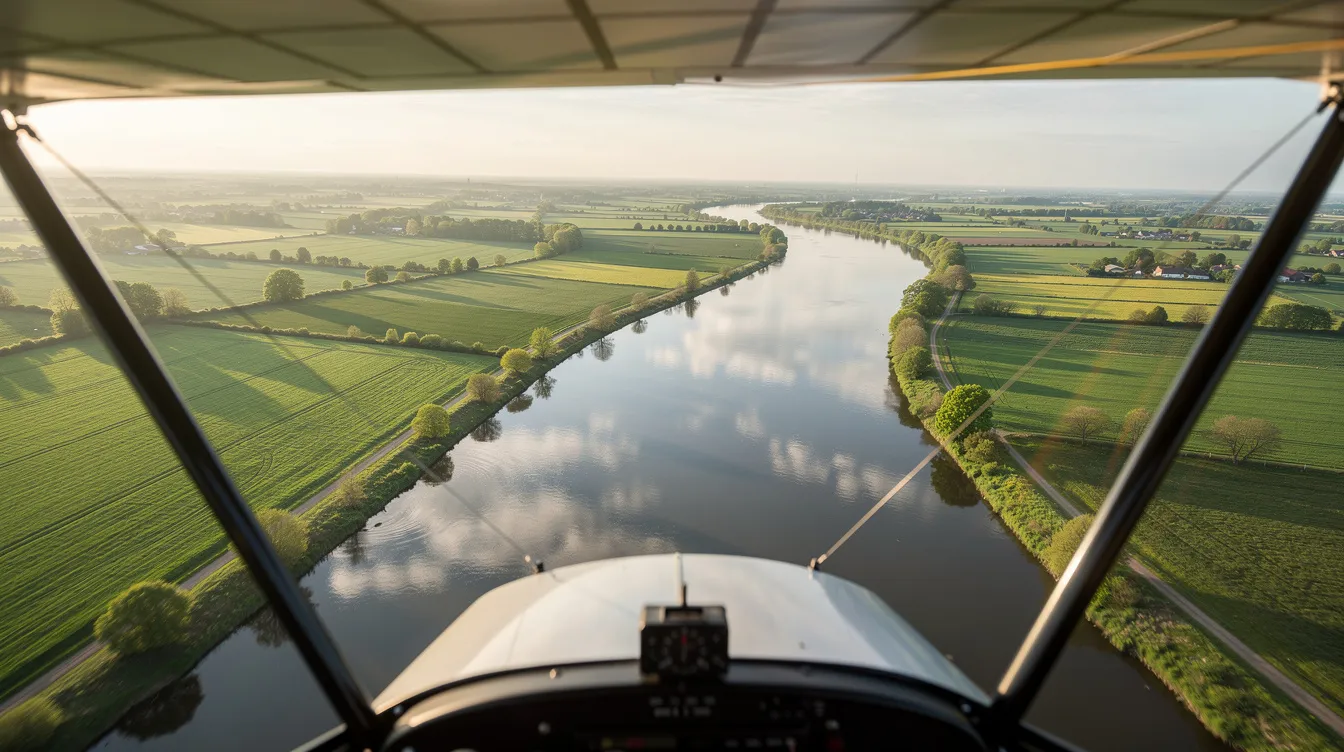
Amphibious Ultralights: Range Trade-Offs on Water and Land
Amphibious ultralights that can operate from lakes and grass strips represent a niche within a niche-amphibious ultralights represent less than 5% of sales in the ultralight market. Light float-equipped designs offer tremendous versatility but come with real range penalties.
Floats, hulls, and water rudders add 30–60+ pounds of extra weight and significantly increase aerodynamic drag. This typically raises fuel burn from roughly 2.0 gph to 2.5–3.0 gph, while simultaneously reducing cruise speed. The result: effective range drops from approximately 100 miles to 70–80 miles on the same 5-gallon fuel capacity.
The weight sits uncomfortably close to-or beyond-the 254-pound Part 103 maximum empty weight limit. Many amphibious ultralights are therefore registered as Experimental or as light sport aircraft, which opens the door to larger fuel capacities but also requires a private pilot license or sport pilot certificate and aircraft registration.
Water operations demand larger safety margins. Longer takeoff runs on water, the need for strong climb performance over shoreline obstacles, and sensitivity to wind and wave conditions all argue for carrying more reserve fuel, which further constrains usable range.
Range by Ultralight Type: Fixed-Wing, Trikes, and Powered Parachutes
Not all ultralights are built alike. The main categories-fixed-wing, weight-shift trikes, powered parachutes, and powered paragliders-each carry distinct range profiles. Powered fixed-wing ultralights are the most common type, and for good reason: they offer the best combination of speed and fuel efficiency for covering distance.
Fixed-wing ultralights - Typical cruise speed 45–60 mph, fuel burn 1.8–3.0 gph. Range on 5 gallons: approximately 70–150 statute miles with reserves. Lightweight aircraft with clean aerodynamics, like the Enduro, push well beyond this band. Many ultralights sold in this category trace their lineage to hang glider-style wing designs adapted with engines and landing gear.
Weight-shift trikes - Similar engine choices and fuel burns (2–3 gph) but somewhat lower cruise speeds due to the drag of the trike carriage and flexible wing. Range is comparable to or slightly shorter than fixed-wing designs-typically 60–130 miles.
Powered parachutes and powered paragliders - Cruise speeds of just 25–35 mph with fuel burns around 1.0–1.5 gph. Despite lower consumption, useful range is limited to approximately 40–80 miles because of slow groundspeed and extreme wind sensitivity.
Mission determines type. If you want efficient cross-country flights, a fixed-wing design wins. If slow scenic flight over familiar terrain is the goal, a powered parachute delivers an unmatched experience-just do not plan on going far. Unpowered ultralights like a basic hang glider offer zero fuel burn but are entirely dependent on thermals and ridge lift for range, making them impractical for point-to-point travel. Some designs incorporate folding wings for easier transport and storage, and a few manufacturers are exploring electric propulsion, though battery density limits endurance to fewer hours than combustion engines.
Training, Safety, and How Range Decisions Affect Risk
Part 103 does not require a pilot license or medical certificate, but structured pilot training is strongly recommended for ultralight pilots. Proper training dramatically improves judgment about range, weather, and fuel management-the areas where most ultralight incidents originate.
Recommended elements of ultralight flight training include:
Basic aerodynamics and weight-and-balance principles (ultralight pilots should respect weight-and-balance limits at all times)
Fuel planning: calculating burn rates, usable fuel, and reserves before every flight
Reading winds aloft forecasts and understanding density altitude effects
Recognizing when conditions exceed personal minimums
Pushing to the uncomfortable edge of an aircraft's range-flying into marginal weather, stretching fuel, or departing late in the day-ranks among the most common risk factors for ultralight accidents. New pilots benefit from conservative personal minimums: higher fuel reserves, shorter legs, and stricter wind limits. Annual maintenance costs range from $500 to $1,500, and regular inspections are advised even without FAA requirements.
In contrast, professionally crewed private jets operating under FAA Part 135 or Part 91 regulations must follow stringent fuel-planning and alternate-airport requirements. This regulatory framework, combined with recurrent crew training and advanced avionics, virtually eliminates fuel-related risk-a sharp difference from the self-regulated world of Part 103 personal flight. An airspeed indicator may be the only flight instrument in many ultralights, while even entry-level light jets carry full glass cockpits.
From Local Ultralight Flights to Serious Travel: When Range Becomes Strategy
Ultralight aviation offers something no other aircraft category can match: the freedom to fly from a grass strip with no license, no registration, and operating costs under $15 per hour. For local recreational flying within a 30–60 mile radius-sightseeing, pattern work, short hops to a nearby airfield for breakfast-ultralights are unbeatable. A one-hour flight in an ultralight may consume less fuel than a car commute.
But when trips involve tight schedules, multiple passengers, or distances beyond approximately 100–150 miles, the calculus shifts. Many pilots transition to light sport aircraft or begin chartering other aircraft for longer legs.
Think of it as a decision ladder:
Part 103 ultralight - Solo fun, only single-seat ultralights allowed, local exploration
Light sport aircraft - Two-seat weekend trips with a passenger and baggage, regional hops of 300–600 miles
Private jets - Intercity business, international travel, full payloads, all-weather reliability, ranging from 20-passenger private jets to 50-passenger private jet options for large group missions, with small private jets often serving shorter, point-to-point missions efficiently
Consider a pilot who spends Saturday mornings flying an Aerolite 103 around Florida's lake country. On Monday, that same individual boards a midsize jet for a New York–Houston business run using BlackJet's premium private jet services. Ultralights complement private jets for local recreational flying-and this layered approach is increasingly common among high-net-worth individuals and entrepreneurs who refuse to compromise on either joy or efficiency.
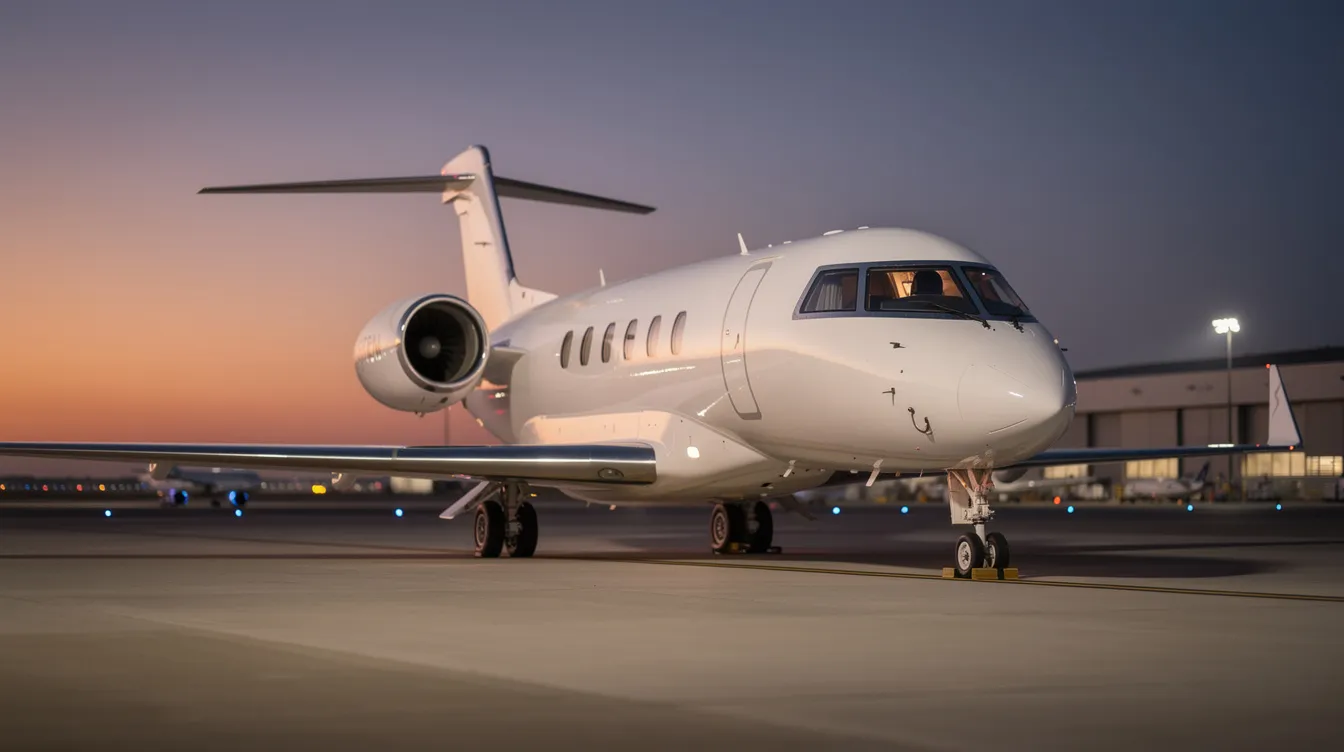
How BlackJet Complements Limited Ultralight Range
Range is not just a technical number-it is a mobility strategy. For affluent travelers who enjoy ultralight aviation yet need reliable long-distance capability, the answer is not choosing one or the other. It is having both.
BlackJet's Jet Card model provides prepaid, on-demand access to light, midsize, and large-cabin private jets across multiple aircraft categories. These aircraft deliver ranges from regional hops to transcontinental routes-capability that no ultralight or light sport aircraft can approach.
A concrete scenario: a member spends Saturday morning flying a Part 103 ultralight near Denver, enjoying 50 miles of mountain-valley scenery. That evening, business calls. Using a 25-hour Jet Card or a BlackJet 25+ Hour Jet Card, the same member flies Denver to Los Angeles nonstop with colleagues, carrying luggage and working en route. No schedule delays, no security lines, no compromises.
The contrast in safety frameworks is equally significant. Ultralights operate under Part 103 with personal responsibility as the governing principle. BlackJet flights are operated by certified crews under stringent FAA regulations, with proprietary safety vetting that exceeds industry baselines. And every BlackJet flight is carbon-neutral, complementing the naturally low fuel burn of ultralight flying to create a broader, sustainability-minded personal aviation footprint.
Safety, Certification, and Technology: Ultralights vs Private Jets
The gap between ultralight and private jet technology is measured in orders of magnitude. Ultralights operate in uncontrolled airspace-typically Class G-with minimal instrumentation: often just an airspeed indicator, altimeter, and basic engine gauges. There is no autopilot, no weather radar, no pressurization. Many ultralights are single-seat vehicles with open cockpits, where the pilot relies almost entirely on visual cues and personal skill.
Private jets integrate advanced avionics, real-time weather systems, digital flight management computers, and performance monitoring that enables precise fuel and range planning across multiple weather systems and time zones. BlackJet works with operators that meet strict third-party safety standards and recurrent training requirements-far exceeding the regulatory rigor around Part 103.
While some ultralight pilots experiment with portable GPS devices and basic navigation aids, these tools do not approach the capability of integrated glass cockpits in modern jets. Ultralights operate in Class G airspace and must avoid Class B airspace around major airports, where air traffic control manages traffic separation. Private jets move seamlessly through controlled airspace at all levels. The distinction matters for anyone whose travel demands reliability, schedule integrity, and all-weather capability. Ultralight flying is joyful and pure, but it is a fundamentally different experience from the professional aviation ecosystem that BlackJet delivers.
Sustainability and Range: From Minimal Fuel Burn to Carbon-Neutral Jets
Ultralight aircraft naturally occupy the low end of aviation's carbon spectrum. With fuel burns of 1.5–3 gallons per hour, each local flight produces minimal emissions. Ultralights have minimal infrastructure needs, reducing environmental impact further-no hangars, no jetways, often just a grass strip.
Key sustainability considerations across the spectrum:
Electric ultralight prototypes aim for lower emissions in personal aviation, trading range for near-silent, zero-emission short flights-often with just 20–40 minutes of endurance due to current battery limitations, while small private aircraft options balance longer range with efficient fuel use
Many sport pilots and ultralight enthusiasts view their aircraft as the most environmentally friendly way to fly
For longer legs, BlackJet addresses sustainability at scale through carbon-neutral programs and sustainable aviation fuel partnerships, balancing higher fuel use with meaningful offsets and leveraging affordable private jet options to keep access costs predictable.
The combination works: low-impact local ultralight flights for recreation, offset-backed jet travel for business and family mobility.
Frequently Asked Questions About Ultralight Range
How far can a Part 103 ultralight fly on 5 gallons?
It depends on fuel burn rate, cruise speed, wind, and reserves. Most Part 103 aircraft achieve 50 to 150 miles per tank. Extremely efficient designs like the Beaujon Enduro can reach approximately 325 statute miles in still air at economy cruise.
What is the range of an Aerolite 103?
The Aerolite 103 has a specified range of roughly 120 statute miles. In practice, flown under typical conditions with a 30-minute fuel reserve, expect 80–100 usable miles.
Can an ultralight carry passengers to extend usefulness?
No. Under FAA rules, ultralights are limited to single-seat operation only. To carry passengers, you need at least a light sport aircraft and a sport pilot certificate—or a private pilot license for certified aircraft.
How does wind affect ultralight range?
Significantly. A 15–20 knot headwind can remove 20–40 miles from your effective range on a two- to three-hour leg. Tailwinds help proportionately. Always plan with forecast winds, not calm-air assumptions.
When does it make sense to use a private jet instead of an ultralight?
When your leg exceeds 100–150 miles, when time matters, when you need to carry people or baggage, when weather or darkness could compromise safety, or when you need to cross regions quickly. Private jets cover 1,000 to 3,000 nautical miles nonstop—operating in a different category entirely. Private jets operate under FAA Part 135 or Part 91 regulations with professional crews.
How does a Jet Card help if my ultralight's range is too limited for business travel?
A Jet Card gives prepaid, guaranteed access to private jets with far greater range, payload, speed, and scheduling flexibility, and guides to Jet Card pricing structures make total costs more predictable. You retain your ultralight—perhaps you even own an ultralight for weekend flying—and rely on the Jet Card when the mission demands more. Many aviation enthusiasts use exactly this approach.
Choosing Your Path: Ultralight Range vs Your Travel Needs
The numbers tell a clear story:
Part 103 ultralights - 50–150 statute miles for most; up to ~325 miles for exceptional efficiency designs
Light sport aircraft - 300–600 statute miles with two seats and real cross-country capability
Private jets - 1,000–3,000+ nautical miles nonstop, all-weather, full payloads across multiple types of private jets
Three personas, three solutions:
The weekend hobby pilot content with local fields, scenic loops, and $7–$15 flights. A Part 103 ultralight-or cheap light aircraft option is all they need.
The regional traveler who invests in pilot training, earns a sport pilot certificate or private pilot license, and flies a light sport aircraft or other budget-friendly private aircraft for 300–600 mile weekend trips with a companion.
The executive or entrepreneur who pairs ultralight recreation with BlackJet's Jet Card for serious travel-enjoying personal flight on Saturday and boarding a jet for a coast-to-coast meeting on Monday- often compares the best Jet Card programs for frequent flyers to match their schedule.
If you already enjoy-or aspire to-the freedom of ultralight flying, you understand that some journeys demand more than five gallons can deliver. BlackJet extends your reach far beyond ultralight range, with safety, carbon-neutral performance, and unmatched flexibility built into every flight, supported by a clear view of Jet Card membership pricing.
Elevate your travel-effortlessly. Explore BlackJet's Jet Card programs-including guides to 100-hour Jet Card costs, 25-hour Jet Card features and pricing, and 50-hour Jet Card value, as well as comparisons like Flexjet Jet Card pricing and NetJets Jet Card costs-and discover how refined, purposeful aviation becomes your new standard-from grass strips to global runways.


 Sign up with google
 Sign up with Apple