The United Airlines Boeing 737-800 is one of the most frequently flown narrowbody aircraft in North America. Whether you are booking a cross-country domestic flight or researching the seat map before selecting your row, understanding this plane's cabin layout, seat dimensions, and comfort trade-offs can make a meaningful difference in your travel experience. This guide is for United Airlines passengers, frequent flyers, and anyone comparing commercial and private jet travel. Choosing the right seat and understanding the aircraft layout can significantly impact your comfort and travel experience. Here is everything you need to know about the United Boeing 737-800—and when stepping off the commercial grid entirely may be the smarter move.
Quick Overview: United Boeing 737-800 at a Glance
The Boeing 737-800 is part of Boeing's 737 Next Generation family, powered by two General Electric CFM56 engines with a cruise speed of around 530 mph and a range of approximately 2,935 miles. It primarily serves domestic and regional medium-haul routes, making it a workhorse for United Airlines, which has historically operated one of the largest fleets of this aircraft type.
Typical capacity: 166 passengers across three cabins—first class (or business class on select routes), premium economy (Economy Plus), and standard economy.
Primary use: Domestic routes under six hours, including popular pairs like Newark–Los Angeles, Chicago–San Francisco, and Denver–Houston.
Cabin reality: Even in first class, you share a cabin with up to 15 other passengers. Compare that with booking a Jet Card through BlackJet or exploring premium private jet card programs, where the entire aircraft is yours—no middle seats, no strangers, no compromise.
The rest of this article breaks down cabin classes, specific seat recommendations (including the best window seats and rows to avoid), power outlets and Wi-Fi options, and how commercial first or business class on the 737-800 stacks up against private aviation.
Cabin Layout & Aircraft Type Details
United operates several internal versions of the Boeing 737-800, all falling under the broader Boeing 737 aircraft family. The plane has a wingspan of 117 feet, 5 inches and seats 166 passengers in most configurations.
When booking, you will generally see this specific aircraft listed as "738" or by United internal codes such as 73Q. Legacy Continental Airlines' interiors still dominate much of the 737-800 fleet, though United has been progressively updating these aircraft with new interiors. United operates four versions of the Boeing 737-800, and the differences are worth understanding:
Forward cabin: 16 first-class seats in a 2-2 configuration on all versions. United labels this cabin "First Class" on most domestic flights and "United Business" on certain international or premium leisure routes—but the hard product is essentially the same recliner seat.
Middle cabin: Premium economy (Economy Plus) rows vary by version, generally between 48 and 54 seats.
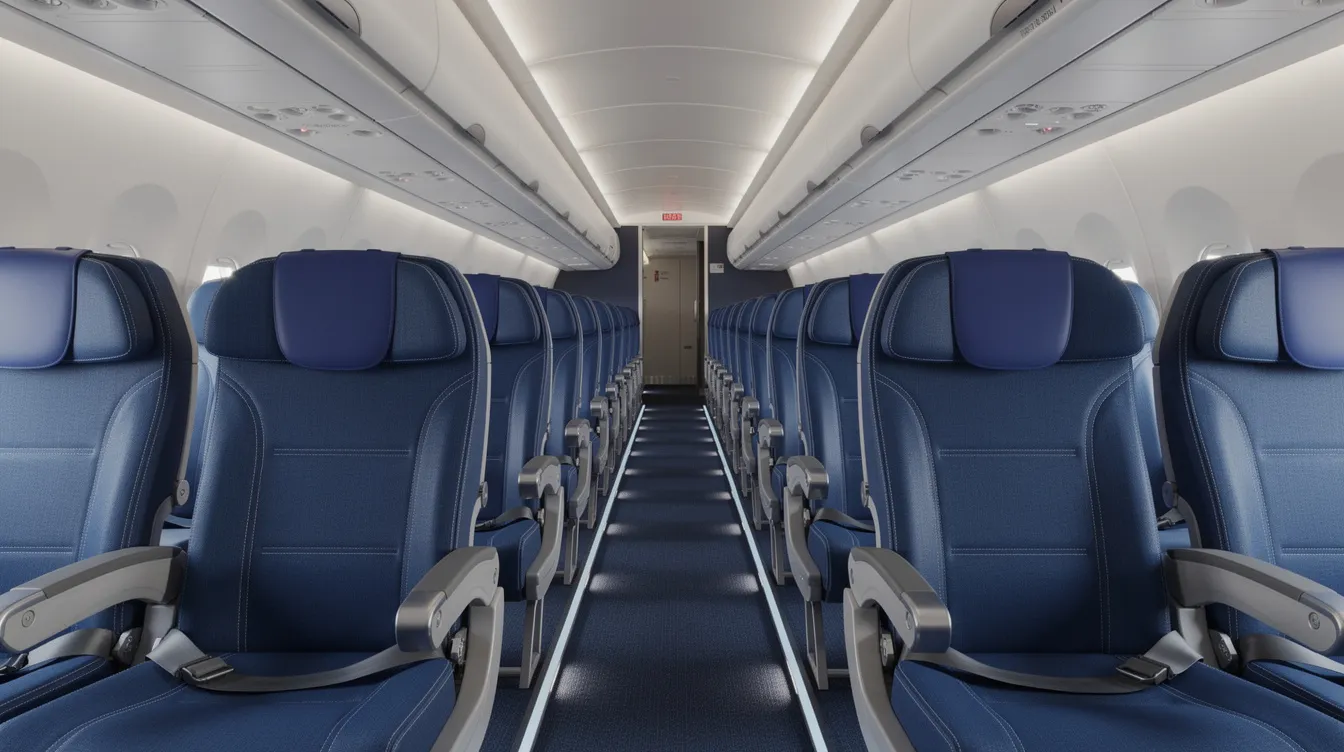
Rear cabin: Standard economy in a 3-3 seating configuration, accommodating 96 to 102 passengers depending on the version. A 3-3 seating configuration means there are three seats on each side of the aisle in each row.
The cabin layout differences primarily affect how many Economy Plus seats exist and the exact pitch offered, not the number of forward-cabin class seats.
Seat Map Versions: V.1 vs V.2 on United 737-800
United's Boeing 737-800 seat map appears in at least two main versions that passengers commonly encounter when checking a reservation on united.com or in the United app.
Version 1: 166 seats with 16 first-class, 48 Economy Plus seats with 34.5 inches of pitch, and 102 economy seats. This is generally the most common configuration across the fleet.
Version 2: Also 166 seats, but with 54 premium economy seats at a slightly tighter 33.2 inches of pitch, leaving 96 standard economy seats.
On the digital seat map, Economy Plus rows appear in a distinct color (usually blue), standard economy in another shade, and first or business class in a third. Front to back, the layout flows from rows 1–4 (first class), through Economy Plus rows starting around row 7, past the over-wing exit rows at 20–21, and into standard economy extending to row 37 or 38 at the rear.
For BlackJet clients accustomed to custom-configured private cabins, knowing exactly where density increases in the 737-800 layout—more rows, narrower pitch—helps calibrate expectations before committing to a specific United fare.
First / Business Class Cabin on the United 737-800
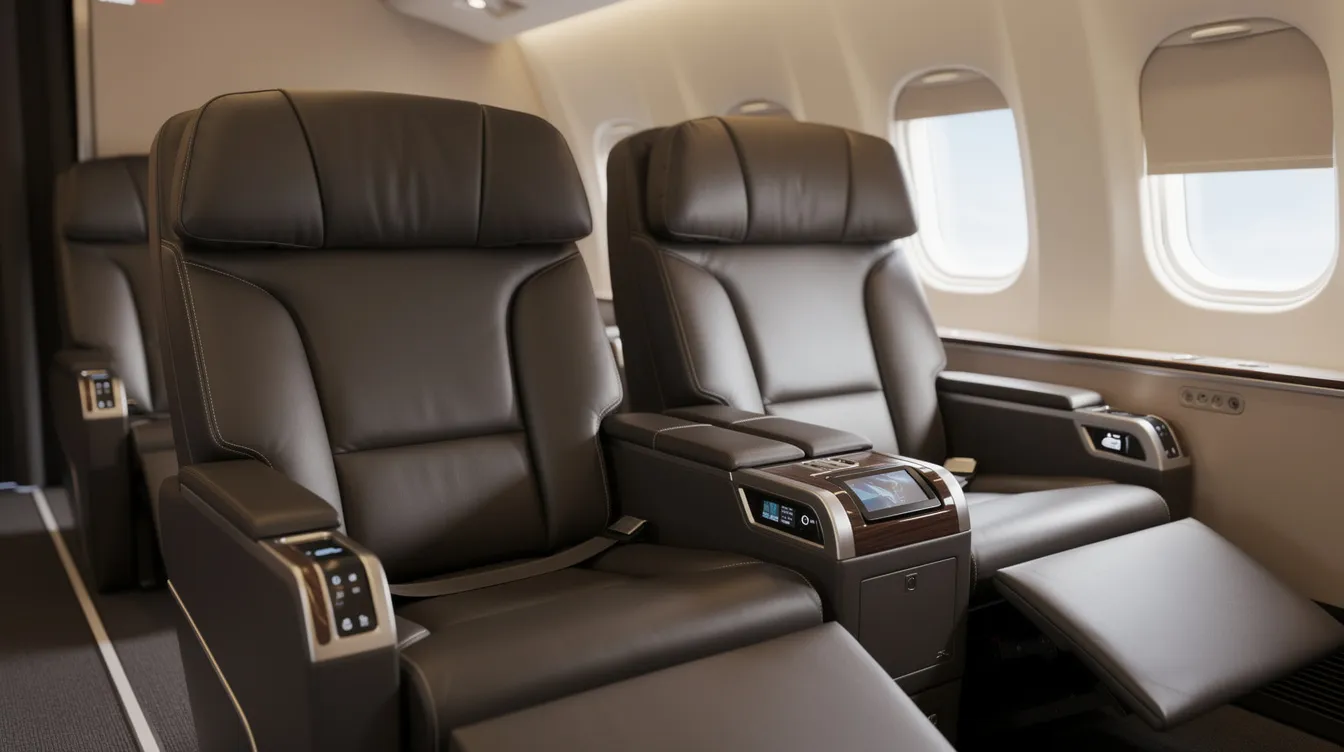
United's forward cabin on the 737-800 features 16 first-class seats in a 2-2 configuration with no middle seats. The seats have a pitch of 37 inches, a seat width of approximately 20 to 21 inches, and recline 5 to 6 inches using an articulated cradle mechanism. There are no private suites, no doors, and no lie-flat capability—privacy is limited compared with modern long-haul business class products.
Amenities include:
Larger tray tables, adjustable headrests, and power outlets (AC and USB)
Personal seatback screens on retrofitted aircraft
Full meal service on flights over two hours and 20 minutes, with two main course options and dessert; a snack basket is provided on shorter flights
Beverages, including alcohol, are complimentary; meal pre-order is available through the United app 24 hours before departure
On a route like Chicago–San Francisco (roughly four hours), this cabin is comfortable enough for working or resting, but the recliner design and shared space mean it cannot replicate what flying first class on a private jet feels like. A BlackJet flight on the same route offers a tailored itinerary, bespoke catering, and a cabin where every person on board is part of your party.
Premium Economy (Economy Plus) on the 737-800
United markets its extra-legroom rows as Economy Plus, and some booking channels label them premium economy. The core idea is a standard economy seat with more pitch—roughly 34 inches in Version 1 and around 33 inches in Version 2. Premium economy seats recline approximately 3 inches, and the layout remains a 3-3 configuration with the same seat width as regular economy (16.3 to 17.3 inches).
Key advantages over standard economy: extra space for laptops, easier aisle access, and sometimes earlier boarding groups. On many pre-retrofit aircraft, Economy Plus rows have access to AC power outlets, while standard economy may not—a critical point for business travelers.
Recommended rows in Economy Plus:
Row 7 (bulkhead): Extra legroom thanks to the bulkhead cutout forward, though under-seat storage is limited during takeoff and landing.
Rows 20–21 (exit): Up to 39 inches of pitch in some maps, though armrests may be fixed and recline is sometimes zero.
This "mini-upgrade" helps, but contrast it with a 25-hour Jet Card from BlackJet or a 25+ Hour Jet Card, where every seat offers full legroom, guaranteed power, and a quiet workspace. The commercial premium economy uplift feels modest by comparison.
Economy Cabin: Layout, Comfort & Rows to Avoid
Economy is the largest cabin on United's 737-800, usually 96 to 102 seats in a 3-3 configuration. Economy class seats have a pitch of 30 inches and recline approximately 2 inches—acceptable for short hops but noticeably tight on segments over four hours.
Better locations: The first one to two rows of standard economy (around rows 22–23) sit close to the mid-cabin exit for quicker deplaning.
Rows to avoid: The last row and the few rows ahead of it. These suffer from lavatory noise, galley traffic in the rear, and limited recline. Seats where the fuselage tapers at the back can feel narrower.
Window seat warning: Some window seats on the Boeing 737 (particularly around rows 11–12 on many NG-series frames) have missing or misaligned windows, frustrating passengers expecting a view.
For BlackJet's core audience—time-sensitive executives and high-net-worth travelers—this economy cabin configuration, often packed with too many people on peak-demand routes, reinforces why many eventually transition from commercial travel to private jet access or even buying a single seat on a private jet once they fly multiple times per month.
Best Seats on the United Boeing 737-800 (By Cabin)
Use this as a quick-reference guide to the best seats on United's 737-800 seat map.
First / Business Class:
1A / 1F: Maximum forward legroom; bulkhead offers extra space but limited under-seat storage
2A / 2F: Strong all-around picks—good legroom, quieter than row 1 (less galley foot traffic)
Avoid row 4 on some ex-Continental Airlines frames: Reduced recline due to cabin divider proximity
Premium Economy / Economy Plus:
Row 7: Bulkhead legroom; trade-off is no under-seat bag storage during taxi
Rows 20–21: Exit row pitch around 38–39 inches; note that one of these rows may have zero recline
Rows 8, 10–12: Solid balance of legroom and fewer drawbacks
Economy:
Better locations:
Rows to avoid:
Window seat warning:
For frequent travelers who routinely pay a premium for the best seats in first or premium economy on the 737-800, a Jet Card model like BlackJet, informed by a solid grasp of jet card membership pricing, guarantees that the "best seat" question never arises—because the entire aircraft is essentially all premium seating.
Power Outlets, Wi-Fi & In-Flight Technology
Onboard power and connectivity vary significantly between pre-retrofit and United Next interior aircraft, making the seat map version and retrofit status important to confirm before you board.
Feature | Pre-Retrofit | United Next (Signature Interior) |
|---|
Power Outlets | AC outlets in first class & some Economy Plus; | USB-A & USB-C at every seat; some with wireless pads |
| Standard economy may lack outlets | |
Seatback Screens | Small, low-res screens with limited content | Modern touchscreen displays |
Wi-Fi | Available for ~$8–$10 per flight | Upgraded Wi-Fi; Starlink on select aircraft |
Bluetooth Audio | Not available | Supported on newer IFE systems |
Overhead Bins | Standard bins | Larger, updated bins |
In-Flight Entertainment | Limited selection | Movies, TV, games, Bluetooth audio |
On a BlackJet private jet flight, connectivity is configured in advance to client needs, and devices can be charged anywhere in the cabin—no hunting for outlets or waiting for slow satellite links.

Seat Map Ratings & Passenger Feedback
Many travelers now consult crowd-sourced seat map ratings before flying the United 737-800. Well-reviewed layouts generally score 4.3 to 4.7 out of 5, with high marks driven by good legroom in Economy Plus, acceptable noise levels in first class, and upgraded interiors.
Common complaints include tight 30-inch pitch in rear economy, absence of power outlets in older cabins, lineups at rear lavatories, and misleading "window seats" without windows. Seat selection on busy routes is still limited by upgrade priority, elite status, and booking time—non-members and infrequent flyers face the most constraints.
BlackJet's model removes this uncertainty entirely, while still allowing newcomers to explore the cheapest private jet options as they transition away from commercial cabins. Every flight is effectively a "best seat" scenario with no anonymous crowd-sourced compromises. Combine public feedback with United's own digital seat map to make an informed choice for a specific flight number and departure date.
United 737-800 vs Other United Narrowbodies
The 737-800 sits in the middle of United's narrowbody fleet alongside the 737 MAX 8/9, 737-900ER, A319, A320, and A321neo, yet none of these narrowbodies can match the cabin experience on top 16-seat private jet options for groups.
737 MAX 8 / MAX 9: Similar seat counts, but MAX aircraft generally offer newer interiors, better cabin lighting, and more consistent power and IFE. Unlike United Express regional jets, both the 737-800 and MAX operate full domestic routes with comparable service, but large executive teams may be better served by private jets suitable for 20 passengers on complex itineraries.
737-900ER: Stretched fuselage seating up to 179 passengers with more economy density; similar cabin variability between pre-retrofit and United Next configurations, though companies moving large groups often turn instead to private jets configured for 30 passengers.
A321neo: A slightly wider cabin, all-United Next interiors with advanced IFE and power at every seat, and a generally more modern feel than many 737-800s, but still far from the space and amenities of private jets that can carry 50 passengers.
From a premium traveler's perspective, the 737-800 first or business class seat is roughly comparable across United's narrowbody fleet, but none match the privacy or control associated with private jet access. When choosing flights on united.com, travelers can filter by aircraft type to select newer planes when schedule and ticket price allow—or opt out of the commercial trade-off entirely by flying privately.
When to Choose United 737-800 Premium Cabins vs Private Jet Travel
Many BlackJet clients still fly commercial on certain routes but increasingly compare first class on aircraft like the 737-800 with private jet options, often analyzing the hourly cost of different jet card programs before shifting more of their travel budget to private aviation.
When the 737-800 works: Mid-length domestic flights of three to five hours where the fare difference between economy and first class is modest, and the schedule aligns exactly with your meeting. Lounge access at hub airports adds comfort before departure.
Where it falls short: No lie-flat seats, a shared cabin with up to 16 passengers in first class, fixed departure times, and occasional aircraft swaps that change the seat map and power or IFE expectations at the last minute—limitations that have led some frequent flyers to consider unlimited private jet membership models.
Where a BlackJet Jet Card wins: Multi-city business trips in a single day, high-value crew traveling together, last-minute departures, or when privacy for onboard negotiations is critical, especially once you understand how jet card pricing structures work.
Consider a New York–Chicago–Dallas day trip. Commercial connections on a 737-800 would demand an overnight wait in Chicago, and even a well-designed jet card strategy may need to factor in potential jet card tax deductions for business users. A BlackJet-arranged private jet can complete all meetings and return you home the same evening, making a 100-hour jet card structure particularly compelling for executives who live on the road. For travelers who routinely book United 737-800 first class or premium economy, reallocating a portion of that annual spend toward a Jet Card can unlock schedule control, bespoke service, and genuinely private cabins that no commercial Boeing plane can match.
FAQ: United Boeing 737-800 Seats, Cabins & BlackJet Alternatives
Does the United 737-800 have true lie-flat business class seats? No. First class and United business on this aircraft use recliner seats with 37 inches of pitch and 5 to 6 inches of recline. The seat features an articulated cradle design, not a lie-flat mechanism. The difference between "First Class" and "Business Class" on this aircraft type is generally a labeling distinction based on route, not a change in hard product.
Which window seats on the Boeing 737-800 lack an actual window? Certain rows near exit doors and over the wing—commonly around rows 11–12—may have missing or misaligned windows. Always check the exact seat map for your specific aircraft before selecting a window seat.
Does Economy or Economy Plus have power outlets? It depends on the retrofit status. On older aircraft, only first class and select Economy Plus rows have AC outlets. On United Next interior frames, USB-A and USB-C ports are available at every seat. Confirm by checking the outlet symbols on the digital seat map in the United app.
How do I identify which 737-800 version my flight uses? The seat map displayed during booking will show the configuration. Note that last-minute aircraft swaps can change the layout; you can confirm the version closer to departure by rechecking the app or contacting United.
How do carriers like United handle demand for forward-cabin seats? MileagePlus members with elite status generally receive upgrade priority. Non-members and those who point toward a specific row post-booking often wait until check-in to secure preferred class seats, prompting some to investigate leading private jet companies for more reliable premium access.
If I usually fly United first class on the 737-800, when does a Jet Card make more sense? Once you fly four or more premium-cabin round trips per month, the cumulative cost, time lost to fixed schedules, and comfort limitations start to exceed the value, and it becomes worth comparing options like a 50-hour jet card and similar products. A BlackJet Jet Card offers safety standards that meet or exceed commercial certification, carbon-neutral flights at no extra cost, and a cabin where you operate on your own schedule, while still allowing budget-conscious travelers to explore cheaper private aircraft options when appropriate.
Can BlackJet match my corporate travel schedule more reliably than commercial flights on the 737-800? Yes. BlackJet's 24/7 digital booking platform and real-time support team can arrange departures around your meetings, not around an airline's published timetable. No progress-halting delays, no mid-trip aircraft swaps, and no compromise on the interior you were promised, and you can benchmark BlackJet’s value against alternatives such as Flexjet’s jet card pricing and options.
Conclusion: United Boeing 737-800 and the Private Jet Advantage
The Boeing 737-800 remains a dependable and widely used aircraft for domestic and regional travel, offering a range of cabin options from economy to first class. While the 737-800’s first class provides more space, complimentary meals, and enhanced service compared to economy, it still falls short of the privacy, flexibility, and premium experience available through private jet travel.
For frequent business travelers and high-net-worth individuals, the limitations of fixed schedules, shared cabins, and variable interiors on the 737-800 highlight why shifting to private jet access makes strategic sense. BlackJet’s Jet Card programs deliver bespoke itineraries, guaranteed space, advanced safety certifications, and carbon-neutral flights—benefits that commercial aviation cannot match.
Whether you are flying cross-country or internationally on a tight schedule, the choice between booking United’s 737-800 first class or upgrading to private jet access is a decision about control, comfort, and time. Explore how BlackJet can elevate your travel experience beyond the constraints of commercial aviation and discover the true meaning of premier, effortless travel.


 Sign up with google
 Sign up with Apple