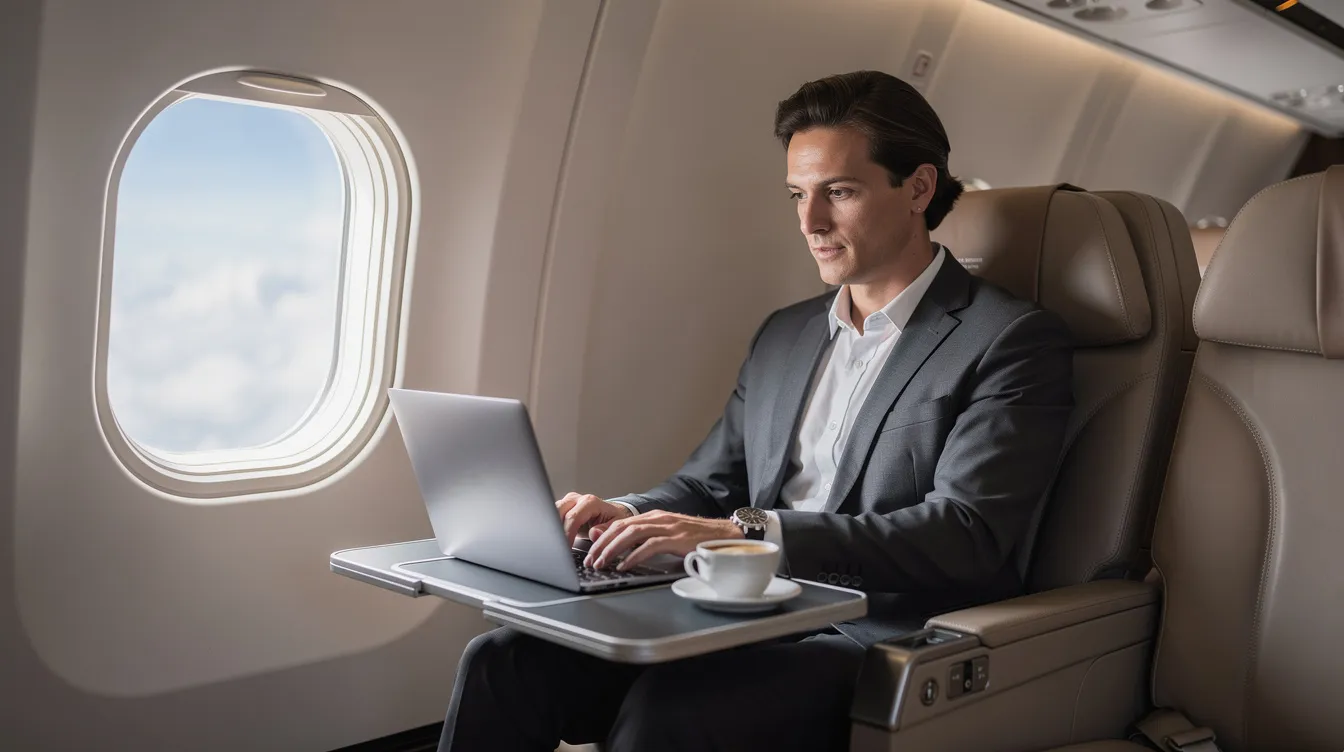
If you've flown domestically on United Airlines in the past few years, there's a strong chance you've sat inside an Embraer 175. This aircraft has quietly become one of the most important workhorses in American regional aviation, and whether you're connecting through Denver or hopping between West Coast cities, the E175 shapes millions of travel experiences every year. Here's what you can actually expect onboard—and where commercial regional flying starts to hit its ceiling.
Overview of the United Embraer 175 Experience
Fleet Role and Route Types
The Embraer 175 is the backbone of the United Express fleet, a regional jet that the airline deploys on routes generally under 1,200 miles. The Embraer E-175 can accommodate up to 76 passengers across two classes, and many travelers consider it one of the best regional jets in the U.S. thanks to its spacious cabin design relative to older aircraft like the Bombardier CRJ series. The airplane is primarily used for regional and longer domestic flights connecting United's major hubs—ORD, DEN, IAH, EWR, SFO, LAX—to secondary markets.
Seating Configuration and Capacity
In its standard configuration, you'll find:
United First: 12 first-class seats across rows 1–4 in a 1-2 layout. The solo "A" seat on the left offers maximum privacy and direct aisle access, while the "C-D" pair sits on the right.
Economy Plus: 16 seats in rows 7–9 (standard layout), configured 2-2 with approximately 34 inches of pitch—noticeably more generous than standard economy.
Main Cabin (Economy): 48 seats from about row 10 to row 21, also 2-2, with 30–31 inches of pitch and limited recline.
The cabin is noted for being relatively quiet during flight, and the overhead bins are large enough to fit standard roll-aboards, especially on the center (C-D) side.
United Express Operator Partners
The plane is operated by partners including SkyWest, Mesa Airlines, and Republic Airways, but passengers still receive full United Airlines branding, MileagePlus integration, and access to the United app for booking, boarding passes, and entertainment.
What does it feel like to actually board one? To give you an idea, expect a compact but modern cabin, decent wi fi on most flights, and service that scales with your class of seat and route distance. For travelers who wonder whether this regional aircraft delivers enough—or whether it's time to consider a private aviation alternative—this review covers every cabin, every amenity, and every trade-off worth knowing.
Cabin Layout and Class Seats on the United Embraer 175
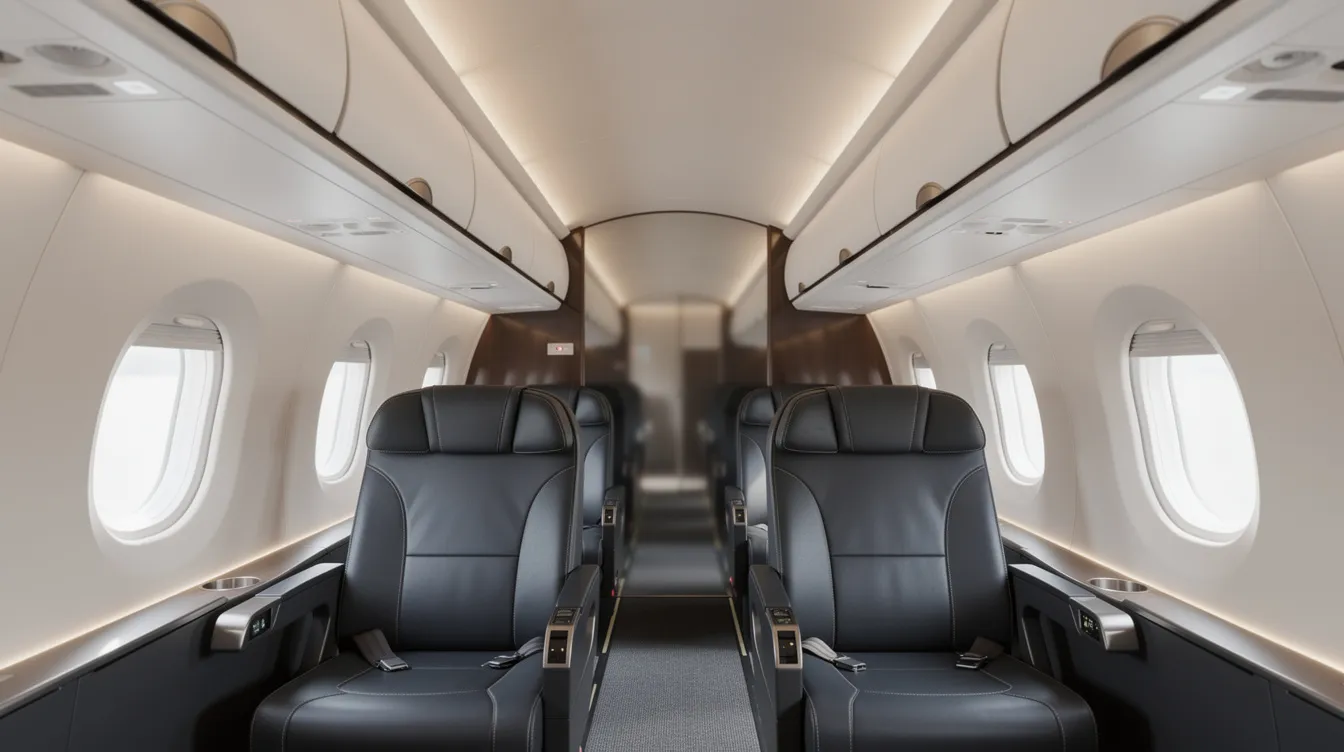
The E175's cabin is narrower than a mainline Boeing or Airbus, but it's thoughtfully arranged. The Embraer 175 features a 2+2 cabin configuration eliminating middle seats—a genuine advantage over many narrow-body jets that force passengers into 3-3 layouts. The cabin is noted for being relatively quiet during flight, and the overhead bins are large enough to fit standard roll-aboards, especially on the center (C-D) side.
Cabin Breakdown:
United First: 12 first-class seats across rows 1–4 in a 1-2 layout. The solo "A" seat on the left offers maximum privacy and direct aisle access, while the "C-D" pair sits on the right.
Economy Plus: 16 seats in rows 7–9 (standard layout), configured 2-2 with approximately 34 inches of pitch—noticeably more generous than standard economy.
Main Cabin (Economy): 48 seats from about row 10 to row 21, also 2-2, with 30–31 inches of pitch and limited recline.
Visually, the cabin features LED lighting in neutral tones, leather or leather-look upholstery, and shared overhead vents and reading lights. The Embraer 175 offers a modern cabin experience comparable to mainline aircraft, which is one reason frequent flyers prefer it over older regional jets. The spacious cabin design with large overhead bins means you won't need to gate-check a standard small bag or roll-aboard on most flights.
First Class on United Express Embraer 175
First Class Seat Layout and Features
Pitch: 37 inches
Width: 20 inches
Recline: Up to five inches
Layout: 1-2 configuration, with the solo A seat being the most prized for privacy
Armrests: Adjustable
Tray Tables: Sturdy enough to support a 13–15-inch laptop
Legroom: Sufficient even for taller passengers
Power Outlets: Universal AC between seats (USB ports are inconsistent on older interiors; bring your own charging bricks)
First Class Service and Amenities
Pre-departure Beverages: Offered on flights over roughly 500–700 miles
Snack Basket: Almonds, chips, cookies
Cold Meal Plates: Such as wraps or salads (no hot meals, as regional Embraer 175 aircraft lack galley ovens)
Shorter Segments: Crew may only manage a drink and light snack before descent
Wi Fi and Streaming Entertainment: Identical to economy but easier to enjoy with more space and guaranteed power access; Wi fi runs around $8 for MileagePlus members per flight
Comparing First Class to Private Jet Options
The direct comparison to private aviation is stark: on the E175, you share 12 first-class seats with other class passengers, whereas even more affordable private aircraft options can deliver a fundamentally different experience for small groups. On a BlackJet light or midsize jet, the entire cabin is yours—with customized catering, no overhead bin limitations, and departure times that flex around your schedule rather than the airline's, while still considering the most economical private jet options that fit your travel profile.
Economy Class on the United Embraer 175
Economy Class Seat Details
Pitch and Width: Economy class has a seat pitch of 31 inches. Economy class seats are 18 inches wide on the E-175—narrower than what you'd find on a widebody.
Recline: Limited recline of about two inches.
Seat Build: Narrow and hard, offering limited comfort. Slimline cushioning with adjustable headrests on most aircraft.
Tray Table: Standard tray table.
Overhead Features: Shared overhead air nozzles and reading lights.
Economy Class Service
Complimentary Drinks: Soft drinks, coffee, and tea.
In-Flight Snacks: Pretzels or peanuts in economy class on flights over roughly 200 miles.
Alcoholic Beverages and Premium Snacks: Buy-on-board.
Hot Food: Not served in United economy on these flights.
Comfort Tips for Economy Travelers
Bulkhead or Exit Row: Choosing these seats helps taller passengers—those over 5'10" may find legroom tight beyond 90 minutes.
Economy Plus: Forward rows in the Economy Plus section feel noticeably better with 34 inches of pitch.
2-2 Layout: No middle seat, ever.
Private Jet Comparison for Economy Passengers
Even the best economy seat on this plane compares unfavorably with entry-level private charter. A BlackJet jet card from the broader BlackJet private aviation program gives each person substantially more space, complete privacy for confidential conversations, and eliminates the ground time lost to terminal waits and gate delays.
In-Flight Entertainment, Wi Fi, and Connectivity
Streaming Entertainment and Wi Fi Access
The United Express fleet of E175s increasingly relies on "Personal Device Entertainment" rather than built-in screens. All passengers can access streaming content on the Embraer 175 by connecting to the "United_WiFi" network and opening the onboard portal via the United app.
Streaming movies and TV shows are available through the app on phones, tablets, or laptops. Economy class passengers can access streaming movies via wi fi just as easily as those in first class. Wi fi costs $8 for MileagePlus members on Embraer 175 flights, with non-members paying more. In-flight entertainment is not available on very short flights—on a 25-minute SAN–LAX segment, for instance, cruise time above 10,000 feet is simply too brief for the system to activate.
Reliability varies. Speed is generally fine for email, messaging, and light streaming movies, but heavy video calls or large file downloads may struggle. Connectivity can drop during turbulence or technical issues.
Practical Connectivity Tips
Download content offline before departure: Ensure you have entertainment ready in case of connectivity issues.
Charge devices fully before you board: Power outlets may be inconsistent, especially in older interiors.
Bring wired headphones: Bluetooth pairing may be limited.
Pack a power bank as a backup: Stay powered up throughout your journey.
Private Jet Connectivity Comparison
On private flights with BlackJet, connectivity is configured to your needs—high-speed broadband on select aircraft, with secure VPN-friendly connections ideal for executives who need to work undisturbed at altitude.
Routes, Schedules, and Typical Use Cases for United's Embraer 175
Typical United Embraer 175 Routes
United deploys the Embraer 175 as a regional connector: hub-to-spoke links and high-frequency shuttles between cities. The aircraft has a maximum range of 2,000 nautical miles and a cruising speed of approximately 530 mph (450 knots), making it well-suited for routes up to about three hours.
Route | Approximate Flight Time |
|---|
SAN–LAX | ~25 minutes |
BUR–SFO | ~1 hour |
DEN–OMA | ~1.5 hours |
IAH–MSY | ~1 hour |
EWR–RDU | ~1.5 hours |
Schedule Reliability and Delays
Schedule reliability is a persistent challenge. Regional jets often operate multiple segments per day, so a weather delay at SFO or ATC congestion at ORD can cascade—meaning your night flight home may be delayed by an hour or more because the aircraft arrived late after problems three legs earlier.
Passenger Profiles and Private Jet Alternatives
Typical passengers on these United Express flights include business travelers commuting weekly between West Coast cities, leisure travelers connecting to long-haul flights, and status holders running mileage routes, while some larger corporate or family groups may be better served by 20-passenger private jet solutions that avoid hub-and-spoke itineraries entirely. Delta and other carriers run similar regional operations, but United's E175 coverage is among the densest in the world.
BlackJet members, by contrast, fly nonstop from secondary airports closer to home or the office, skip hub connections entirely, and set departure times around meetings—not around the airline's schedule, illustrating many of the practical cost and time advantages of chartering a private jet.
Safety, Comfort, and Sustainability: United Embraer 175 vs Private Jets
Safety Standards and Crew
Every Embraer 175 operated as United Express meets stringent FAA safety standards. Professional two-pilot crews fly every segment, and maintenance is rigorous under United's contracts with its regional partners.
Comfort and Efficiency Features
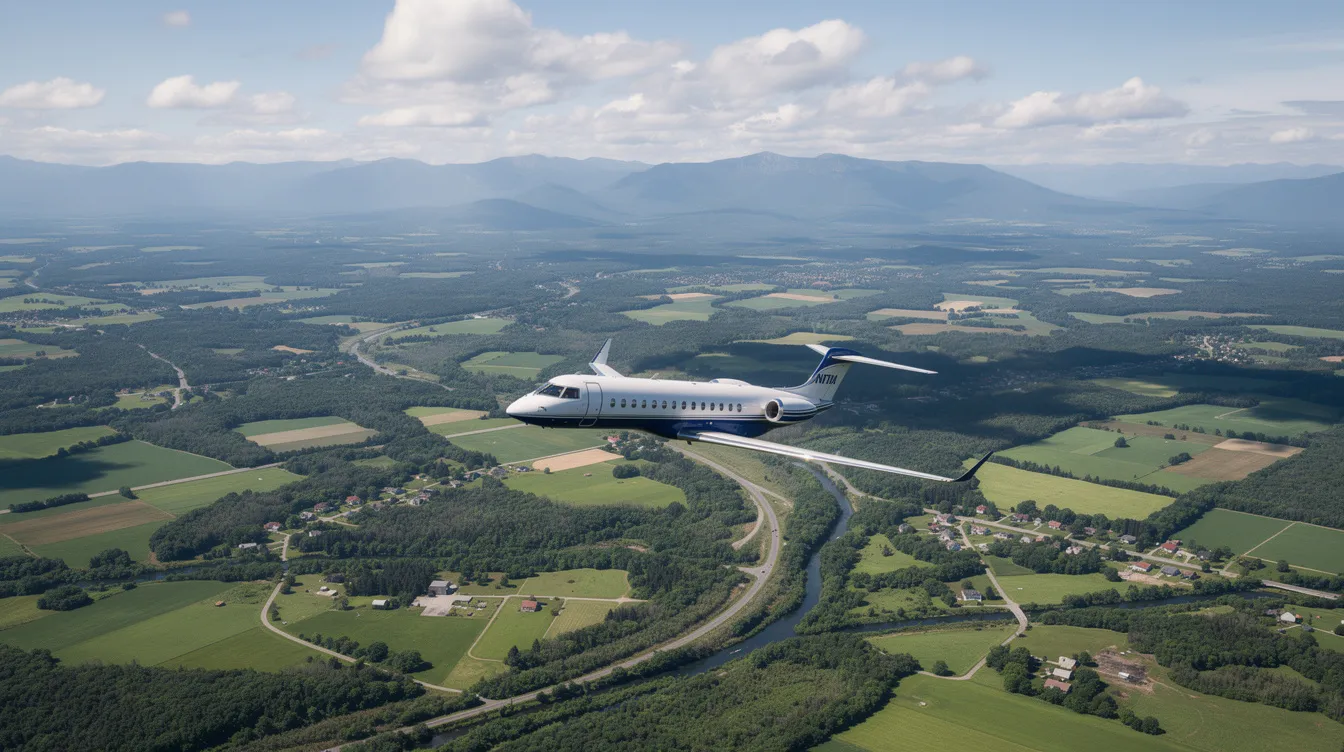
Comfort trade-offs are real. First-class seats on the E175 are decent for flights up to about three hours, while economy may feel cramped beyond 90–120 minutes for taller travelers. The aircraft is equipped with winglets that help reduce air resistance and fuel consumption, making it relatively efficient in the regional jet category, though some travelers also explore budget-friendly private aircraft that balance efficiency with flexibility. But commercial aviation's advantage—pooling passengers—doesn't address the time and productivity costs of airport congestion, security lines, and rigid schedules.
Sustainability Initiatives
BlackJet addresses sustainability head-on: every jet card hour is carbon neutral via verified offsets at no extra cost, and its approach is competitive with other major providers such as Flexjet’s jet card programs and pricing. On the safety front, BlackJet's proprietary operator vetting includes ARGUS and Wyvern ratings, crew experience standards, and continuous monitoring—rigor that matches or exceeds major-airline-grade oversight.
Door-to-Door Time Comparison
Consider a door-to-door scenario: a New York–Boston round trip. Flying United Express via EWR means arriving 90 minutes early, clearing security, sitting through a one-hour flight, deplaning, and transferring—roughly 4–5 hours door to door each way. A BlackJet light jet departing Teterboro or Westchester requires 15–30 minutes before departure, lands at a smaller field with minimal ground transit, and compresses the round trip to about 2.5–3 hours total. For executives who value confidentiality, flexible timing, and predictable rest between meetings, private jet access is less a luxury and more a strategic course of action.
Is United's Embraer 175 Enough – or Is It Time to Consider a Jet Card?
When the Embraer 175 Makes Sense
The United Embraer 175 is a fine choice for short regional hops when your schedule aligns with the airline's, you're earning MileagePlus miles, and you don't wonder about what you're leaving on the table in lost time. For heavier travelers weighing commercial against private, understanding jet card cost per hour and broader jet card pricing structures helps clarify when the math starts to favor private access. It's a modern, capable regional aircraft—no question.
Signs You May Need a Jet Card
But thresholds exist where commercial constraints start costing more than the ticket price—and where understanding jet card membership pricing and value becomes increasingly relevant:
Annual Flight Hours: You spend 25 or more hours in the air annually on regional segments and are beginning to evaluate jet card cost per hour against the true cost of flying commercial.
Schedule Changes: Last-minute schedule changes regularly force rebooking fees or missed connections, making a 50-hour jet card program look more predictable.
Privacy Needs: You need privacy for onboard conversations that can't happen with 75 other passengers nearby.
Recurring Delays: Delays, cascading cancellations, and cramped economy seats have become a recurring point of friction, nudging frequent flyers toward evaluating the best jet cards for flexibility and comfort.
Frequently Asked Questions About the United Embraer 175
What is the seating configuration on United's Embraer 175?
United's Embraer 175 features a 12-seat first-class cabin arranged in a 1-2 layout, an Economy Plus section with 16 seats offering extra legroom, and a main economy cabin with 48 seats in a 2-2 configuration, eliminating middle seats for added comfort.
Can I upgrade to first class on the Embraer 175?
Yes, upgrades to first class on United's Embraer 175 are often available, especially since the 12-seat first class cabin has a favorable ratio of premium seats. Upgrades can be earned through MileagePlus status or purchased, subject to availability.
What amenities are offered in first class on the Embraer 175?
First class passengers enjoy wider seats with 37 inches of pitch, universal power outlets, pre-departure beverage service, a snack basket, and access to streaming entertainment via the United app. Hot meals are not typically served due to galley limitations.
Is Wi-Fi available on United's Embraer 175 flights?
Yes, Wi-Fi is available for purchase at $8 for MileagePlus members and slightly higher for non-members. Passengers can stream movies and TV shows through the United app on their personal devices.
How does the Embraer 175 compare to flying private?
While the Embraer 175 offers a modern regional jet experience with first class amenities, private jet travel with BlackJet provides unmatched flexibility, privacy, and luxury, including carbon-neutral flights, customizable catering, and departure times tailored to your schedule.
BlackJet Jet Card Solutions
BlackJet's jet card model solves these pain points with prepaid hourly packages (25-hour, 50-hour, and beyond), access to light, midsize, and super-midsize jets, guaranteed availability with defined notice periods, and all-in transparent pricing, especially through its flagship BlackJet 25+ Hour Jet Card. Every BlackJet flight is carbon neutral at no extra cost—combining luxury with sustainability for customers conscious of their environmental footprint and aligning with a thoughtful approach to the broader private jet price and access landscape.
If you've landed on this page wondering whether your current travel pattern has outgrown the E175's first class cabin, the answer may already be clear—and if your flying is especially dense, a dedicated 100-hour jet card cost analysis can sharpen the comparison even further.
Conclusion: United Embraer 175 – A Solid Regional Jet with Room to Elevate Your Travel
The United Embraer 175 delivers a reliable and modern regional jet experience, with a comfortable first-class cabin, efficient 2-2 seating, and amenities like streaming entertainment and Wi-Fi that keep pace with today’s traveler expectations. Its spacious cabin design and quieter environment set it apart from many regional jets, making it a preferred choice for short- to medium-haul flights within the U.S.
However, for frequent flyers seeking greater flexibility, privacy, and a seamless travel experience that transcends the constraints of commercial aviation, private jet access through programs like BlackJet’s Jet Card offers a strategic advantage. With customizable departure times, exclusive cabins, enhanced safety certifications, and carbon-neutral flights, private aviation elevates the journey beyond what the Embraer 175 can offer.
Whether you value United’s premium economy comfort for select routes or are ready to explore the freedom of private jet travel, understanding your travel needs and priorities will guide you to the best choice. Discover how BlackJet can reshape your travel with effortless, premier access to private jets tailored for discerning travelers like you.


 Sign up with google
 Sign up with Apple