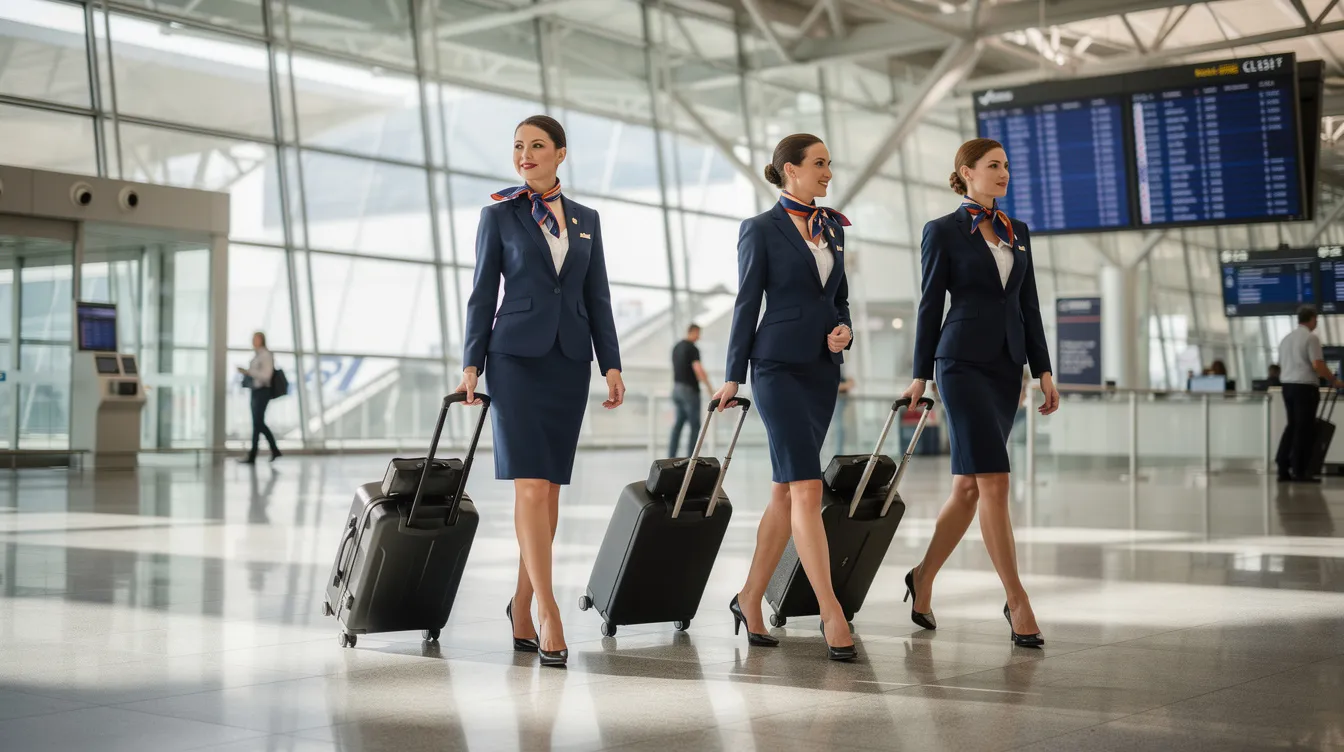
If you're researching which airline pays flight attendants the most, the short answer is this: in 2026, United Airlines pays the highest base hourly flight pay, with top-scale flight attendants earning up to $100.13 per flight hour, while Delta Air Lines can lead in total compensation once boarding pay and profit sharing are included. For current and aspiring flight attendants comparing employers—and for frequent business travelers, executives, and high-net-worth leisure flyers who want to understand what crew pay signals about service standards—this makes the answer more nuanced than a single airline name.
This guide breaks down how flight attendant compensation actually works across the industry, including base pay, boarding pay, per diem, premium pay, profit sharing, and how seniority changes earnings over time. It also compares major airlines side by side and looks at how commercial airline pay stacks up against private jet cabin crew compensation, because who pays the most shapes career decisions for crew and helps travelers understand how airlines and private aviation operators prioritize safety, retention, and onboard service.
Quick Answer: Which Airline Pays Flight Attendants the Most in 2026?
In 2026, the highest-paid flight attendants in the United States work at a handful of legacy carriers and one standout regional-turned-major airline. Here is how the top contenders stack up.
United Airlines flight attendants hold the highest base hourly flight pay among major U.S. carriers, with senior crew members at Year 13+ earning up to $100.13 per flight hour under the new contract ratified in May 2026. Delta Air Lines leads in total compensation when profit sharing and boarding pay are included-its 2025 profit sharing payout alone delivered 8.9% of eligible earnings across the company. American Airlines flight attendants can earn over $100,000 annually thanks to a revamped pay scale topping out around $92.79 per hour and newly introduced boarding pay. Alaska Airlines is extremely competitive on domestic narrow-body flying, with strong boarding pay and a top-out rate scheduled to reach approximately $78.77 by 2027.
The best airline for a flight attendant depends not only on flight pay but also on boarding pay, diem pay, schedule rules, base locations, and quality-of-life benefits. Major U.S. carriers like Southwest and Delta offer the highest compensation for flight attendants when all components are included, while major international carriers provide extensive packages, including tax-free stipends and housing allowances.
Here is a quick snapshot of realistic senior flight attendant earnings in 2026:
A senior Delta purser on international routes with profit sharing and boarding pay can approach $120,000–$140,000 annually
A top-step American lineholder flying international flights regularly can clear low six figures
A senior Alaska crew member maximizing boarding pay on high-frequency domestic trips can exceed $100,000 in strong years
By contrast, private jet and VIP cabin crew roles operate on an entirely different pay structure-often salary-based or day-rate models rather than union hourly scales-making direct comparisons tricky but fascinating.
The rest of this article unpacks how flight attendant pay really works and then returns to which airlines consistently deliver the highest total pay.
How Flight Attendant Pay Actually Works (Why "Hourly Rate" Is Misleading)
The posted hourly rate you see on an airline's careers page rarely tells the whole story. Flight attendants in the U.S. are typically paid by credit hours, not fixed salaries, and the gap between "flight time" and "duty time" can make advertised rates misleading.
Here are the core components of flight attendant compensation in 2026:
Flight pay (block hour pay): Compensation for actual in-air or taxiing time, measured from aircraft door close to door open. This is the headline number most airlines publish.
Boarding pay: A partial hourly rate paid during passenger boarding, usually 50% of the normal flight pay rate. Airlines have adopted boarding pay to compensate for the time spent during passenger boarding, which used to be entirely unpaid.
Per diem: A non-taxable allowance paid for every hour away from home base, covering meals and incidentals. Per diem rates typically range from $2.00 to $3.00 per hour, and the pay continues to accumulate during layovers and rest periods.
Premium pay: Extra hourly compensation for lead or purser roles, language qualifications, galley service, holiday shifts, and international routes.
Profit sharing: Annual bonuses tied to airline profitability, common at Delta, American, United, and Alaska.
Schedule guarantees: Monthly minimums (typically 70–85 credit hours) that establish a pay floor for both reserve flight attendants and lineholders.
Flight attendants typically log 75–100 flight hours per month but may spend 12–16 hours on duty for every 8–10 hours of credited flight time. Long duty days, irregular operations, and ground delays all erode the effective hourly rate when measured against total time worked.
Most airlines pay under union contracts with a fixed pay scale tied to seniority, while Delta is non-union but uses a similar seniority ladder. Private jet and corporate cabin crew often receive a salary or day rate plus per diem and catering budgets rather than block-hour compensation.
Base Flight Pay: 2026 Hourly Rates at Major U.S. Airlines
Starting pay for flight attendants typically ranges from $25 to $37 per hour, depending on the carrier. Top-step rates diverge dramatically. Here is where the major airlines stand in 2026:
United Airlines: Under the new contract, first-year flight attendants start at approximately $37.10 per flight hour. Senior flight attendants at Year 13+ earn up to $100.13 per hour-the highest published base rate among legacy carriers.
American Airlines: First-year flight attendants earn around $37.91 per hour. The top-step rate at Year 13 reaches $92.79 under the current five-year agreement ratified in 2024.
Delta Air Lines: Delta flight attendants at senior levels earn up to $86 per hour in base flight pay. Delta implemented a 4% raise in June 2025, and its strength lies in combining this rate with profit sharing and boarding pay rather than chasing the absolute highest hourly number.
Alaska Airlines: Top-out flight pay on Alaska's scale is scheduled to reach around $78.77 by 2027, making it one of the strongest domestic narrow-body pay scales. Year-1 pay starts near $32.00.
Southwest, JetBlue, and others: Southwest Airlines flight attendants have competitive pay and benefits, though top-step base rates generally sit slightly below the very top scales at United and Delta. Southwest flight attendants benefit from strong union contracts and scheduling protections. JetBlue and regional carriers tend to lag further behind when comparing top-step hourly pay alone.
Note that Continental Airlines, which merged into United in 2012, no longer exists as a separate entity-its flight attendant seniority lists were integrated into United's current pay structure.
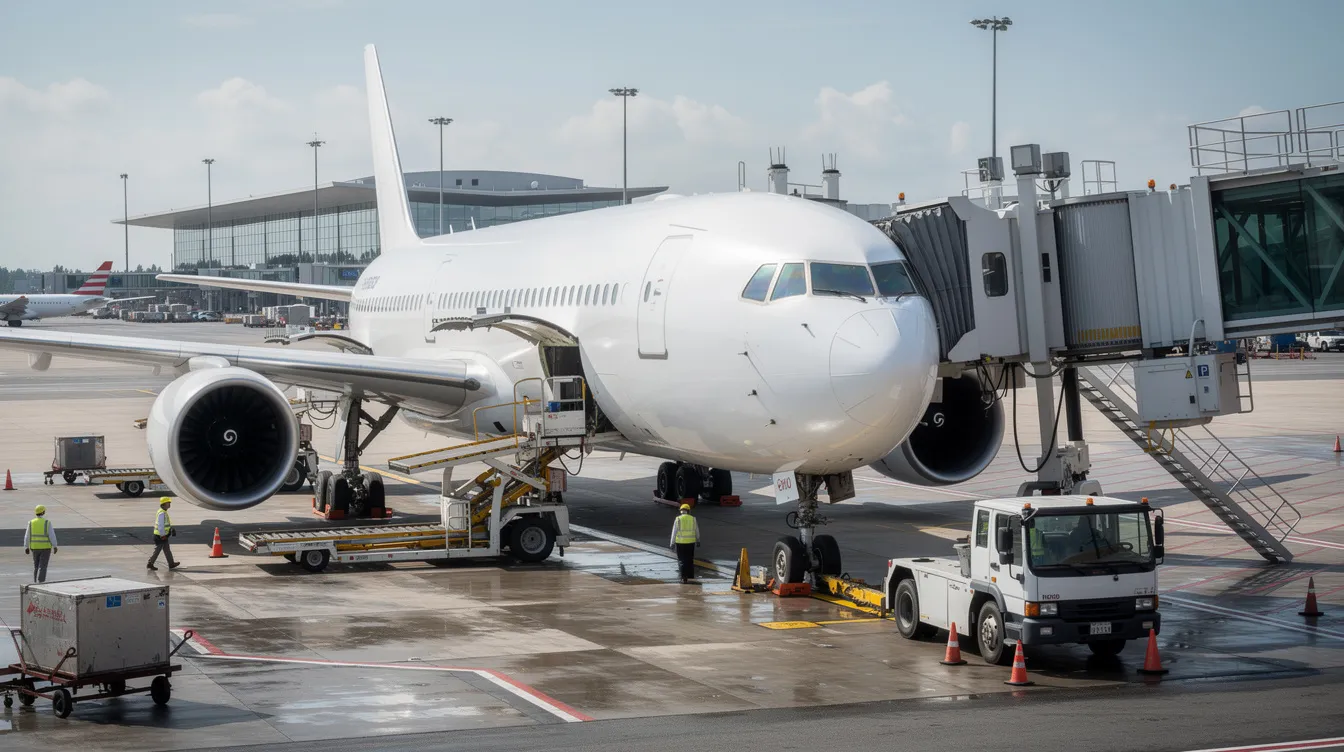
Boarding Pay and Diem Pay: The Hidden Drivers of "Highest Paid" Status
Boarding pay and diem pay can add 5–15% or more to a flight attendant's annual income and meaningfully change which airline actually pays the most.
Boarding pay compensates cabin crew for pre-departure duties that used to be entirely unpaid-greeting passengers, stowing luggage, performing safety checks before the aircraft door closes. Flight attendants earn boarding pay at 50% of their hourly rate at most airlines that offer it. Boarding pay can add 7% to 8% to annual compensation for flight attendants, with some estimates reaching 9–10% on segment-heavy domestic schedules.
Here is how the major carriers handle it:
Delta pioneered a boarding premium in 2022, paying flight attendants for boarding time at roughly 50% of their normal rate
American Airlines introduced boarding pay in its latest contract, compensating flight attendants for pre-departure duties across all fleet types
United Airlines added boarding pay in its 2026 agreement, along with "sit pay" for ground delays exceeding 2.5 hours
Alaska Airlines offers industry-leading boarding pay on domestic narrow-body aircraft, where frequent short segments amplify the benefit
Per diem (diem pay) is paid for every hour away from home base. Per diem rates typically range from $2.00 to $3.00 per hour. United pays approximately $2.97 per hour domestically and $3.54 per hour internationally. Delta pays around $3.30 per hour domestically and $3.55 per hour internationally. Per diem is generally not taxed if within federal guidelines, making it effectively a tax-free salary supplement.
Here is a concrete example: a four-day trip with roughly 84 hours away from base at a $2.50 per hour rate yields about $210 in per diem on top of flight pay. Across a full month, a flight attendant can earn about $756 in per diem alone. For many flight attendants, that translates to $700–$800 or more added to each monthly paycheck-a meaningful boost that rarely appears in headline pay comparisons. Compensation for flight attendants often includes per diem and profit sharing as essential components beyond base rates.
Profit Sharing, Bonuses, and Premium Pay
Airlines with robust profit sharing can dramatically lift total annual flight attendant compensation, especially in strong financial years. Profit-sharing bonuses are common for flight attendants at major airlines, and they often represent the difference between "well-paid" and "highest paid."
Delta Air Lines' profit sharing is the gold standard. In 2025, Delta disbursed $1.3 billion in profit sharing to eligible employees, amounting to 8.9% of eligible earnings. For senior Delta flight attendants, that translates to roughly four weeks of extra pay in a profitable year, pushing many into six-figure territory.
American Airlines also offers profit sharing under its newest contract, with payouts that interact with high hourly rates to make American one of the highest total-pay environments in 2026. United and Alaska have their own formulas, though United's historically yields smaller percentage payouts than Delta's.
Beyond profit sharing, premium pay types include:
Lead flight attendant or purser pay: Lead flight attendants earn an additional $2 to $4 per flight hour on top of their base rate
Language-qualified pay: Extra compensation for crew members fluent in languages needed at international destinations
Galley premiums: Added pay for managing premium cabin service on wide-body aircraft
Holiday pay: Holiday pay is often 150% for six holidays per year at most airlines
International premiums: Higher rates for long-haul flight assignments
Training or instructor stipends: Additional pay for crew who lead initial training for new hires
Pursers and international service directors on wide-body fleets at Delta or United can see total annual compensation in the $120,000–$140,000+ range when combining top hourly rates, purser premiums, boarding pay, per diem, and profit sharing.
To truly judge "highest paid," prospective flight attendants must consider all of these components rather than just the base hourly rate listed on recruitment pages. For a deeper breakdown of how much airline attendants get paid, the numbers become even more compelling once you add every layer.
Reserve vs. Lineholder: How Schedule Type Affects Real Pay
Two flight attendants with the same hourly rate can earn vastly different annual incomes depending on whether they hold a line or sit on reserve status.
Reserve flight attendants are often new hires who are on call, assigned trips with little notice, and guaranteed a minimum number of credit hours-typically 70–75 hours per month-regardless of how much they actually fly. New flight attendants often start on reserve status for 1–5 years depending on the airline and base location. Reserve rules vary widely; some reserves fly very little but still earn guaranteed pay, while others fly heavily during peak seasons and accumulate overtime.
Lineholders bid monthly for pre-assigned trips based on seniority. Senior lineholders can target high-time or premium trips, maximizing credit hours, per diem, and premium pay. This is where most flight attendants earn their highest income.
How airlines differ on reserve timelines:
American Airlines and United typically keep new flight attendants on reserve for a significant period, sometimes up to two years at American, depending on the base
Delta Air Lines allows many new hires to operate more like lineholders with built-in scheduled days off, even early in their careers
Alaska Airlines reserve periods vary by base, with Seattle often being faster to transition to lineholder status
Seniority and how fast a new hire moves from reserve to lineholder play a large role in which airline ends up feeling like the "best paying" from a year-to-year perspective. Flight attendants face varied compensation structures across airlines, including base pay and additional perks that only become fully accessible once reserve status ends.
Seniority and Career Progression: When Do Flight Attendants Hit Top Pay?
Flight attendant pay is a long game. The highest hourly rates and best schedules are almost always reserved for those with 10–20+ years of service. Seniority affects flight attendants' trip selection and schedules at every carrier, and flight attendants' pay increases annually based on seniority.
Top pay for flight attendants is reached after 12 to 13 years at most airlines. At American Airlines, the full top-out hourly pay lands at Year 13. United follows a similar timeline. Alaska's standard scale tops out at Year 14, with longevity premiums beyond that point.
Here are typical salary ranges by career stage in 2026:
Entry-level flight attendants earn about $28,000 to $35,000 yearly, including per diem
Mid-career (5–10 years): $50,000–$70,000 annually. The median flight attendant salary is about $67,130, according to Bureau of Labor Statistics data
Senior flight attendants (12+ years): Top senior flight attendants can earn between $95,000 and $120,000 annually. The top 25% of flight attendants earn around $98,160 annually
Experienced flight attendants at airlines with strong profit sharing and premium routes can earn over $100,000 per year
Flight attendants with over five years of service gain job security through contractual protections and seniority-based bidding rights. Seniority is airline-specific and non-transferable; changing airlines means going back to the bottom of the list at the same airline or a new one and losing access to top pay and premium schedules.
The fastest path to becoming one of the highest-paid flight attendants is to join a high-paying airline early in your career, remain there, and steadily progress to senior lineholder, lead, or purser roles. The U.S. Bureau of Labor Statistics projects about 9% growth in flight attendant roles by 2034, supporting long-term career prospects once top pay is reached.
For more context on flight attendant salary insights for 2026, including how pay varies by region and fleet type, the picture becomes clearer at each career stage.
Which Airlines Offer the Highest Total Flight Attendant Pay in 2026?
Combining hourly pay, boarding pay, per diem, profit sharing, and premiums reveals which airlines truly deliver the highest total earning potential for cabin crew in 2026.
United Airlines is the front-runner on pure top-step hourly pay, with contracts pushing senior rates to $100.13 per hour and plans to maintain industry-leading compensation through 2030
Delta Air Lines is one of the overall highest-paying environments when factoring in strong hourly rates, generous profit sharing (8.9% in 2025), and boarding pay-especially for senior lineholders and pursers on international routes
American Airlines is a top-tier option thanks to its revamped pay scale (top-out around $92.79), boarding pay, and profit sharing, enabling six-figure compensation later in a career
Alaska Airlines stands out as one of the best-paying airlines for domestic narrow-body flying, with high boarding pay, strong top-out rates by 2027, and the possibility of six-figure income at upper seniority levels
For many aspiring flight attendants, Delta, American, United, and Alaska form the short list of airlines where long-term income potential is the highest, though schedule preferences, base locations, demanding schedules, and work rules remain critical deciding factors. Other major airlines in the airline industry offer competitive pay but generally trail these four on total compensation at the senior level.
Case Studies: How Much Can Top Flight Attendants Actually Make?
Real earnings depend on hours flown, base location, and trip selection. Here are realistic 2026 earnings scenarios that illustrate what the highest-paid flight attendants actually bring home.
Example 1: Senior Delta Air Lines purser, international wide-body routes. Flying approximately 85 credit hours per month on transatlantic and transpacific routes, this crew member earns top-step flight pay in the mid-$80s per hour, plus boarding pay, language pay, and purser premium. Add Delta's 8.9% profit-sharing payout and strong per diem on international flights, and total annual compensation lands in the $120,000–$140,000 range.
Example 2: 13-year American Airlines lineholder, mixed domestic and international. At the top-out rate of $92.79 per hour, flying 80–85 credit hours monthly with regular international flying, this flight attendant earns a strong per diem (approximately $800 per month) and annual profit sharing. Total income reaches low six figures-a flight attendant's salary that would have been nearly unimaginable a decade ago.
Example 3: Senior Alaska Airlines flight attendant, domestic narrow-body. Combining high boarding pay from frequent short segments, top-out TFP earnings, and longevity bonuses, this crew member exceeds $100,000 in a strong year—impressive for an airline focused primarily on domestic and West Coast routes.
The other end of the spectrum: Entry-level or reserve flight attendants at these same airlines may only see $28,000–$40,000 in the first couple of years, illustrating the enormous impact of seniority and schedule control on real pay.
Private aviation comparison: A VIP or corporate flight attendant on a long-range business jet like a Gulfstream G650 might earn $500–$900+ per day, underscoring the difference between commercial and private aviation pay models. These roles trade union protections and seniority for higher per-trip compensation and a fundamentally different lifestyle. For those interested in private plane jobs, including learning how to buy a seat on a private jet, the earning potential and career path look quite different from the commercial airline track.
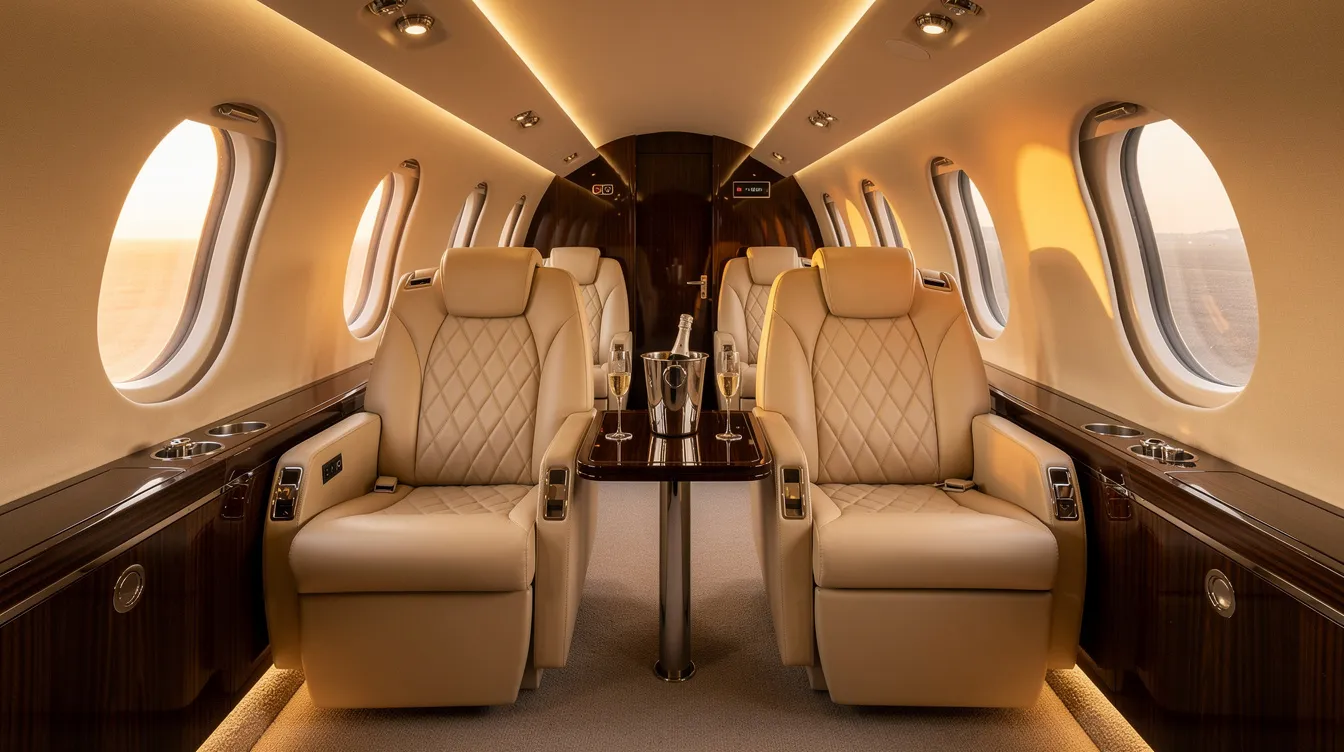
Commercial Airline Flight Attendant Pay vs. Private Jet Cabin Crew Pay
Commercial flight attendants are typically paid by the flight hour plus per diem and union-defined premiums, while private jet cabin crew often receive a base salary, day rate, or trip fee with flexible per diem structures. The two worlds share the same core safety responsibilities but diverge sharply on pay structure, schedule, and service expectations.
Corporate and VIP cabin crew on long-range aircraft often perform multiple roles-safety expert, concierge, personal chef, cabin manager-which can justify higher per-trip pay compared with standard airline sectors. Freelance private cabin crew can earn substantial daily rates ($500–$900+ per day on large-cabin jets), but work may be irregular and requires networking, specialized training, and high-end service skills beyond what most airlines require during initial training.
Private jet operators, including those working with jet card providers like BlackJet, expect rigorous safety training, superior premium cabin service, and discretion, qualities that often come with commensurate compensation for both private jet pilots and professionals in private jet sales careers.
Schedule structure also differs dramatically. Private aviation may involve intense multi-day trips followed by longer periods at home, rather than the fixed monthly bidding and reserve systems used by major airlines. Hotel accommodations and free transport are typically handled by the operator rather than negotiated through labor unions, and understanding the broader private jet price list, costs, and access options helps clarify how these different operating models translate into overall value.
While top commercial flight attendants at Delta, American, United, or Alaska can reach or exceed six figures, private jet cabin crew may match or surpass that on a per-day basis-but with more variability, less predictable hours flown, and greater individual responsibility for each passenger's experience. To understand flight attendant hourly pay across both sectors, it helps to compare not just the rate but the total package.
How BlackJet Fits Into the Picture: Private Jet Access, Not Airline Pay Scales
BlackJet is not an airline. It is a private aviation company offering Jet Card programs and on-demand private jet access, so it does not employ large airline-style flight attendant groups on union pay scales or a fixed pay scale.
Instead, BlackJet partners with rigorously vetted operators whose cabin crew and pilots meet strict safety, certification, and service standards aligned with premium corporate aviation rather than commercial aviation norms. Every operator in BlackJet's network adheres to Part 135 safety standards, ensuring crew qualifications match or exceed what passengers experience on the best commercial carriers.
BlackJet's focus is on delivering a refined cabin experience-bespoke catering, quiet cabins, privacy, and tailored schedules-rather than competing with American Airlines or Delta Air Lines on flight attendant pay tables. For travelers accustomed to premium cabins on high-paying airlines, BlackJet's Jet Card model offers a strategic upgrade: skipping commercial terminals, flying on your schedule, and benefiting from consistently high service levels across aircraft types.
All BlackJet flights are carbon-neutral, with offsets built into every program at no extra cost-a commitment detailed in the company's green private jet initiatives. This appeals to executives and high-net-worth individuals who care about sustainability alongside comfort.
BlackJet is a logical next step for frequent flyers who already understand the value that highly trained cabin crew provide on major carriers and who want that same level of professionalism in a fully private environment.
Why Understanding Flight Attendant Pay Matters for Travelers and Executives
Flight attendant pay is a window into airline priorities. Airlines that invest in cabin crew compensation tend to emphasize safety, reliability, and service quality-factors critical to business travelers navigating demanding schedules.
Compensation structures influence how airlines schedule flights, staff premium cabins, and manage irregular operations. When a lead flight attendant is well-compensated and motivated, they handle complex safety procedures, medical events, and service expectations with calm professionalism, reducing operational friction for passengers.
Senior, well-compensated cabin crew are genuine assets. They've completed years of recurrent training beyond their initial training, know how to manage every scenario from severe turbulence to medical diversions, and set a service standard that newer crew members learn from.
Executives comparing commercial first class with private jet access should factor in the total value of time saved, privacy, and customization-not just ticket price or hourly flight attendant pay. Consider a typical day: a senior airline flight attendant manages a hub-and-spoke schedule with multiple segments, layovers, and hundreds of passengers, while a private jet cabin crew member on a direct New York–London business mission is optimized entirely around one client's agenda.
Understanding these dynamics positions BlackJet as a strategic travel solution. Clients access highly trained cabin crew and safety-vetted operators without needing to navigate complex commercial airline pay scales, reserve rules, or union contracts.
Key Factors to Weigh When Choosing the "Best" Airline as a Flight Attendant
For aspiring flight attendants weighing offers, "highest paid" is multidimensional. Here are the factors that matter most.
Pay-related factors:
Starting hourly rate and time to top-out
Boarding pay policies and percentage of hourly rate
Per diem levels (domestic vs. international)
Premium pay opportunities (purser, language, galley, holiday)
Profit sharing percentages and payout history
Deadhead pay policies for repositioning flights
Quality-of-life factors:
Reserve rules and duration before becoming a lineholder
Trip patterns: domestic vs. international destinations
Commuting requirements and base location options
Union protections (at American, United, Alaska) vs. non-union flexibility (at Delta Air Lines)
Schedule flexibility and minimum age requirements for certain international routes
Long-term earning potential matters more than starting pay. A slightly lower starting rate at an airline with faster promotions or better profit sharing can beat a higher starting rate at a carrier with limited growth. Most airlines follow a similar trajectory, but the gap between regional airlines and major carriers is significant-regional carriers often pay tens of thousands less annually even at senior levels.
Candidates should model a full year of projected income, flight pay, per diem, boarding pay, and realistic monthly hours-at each airline they are considering. The "highest paid" airline on paper might not be the best personal fit if schedule, base, or culture do not align with lifestyle goals. Competitive pay is only one piece of the equation.
Frequently Asked Questions About Highest Paid Flight Attendants
Which U.S. airline has the highest hourly flight attendant pay in 2026?
United Airlines currently holds the highest published base hourly rate, with senior flight attendants earning up to $100.13 per flight hour under the 2026 contract. However, Delta Air Lines and American Airlines compete closely at the top when total compensation-including profit sharing and boarding pay-is factored in. Airlines pay differently based on structure, and the answer depends on which metric you prioritize.
How much do first-year flight attendants really make?
Entry-level flight attendants earn about $28,000 to $35,000 yearly in 2026, including per diem but before profit sharing. Starting pay at major carriers ranges from roughly $32 to $38 per flight hour. New flight attendants on reserve status may fly fewer hours and earn closer to the lower end of that range.
Can flight attendants make six figures?
Yes. Experienced flight attendants can earn over $100,000 per year. Senior lineholders and pursers at airlines like Delta Air Lines, American Airlines, United Airlines, and Alaska Airlines can exceed $100,000+ with premiums and profit sharing. Top senior flight attendants can earn between $95,000 and $120,000 annually, with purser and international premiums pushing some well beyond that.
Is per diem part of a flight attendant's salary?
Per diem is separate from flight pay and is paid for every hour away from home base. Per diem continues to accumulate during layovers and rest periods, and it is generally not taxed if within federal guidelines-making it effectively a tax free supplement. Per diem rates typically range from $2.00 to $3.00 per hour at most airlines, adding hundreds per month to take-home income.
Do private jet cabin crew earn more than airline flight attendants?
Corporate and VIP cabin crew can earn higher day rates-often $500–$900+ per day on large-cabin jets-but face different schedules and responsibilities. Operators partnering with BlackJet maintain premium compensation for specialized roles, combining safety expertise with concierge-level service. Unlike commercial crew, private aviation professionals aren't bound by the same seniority-based pay structure, but their income can be less predictable month to month.
What role do labor unions play in flight attendant pay?
Union contracts at airlines like American (APFA), United (AFA-CWA), and Alaska (AFA-CWA) establish binding pay scales, boarding pay rules, reserve rules, per diem rates, and health insurance benefits. Delta, which is non-union, sets pay unilaterally but has historically matched or exceeded union rates to remain competitive and discourage unionization. Many flight attendants view union protections as essential for long-term career stability.
From Top-Paying Airlines to Private Jet Access: Next Steps
In 2026, airlines like Delta Air Lines, American Airlines, United Airlines, and Alaska Airlines lead in flight attendant compensation when all components-flight pay, boarding pay, per diem, and profit sharing-are considered. The aviation industry has never been more transparent about what cabin crew earn, and the numbers confirm that this career path can deliver six-figure incomes for those who commit to it.
Aspiring flight attendants should look beyond headline hourly rates to the full pay package, scheduling system, and seniority progression when choosing where to apply or accept an offer. The same airline that posts the highest per hour rate may not be the same airline that delivers the best total compensation once every line item is counted.
For frequent flyers and executives, the lens shifts. Understanding flight attendant pay sheds light on why certain airlines deliver better service-and why private jet solutions can offer a superior, more strategic travel experience.
A BlackJet Jet Card can transform a multi-segment commercial itinerary into a single optimized private jet flight with vetted crew, real-time support, and carbon-neutral operations. High-frequency private flyers evaluating premium private jet cards and membership programs can compare options using a comprehensive guide to jet card costs and pricing structures and a detailed overview of jet card pricing models, as well as focused breakdowns of 100-hour jet card cost, 50-hour jet card pricing, and jet card cost per hour. Travelers seeking a smaller initial commitment can explore the flexible BlackJet 25+ Hour Jet Card alongside these benchmarks. No layovers. No crowded terminals. No compromises on the crew serving you.
If you prioritize time, privacy, and consistent cabin service at the level you've come to expect from the best commercial airlines—only elevated—explore BlackJet's Jet Card options and discover how private aviation can complement or replace even the finest commercial experience, especially when you compare them with the best jet cards for frequent flyers and offerings from top private jet companies for luxury travel.


 Sign up with google
 Sign up with Apple