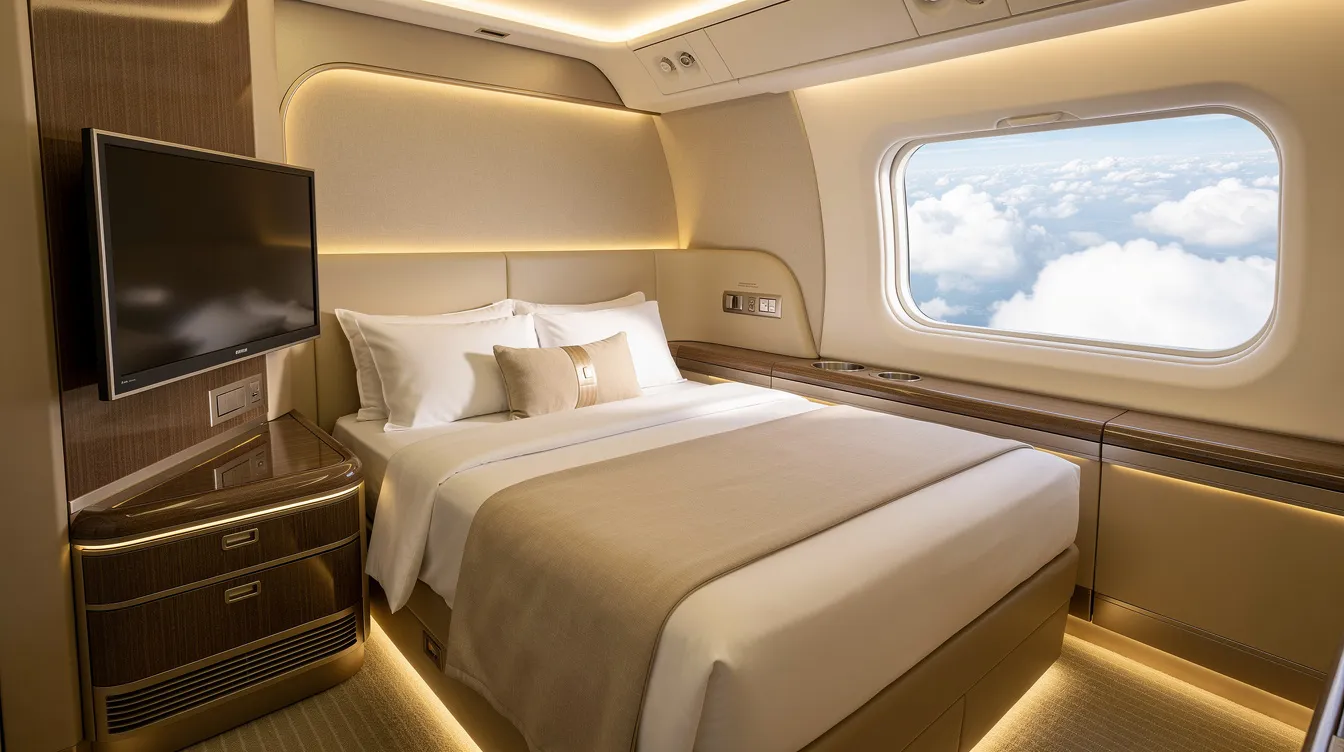
For frequent long-haul travelers and executives who need to arrive sharp, how wide your seat is can make the difference between a productive day and a wasted one. This guide breaks down the exact width of first class seats across domestic and international cabins, compares them against economy and business class, and shows where private jet access through BlackJet offers a fundamentally different experience.
Key Takeaways
The typical width of first class seats on commercial airlines ranges from 22 to 35 inches, compared to economy class seats at 16–18.5 inches and business class seats at 20–22 inches.
Domestic first class typically features seats measuring between 18 and 22 inches wide, while international first class suites can reach 35 inches in bed mode—nearly double the width of standard economy.
Japan Airlines first class on the Boeing 777-300ER offers approximately 23 inches of seat width and a bed exceeding 33 inches wide. Singapore Airlines and Emirates suites also exceed 30 inches in bed configuration.
Private jet cabins accessed through BlackJet Jet Card programs feature club seats typically 21–24 inches wide, with sofa-style divans exceeding 24–30 inches—all without sharing your cabin with other passengers.
This article covers how to verify airline seat width before booking flights, when the upgrade to first class is justified by flight duration and arrival obligations, and when switching to a jet card model delivers more value per dollar than repeated first class tickets.
Why Seat Width Matters More Than Ever
Impact on Comfort and Health
Seat width affects passenger comfort on long-haul flights in ways that go beyond simple preference. For business travelers who fly transcontinental or transoceanic routes regularly, the lateral space available at 35,000 feet directly shapes sleep quality, spinal alignment, and cognitive sharpness upon arrival.
The problem has gotten worse over time. On many high-density widebody aircraft, the average seat width decreased as airlines squeezed more economy seats into existing fuselages. A Boeing 777 configured nine abreast in economy offers roughly 18 inches per seat; push that to ten abreast, and economy seat widths shrink to approximately 16.5 inches. Meanwhile, the average adult shoulder breadth has increased since the 1960s when many of these aircraft fuselage dimensions were first designed.
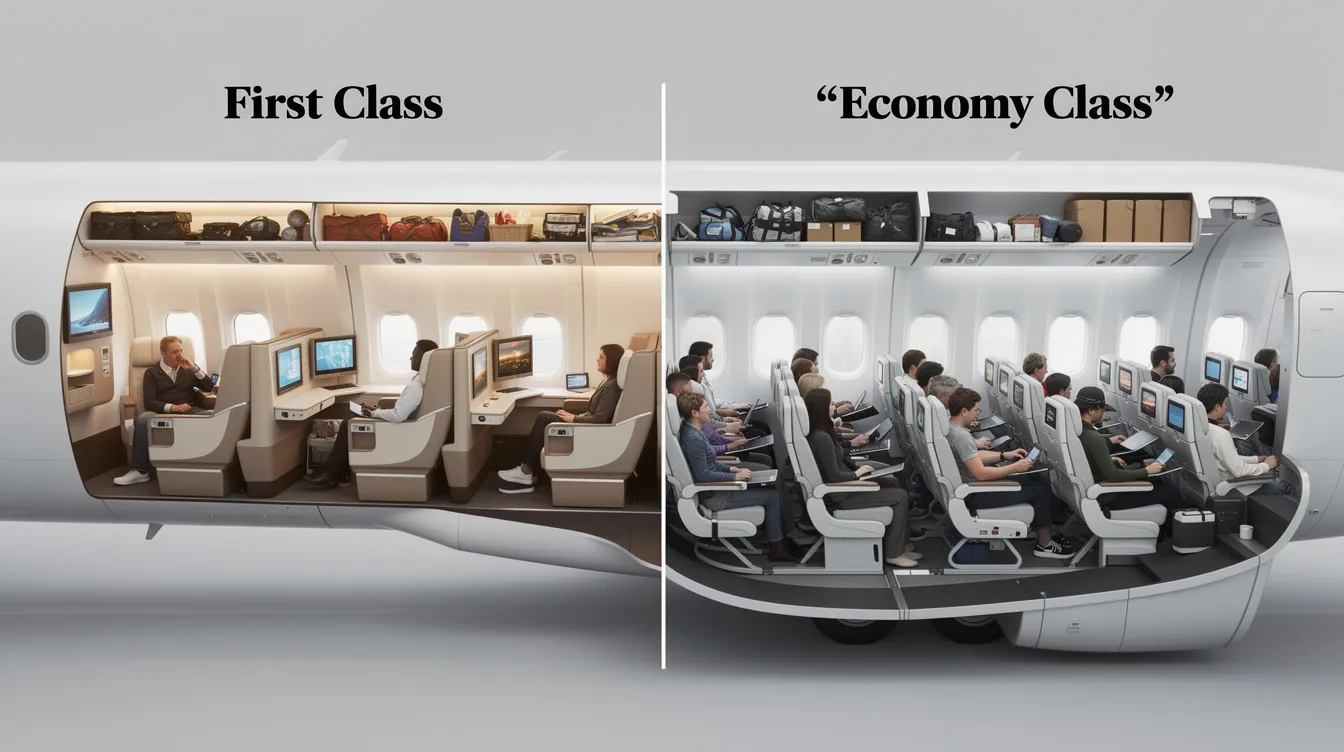
The difference across cabins is stark. Economy passengers on a twelve-hour flight may be wedged into 16 to 18.5 inches of shoulder room with a seat pitch of just 30–32 inches—the distance from one seat row to the next. Domestic first class stretches that to 18 to 22 inches with enhanced recline and seat pitch ranging from 34 to 68 inches. International first class on the same aircraft can offer 19 to 35 inches or more in seat width and a fully lie-flat bed up to 36 inches wide, with seat pitch expanding to 58 to 94 inches. For executives and high-net-worth travelers, wider seating is not simply a comfort perk—it is a strategic advantage for arriving rested and ready to execute. Cabin layout also comes up in safety discussions because seating density and aisle access can affect emergency evacuation.
What Is First Class Seat Width?
How Airlines Measure Seat Width
Seat width is the distance between armrests, measured inner edge to inner edge, when the seat is in its upright position. This number represents your usable shoulder and hip space during the seated portion of a flight. In lie-flat bed mode, the relevant metric shifts to "bed width," which measures the distance between sidewalls, partitions, or ottoman edges that form the sleeping surface.
First class differs from economy seats and business class in how much cabin width is allocated to each airline seat. Fewer seats per row, wider armrests, and privacy shells or suites all increase the space envelope around each passenger. However, first class width metrics can be misleading. Airlines sometimes include the shell, padding, or outer partition in their advertised dimensions. The actual "seat pan width"—the cushion surface your body contacts—may be 1–2 inches less than the headline figure.
Some international first class products, like Singapore Airlines Suites on the A380 and Emirates A380 first, resemble small rooms rather than traditional class seats. Their bed widths approach or exceed the dimensions of a domestic twin bed, making raw seat width only part of the story.
Typical Seat Width By Cabin Class
Here is how seat width and seat pitch compare across cabin classes on most airlines:
Cabin Class | Seat Width (Upright) | Seat Pitch | Lie Flat Bed Width | Notes |
|---|
Economy | 16–18.5 inches | 30–32 inches | N/A | Standard economy class on widebody aircraft; narrowbody aircraft similar |
Premium Economy | 18–19.5 inches | 38–42 inches | N/A | Wider seats, more legroom, adjustable headrests |
Business Class | 20–22 inches | Up to 62 inches | 23–28 inches | Many seats convert to lie flat beds |
First Class (Domestic) | 18–22 inches | 34–68 inches | Rare | Traditional recliner style on most airlines |
First Class (International) | 19–35 inches | 58–94 inches | 30–36 inches | Fully enclosed suites common; flat-bed suites offer seat widths of 26 to 28 inches |
Standard economy seats typically measure 17–18 inches wide. Business class seat widths typically range from 20 to 22 inches, while first class seats can exceed 30 inches in width.
Seat pitch is the distance from one point on a seat to the same point on the seat in front—effectively the distance from one seat row to the next. Premium economy seats offer a pitch of 38 to 42 inches, a meaningful step up from economy class seat pitch, which is usually 30 to 32 inches. Business class seat pitch can reach up to 62 inches, while international first class seating can range from 58 to 94 inches of seat pitch.
Higher class seats also get adjustable headrests, more recline, and better basic amenities including larger tray tables and power outlets. Consider this: a 16.5-inch economy seat on a ten-abreast Boeing 777 versus a 23-inch-wide international first class seat on the same aircraft—that is nearly 40% more shoulder room.
Domestic First Class Seat Width (U.S. & Short-Haul)
First class airline seating varies significantly between domestic and international flights. On domestic routes, "first class" typically means a 2–2 layout on a narrowbody aircraft like the Boeing 737 or Airbus A320 family. The aircraft fuselage on these planes is narrow enough that even with just four seats per row, individual seats rarely exceed 22 inches in width.
Domestic first class typically offers 18–22 inches of seat width and 34–68 inches of pitch. Domestic first-class seats are typically designed for larger comfort with wider reclining seats rather than suites or pods.
Specific aircraft examples:
Boeing 737-800 / 737 MAX: First class seats typically measure 20–21 inches between armrests. Delta Air Lines and other major carriers configure these with more legroom but limited recline compared to long haul products.
Airbus A321: First class often reaches 20–21 inches wide, with certain airlines pushing closer to 21.5 inches on select configurations.
Buying an extra seat in economy to get more space rarely works as reliably as domestic first class. Middle seats may be reassigned on full flights, and flying economy in two adjacent seats still does not provide the enhanced recline, service, or guaranteed elbow room of a dedicated first class seat. Seats vary by airline configuration, so checking specs before your next flight is always worth the effort.
International First Class Seat Width & Suites
International first class is a fundamentally different seat class from domestic. Many international first-class cabins use enclosed suites or high-partition arrangements that transform how much space each passenger occupies. Fully enclosed suites are common in premium international first-class travel, and lie-flat beds are common in long-haul first class travel.
First class usually provides 19–35 inches of seat width and 58–94 inches of pitch on long-haul flights. International first-class seats often include premium seats or suites with widths spanning 19 to 35 inches. The typical seat width in international first class can reach 35 inches in private suites at the top end.
Flagship examples with current-generation products:
Japan Airlines Boeing 777-300ER "JAL SUITE": Approximately 23-inch seat width, with a bed exceeding 33 inches wide and roughly 79 inches long.
Singapore Airlines A380 Suites: Among the most spacious aircraft seats in commercial aviation, with bed widths that rival a single bed at home.
Emirates A380 First Class: Approximately 23 inches of seat width in upright mode, bed length of roughly 78 inches, and a seat pitch of approximately 86 inches.
Air France La Première (777-300ER, refreshed product): Approximately 22.4 inches of seat width with a bed transforming to about 79 inches in length and a total suite area of roughly 3 square meters.
Staggered, herringbone, or enclosed suite designs affect usable width. Privacy doors and large side consoles increase perceived personal space beyond the raw inches—even when the airline seat's armrests measure the same as a competitor, the surrounding architecture can make one seat feel substantially wider.
Aircraft Examples: Boeing 777, 787 & A350 First Class Layouts
Understanding how aircraft types shape the width of first class seats helps when comparing flight choices on the same route.
Boeing 777: The widebody aircraft with the widest cabin in its class. In economy, ten-abreast configurations yield just 16–17 inches per seat. Certain airlines like Japan Airlines configure their 777s nine abreast in economy, giving economy class passengers closer to 18.5 inches. First class on a 1–2–1 or 1–1–1 layout on the same Boeing 777 reaches 22–24 inches with lie flat beds exceeding 30 inches wide.
Boeing 787 Dreamliner: Typical nine-abreast economy offers approximately 17 inches of width. Most 787 operators skip traditional first class in favor of a premium business class product with 1–2–1 layouts, delivering 20–22 inches in seat mode and 23–26 inches in bed mode. The 787's lower cabin pressure altitude and higher humidity also improve sleep quality on long flights—a factor that amplifies whatever width advantage you gain from a higher seat class.
Airbus A350: Slightly narrower than the 777 but with a modern cabin design, the A350 supports premium cabins with 20–22 inches of seat width. Many airlines that skip true first class on the A350 offer business-first hybrids—wider seats with full lie flat capability and generous bed widths. For travelers looking at long haul routes, the A350's cabin environment (lower noise, better pressurization) combines with wider seats to deliver a meaningfully better experience than transport category aircraft from previous generations.
Japan Airlines And Other Standout First Class Products
Japan Airlines has built a reputation for offering some of the most spacious aircraft seats in both economy and first class. JAL's cabin philosophy prioritizes seat width across all classes—a notable example being its decision to configure its 777 fleet nine abreast in economy rather than ten, giving economy passengers wider seats than many competitors offer on the same airframe.
In first class on the Boeing 777-300ER, JAL's suite delivers approximately 23 inches of seat width in upright mode and a bed width exceeding 33 inches. The suite includes large privacy partitions, premium amenity kits tailored to long haul travelers, and a level of personal space that turns a twelve-hour flight into a genuinely restful experience. Many first class seats include personal video screens for entertainment, and first class often provides gourmet meals served on fine tableware—both of which JAL executes at an exceptionally high standard.
Other standout products from Asian and Middle Eastern carriers:
Singapore Airlines Suites (A380): Fully enclosed suites with slide-open doors, among the widest bed configurations in commercial aviation. A benchmark for how much space one seat can claim on a widebody jet.
Emirates A380 First Class: Door-equipped suites, virtual windows in center seats, and a bed approaching 78 inches in length.
ANA "THE Suite" (777-300ER): Enclosed first class with a fully lie flat bed, sliding privacy doors, and seat width exceeding 22 inches.
Qatar Airways QSuites: Technically marketed as business class but competing directly with many airlines' first class in terms of width, privacy, and lie flat capability.
First Class Seat Width vs. Private Jet Cabins (BlackJet Perspective)
Even the widest international first class suites share a cabin with dozens of other passengers. You are still subject to the airline's schedule, crew protocols, and the reality that a flight attendant is splitting attention across an entire cabin. Private jets accessed through BlackJet's premium private jet programs offer a fundamentally different equation: the entire cabin belongs to you and your party.
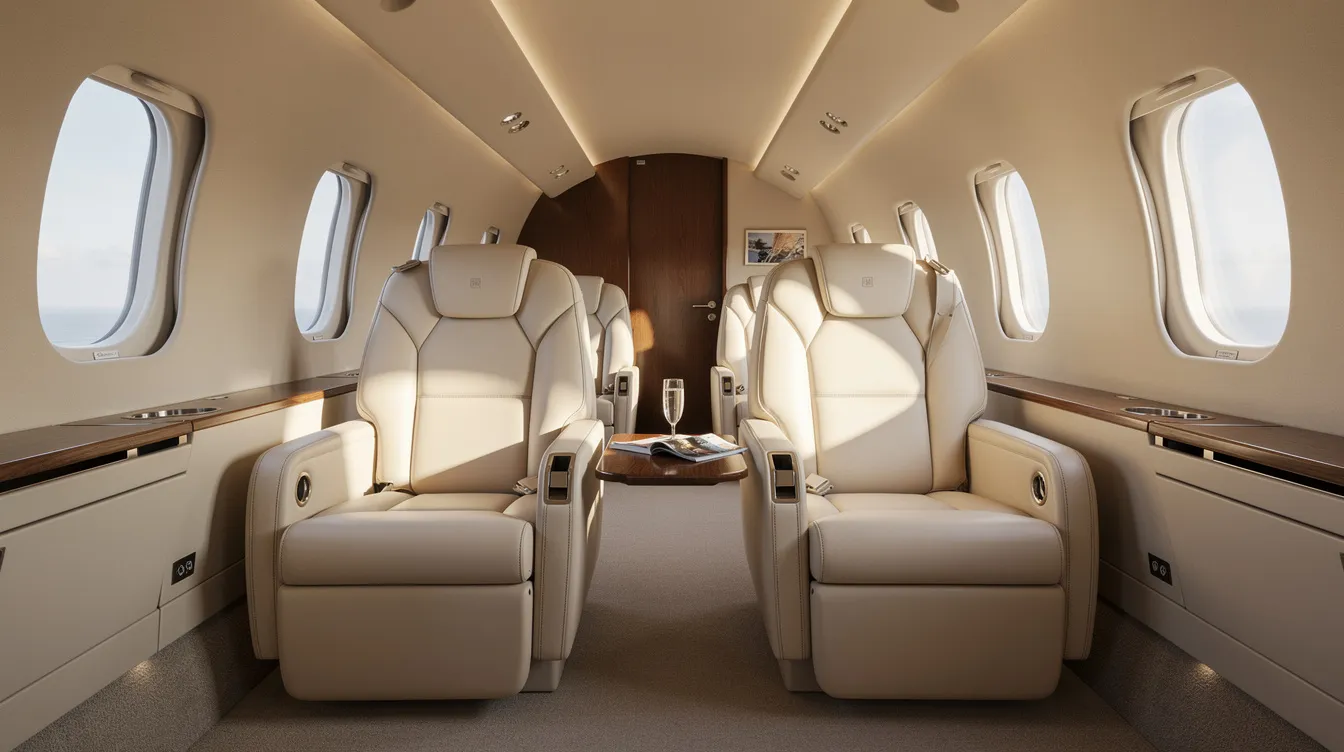
Typical private jet seating includes club seats roughly 21–24 inches wide, with opposing sofas and divans exceeding 24–30 inches, and a range of private jet sizes that determine how much total cabin width you can access. Unlike airline seats, private jet chairs lack the rigid partition walls that constrain usable width. The absence of fixed seat rows, shared armrests, and adjacent stranger elbows means practical shoulder room can match or surpass international first class.
BlackJet's multiple cabin categories—from light jets to large cabin aircraft—translate into different seat and bed width experiences, mirroring the range of options you might see on a detailed private jet price list. A super-midsize jet with internal cabin widths exceeding 72 inches can accommodate fully flat sleeping surfaces wider than a commercial first class bed, with no compromises on lateral space.
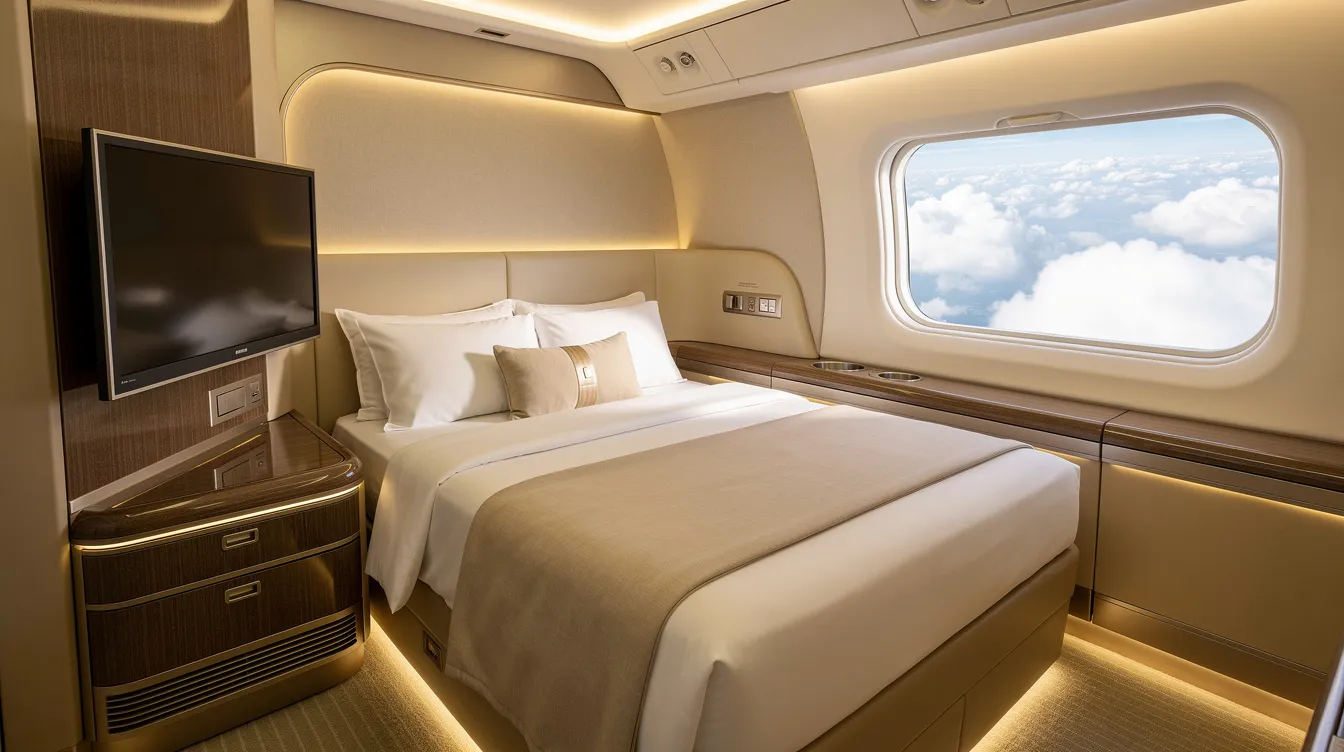
Scenario: A BlackJet member flying New York to London overnight on a super-midsize jet stretches out on a fully flat sleeping surface with unrestricted lateral space, eats a custom-prepared meal on their schedule, and arrives at Luton or Farnborough having slept uninterrupted. On the same route in commercial first class, the seat is roughly 23 inches wide, the cabin holds 8–12 passengers, and the schedule is fixed. Both options deliver lie flat rest—but only one gives you the privacy to treat the cabin as your own bedroom.
Beyond width, BlackJet differentiates through real-time flight support, bespoke catering, vetted operators, and carbon-neutral flights at no additional cost. For discerning travelers, how much space you get is only the beginning.
How Seat Width Interacts With Other Comfort Factors
Additional Comfort Features
Width alone does not define passenger comfort. Seat pitch, recline capability, cushioning, and ergonomics work in concert with lateral space to shape the experience over eight hours or more.
First class typically features fully flat beds for comfort on long haul flights, and a slightly narrower fully lie flat bed can be more restful than a wider but only partially reclining recliner seat. Adjustable headrests and lumbar support—standard in first class and most business class seats—make a significant difference versus the simpler hardware in economy seats, where you may be left supporting your own neck for the entire flight duration.
Amenities that complement seat width include:
Larger pillows and duvets designed for lie flat sleeping
Amenity kits with skincare and eye masks
Noise-cancelling headphones
Improved cabin humidity and pressurization on modern aircraft like the 787 and A350
Many first class seats include personal video screens for entertainment
First class often provides gourmet meals served on fine tableware
On long haul routes, these details compound. A 22-inch-wide seat with excellent cushioning, full lie flat capability, and a well-humidified cabin can outperform a 25-inch-wide seat with inferior bedding and loud ambient noise.
How To Check First Class Seat Width Before You Book
Before booking flights, verify the exact seat width and layout for your specific route and aircraft:
Check airline websites: Most airlines publish seat specifications by aircraft type, including seat width, pitch, and whether lie flat is available.
Use third-party seat review sites: Platforms like SeatGuru and AeroLOPA show detailed cabin diagrams with exact dimensions for each seat class on specific aircraft.
Compare flights, not just airlines: A Boeing 777 and an Airbus A350 from the same carrier can have different first class seat widths and layouts. Look at your specific route and the aircraft assigned to it.
Look beyond numbers: Check photos, cabin diagrams, and user reviews to understand shoulder room, storage space, and whether the seat is truly lie flat or merely a recliner marketed with an optimistic angle.
For private aviation, BlackJet's booking team and digital tools can recommend specific jet categories that match or exceed the comfort level of your preferred first class products—whether you prioritize club seating, divan-style sofas, or bedroom-style configurations, and can help you navigate private jet sizes and leasing options for private jets if long-term access is part of your strategy.
When Is First Class (Or Private) Worth The Upgrade For Width Alone?
The upgrade decision comes down to a few clear criteria:
Flight duration: When flight duration exceeds eight hours, the gap between a 17-inch economy seat and a 23-inch first class suite translates directly into sleep quality and next-day performance.
Body size: Travelers with broader shoulders or hips may find standard economy seats physically constraining; wider seats eliminate the need to compress into a space designed for an average frame from decades ago.
Arrival obligations: If you have meetings, presentations, or public appearances within hours of landing, the productivity cost of poor rest far exceeds the ticket premium.
Frequency: Passengers in first class enjoy priority boarding and check-in services, but the real value compounds for frequent travelers.
For a long haul route like Los Angeles to Tokyo or New York to London, the step up from economy (17 inches, no lie flat) to business class (21 inches, lie flat) to first class (23+ inches, full suite) is measurable. But for business travel involving multi-city itineraries, flexible departure times, or more than ten long flights per year, a BlackJet Jet Card can become more cost-efficient than repeatedly purchasing international first class tickets—with the added benefit of vetted operators, safety certification, and built-in carbon-neutral flights, all within a predictable jet card cost structure.

BlackJet Jet Cards: A Different Way To Think About "Seat Width"
Instead of searching for the widest one seat in a commercial cabin, BlackJet Jet Card programs (25-hour and 50-hour options) offer on-demand access to an entire private cabin, following a clear and transparent jet card pricing model. The paradigm shifts from "which airline offers the widest seat" to "which aircraft gives my party the most comfortable environment."
Key program elements—similar in concept to other 25 hour jet card programs and 50 hour jet card options, but tailored through the BlackJet 25+ Hour Jet Card and other top jet cards for frequent flyers:
Prepaid hours across multiple aircraft categories, from light jets for regional hops to large cabin jets for transatlantic crossings, giving you flexibility similar to choosing among different private jet sizes for each journey or even learning how to buy a seat on a private jet when a full cabin is not required
24/7 digital booking with real-time support
Transparent pricing that, for frequent flyers, can rival the annual spend on international first class tickets and compares favorably with established providers such as those detailed in NetJets jet card cost guides
Safety certification and consistent operator vetting integrated into every flight—critical for corporate clients with ESG and duty-of-care obligations
Carbon-neutral flights at no additional cost, a sustainability feature that aligns with certain unlimited private jet membership programs
For many airlines in the commercial space, seat width is a fixed number dictated by economics and fuselage constraints. In private aviation, it becomes a variable you control.
Elevate your travel—effortlessly. Explore BlackJet's Jet Card programs and discover how the BlackJet 25+ Hour Jet Card makes refined, carbon-neutral private flight your new standard.
FAQ: First Class Seat Width & Private Jet Alternatives
How wide are first class seats compared with economy on the same aircraft?
On many widebody jets such as the Boeing 777, 787, and Airbus A350, economy class seat widths range from 16 to 18.5 inches, while first class seats often reach 22–24 inches in upright mode and 30–36 inches in bed mode. This effectively provides nearly double the lateral sleeping space. Low cost carriers and airlines using denser configurations can push economy even narrower, making the contrast even sharper on long flights.
Is buying two economy seats better than booking first class for extra space?
Buying two economy seats rarely guarantees both will remain open. Seat reassignments on full flights, airline overbooking policies, and carry on bag stowage limits mean you may end up next to another passenger anyway. Two economy seats also do not provide the enhanced recline, service, or privacy of first class. For reliable space, seat comfort, and more legroom, first class or a private jet solution like BlackJet is more effective. The same point applies to attempting to block middle seats—most airlines will not guarantee it.
Do all international first class seats lie flat, and does that change the width?
Nearly all modern international first class seats are fully lie flat. Bed width is usually greater than seat width because the seat bottom extends, armrests fold down, or ottomans merge with the main seat to form a wider sleeping surface. Bed widths typically range from about 30 to 36 inches, giving significantly more room at the shoulders and hips than in seated mode. JetBlue's economy seats or even premium economy cannot replicate this transformation.
How does private jet seat width compare to the best international first class suites?
Individual private jet club seats are typically 21–24 inches wide, comparable to the upright dimension of the best airline first class. However, private jets benefit from open cabin layouts, sofas, and the freedom to move without navigating around seat rows or other passengers. Practical usable space can match or exceed commercial first class, with total privacy and custom cabin arrangements that no airline offers regardless of seat class.
How can I choose the right aircraft or cabin if seat width is my top priority?
Start by checking specific aircraft types and route configurations on airline websites, prioritizing widebody aircraft with established first class suites. Look for 1–1–1 or 1–2–1 layouts, which allocate the most width per passenger. Aviation authorities and third-party review sites can confirm exact seat size specifications. For private aviation, consulting BlackJet's team helps match jet category and layout—whether club seating, divan, or bedroom-style configurations—to your comfort requirements.
Conclusion
Seat width is a critical factor that defines the comfort and effectiveness of your travel experience, especially on long-haul flights where rest and productivity are paramount. While first class on commercial airlines offers significantly more lateral space than economy or business class, it remains constrained by shared cabin environments and fixed schedules. Private jet access through BlackJet elevates this further by providing exclusive cabins with spacious seating arrangements, flexible layouts, and personalized service that transform travel into a seamless extension of your lifestyle. Whether you prioritize the generous width of international first class suites or the bespoke comfort of private aviation, understanding seat dimensions empowers you to make informed choices that enhance every journey. Elevate your travel with BlackJet Jet Card programs and experience how true space and privacy redefine what first class can mean.


 Sign up with google
 Sign up with Apple