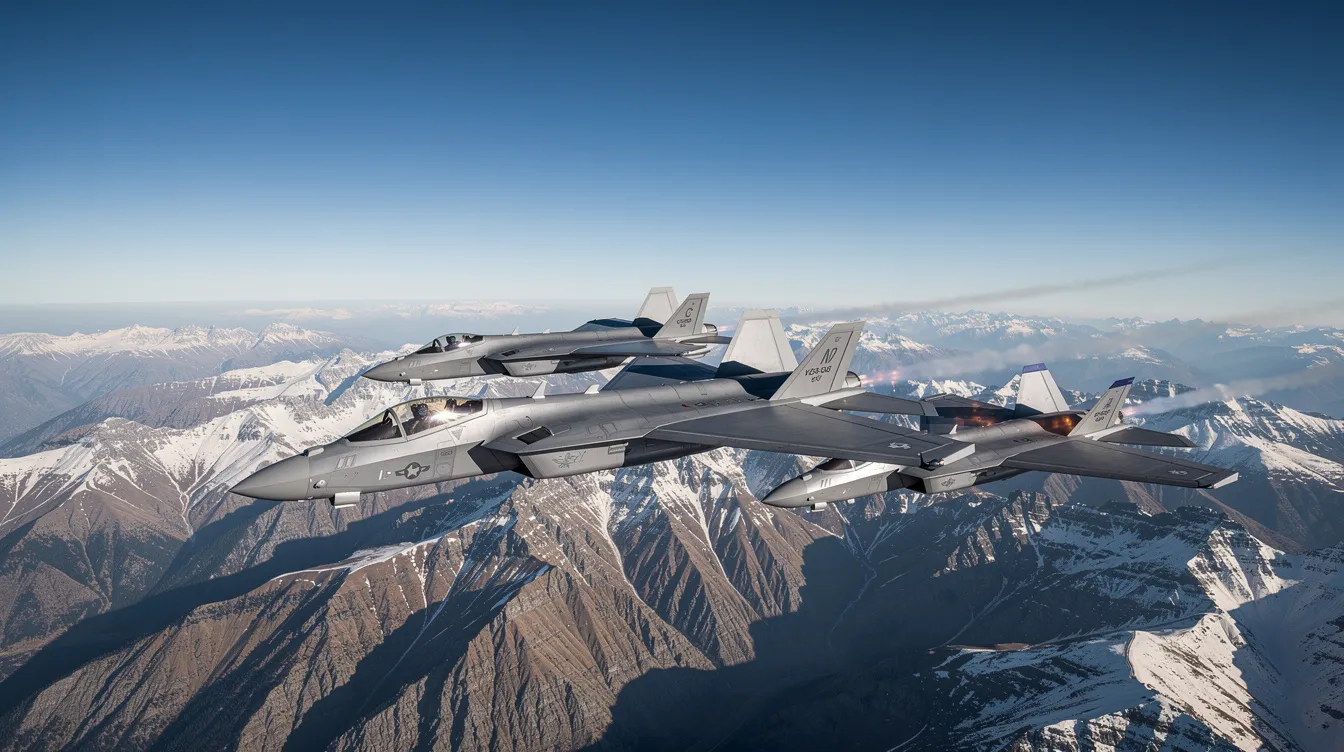
The pursuit of air superiority has driven nations to invest trillions in fighter aircraft that push the boundaries of speed, stealth, and lethality. In 2026, the competition for the title of the world's top fighter jet is fiercer than ever, with fifth-generation fighters from the United States, China, and Russia redefining what it means to control the skies. But the technology that makes these military aircraft dominant does not stay inside defense labs forever. Composite materials, sensor fusion, fly-by-wire controls, and turbofan efficiency developed for combat jets increasingly shape the private aviation world, from business jet cabins to the digital booking platforms that modern travelers rely on.
This article ranks the most advanced fighters in operational service today, explains the criteria behind those rankings, and traces the line from contested airspace to the cabin of your next private flight, connecting these insights to the best aircraft of 2026 across military, commercial, and private aviation.
World Top Fighter Jet Rankings and Analysis
Quick Answer: What Is the Best Fighter Jet in the World Right Now?
The Lockheed Martin F-35 Lightning II is the best all-around fighter jet in the world today. With over 1,200 deliveries planned by 2026 and more than 880 units already in active service across 20-plus air forces, no other aircraft matches its combination of stealth, sensor fusion, multirole flexibility, and global operational reach.
Defining the "best fighter jet" requires looking beyond a single metric. Top speed matters less when an aircraft can avoid detection entirely. Dogfighting agility matters less when beyond-visual-range missiles decide engagements before opponents ever see each other. The criteria that separate the best from the rest in the world today are low observability, integrated situational awareness, weapons versatility, and the ability to operate within allied networks across multiple theaters.
The F-22 Raptor remains the premier air superiority platform, with unmatched speed and agility, but its fleet of roughly 184 aircraft is limited to the United States Air Force alone. China's Chengdu J-20 Mighty Dragon fields around 250 units in active service and is optimized for long-range interception. Russia's Su-57 Felon, with approximately 30 units in service, demonstrates ambition but lacks the production scale to influence the global balance. The Eurofighter Typhoon, a formidable 4.5-generation fighter, excels in agility and payload but cannot match the stealth or sensor integration of true fifth-generation fighters.
Aircraft | Service Entry | Generation | Primary Role | Approx. Active Fleet |
|---|
F-35 Lightning II | 2015 | 5th | Multirole (stealth, sensor fusion) | 880+ in service; 1,344 delivered |
F-22 Raptor | 2005 | 5th | Air superiority | ~184 (USAF only) |
Chengdu J-20 | ~2017 | 5th | Long-range interceptor / air superiority | ~250 |
Su-57 Felon | 2020 | 5th | Multirole / air superiority | ~30 operational |
These aircraft define modern air combat. Their technologies—from radar-absorbent skins to networked data links—increasingly influence civil and private aviation as well.
Why Air Superiority Still Decides Wars in the 2020s
Control of the skies remains the single most decisive factor in modern warfare. From the 1991 Gulf War, where allied air dominance neutralized Iraqi defenses within days, to ongoing regional tensions where airpower provides both deterrence and strike capability, the nation that owns the airspace dictates the tempo of the conflict.
Three concepts frame how military planners think about control of the air:
Air parity means neither side controls the skies; threats persist on both sides.
Air superiority means one side controls the airspace in a given area, enabling freedom of operation but still facing some contestation.
Air dominance means near-total control—adversarial air capabilities are neutralized or unable to challenge in a given theater.
Air superiority fighters emphasize agility and high thrust-to-weight ratios, but the tools that deliver dominance have evolved dramatically. Here is how the strategic calculus has shifted:
Active electronically scanned array (AESA) radars detect targets at longer ranges with greater precision while being harder to jam.
Beyond-visual-range air-to-air missiles like the AIM-120 AMRAAM and PL-15 give first-shot advantage to the pilot who detects first.
Advanced stealth and low-observable technology shrink detection windows, letting a stealth aircraft engage before being seen.
Electronic warfare systems can jam enemy radar networks and spoof missile guidance systems, degrading an opponent's ability to fight back.
Networked sensors and secure datalinks create shared battlespace pictures across air, ground, sea, and space assets.
Modern military aviation emphasizes stealth, sensor fusion, and networked combat systems over raw speed or turning ability.
Logistics, readiness, and pilot training remain as critical as any airframe specification.
The F-15 Eagle's near-perfect air-to-air kill record since the 1970s illustrates how an advanced fighter changes campaign outcomes. Today, the F-22's forward deployments across the Asia-Pacific serve as strategic deterrents, while the F-35 network extends that advantage to allied nations worldwide.
How Modern Fighter Jets Are Ranked: Criteria and Method
Ranking the world's fighter aircraft requires a framework that accounts for more than headline specifications. The core domains we evaluate include:
Stealth and low observability: radar cross section, infrared management, emissions control, and stealth materials that use advanced radar-absorbent skins and composite shaping to reduce radar signatures.
Sensor fusion and advanced avionics: how well radar, infrared search-and-track, electro-optical systems, and electronic warfare suites integrate into a unified tactical picture. Sensor fusion combines data from various sensors into a unified tactical picture for pilots, reducing workload and accelerating decision-making.
Weapons payload and internal armament: internal weapons bays for stealth, external hardpoints, missile diversity, and ground-attack capability.
Speed and supercruise: maximum speed and the ability to cruise supersonically without afterburner.
Combat radius and range: how far the aircraft can project power on a single fuel load.
Agility and maneuverability: thrust vectoring, high angle-of-attack control, and energy management in a fight.
Operational prevalence and support infrastructure: number built, number in operational service, export partnerships, readiness rates, maintenance burden, and program cost, including the tradeoff between flyaway price and long-term sustainment burden.
A fighter jet's operational capability relies heavily on advanced weapon systems and integration—not just the airframe itself. Fifth-generation fighters typically score highest on stealth and avionics, while upgraded 4.5-generation jets often lead in payload capacity, cost per flight hour, and simpler sustainment, which also makes them more affordable in real-world force planning.
This distinction matters: the fastest fighter jet is not automatically the best fighter jet. "Most advanced" might describe a prototype with only a handful of airframes. "Best" balances survivability, lethality, and deployability across real-world missions.
Exportability also plays a role. The F-22 Raptor, despite being arguably the most lethal air superiority fighter ever built, cannot be exported under US law. The F-35, by contrast, is operated by allied air forces from South Korea to Norway, supported by a global sustainment network. That breadth of deployment and interoperability is itself a form of combat power.
Generations of Fighter Aircraft: From Early Jets to Fifth Generation Fighters
There is no single official standard for classifying fighter generations, but the aerospace community uses widely accepted capability milestones:
First generation: Early jet-powered aircraft, subsonic or barely supersonic, with minimal avionics. Think MiG-15 and F-80—the aircraft that first broke the sound barrier in operational squadrons.
Second generation: Swept wings, reliable supersonic speeds, early air-to-air missiles, and radar. The F-86 and early MiG-21 belong here.
Third generation: Greater multirole capability, longer ranges, improved avionics. The F-4 Phantom II defined this era—capable of both air combat and ground attack missions.
Fourth generation: Emphasis on maneuverability, fly-by-wire controls, look-down/shoot-down radar, and advanced missiles. The F-15, F-16, and MiG-29 set the standard. These aircraft remain in service with continuous upgrades across dozens of air forces.
4.5 generation: Upgraded fourth-generation designs with AESA radar, partial stealth shaping, improved data links, and refined electronic warfare suites. The Eurofighter Typhoon, Dassault Rafale, and Su-35 fall here.
Fifth generation: Designed from inception for very low radar cross section, internal weapons bays, full sensor fusion, networked operations, and in some cases supercruise. Fifth-generation fighters feature advanced stealth technology and utilize low observability, supercruise, and sensor fusion technologies as core design pillars. The F-22, F-35, J-20, and Su-57 define this class.
Sixth-generation fighters are in development; programs like the US NGAD, European FCAS, and the multinational GCAP aim to enhance automation and incorporate unmanned teaming alongside manned platforms. However, none are operational, so they fall outside current rankings of the world's top fighter jets.
Lockheed Martin F-35 Lightning II: The World's Best Multirole Fighter Jet
The Lockheed Martin F-35 Lightning II is the best fighter jet overall in 2026. No other aircraft in active service matches its balance of stealth, sensor integration, multirole capability, and global deployment.
Core specifications tell part of the story: first flight in December 2006, initial operational capability in 2015 with the US Marine Corps, a maximum speed of approximately Mach 1.6, and a combat radius around 1,000 km. With the F-35 Lightning II having over 880 units in service and deliveries surpassing 1,340 production airframes by mid-2026, its scale of deployment is unmatched among fifth-generation fighters.
What sets it apart is not raw performance but information dominance. The F-35 has a radar cross section equivalent to a golf ball, making it extraordinarily difficult to detect and track. Its Distributed Aperture System provides 360-degree infrared coverage, while the Electro-Optical Targeting System and AESA radar fuse data into a single tactical picture. AESA radars allow rapid frequency hopping, making them difficult to jam while tracking multiple targets simultaneously. The result: pilots see the entire battlespace before adversaries even know the F-35 is there.
Global partners chose the F-35 for reasons beyond performance. The United Kingdom, Italy, Japan, South Korea, Israel, Australia, and others selected it as their frontline advanced fighter because of shared logistics, interoperable data links, and economies of scale across variants. It functions as a true multirole fighter-capable of air superiority, deep strike, intelligence gathering, and electronic warfare in a single sortie.
The F-35 is not the fastest fighter jet in the world, and it does not win a turning contest against a clean-configured Eurofighter Typhoon. But its networked warfare capabilities, situational awareness, and ability to operate unseen in contested airspace make it dominant in the missions that matter.
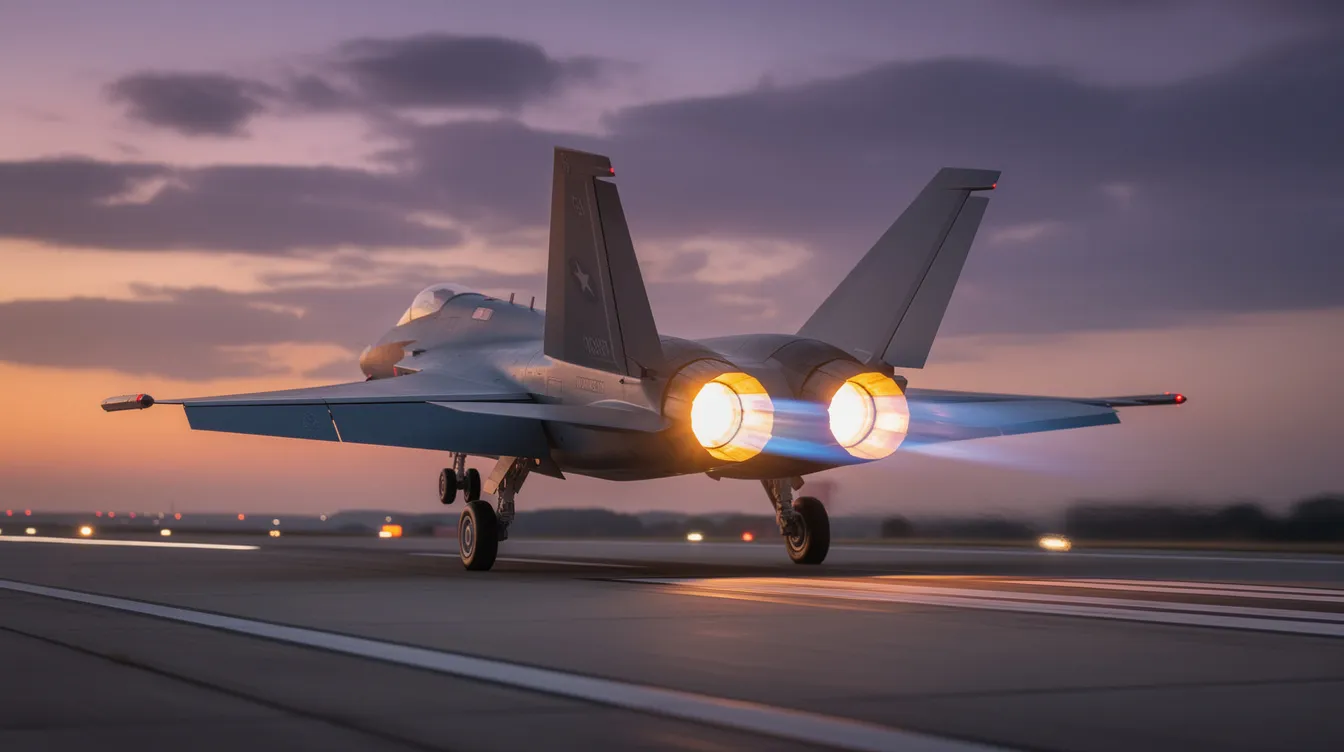
F-35 Lightning II Variants and Mission Profiles
The Martin F-35 Lightning program delivers three distinct variants, each tailored to different operational demands:
F-35A (CTOL): The conventional takeoff and landing variant used by the US Air Force and most allied air forces. It serves as the backbone for air superiority, deep strike, and suppression of enemy air defenses. Optimized for range and payload from standard runways.
F-35B (STOVL): The short takeoff and vertical landing variant, operated by the US Marine Corps, the UK Royal Navy and RAF, and Italy. It launches from amphibious assault ships and austere forward bases, providing close air support and air interdiction over littoral zones.
F-35C (Carrier Variant): Built for US Navy carrier operations with larger wings, reinforced landing gear, and a tailhook. It provides fleet air defense and naval strike capability, integrating with carrier battle group sensors and airborne early warning platforms.
A representative mission profile: an F-35A conducts a stealthy night deep strike, penetrating enemy air defenses using electronic warfare suites and stand-off precision weapons. Its sensors relay targeting data to other aircraft and ground stations in real time, multiplying the force's effectiveness well beyond the single airframe. Meanwhile, an F-35B launches from a small deck in the Pacific to support amphibious forces, and an F-35C provides air cover for a carrier strike group transiting a contested strait.
F-22 Raptor: The Benchmark for Air Superiority
The F-22 Raptor entered service with the United States Air Force in 2005 and remains the most formidable air superiority fighter ever built. No new aircraft has matched its combination of speed, stealth, and agility in an air-to-air engagement.
The numbers underscore its dominance: a top speed around Mach 2.25, the ability to supercruise at Mach 1.8 without afterburners, and thrust-vectoring nozzles that give it exceptional agility at every speed and altitude. The F-22 Raptor has a radar cross section comparable to a marble—smaller even than the F-35's profile—making it virtually invisible to conventional radar systems. The F-22 Raptor costs over $140 million per unit, a figure that contributed to its limited production run.
Only about 195 F-22s were built, with roughly 184 remaining in USAF inventory. US law prohibits export to any foreign operator, keeping the Raptor a uniquely American asset. This makes it a "low-density, high-demand" platform—extraordinary capability, but never enough to be everywhere at once.
In US air combat doctrine, the F-22 and F-35 are complementary. The Raptor clears the airspace: it enters first, eliminates aerial threats, and establishes air dominance. The F-35 then penetrates deeper, collecting and sharing data while prosecuting ground targets and supporting the broader network. Other fighters like the F-15EX follow, leveraging the permissive environment created by stealth platforms.
Upgrades planned through the 2030s and 2040s will sustain the Raptor's relevance with improved sensors, weapons, and electronic warfare capabilities until sixth-generation fighters eventually replace it.
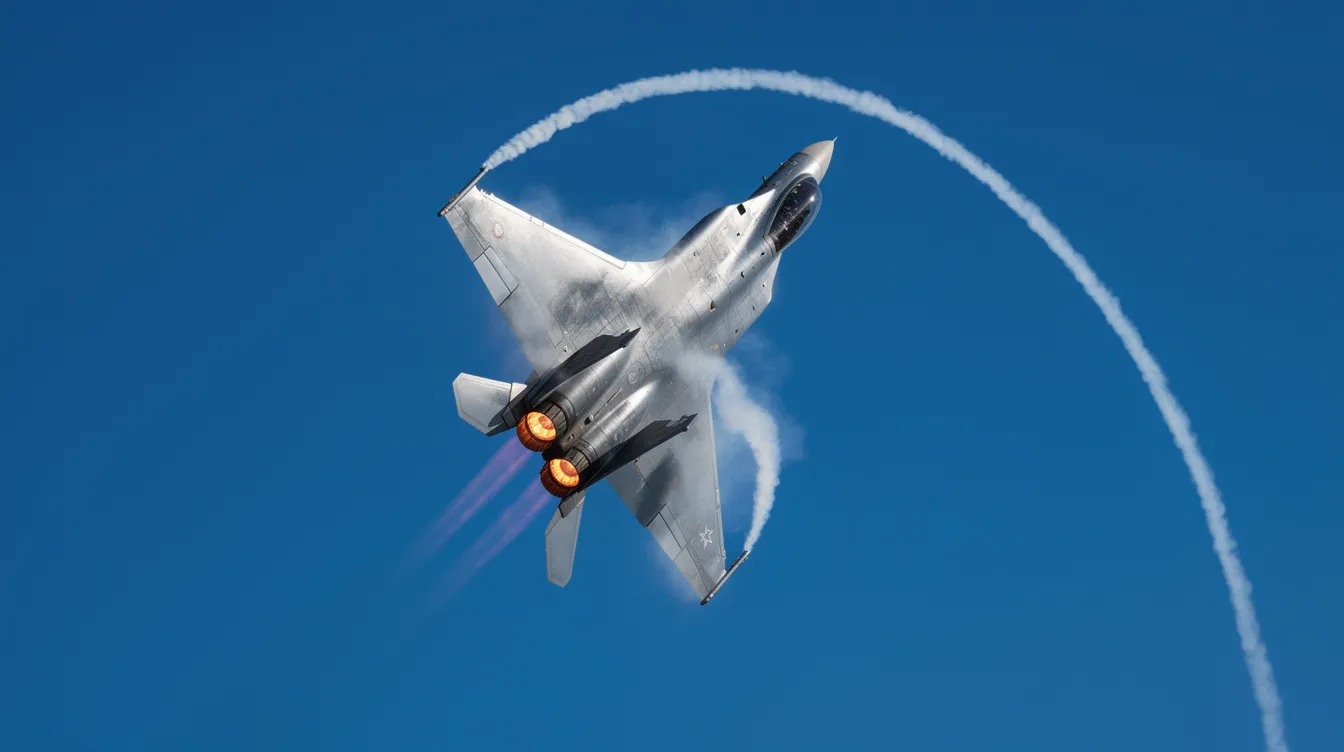
Chengdu J-20 Mighty Dragon: China's Long-Range Hunter
The Chengdu J-20 Mighty Dragon is China's first fully operational fifth-generation fighter aircraft, purpose-built for long-range interception and air superiority across the vast distances of the Western Pacific.
The J-20 first flew in 2011 and entered operational service with the People's Liberation Army Air Force in the mid-2010s. By 2026, the fleet includes approximately 250 units in active service, with production rates reportedly exceeding 100 airframes per year to meet China's anti-access/area denial strategy.
The aircraft's design centers on reaching out and eliminating high-value targets—aerial tankers, airborne early warning aircraft, and support platforms—that underpin an adversary's ability to sustain air operations. Its internal weapons bays carry PL-15 long-range missiles, enabling beyond-visual-range engagement at distances that challenge even Western systems. The Chengdu J-20 has a weapons payload of 24,000 lbs and a combat radius of approximately 1,000 km, giving it substantial reach for deep penetration missions. The Chengdu J-20 can reach speeds of Mach 2 without afterburners, though independent verification of this supercruise capability remains limited.
Newer two-seat J-20 variants suggest China is developing manned-unmanned teaming, where the second crew member manages loyal wingman drones and expanded sensor networks.
Limitations persist. Early J-20s relied on interim engines, and while newer variants may address this, stealth coatings, sensor fusion maturity, and integration with broader command-and-control systems likely lag behind Western counterparts. Still, the J-20's rapid production and strategic purpose make it one of the most consequential new aircraft in the Pacific theater.
Sukhoi Su-57 Felon: Russia's Stealth Ambition
The Sukhoi Su-57 Felon represents Russia's entry into the fifth-generation arena, designed for both air superiority and ground attack in contested environments.
Notable features include powerful engines (AL-41F1 with a planned upgrade to the Izdeliye-30), advanced infrared search-and-track sensors, and internal weapons bays. The Sukhoi Su-57 features 3D thrust vectoring for enhanced maneuverability, giving it exceptional agility at high angles of attack—a hallmark of Russian fighter design philosophy. The Su-57 can carry hypersonic missiles internally, a capability that few other fighters in the world can claim, extending its reach against both air and surface targets with long range missiles and anti-ship missiles.
However, fleet numbers tell a different story. With approximately 30 units in operational service and only around 42-44 total airframes built (including prototypes), the Su-57 has not achieved the mass production needed to influence global air force balance the way the F-35 or even J-20 have. Algeria has been confirmed as an export customer, but deliveries are only beginning.
Debates continue about the Su-57's actual stealth effectiveness. Open-source analysts have noted uneven radar cross-section management, particularly from rear aspects, and manufacturing precision that may not match Western standards. Its operational deployment, including limited use in the Russia-Ukraine conflict, has been cautious-primarily standoff missile launches rather than penetration into contested airspace.
The Su-57 remains a capable fighter with impressive kinematic performance, but its limited numbers and uncertain stealth quality place it behind the F-35, F-22, and J-20 in overall rankings.
Boeing F-15EX Eagle II: Payload King of the Skies
The F-15EX Eagle II is not a stealth aircraft. It makes no attempt to hide. Instead, it compensates with sheer firepower and speed, carrying a weapons payload that no other fighter aircraft in active service can match.
The numbers are staggering: the F-15EX can carry almost 30,000 lbs of weapons across its hardpoints, including configurations with AMBER racks that enable 20 or more air-to-air missiles on a single sortie. Its top speed reaches Mach 2.5-making it the fastest fighter jet in the current US Air Force inventory-and its combat radius extends roughly 600-700 nautical miles depending on mission profile and fuel load.
The F-15EX's role is to serve as a heavily armed "missile truck," escorting stealth platforms like the F-35 and launching salvos of long-range missiles at targets identified by networked sensors. In homeland defense, it provides rapid intercept capability. For saturation attacks against massed threats, nothing in the US Air Force inventory matches its carrying capacity.
The US Air Force plans to expand the F-15EX fleet beyond 200 aircraft, replacing aging F-15C/D airframes with a platform that combines proven aerodynamics with modern avionics, a digital cockpit, and open-architecture mission systems. The unit cost is substantially lower than any fifth-generation fighter, and maintenance is simpler without stealth coatings to maintain.
The trade-off is survivability. As a non-stealth aircraft, the F-15EX is vulnerable in contested airspace without support from stealth fighters and electronic warfare platforms. But in the right tactical context, its speed and payload make it indispensable.
Eurofighter Typhoon: European Air Superiority and Flexibility
The Eurofighter Typhoon stands as the premier 4.5-generation air superiority and multirole fighter in European service, with over 500 aircraft delivered to the United Kingdom, Germany, Italy, Spain, Saudi Arabia, and other operators.
The Eurofighter Typhoon can reach a top speed of Mach 2 and supercruise at Mach 1.5 fully loaded in later tranche configurations-a rare capability for a non-stealth fighter aircraft. Its airframe was designed for agility from the outset, with a delta-canard layout and fly-by-wire controls that deliver exceptional agility in both air-to-air and dynamic strike scenarios.
Advanced avionics have kept the Typhoon relevant against newer competitors. The PIRATE infrared search-and-track system provides passive detection capability, and evolving Tranche 4 and 5 upgrades introduce improved cockpits, enhanced data links, and AESA radar integration. These electronic warfare suites allow the Typhoon to detect, track, and engage targets without emitting radar signals of its own.
In NATO operations, the Typhoon performs quick reaction alert duties across Europe, scrambling to intercept unidentified aircraft entering allied airspace. It also pairs effectively with the F-35 Lightning II: the F-35 uses its stealth and sensors to locate threats, then cues the Typhoon to launch long-range missile shots from safer positions. This combination of stealth sensor node and heavily armed shooter defines modern coalition air power.
The Typhoon's limitations are straightforward: no internal weapons bays, no full stealth shaping, and a combat radius that trails larger platforms. But as an air superiority fighter with serious ground-attack capability and a proven record in operational service, it remains among the most capable fighter jets anywhere.
Dassault Rafale: France's Omnirole Workhorse
The Dassault Rafale is France's answer to the question of how one aircraft can do everything. Designed from the start as an "omnirole" fighter, the Dassault Rafale can perform all mission types simultaneously—air superiority, deep strike, carrier operations, reconnaissance, and nuclear deterrence-within a single flight if required.
Key figures: a maximum speed around Mach 1.8, a weapons payload exceeding 20,000 lbs, and operational service since the early 2000s with the French Air Force and Navy. The SPECTRA self-protection suite is widely regarded as one of the most capable integrated electronic warfare systems on any fighter, providing 360-degree threat detection, jamming, and missile countermeasures.
The Rafale's AESA radar (RBE2-AA) and evolving F3-R/F4 upgrade standards deliver enhanced connectivity, improved sensor fusion, and AI-assisted diagnostics. These continuous upgrades keep the platform competitive despite not being a fifth-generation fighter.
Operators include France, India, Egypt, Greece, Qatar, and Indonesia. Its combat record spans operations in Libya, Afghanistan, and the Sahel, where it demonstrated precision strike and sustained combat support in demanding conditions. France also relies on the Rafale for its airborne nuclear deterrent—a mission that demands absolute reliability.
Saab JAS 39 Gripen E: Cost-Effective Advanced Fighter
The Gripen E is built on a different philosophy than its larger, heavier competitors. Where other fighters pursue maximum capability regardless of cost, the Gripen E delivers advanced performance at a fraction of the operating expense.
Engine: Single GE F414 afterburning turbofan, enabling a top speed of Mach 2 with reduced fuel consumption compared to twin-engine designs.
Sensors: Raven ES-05 AESA radar and Skyward-G IRST give it detection and tracking capability that rivals much larger platforms.
Operations: Designed to operate from dispersed, short runways—even highway strips—with minimal ground crew and rapid turnaround times.
Sweden and Brazil are the primary operators, with additional export customers recognizing the Gripen E's appeal for nations that need a modern, capable fighter without F-35-level budgets. Its climb rate and payload-to-weight ratio are competitive, and its data links integrate seamlessly with NATO and allied networks.
The Gripen E is not a fifth-generation fighter—it lacks internal weapons bays and full stealth shaping. But its advanced avionics, low operating cost, and ability to fight from austere locations make it one of the best fighter jets in the 4.5-generation category for air forces that prioritize affordability and operational flexibility.
Other Notable Advanced Fighter Jets in 2026
Several other fighters remain central to global air power:
F-16V Viper: The latest evolution of the world's most widely deployed fighter. Upgraded with AESA radar, modern electronic warfare suites, and enhanced data links, the F-16V serves air forces from the US to Taiwan and across NATO. Hundreds remain in frontline service with upgrades planned across multiple nations.
F/A-18E/F Super Hornet: The US Navy's carrier-based multirole workhorse. Not a stealth aircraft, but heavily upgraded with advanced radar, electronic attack capability, and compatibility with the latest air-to-air missiles. It handles fleet defense and strike operations from carrier decks worldwide.
Su-35 Flanker-E: Russia's most capable 4.5-generation fighter, featuring exceptional agility, powerful engines, and a large radar with long detection ranges. Exported to several nations and operated in significant numbers by the Russian Air Force. No stealth, but formidable in kinematic performance.
MiG-35: A lighter, more cost-effective Russian multirole fighter with upgraded sensors and improved radar. Produced in smaller numbers and aimed primarily at export markets seeking modern capability at a lower price point than other fighters in its class.
Fastest Fighter Jet vs. Best Fighter Jet
The assumption that the fastest fighter jet is automatically the best is one of the most persistent myths in aviation.
Historically, the MiG-25 Foxbat could exceed Mach 2.8, and the MiG-31 pushed past Mach 2.83 in operational use. Experimental aircraft like the X-15 reached even more extreme supersonic speeds. Speed was once the defining measure of a fighter's capability-outrun what you cannot outfight.
But high speed came with severe trade-offs. Aircraft weight increased to handle thermal and structural loads. Radar cross sections grew. Fuel consumption skyrocketed. Maneuverability suffered. The MiG-25, for all its speed, was limited in close combat, had a massive infrared signature from its afterburning turbofan engines, and carried no stealth whatsoever.
Contrast that with the F-35 Lightning II, which tops out around Mach 1.6. It is far from the fastest fighter jet in any inventory. But it detects threats before they detect it, engages at beyond-visual-range with precision, and shares targeting data across an entire force in real time. In modern air combat, the aircraft that sees first and shoots first wins. Speed is useful for repositioning and escape, but it is no longer the decisive factor.
The bottom line: if you are choosing a fighter for national interest and real-world combat effectiveness, the best fighter jet is the one that survives and wins, not the one that reaches the highest Mach number on a spec sheet.
How Top Fighter Jets Shape Today's Air Forces
Modern air force procurement is built around a mixed fleet concept. No single aircraft does everything perfectly, so planners assemble complementary layers:
First-day-of-war penetrators: Fifth-generation stealth fighters (F-35, F-22, J-20, Su-57) that enter contested airspace first to suppress air defenses, establish air dominance, and collect intelligence.
Bulk force and payload carriers: 4.5-generation and upgraded fourth-generation jets (F-15EX, Typhoon, Rafale, Su-35, F-16V) that follow once the threat environment is degraded, providing volume of firepower for air defense and ground attack missions.
Specialized assets: Electronic warfare variants, tankers, and airborne early warning aircraft that multiply the effectiveness of the entire force.
Major fleet examples:
The US Air Force fields the F-35A, F-22, F-15EX, and F-16—a layered force designed for global power projection.
China's PLAAF relies on the J-20 at the tip of the spear, backed by J-10, J-11, and J-16 variants for mass and versatility.
European nations blend Typhoon, Rafale, and F-35 based on geography, budget, and alliance commitments.
Modern advanced fighters increasingly rely on networking and information-sharing capabilities, meaning that training, software updates, and maintenance now determine whether an air force can exploit its hardware fully. A smaller fleet with high readiness and skilled pilots—like Israel's or the UK's—can match or exceed a larger but poorly sustained force.
Fifth Generation Fighters and the Future of Air Combat
Fifth generation fighters share a set of defining traits that separate them from everything that came before:
Very low radar cross section achieved through shaping, internal weapons bays for stealth, and radar-absorbent materials.
Fifth-generation fighters utilize sensor fusion for situational awareness, combining radar, IRST, electro-optical sensors, and electronic intelligence into a single coherent picture.
AESA radars that scan electronically, resist jamming, and track dozens of targets simultaneously.
Secure, redundant data links that turn each aircraft into a node in a broader combat network.
Supercruise capability in some designs, allowing sustained supersonic flight without the fuel penalty and infrared signature of afterburners.
The philosophical shift is fundamental: information dominance now matters more than raw maneuverability. The pilot who sees first, identifies first, and engages first holds the decisive advantage. Fifth-generation jets serve as flying sensor nodes, sharing targeting data with other aircraft, ground stations, unmanned systems, and naval vessels.
Equally significant is the move toward software-defined aircraft. Capabilities improve through software updates and block upgrades rather than entirely new airframes. An F-35 delivered in 2020 can receive sensor, weapons, and electronic warfare upgrades that make it functionally a different machine by 2030—without ever leaving the flight line for structural changes.
These trends explain why the F-35, F-22, J-20, and Su-57 dominate every serious discussion of the most advanced fighters in the world. And the same principles—networked awareness, data integration, continuous improvement—increasingly shape how the best private aviation providers operate.
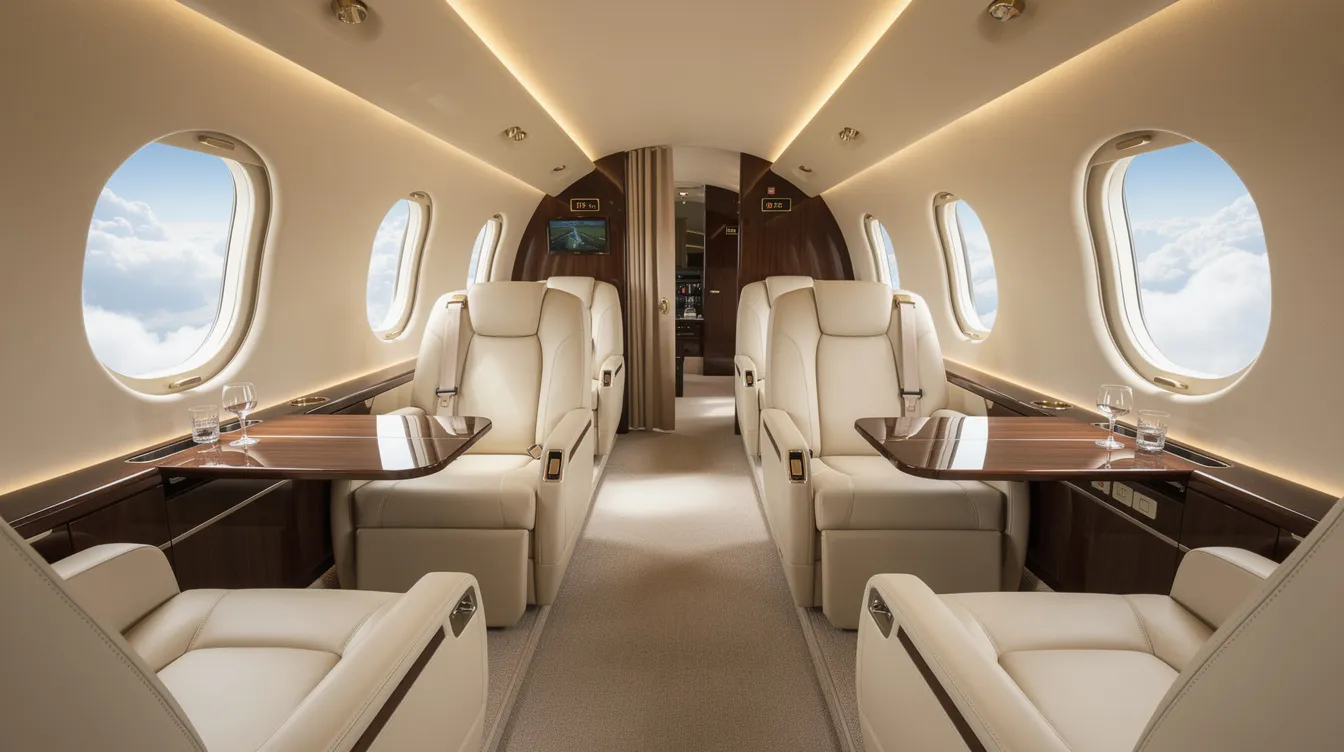
From Military Skies to Private Cabins: Technology Transfer to Business Aviation
The technologies that define the world's top fighter jets do not remain exclusive to defense. Innovation flows from military skies into civilian cabins:
Composite materials: Carbon fiber and advanced alloys developed for stealth aircraft reduce aircraft weight and improve fuel efficiency in modern business jets, enabling longer range and lower operating costs.
Fly-by-wire controls: Active stability augmentation systems from combat aircraft translate into smoother handling, enhanced safety margins, and reduced pilot workload in private jets.
Cockpit technology: Helmet-mounted displays, synthetic vision, terrain awareness, and traffic collision avoidance systems in fighters inspire the glass cockpits and heads-up displays now standard in high-end business aviation.
Jet engines and efficiency: Turbofan innovations driven by military requirements for powerful engines contribute to quieter, more fuel-efficient powerplants in business jets, reducing noise and environmental impact.
Situational awareness tools: Real-time weather detection, hazard avoidance, and datalink connectivity in fighters inform the cockpit systems that keep private jet passengers safe and informed.
The line between military innovation and civilian comfort is shorter than most travelers realize. The same pursuit of performance, reliability, and safety that drives fighter aircraft development underpins the best private aviation experiences.
How Air Superiority Thinking Influences BlackJet's Private Aviation Philosophy
Air forces select their fighter jets based on mission requirements: the right platform for the right scenario, backed by rigorous safety standards and real-time operational support. BlackJet applies the same thinking to private aviation.
As a carbon-neutral private aviation provider, BlackJet curates aircraft categories and operators the way an air force builds its fleet—matching the right jet to each member's mission. A short regional hop calls for a light jet. A transatlantic board meeting demands a large-cabin, long-range platform. The principle is identical: deploy the optimal asset, every time.
BlackJet's focus on safety certification, vetted crews, and standardized maintenance protocols mirrors the combat readiness standards that keep fighter squadrons mission-capable. Every operator in the network meets stringent third-party audit requirements, and every crew exceeds minimum experience thresholds, making private jet chartering directly comparable to the scenarios explored in a practical cost comparison of chartering a private jet.
The BlackJet mobile booking platform and 24/7 operations center function as a civilian equivalent of a fighter squadron's ops center—monitoring weather, routing, and aircraft availability in real time so members have complete "information dominance" over their travel. If conditions change, the team adapts proactively, repositioning aircraft or adjusting itineraries before the member even needs to ask.
BlackJet Jet Cards vs. Owning a Jet vs. On-Demand Charter
Air forces do not buy a single aircraft type and hope it covers every scenario. They build flexible fleets matched to diverse missions. For private travelers, the same logic applies—and BlackJet's Jet Card programs deliver that flexibility without the capital burden of ownership.
Jet Card members prepay flight hours (typically 25-hour or 50-hour programs) for guaranteed access across multiple aircraft categories. There is no hangar to lease, no crew to employ, no maintenance schedule to manage. You select the right aircraft for each trip—light jet for a two-hour hop, large cabin for an overseas journey—and BlackJet handles the rest.
Full aircraft ownership offers maximum control but comes with significant fixed costs: purchase price, crew salaries, insurance, hangar fees, maintenance, and depreciation. For travelers who fly fewer than 300-400 hours annually, ownership rarely makes financial sense, especially when you understand the broader private jet price list and cost structures across ownership, charter, and membership models.
On-demand charter provides access without commitment but sacrifices predictability. Pricing fluctuates with demand, preferred aircraft may not be available, and there is no ongoing relationship to ensure consistency in safety standards or service quality, particularly when compared with structured programs explained in this guide to understanding jet card cost.
Consider two scenarios, each highlighting how members can balance performance with affordability using insights similar to those in this guide to the cheapest private aircraft and budget-friendly options:
An executive flies New York to London four times per quarter on a large-cabin jet, similar in capability to many of the best long-range private jets. With a Jet Card, pricing is locked in, the aircraft is guaranteed, and the entire booking takes minutes via the app.
A family books a European ski weekend on a light jet, departing a smaller regional airport close to home, echoing many of the most affordable private jet options available to first-time private flyers. No commercial connections, no crowds, no compromise.
The Jet Card model mirrors what the best air forces do: select the right platform for each mission, maintain readiness at all times, and never pay for capability you do not use.
Aircraft Categories and Cabin Classes in the BlackJet Network
BlackJet members can choose from multiple aircraft categories, each tailored to different trip profiles, much like the range of cabin sizes and mission profiles outlined in this overview of types of private jets for every traveler:
Light jets: Ideal for regional flights of 2-3 hours, seating 4-7 passengers. Fast, efficient, and able to access smaller airports closer to final destinations.
Midsize jets: Greater range (up to 4-5 hours nonstop), more cabin space, and stand-up headroom. Suited for coast-to-coast business trips or medium-distance leisure travel.
Super-midsize jets: Extended range approaching transcontinental capability, larger cabins, and enhanced amenities. A strong choice for longer domestic or short international routes.
Large-cabin and long-range jets: Full international travel capability, seating 8-16 passengers with lie-flat configurations, onboard connectivity, and premium cabin appointments, similar to many of the top 16-seat private jet options favored by larger groups. The platform of choice for transatlantic and transpacific missions.
While fighter aircraft prioritize performance and weapons, BlackJet's fleet curation emphasizes comfort, noise levels, cabin space, and onboard connectivity. Members select their cabin class based on trip length, passenger count, and personal preferences—all managed through the digital booking platform.
Safety and Certification: The Civilian Version of Combat Readiness
Air forces maintain fighter jets at exacting readiness and inspection standards because the cost of failure is absolute. BlackJet applies the same philosophy to private aviation safety.
Key elements of the BlackJet safety framework:
Use of top-tier operators that meet or exceed industry safety standards.
Third-party safety audits conducted independently to verify compliance.
Pilot experience thresholds that exceed regulatory minimums.
Standardized maintenance protocols across the network, ensuring every aircraft meets consistent airworthiness criteria.
Consider a winter scenario: a member departs from the Northeast during a sudden ice storm. BlackJet's operations team coordinates de-icing, identifies alternate routing, and, if necessary, repositions to a safer departure airport—all proactively, mirroring the pre-flight risk management that military crews perform before every sortie.
Members benefit from operational oversight they would otherwise need to manage themselves as aircraft owners. Prestige in private aviation does not begin with cabin finishes or champagne selections. It begins with the confidence that every flight is planned, monitored, and executed to the highest safety standard.
Sustainability and Carbon-Neutral Flights with BlackJet
Every BlackJet member journey is carbon-neutral at no additional cost. This is not a marketing line—it is an operational commitment.
BlackJet calculates emissions for each flight and funds certified environmental projects that offset the carbon footprint. The complexity happens entirely in the background. Members do not fill out forms, purchase separate credits, or manage offset portfolios. They travel, and BlackJet ensures the environmental balance is maintained.
This matters increasingly for corporate travelers whose organizations must report emissions as part of ESG commitments. A Jet Card from BlackJet provides not only convenience and flexibility but also a clear, auditable record of responsible travel.
The broader aerospace industry—military and civilian—continues to invest in turbofan efficiency, sustainable aviation fuels, and emissions reduction. BlackJet aligns with that trajectory, ensuring that private aviation evolves alongside the world's expectations for environmental stewardship.
Technology and Real-Time Support: Your Personal "Ops Center"
Fighter squadron operations centers monitor weather, threats, fuel status, and routing in real time. BlackJet's support team does the same for every member: flight-tracking conditions, managing disruptions, and adjusting plans proactively.
The mobile booking platform enables instant quoting, itinerary creation, and schedule changes from any device. No phone trees, no waiting.
If a meeting runs long and departure needs to shift by two hours, the operations team repositions the aircraft and updates the itinerary automatically.
If a destination changes entirely—say, from Geneva to Milan—BlackJet coordinates the new routing, confirms aircraft availability, and provides updated timing within minutes.
Technology is not just the app interface. It underpins every stage of the experience: from initial quote through wheels-up to post-flight reporting and invoicing.
FAQ: Fighter Jets, Air Superiority, and Private Jet Travel with BlackJet
Below are answers to the questions we hear most from readers interested in both military aviation and private jet travel.
What is the best fighter jet in the world today? The Lockheed Martin F-35 Lightning II holds the top position as the best overall fighter jet in 2026, with over 880 units in service across more than 20 nations. Its combination of stealth, sensor fusion, and multirole flexibility is unmatched.
How is air superiority different from air combat dogfighting? Air superiority refers to controlling the airspace in a given theater so that friendly forces can operate freely. Dogfighting is one tactic within air combat, but modern engagements are increasingly decided at beyond-visual-range distances using radar, missiles, and networked sensors rather than close-in turning fights.
Why don't top air forces only buy the fastest fighter jet? Speed is only one factor among many. Stealth, sensors, weapons integration, and survivability matter more in contested environments. The fastest fighter jet in history—the MiG-25 Foxbat—lacked agility, stealth, and modern avionics, making it far less effective than slower but more capable platforms like the F-35.
What makes a fifth-generation fighter different? Fifth-generation fighters feature advanced stealth, internal weapons bays, sensor fusion, AESA radars, and secure networking. They are designed to detect and engage threats before being seen, rather than relying on speed or maneuverability alone.
How does a Jet Card work versus a one-off charter? A Jet Card from BlackJet provides prepaid flight hours with guaranteed access, fixed pricing, and consistent safety standards. On-demand charter pricing fluctuates, availability is uncertain, and there is no ongoing quality relationship. The Jet Card offers predictability and peace of mind.
Are BlackJet flights really carbon-neutral? Yes. BlackJet calculates the emissions for every member flight and funds certified offset projects at no additional cost. Members travel responsibly without any extra administrative burden.
How quickly can I book a private jet through BlackJet? Jet Card members can book flights through the mobile platform in minutes, with real-time availability and pricing. The 24/7 operations team is also available for immediate assistance with complex or last-minute itineraries.
For tailored guidance on the right private travel solution, the BlackJet team is available to discuss your travel profile and recommend the ideal Jet Card program.
Conclusion: From the World's Top Fighter Jets to Your Next Private Flight
Modern air power is defined by information, stealth, and integrated systems. The F-35 Lightning II leads the current generation of fighter jets not because it is the fastest or the most agile, but because it sees more, shares more, and survives more than any rival. The F-22 Raptor, J-20 Mighty Dragon, Su-57 Felon, and advanced 4.5-generation fighters like the Eurofighter Typhoon and Dassault Rafale fill critical roles, but the world's top fighter jet in 2026 is the one that masters the full spectrum of modern combat.
While air forces pursue air superiority, high-net-worth travelers and executives pursue something parallel: time superiority. Arriving faster, safer, and with less friction is the civilian equivalent of dominating contested airspace. Every hour saved, every hassle avoided, every safety standard upheld compounds into a strategic advantage for your business and your life.
BlackJet's Jet Card model and private jet charter services represent the civilian route to that advantage. The same principles that guide the world's most capable air forces—selecting the right platform for each mission, maintaining uncompromising readiness, leveraging real-time information—are woven into every BlackJet experience.
Explore how a BlackJet Jet Card can reshape your travel. Request a consultation, speak with our team about your typical routes and schedule, and discover what it means to fly with the precision, safety, and confidence that the world's best demand.


 Sign up with google
 Sign up with Apple