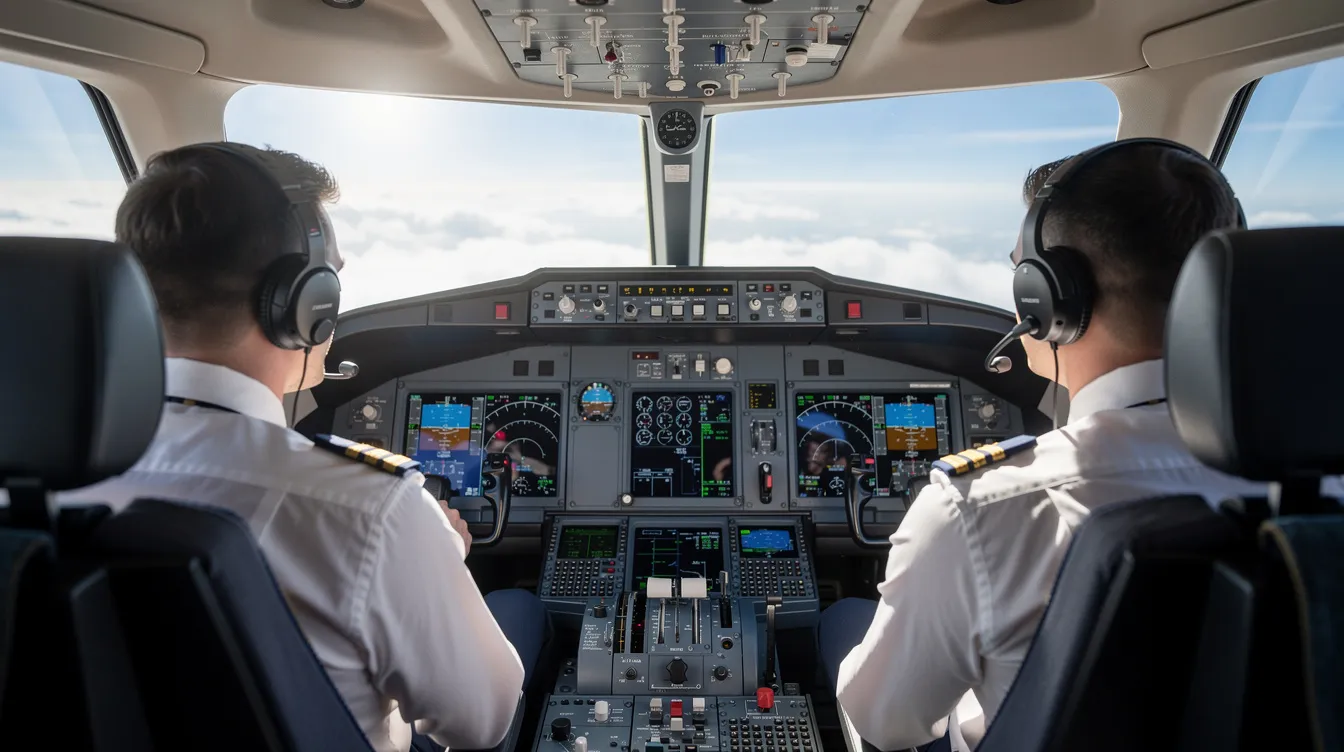
Every commercial flight, cargo aircraft mission, charter leg, and military sortie depends on one constant: a trained aircraft pilot at the controls. Pilots convert regulations, weather data, and aeronautics principles into safe travel for millions of passengers each year, and for corporate or high-net-worth travelers, the caliber of the pilot behind the cockpit door determines the quality of every private journey.
This article is for prospective pilots, private jet travelers, and anyone interested in understanding the roles and training paths of aircraft pilots. Understanding what pilots do and how they are trained is essential for anyone considering a career in aviation or seeking the safest, most reliable private flight experience.
An aircraft pilot is responsible for navigating and operating the aircraft safely, maintaining compliance with aviation regulations, communicating with air traffic controllers, managing flight safety by checking fuel and weather, monitoring engine performance, making quick decisions during emergencies, maintaining communication with control centers during flight, filling in flight reports after each flight, performing visual inspections of the aircraft before takeoff, and ensuring proper stowage of cargo and luggage. These core responsibilities are shared across all types of pilots—whether airline, private jet, military, or UAV—though the specific context, mission, and operational environment may differ for each role.
Consider a business executive flying from New York to London, evaluating options across a comprehensive private jet price list. On a commercial airline, the process involves roughly 60 to 90 minutes of ground transit to JFK, another 45 to 60 minutes clearing security, and a fixed departure window with no schedule flexibility. On a private jet departing Teterboro, that same executive boards within minutes at a fixed-base operator, flies a direct city-pair route to London City Airport, and saves three to four hours of total travel time. The airplane pilot handling that trip works under different operational rules than an airline pilot flying a scheduled 777 service, and both operate in a world apart from a fighter pilot running combat sorties. Each title describes a distinct professional context, mission profile, and training background.
At BlackJet, we work daily with pilots who hold type ratings across multiple aircraft categories, from light jets to large-cabin Gulfstreams, delivering safe, carbon-neutral private flights for Jet Card members. This article covers what pilots do before, during, and after each flight; how pilot training and licensing work; and how pilot expertise directly shapes the private aviation experience.
Core Functions of an Aircraft Pilot
A pilot's work spans the full flight profile: planning, execution, and post-flight analysis. The pilot in command carries legal responsibility for the aircraft, crew, and passengers. Pilots are responsible for navigating and operating the aircraft safely across every phase of operation, and they must maintain compliance with aviation regulations issued by authorities like the FAA or EASA.
Core functions include flight planning (route, fuel, alternates, performance calculations), aircraft systems oversight (avionics, engines, hydraulics, pressurization), navigation using GPS and radio aids, communication with air traffic control, crew coordination between captain and co-pilot, and safety management through standard operating procedures. Airline pilots, business aviation captains, and cargo or mobility pilots all share these responsibilities, even as mission profiles differ.
On a typical business jet leg from London Luton to Geneva in a super-midsize jet, the captain handles the initial flight plan and performance data, while the first officer programs the flight management system and selects alternates. During climb, the first officer monitors engine instruments; the captain manages ATC communications and manual flying as needed. Workload splits this way through cruise and descent, with both pilots cross-checking fuel, navigation, and checklists. Under FAA Part 135 rules, two-pilot crews cannot exceed 10 hours of daily flight time; EASA imposes cumulative limits of 60 duty hours in any seven consecutive days.
Pre-Flight Duties: On the Ground Before Takeoff
Safe flights start hours before engine start. Most of this work happens behind the scenes, well before passengers arrive at the aircraft.
Pilots supervise the flight plan before departure, beginning with route selection, alternate airports, and fuel calculation. Performance checks factor in aircraft type, runway length, pressure altitude, and temperature. A Gulfstream G650 has crosswind limits near 30 knots; a light jet like a Citation Mustang may be limited to 15 to 20 knots, which can change the departure airport or timing. Pilots manage flight safety by checking fuel reserves and weather; this includes reading METARs and TAFs, assessing thunderstorm activity, icing potential, and turbulence along the planned route.
Pilots perform visual inspections of the aircraft before takeoff. The walk-around covers control surfaces, fuselage skin for dents or cracks, engine nacelles for oil or fuel leaks, landing gear condition (tire tread, strut pressure), fuel caps, pitot tubes, and static ports. In cold conditions, the pilot checks for ice or frost accumulation that could disrupt aerodynamic performance.
Coordination with ground crew follows: confirming load sheets, verifying passenger count and baggage distribution for proper center of gravity, confirming fuel uplift, and checking catering delivery. Pilots must ensure proper stowage of cargo and luggage before departure. Pilots then conduct pre-flight checks on navigation systems, program the flight management system, set radio frequencies, and verify emergency equipment per the aircraft's checklist. In private aviation, many of these steps are supported by digital tools and 24/7 operations teams, but pilots still personally verify every safety-critical item.
In-Flight Responsibilities: Managing the Aircraft and the Experience
After pushback and taxi, the flight transitions through takeoff, climb, cruise, descent, and landing. Each phase demands continuous monitoring and decision-making at every critical point in the flight.
Pilots hand-fly during takeoff and initial climb, and often during visual approaches. Autopilot and the flight management system handle cruise and standard descents. Manual skills remain essential: system failures or ATC-directed visual approaches require immediate, precise hand-flying. Aircraft pilots must monitor engine performance during flight, tracking turbine temperatures, fuel flow, fuel balance between tanks, and pressurization differential. If a turbine inlet temperature exceeds its redline, the pilot must reduce thrust or shut down the engine and divert.
Communication with air traffic controllers is crucial for pilots throughout the flight. During cruise, pilots receive route amendments, request altitude changes, and negotiate weather deviations. A typical exchange might sound like: "Geneva Center, Charter 123, request deviation 10 degrees right for weather, current FL330, request FL350." Pilots maintain communication with control centers during flight to confirm clearances and readbacks. Pilots must make quick decisions during emergencies, whether a pressurization failure, traffic conflict, or sudden weather change.
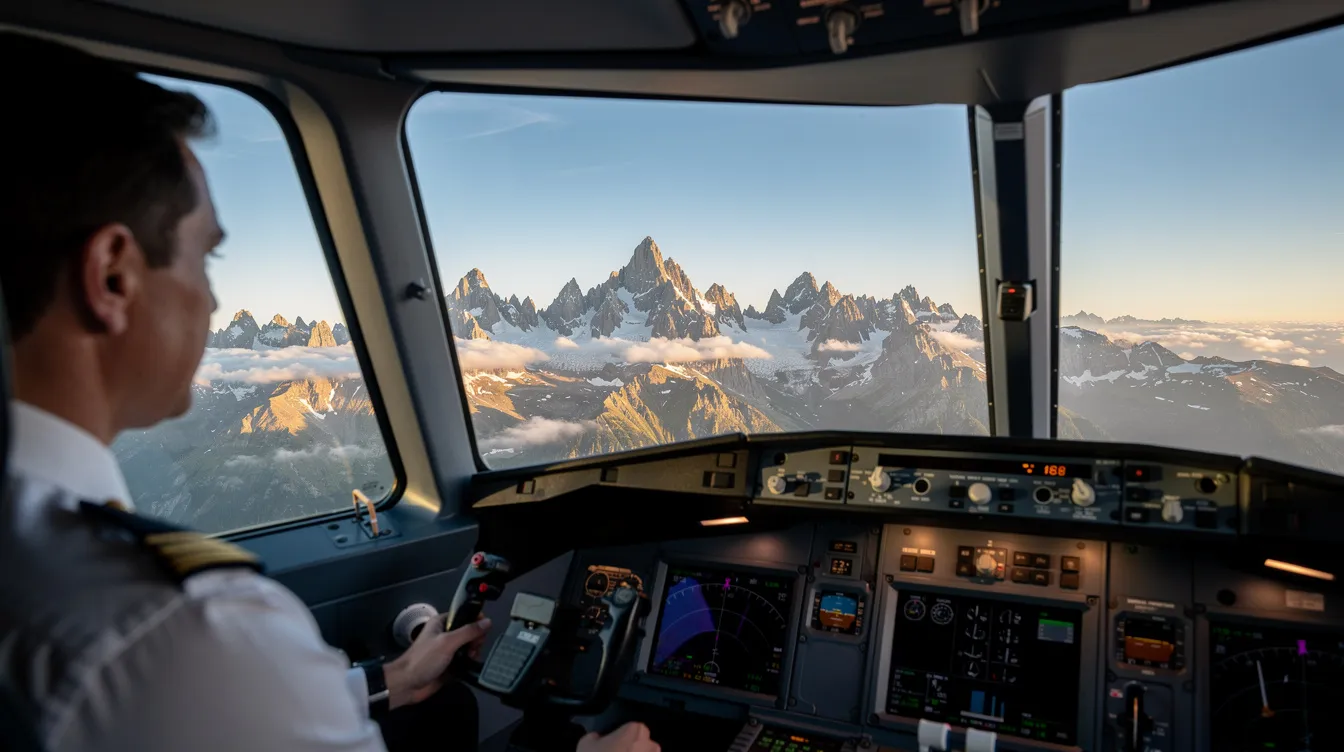
On a private jet, the captain also leads the cabin experience: informing passengers about turbulence, updating estimated arrival times, explaining diversions, and coordinating with cabin crew on meal timing, which remains true whether the aircraft is a top-tier Gulfstream or a more affordable private jet option. During a two-hour flight encountering thunderstorms over the Alps, the crew might divert laterally, consuming extra fuel but maintaining comfort and safety margins. This kind of real-time balancing act, weighing fuel reserves, passenger comfort, and regulatory compliance, defines the professional pilot's role.
Post-Flight Tasks: After Landing and Turnaround
Pilot duties continue well after touchdown and taxi to the parking stand.
The crew follows shutdown checklists: powering down avionics and lighting, setting the parking brake, inserting wheel chocks, and configuring the aircraft for ground operations. Pilots fill in flight reports after each flight, logging flight time, fuel consumed, any EICAS or ECAM system messages, and deviations from the planned route into the operator's digital reporting system.
Technical feedback is equally critical. If a pilot noted unusual vibration during descent, a warning light on the landing gear panel, or an irregular flap indication, these discrepancies go directly to the maintenance team for inspection before the next leg. The crew then debriefs together, reviewing operational issues, weather handling, ATC interactions, and any passenger feedback. In BlackJet operations, turnarounds for back-to-back Jet Card legs are rapid but thorough; the captain confirms refueling, cabin readiness, rest compliance, and paperwork completion before accepting the next mission.
Types of Aircraft Pilots: Airline Pilot, Private Jet, Military, and Remote
Pilot career tracks split across distinct operational environments, and each pilot job comes with its own aircraft, mission focus, and lifestyle.
Airline pilots operate scheduled commercial flights on aircraft like the Airbus A320 or Boeing 777, following fixed route networks with large crews and standardized procedures. Airline pilots are divided into captain and first officer categories, with the captain holding final command authority. Schedules are predictable but often involve layovers and time away from home.
Private jet and business aviation pilots fly non-scheduled missions for corporate, charter, or Jet Card clients, and their compensation reflects aircraft complexity, hours flown, and operator type, as outlined in our private jet pilot salary guide. They operate various types of jets, from light Phenoms to large-cabin Globals, and even large-group configurations suitable as the best private jet for 20 passengers, often visiting secondary airports that airlines do not serve. They interact with passengers directly, adapting to last-minute itinerary changes and delivering a higher level of personal service. According to AeroScout's June 2026 hiring report, 41 percent of 1,390 live pilot listings targeted business and corporate aviation roles, compared to 27 percent for airlines, reflecting demand from leading providers such as NetJets jet card programs.
Fighter pilot roles and other military tracks (mobility, bomber, reconnaissance, rescue) involve specialized training for combat or defense missions in aircraft like the F-16, C-17, B-52, U-2, and MQ-9. These pilots operate under military licensing systems; transitioning to civilian certification requires conversion training.
UAVs are classified into two categories: autonomous and remotely piloted, while at the opposite end of the spectrum, heavy private aircraft can be configured as the best private jet for 50 passengers. Pilots of UAVs generally do not require manned aircraft licenses; instead, they hold remote pilot certificates (FAA Part 107 in the U.S.) and mission-specific qualifications. Their work involves ground control stations, long-endurance surveillance or cargo missions, and a different set of human factors challenges.
Pilot Training, Flight Training, and Licences: From First Flight to Airline or Private Jet Captain
Pilot training follows a structured progression governed by authorities like the Federal Aviation Administration and EASA, with each Course leading to clear licence levels at each stage, and the investment in this pathway is a major component of overall private jet pilot operating costs. Training for pilots typically includes practical and theoretical exams, and pilot training requires understanding of aerodynamics and navigation from the outset.
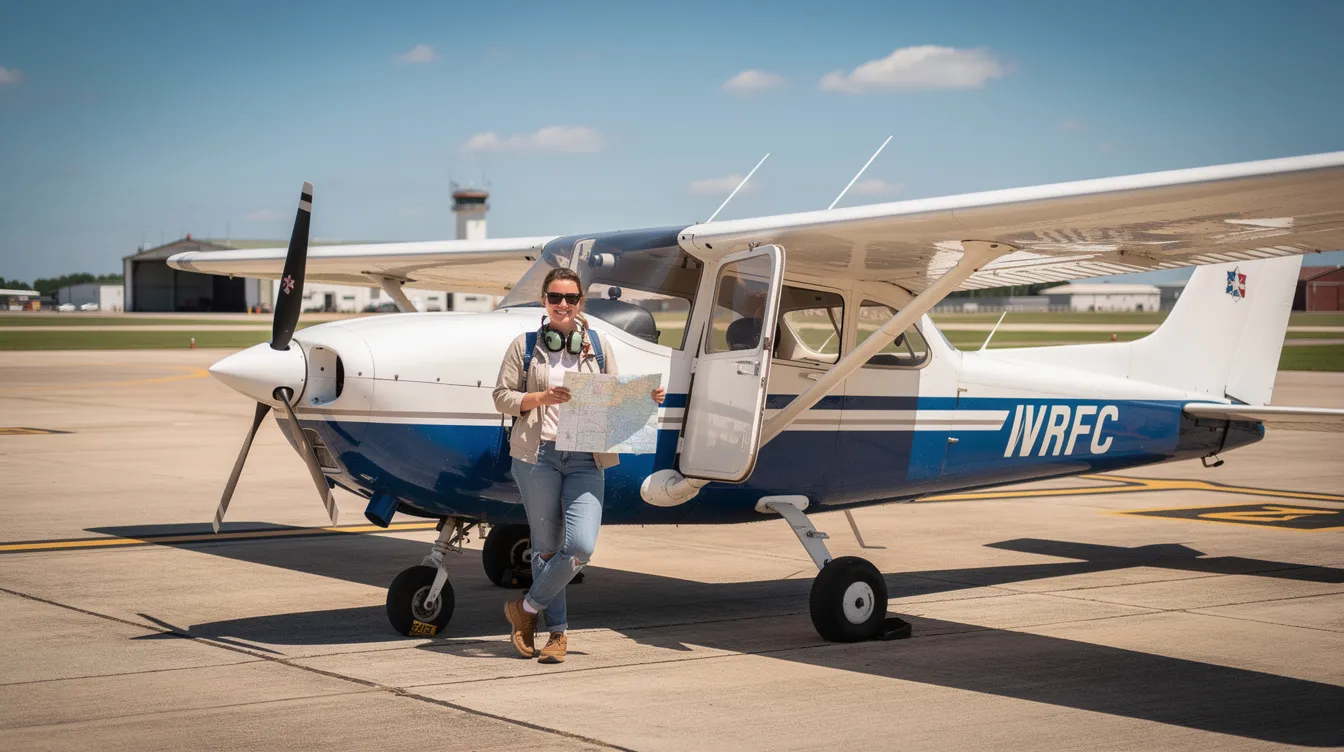
The first step is a private pilot licence, which requires 35 to 40 flight hours of training and permits non-commercial flying. Student pilots log these hours in training aircraft like the Cessna 172 or Diamond DA40. For those exploring entry-level options, a Light Sport Aircraft license requires at least 20 flight hours, covering starter planes with simpler systems.
A commercial pilot licence allows professional flying for remuneration and is a key step toward a professional pilot career. Under FAA Part 61, applicants need a minimum of 250 total flight hours, including cross-country, night, and instrument components. Commercial Pilot License training typically takes about 2 years through modular programs. The Airline Transport Pilot License is the most comprehensive pilot licence, requiring 1,500 total flight hours (including 500 cross-country and 100 night hours), and is required to captain an airliner—a level of expertise particularly valued by frequent travelers considering a 100-hour jet card for regular private flying.
The Multi-Crew Pilot License focuses on airline-specific operations, emphasizing crew work and decision-making skills through intensive simulator training. The Multi-Crew Pilot License focuses on airline-specific operations from day one, allowing graduates to enter as co-pilots, similar to how a 50-hour jet card program can provide a structured, mid-tier commitment for travelers ramping up their private flying. Integrated ATPL programs last approximately 24 months, while modular training offers flexible pacing for career changers, with instruction delivered in English for international-standard aviation training, just as travelers choose among different jet card pricing structures to match their flying patterns. Cadets enroll in these structured airline pathways, which are often funded or sponsored by airlines.
Additional ratings matter for career advancement. An Instrument Rating permits flight under instrument flight rules, requiring 40 hours of instrument time. A Multi-Engine Rating is needed for aircraft with more than one engine. Multi-crew cooperation training prepares pilots for two-pilot cockpits, covering workload sharing, communication protocols, and threat management. Throughout a pilot's career, Class 1 medical certification and English proficiency at ICAO Level 4 or above remain mandatory, with recurring checkrides and simulator checks to maintain each certificate—standards that underpin the reliability promised by the best jet cards for frequent flyers.
Skills, Competencies, and Personality: What Makes an Excellent Pilot and Student Pilots
Technical skill alone does not produce an excellent pilot; long-term success also depends on judgment, discipline, and professionalism. Modern aviation demands strong human factors capabilities alongside precise aircraft handling.
Core technical competencies include manual flying precision, instrument scanning discipline, deep systems knowledge of a specific aircraft type, and strict adherence to standard operating procedures under both normal and abnormal conditions. Multitasking and attention to detail are critical skills for pilots, particularly during high-workload phases like approach and landing. Effective communication is key for pilots when speaking with crew and ATC, and situational awareness is essential for effective piloting, whether tracking weather changes, traffic conflicts, or system anomalies.
In private aviation and BlackJet's Jet Card environment, pilots need additional qualities: discretion with client information, service orientation toward passengers with bespoke itineraries, and the flexibility to adjust to short-notice schedule changes, whether serving full aircraft charters or travelers who simply buy a seat on a private jet. A pilot who can calmly reroute a flight due to weather while keeping passengers informed and comfortable delivers measurable value beyond stick-and-rudder skills.
Safety, Technology, and Sustainability in Modern Pilot Operations
Flight safety is the non-negotiable foundation of every pilot's work, supported by technology and, increasingly, by environmental commitments.
Pilots participate in recurrent simulator training (typically every six to twelve months), crew resource management courses, line checks by designated check airmen, and data-driven safety programs that track trends across fleets. Part 135 operators in the U.S. and equivalent authorities in Europe audit these programs against published standards.
Technology gives pilots real-time advantages, alongside the digital resources and reference tools they rely on: glass cockpits with electronic flight instrument systems, flight management systems that compute fuel-optimal routes, satellite weather data links, and electronic flight bags replacing paper charts and performance manuals, while owners and members analyze jet card cost per hour to decide which missions to fly privately. Private jet pilots use these tools to plan and execute rapid, on-demand missions that commercial operations cannot match.
On sustainability, pilots contribute by flying optimized climb, cruise, and descent profiles that reduce fuel burn per nautical mile. Step climbs to higher altitudes as fuel weight decreases, continuous descent approaches that minimize low-altitude thrust, and precise weight calculations all cut emissions at the source. BlackJet ensures every flight is carbon neutral through verified offsets, and selects pilots trained to balance performance with environmental responsibility on everything from light jets to ultra-luxury $15 million private jets.
Frequently Asked Questions (FAQs) About Aircraft Pilots and Private Jet Travel
What is a Private Pilot Licence (PPL) and how long does it take to obtain?
A Private Pilot Licence (PPL) allows individuals to fly aircraft non-commercially. It typically requires 35 to 40 flight hours of training, including both practical flight time and theoretical study.
What role does the Federal Aviation Administration (FAA) play in pilot certification?
The FAA is the U.S. regulatory body responsible for setting standards and issuing pilot licenses, including private, commercial, and airline transport pilot certificates. It also oversees pilot training programs and flight safety regulations.
How do private jet pilots differ from airline pilots?
Private jet pilots often operate on-demand, non-scheduled flights for corporate or high-net-worth clients, flying a range of aircraft types and adapting to variable itineraries. Airline pilots fly scheduled routes on commercial airliners with larger crews and standardized procedures.
What is the Multi-Crew Pilot Licence (MPL)?
The MPL is a pilot license focused on airline-specific operations, emphasizing crew resource management and decision-making skills through simulator training and multi-crew coordination.
Are flight engineers still used in modern aircraft operations?
While traditional flight engineers have largely been phased out in favor of automated systems and two-pilot cockpits, some specialized or older aircraft may still employ flight engineers for system monitoring and management.
How does pilot expertise impact private jet safety and experience?
Experienced pilots bring critical judgment, technical skill, and situational awareness that enhance safety and comfort. Their ability to adapt flight plans, manage weather challenges, and communicate effectively ensures seamless, secure travel.
What further information is available for aspiring pilots?
Prospective pilots can explore training programs, licensing requirements, and career pathways through aviation authorities like the FAA and EASA, as well as flight academies and airline cadet programs.
How can I become a private pilot?
Starting with a private pilot licence requires enrolling in a certified flight school, completing required flight hours, passing medical exams, and successfully completing written and practical tests.
What types of aircraft can private pilots fly?
Private pilots typically fly small to medium-sized planes, including single-engine pistons and light sport aircraft, which are ideal for training and recreational flying.
How do pilots contribute to sustainability in aviation?
Pilots optimize flight profiles to reduce fuel consumption and emissions, such as using continuous descent approaches and step climbs. Additionally, companies like BlackJet offset carbon emissions to ensure carbon-neutral private flights.
How Pilot Expertise Shapes the BlackJet Private Flying Experience
Join BlackJet as a member, and pilot professionalism translates directly into time saved, comfort, and peace of mind on every flight.
BlackJet selects pilots based on minimum flight-hour thresholds, type-rating qualifications for specific aircraft, clean safety records, valid medical certification, and third-party safety accreditation — standards that align with the expectations of clients weighing different private jet price list options. Every pilot in the network undergoes vetting that goes beyond regulatory minimums, including reference checks and recurrent training verification.
Consider an executive using a 25-hour Jet Card from the BlackJet 25+ Hour Jet Card program to fly from Los Angeles to Aspen on short notice. Aspen's runway sits at 7,820 feet elevation, with terrain on three sides and length limitations that restrict operating weight. The assigned crew pulls density altitude performance data, checks for snow and mountain-wave turbulence, selects alternate airports, and confirms de-icing availability. The operations team pre-clears the routing while the pilot verifies every safety-critical input. The member sees a smooth, on-time departure; behind it sits hours of coordinated planning.
BlackJet's mobile booking platform and real-time support tools keep pilots, dispatchers, and members connected, while dedicated owners work with advisors to maximize jet card tax deductions associated with their business flying. When weather or runway closures force last-minute changes, the pilot's decision to wait, divert, or adjust fuel load drives the operation, and the member receives updates in real time. This interplay between pilot expertise and digital infrastructure is what makes the experience work.
Discover how a BlackJet Jet Card program provides access not only to premium aircraft and cabins, but to a curated network of pilots whose skills, training, and judgment define every journey, along with predictable jet card membership pricing.


 Sign up with google
 Sign up with Apple