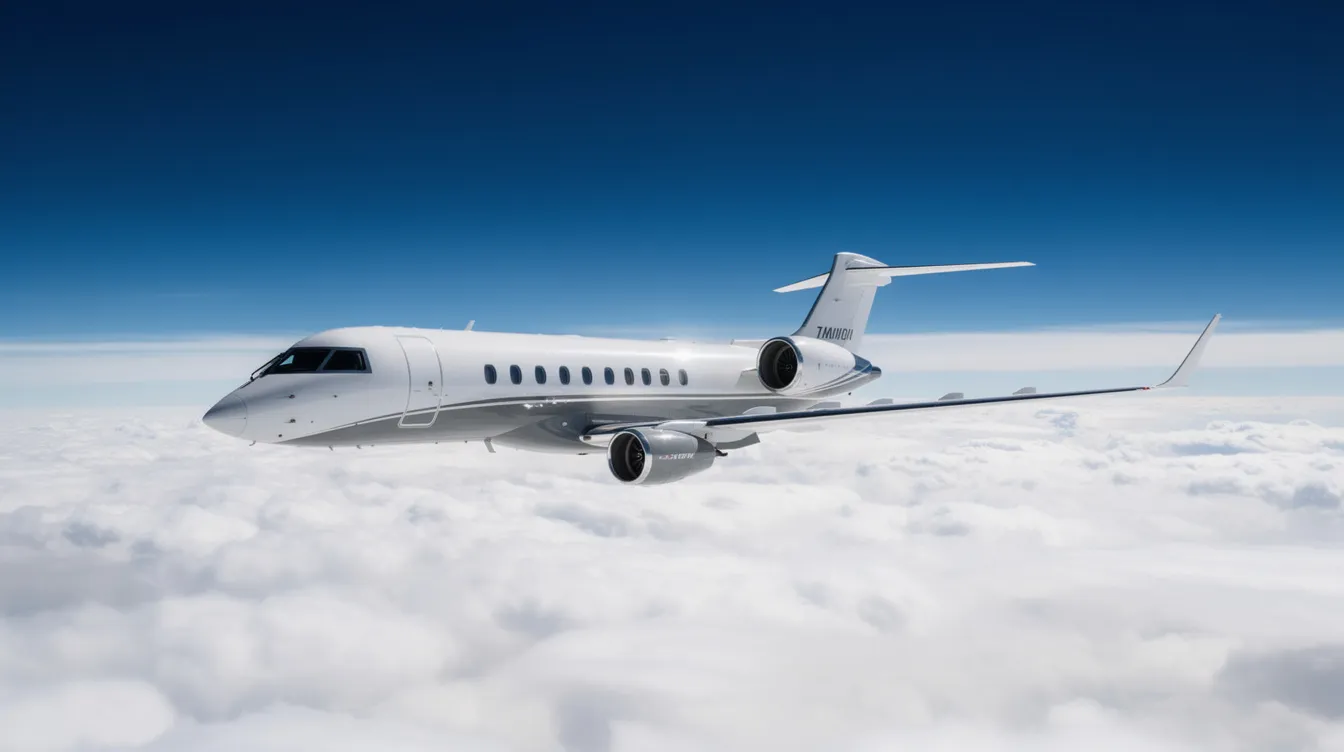
The phrase "airplane fast" carries different weight depending on who you ask. If you’ve ever wondered just how fast airplanes can go, from legendary military jets to today’s fastest private aircraft, this guide explores the full spectrum of airplane speed. For aviation historians, it conjures images of titanium airframes glowing red at Mach 3. For a business executive racing to close a deal across the Atlantic, it means cutting a seven-hour commercial flight down to something far more productive. This article is for aviation enthusiasts and business travelers who want to understand what makes an airplane fast, how speed records are set, and how modern private jets compare to legendary supersonic aircraft. Knowing these details helps travelers make informed decisions and appreciate the engineering behind high-speed flight. This article traces the full speed spectrum of aviation, from hypersonic research vehicles to the private jets that give today's travelers a real strategic edge.
Why "Airplane Fast" Matters for Elite Travelers Today
A nonstop New York to London commercial flight covers roughly 5,570 km at about 900 km h, landing approximately 7 hours after departure. On July 1, 1974, an SR-71 Blackbird covered the same route in 1 hour, 54 minutes, and 56.4 seconds at an average ground speed of 2,908 km h. That gap between what is technically possible and what most travelers experience defines the opportunity in high-speed aviation.
For BlackJet clients, the strategic advantage is not about matching Cold War reconnaissance aircraft speeds. The real gain is door-to-door time: bypassing commercial terminals, security queues, hub connections, and the 90-minute buffer most airlines demand before boarding. A private jet cruising at Mach 0.82 on a direct route, departing from a private terminal 15 minutes after arrival, can beat a commercial itinerary by three or four hours on a transcontinental trip.
High-speed aviation underpins business and diplomacy at the highest levels. Same-day site visits across vast distances, overnight deal-making between continents, and crisis response all depend on aircraft that can cover ground quickly and reliably. Understanding how airplane speed works, from Mach numbers to practical flight phases, gives discerning travelers the context to make better decisions about how they move.
What Is Mach Speed and How Fast Is "Fast" in Aviation?
Mach speed is the ratio of an object's velocity to the local speed of sound. At typical cruising altitude (35,000 to 45,000 ft), the speed of sound sits around 1,060 to 1,100 km h (660 to 685 mph), making Mach 1 roughly 1,195 km h or 717 mph at those altitudes. The Mach number shifts with temperature and altitude because the speed of sound itself changes in different atmospheric conditions.
Aviation divides speed into four regimes:
Subsonic: below Mach 0.8 (under roughly 960 km h / 600 mph). Most flight time for commercial jets and private aircraft falls here during climb and descent.
Transonic: Mach 0.8 to approximately 1.2 (960 to 1,430 km h). Airflow over parts of the wing goes supersonic while other areas remain subsonic, creating a sharp rise in drag.
Supersonic: Mach 1.2 to Mach 5 (1,430 to roughly 6,000 km h). Supersonic flight is defined as speeds between Mach 1.2 and Mach 5. The Concorde cruised at Mach 2.04 (1,354 mph) in this band.
Hypersonic: above Mach 5 (over 6,000 km h). Reserved for experimental aircraft and re-entry vehicles, where airframe heating becomes the primary engineering constraint.
The sonic boom phenomenon, a pressure wave created when an aircraft exceeds Mach 1, remains a practical barrier to supersonic passenger flights over land. Regulations in most countries prohibit overland supersonic commercial flight because of the noise and vibration impact on communities below.
The Fastest Airplanes Ever Built
These are the fastest airplanes in aviation history, each built to push specific boundaries rather than carry passengers in comfort.
North American X-15: The NASA/USAF X-15 holds the record at Mach 6.72 (4,520 mph / 7,274 km h), reached on October 3, 1967. This rocket-powered aircraft carried a pilot and contributed foundational data to hypersonic flight research, including thermal protection methods that later informed spacecraft design.
NASA X-43 Hyper-X: An unmanned scramjet research vehicle, the X-43 achieved hypersonic speeds of Mach 9.6 (approximately 11,850 km h) during a November 2004 test flight. Unlike the X-15's rocket engine, the X-43 used an air-breathing scramjet, making it a different category of fast aircraft entirely.
Space Shuttle (re-entry): The Space Shuttle reached near Mach 25 (roughly 30,000 km h) during re-entry from orbit. However, it relied on orbital velocity rather than sustained powered flight, which is why aviation records treat it as a spacecraft rather than a conventional airplane.
Bell X-2: In September 1956, this experimental aircraft hit Mach 3.196 (about 3,420 km h) at 65,500 ft, gathering data on high-speed aerodynamics that shaped every supersonic program that followed.
Lockheed SR-71 Blackbird: Icon of High-Speed Aviation
The Lockheed SR-71 Blackbird achieved speeds over Mach 3.3 (2,193 mph). Specifically, on July 28, 1976, SR-71A serial 61-7958, flown by Eldon Joersz and George T. Morgan Jr., set the official absolute speed record for a crewed, air-breathing powered aircraft at 3,529.6 km h (2,193.2 mph) over a measured course in California. On that same flight, the aircraft also set an altitude record of 25,929 m (85,069 ft) in horizontal flight.
During the Cold War, the SR-71's typical reconnaissance missions involved cruising above 25,000 m at Mach 3.2, photographing hostile territory while relying on sheer speed and altitude rather than stealth technology alone. No SR-71 was ever shot down by enemy fire, achieving zero losses to hostile action across its operational career.
The Blackbird's New York to London dash in under 2 hours stands in stark contrast to today's commercial airliners, which cover the same route in 6 to 7 hours at roughly 900 km h.
High-speed aircraft are built with specialized alloys to withstand extreme heat. The SR-71's airframe was constructed primarily from titanium alloy to handle skin temperatures exceeding 300°C at Mach 3+.
Its engines (Pratt & Whitney J-58) operated partly as ramjets at cruise, and the aircraft used JP-7 fuel, chosen for its high flash point and stability at higher temperatures.
The SR-71 remains the benchmark for what crewed, air-breathing flight can achieve. No operational aircraft has broken its speed record in the 50 years since.
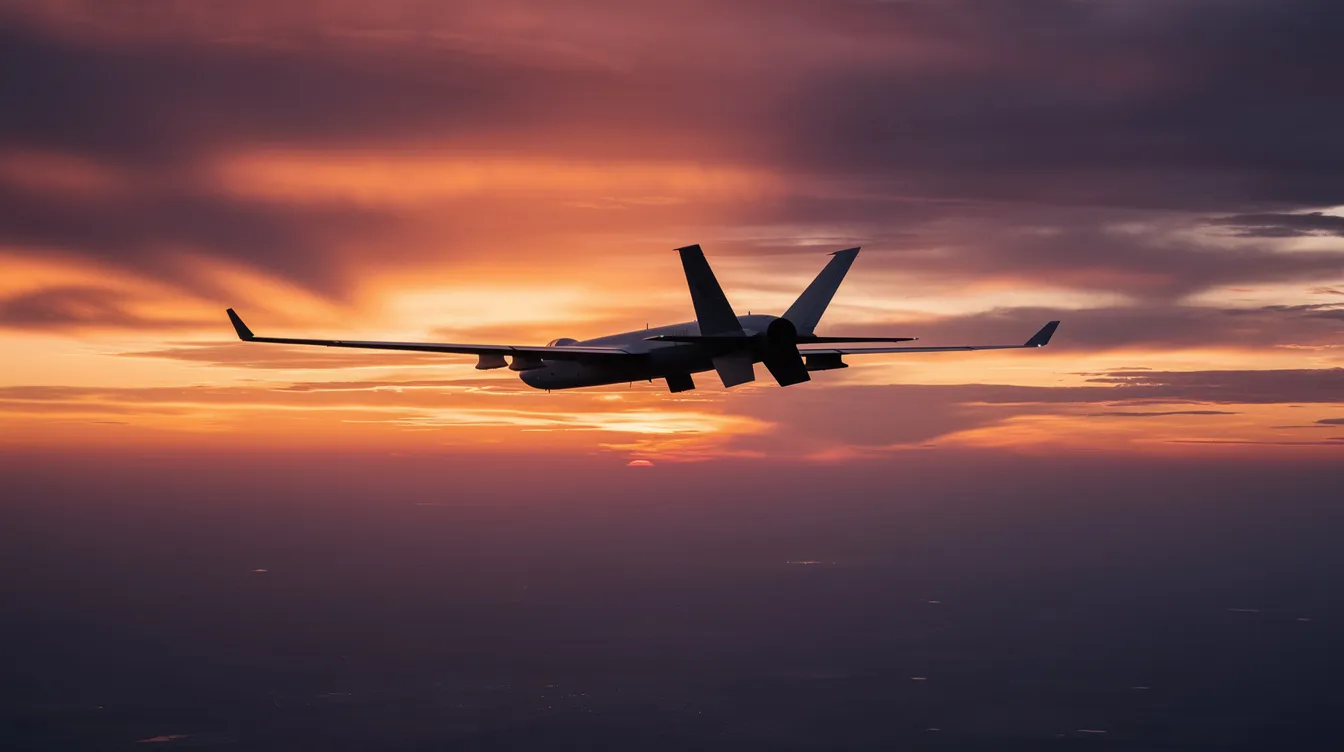
Fastest Fighter Jets and Air Combat in the Cold War
Air superiority during the Cold War depended on interceptors that could climb fast, reach high altitudes, and close distance before an adversary could escape. Speed was not an abstract goal; it determined whether military pilots could engage a target or watch it disappear over the horizon. The fastest operational aircraft from this era were military interceptors built to counter strategic bombers and high-altitude reconnaissance flights. Supersonic military jets utilize low-bypass turbofan engines with afterburners to reach speeds twice the speed of sound and beyond. Turbojet engines deliver higher speeds at high altitudes, where thinner air reduces drag on the airframe.
MiG-25 Foxbat: The MiG-25 Foxbat has a top speed of Mach 3.2 (2,190 mph), making it one of the fastest jets ever fielded. Developed by the Soviet Union to intercept aircraft like the XB-70 Valkyrie and SR-71, it traded maneuverability for raw speed and altitude ceiling (above 25 km). Its role was air-to-air combat interception and reconnaissance missions at altitudes most fighters could not reach.
MiG-31 Foxhound: The MiG-31 Foxhound can reach speeds of Mach 2.83 (1,864 mph). An evolution of the MiG-25, it added advanced phased-array radar and better acceleration, serving as a long-range interceptor against cruise missiles and bombers.
F-15 Eagle: The F-15 Eagle has a maximum speed of Mach 2.5 (1,650 mph). Designed as a dedicated air superiority fighter for the U.S. Air Force, it balanced top speed with agility and advanced avionics, also serving as a multirole fighter capable of ground attack.
English Electric Lightning: A British interceptor from the late 1950s, with a top speed of about Mach 2.0 (2,150 km h). Its incredible speed of climb allowed Royal Air Force pilots to scramble and reach high altitudes fast enough to intercept Soviet bombers approaching from the north.
Supersonic Bombers and Experimental High-Speed Aircraft
Nuclear strategy during the Cold War spawned bombers designed to outrun enemy fighters and surface-to-air missiles through speed and altitude rather than low-level penetration or stealth. At the same time, experimental aircraft built during and after World War II broke the sound barrier and laid the groundwork for supersonic flight as we know it.
Bell X-1: The first aircraft to exceed the speed of sound in controlled, level flight. On October 14, 1947, Chuck Yeager flew the Bell X-1 "Glamorous Glennis" past Mach 1.06 (about 1,299 km h) at 43,000 ft, earning a Guinness World Records entry for the first flight to break the sound barrier. The program proved supersonic flight was survivable and controllable, opening the door to everything that followed in aviation history.
Bell X-2: Pushed to Mach 3.196 (3,420 km h) in September 1956 with pilot Milburn Apt. The program ended after a fatal accident during that record flight, but its data on high angles of attack and thermal loads at supersonic speeds informed the North American X-15 and later hypersonic research.
B-58 Hustler: The first production bomber capable of sustained Mach 2 flight, entering service in 1960. Its speed was meant to outrun Soviet interceptors, but vulnerability to improving surface-to-air missiles and high operating costs led to its retirement by 1970.
XB-70 Valkyrie: A Mach 3.1 (approximately 3,300 km h) bomber concept that could cruise at 70,000 ft. Only two prototypes were built. The program ended in 1969 as intercontinental ballistic missiles and stealth technology shifted nuclear doctrine away from fast, high-altitude bombers.
Official vs. Unofficial Speed Records
The Fédération Aéronautique Internationale (FAI) oversees official aviation speed records, applying strict criteria for course type, measurement method, aircraft weight class, and whether the vehicle is crewed or uncrewed.
The SR-71 Blackbird's official record of 3,529.56 km h (2,193.2 mph) was set on July 28, 1976, over a measured 15/25 km straight course. It remains the absolute record for a crewed, air-breathing powered aircraft.
During World War II, prototype aircraft like certain Messerschmitt variants reportedly exceeded 1,000 km h in level flight, but these runs lacked the independent verification and standardized course measurements required by the FAI, keeping them unofficial.
The fastest piston-engined official record belongs to the Grumman F8F Bearcat "Rare Bear," which achieved 850.23 km h (528.31 mph) in its category. Modified racing aircraft have claimed faster speeds, but without meeting FAI course and measurement standards.
Speed records are course- and category-specific: "speed over a straight course" and "closed circuit over 1,000 km" are separate categories, so comparing records requires matching the exact course type.
How Plane Speed Is Measured: Knots, km/h, and Mach
Aircraft speed measurement involves several distinct values, each serving a different purpose for pilots, controllers, and engineers.
Pitot-static systems: Pitot-static systems are used to measure an aircraft's speed.
Indicated Airspeed (IAS): Indicated Airspeed is raw speed read directly from the airspeed indicator.
True Airspeed (TAS): True Airspeed is the actual speed of the aircraft relative to the surrounding air.
Ground Speed: Ground Speed reflects the aircraft's speed relative to the Earth's surface.
Airspeed vs. ground speed: Airspeed measures velocity relative to the surrounding air mass. Ground Speed reflects the aircraft's speed relative to the Earth's surface. A jet flying at 460 knots true airspeed into a 60-knot headwind has a ground speed of only 400 knots (about 740 km h); with a tailwind, that figure climbs above 520 knots.
Units: Knots (nautical miles per hour, where 1 knot = 1.852 km h) are standard in air traffic control and cockpit instruments. Mach number is used at high altitude, where it governs aerodynamic limits. Km h and mph provide intuitive context for general audiences.
Indicated Airspeed (IAS): Indicated Airspeed is raw speed read directly from the airspeed indicator, derived from pitot-static systems that measure dynamic air pressure. True Airspeed (TAS) is the actual speed of the aircraft relative to the surrounding air, corrected for altitude and temperature. At higher altitudes, aerodynamic drag is reduced in thinner air, and altitude influences air density and aircraft speed, so TAS can be much higher than IAS for the same Mach number.
What affects speed: Aircraft speed is affected by factors such as thrust, drag, and altitude. Aircraft engine type and airframe design impact drag and speed efficiency, and airspeed affects lift generation in aircraft, which is why precise speed measurement matters through every phase of flight.
How Fast Do Commercial Airliners Really Fly?
Commercial jets typically cruise between Mach 0.78 and Mach 0.85, translating to roughly 830 to 1,050 km h depending on altitude and temperature. This places commercial aviation firmly in the high subsonic band, well below the transonic drag rise that would spike fuel consumption.
The Airbus A380 typically cruises around Mach 0.85 (900 km h), making it one of the faster wide-body airliners in regular service and a platform for some of the most expensive private jet conversions in the world.
The Boeing 787 Dreamliner cruises at about Mach 0.85 (488 knots), prioritizing fuel efficiency over raw top speed through its composite airframe and efficient engines.
The Boeing 747-8I cruises at Mach 0.855 (about 1,061 km h), holding the distinction of being among the fastest commercial airliners flying today.
Why don't commercial airliners fly faster? Pushing from Mach 0.85 to Mach 0.90 increases fuel burn per mile by a disproportionate amount as transonic drag rises. The Concorde cruised at Mach 2.02, about 1,354 mph, but consumed fuel at a rate that made ticket prices prohibitive for most travelers, contributing to its retirement in 2003.
Jet stream tailwinds illustrate how ground speed and airspeed diverge in practice. An eastbound London-to-New York flight (against the jet stream) may take 8 hours, while the return trip, riding a 200 km h tailwind, can see ground speeds above 1,100 km h and arrive in under 6 hours. Airlines like Japan Airlines and United Airlines routinely adjust routes to capture or avoid jet stream winds.
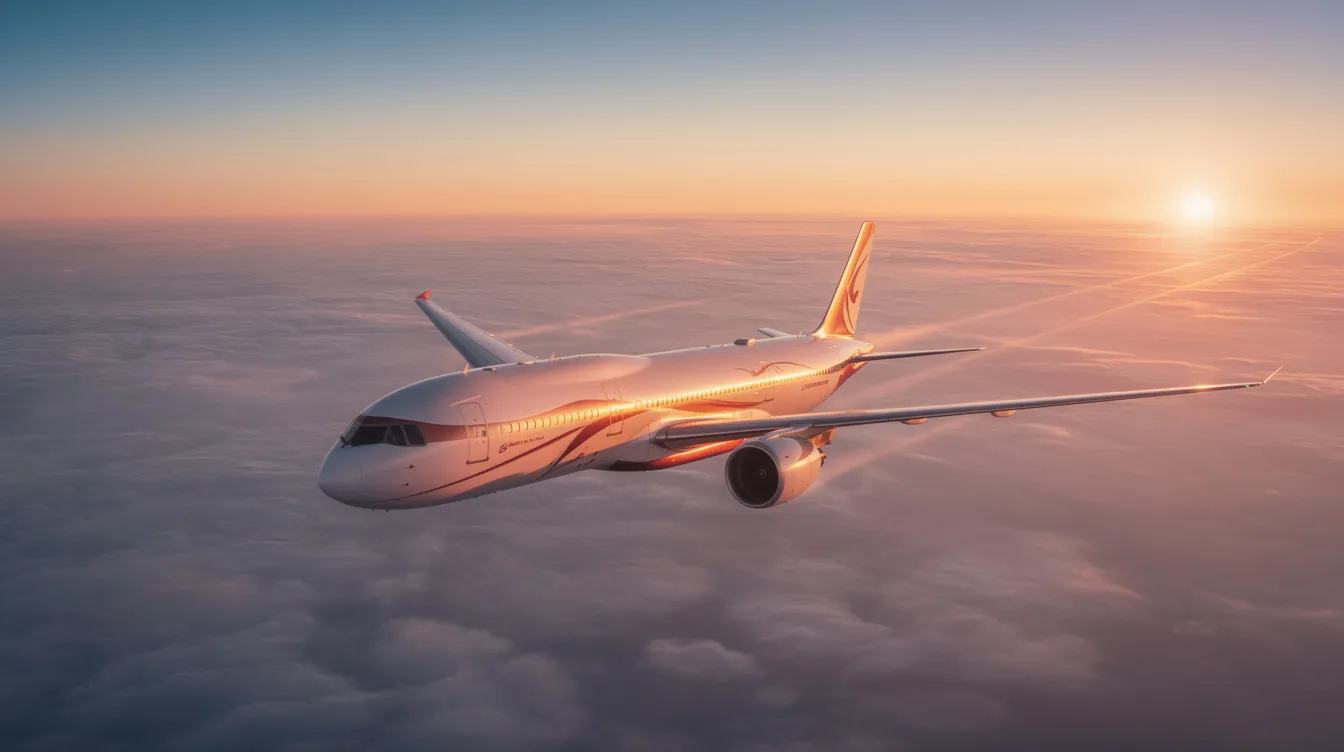
Private Jets and Business Aviation at Near-Supersonic Speeds
The fastest private jets in service operate at the upper edge of the subsonic envelope, matching or exceeding commercial airliner cruise speeds while offering far greater flexibility.
The Gulfstream G700 has a maximum speed of Mach 0.935 and a high-speed cruise of Mach 0.90 (approximately 956 km h). Its MMO puts it among the fastest jets available for private air travel.
The Bombardier Global Express can cruise near Mach 0.89, with the newer Global 8000 variant pushing toward Mach 0.95 in promotional materials, which would make it the fastest civilian aircraft since the Concorde.
The Cessna Citation X+ reaches approximately Mach 0.935, competing directly with Gulfstream for the title of fastest personal plane in the business jet category.
These aircraft don't reach supersonic speeds, but their real-world speed advantage over commercial aviation is measured door-to-door rather than Mach-to-Mach, especially when compared with small private aircraft optimized for shorter missions. A Gulfstream G700 departing from a private terminal can be wheels-up in under 15 minutes after a client arrives. Compare that with 2+ hours of pre-departure time at a commercial hub, and the private jet arrives first on any route under 4,000 nautical miles, even if its cruise Mach is slightly lower. The airplane's fast advantage in business aviation is scheduling control and route directness, not just cruise speed.
How BlackJet Uses High Speed to Create Strategic Advantage
BlackJet translates the principles of high-speed aviation into a practical tool through its Jet Card programs and broader premium private jet services. Rather than chasing experimental supersonic or hypersonic speeds, BlackJet focuses on compressing total travel time using advanced subsonic jets, private terminals, and operational support that eliminates the friction of commercial air travel.
Consider a concrete scenario: a BlackJet 25-hour Jet Card member needs to fly from Los Angeles to New York for a board meeting the following morning, leveraging the flexibility of the BlackJet 25+ Hour Jet Card. A super-midsize jet cruising near Mach 0.82 (about 870 km h) covers the roughly 2,150 nautical miles in approximately 4.5 hours of flight time. The member arrives at a private jet center, boards within minutes, and lands at Teterboro or Westchester rather than JFK. Total door-to-door time: under 6 hours. The equivalent commercial itinerary, including ground transfers, security, boarding, and taxi time, stretches past 8 hours even on a nonstop flight.
Prepaid access: 25- or 50-hour Jet Cards let members treat speed as a predictable asset, available for last-minute departures without the lead time of ad-hoc charter booking.
Multiple aircraft categories: Members select from light, midsize, super-midsize, and large cabin jets depending on the mission, matching aircraft performance to route distance and passenger count, guided by a clear understanding of different private jet sizes.
24/7 digital booking and real-time support: BlackJet's operations team monitors weather, NOTAMs, and airspace conditions, coordinating ground transfers to minimize total journey time, similar to the always-on service models used by top private jet companies.
Access to less congested airports: Flying into smaller airports closer to final destinations saves 30 to 90 minutes of ground travel compared with major commercial hubs, whether that’s Teterboro outside New York or dedicated private jet charter options in Karachi.
Safety, Certification, and Going Fast Without Cutting Corners
Flying high-performance aircraft at the upper edge of their speed envelope requires strict safety management. Speed without control is risk, not advantage.
Every aircraft has certified speed limits: VMO (maximum operating indicated airspeed) and MMO (maximum operating Mach number). These limits are set during certification testing to prevent structural loads, aerodynamic flutter, and engine damage. A Gulfstream G700 pilot cannot legally or safely exceed its MMO of Mach 0.935, even if the airframe could momentarily sustain it.
BlackJet partners with operators that meet top-tier safety certifications, including standards such as ARG/US and Wyvern ratings. These third-party audits evaluate pilot training, maintenance records, operational procedures, and insurance coverage.
Pilot training for high-performance flight includes recognizing transonic aerodynamic behavior, managing high-altitude pressurization, and responding to conditions like clear-air turbulence or wind shear that become more consequential at faster speeds.
BlackJet's operations team tracks real-time weather, turbulence reports, and restricted airspaces. If conditions along a planned route pose risk, the team adjusts altitude, routing, or departure time to maintain both safety and schedule, rather than pushing through adverse conditions.
Sustainable High-Speed Aviation: Carbon-Neutral by Design
Faster flight consumes more fuel. That relationship is governed by physics: wave drag rises sharply as Mach number increases above 0.80, and fuel burn per nautical mile climbs with it. Sustainability in private aviation requires acknowledging this cost and offsetting it systematically.
BlackJet delivers carbon-neutral flights as standard. Verified carbon offset projects (reforestation, methane capture, renewable energy development) neutralize the CO₂ footprint of every flight, at no additional cost to the member.
A 5-hour transcontinental private jet flight (roughly 2,100 nautical miles) burns several tons of fuel. Per passenger, emissions from a private jet can run 2 to 3 times higher than commercial business class because fewer seats share the fuel load. Offsets bring the net carbon figure to zero.
Where available, BlackJet supports the use of sustainable aviation fuel (SAF), which reduces lifecycle carbon emissions compared with conventional jet fuel.
Weight affects lift and climb performance in aircraft, so operational practices such as optimizing fuel load (carrying only what the mission requires), selecting efficient cruising altitudes, and planning direct routings all reduce fuel consumption and emissions per flight.
Airplane Speeds Through the Phases of Flight
Aircraft speed varies through each phase of flight, governed by structural limits, air traffic control rules, and passenger comfort. Aviation speed limits apply differently at different altitudes and stages.
Takeoff/rotation: Commercial jets rotate at roughly 145 to 160 knots (270 to 300 km h). Light private jets rotate at lower speeds, around 120 to 140 knots, depending on weight and runway length.
Climb: After gear and flap retraction, aircraft accelerate to 250 knots IAS (the regulatory speed limit below 10,000 ft in most airspaces), then transition to a Mach climb schedule (typically Mach 0.78 to 0.80) as they gain altitude and air density drops.
Cruise: Long-haul commercial airliners settle at Mach 0.78 to 0.85. Private jets may cruise at their MMO (e.g., Mach 0.90 for a G700) for time-critical missions, flying high above commercial traffic at 43,000 to 51,000 ft.
Descent and approach: Speeds drop to 250 knots below 10,000 ft, then to final approach speeds of 130 to 160 knots. Pilots cannot simply fly faster through these phases; noise abatement rules, ATC spacing, and structural flap limits all constrain the speed profile.
From Hypersonic Flight Labs to Tomorrow's Air Travel
Ongoing research in hypersonic flight continues where the X-15 and X-43 left off, but the gap between laboratory speeds and commercial passenger service remains wide.
NASA's High-Speed Flight project is developing the X-59 QueSST, designed to produce a low sonic boom that could change regulations around overland supersonic flight. If successful, it may open the first stage of regulatory reform needed for commercial supersonic routes over land.
Boom Supersonic's Overture aims for Mach 1.7 with 80 passengers on transoceanic routes. The aircraft is under development, with airline commitments from carriers, but FAA certification and final design reviews are not complete as of mid-2026.
Hypersonic speeds above Mach 5 introduce airframe heating that requires thermal protection systems using exotic ceramics and ablative coatings. Leading edges on a Mach 6 vehicle can exceed 1,500°C, which is why hypersonic flight remains in the domain of defense and research rather than business travel.
For BlackJet members, the practical ceiling of private air travel speed in the world today is Mach 0.90 to 0.95. That range delivers a genuine time advantage without the unresolved regulatory, environmental, and engineering challenges of supersonic or hypersonic passenger flights.
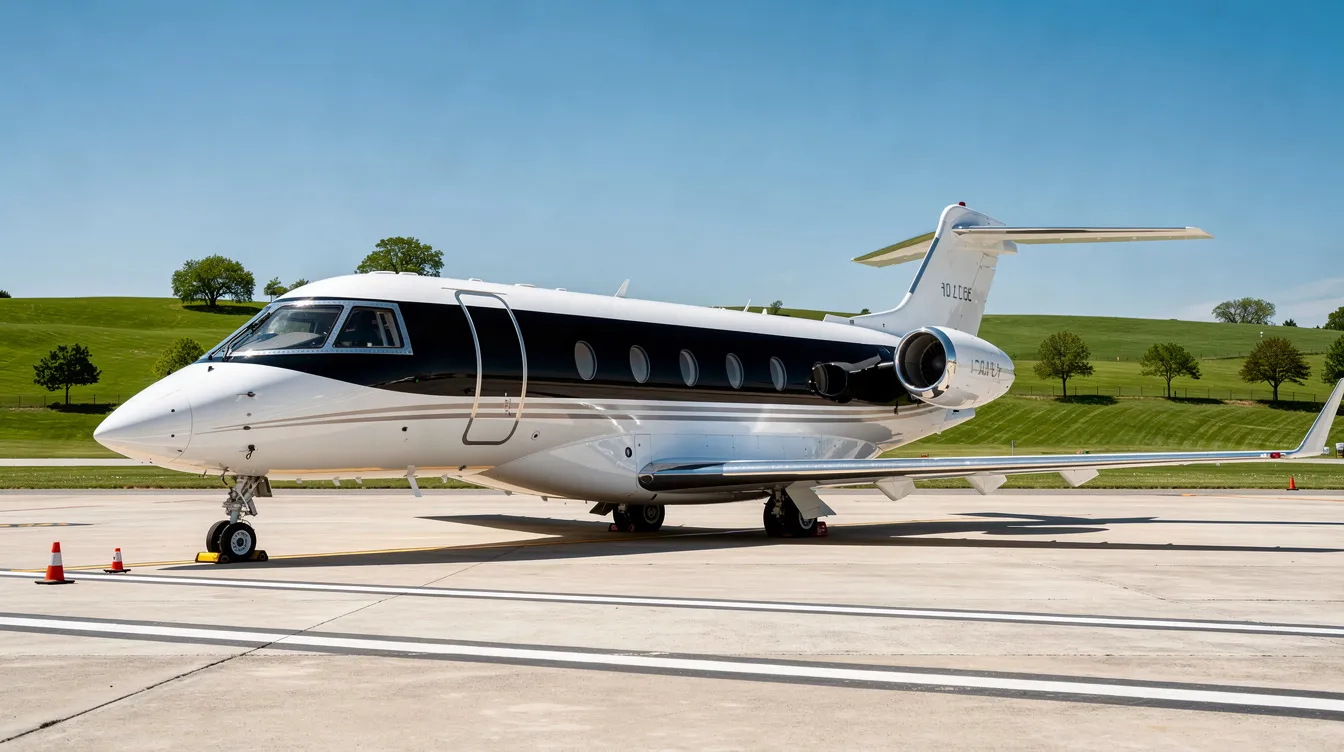
How Speed Affects Cost, Comfort, and Efficiency
Every aircraft has an optimal cruise Mach where fuel efficiency, speed, and range intersect. Deviating from that sweet spot has measurable consequences.
A Boeing 737 reducing cruise Mach from 0.785 to 0.76 on a 500 NM sector saves roughly 7% on fuel burn while adding only 5 to 8 minutes of flight time. Airlines make this trade-off daily based on fuel prices, schedule pressure, and slot availability.
Flying faster means higher fuel consumption per mile, but flying too slowly lengthens exposure to headwinds and increases crew duty time. The optimal point depends on wind, weight, and the cost of delay versus fuel.
Comfort factors: high speed increases the probability of encountering turbulence in jet stream shear zones. Cabin noise from airflow over the fuselage rises at faster speeds. A slightly slower, smoother climb profile can improve passenger experience on shorter sectors.
For BlackJet, trip planning through Jet Card programs balances all three variables. Hourly rates provide cost predictability, while the operations team selects cruise altitudes and speeds that optimize the trade-off between arrival time and comfort for each specific route and aircraft, informed by a detailed understanding of Jet Card cost per hour.
Choosing the Right Aircraft Category for Your "Fast" Trip
Different private jet categories offer similar top speeds in the Mach 0.75 to 0.85 band, but their range, payload, and airport access differ, and those differences determine total trip time more than cruise speed alone.
Boston to Chicago (~850 NM): A light jet cruising at Mach 0.75 (roughly 800 km h) completes this trip nonstop in about 2 hours, illustrating how budget-friendly light and very light jets can still deliver serious time savings. Departing from a regional airport like Hanscom Field avoids the congestion of Logan International and puts the traveler in a car to downtown Chicago minutes after landing at Midway or DuPage.
Los Angeles to Miami (~2,300 NM): A super-midsize jet at Mach 0.80 (about 870 km h) flies nonstop in roughly 5 hours. A light jet would need a fuel stop, adding 30 to 45 minutes of ground time and negating any cost savings; larger-cabin options suitable for groups up to 15, such as large private jets for 15 passengers, can cover similar or longer routes in a single hop.
New York to London (~3,500 NM): A large-cabin jet cruising at Mach 0.85 (around 950 km h) covers this in 6 to 7 hours with the right wind conditions. Only aircraft in this category carry sufficient fuel for a nonstop transatlantic crossing while maintaining speed, and even larger platforms exist when you need private jets configured for 20 passengers.
BlackJet advisors match aircraft type to mission profile, weighing runway requirements at departure and arrival airports, passenger count, baggage needs, and whether the itinerary requires flying high over an aircraft carrier battle group's restricted airspace or routing around weather.
Frequently Asked Questions About Fast Airplanes and Private Jets
What is the fastest airplane in the world?
The crewed, air-breathing speed record belongs to the Lockheed SR-71 Blackbird at 3,529.6 km h (2,193.2 mph), set July 28, 1976. The NASA/USAF X-15 reached Mach 6.72 (4,520 mph) but used a rocket engine rather than air-breathing propulsion. The Mirage III, while a capable supersonic fighter, does not approach either record.
How fast do private jets fly compared with commercial airliners?
Top private jets like the Gulfstream G700 (Mach 0.935) and Bombardier Global Express (Mach 0.89) match or exceed commercial airliner speeds (Mach 0.78 to 0.85). The time advantage comes from how private jets outpace commercial planes in total trip time: direct routing, faster boarding, and access to airports closer to destinations.
Can private jets go supersonic?
Not under current regulations or with current production aircraft. Supersonic business jet projects exist (Boom Overture targets Mach 1.7), but none are certified for commercial service as of 2026. Overland supersonic flight remains prohibited in most jurisdictions due to the sonic boom.
Is flying faster less safe?
No, when aircraft operate within their certified VMO/MMO limits with trained crews. These limits are set well below structural failure thresholds. Speed becomes unsafe only when an aircraft exceeds its design envelope or encounters conditions (severe turbulence, icing) that the crew fails to manage.
How does a BlackJet Jet Card make travel effectively faster?
Prepaid hours guarantee aircraft availability without the lead time of ad-hoc charter. Digital booking enables same-day departures. Access to less congested airports and coordinated ground transfers compress total door-to-door time by hours compared with commercial alternatives.
Elevate Your Travel: Turning Speed Into a Personal Advantage
Aviation history offers a compelling arc: from Chuck Yeager's first flight past Mach 1 in 1947 to the SR-71's Mach 3.3 dashes during the Vietnam War era to today's near-supersonic private jets cruising at Mach 0.935. These milestones in speed records prove what engineering can achieve. But for travelers who measure success in meetings attended, decisions made, and hours reclaimed, the practical definition of "airplane fast" is simpler: less time between deciding to go and arriving.
BlackJet delivers that definition through carbon-neutral flights, vetted safety standards, and Jet Card access that turns private aviation into a reliable, on-demand asset. Certified operators, real-time operational support, and the flexibility to fly faster on your terms back every flight, whether that means a same-day sprint from LA to New York or an overnight crossing to London.
Discover how BlackJet's Jet Card programs can reshape your most time-critical routes. Speak with an advisor, explore aircraft categories, and experience what it means when speed, safety, and sustainability work together for you.


 Sign up with google
 Sign up with Apple