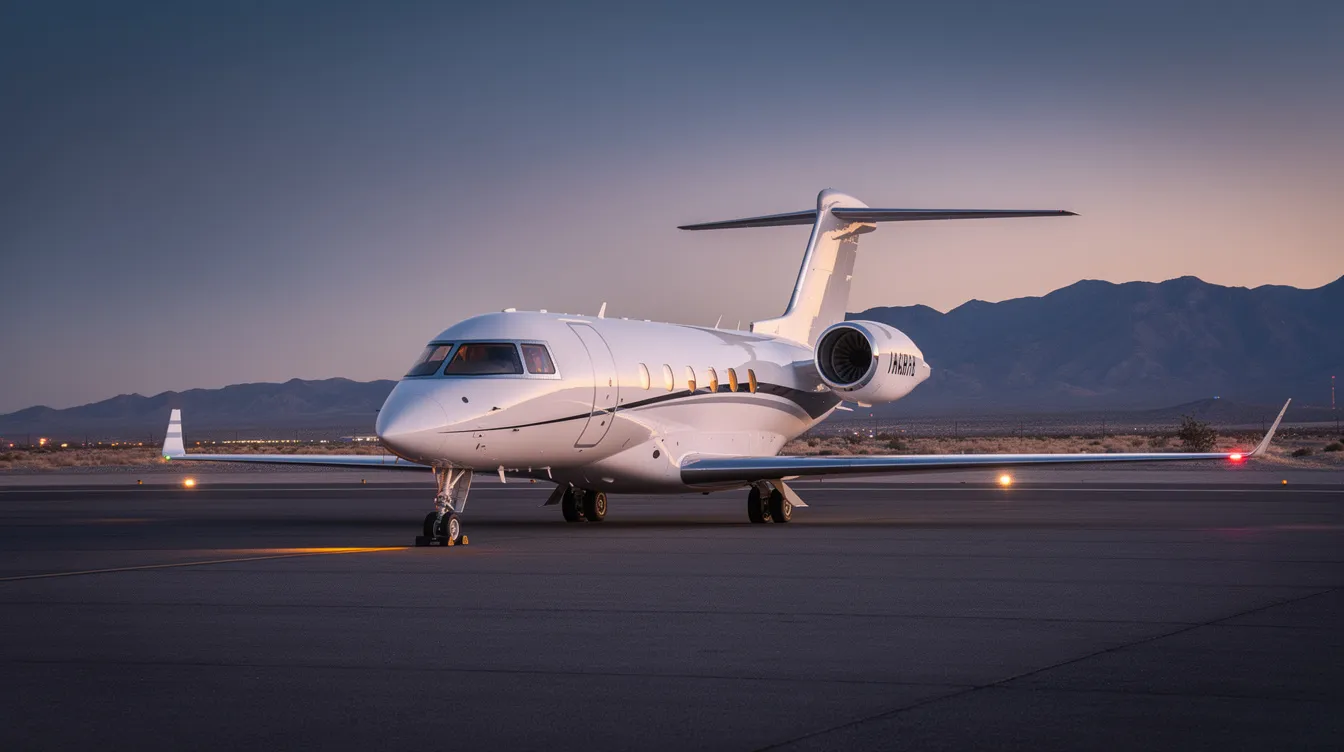
Allegiant Air is a major American ultra-low-cost carrier headquartered in Las Vegas, serving 133 destinations across the United States and focusing almost exclusively on leisure travelers through direct flights between underserved regional cities and popular vacation markets. This guide is for leisure and business travelers comparing Allegiant Air's low-cost model with premium private jet alternatives. It operates from popular hubs like Orlando, Tampa, and Las Vegas — the same destinations that also attract frequent business travelers and high-net-worth leisure flyers who want more control over how they travel.
For travelers considering an Allegiant route but weighing a premium alternative, this comparison looks at how Allegiant stacks up against BlackJet's premium private jet service across route access, schedule flexibility, cabin options, pricing, onboard experience, safety, and carbon-neutral private flying. The distinction matters when low fares come with real trade-offs in time, privacy, comfort, and limited schedules - especially if you would rather fly the same routes on your own terms. Understanding the differences helps travelers choose the best option for their schedule, comfort, and budget.
Why High-End Travelers Look Beyond Allegiant Air
Many BlackJet clients began their travel habits on Allegiant flights. A weekend in Las Vegas or a family trip to Florida made perfect sense at $49 each way. But as schedules tightened and stakes grew, the advantage shifted from saving dollars to saving hours.
Consider a Nashville–Las Vegas weekend trip. Allegiant Air flights from Nashville may operate only a few times per week, locking travelers into rigid departure windows. Factor in arriving at the airport two hours early, boarding zones, a possible connection, and ground transport on landing — total door-to-door time can easily reach seven to eight hours. A BlackJet private flight on the same route cuts that to roughly four hours, including ground time at both ends. Research confirms that nearly half of private jet flights serve city pairs with no direct commercial alternative, and where commercial routings take roughly twice as long.
Time reclaimed is time reinvested. For executives whose opportunity cost exceeds $2,000 per hour, those three to four extra hours per trip compound into a strategic asset — not just a comfort upgrade.
Allegiant Air focuses on keeping fares low, which means fewer amenities, limited frequencies, and all-economy cabins. BlackJet exists for the traveler who needs control over when they depart, where they land, and what happens onboard.
Privacy matters in ways that go beyond preference. Confidential conversations, focused preparation before a meeting, or simply decompressing without 180 strangers - these are not luxuries but professional necessities for many frequent travelers.
Top Allegiant Air Nonstop Flights and Routes Your BlackJet Card Can Replace
Allegiant connects over 115 regional and small U.S. cities to vacation destinations, primarily serving niche markets with limited competition on many routes. The airline operates direct flights on 373 routes and does not operate connecting flights. Many Allegiant routes operate on a part-time or seasonal schedule, and the airline has announced multiple new routes to expand its network. Here is how BlackJet reimagines several of those popular routes.
Nashville–Las Vegas: Allegiant operates this route with limited weekly frequencies from smaller regional airports. BlackJet clients depart on demand from a private FBO, arriving at Henderson Executive or another airport minutes from the Strip — no schedule constraints, no crowded terminal.
Grand Rapids–Orlando: A classic Allegiant pairing linking a mid-sized Midwest city to Florida. Flight schedules may only fly a few times a week. BlackJet offers direct routing to Sanford or Orlando Executive, with departure times built around your meeting or park visit, not the airline's crew rotation.
Cincinnati–Tampa: Allegiant often operates at smaller and less congested regional airports on both ends. BlackJet matches that with even closer proximity — private terminals at Lunken Field or Tampa's Peter O. Knight, cutting ground transport significantly.
Phoenix–Jacksonville (JAX): Allegiant connects these cities seasonally. BlackJet replaces the seasonal gap with year-round availability on a Jet Card, making the route viable for business travel that doesn't pause in August.
Fresno/Stockton, California–Las Vegas: Allegiant serves several California cities, including Fresno, Stockton, and Bellingham, with nonstop flights to Las Vegas. BlackJet condenses these into one seamless leg from any nearby airfield, often using light jets perfectly suited for sub-two-hour hops.
OKC–Orlando / Rapid City–Phoenix: Smaller origin points like Oklahoma City and Rapid City reflect Allegiant's strength in underserved markets. For group travel or time-sensitive trips, a BlackJet card transforms these into direct, private itineraries with no compromises on timing.
From Allegiant Flights to Private Jet Cards: When the Upgrade Makes Sense
A Jet Card is prepaid flight time - typically purchased in blocks of 25 or 50 hours - that you draw from whenever you fly. Unlike buying individual Allegiant air flights, a Jet Card locks in hourly rates across cabin classes, with no fluctuating fares, no blackout dates, and no restrictions on when you can book, a structure explored in detail in this complete guide to Jet Card pricing.
For travelers taking two or three leisure trips a year, Allegiant's model remains a perfectly rational deal. But the calculus shifts once you fly ten or more times annually.
Scenario: A tech executive based in New York flies 15 times a year between Las Vegas, San Francisco, and Austin. On Allegiant, direct service between these cities is limited or nonexistent, forcing connections through major hubs. Annual spend on commercial tickets, baggage fees, seat upgrades, hotel accommodations for early-morning departures, and lost productivity adds up rapidly. A BlackJet 25-hour Jet Card in the midsize category, with industry averages around $9,577 per hour informed by jet card cost per hour comparisons, covers those 15 flights while saving roughly 30 hours of total travel time per year.
The Jet Card market is projected to grow from approximately $6 billion in 2025 to over $10 billion by 2034, driven by demand for predictable costs and scheduling flexibility, and savvy travelers increasingly seek out the best jet cards for frequent flyers to capture those advantages.
Key thresholds that justify moving beyond Allegiant's model: flying more than eight to ten times per year, traveling in groups of three or more, needing to visit multiple cities in a single day, or operating on plans that can't bend to an airline's limited weekly schedule.
BlackJet Jet Cards function like a flight subscription — purchased once, used flexibly, with availability guaranteed across light, midsize, super-midsize, and large cabin aircraft, with options scaling up to 100-hour jet card programs for ultra-frequent travelers.
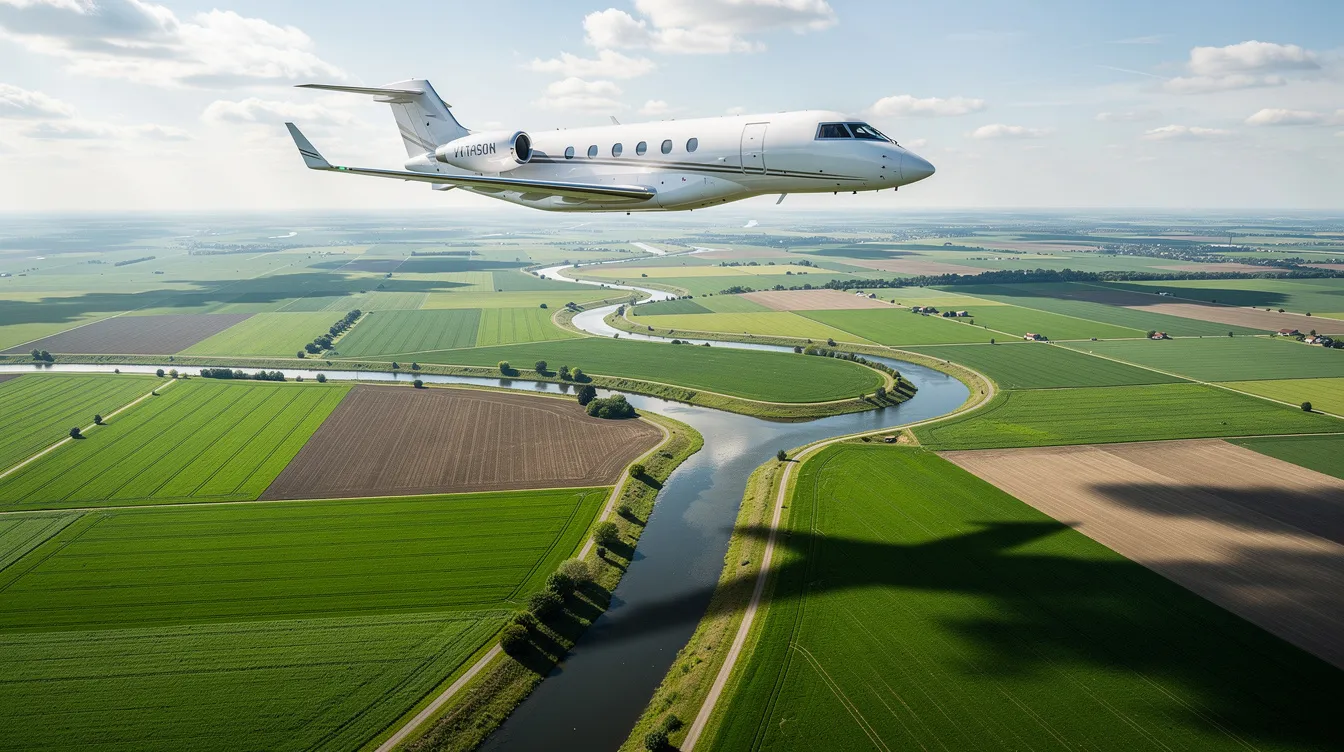
Allegiant Air Fare Classes vs. Private Cabin Classes
Allegiant operates an all-economy seating configuration. An all-economy seating configuration means that every seat on Allegiant flights is in the same class, with no separate first or business class sections. Unlike many other airlines, there is no first or business class cabin. The airline offers two upgrade options - Allegiant Extra and Legroom+ - where Legroom+ includes exit rows and front-of-plane seats. These provide marginal improvements but remain firmly within economy class territory.
BlackJet's cabin categories are built around mission profiles. Light jets handle short hops like Las Vegas–Los Angeles with club-style leather seats for up to seven passengers. Midsize aircraft serve routes like Nashville–Las Vegas with stand-up cabins, enclosed lavatories, and full refreshment service. Large cabin jets cover transcontinental or international travel with lie-flat seats, dedicated work areas, and bespoke catering, mirroring the broader types of private jets for every traveler available in the market.
Seat comfort diverges sharply: Allegiant's high-density, non-reclining seats are engineered for cost efficiency, and on short-haul flights, features like reclining seats may matter less to some travelers. Private aircraft still offer a much wider comfort gap, with fully reclining leather seating, worktables, and noise-dampened cabins that feel closer to a private office than a transit vehicle.
Productivity is the real differentiator. BlackJet cabins allow confidential meetings, phone calls, and focused work. Many private jet options support Wi-Fi for in-flight work or streaming - something Allegiant does not provide.
Bundles, Fees, and Transparency: Allegiant vs. BlackJet Pricing
Allegiant offers three fare bundles - Basic, Bonus, and Total - that layer services at increasing price points. The Total bundle includes priority access and checked baggage. Beyond bundles, Allegiant allows passengers to pay only for services they need, like baggage and seat selection, with options such as bundles or Trip Flex typically chosen during booking. A typical characteristic of Allegiant's model is very low base fares plus additional fees for extras. The airline charges for optional services such as baggage and seat selection, and by 2025, ancillary revenue reached approximately $76.35 per passenger.
For a family of four flying to Las Vegas on an Allegiant Basic fare, adding carry-on bags, checked baggage, seat selection, and priority boarding can effectively double the initial ticket price. If you need to cancel or change your flight, additional fees apply unless you've purchased Trip Flex, which generally must be added at the time of booking.
Allegiant's loyalty program, called Allways Rewards, lets members earn one point per dollar spent under $500 and two points per dollar spent over $500. The Allegiant AAlwaysRewards VisaCard offers priority boarding, and cardholders receive a free drink on Allegiant flights. Points do not expire with account activity - a reasonable perk, but one that still operates within the constraints of commercial scheduling.
BlackJet's Jet Card pricing is all-in: aircraft, crew, standard catering, and mandatory safety standards are covered in a single hourly rate. No separate baggage fees, no seat selection charges, no surprise costs at the gate, and it fits cleanly within the broader private jet price list landscape that compares ownership, charter, and jet card models.
For high-frequency travelers, the value proposition is clarity. Rather than managing dynamic fares, ancillary charges, and bundle comparisons on every trip, customers lock in a predictable rate and spend their energy on the work or leisure that actually matters.
Check-In, Security, and Boarding: Commercial Terminals vs. Private FBOs
Allegiant follows standard commercial procedures: online check-in opens 24 hours before departure, passengers should arrive at the airport two hours early, and boarding passes are available via mobile or print. Simply enter your confirmation number on Allegiant's site or app to retrieve your boarding documents.
Allegiant's boarding hierarchy moves through priority access, military personnel, exit rows, and then back-to-front zones. At a busy Las Vegas departure gate, this process can consume 30 to 45 minutes of standing and waiting before you reach your seat.
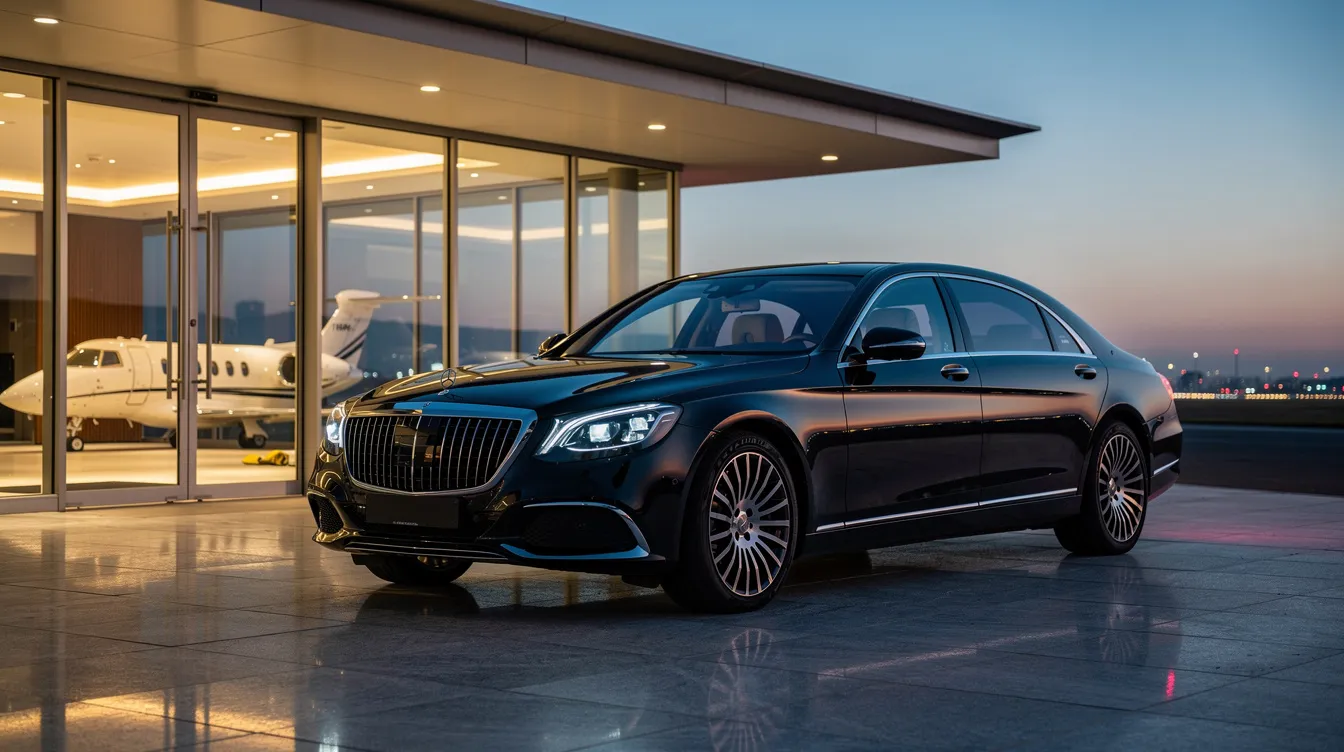
BlackJet clients use private terminals - Fixed Base Operators (FBOs) - where you arrive 20 to 30 minutes before departure. There are no standard TSA lines. You step from your car directly to the aircraft, with notice to the crew handled digitally through BlackJet's platform. Baggage is loaded by hand without the usual commercial baggage process.
What this means in practice: a business traveler can board a meeting in Las Vegas at noon, fly to Los Angeles by 2:30 PM, and take a second meeting by 3:15 — something virtually impossible when factoring in commercial airport timelines.
Onboard Experience: Allegiant Air vs. BlackJet Comfort and Service
Allegiant does not provide in-flight amenities such as Wi-Fi or free refreshments. Onboard, passengers can purchase snacks, soft drinks, and alcohol from a branded menu. There is no built-in entertainment system. The experience is optimized for short-haul, budget-conscious travelers - functional, but minimal.
A comparable BlackJet flight transforms the same route. Picture a three-hour Las Vegas–Chicago leg: spacious club seating, a quiet cabin, bespoke catering coordinated before departure. Food options range from light snacks to full meals tailored to dietary requirements, and premium spirits are available without a transaction at 35,000 feet.
Connectivity is a practical differentiator. Many private aircraft in BlackJet's network support Wi-Fi, enabling passengers to work, take calls, or stream content throughout the flight.
For a passenger who values the journey as much as the destination, the gap between the two experiences is not incremental — it's categorical.
Safety and Fleet Strategy: LCC Efficiency vs. Private Aviation Standards
Allegiant Air was founded in January 1997, with scheduled service beginning on October 15, 1998. The company filed for Chapter 11 bankruptcy protection in December 2000 and exited bankruptcy in late 2001, later beginning to trade on NASDAQ in December 2006. Allegiant's fleet evolution reflects its cost-first philosophy: the airline retired its last MD-80 aircraft in November 2018 and now operates primarily Airbus A320-family jets, with recent Boeing 737 MAX orders to modernize flight operations and reduce unit costs across the USA. Allegiant Travel Company also has the authority to operate charter services in the U.S., Canada, and Mexico.
Allegiant, like all U.S. airlines, operates under FAA regulations. Its strategy emphasizes cost efficiency, secondary airports, and limited weekly frequencies to maximize seat utilization.
BlackJet's safety standards go further. Operators in the BlackJet network meet or exceed FAA requirements, maintain third-party safety ratings through organizations like ARGUS and Wyvern, adhere to strict maintenance protocols, and fly with experienced crews operating under Part 135 certification.
Fleet philosophy diverges sharply: Allegiant flies high-density aircraft to maximize seat revenue per departure. BlackJet sources aircraft based on mission profile - range, runway performance, passenger count, and cabin requirements - ensuring the right tool for every trip.
Las Vegas and Other Allegiant Hubs Through a Private Jet Lens
Major leisure destinations served by Allegiant include Florida and Las Vegas. Allegiant offers customizable vacation packages through its parent company, often bundling hotel and car rental for visitors to these hubs. The airline connects smaller domestic origin points directly to high-demand vacation regions - a model that works for price-sensitive leisure travelers with flexible schedules.
Allegiant connects regional airports to Las Vegas with a few flights per week, typically on fixed days. For a search of availability during peak events, travelers may find flights sold out or inconveniently timed, prompting some to research the cheapest private jet options as an upgrade path.
BlackJet serves similar flows with different priorities: flexible timings around event start and end times, late-night departures after shows in Las Vegas, and direct flights to private airports closer to luxury resorts in destinations like Phoenix, Tampa, or cities across Florida.
Event itinerary example: A group of investors needs to fly from Nashville, Cincinnati, and Chicago into Las Vegas for CES in January or a major fight weekend in August. Commercial coordination across three cities requires juggling different carriers, layovers, and arrival windows. BlackJet arranges multiple legs departing within the same afternoon, landing the full group at the same FBO within hours of each other - ready to visit the venue together, using aircraft similar to the best private jets for 20 passengers when group size demands it. Hotel accommodations and ground transport are arranged in parallel.
Sustainability and Carbon-Neutral Flying vs. Low-Cost Efficiency
Allegiant's low-cost operations are designed around fuel and cost efficiency — newer fleet aircraft, high seat density, and secondary airports all contribute. However, the airline does not typically advertise carbon-neutral flights or comprehensive offset programs. Its environmental efforts reflect operational efficiency rather than proactive climate commitments.
BlackJet's commitment to carbon-neutral flying means all Jet Card hours include carbon offsets by default, tied to verifiable environmental projects such as reforestation and renewable energy development, even as the newest private jets push for greater fuel efficiency and lower emissions.
In practice, offsets work straightforwardly: emissions are calculated per flight based on distance, aircraft type, and fuel burn, then matched with certified carbon credits purchased through accredited programs. The cost is built into the hourly rate — no add-on, no opt-in required — which is particularly impactful on long-range private jets for global travel, where emissions per leg are higher.
The contrast is one of mindset. Rather than searching for the cheapest possible Allegiant Air ticket to Las Vegas, climate-conscious executives using BlackJet travel with a smaller verified footprint and public ESG alignment — a distinction that increasingly matters to boards, clients, and stakeholders.

When to Choose Allegiant Air and When to Choose BlackJet
Allegiant Air serves an essential segment of American aviation: low-cost, point-to-point leisure travel on popular routes, especially to Las Vegas and Florida. For its core customer, the model works. The question is whether it still works for you.
Choose Allegiant when: you're taking an infrequent leisure trip, traveling solo on a strict budget, or your schedule can adapt to limited Allegiant frequencies. The airline's low base fares remain a genuine deal for the right traveler.
Choose BlackJet when: you're an executive with tight meeting schedules who can't afford to lose half a day in transit; a family or group that values privacy and comfort; a traveler making multi-leg trips in a single day; or someone who regularly flies between secondary cities where commercial options are sparse and a BlackJet 25+ Hour Jet Card provides guaranteed access.
Nashville entrepreneur flies to Las Vegas six times a year for trade shows. Allegiant's twice-weekly schedule rarely aligns with show dates. A BlackJet Jet Card eliminates the scheduling friction entirely, especially compared with ad hoc options like buying a seat on a private jet for each individual trip.
Tampa-based family: four travelers heading to Orlando for a long weekend. After baggage fees, seat selection, and ground transport, the Allegiant cost gap narrows - and the private experience transforms a stressful travel day into part of the vacation.
Las Vegas casino host: managing VIP guests arriving from Fresno, Rapid City, and Jacksonville. Commercial coordination is a logistical headache. BlackJet handles multi-city pickup with a single point of contact, including arranging private jets for up to 50 passengers when high-volume VIP groups are involved.
If Allegiant Air's model no longer fits your lifestyle or business demands, explore how a BlackJet Jet Card can elevate every route you already love. Discover premium jet access at BlackJet.
FAQs: Allegiant Air vs. BlackJet Jet Cards
Is private jet travel always more expensive than Allegiant Air?
On a per-seat basis, yes, private aviation costs more than ultra-low-cost commercial fares. But when you factor in time saved, ancillary fees avoided, productivity gained, and the ability to fly on your schedule rather than Allegiant's limited weekly departures, the cost-per-hour-of-value equation shifts significantly for frequent travelers.
How do BlackJet's Jet Cards work compared to buying Allegiant tickets?
Allegiant tickets are purchased per flight with dynamic pricing. BlackJet Jet Cards are prepaid blocks of flight hours - 25, 50, or 100 hours - with fixed hourly rates locked in at purchase. You simply book through BlackJet's digital platform when you're ready to fly.
Can I still fly to Allegiant hubs like Las Vegas or Orlando on a private jet?
Absolutely. Las Vegas, Orlando, Tampa, Phoenix, Nashville, and every other Allegiant destination are accessible via private aviation - often through closer, less congested airports that reduce ground travel time. Even destinations like Paris or other international cities are reachable with large cabin or ultra-long-haul aircraft, including some of the largest private jets for sale and charter, via WestJet Express partnerships or direct international charters.
How does safety compare?
Both Allegiant and BlackJet operators comply with FAA regulations. BlackJet adds additional layers: third-party safety audits from organizations like ARGUS and Wyvern, BlackJet Certified standards, and rigorous crew vetting protocols, comparable to the benchmarks used by top private jet companies worldwide.
What about pets on board?
Allegiant allows dogs and cats in the cabin. Pets must be in a carrier that meets size requirements, and the pet fee is $50 per segment for travel. Pet travel is only allowed within the 48 contiguous states. On private jets, pets typically fly freely in the cabin without carrier restrictions, with no per-segment fees — your dog sits next to you, not under the seat in front of you.
What's different about check-in and boarding?
Allegiant uses standard commercial terminals with TSA screening, two-hour advance arrival, and zone-based boarding. BlackJet clients use private FBOs, arrive 20–30 minutes early, and walk directly from their vehicle to the aircraft.
Conclusion: Elevate Your Travel Beyond Allegiant Air
Allegiant Air serves a vital role in connecting underserved cities to popular vacation destinations with affordability and simplicity. However, for discerning travelers who value time, flexibility, privacy, and seamless service, BlackJet offers a transformative alternative. By replacing rigid schedules and crowded terminals with on-demand private jet access, BlackJet unlocks new possibilities for business and leisure travel alike.
Whether you're an executive needing to maximize productivity, a family seeking comfort and convenience, or a group coordinating multi-city arrivals, BlackJet Jet Cards deliver unmatched control and consistency. The all-inclusive pricing, premium cabin experience, and commitment to safety and sustainability elevate every journey beyond what Allegiant or any commercial carrier can offer, leveraging access to some of the best private jets in the world.
Explore how BlackJet can reshape your travel on routes you already know and love. Discover the strategic advantage of private jet access and experience the future of luxury air travel today, especially when you compare options like NetJets jet card costs against BlackJet's programs.


 Sign up with google
 Sign up with Apple