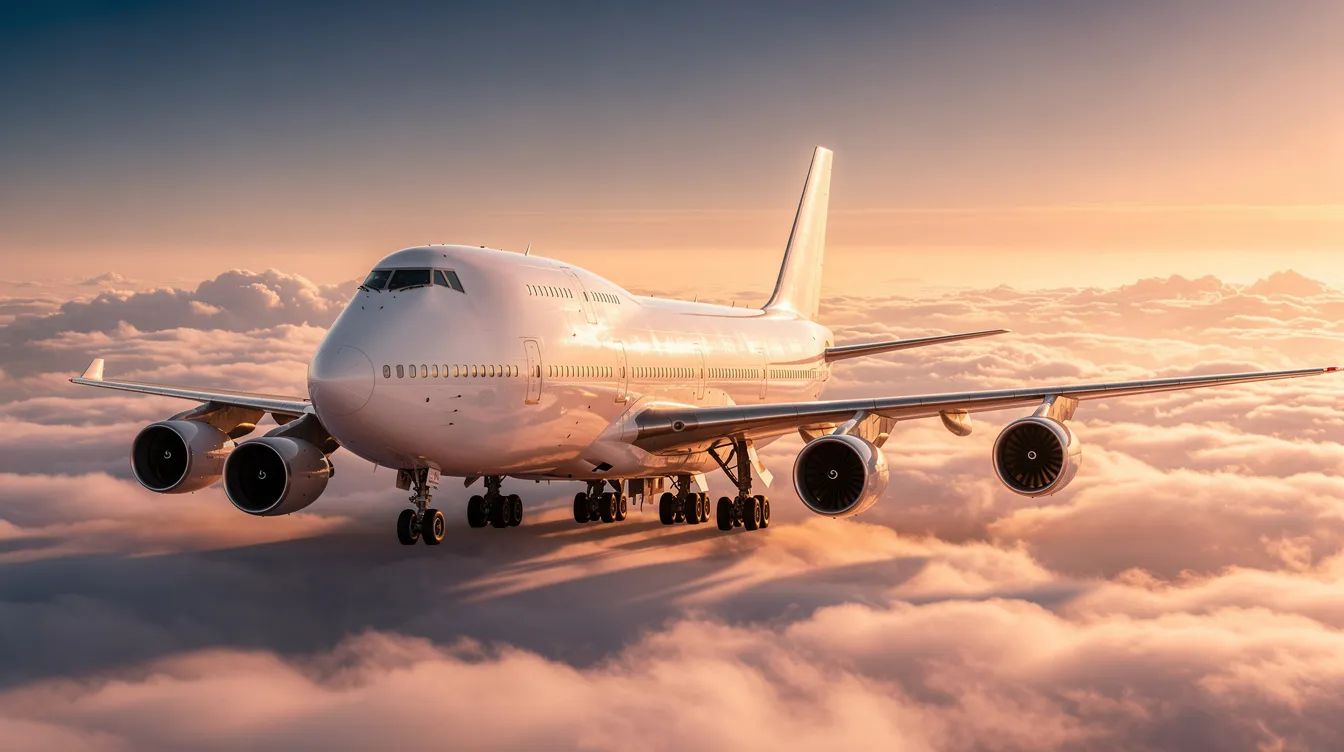
Why the Boeing 747 Still Matters for Today's Luxury Traveler
When the Boeing 747 entered commercial service on January 22, 1970, the Boeing 747 jetliner established itself as a wide-body, four-engine jumbo jet that transformed long-haul passenger travel. Dubbed the Queen of the Skies (the 747 is nicknamed Queen of the Skies for its size and prestige), it introduced large-scale wide-body flying, helped define the modern economy, business, and first-class cabin structure, and set a benchmark for comfort, prestige, safety expectations, and global connectivity that commercial aviation chased for decades.
Consider the contrast. In the 1970s, flying first class on a Boeing 747 from New York to London meant stepping aboard Pan Am's flagship, climbing to the aircraft's upper deck, and settling into a lounge that felt more like an exclusive club than a commercial cabin. The experience was remarkable but still bound by airline schedules, hub-and-spoke routing, lengthy check-ins, and shared space with hundreds of other passengers. Today, a frequent business traveler or high-net-worth leisure flyer using a BlackJet Jet Card departs on their own schedule, boards in minutes, flies point-to-point with total privacy, and arrives at airports closer to their final destination. The time saved, the control gained, and the cabin made yours entirely represent a direct evolution of the expectations the 747 first set.
That is why this guide examines the Boeing 747's history, design breakthroughs, model evolution, cabin classes, presidential and cargo roles, safety lessons, and cultural impact before connecting its legacy to the shift from jumbo jets to private aviation. For travelers comparing commercial first class with more flexible private access, it also explains how jet card programs, sustainability efforts, and BlackJet's modern booking technology and flight support turn the standards the 747 popularized into a more personal and efficient way to fly.
Origins: From U.S. Air Force Tender to Pan Am's Jumbo Vision
The Boeing 747's origins trace back not to a commercial boardroom but to a military contract that Boeing lost. In the early 1960s, the U.S. Air Force issued the CX-Heavy Logistics System tender, seeking a massive cargo aircraft capable of carrying 115,000 pounds over 5,000 nautical miles. Boeing competed but lost to Lockheed, whose design became the C-5 Galaxy. The defeat, however, left Boeing with a critical insight: the raised cockpit and front cargo door design that would allow nose-loading on a freighter model could also underpin an entirely new kind of commercial aircraft.
That insight met ambition when Juan Trippe, president of Pan American World Airways, approached Boeing in 1965 with a bold demand. Trippe wanted an aircraft roughly 2.5 times larger than the Boeing 707, capable of delivering approximately 30 percent lower cost per passenger-mile. He believed scale was the key to making intercontinental travel affordable for the masses, and he wanted Boeing to build it. Boeing began developing the 747 in 1966, assigning lead engineer Joe Sutter to head the effort. Sutter's team made a strategic decision that would define the program: they designed the airframe so it could be converted to freighter use if the anticipated passenger demand didn't materialize, protecting the investment for both Boeing and its airline customers.
In April 1966, Pan Am ordered 25 Boeing 747-100s at roughly $20 million each-a commitment that formally launched the program. That single order gave Pan Am extraordinary influence over the first aircraft's specifications and layout, a level of customer-driven design rarely seen before or since in commercial aviation.
Design Breakthroughs: What Made the Boeing 747 Different
Early Boeing design studies explored a full-length double-deck configuration to maximize passenger capacity. The team ultimately rejected this approach in favor of a single wide main deck topped by a shortened upper deck-the famous "hump" that gave the 747 its silhouette and became one of the most recognizable aircraft profiles in history. The Boeing 747 features a distinctive raised cockpit design positioned above the main deck, which served a dual purpose: it cleared the way for an unobstructed nose cargo door on freighter versions and created a unique second-level cabin space that airlines could configure as a first-class lounge, extra seating area, or premium cabin.
The Boeing 747 was the world's first wide-body airplane (an aircraft with two passenger aisles), introducing a twin-aisle layout for increased capacity and establishing the viability of the wide-body concept in aviation. Early Boeing 747 models were powered by four turbofan engines-specifically the Pratt & Whitney JT9D high-bypass turbofans-mounted beneath swept wings angled at approximately 37.5 degrees, enabling cruise speeds near Mach 0.85 to 0.88. Those four wing-mounted engines provided redundancy that made long overwater flights viable under the regulations of the era.
What allowed such an enormous aircraft to operate from existing runways was a suite of advanced high-lift devices: triple-slotted Fowler trailing-edge flaps and variable-camber Krueger leading-edge flaps that together could increase wing lift by roughly 90 percent and expand effective wing area by about 21 percent when deployed. These innovations meant airports didn't need to rebuild infrastructure to accommodate the new giant. The Boeing 747 established the viability of the wide-body concept in aviation and set a benchmark that modern wide-bodies-and even today's high-end private jets-are still measured against.
Building the Giant: Everett, Washington, and the 747 Factory
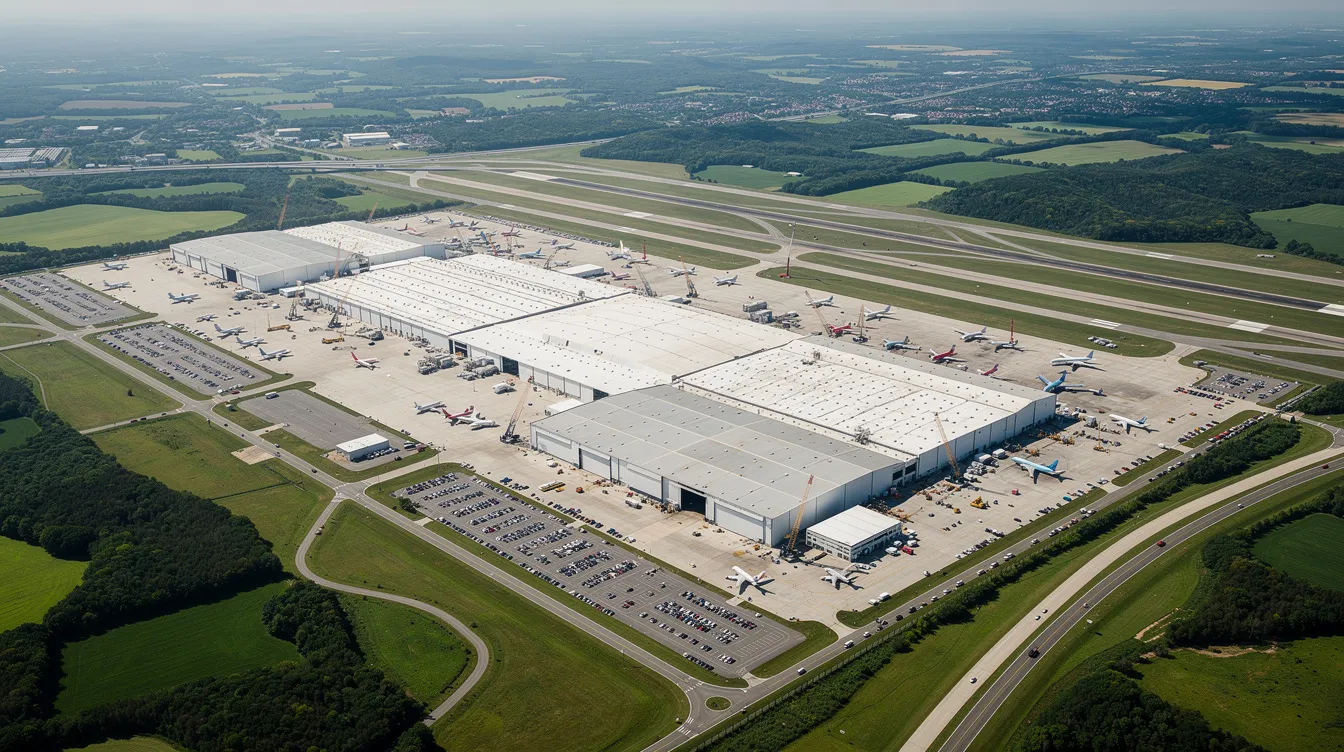
To build an aircraft this large, Boeing needed a factory that didn't yet exist. In 1966, the company selected a 780-acre site at Paine Field in Everett, Washington, and began constructing what would become the largest building in the world by volume. More than four million cubic yards of earth were moved to prepare the site. Malcolm Stamper led the factory construction effort under extraordinary pressure: the plant had to rise simultaneously with the finalization of the 747's design, a feat of parallel engineering and construction that few aerospace programs have attempted.
Boeing's Everett factory became the nerve center of jumbo jet production, but the airplane itself was assembled from components sourced across a vast subcontracting network. Fuselage sections, wings, and tail surfaces arrived from outside firms-a large-scale global supply chain model that foreshadowed how other aircraft programs, from the 787 to modern private jet manufacturers, would later be organized. The Everett factory remains in operation today, a testament to the scale of ambition that the 747 demanded.
Flight Testing, Certification, and Early Risks
The first 747 prototype rolled out at the Everett factory in September 1968, a milestone attended by representatives of the 26 airlines that had already placed orders. The first flight occurred on February 9, 1969, when test pilots Jack Waddell, Brien Wygle, and Jess Wallick lifted the massive aircraft from the runway at Paine Field.
The flight test program was anything but routine. Pilots practiced ground handling using an unusual training device nicknamed "Waddell's Wagon"-a full-scale cockpit mock-up mounted on a truck that simulated the challenges of steering, taxiing, and managing visibility from such a high perch. The test flight campaign uncovered significant challenges: evacuation procedures from the upper deck had to be proven to meet regulatory time limits, and the aircraft's sheer mass prompted the FAA to establish new wake turbulence separation rules for other aircraft following in its path.
Engine reliability posed one of the program's most serious risks. The Pratt & Whitney JT9D turbofans suffered early stall and reliability issues, and engineers discovered wing flutter at high speed that required nacelle pylon counterweights and structural reinforcement to resolve. Boeing had invested enormous sums on a compressed 28-month development timeline, and any significant delay in certification could have pushed the company toward financial crisis. The FAA granted certification on December 30, 1969-just weeks before the planned service entry-allowing the Boeing 747 jetliner to begin its commercial life on schedule.
Entering Service: Pan Am, New York–London, and the Age of the Jumbo
Pan Am's inaugural Boeing 747 passenger service launched on the New York–London route on January 22, 1970. The original aircraft scheduled for the flight, Clipper Young America, experienced an engine issue and had to be replaced with another 747, causing a brief delay. When the replacement finally departed JFK for Heathrow, it marked the start of a new era. The Boeing 747 entered commercial service, and long-haul air travel would never be the same.
The Boeing 747 significantly lowered the per-seat cost of flying. With economy class capacity often exceeding 350 passengers in typical layouts, the aircraft's sheer volume transformed transatlantic and transpacific economics. It made long-haul travel more accessible with lower ticket prices and, in doing so, the Boeing 747 democratized international travel by making it more accessible to millions who had never considered flying overseas. The 747-100 has a range of 5,300 nautical miles in later configurations, sufficient for nonstop links between major cities across the Atlantic, while the baseline 747-100 has a range of 4,620 nautical miles in standard form.
Rapid adoption followed throughout the 1970s. Many airlines placed orders:
British Airways
Lufthansa
Japan Airlines
Qantas
Singapore Airlines
joined the jumbo jet revolution within a few years. The Boeing 747 enabled direct non-stop intercontinental flights at a scale previously impossible, and the first 747 deliveries to international carriers accelerated a global network that connected major cities on every continent. Compared to later twin-engine aircraft that would eventually dominate long-haul service, the early 747 cabins were louder and less fuel-efficient, but they offered unmatched space, prestige, and onboard infrastructure-lavish galleys, lounges, and lavatories-that smaller jets had to emulate gradually.
The Cabin Experience: Economy Class to Upper-Deck First Class
Economy Class Innovations
On the main deck, the Boeing 747 established a 3-4-3 economy class layout across its wide fuselage-a configuration that exploited the twin-aisle cabin to carry more passengers than any previous commercial aircraft. Airlines used the extraordinary interior volume to install expansive galleys, multiple lavatories, and onboard bars that would have been impossible on narrower jets. The 747 introduced a physical social hierarchy in aviation, dividing the cabin into clearly delineated classes that separated passengers by service level, space, and price.
Upper Deck Luxury
The aircraft's upper deck was where the true magic happened. In the early variants, the upper deck had just six small windows behind the cockpit, later expanded to ten windows in updated production models. Airlines used this intimate, elevated space in wildly creative ways. Pan Am installed a first-class lounge; Qantas experimented with skybeds; Lufthansa created a "Bordrestaurant" dining room. The upper deck featured luxury amenities like lounges and bars, and climbing the narrow staircase to reach them felt like entering an exclusive club at 35,000 feet. The class lounge concept pioneered on the 747 became the template for every premium cabin innovation that followed.
Evolution of Premium Cabins
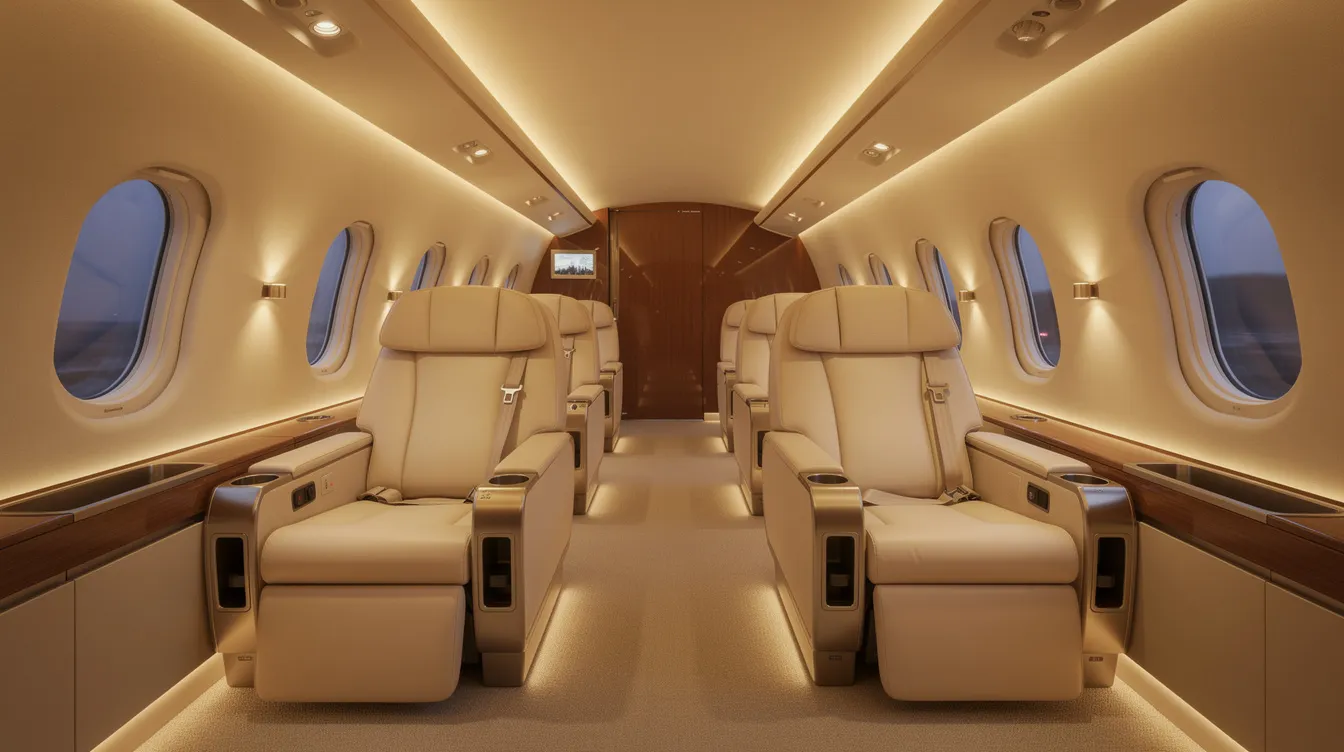
Over the decades, airlines converted these social spaces into revenue-generating premium seats. Singapore Airlines eventually introduced fully enclosed private suites in its first class cabin. As demand for passenger comfort grew, full-flat beds, privacy closures, and bespoke dining service became standard in the forward cabin. These changes formalized what the jumbo jet had started: a clear, aspirational hierarchy of comfort in the skies. For today's luxury travelers, large-cabin private jets take that concept to its logical conclusion-the entire cabin is yours, configured for your comfort, with no compromise.
Government and Military Roles: From E-4B to Air Force One
The Boeing 747's size, range, and four-engine redundancy made it uniquely suited for high-stakes government and military variants. The USAF E-4B National Airborne Operations Center is a hardened 747-based platform designed for command and control during nuclear crises, capable of remaining airborne for extended periods. Modified Boeing 747s serve as governmental and scientific assets across multiple nations and agencies.
The most publicly recognized role belongs to the VC-25A and its successor, the VC-25B. These are the presidential aircraft based on the 747 airframe; when the U.S. President is aboard, the call sign Air Force One applies. The aircraft carries secure communications, defensive systems, and a full suite of executive facilities that effectively serve as a flying White House. The Air Force designation distinguishes the specific military variant from the public shorthand, but the association between "747" and "Air Force One" has become inseparable in public consciousness.
Beyond executive transport, NASA modified two 747s as shuttle carrier aircraft to ferry the Space Shuttle between landing and launch sites-a role that required structural reinforcement and aerodynamic modifications unique among all 747 variants. The SOFIA airborne observatory, based on a 747SP, carried a 2.5-meter telescope to study infrared astronomy at altitude. During Operation Solomon in 1991, the Israeli Air Force used 747s to evacuate thousands of Ethiopian Jews in a single airlift. Each of these roles underscored what made the 747 irreplaceable for decades: no other aircraft in the world combined its payload, range, and structural resilience.
Key Commercial and Cargo Operators Around the World
The Boeing 747's commercial passenger legacy was built by a roster of the world's most prestigious airlines. Pan Am was the launch customer, but the type quickly became the flagship for international routes at major airlines, including:
Pan Am
British Airways
Lufthansa
Japan Airlines
Qantas
Singapore Airlines
Korean Air
Japan Airlines once operated over 100 Boeing 747s simultaneously-the largest single fleet of any operator. For decades, seeing a 747 at the gate meant you were about to fly with an airline's best service on its most important route.
As newer twin-engine aircraft displaced the 747 from passenger service, the type found a second life as a cargo carrier. The Boeing 747 became an important freighter with a distinctive nose-loading cargo door, and major cargo operators include:
Lufthansa Cargo
UPS
Atlas Air
Volga-Dnepr
These operators built their businesses around the 747 freighter's unmatched volume and increased payload capability. The freighter model accounted for the majority of late-production orders. Today, as of mid-2025, approximately 424 Boeing 747s remain in active airline service, the vast majority serving cargo or specialty roles rather than front-line passenger service. A total of 1,574 Boeing 747s have been built across all variants.
Core Variants: How the Boeing 747 Evolved Over Five Decades
Over more than fifty years of production, the Boeing 747 evolved through several variants that shared a common airframe philosophy but were optimized for different missions. The main families-747-100, 747-200, 747SP, 747-300, 747- 400, and 747-8-represent a continuous thread of innovation in fuselage length, upper-deck layout, engine generations, range improvements, and cockpit modernization.
Below is a comparison table of the major 747 variants:
Variant | Typical Seating | Range (nm) | Years of Introduction |
|---|
747-100 | ~366 | 4,620–5,300 | 1970 |
747-200 | ~366–452 | 5,000–6,850 | 1971 |
747SP | ~230 | 6,650–7,650 | 1976 |
747-300 | ~412–496 | 6,400–6,825 | 1983 |
747-400 | ~416–524 | 7,285–7,670 | 1989 |
747-8 | ~410–467 | 8,000+ | 2012 |
Each variant tells a chapter in the story of how commercial aviation's most iconic commercial plane model adapted to shifting market demands.
Early Models: 747-100 and 747-200
The 747-100 entered service in January 1970 as the first aircraft to bear the jumbo jet name. In typical airline layouts, it seated around 366 passengers across multiple cabin classes, with a range sufficient for most transatlantic missions. The first delivery to Pan Am marked the beginning of wide-body passenger service worldwide. Early production aircraft featured just six windows on the upper deck, later revised to ten windows to accommodate additional seating or a more spacious lounge configuration. Approximately 168 747-100s were built, along with 29 short-range variants designed for high-density Japanese domestic routes and 9 -100B models.
The 747-200, introduced from 1971 onward, represented a major upgrade. It featured higher maximum takeoff weights and more powerful engines-airlines could choose between upgraded Pratt & Whitney JT9D variants, General Electric CF6, or Rolls-Royce RB211 turbofans. This flexibility made the -200 adaptable across diverse operating environments. Boeing produced it in passenger, freighter, combi (mixed cargo and passengers on the main deck), and convertible versions. Roughly 393 aircraft in the -200 family were delivered, serving airlines as both flagship long-haul passenger aircraft and dedicated cargo workhorses. The -200's versatility demonstrated a principle that would define the 747 program: one airframe, many missions.
Special Performance: The Short-Fuselage 747SP
In the mid-1970s, Pan Am and Iran Air requested a variant that could fly farther than standard models on routes with thinner passenger demand-missions like New York–Tehran and certain transpacific legs where filling a full-size 747 wasn't economically viable. Boeing responded with the 747SP, a special performance variant featuring a shortened fuselage roughly 48 feet shorter than the standard airframe and redesigned tail surfaces that improved high-altitude handling.
The SP carried about 230 passengers in a typical three-class cabin configuration and could reach destinations beyond the range of contemporary models. Only 45 were built between 1974 and 1987, making it a niche but important chapter in the 747 story. Some later found specialized roles, including NASA's SOFIA telescope platform. Airlines eventually favored more efficient later variants and emerging twin-engine aircraft for ultra-long-haul service, limiting the 747SP's commercial lifespan. But for a brief period, it was the aircraft that could reach places no other aircraft of its size could.
Stretched Upper Deck: 747-300 and the Maturing Jumbo
The 747-300, introduced in the early 1980s, addressed a straightforward question: how to get more premium revenue from the aircraft's upper deck. Boeing replaced the original spiral staircase with a straight stairway and extended the upper deck significantly, creating room for extra seating or expanded business and first class configurations above the main deck. This stretched upper deck became the template for what many travelers picture when they think of the 747's second level.
The -300 didn't radically change the aircraft's engines or avionics. Its improvements were primarily about cabin layout evolution and passenger experience-a reflection of how airlines were increasingly competing on service rather than just capacity. About 81 were built in all -300 variants before the far more advanced 747 400 arrived, making the -300 a relatively brief but meaningful stepping stone in the type's development.
The Workhorse Flagship: 747-400 and Long-Range Global Travel
The 747- 400 launched in the mid-1980s and entered service in February 1989 with Northwest Airlines, quickly establishing itself as the most commercially successful and technologically advanced member of the family. Key upgrades included winglets and wingtip extensions that reduced aerodynamic drag, new engine options from Pratt & Whitney, General Electric, and Rolls-Royce, and a thoroughly modernized interior. The Boeing 747-400 featured a glass cockpit that eliminated the flight engineer position, reducing the flight crew to two pilots and significantly lowering operating costs.
The 747-400 can cruise at speeds up to Mach 0.855 with a range of approximately 7,285 to 7,670 nautical miles-enough to connect London to Singapore, Los Angeles to Sydney, or New York to Tokyo without stopping. Typical seating ranged between 416 and 524 passengers in standard airline layouts, though the 747-400 has a maximum seating capacity of 624 passengers in high-density configurations. The 747-400D variant, designed specifically for high-frequency Japanese domestic routes, could carry up to 624 passengers in an all-economy arrangement.
For many travelers in Asia, Europe, and the Americas, the 747 400 defined what long-haul flight meant throughout the 1990s and 2000s. Airlines like Singapore Airlines, British Airways, and Qantas positioned it on their most prestigious international routes, and its distinctive silhouette at the gate signaled that you were about to experience an airline's finest service.
The Final Stretch: 747-8 and the Last Generation of the Queen
The 747-8 program began around 2005 as Boeing's response to demand for an updated four-engine wide-body incorporating technology developed for the 787 Dreamliner. The 747-8 is the last variant of the Boeing 747 series and represents the culmination of over five decades of engineering refinement. The final Boeing 747 model, the 747-8, has a length of 76.4 meters, making it the longest member of the family,y and the 747-8 is the largest commercial aircraft built in the US.
Boeing fitted the 747-8 with new General Electric GEnx-2B engines producing approximately 66,500 pounds of thrust, advanced raked wingtips replacing the -400's blended winglets, and aerodynamic improvements across the wing and fuselage. The 747-8 can fly over 8,000 nautical miles, extending the type's already impressive intercontinental reach. The Boeing 747-8 has a maximum takeoff weight of 970,000 pounds and a maximum payload capacity of 154 short tons in its freighter configuration. The 747-8 can typically seat 410 to 467 passengers,s depending on configuration.
Boeing differentiated between the 747-8 Intercontinental (passenger) and the 747-8 Freighter. The freighter completed its maiden flight in 2010, with the passenger version following in 2011 and the first delivery occurring in 2012. Notably, the 747-8 passenger version had only 48 aircraft ordered-a stark contrast to the freighter's stronger sales. The last Boeing 747 was delivered on January 31, 2023, a 747-8F handed to Atlas Air. Boeing produced 1,574 Boeing 747 aircraft in total across all variants, closing more than fifty years of continuous production.
Technical Snapshot: Performance, Range, and Capabilities
Taking the 747- 40000 as a representative variant: this aircraft stretches approximately 231 feet 10 inches in length, spans about 211 feet 5 inches wingtip to wingtip (including winglets), and stands roughly 63 feet 8 inches tall. Its fuel capacity of approximately 57,285 US gallons enables those marathon long-haul missions-nonstop links between major global business hubs separated by entire oceans.
In plain terms, these numbers mean a departure from New York to Tokyo, or London to Singapore, without touching the ground. The 747 400's cruise near Mach 0.855 translates to roughly 570 miles per hour at altitude, covering vast distances in single flights that would have required refueling stops on earlier-generation aircraft.
Design features underscore the type's robustness:
Four independent hydraulic systems
Four main landing gear bogies, each with four wheels (sixteen main wheels total)
Structural provisions allowing some variants to ferry a fifth engine mounted beneath a wing
These redundancies, developed across decades of service, contributed to the 747's reputation as a reliable workhorse on the world's longest and most demanding routes-a standard that private jets and other aircraft now inherit as baseline expectations.
Safety Record, Incidents, and Lessons Learned
Over its service life spanning millions of flight hours, the 747 has been involved in 173 aviation accidents and incidents-a figure that must be understood in the context of the type's extraordinary utilization across thousands of operators, decades of service, and billions of passenger miles. The overall safety record reflects both the inherent risks of early aviation operations and the steady improvements that the 747 itself helped drive.
Several historically significant incidents reshaped global aviation safety. The 1977 Tenerife runway collision between two 747s led to fundamental changes in cockpit communication protocols and air traffic control procedures. Pan Am Flight 103, destroyed over Lockerbie in 1988, prompted sweeping overhauls in cargo screening and aviation security. Air India Flight 182 in 1985 drove similar security enhancements. Each tragedy produced systemic improvements-cargo door redesigns, enhanced locking mechanisms, fuel tank inerting systems, and stricter structural inspection regimes-that raised the safety floor for the entire commercial aviation industry.
These lessons extend directly into private aviation. BlackJet's partner operators build on decades of safety frameworks originally forged through wide-body operations. The principles are the same: redundancy in systems, rigorous crew training, structured maintenance cycles, and continuous improvement. The safety standards that govern private jet travel today owe much to the hard-won lessons of the jumbo jet era.
Cultural Icon: How the Queen of the Skies Captured Imagination
The Boeing 747 earned its place in popular culture not through marketing alone but through sheer visual impact and global ubiquity. Nicknames like "Jumbo Jet" and "Queen of the Skies" entered everyday language. The 747's massive capacity contributed to the growth of mass international tourism, connecting people to destinations that had previously required multi-stop journeys or ship crossings. It has appeared in over 300 film productions, from disaster thrillers like Airport to action blockbusters like Air Force One and Die Hard 2-a testament to its status as the most recognizable aircraft in the world.
Beyond cinema, the 747 became shorthand for ambition, adventure, and global connectivity. Travel posters featured its distinctive hump; airport spotters gathered to photograph it; children pressed against terminal windows to watch it taxi. Walking up the narrow staircase to the upper deck felt like crossing a threshold into a more exclusive world-a sensation that defined what flying could be at its finest.
That cultural legacy matters today. Many of the premium travelers who now seek private jet solutions grew up watching 747s define the gold standard of air travel. Their expectations-for space, for service, for a sense of occasion-were shaped by the Queen of the Skies. Private aviation doesn't replace that romance; it channels it into something more personal and more flexible.
The Shift to Twin-Engine Long-Haul and the End of Production
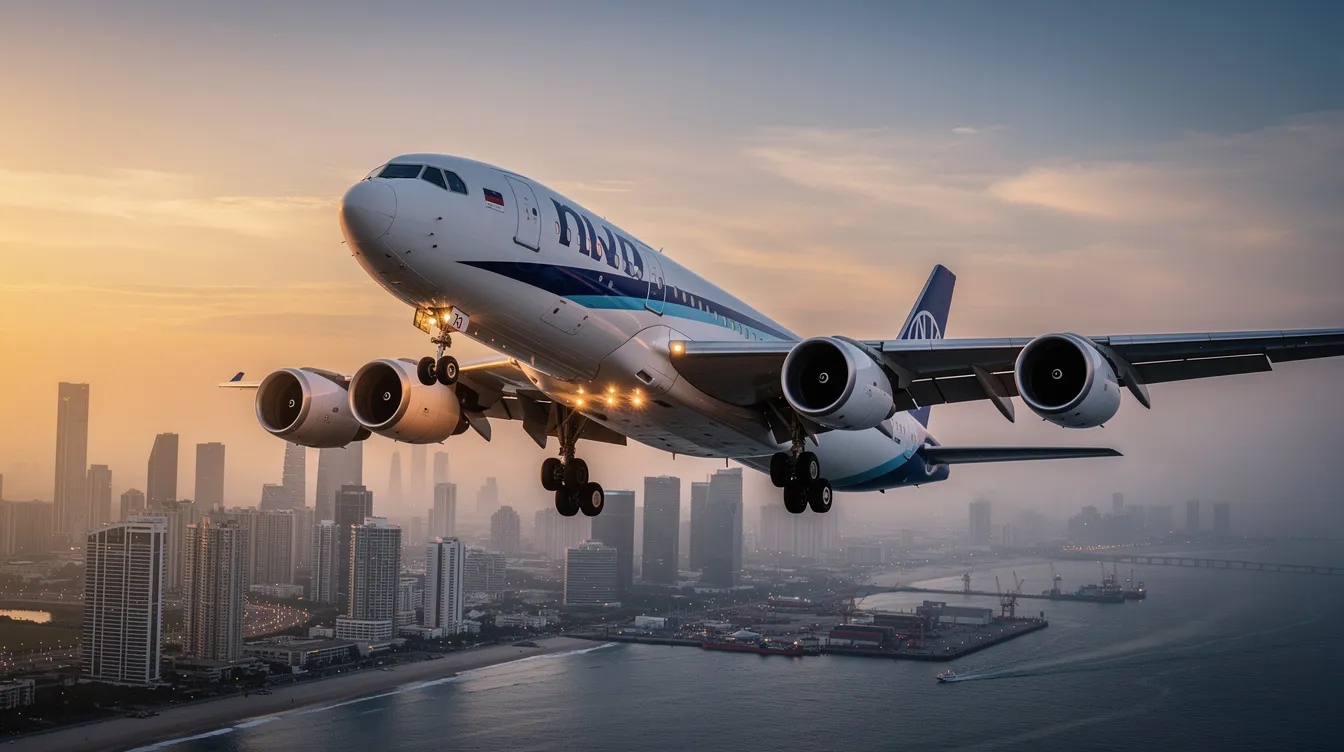
The forces that ended the 747's reign as a passenger flagship were economic and environmental, not romantic. More efficienttwin-enginee aircraft-the Boeing 777, Boeing 787, and Airbus A350-gradually proved they could fly similar ranges with substantially lower fuel burn per seat, simpler maintenance (two engines instead of four), and reduced emissions. ETOPS (Extended Twin-Engine Operations) regulations expanded to allow twin-jets on routes that once required four-engine redundancy, removing the 747's last regulatory advantage on overwater legs.
Boeing ended 747 production in 2022 due to low demand, with the final aircraft rolling off the line at the everett factory in a ceremony that marked the end of an era. The last Boeing 747 was delivered on January 31, 2023. But the type lives on. Hundreds of 747s continue flying as freighters, government platforms, and specialty aircraft, their cargo-carrying capability ensuring relevance long after the passenger cabins fell silent. The shift to twin-engine long-haul wasn't a failure of the 747; it was the natural consequence of an industry optimizing for efficiency-the same drive that Juan Trippe championed when he first demanded the jumbo jet.
From Jumbo to Private Jet: What the 747 Taught Luxury Aviation
Private Jet Advantages
Flying first class on a Boeing 747 in its prime meant arriving two hours early, navigating airport security with hundreds of other travelers, boarding through the same jetway as economy passengers, and sharing an aircraft with 300 to 500 strangers-even if your particular cabin offered champagne and a flat bed. Private aviation strips away every one of those friction points. Check-in takes minutes, not hours. Boarding is private. The cabin is yours alone.
Legacy of the 747 in Private Aviation
The expectations set by upper-deck first-class suites, dedicated service, lounge access, exclusivity-nudged high-net-worth travelers toward seeking full control of the cabin experience. Today, an executive who once flew the Boeing 747 first-class cabin between New York and London can use a BlackJet 25-hour Jet Card for flexible, point-to-point access: departing when she chooses, using Teterboro or Farnborough instead of JFK and Heathrow, arriving closer to her destination with zero layover risk. The flight becomes an extension of her schedule rather than a constraint on it.
Private jets can match or exceed 747 first-class levels of passenger comfort-custom catering, lie-flat sleeping, onboard connectivity-with a fraction of the time commitment and far greater control, especially when you look at the top-tier private jets worldwide that set today's luxury benchmark. The 747 taught the world what premium could mean. Private aviation made it personal.
Jet Cards vs Commercial Premium Cabins: A Strategic Upgrade
A Jet Card is a prepaid block of flight hours-BlackJet offers programs like the 25-hour and 50-hour Jet Card-that provides guaranteed access to private jets across multiple cabin categories at fixed hourly rates. It differs fundamentally from buying individual first-class tickets, accumulating airline loyalty points, or arranging ad hoc charter flights. With a Jet Card, availability is assured, pricing is predictable, and every flight is private.
Compare the experience of booking a business or first-class ticket on a Boeing 747: fixed departure times, fixed routes, airport crowds, connection risks, and the possibility that your preferred seat or suite isn't available. A Jet Card member books through a mobile platform with real-time visibility into aircraft categories and availability, can change itineraries with minimal notice, and accesses secondary airports closer to city centers-eliminating layovers and reducing total door-to-door travel time by hours.
The cost positioning is straightforward. Jet Card hourly rates don't compete with economy class fares. They offer a smarter alternative for frequent premium travelers who currently spend significant sums on long-haul first-class tickets or corporate travel budgets. When you factor in time saved, productivity preserved, and the consistency of a curated flying experience, Jet Card pricing structures make the value equation shift decisively. Understanding how Jet Cards work is the first step toward recognizing the strategic advantage they represent.
Safety and Certification: Lessons from the 747 Applied to Private Jets
Decades of wide-body operations, including the rigorous certification frameworks built around Boeing 747 flight operations, shaped the global safety infrastructure that governs all of aviation today. Crew communication protocols, maintenance cycle standards, system redundancy requirements, and emergency procedure mandates all evolved through the Boeing 747 era and now form the foundation of modern business aviation regulation.
BlackJet partners exclusively with operators that meet rigorous third-party safety audit standards like Wyvern Wingman certification and ARGUS ratings that evaluate everything from pilot training records to maintenance documentation to operational history, similar to the benchmarks used when reviewing top private jet companies worldwide. These audits parallel or exceed the oversight that passengers experienced on the 747, applied with the focused attention that smaller fleet operations allow.
Moving from a large airliner to a private jet does not mean compromising on safety, whether you're flying with major fractional providers and their NetJets-style jet card programs or through curated Jet Card partnerships. In many cases, it means more tailored oversight: dedicated crews who know the aircraft intimately, rapid decision-making authority during weather or operational disruptions, and maintenance schedules that often exceed regulatory minimums-across both independent operators and branded programs like Flexjet jet card offerings. The safety protocols embedded in private jet card programs represent the aviation industry's accumulated wisdom-hard-won through decades of flying the world's most demanding routes, and they extend to larger-cabin solutions when you need a private jet configured for around 20 passengers.
Sustainability: From Four Engines to Carbon-Neutral Private Flights
Environmental scrutiny played a material role in the Boeing 747's decline as a passenger aircraft. Four engines burn more fuel per seat than two. Emissions regulations from ICAO and regional authorities increasingly penalized less efficient operations, and airlines responded by retiring their four-engine fleets in favor of cleaner, more economical twin-jets.
Modern private jets use efficient twin-engine designs, advanced aerodynamics, and optimized routing to reduce fuel burn per passenger-especially when flown at consistently high load factors, as Jet Card travelers tend to do, and there are even entry-level private jet options that balance cost and efficiency for shorter missions. The gap between a fuel-hungry jumbo carrying half-empty cabins and a right-sized private jet carrying a full party is often narrower than headlines suggest, and in some configurations, the per-passenger efficiency can be comparable.
BlackJet ensures every journey is ccarbon-neutral-atno extra cost to members, while also helping travelers compare more economical private aircraft options for missions where a smaller jet makes sense. Each flight is offset through verified carbon credits, and where applicable, BlackJet supports sustainable aviation fuel initiatives that contribute to the broader industry goal of decarbonizing air travel. Sustainability is not a marketing afterthought; it is a measurable pillar of how private aviation earns its place in a world increasingly focused on environmental accountability.
Technology and Booking Experience: Beyond the Legacy Airline Model
In the era when the Boeing 747 defined long-haul air travel, booking a flight meant paper tickets, printed timetables, travel agent phone calls, and fixed schedules that bent for no one. Delays were communicated via terminal announcement boards. Itinerary changes required rebooking through airline counters. The passenger had remarkably little control.
Today's private aviation platforms represent a generational leap. BlackJet's digital tools allow members to view aircraft categories, cabin layouts, and live availability in real time, mirroring the broader BlackJet private jet card and charter platform capabilities that would have seemed like science fiction in the 1970s jumbo era. Itinerary changes, catering requests, and special accommodations are handled through 24/7 real-time support. The BlackJet experience is designed to give travelers the control and transparency that legacy airline models never could, transforming booking from a bureaucratic process into a seamless interaction-even for those who prefer buying just a seat on a private jet via shared and semi-private options.
How the Boeing 747 Legacy Shapes BlackJet's Service Philosophy
The Boeing 747 embodied qualities that defined an era of air travel: global reach through long-range capability, reliability through redundant systems and engineering rigor, clear cabin class differentiation that gave every traveler a sense of place, and-above all-a sense of occasion. Flying the Queen of the Skies meant something. It wasn't just transit; it was an event.
BlackJet translates those qualities into private aviation. Consistent access across multiple aircraft categories mirrors the 747's global network reach. Curated onboard experiences echo the attention to passenger comfort that the best 747 operators provided. Dependable operations, backed by audited safety standards, carry forward the reliability ethos that made the jumbo jet a trusted workhorse for half a century.
Consider a family that spent years traveling in 747 upper-deck business class on international holidays. Their children grew up associating flying with space, service, and excitement. Now, that same family uses a BlackJet Jet Card to create seamless, end-to-end private journeys-departing on their schedule, arriving refreshed, with no layovers and no crowds. BlackJet doesn't recreate the jumbo. It takes what the best 747 journeys attempted to deliver and elevates it to a more personal, more flexible standard for a new generation of travelers.
FAQs: Boeing 747 and Modern Private Jet Travel
When did the Boeing 747 first fly, and when was it introduced commercially?
The first 747 flew on February 9, 1969, from Paine Field in Everett, Washington. Commercial passenger service began on January 22, 1970, with Pan Am operating the New York–London route.
How many Boeing 747s were built in total, and across which major variants?
Boeing produced 1,574 Boeing 747 aircraft in total between 1968 and January 2023. Major variants include the 747-100 (approximately 168 built), 747-200 (approximately 393), 747SP (45), 747-300 (81), 747-400 (694), and 747-8 (155).
What does "Queen of the Skies" mean, and how did the 747 earn that nickname?
The 747 is nicknamed Queen of the Skies in recognition of its size, its dominance on the world's most prestigious long-haul routes, and its role in making intercontinental flying accessible to millions. It was the first wide-body airplane and set standards for cabin luxury, global connectivity, and airline prestige.
Which roles does the Boeing 747 still serve today?
Most active 747s now serve as freighters or specialty platforms. Cargo operators like Atlas Air and UPS rely on 747 freighters, while government variants continue serving as presidential aircraft (VC-25) and military command platforms (E-4B). A small number remain in charter flights and VIP transport.
Can private jets match a 747's range for intercontinental flights?
Modern large-cabin private jets can cover 6,000 to 7,500 nautical miles nonstop, which handles most intercontinental routes. For ultra-long sectors, a brief fuel stop adds minimal time compared to the hours saved by avoiding commercial check-in, security, and connections.
How do cabin sizes and service levels compare between 747 first class and private jet cabins?
A 747 first class cabin offered generous space and premium service, but within a shared aircraft carrying hundreds of other passengers. A private jet provides an entire cabin for one party-full privacy, custom catering, flexible departure times, and a space that is exclusively yours from boarding to arrival.
What is a Jet Card, and how does it differ from buying airline tickets or owning a jet?
A Jet Card is a prepaid block of flight hours that guarantees access to private jets at fixed rates. Unlike airline tickets, it offers schedule flexibility, privacy, and point-to-point routing. Unlike jet ownership, it eliminates crew management, maintenance responsibilities, and hangar costs. Learn more about the best Jet Card programs to find the right fit.
What safety standards apply to private jets compared to commercial wide-body operations?
Private jet operators serving Jet Card programs typically undergo third-party safety audits (ARGUS, Wyvern), adhere to FAA Part 135 regulations, and maintain crews with training standards comparable to or exceeding commercial airline requirements. Decades of lessons from wide-body operations, including the 747 program, inform today's private aviation safety frameworks.
How does sustainability compare between a 747 and modern private jets?
The 747's four engines and large airframe made it fuel-intensive, especially at lower load factors. Modern private jets use efficient twin-engine designs and advanced aerodynamics. BlackJet further ensures carbon neutrality through verified offsets on every flight, aligning private aviation with contemporary environmental standards.
From Iconic Jumbo to Your Next Flight: Exploring Private Jet Access with BlackJet
The Boeing 747 jetliner traveled from a 1960s Air Force-influenced concept through half a century of continuous production to become the most culturally significant airplane in aviation history. It carried presidents and tourists, telescopes and freight, setting standards for comfort, safety, and global reach that shaped what every air traveler expects today. Its production ended in 2022, and the final airframe was delivered in early 2023, but its influence endures in every premium cabin, every safety protocol, and every traveler who steps aboard a private jet expecting excellence.
For those who once chose the Boeing 747 for its space, its status, and its sense of occasion, modern private aviation offers a more strategic, time-efficient, and personalized evolution. BlackJet's Jet Card programs deliver the prestige and comfort the Queen of the Skies promised-without the constraints of fixed schedules, shared cabins, or crowded terminals, and for ultra-frequent travelers, there are even 100 hour Jet Card cost models that can further optimize your annual travel budget.
Explore BlackJet Jet Card options and speak with an aviation advisor about transitioning your key routes from commercial premium cabins to private jet access, using a clear private jet price list and access comparison to align aircraft categories and budgets with your travel profile. Discover how BlackJet can reshape your travel-beyond the era of the Queen of the Skies, starting with a comparison of the best Jet Card programs for frequent flyers.


 Sign up with google
 Sign up with Apple