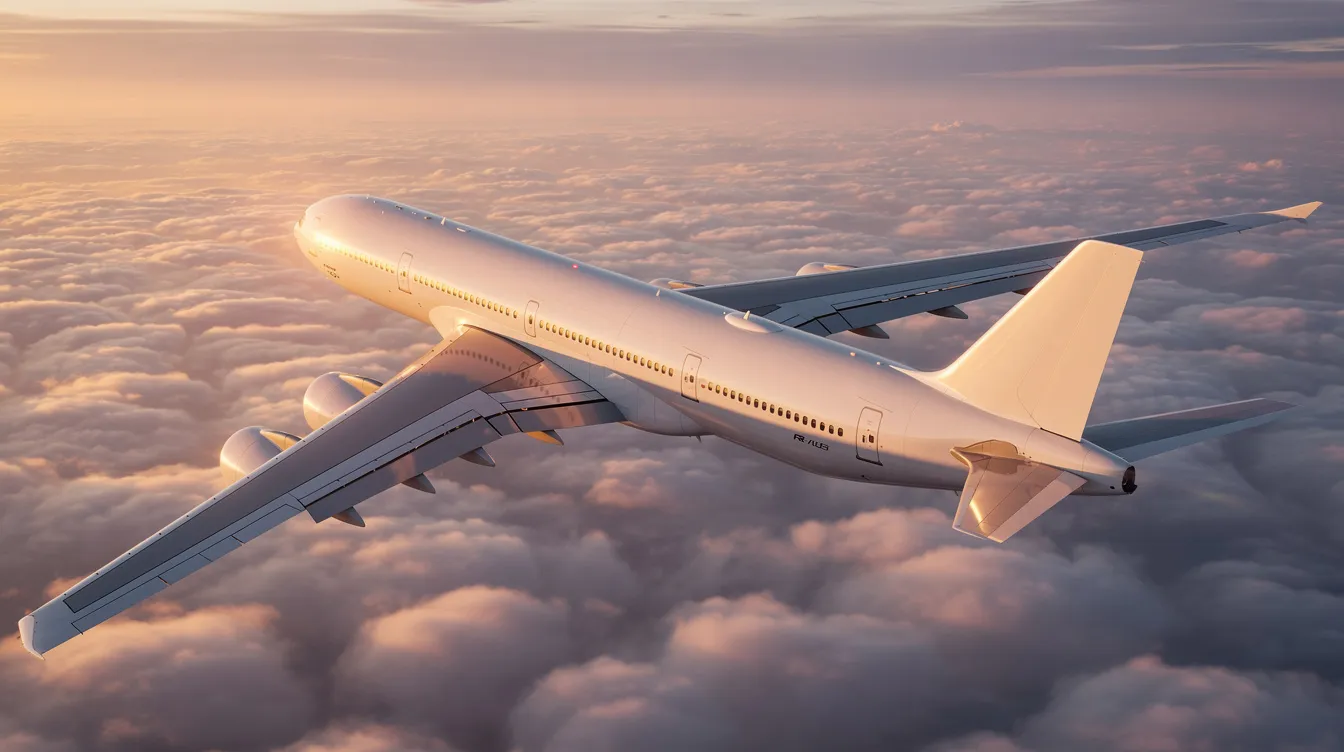
The Boeing 777X is Boeing’s next-generation long-range wide-body twin-engine jet, built with composite wings and folding wingtips, GE9X engines, larger windows, and a more comfortable cabin to improve fuel efficiency, cut emissions, and reset expectations for intercontinental commercial service. For discerning frequent business travelers and high-net-worth leisure flyers who routinely weigh flagship airline cabins against private jet access, this airplane matters not as an abstract engineering exercise, but as a strategic node in the way premium travel will work for the next two decades.
What follows examines the 777X’s design and technology, program development, variants and performance, cabin comfort, environmental efficiency, safety certification, and the Boeing Business Jet 777X VIP version, while also looking at how airlines and private aviation can combine it with private jet travel for a smoother door-to-door premium journey informed by insights from top private jet companies.
Executive snapshot: Why the Boeing 777X matters for high-end and private aviation
The 777X family comprises two variants - the ultra-long-range 777-8 and the high-capacity stretched variant, the 777-9 - each powered by General Electric GE9X engines and built around a composite wing with folding wingtips. The aircraft completed its first flight on 25 January 2020 from the Boeing Everett Factory, marking the beginning of an extensive certification campaign. Its cabin draws directly from the Boeing 787, featuring larger windows, higher ceilings, more humidity, and better insulation that collectively reduce fatigue on flights exceeding twelve hours.
Consider a near-future scenario: a BlackJet member flying Emirates from Dubai to Sydney aboard a 777-9 in business class, then stepping off to connect via a light jet chosen from the best small private aircraft options into a regional Australian airfield for a private retreat. The 777X serves as the long-haul backbone; the private leg completes the journey without compromise.
Why does this plane deserve attention from travelers who already have access to private aviation?
It achieves a 20% reduction in fuel use and emissions compared to older aircraft like the 777-300ER, meaning airlines can reinvest savings into richer premium cabins.
The Boeing 777X maintains a smaller noise footprint during operations, producing quieter departures and arrivals.
It reduces operating costs by about 10% compared to competing aircraft, strengthening airline route economics on the trunk services that connect major hubs.
Improved cabin altitude and humidity levels enhance passenger comfort, arriving travelers in better physical condition - ready for a seamless transfer to a private jet.
The tone here is strategic, not sentimental: the 777X reshapes the commercial portion of a journey that private aviation completes.
The 777X program: From Dubai Airshow launch to first flight
Boeing's board approved the 777X program in 2013, and Boeing officially launched the aircraft at the 2013 Dubai Airshow with approximately 259 orders and commitments valued at roughly $95 billion in dollar value at list prices. The launch customers read like a roster of the world's premier long-haul carriers: Emirates finalized an order for 150 Boeing 777X aircraft, Etihad Airways committed to 25, and Lufthansa ordered 34 Boeing 777-9X aircraft. Shortly after, Qatar Airways finalized a commitment for 50 Boeing 777-9X aircraft in 2014, often with additional purchase rights.
The rationale was clear: replace aging 777-300ERs and 747-400s with a more efficient twin-engine platform designed to compete directly with the Airbus A350 family. Boeing began construction of a dedicated composites facility and composite wing center in Everett, Washington, while production support also involved Boeing facilities in Long Beach and expanded wing-structure work near St. Louis.
The first flight on 25 January 2020 lasted approximately three to four hours over Washington State, validating the new composite wing and GE9X engine integration. Since then, certification delays - driven by heightened regulatory scrutiny, novel technologies like the folding wingtip system, and structural changes including engine-mount thrust link issues - have pushed the expected entry into commercial service toward 2027. For premium carriers whose passengers overlap with BlackJet's private aviation audience, these delays affect long-haul network planning but do not diminish the aircraft's significance.
777X family overview: Variants, roles, and performance
The 777X family includes three primary configurations, each designed for a distinct long-haul mission:
Variant | Typical Seating | Range | Primary Role |
|---|
777-9 | 400–425 passengers (two-class) or 375–450 depending on configuration | 7,600 nautical miles | High-capacity trunk routes |
777-8 | ~350 (three-class) | Over 9,300 nautical miles (up to 9,500 nm ultra-long range) | Ultra-long-haul specialist |
777-8 Freighter | Cargo variant | Long range with high payload | Global freight operations |
The Boeing 777-9 has a length of 250 ft 11 in, a wingspan of 234 ft, and a maximum takeoff weight of approximately 759,000 lb. The 777-9 can accommodate 400-425 passengers in a two-class configuration, making it ideal for dense hubs like Dubai–London or Frankfurt–Singapore. The 777-8 variant offers a range of over 9,300 nautical miles - with some configurations reaching 9,500 nautical miles - positioning it for routes like Dubai–Los Angeles or Hong Kong–New York that were previously stopover-dependent.
The 777-8 Freighter leverages the same GE9X engines and composite wing to move high-value cargo on global lanes, influencing premium belly-cargo capacity on routes BlackJet clients often connect to or from. The flexibility of this family allows airlines to build networks that naturally complement private jet usage: a traveler might pair a 777X intercontinental sector with a BlackJet large-cabin jet sector into a secondary city or resort airport.
Advanced aerodynamics: Composite wings and folding wingtips
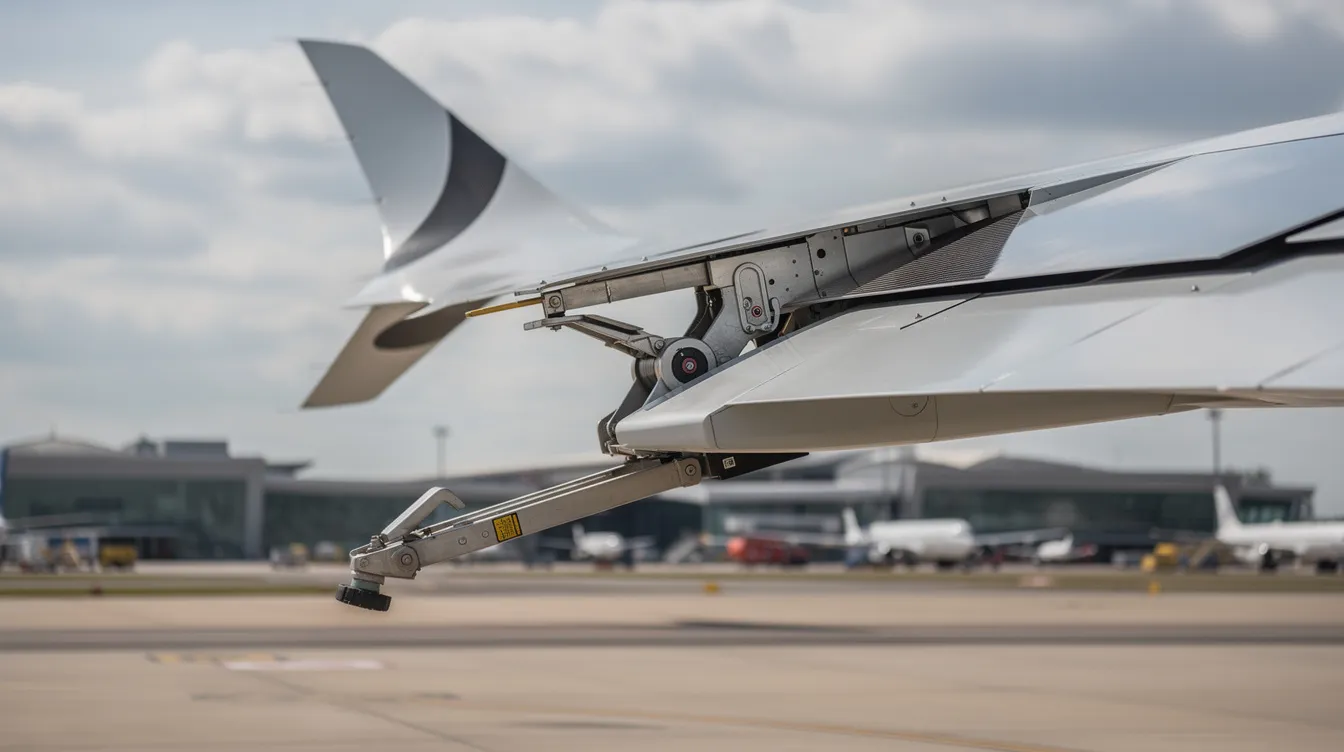
The most visually distinctive feature of the Boeing 777X is its composite wing with folding wingtips - a first for any commercial airplane. The exterior design of the 777X allows for better long-distance performance through high-aspect-ratio composite wings that reduce induced drag across every phase of flight.
The engineering logic is elegant: the Boeing 777X features a wingspan of 234 feet when fully extended (approximately 71.8 meters), giving it the aerodynamics of a much larger aircraft. On the ground, the folding wingtips retract to reduce span to about 64.8 meters, meaning the Boeing 777X is designed to fit standard airport gates without requiring modifications - preserving Code E compatibility at every major hub.
Additional refinements include:
Laminar flow nacelles that smooth airflow around the GE9X engines
Raked wingtips derived from the 787 program
Optimized flap systems and control surfaces
Together, these features achieve up to 20% lower fuel burn compared with the 777-300ER. The Boeing 777X employs high-aspect-ratio composite wings for better aerodynamics, a philosophy that parallels the efficient wing designs on long-range private jets like the Global 7500 and Gulfstream G700 - underscoring that the same aerodynamic principles drive performance gains across both commercial and private aviation.
GE9X engines: Power, efficiency, and lower emissions
The GE9X, developed by GE Aviation, is the exclusive engine for the 777X and the largest commercial turbofan ever built, with a fan diameter of approximately 134 inches (340 cm). The aircraft uses General Electric GE9X engines for improved thrust, delivering up to 105,000 lbf of thrust per engine.
Key technical features, simplified:
Composite fan blades and fan case reduce weight significantly
Ceramic matrix composites in the hot section withstand higher temperatures with less cooling air
A high overall pressure ratio improves specific fuel consumption by roughly 10% versus the predecessor GE90-115B
NOx emissions well below current regulatory limits
For premium travelers, the power and efficiency gains translate directly into comfort. Quieter departures and arrivals mean less cabin noise on long-haul missions - an environment closer to the calm expected on a BlackJet charter. The engine's fuel burn advantage feeds airline decarbonization strategies, aligning with programs like BlackJet's carbon-neutral commitment that offsets emissions across every private flight.
Reliability and maintenance interval targets for the GE9X are designed for high-utilization, long-haul operations - the same operational discipline that private jet fleets rely on to maintain tight schedules for corporate and high-net-worth clients.
Cabin and passenger experience: Larger windows, wider cabin, and 787-style comfort
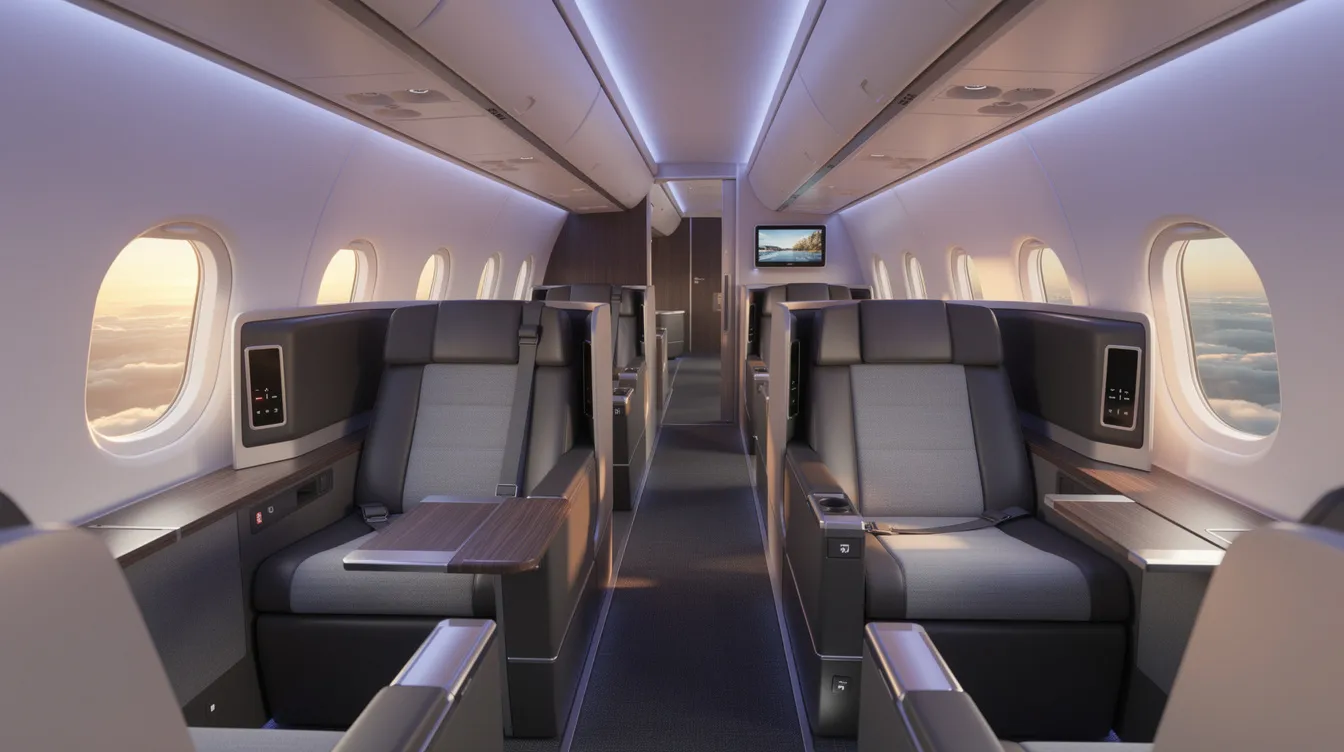
The Boeing 777X incorporates advanced architecture and technology from the Boeing 787, and nowhere is this more evident than in the cabin. The aircraft features thinner interior cabin walls that create greater cabin width without changing the fuselage diameter, resulting in an internal cabin width of approximately 19 feet 7 inches (5.97 m). This enables airlines to configure 10-abreast economy with wide seats and meaningful shoulder room, or - more relevant to BlackJet's clientele - invest that space into expansive first and business class suites.
Cabin design details that matter on 12- to 16-hour flights:
The cabin features larger windows placed higher on the fuselage, allowing passengers to see the horizon from virtually any seat
The Boeing 777X offers improved cabin altitude and humidity to enhance passenger comfort, reducing dehydration and jet lag
Advanced LED lighting systems support circadian rhythm management, easing transitions across multiple time zones
Improved air filtration systems maintain cleaner cabin air throughout the journey
Better insulation and higher ceilings create a sense of spaciousness that reduces the psychological fatigue of long confinement
These upgrades benefit BlackJet's target audience even when they fly commercial first or business class on a 777X. A traveler arriving in London after an overnight 777X sector from the Gulf arrives in measurably better condition - ready for a seamless transfer to a private jet, whether via full charter or simply buying a seat on a private jet, for the final leg to a countryside meeting or coastal retreat.
Flight deck and systems: Technology upgrade for long-haul operations
The 777X flight deck preserves cockpit commonality with the existing 777 fleet - critical for airlines managing pilot training costs - while incorporating advanced displays and systems architecture closely related to the 787.
Key upgrades include:
Large-format LCD displays are replacing legacy CRT screens
Head-up display capability for enhanced situational awareness during approach
Updated fly-by-wire control laws supporting the new wing geometry and folding wingtip system
Advanced flight management systems optimized for ultra-long-haul routing and fuel efficiency
Navigation tools aid extended-range ETOPS planning on 14- to 18-hour flights, with improved weather and turbulence detection that helps crew avoid discomfort-inducing airspace. These systems reduce crew workload and enhance decision-making - paralleling BlackJet's emphasis on rigorous safety protocols and technology-supported dispatch for private missions.
Crew rest and ultra-long-haul capability
On flights beyond approximately 14 hours, aviation regulations require augmented crew - additional pilots and cabin attendants who rotate through dedicated rest periods. The quality of that rest directly affects operational safety and service quality.
The 777X addresses this with overhead crew rest facilities: enclosed rest compartments located above the main deck, accessed by discrete stairways, and fitted with bunks, lighting controls, and independent ventilation. It includes a crew rest area on the upper deck for privacy, separating resting crew from the passenger cabin entirely.
Using overhead space for crew rest preserves main deck floor space for revenue seats or enhanced premium cabins - central to the airplane's economic case. On an anticipated nonstop Dubai–Los Angeles service (approximately 16 hours), pilots would rotate through three rest cycles while cabin crew maintain fresh service throughout. Better-rested crews contribute to smoother operations, which corporate executives and high-net-worth travelers value just as they value BlackJet's rested, well-briefed private crews.
Airline customers and routes: Who is betting on the 777X?
The Boeing 777X has attracted commitments from virtually every major long-haul airline. As reported by the Wall Street Journal and aviation press, the customer base includes:
Airline | Aircraft / Variant | Approximate Order |
|---|
Emirates | 777-9 | 150+ (originally introduced at launch; expanded since) |
Qatar Airways | 777-9 | 50 |
Lufthansa | 777-9 | 34 |
Cathay Pacific | 777-9 | 21 (for 2021–2024 delivery window, now delayed) |
Singapore Airlines | 777-9 | 31 |
Etihad Airways | 777-9 | 25 |
Air India | 777-9 | Recent commitment |
Ethiopian Airlines | 777-8 Freighter | Freight operations |
China Airlines | 777-8F | Cargo fleet renewal |
As covered by the Seattle Times, the Boeing 777X has over 259 orders as of the 2013 launch, a figure that has since grown past 650 across passenger and freighter variants. Airlines plan to deploy the plane as a flagship on trunk routes connecting Dubai, Doha, Frankfurt, Singapore, and Hong Kong with North America, Europe, and Australasia - all key regions for BlackJet travelers.
Many BlackJet members may first encounter the 777X in premium cabins on these carriers, then continue on private legs arranged via a BlackJet Jet Card or other premium private jet card programs, creating a seamless flagship-widebody-plus-private-jet travel pattern.
Sustainability, efficiency, and how the 777X compares with private jets
The Boeing 777X achieves a 20% reduction in fuel use and emissions compared to older aircraft it is designed to replace. Combined with the GE9X's lower NOx output and compatibility with sustainable aviation fuel, the aircraft anchors airline decarbonization strategies on high-volume routes.
On a per-seat-mile basis, a fully loaded 777X is substantially more efficient than any small or midsize business jet - an important consideration for travelers who care about environmental impact. However, private jets serve fundamentally different missions: point-to-point flexibility, time savings, and access to airports that widebodies cannot reach.
BlackJet's approach bridges both worlds, often using structured jet card membership pricing models to give travelers predictable costs:
All flights are carbon-neutral through verified offsets, with growing access to SAF where feasible
Aircraft selection among partner operators balances performance, range, and efficiency for each mission profile
Members can choose green private jet options that minimize environmental impact on shorter segments
A concrete example: a client flying New York–Frankfurt in a 777X business class cabin, then transferring to a BlackJet midsize jet selected with an understanding of private jet size categories for a 90-minute hop to a smaller European city. Both legs are supported by carbon-offset or lower-emission strategies, delivering door-to-door efficiency with measurable environmental accountability.
Boeing BBJ 777X: Ultra-long-range private palaces
Boeing announced the Boeing Business Jet 777X in December 2018, adapting both the 777-8 and 777-9 for VIP and head-of-state missions. These are not charter aircraft in any conventional sense - they are flying estates.
Capabilities are extraordinary:
The BBJ 777-8 offers a potential range of approximately 11,645 nautical miles with VIP interiors, enabling nonstop flights like New York–Sydney
The BBJ 777-9 delivers roughly 11,000 nautical miles of range with a cabin area of approximately 342.7 square meters
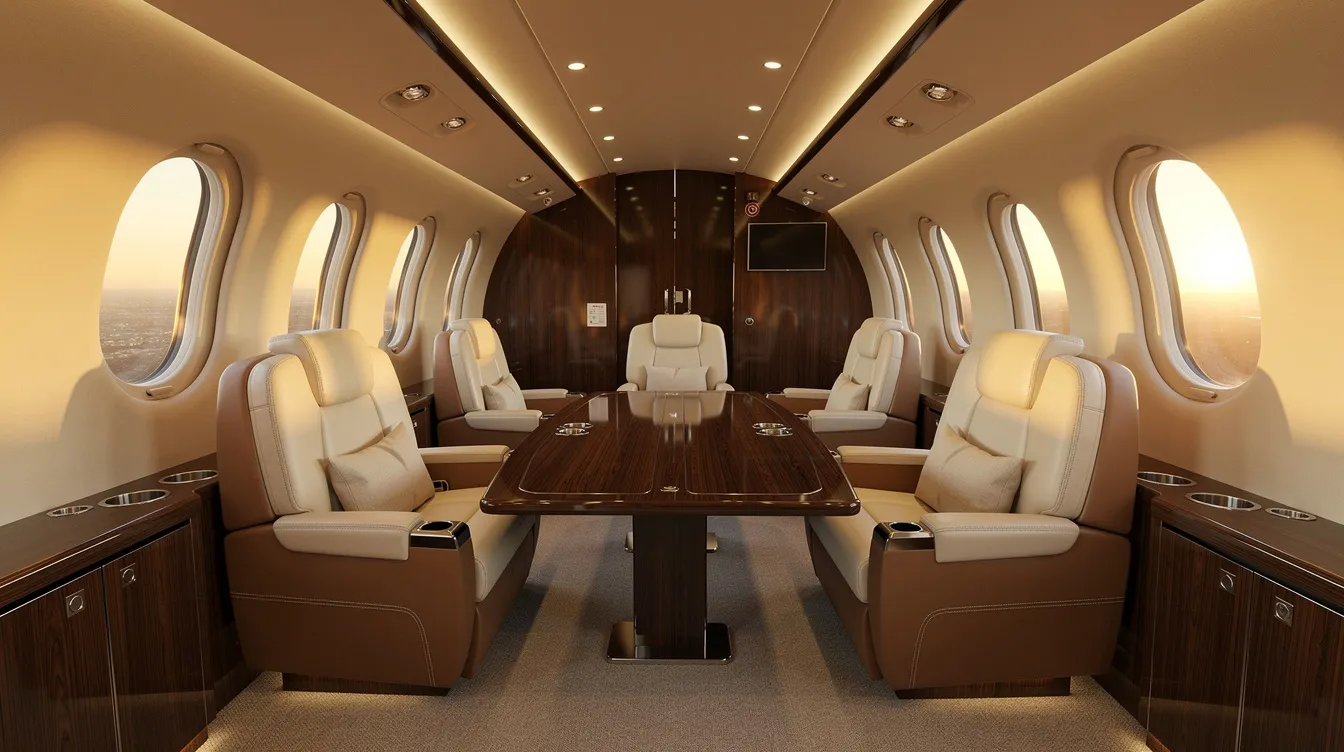
Customization includes multi-zone lounges, master suites, private offices, wellness areas, and secure communications
While BBJ 777Xs are typically owned by sovereign entities or ultra-high-net-worth individuals, Jet Card members can access comparable comfort and longer-range capability through large-cabin private jets - aircraft like the Bombardier Global 7500 or Gulfstream G700 that offer intercontinental reach in a bespoke setting. BlackJet's model provides this access without ownership: prepaid hours in 25-hour or 50-hour blocks informed by a clear understanding of 50-hour Jet Card cost and value, guaranteed availability, and global reach that complements flagship commercial options.
Travel strategy: Combining 777X flights with BlackJet private access
Sophisticated travelers increasingly blend flagship commercial flights on aircraft like the 777X with private jet segments booked through Jet Cards for maximum efficiency, leveraging the best jet cards for frequent flyers to lock in service quality and availability. This is not about choosing one over the other - it is about deploying each where it delivers the greatest advantage.
Scenario 1: A New York executive flying on a future Lufthansa 777-9 from Newark to Frankfurt in business class, then using BlackJet to connect via light jet to Zurich for a board meeting - no backtracking, no layover, no commercial connection stress, and economics that can justify even a 100-hour Jet Card investment for heavy users.
Scenario 2: A family flying Cathay Pacific 777X business class overnight from Hong Kong to London Heathrow, then transferring to a BlackJet charter on one of the best private jets for 15 passengers into a regional UK airport 20 minutes from their countryside estate.
Compared with commercial-only travel, this combined approach eliminates the inefficiency of positioning flights and longer commodities like ground transfers through congested airports. Compared with full aircraft ownership, it offers cost predictability and flexibility through BlackJet's Jet Card model, which follows transparent jet card pricing structures - multi-cabin access, 24/7 digital booking, and no capital commitment.
The 777X makes the commercial leg genuinely comfortable. BlackJet makes the private leg effortless. Together, they represent the most intelligent way to move across the globe.
Safety, certification, and what discerning travelers should watch
The 777X is undergoing one of the most rigorous certification processes in commercial aviation history, involving both the FAA and EASA. The extended timeline reflects stricter regulatory scrutiny following the 737 MAX incidents - a development that, while inconvenient for airline schedules, is unambiguously positive from a safety perspective.
Boeing's full-scale fatigue test for the 777-9 has already exceeded one full design lifetime, and the 777 family historically ranks among the safest and most reliable long-haul aircraft types in service. Airlines, regulators, and corporate flight departments are watching early operational data closely.
BlackJet applies a parallel philosophy: partnering only with audited, highly rated operators who meet industry-leading safety standards, including ARG/US and Wyvern certifications, and using data-driven oversight to monitor every mission.
What to watch:
FAA type certification milestones (expected 2027)
First airline entry into commercial service - likely Emirates or Lufthansa
Early long-haul routes where you might first experience the 777X in practice
Cabin product launches in first and business class from competition-driven carriers
Frequently asked questions about the Boeing 777X and private travel
What is the difference between the 777-8 and 777-9? The 777-9 is the larger, higher-capacity variant with a seating capacity of 375 to 450 passengers and a range of 7,600 nautical miles, optimized for high-demand trunk routes. The 777-8 carries fewer passengers (around 350 in three classes) but offers a longer range of over 9,300 nautical miles, making it the ultra-long-haul specialist for routes that previously required stopovers.
When will the 777X enter commercial service? Boeing currently targets certification and first deliveries in 2027, following an extended flight test and regulatory review process. Early operators are expected to be Emirates and Lufthansa.
How does the 777X compare to the Airbus A350 for passengers? Both aircraft represent the latest generation of widebody efficiency and comfort. The 777X offers a wider fuselage cross-section (greater cabin width at approximately 19 ft 7 in) and the power of the GE9X engines, while the A350 uses a slightly different aerodynamic approach. For premium travelers, the competition between the two drives better cabin products across both platforms.
Can I charter a 777X privately? Standard 777X passenger aircraft are not available for charter. However, the BBJ 777X VIP variant exists for sovereign and corporate owners. For travelers seeking comparable space and range without ownership, BlackJet offers access to large-cabin and ultra-long-range private jets and even private jets for groups of up to 50 passengers through flexible Jet Card programs.
Is the 777X more environmentally friendly than older long-haul aircraft? Yes. The Boeing 777X achieves approximately 20% lower fuel burn and emissions versus the aircraft it replaces. Combined with quieter engine operations and SAF compatibility, it represents a meaningful step in airline decarbonization - complementing programs like BlackJet's carbon-neutral flight commitment.
How does BlackJet complement 777X travel? BlackJet's Jet Card programs provide the private aviation segments that complete a journey started on a 777X. After landing at a major hub aboard a flagship carrier, members can seamlessly connect to a private jet for the final leg - whether to a resort, a secondary city, or a meeting location inaccessible by commercial service. The result is an end-to-end travel experience that combines the efficiency of modern widebody flying with the privacy and control of private aviation.
The Boeing 777X represents more than an aircraft upgrade. It reshapes the long-haul backbone that premium travelers rely on - and in doing so, it creates new opportunities to integrate commercial excellence with private flexibility. For those who value time, comfort, and control over every segment of a journey, the smartest strategy pairs flagship widebodies with agile private jet access.
Explore how BlackJet's Jet Card programs elevate every stage of your travel.


 Sign up with google
 Sign up with Apple