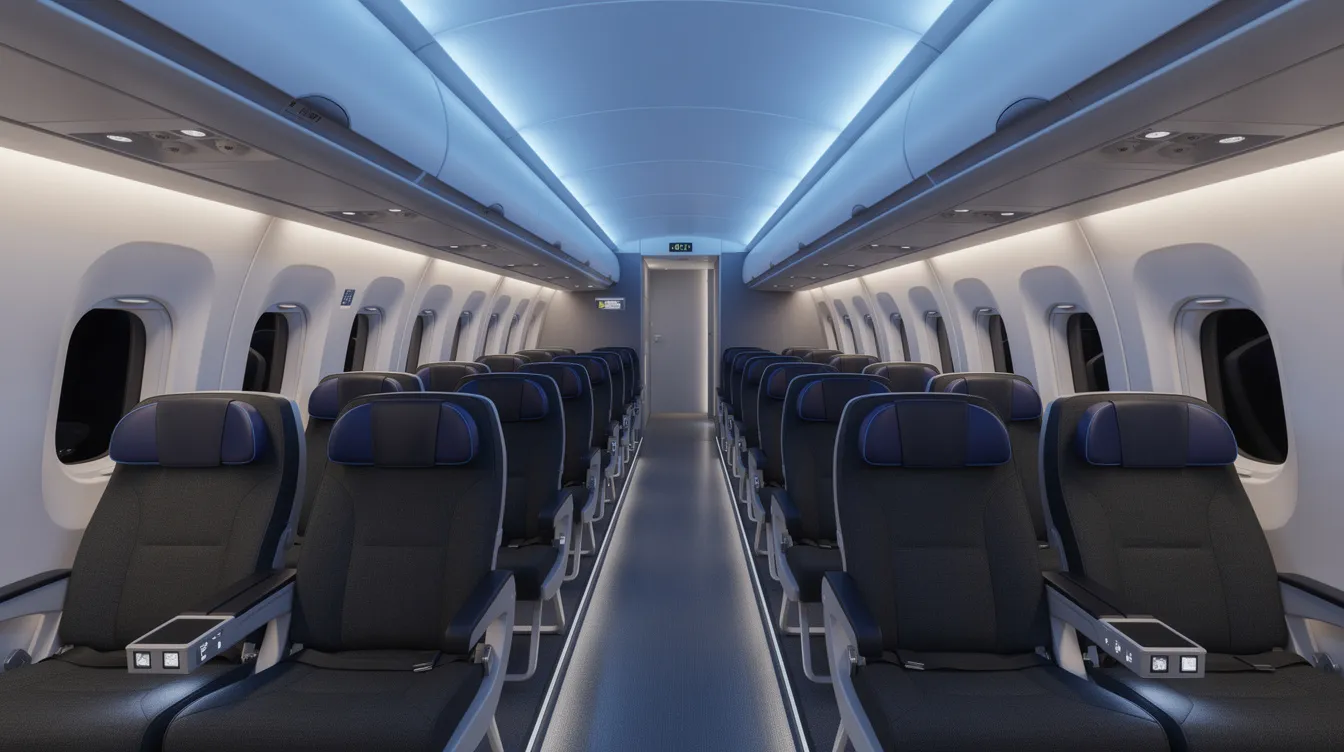
The Boeing 777X represents new breakthroughs in widebody aircraft design, promising to carry more passengers farther and more comfortably than any twin-engine plane before it. But raw seat count is only part of the story. For travelers who weigh every hour spent in the air against productivity, privacy, and well-being, understanding exactly how many people will share that cabin — and what the experience will feel like — shapes a very different calculation.
Overview: Boeing 777X Seating Capacity At A Glance
The seating capacity of the Boeing 777X family ranges from 350 to 450 passengers depending on configuration, and as the largest passenger jet in production today, it remains one of the most flexible widebody airplanes flying. In its standard two-class layout, the Boeing 777-9 has a typical two-class capacity of 426 passengers, while the shorter 777-8 targets roughly 350 to 425 passengers in multi-class arrangements. The 777-9 is expected to be certified for around 475 passengers under high-density scenarios — still well below the 777-300ER's theoretical single-class maximum of 550, reflecting tighter modern evacuation and safety standards from the FAA and other regulators.
These numbers shift meaningfully based on how each airline configures its cabin. Airlines can configure the 777X cabin based on route economics and passenger demographics: a carrier focused on ultra-long-haul premium routes may install spacious business suites and first-class cabins that pull total capacity below 400, while a high-density operator could push toward 475. With 619 orders from 12 customers as of late 2025 and an order total that continues to grow, the 777X is positioned as one of the most significant entries in the aviation industry this decade.
For context, the BBJ 777X - Boeing's bizliner conversion — trades all of that seat count for as few as 25 passengers across private suites, lounges, and bedrooms, with over 11,000 nautical miles of range. It's the logical extreme of prioritizing space over density, and it mirrors the philosophy behind how companies like BlackJet approach private aviation.
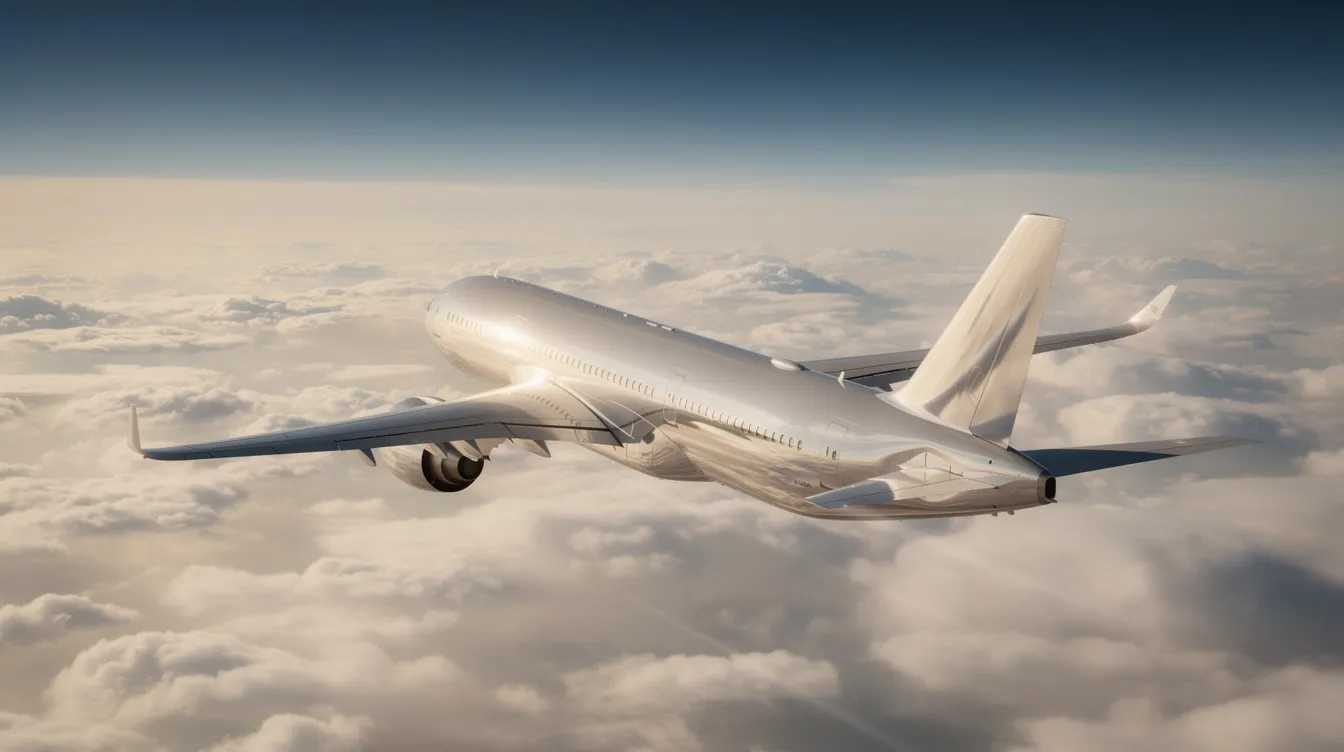
The 777X Family: 777-8 vs 777-9 Seating Configurations
The 777X family consists of two passenger variants built on shared technology. Both use GE9X engines from GE Aerospace and share advanced aerodynamics, composite wings, and a redesigned interior architecture. The difference lies in length, range, and how airlines plan to fill them.
Here is how the two variants break down in typical configurations:
777-9 (longer fuselage, higher capacity)
Around 426 seats in a standard two-class layout (business + economy)
Up to approximately 475 in high-density configurations
Range of roughly 7,285 nautical miles with full payload
Optimized for high-traffic, long-haul routes like Dubai–Los Angeles or London–Singapore
777-8 (shorter fuselage, longer range)
The 777-8 variant will carry 384 passengers in a two-class layout
Boeing 777-8 accommodates 350 to 425 passengers in a typical multi-class configuration
Improved range of approximately 8,745 nautical miles
Suited to thinner, ultra-long routes where premium demand outweighs volume
Launch customers reveal clear preferences. Emirates has plans for its "Game Changer" first class suites on select 777X aircraft. Lufthansa's Allegris business class concept introduces high-wall suites with sliding doors. Qatar Airways is developing an all-new first class exclusively for 777X routes. Each of these decisions reduces total seat count in favor of revenue per passenger — a trend that has accelerated across the industry over many years.
Certification rules and emergency exit design also limit how tightly airlines can pack seats compared to the older 777-300ER. The 777X optimizes comfort and yield, not just raw capacity.
How The 777X Compares To The Current Boeing 777
The Boeing 777 has served as the backbone of long-haul aviation for decades. The 777X is engineered to replace it on the world's most demanding routes — and the dimensional differences explain how capacity improves.
Specification | 777-300ER | 777-9 |
|---|
Overall length | 242 ft 5 in | 251 ft 8 in |
Wingspan | 212 ft 7 in | 238 ft 10 in |
Typical two-class seats | ~392 | ~426 |
Maximum certified seats | ~550 | ~475 (expected) |
The 777-9 is roughly 9 feet longer than the 777-300ER, and the 777-9's capacity is an increase from 392 on the 777-300ER in standard two-class service. The wingspan jumps by over 26 feet thanks to folding wingtips — a feature that extends the wing in flight for aerodynamic efficiency while folding on the ground to fit existing Code E gates.
Despite the higher typical seating, the 777-9's maximum certified capacity is expected to be lower than the 777-300ER's 550. Newer evacuation standards and updated exit spacing requirements mean airlines cannot simply replicate the ultra-dense layouts that were once theoretically possible. This reflects a broader shift: the world's airlines are increasingly prioritizing spacious, premium-heavy cabins over maximum headcount. For a detailed look at how Boeing aircraft sizes have evolved across models, the progression from the 777 to the 777X tells a compelling story, much as rankings of the top 10 best private jets in the world chart the evolution of luxury and performance in business aviation.
Economy Cabin: 10‑Abreast Seating And Passenger Density
Most airlines will deploy 10‑abreast seating in economy on the Boeing 777X, maintaining the 3-4-3 configuration familiar from current Boeing 777 operations. The 777X can accommodate up to 10 seats per row in economy, but the wider cabin makes a meaningful difference in how that density feels.
The 777X features 18-inch-wide seats in economy — a notable improvement over the roughly 17.2-inch widths common in many older 777-300ER layouts. Boeing achieved this through thinner sidewalls and improved insulation rather than widening the fuselage itself, enabling airlines to offer 10-abreast seating without the shoulder-to-shoulder compression that frequently draws complaints on current long-haul flights.
Airlines can configure the Boeing 777X for either spacious layouts or high-density configurations. A carrier choosing 9-abreast (3-3-3) gains wider seats and more aisle space but sacrifices roughly 40-50 seats per aircraft.
Economy Cabin Layout Comparison Table
Layout | Seats per Row | Approx. Seat Width | Estimated Total Economy Seats | Best For |
|---|
10-abreast (3-4-3) | 10 | ~18 in | 340-380 | Revenue maximization |
9-abreast (3-3-3) | 9 | ~19.5 in | 290-330 | Comfort-focused carriers |
These decisions ripple through the entire cabin: fewer economy rows free up space for premium economy or additional galley and lavatory modules, while denser configurations push total capacity toward the aircraft's certified ceiling.
Premium Economy And High‑Yield Cabin Mix
Premium economy has become a defining cabin class on long-haul widebody aircraft, and the 777X is no exception. Positioned between business and economy in both comfort and price, it occupies floor area that would otherwise hold additional economy rows — directly reducing total passenger count while increasing yield per square foot.
Typical premium economy layouts on the 777X use 2-4-2 or 2-3-2 configurations with seat pitch between 38 and 42 inches, compared to 31-33 inches in standard economy. The 777X's design accommodates different configurations that can include first class, business class, premium economy, and economy, and airlines are leaning heavily into premium economy as the growth segment.
Airline Examples: Premium Economy
Airline | Premium Economy Configuration | Seat Pitch | Notable Features |
|---|
Lufthansa | 2-4-2 | 38-42 inches | Allegris interior, modular customization |
Cathay Pacific | 2-4-2 (upgraded) | 38-42 inches | Improved pitch, legrests, personal storage |
Airlines emphasizing premium seating can reduce total passenger capacity on the Boeing 777X by 30 to 60 seats compared to an all-economy-plus-business layout. But the math works: premium economy fares on competitive routes often run 2-3x economy pricing, making the space trade-off rational for carriers that operate dense route networks. For business travelers weighing this against private jet benefits, the comparison becomes less about seat width and more about total control over the travel experience, and a detailed analysis of whether chartering a private jet is worth it underscores how time savings and flexibility change the equation.
Business And First Class: Space Versus Seat Count
Next-generation business and first-class suites on the 777X can dramatically reduce total seat count while transforming the onboard experience into something closer to a private cabin—though still fundamentally shared.
Airline Examples: Business and First Class
Airline | First Class Suite Features | Number of Suites | Business Class Features |
|---|
Emirates | "Game Changer" suites, floor-to-ceiling doors, virtual windows, fully enclosed spaces | 6-8 | High-wall suites, direct-aisle access |
Qatar Airways | All-new first class, exclusive to 777X, Qsuite-style business class, direct-aisle access | 6-8 | Qsuite-style, direct-aisle access |
Full-height suites, social spaces (onboard lounges, bars, mini-conference zones), and direct-aisle access in business class mean fewer premium seats but far greater personal space. A boutique first-class section with 6-8 suites in the nose of the aircraft looks nothing like the dense 3-4-3 economy rows behind it. For a deeper comparison of what the best first-class seats on a plane look like across airlines, the 777X is set to raise the bar considerably.
As Business Insider and other outlets have reported, the trend toward enclosed suites reflects a broader competition among airlines to capture passengers who might otherwise consider private aviation entirely.
Cabin Width, Larger Windows, And Cross‑Section Advantages
Cabin Width and Window Features
The 777X's cross-section produces one of the widest and tallest twin-engine cabins in commercial service, and this directly affects how layouts feel at any seat count.
Key interior features that shape passenger perception:
Larger windows: The 777X has larger windows that are 29% bigger than those on some competing widebody airplanes and mounted higher on the fuselage, giving more passengers a natural sightline at eye level.
Wider cabin: Thinner composite sidewalls create more usable shoulder room, enabling comfortable 10-abreast economy without the claustrophobic compression of older designs.
Flexible sidewall contours make window seats feel less cramped - a detail that matters intensely over a 14-hour sector.
Beyond dimensions, mood lighting can change throughout the flight for comfort, simulating sunrise, sunset, and restful environments that help passengers adjust across time zones. Redesigned entry arches and architectural ceiling options make the cabin feel less "packed" even when configured for 400+ passengers.
Overhead Bins and Storage
Overhead bins can hold up to four bags each, reducing the scramble for storage space that plagues narrower aircraft.
Compared to the Airbus A350-1000 — the 777X's primary competition — Boeing claims up to 16 inches of additional usable cabin width, giving airlines more flexibility in seat and aisle dimensions.
Cabin Altitude, Humidity, And Comfort In High‑Capacity Layouts
The Boeing 777X is designed for very long sectors exceeding 7,000 nautical miles, where comfort becomes the decisive factor — even in dense cabins with hundreds of passengers aboard.
The 777X targets a cabin altitude around 6,000 feet at cruise, a significant improvement over older widebodies that typically pressurize to around 8,000 feet. This lower cabin altitude, borrowed from 787 Dreamliner technology, reduces the physiological stress of long-haul flight: less fatigue, fewer headaches, and better sleep quality.
Additional comfort systems include:
Higher cabin humidity for improved air quality and reduced dehydration on flights lasting 12-16 hours
Advanced air filtration that refreshes cabin air more frequently
Lower noise levels from the GE9X engines and improved acoustic insulation
These features help mitigate the toll of spending extended hours in a full cabin. But there remains a fundamental difference: spending 14 hours surrounded by 400+ other passengers — even in a technically superior environment — is a qualitatively different experience from traveling in a private jet optimized for long range, where cabin altitude, seating density, and personalization are calibrated for a handful of people. For travelers who rank among the most comfortable planes as a priority, that distinction matters.
Folding Wingtips, GE9X Engines, And How They Enable Larger Cabins
Two engineering innovations make the 777X's high-capacity layouts economically viable on long-haul routes: folding wingtips and the GE9X engine.
Folding wingtips are a first for commercial airplanes. The 777-9 has a wingspan of 238 feet and 10 inches when extended in flight — improving lift-to-drag ratio and fuel efficiency substantially. On the ground, the tips fold inward to approximately 213 feet, allowing the aircraft to operate from standard Code E gates without requiring airport modifications. The 777X flew its first flight in January 2020, and the flight test program has validated the folding mechanism under diverse conditions. Certification is scheduled for completion ahead of entry into service.
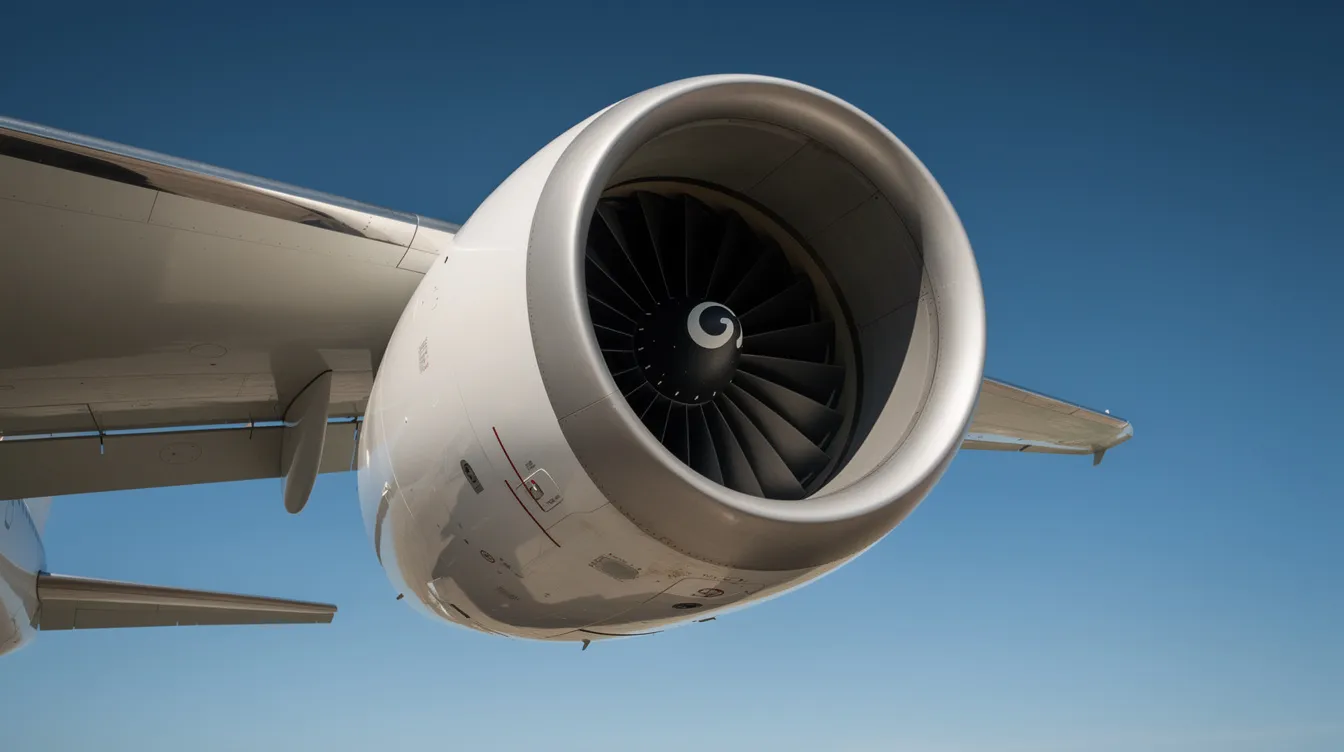
The GE9X engines from GE Aerospace are the largest turbofans ever built for commercial use. The Boeing 777X features GE9X engines with a 10:1 bypass ratio, and their overall pressure ratio contributes to remarkable thermodynamic efficiency. The GE9X engine consumes 10% less fuel than the GE90-115B it replaces on the 777-300ER. Combined with aerodynamic improvements from the composite wing, the 777X achieves 20% lower fuel use and emissions than predecessors — making it one of the most fuel-efficient large aircraft in the world.
The 777X's wings improve lift-to-drag ratio and fuel efficiency across every phase of operation. Equipped with these engines and aerodynamics, the aircraft can carry full cabins across transoceanic routes with lower fuel consumption per passenger than any comparable widebody. Quieter thrust profiles also contribute to a calmer in-cabin experience, which becomes especially noticeable when traveling with 400+ other passengers.
From Airline Layouts To Bizliner Luxury: BBJ 777X Capacity
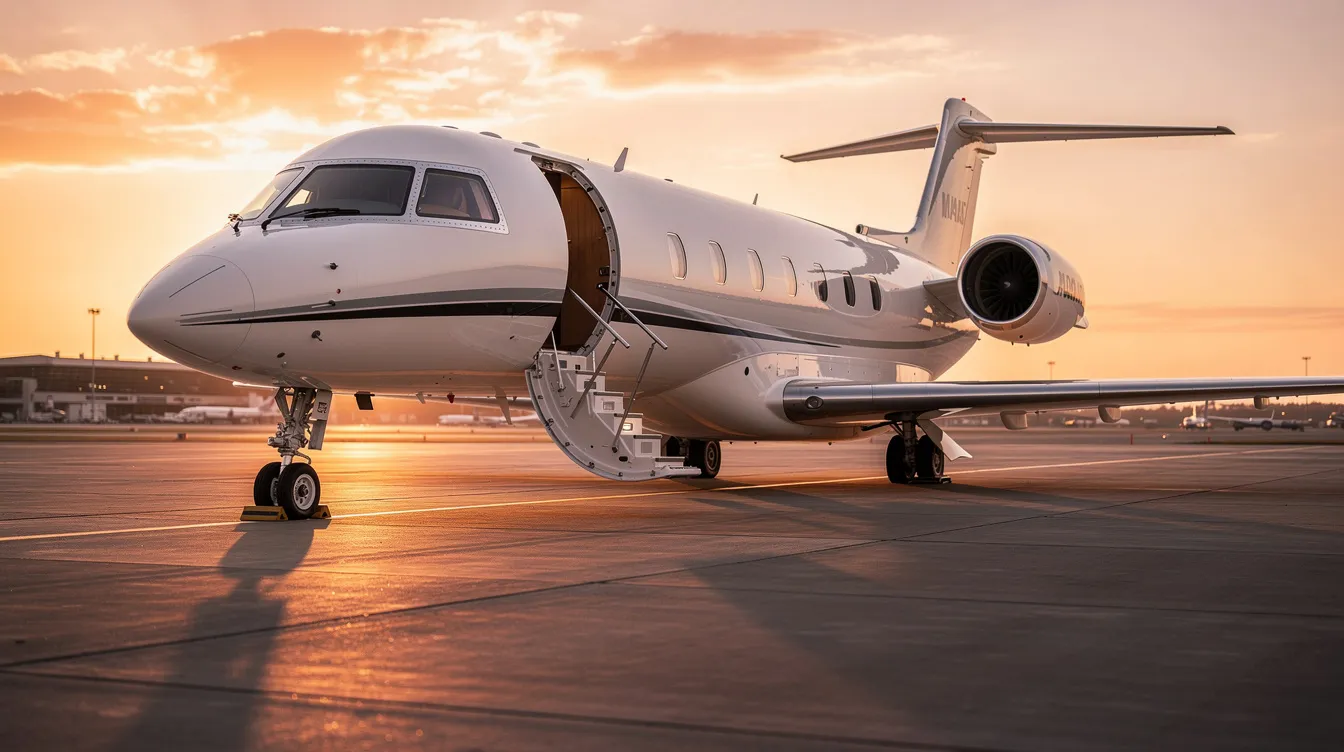
The Boeing Business Jet (BBJ) 777X takes the same airframe that carries 426 passengers in airline service and reimagines it as a flying residence for heads of state, ultra-high-net-worth individuals, and corporate flight departments.
The contrast is stark:
Configuration | Typical Passengers | Space Per Person | Range |
|---|
Airline two-class (777-9) | ~426 | Standard | ~7,285 nm |
BBJ 777X (private) | 25-75 | Exceptional | ~11,000+ nm |
BBJ layouts trade rows of seats for fully private bedrooms, dining rooms, offices, and conference spaces across up to 343 square meters of cabin space, similar in spirit to private jets for 50 passengers that bring VIP airliner comfort to large groups. Marketing materials often assume configurations for approximately 25 passengers, supporting long-range, low-cabin-altitude travel with extraordinarily generous space per person, paralleling private jet options for 30 passengers that target corporate and entertainment charters.
This is the logical extreme of prioritizing individualized comfort over density — a concept that directly informs how companies like BlackJet's premium private jet card programs curate aircraft choices for their private jet and Jet Card members. For more on how private plane layouts shape the travel experience, the BBJ 777X sits at the apex.
Seat Count Versus Experience: Why Private Jet Travelers Still Choose BlackJet
The 777X refines high-capacity travel with larger windows, improved cabin altitude, better seating, and quieter engines. It is, without question, the future of commercial long-haul aviation. But it remains a shared environment with hundreds of passengers, fixed schedules, and all the constraints that come with large-scale airline operation.
BlackJet members typically travel with small groups of 1 to 12 passengers and prioritize, for example, routes where 16-seat private jets are ideal for executive teams or families:
Benefit | Commercial 777X Experience | BlackJet Private Jet Experience |
|---|
Privacy & Control | Shared cabin, limited control | Total privacy, full cabin control |
Schedule Flexibility | Fixed airline schedules | Bespoke, traveler-driven schedules |
Terminal Access | Large hub airports, long queues | Private terminals (FBOs), no lines |
Cabin Environment | Shared, variable | Predictable, quiet, customizable |
Consider two versions of a New York–Dubai business trip: a premium cabin on a 777-9 means a superb seat but shared space, fixed departure windows, and a 90-minute board-to-takeoff cycle at a major hub, versus accessing the best long-range private jets for sale or charter that can fly the route nonstop on your schedule. The same route via a long-range private jet arranged through a BlackJet Jet Card delivers flexible departure times, custom catering, dedicated baggage handling, and a cabin configured for your group alone — with carbon-neutral flights, proprietary safety certification, and real-time flight support as standard, all at a predictable Jet Card cost per hour that simplifies budgeting.
How Jet Cards And Private Charter Compare To Flying On A 777X
BlackJet's Jet Card model — available in 25-hour and 50-hour blocks — offers a fundamentally different proposition than even the best commercial long-haul flight on the 777X, and its transparent Jet Card pricing structure makes costs easier to predict than complex airline fare rules.
Key comparison points:
Time savings: Private terminals versus large hub airports. No check-in queues, no boarding alongside hundreds of passengers. A typical private departure saves 2-3 hours per trip compared to commercial.
Cabin control: Choose your aircraft category — light, midsize, or large cabin — rather than accepting a fixed 777X interior designed for mass operation. It makes sense for travelers whose productivity depends on their environment.
Privacy and productivity: Confidential conversations, in-flight meetings, and secure connectivity versus a shared cabin where even first class sits within earshot of other passengers.
Sustainability: BlackJet's carbon-neutral flights offset emissions at no extra cost — a measurable commitment compared to the per-passenger footprint of even the most fuel-efficient commercial widebody.
BlackJet's technology - 24/7 digital booking, real-time flight deck coordination, and mobile support - provides a level of convenience that mirrors the best airline apps but is tailored entirely to private aviation, complementing a comprehensive guide to Jet Card costs for travelers comparing membership options. To understand how Jet Cards work in practice, the model eliminates the complexity of ownership while preserving every advantage of flying privately, and insights into the best Jet Cards for frequent flyers help match program design to actual travel patterns.
Technical Specifications Related To Seating Capacity
The 777X's physical dimensions and performance envelope directly determine how many passengers it can carry and over what distances. Here are the high-level specs for both variants:
Specification | 777-9 | 777-8 |
|---|
Overall length | 251 ft 8 in (76.72 m) | ~232 ft 6 in (~70.9 m) |
Wingspan (extended) | 238 ft 10 in (72.8 m) | 238 ft 10 in (72.8 m) |
Typical two-class capacity | ~426 passengers | ~384 passengers |
Range (full payload) | ~7,285 nm | ~8,745 nm |
Maximum takeoff weight | ~775,000 lbs | ~775,000 lbs |
Engines | 2× GE9X | 2× GE9X |
Cabin altitude at cruise | ~6,000 ft | ~6,000 ft |
The 777-9's fuselage measures 76.72 meters, making it the longest twin-engine commercial aircraft in the world. The 777-8's shorter fuselage trades some capacity for longer range, positioning it for thinner routes where premium demand justifies fewer seats but the ability to fly further non-stop, just as private jets for 15 passengers balance cabin size and range for international missions.
Both variants share the same advanced flight deck, composite wing structure, and folding wingtip mechanism, while on the priv100-houre products like25-hourr Jet Cards and their costs give similar predictability in how much flying you can unlock from a given commitment. While list prices for the 777X family have not been finalized publicly in the way production-era pricing typically settles, industry estimates place them in the $375-450 million range depending on variant and configuration, a scale that makes even a 100 hour Jet Card cost guide feel modest by comparison for frequent flyers. The future of the program depends on completing certification and beginning scheduled deliveries, currently expected around 2027 after delays spanning many years.
FAQ: Boeing 777X Seating And The Future Of Long‑Haul Travel
How many seats will the Boeing 777X have in typical airline service? The Boeing 777-9 seats approximately 426 passengers in a standard two-class layout. The 777-8 carries around 384 in two-class service. Airlines that emphasize premium cabins may configure fewer total seats — some three-class layouts drop below 350.
Is the 777X more comfortable than the current Boeing 777 in economy? Yes. The 777X features 18-inch-wide economy seats (versus roughly 17 inches on many 777-300ER layouts), a lower cabin altitude of 6,000 feet, higher humidity, and windows that are 29% larger. These improvements make even 10-abreast economy noticeably more tolerable on long sectors.
What is the cabin altitude on the 777X, and does it reduce jet lag? The 777X maintains a cabin altitude of approximately 6,000 feet at cruise — about 2,000 feet lower than older widebodies. Lower cabin altitude means higher oxygen saturation, reduced dehydration, and less fatigue, all of which help mitigate jet lag on flights exceeding 12 hours.
Can the 777X be configured as a private or government aircraft (BBJ 777X)? Yes. The BBJ 777X converts the same airframe into a private configuration for 25-75 passengers, featuring bedrooms, offices, lounges, and a range exceeding 11,000 nautical miles. Several heads of state and ultra-high-net-worth individuals have expressed interest.
Which airlines will operate the 777X first? Emirates, Lufthansa, Singapore Airlines, Cathay Pacific, and Qatar Airways are among the earliest customers. Entry into service is expected around 2027, with initial routes likely covering high-demand long-haul corridors.
Why would a traveler still choose a private jet or Jet Card over first class on a 777X? Even the finest 777X first class remains a shared cabin on a fixed schedule, whereas understanding how to buy a seat on a private jet opens up semi-private and shared options that still feel radically more personal. A Jet Card provides complete privacy, flexible departure times, private terminal access, and a cabin configured for your group alone - advantages that no commercial aircraft, regardless of how advanced, can replicate, and a detailed look at 50-hour Jet C—rd costs shows how these benefits price out over a year of heavy travel. For travelers who value time, discretion, and control, private aviation operates in a different category entirely.
The Boeing 777X is poised to reshape long-haul commercial aviation with unprecedented efficiency, capacity, and comfort. But for those who measure travel quality in privacy, flexibility, and minutes saved - not just seat width and cabin altitude - the calculus leads somewhere else entirely.
Conclusion: Boeing 777X Seating Capacity and Its Impact on Long-Haul Luxury Travel
The Boeing 777X redefines the landscape of long-haul commercial aviation by blending advanced technology, enhanced comfort, and flexible seating configurations. Its seating capacity, ranging from 350 to nearly 475 passengers depending on layout, reflects a strategic balance between maximizing efficiency and elevating passenger experience. Airlines tailor the 777X to their unique route demands, often prioritizing premium cabins that offer spaciousness and exclusivity over sheer seat count.
For discerning travelers, the 777X offers significant improvements over previous widebody aircraft, including larger windows, wider economy seats, and a lower cabin altitude that collectively enhance comfort on ultra-long flights. Yet, despite these advancements, the shared nature of commercial aviation contrasts sharply with the personalized control and privacy afforded by private jet travel.
Companies like BlackJet highlight this distinction by providing Jet Card programs that deliver bespoke travel experiences—combining flexibility, privacy, and sustainability that no commercial aircraft can match. Whether flying on a 777X or chartering a private jet, understanding the nuances of cabin configuration and passenger capacity helps travelers make informed choices tailored to their priorities.
Ultimately, the Boeing 777X stands as a pinnacle of modern commercial aviation, but for those who measure travel by exclusivity and convenience, private aviation remains the premier choice. Exploring options like BlackJet’s Jet Card can transform how you approach air travel, unlocking a new level of luxury and efficiency beyond the capabilities of even the most advanced widebody jets.
Explore how a BlackJet Jet Card can elevate your next journey—whether it complements your airline travel or replaces it altogether, from regional departures like private jet charters in Karachi to specialized programs such as Flexjet Jet Card pricing and options.


 Sign up with google
 Sign up with Apple