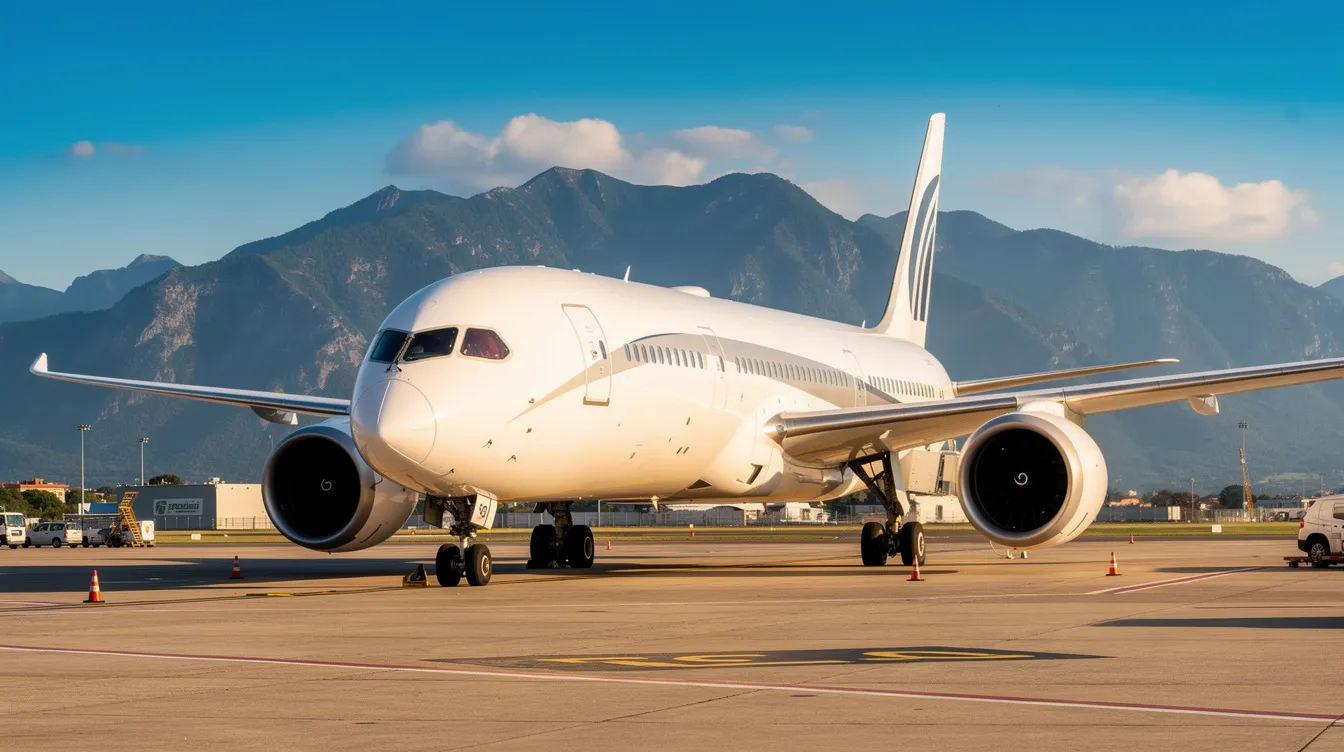
The Boeing 787 Dreamliner stands as the most technologically advanced widebody aircraft ever produced - and for a select group of buyers, it represents the ultimate private aviation asset. Whether you're a head of state, an ultra-high-net-worth family, or a global corporation evaluating fleet strategy, understanding the 787 market is essential before committing hundreds of millions of dollars to ownership. This guide covers everything from current availability and pricing to cabin capability, operating costs, and smarter alternatives to outright purchase.
Immediate Answers: Can You Buy A Boeing 787 Today?
Yes - Boeing 787 aircraft are available for sale on both the commercial airline market and the exclusive VVIP / BBJ (Boeing Business Jet) market (BBJ 787 refers to the Boeing Business Jet version of the 787, a factory-delivered aircraft customized for private or VVIP use). But buying one is neither simple nor quick.
As of September 2026, Boeing has delivered 1,311 units across the 787 family and holds 1,178 firm unfilled orders, bringing total orders to 2,489. Boeing's Dreamliner backlog exceeds 1,000 aircraft with a production target of 10 to 16 per month, meaning new delivery slots are heavily subscribed. On the BBJ side, the market is even tighter: as of July 2025, only 13 BBJ 787 aircraft have been delivered worldwide. Buyers of the 787 must navigate complex acquisition processes due to limited market availability.
There is a critical distinction between airline-configured 787s for sale and BBJ 787 business jets. Airline units - whether brand-new aircraft from Boeing's production line or pre-owned frames returning from carriers - come with high-density commercial interiors, much like those found on other converted airliners such as the Boeing 737 for private ownership. A BBJ 787, by contrast, is a factory-delivered "green" aircraft (no interior) that undergoes bespoke VVIP completion at specialized centers like Greenpoint Aerospace, a process that can take 18 to 30 months depending on configuration complexity.
Here's the current market snapshot:
787-8: 424 total ordered, 399 delivered - only 25 remain to deliver; this is the most common BBJ conversion candidate
787-9: 1,493 ordered, 768 delivered - the volume workhorse with growing BBJ interest
787-10: 572 ordered, 144 delivered - rarely chosen for VVIP due to reduced range
Pre-owned BBJ 787s: Extremely rare on listings; brokers handle most transactions privately with "call for price" terms
Pricing: List price for a new Boeing 787-8 starts around $239 million for a green airframe; realized commercial sale prices often fall 40–50% below list (e.g., American Airlines' 2025 787-9 deal appraised between $151–$161 million)
For those who want 787-level travel without the capital burden, three paths exist: outright ownership, fractional shares, or charter and membership access. A Jet Card from a provider like BlackJet allows clients to fly large-cabin and ultra-long-range aircraft - replicating much of the Dreamliner's mission profile - without tying up a quarter-billion dollars in a depreciating asset; BlackJet's core focus is delivering premium private jet card programs that package this flexibility and service into a single, predictable solution.
Boeing 787 Overview: Models, Range & Operating Profile
The Boeing 787 Dreamliner is Boeing's flagship long-haul twin-engine widebody, and it redefined what a commercial aircraft could be when it entered service in 2011. Among private flyers, it now sits alongside many of the best private jets in the world by range and comfort, even though it was originally designed as an airliner. The Boeing 787 family features a composite airframe reducing weight and increasing durability, with roughly 50% of its primary structure built from carbon-fiber-reinforced polymer composites that extend maintenance intervals and slash fuel consumption. Boeing offers GE Aerospace GEnx-1B and Rolls-Royce Trent 1000 engines for the 787, both optimized for range and efficiency.
Compared to older planes, the 787 improves fuel efficiency by 20% to 25%, making it the most economical widebody in its class per seat-mile. That efficiency advantage matters just as much for private owners as it does for airlines - fuel is the single largest variable cost in widebody operations.
Variants: What Buyers Need To Know
Boeing 787 variants optimize balancing range and capacity for different route profiles. Each model serves a distinct mission:
787-8 The lightest and longest-legged variant. In BBJ configuration with 25 passengers, the BBJ 787 has a maximum range of 9,945 nautical miles - capable of flying nonstop for up to 16 hours. Typical VVIP layout seats 20–30 passengers across approximately 217 square meters of cabin area. This is the 7787- 8, most commonly chosen for private and government conversions due to its balance of reach and operating efficiency. Runway requirement: approximately 10,500–11,000 feet depending on altitude and temperature.
787-9: A stretched fuselage offering more spacious cabin volume - roughly 250 square meters in VVIP layouts - while retaining outstanding range. The Boeing 787-9 can fly 9,945 nautical miles in optimized BBJ configuration, seating 25–40 passengers. Slightly heavier than the -8, with similar runway demands but higher payload capacity. Corporate and government buyers who need more entertaining and meeting space gravitate here.
787-10 The largest variant in the family. The 787-10 has the highest passenger capacity but a reduced range - approximately 9,015 nautical miles in VIP layout. Best suited for high-density charter or regional VVIP missions rather than globe-spanning nonstop flights. Cabin area reaches nearly 279 square meters, but the trade-off in range limits its appeal for buyers seeking ultimate flexibility.
Performance That Matters
The Boeing 787 has a maximum range of 11,444 miles in airline configuration - and the BBJ 787 can fly 9,945 nautical miles nonstop with 25 passengers under NBAA-IFR rules. The aircraft can connect nearly every global destination nonstop: New York to Hong Kong, London to Perth, Dubai to Los Angeles. Cruise speed is approximately Mach 0.85, competitive with the longest-range private jets like the Gulfstream G700 or Bombardier Global 7500 - though the 787 offers dramatically more interior volume.
For investors and corporate flight departments, the value proposition is clear: ETOPS-certified twin-engine reliability, fuel burn per seat that undercuts legacy widebodies by a wide margin, and a platform capable of virtually any point-to-point mission on earth. It can fly nonstop for up to 16 hours, making it the go-anywhere aircraft for those who refuse to stop.
Cabin Experience & Health: Why The 787 Is A Game-Changer
The Boeing 787 didn't just advance aviation engineering - it fundamentally changed what it feels like to arrive at a destination after a long flight. For executives, families, and delegations spending 10 to 16 hours aloft, the Dreamliner's cabin environment is a measurable competitive advantage.
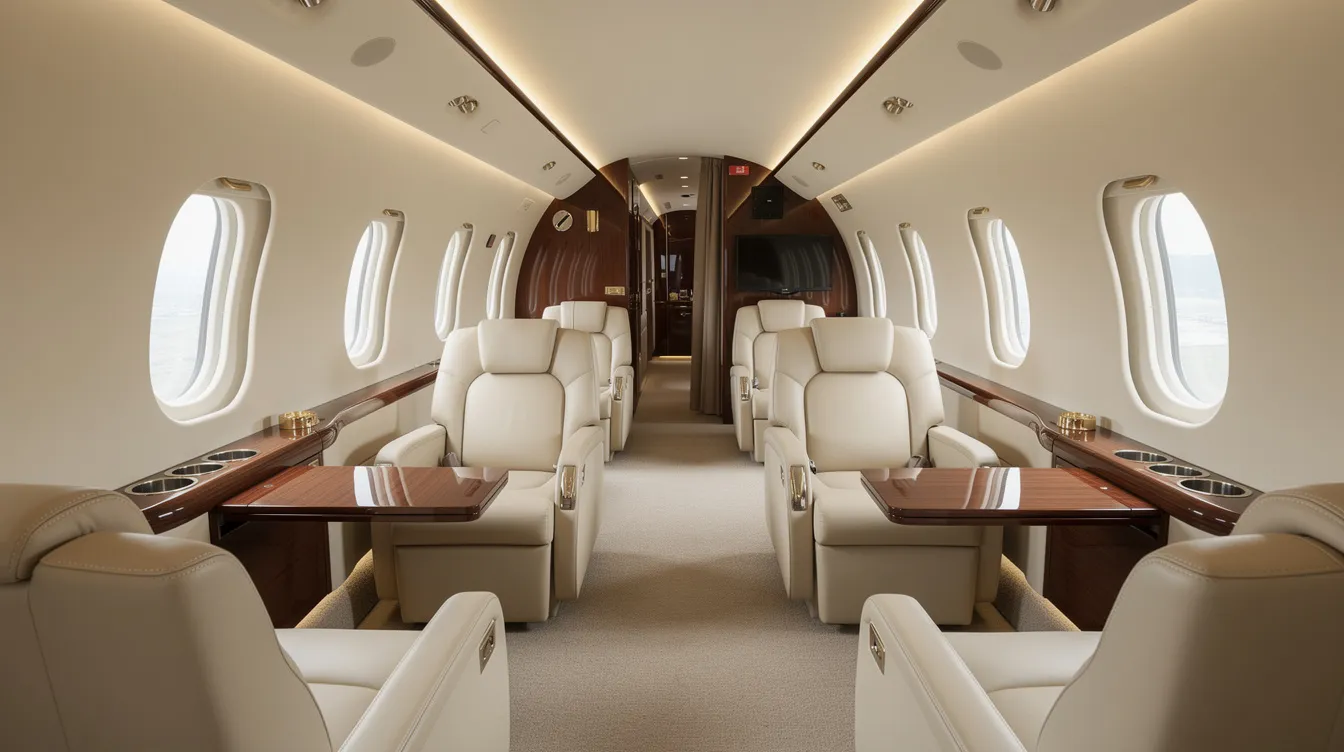
Space That Redefines Private Flight
The 787's cross-section measures roughly 18 feet wide with a cabin height of approximately 9 feet - dimensions that allow BBJ completion centers to install full private suites, a master bedroom, conference and dining zones, dedicated lounges, and even showers. In a typical VVIP configuration, the aircraft can accommodate up to 40 passengers in luxury, though most owners opt for 25 to 30 to maximize living space. The BBJ 787 offers spacious living areas and private rooms that rival boutique hotel suites, with ample storage integrated throughout the cabin for extended world tours.
Lower Cabin Altitude, Less Fatigue
This is where the 787 separates itself from every competitor. Cabin altitude is maintained at just 6,000 feet - compared to the 8,000-foot equivalent in older widebodies commonly converted for VVIP use. That 2,000-foot difference translates directly to higher blood oxygen saturation, reduced headaches, less fatigue, and significantly better rest during long flights. For an executive flying multiple intercontinental legs per week, the cumulative health benefit is substantial. The BBJ 787 has a cabin altitude of just 6,000 feet, and passengers consistently report arriving more alert and with less jet lag than on any other platform.
Air Quality & Comfort Technology
The BBJ 787 features improved cabin humidity and temperature control far beyond what older aircraft can deliver. Humidity levels hover around 16% - compared to the bone-dry 5% common in previous-generation widebodies - reducing dehydration, dry eyes, and respiratory discomfort on long legs. Advanced filtration systems continuously circulate and purify cabin air.
The BBJ 787 provides a smoother ride with advanced technology through Boeing's Smooth Ride Technology, which uses forward-looking turbulence-detection sensors to automatically adjust control surfaces before passengers feel a bump. The result is a cabin environment where working, sleeping, and conducting high-level meetings feel entirely natural - even over the mid-Pacific at Mach 0.85.
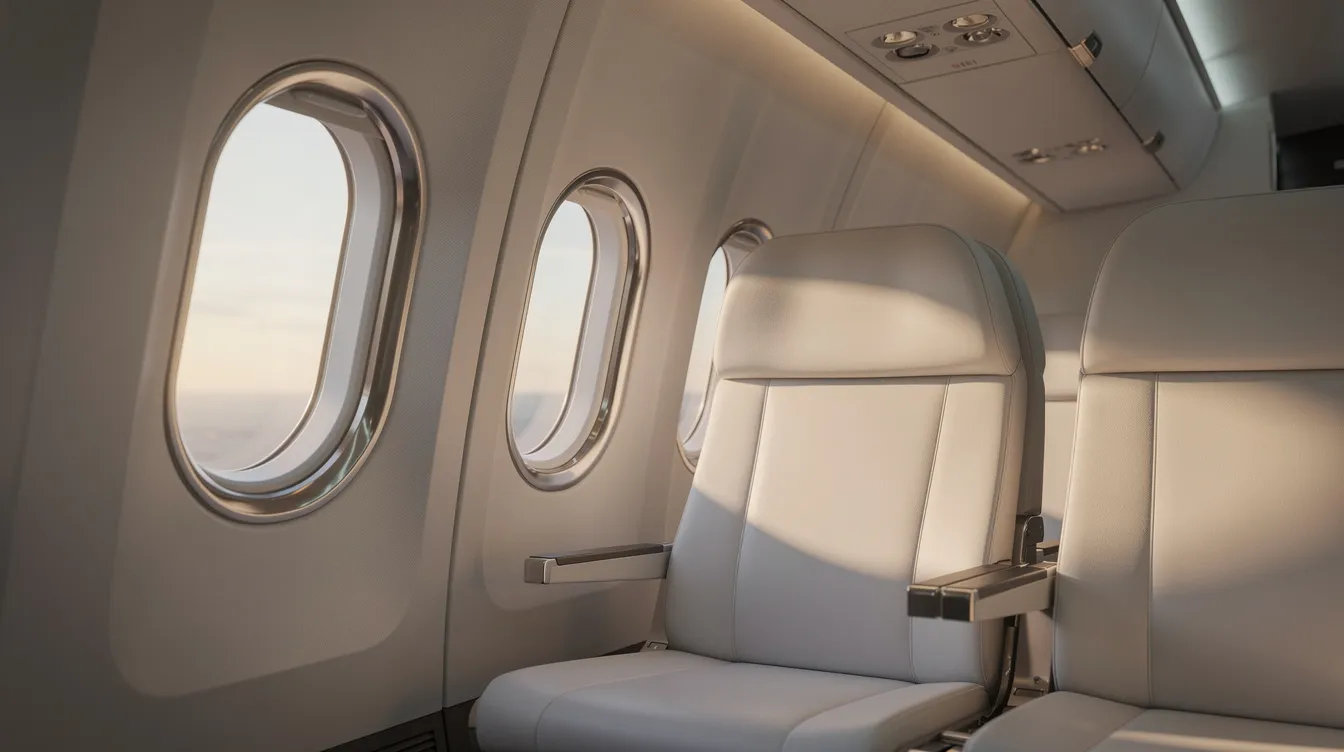
The BBJ 787 features electronically dimmable windows - the largest of any commercial-derived aircraft - that let each passenger control light exposure without traditional shades. This system helps manage circadian rhythm on long east-west crossings, supports privacy without sacrificing the sense of spaciousness, and contributes to a relaxing atmosphere that makes every journey feel shorter.
Ownership Economics: Purchase Price, Operating Costs & Alternatives
Owning a Boeing 787 is a strategic asset decision - one that makes sense for heads of state, UHNW families, and multinational corporations with genuine globe-spanning travel demands. But the capital commitment and operating costs are substantial, and for many potential buyers, the math points toward smarter alternatives, including the cheapest private aircraft and other budget-friendly private aviation options that still deliver meaningful time savings and comfort.
Acquisition: What It Actually Costs
The list price for a new Boeing 787-8 is $239 million for a green airframe - no interior, no paint, no systems beyond the certified baseline. Interior customization costs range from $15 million to $60 million depending on materials, complexity, and the completion center chosen (Greenpoint, AMAC, or similar). A fully finished BBJ 787-9 with a bespoke VVIP cabin can reach $300 million or more, putting it at the extreme upper end of any private jet pricing spectrum.
Realized prices on the commercial market run significantly below list. Distressed airline inventory has traded at 45% of catalogue price in some cases. But BBJ-configured 787s rarely trade at all - with only 13 delivered globally, the secondary market is almost nonexistent. Buyers seeking the best deals on pre-owned BBJ widebodies will find that listings are scarce, pricing is opaque, and financing structures require specialized aviation lenders; many eventually compare this path with cheaper private jet options and entry-level aircraft that dramatically lower both purchase and carrying costs.
Operating Costs: The Ongoing Reality
Direct operating costs for a BBJ 787 range from $10,370 to $11,330 per flight hour depending on variant, according to Boeing's 2021 estimates. But that figure tells only part of the story. Independent analysis of total ownership cost - including crew salaries, maintenance reserves, insurance, hangarage, and capital depreciation - puts the all-in cost of a BBJ 787-9 at approximately $11.15 million annually at 200 flight hours per year. That works out to roughly $55,750 per hour. When you compare those figures with a broader private jet price list covering ownership, charter, and membership, the scale of widebody commitment becomes even clearer.
Key cost drivers include:
Crew: Minimum two qualified widebody pilots plus four to eight cabin crew for VIP service; recurrent training costs are significant
Maintenance: Engine programs (GEnx or Trent 1000), airframe inspections, and VIP interior upkeep on bespoke furnishings
Insurance: Hull plus liability premiums typically run 0.5% to 1% of insured value annually - on a $300M aircraft, that's $1.5M to $3M per year
Infrastructure: The 787's size demands long runways, heavy-duty pavement, large hangars, and commercial-grade ground support - limiting access to smaller airports and remote leisure destinations
Ownership vs. Access: A Strategic Comparison
Consider a real-world scenario: a global corporation needs to fly its leadership team from Los Angeles to Tokyo, then onward to Singapore, several times per year. For frequent itineraries like this, understanding the best jet cards for high-frequency flyers is often as critical as comparing aircraft types.
Ownership path: Acquire a BBJ 787-9 (~$280–300M including interior), staff a full flight department, and budget ~$11M+ annually in operating costs. Over three years, the total commitment approaches $315–335M before depreciation - for an aircraft that may log only 200–300 hours per year. Many decision-makers benchmark this against a detailed Jet Card cost guide explaining membership pricing to see whether prepaid access better matches their utilization.
BlackJet path: Use a combination of Jet Card hours and charter across ultra-long-range business jets and VIP airliner charters. Pay per trip plus block hours, avoid crew management, skip hangarage, eliminate depreciation risk, and retain the freedom to select the right aircraft for each mission. Resources that break down jet card pricing structures and fee models can help quantify how this approach compares over multi-year planning cycles. Three-year cost: a fraction of ownership, with comparable comfort and reach.
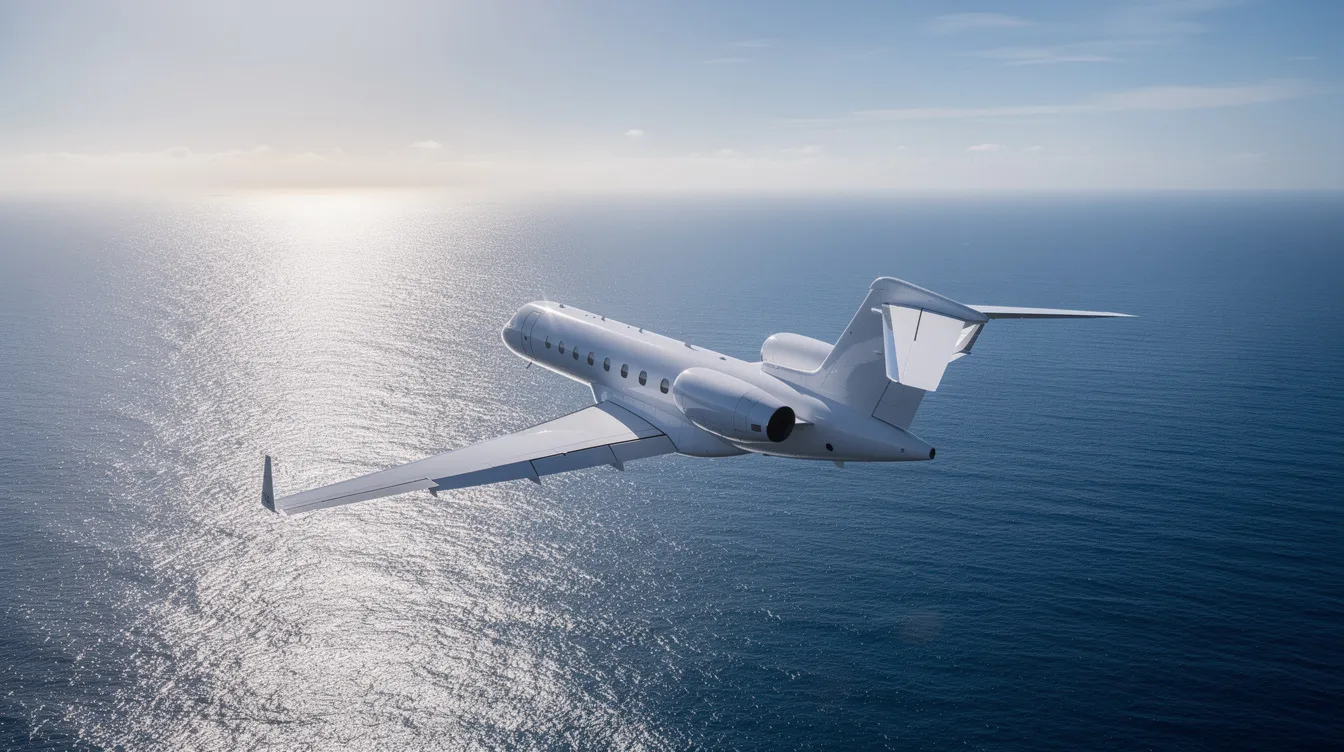
For most buyers exploring a Boeing 787 for sale, the question isn't whether the aircraft is extraordinary - it is. The question is whether ownership is the most efficient way to access that capability.
How BlackJet Clients Access 787-Level Capability Without Owning One
Most high-net-worth individuals and corporate leaders don't need to buy a Boeing 787 to enjoy its level of reach, comfort, and privacy. What they need is the ability to fly anywhere in the world, on their schedule, with the convenience and luxury they expect - without the nine-figure price tag and operational complexity of widebody ownership, which is why many explore buying a seat on a private jet via shared and semi-private models before considering full ownership.
Curated Aircraft For Global Missions
BlackJet sources and curates aircraft across the full spectrum of private aviation - from large-cabin jets ideal for transatlantic trips to top 16-seat private jet options that balance group capacity with access to smaller airports, as well as ultra-long-range platforms that rival the BBJ 787's reach on the world's most demanding city pairs. For large groups, roadshows, and government delegations, BlackJet arranges VIP airliner charters that deliver the same spacious cabin experience as a Dreamliner, configured for the specific mission, often leveraging aircraft similar to those highlighted in private jet options for 20 passengers.
Jet Card Programs: Prepaid Flexibility
BlackJet's Jet Card programs offer 25-hour and 50-hour options with prepaid access to multiple cabin classes; frequent travelers may also compare these against a 100-hour jet card cost guide to plan for even higher annual utilization. For many flyers, understanding how a 25-hour jet card works and what it costs is the first step toward replacing ad-hoc charter with structured access. Clients can explore regional flights on midsize jets one week and seamlessly upgrade into heavy or ultra-long-range aircraft for transoceanic travel the next - all without managing fleet logistics, crew scheduling, or maintenance calendars.
This model eliminates the central tension of 787 ownership: paying fixed costs on an asset that sits idle most of the year. For higher-usage travelers, analyzing 50-hour jet card cost and value can highlight how block-hour commitments scale compared to outright ownership. With a Jet Card, every dollar goes toward actual flight time.
Technology, Safety & Sustainability
24/7 digital booking and real-time support: BlackJet's platform gives clients airline-like reach with private aviation flexibility - check availability, book, and manage trips from anywhere
Safety and certification: Every operator in BlackJet's network undergoes proprietary vetting, including crew experience standards and ongoing audits that match or exceed the industry's leading safety benchmarks
Carbon-neutral flights: BlackJet ensures every journey is carbon neutral at no extra cost - emissions are calculated per flight and fully offset, a meaningful advantage over operating a widebody 787 solely for private use
Real Missions, Without The Boeing Price Tag
Use case 1 - Corporate board tour: A New York–based company needs to move its board from JFK to London, then onward to Riyadh for international meetings. BlackJet arranges an ultra-long-range jet for the transatlantic leg and a large-cabin aircraft for the London–Riyadh segment. Total travel time mirrors what a BBJ 787 would deliver. Total capital committed: zero.
Use case 2 - Family world journey: A family of six plans a multi-stop leisure itinerary spanning Hawai'i, Fiji, the Maldives, and the Swiss Alps. BlackJet combines long-range and large-cabin jets for each segment, matching the aircraft to the runway and the destination. The family gets the freedom, comfort, and privacy of private widebody travel - with none of the ownership burden.
The Boeing 787 Dreamliner remains the gold standard for ultra-long-range capability in the aviation market. For the rare customer whose mission demands a personal widebody - a head of state, a sovereign family - ownership may be justified. But for most discerning travelers and global enterprises, the smarter path is access without ownership.
Frequently Asked Questions About the Boeing 787 for Sale
Can you buy a Boeing 787 for private use?
Yes. Buyers can acquire a commercial 787 or pursue a Boeing Business Jet (BBJ) 787 configured for private or VVIP use. BBJ aircraft are exceptionally scarce, and a new aircraft typically requires a bespoke interior completion after delivery. Availability, delivery timing, certification, and configuration should be reviewed with an experienced aviation adviser.
How much does a Boeing 787 cost?
A new Boeing 787-8 has a listed price of about $239 million for the green aircraft, before interior completion. A bespoke VIP interior can add approximately $15 million to $60 million, depending on the design and equipment. The final acquisition and operating costs vary by aircraft, mission, crew, maintenance program, and annual utilization.
What is the range of a BBJ 787?
In an optimized configuration carrying 25 passengers, the BBJ 787 can fly up to 9,945 nautical miles nonstop. Actual range depends on passenger and baggage loads, weather, routing, reserves, and operating conditions. Its long range can enable intercontinental journeys without a fuel stop, though the aircraft requires airports with suitable runway and ground infrastructure.
How many passengers can a private Boeing 787 carry?
A BBJ 787 can accommodate up to 40 passengers in luxury, although many VVIP interiors prioritize spacious lounges, private rooms, and dining areas over maximum seating. The final capacity depends on the cabin layout and applicable certification requirements.
Is owning a Boeing 787 better than using a Jet Card?
Ownership gives a buyer direct control of a dedicated aircraft but entails a substantial purchase price, crew, maintenance, hangarage, insurance, and operational management. A Jet Card provides prepaid access to aircraft across multiple cabin classes without ownership responsibilities. For example, a company flying internationally a few times each year may use a Jet Card or charter for each mission rather than carrying the fixed cost of a widebody year-round.
What should buyers evaluate before purchasing a Boeing 787?
A buyer should assess aircraft condition and records, engine and maintenance programs, cabin-completion scope, regulatory and certification requirements, operating costs, airport access, and delivery timeline. Independent technical inspections and qualified aviation, legal, and tax advisers are essential. Photos and listing details provide an initial view, but they do not replace an inspection or review of the aircraft’s documentation.
How does BlackJet support private travel without aircraft ownership?
BlackJet offers 25-hour and 50-hour Jet Card programs with access to multiple aircraft categories, digital booking, and real-time support. Its operator-vetting process addresses private aviation safety, while its carbon-neutral flight program offsets emissions at no extra cost. Travelers can match aircraft to each trip rather than operating a single large aircraft for every mission.
Conclusion: Private Jet Access on Your Terms
The Boeing 787 is an extraordinary aircraft, combining intercontinental range, a spacious bespoke cabin, and advanced efficiency. For buyers with the utilization, infrastructure, and resources to support a personal widebody, ownership can serve a clear strategic purpose. Yet its acquisition price, long completion timeline, operating demands, and limited airport access make it more aircraft than most travelers need.
For executives and families who value the freedom of private aviation without the fixed costs of ownership, a Jet Card offers a more flexible way to travel. BlackJet provides prepaid access to multiple aircraft categories, supported by digital booking and real-time flight support, rigorous private aviation safety standards, and carbon-neutral flights. Choose the aircraft that fits each journey—from a regional business trip to a long-range international itinerary—and keep your capital focused elsewhere.
Explore BlackJet’s Jet Card programs to discover a more considered approach to private jet access: flexible, safety-conscious, and tailored to the way you travel.
Elevate your travel - effortlessly. With BlackJet, private flight isn't reserved for the few. It's accessible on your terms through our Jet Card programs, complete with rigorous safety, carbon-neutral performance, and unmatched flexibility. Contact our team to explore how refined, meaningful travel becomes your new standard.
Join BlackJet's Jet Card program for seamless, premium private travel - safety, sustainability, and flexibility built in.


 Sign up with google
 Sign up with Apple