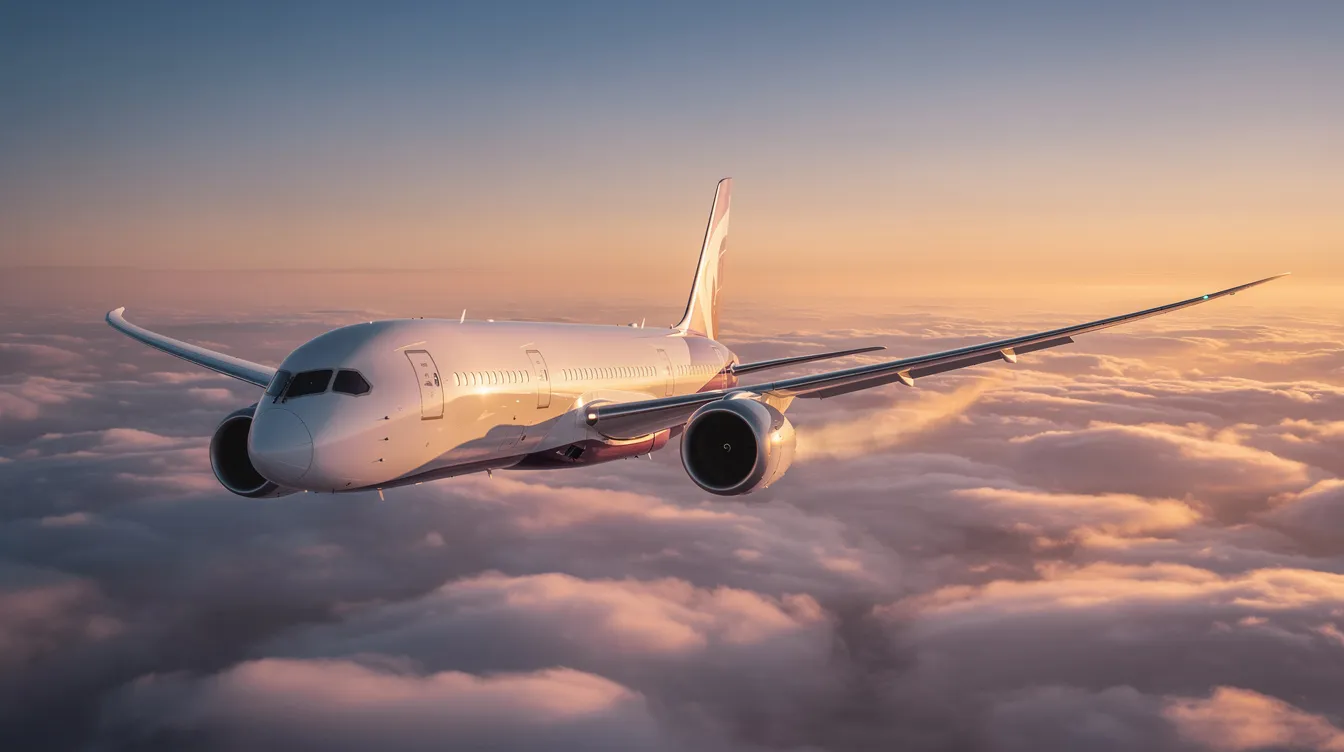
For the executive who treats time as a non-renewable resource, the aircraft you fly on is never an afterthought. Whether you're evaluating a 14-hour commercial flight from New York to Hong Kong or weighing a two-hour private hop from Miami to Atlanta, the plane matters. It shapes the quality of your rest, the efficiency of your schedule, and the control you have over your own journey.
So which Boeing plane earns the title of "best"? The answer depends on the mission. The Boeing 787 Dreamliner and Boeing 777 lead the conversation for long-haul excellence. The Boeing 747 holds an unmatched historic legacy. And the 737 MAX dominates short and medium-haul routes for sheer network reach. Boeing has shaped aviation with a lineup of iconic aircraft, and the Boeing company's commercial lineup is divided into single-aisle and wide-body jets, each engineered for specific operational roles. Single-aisle jets (such as the 737) have one aisle and are typically used for short- and medium-haul routes, while wide-body jets (such as the 747, 777, and 787) have two aisles and are designed for long-haul flights.
While BlackJet clients rarely choose a trip based solely on a commercial aircraft model, understanding what makes these airplanes exceptional provides a sharper lens for comparing commercial aviation against the flexibility, privacy, and time savings of private jet access. Boeing's naming system has used the 7X7 format since 1957, and every model in that line has played a role in moving millions of passengers across the world. At BlackJet, we bring that same focus on safety, performance, and carbon-neutral flights to every mission we arrange.
Here's what you need to know:
The 787 Dreamliner is widely regarded as Boeing's best plane for passenger comfort and fuel efficiency today.
The 777 remains the workhorse for ultra-long-haul airline routes.
The 747's legacy is unmatched, even as it exits passenger service.
The 737 MAX connects the world's business centers on shorter routes.
For discerning travelers, private jet access often outperforms even the best commercial aircraft in time savings and flexibility.
Key Criteria For Choosing The "Best" Boeing Plane
The word "best" only makes sense when tied to a specific mission. A plane that excels on a 13-hour transpacific crossing may be entirely wrong for a 90-minute domestic shuttle. Modern aircraft focus on reducing operating costs and emissions, but the evaluation goes deeper than economics alone.
Core criteria for comparing Boeing commercial airplanes include:
Passenger comfort: cabin width, seat layout, humidity control, cabin noise levels, and window design all shape the passenger experience across a flight.
Operational performance: fuel efficiency per seat-mile, range under payload, maintenance intervals, and engine reliability determine how airlines and operators deploy each model.
Safety record: accident statistics, regulatory history, and corrective redesigns (such as the 737 MAX MCAS overhaul) remain central concerns for every traveler.
Range and versatility: whether a plane can fly nonstop from London to Singapore or only serve regional routes defines its strategic value for major airlines.
Mission flexibility: landing gear design, engine technology, and composite materials influence ride quality, airport compatibility, and long-term adaptability.
For private aviation, the same logic applies. BlackJet matches each client's trip to the right aircraft category - light jet, midsize, or large cabin jet - just as airlines match routes to specific Boeing models, and understanding the different types of private jets helps clarify which option best fits a given mission. The point is always the same: the right plane for the right mission.
Boeing 747: The Original "Best Plane" And Queen Of The Skies
The Boeing 747 was the first widebody passenger aircraft. It revolutionized long-haul air travel since its introduction in 1970, when Pan Am put the original 747-100 into service on transatlantic routes. No aircraft before it could carry so many passengers so far, and none looked quite like it. The distinctive upper deck hump, four engines, and massive fuselage introduced generations to widebody comfort and long-distance flying.
For decades, the 747 served as the definition of what the best plane could be. With capacity reaching up to 600 passengers in dense configurations, it opened legendary routes - New York to Tokyo, London to Johannesburg - that shaped the geography of global air travel. The Boeing 747 is known as the "queen of the skies," and for good reason: its spaciousness and design remain iconic even today.
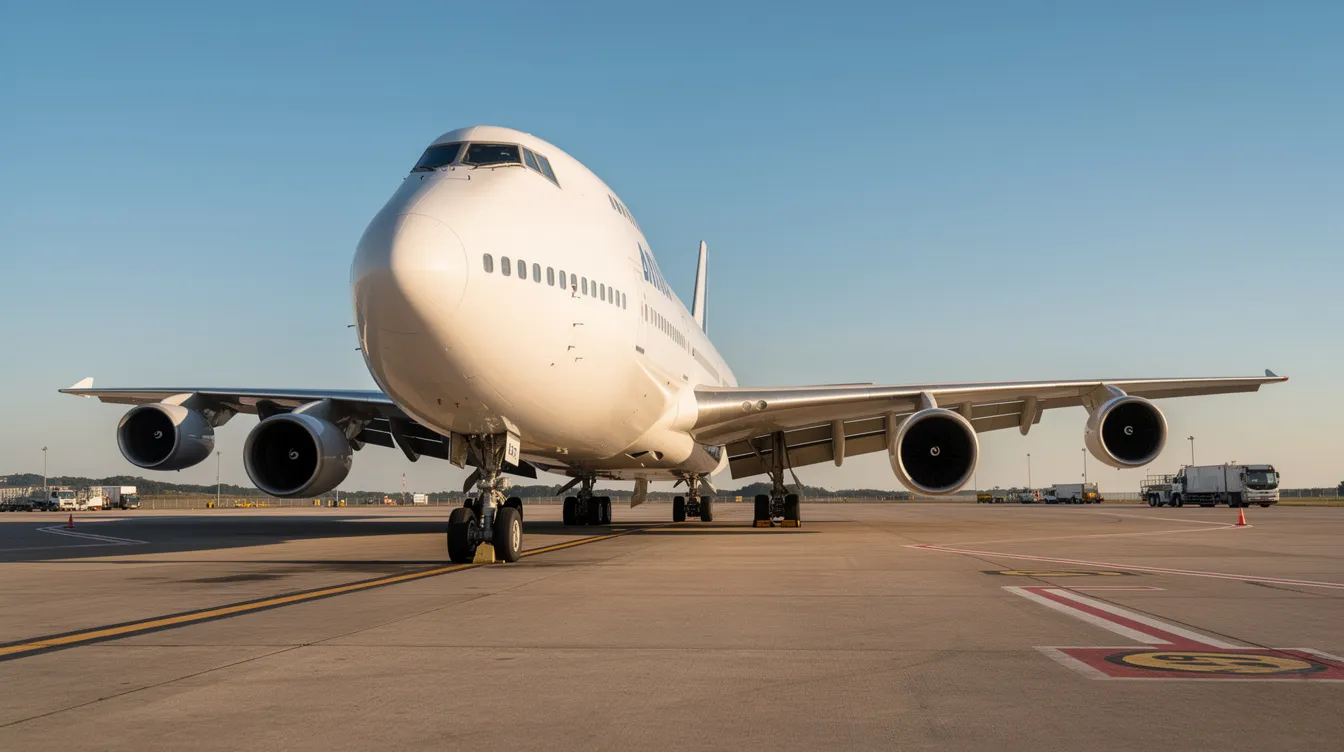
Premium cabins in the nose and upper deck enabled layouts that other aircraft couldn't match. Airlines like Lufthansa (747-8) and British Airways (747-400) used upper decks for first and business class, creating onboard bars and lounge-style spaces that set the standard for luxury in the skies. Boeing aircraft are renowned for their long operational lifespans, and the 747 proved that over more than five decades of continuous service.
Production officially ended in December 2022, with the final 747-8 delivered to cargo operators. Approximately 1,574 units were built across all variants. Passenger operations have largely ceased, though cargo versions (747-8F and 747-400F) continue to serve freight operators worldwide, with the main deck's nose-loading capability making them capable of handling oversized cargo that other aircraft cannot.
Boeing 777: The Workhorse Widebody For Long-Haul Excellence
The Boeing 777 is one of the most successful widebody aircraft in aviation history. Since entering service in 1995, it has become the backbone of long-haul operations for airlines across the world, combining twin-engine design with the range and capacity to fly profitably on routes that once required four-engine airliners.
The 777-300ER offers a range of approximately 7,370 nautical miles, making it capable of nonstop service on demanding routes like New York to Tokyo, Dubai to Sydney, and London to Singapore, and showing how a jet with two engines can replace older four-engine aircraft on long routes. The Boeing 777 is known for its long range and fuel efficiency, and its twin-engine design delivers economics that the four-engine 747 could never match on a per-seat basis. It has excellent fuel efficiency for long routes, which is why it remains a fleet cornerstone for carriers like Emirates, United, and Cathay Pacific.
Passenger comfort on the 777 depends heavily on how each airline configures the cabin. In a nine-abreast economy layout, cabin width provides wider seats and a more comfortable ride. In ten-abreast configurations, the experience tightens noticeably. Business class cabins on the 777 typically feature lie-flat seats, and many airlines operate their most premium long-haul products on this model.
The Boeing 777F freighter variant can fly 4,970 nautical miles with a full load, making it a critical asset for global cargo operations. Looking forward, the Boeing 777X is designed as the world's largest and most efficient twin-engine jet, introducing GE9X engines, composite folding wingtips, and improved per-seat economics. The 777-8 targets a range of approximately 8,745 nautical miles; the 777-9 offers around 7,285. Though certification delays have pushed the first delivery into 2027, the aircraft represents Boeing's future in the wide-body long-haul market.
The 777's operational economics - fuel burn per seat, maintenance record, reliability - make it a favorite of the airline industry globally, just as high-capacity private jets for up to 50 passengers have become indispensable for large-group charter missions.
For BlackJet members arranging transoceanic missions, long-range private jets serve a similar strategic role: connecting distant city pairs nonstop, but with full schedule control and cabin personalization that no commercial flight can match.
Boeing 787 Dreamliner: The Modern Contender For Boeing's Best Plane
The 787 Dreamliner entered commercial service in 2011 with All Nippon Airways, and it immediately reset expectations for what a commercial airplane could deliver. Many frequent flyers and aviation analysts now consider it Boeing's best plane in active service - not for raw size or speed, but for the way it integrates technology, comfort, and efficiency into a single airframe.
The Boeing 787 Dreamliner reduces fuel consumption significantly compared to older models, achieving roughly 20–25% better fuel burn than previous-generation widebodies. This is driven by a fuselage constructed from approximately 50% composite materials by weight, advanced aerodynamics, and more electrified systems that reduce reliance on traditional bleed air. The Boeing 787 Dreamliner reduces fuel consumption with composite materials in a way that also cuts maintenance needs and extends airframe life.
But the real story for passengers is inside the cabin. The 787 delivers measurably better air quality: cabin altitude is maintained at approximately 6,000 feet (compared to roughly 8,000 feet on older jets), humidity is higher, and cabin noise is significantly reduced through engine chevrons and acoustic insulation. Larger electronically dimmable windows and LED lighting that mimics circadian rhythms help passengers arrive feeling less fatigued - concepts that matter enormously on flights exceeding 10 hours.
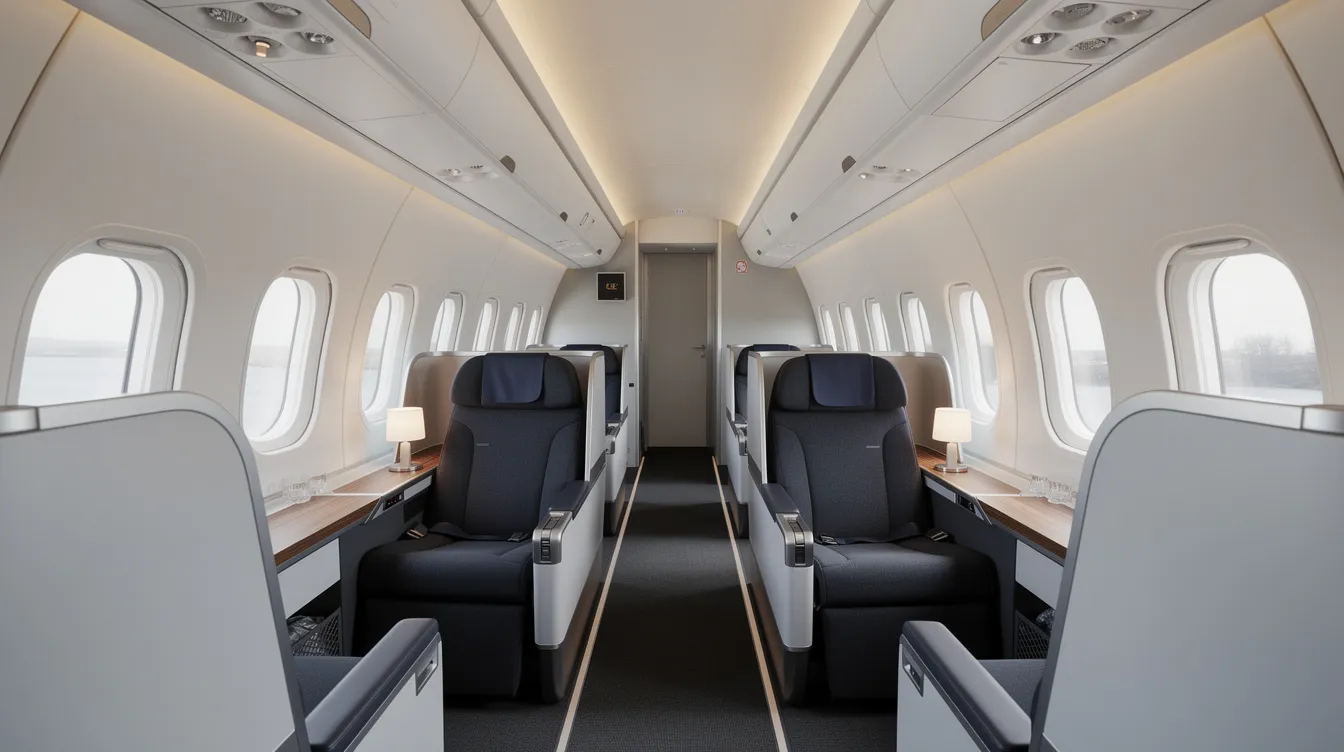
One route example illustrates the 787's capability. Qantas operates its Perth-to-London nonstop on the Dreamliner. United and ANA fly multiple transpacific sectors with 787 variants. The aircraft has enabled airlines to open hundreds of new nonstop point-to-point routes that weren't economically viable before, serving passengers across 85+ countries daily.
Why do many frequent flyers rate the 787 as the best Boeing plane today? It comes down to passenger experience on long flights: lower fatigue, quieter cabins, better humidity, and smoother rides. That said, cabin layout still depends entirely on each airline - a nine-abreast 787 in economy feels very different from one configured at eight-abreast with premium economy, just as cabin design and range distinguish the best private jets in the world from more basic options.
The 787's comfort concepts - air quality, lighting, noise reduction - mirror exactly what BlackJet prioritizes when selecting aircraft for members' long-range trips. If these details matter to you on a commercial flight vs. a private jet, they matter even more when you can control the entire cabin environment.
Boeing 737 And 737 MAX: Short- And Medium-Haul Backbone
The Boeing 737 family is one of the most-produced lines of commercial airplanes in history. Since the 1960s, the 737 has evolved through Classic, Next Generation, and now 737 MAX variants, serving as the narrow-body workhorse that connects business centers and secondary airports across the globe.
The 737's claim to "best" is rooted in ubiquity. No other aircraft family flies as many passengers on as many routes daily. For domestic hops - New York to Chicago, Dallas to Denver, London to Madrid - the 737 and its variants operate the majority of departures for major airlines.
Boeing 737 MAX models focus on high fuel efficiency and low emissions, powered by CFM LEAP-1B engines that deliver approximately 14–20% better fuel burn versus predecessor NG variants. Updated cabins feature larger overhead bins, improved lighting, and the Boeing Sky Interior. However, cabin width remains approximately 11 feet 7 inches - noticeably narrower than the Airbus A320neo family's roughly 12 feet 1 inch, which affects seat comfort in economy, particularly in middle seats.
The safety history of the 737 MAX cannot be ignored. Two fatal crashes in 2018 and 2019, tied to the MCAS flight control system, led to a global grounding. Extensive software redesigns, regulatory recertification by the FAA and international authorities, and updated crew training protocols have since returned the aircraft to service under strict oversight. As of 2026, the MAX operates at high utilization across dozens of airlines with robust safety monitoring.
Comfort trade-off: Frequent flyers consistently note the difference between a two-hour 737 flight and the same route on a wider cabin aircraft. Seat pitch, cabin noise, and boarding logistics add up, which is why many look into how to buy a seat on a private jet for key business trips.
Private jet comparison: Many BlackJet flights replace the exact city pairs typically flown by 737s. A 25-hour Jet Card turns a 90-minute commercial trip - with its two-hour airport buffer on each end - into a seamless door-to-door experience. For the business traveler doing this weekly, the math shifts quickly.
How Boeing Commercial Airplanes Compare With Other Aircraft Types
No airline operates a single aircraft company fleet by accident. Airlines mix Boeing and Airbus airplanes to optimize routes, negotiate pricing, and match aircraft capability to market demand. Understanding where Boeing stands relative to other aircraft sharpens the broader conversation about what "best" means.
Category | Boeing Models | Key Features | Comparable Airbus Models | Notes |
|---|
Widebody | 747, 777, 787, 777X | Long range, high capacity, fuel efficiency (especially 777X), iconic design (747) | A350, A380 | 747, known as “queen of the skies”; 787 Dreamliner leads in passenger comfort and efficiency |
Narrowbody | 737 MAX, 757, 717 | High frequency short-to-medium haul, fuel-efficient, versatile | A320neo family, A220, A321XLR | 737 MAX updated with LEAP engines; 757 celebrated for performance; A321XLR longest narrowbody range |
Freighter & Cargo | 747-8F, 777F | Large payload, long range, nose-loading capability (747) | A330-200F | Cargo variants extend operational life and utility |
Business & VIP Jets | BBJ (737, 777, 787) | Ultra-long range, bespoke interiors, large cabins | ACJ (Airbus Corporate Jets) | BBJs convert commercial airframes for VIP use, but require longer runways and higher costs |
Future Development | 797 (on hold) | Intended 757/767 replacement, based on 787 platform | N/A | Program paused due to market conditions; first flight expected post-2030 |
Widebody comparison: Boeing's 777 and 787 compete directly with the Airbus A350, which features a spacious cabin and quiet engines that rival the Dreamliner's comfort proposition. The Airbus A380 is the largest commercial aircraft currently in service, though its hub-to-hub model has fallen out of favor as airlines shift toward efficient twinjets for long-haul routes. Boeing's wide-body twins have largely won the market economics argument.
Narrowbody rivalry: The 737 MAX competes with the Airbus A320neo family and the Airbus A220, which has the widest economy seats in the industry. The Airbus A321XLR is the longest range narrow-body plane, capable of approximately 4,700 nautical miles - pushing into territory that blurs the line between narrow body and wide body missions and influencing how top private jet companies position their fleets for similar stage lengths.
Boeing's broader legacy: The Boeing 757 is celebrated for its unique capability and high performance on routes that demand steep takeoffs and long range from a single-aisle frame. The Boeing 717 has an excellent safety record and high utility as a narrowbody airliner on short regional routes. Both models, though no longer in production, illustrate the depth of Boeing's contribution to the industry.
Looking ahead: Boeing 797 is the only 7X7 model name not assigned yet. Boeing plans to develop the 797 as a 757/767 replacement. The 797 design may be based on the Boeing 787 platform, and Boeing aims to fill the 737 and 757 roles with the 797. However, the Boeing 797 is currently on hold due to market conditions, with the first flight of the Boeing 797 expected after 2030.
VIP and business jet conversions: Boeing Business Jets (BBJ) convert 737, 777, and 787 airframes into ultra-long-range VIP aircraft with bespoke cabins - private bedrooms, lounges, and en suite facilities. For those curious about this category, our Boeing BBJ guide and broader overview of [private jet sizes and categories cover the details.
For BlackJet clients, the choice is often between flying on an airline's best commercial aircraft and booking a purpose-built private jet. We curate the most suitable aircraft category for each trip, whether that's a light jet for a regional hop or a large cabin aircraft for a transatlantic meeting, leveraging the full suite of BlackJet private jet card and charter services.
From Best Boeing Plane To Best Way To Fly: Private Jet Access With BlackJet
The question "Which Boeing is best?" is worth asking. But for executives and high-net-worth travelers who fly frequently, a more valuable question is: "What's the best way for me to travel?"
Even on the finest Boeing widebody in business or first class, you're still subject to airline schedules, terminal delays, security queues, and shared cabins. A New York-to-Miami business trip on a commercial flight consumes roughly five to six hours door-to-door. The same trip via private jet takes closer to three - with no early arrival requirement, no baggage carousel, and full control over timing.

BlackJet's Jet Card programs - including 25-hour and 50-hour options - offer a strategic alternative to even the best Boeing commercial airplanes in business or first class, and understanding overall jet card cost and pricing structures helps clarify the value. Here's what the model delivers:
Safety and certification: Every partner operator meets rigorous safety standards. BlackJet's proprietary certification process ensures maintenance records, crew credentials, and operational protocols match or exceed airline-level requirements.
Carbon-neutral flights: Every trip includes carbon offsets at no additional cost, along with optimized routing and sustainable aviation fuel integration where available.
24/7 digital booking and real-time support: Schedule changes, weather disruptions, and last-minute adjustments are handled seamlessly through BlackJet's platform.
Access to multiple aircraft categories: From light jets for regional routes to large cabin jets for long haul missions, the fleet adapts to your itinerary - not the other way around, and our guidance on types of private jets can help narrow the choices.
Consider the client who previously flew long haul on a Boeing 777 or 787 in business class for transatlantic meetings. Now, they use a Jet Card for weekly regional hops between East Coast cities and book occasional large-cabin charters for London or Geneva. The total flight hours may be similar, but the time saved, privacy gained, and schedule flexibility are in a different category entirely, especially when you understand jet card pricing and value trade-offs. That's the sense in which "best" takes on a new meaning.
FAQs: Boeing's Best Planes And Private Jet Alternatives
Which Boeing aircraft is best for long-haul passenger comfort?
The 787 Dreamliner generally earns the top ranking for passenger comfort on long flights, thanks to its lower cabin altitude, higher humidity, larger windows, and reduced cabin noise. The 777 offers more cabin space and wider seat options in premium classes but lacks some of the Dreamliner's environmental innovations. Both serve different operational roles depending on route and airline configuration.
Is the Boeing 747 still a good plane to fly on in 2026?
Passenger 747 operations are extremely limited. A handful of carriers may operate the 747-400 on select seasonal routes, but the fleet is largely retired from passenger service. Cargo variants remain active. If you have the chance to fly one, it's a nostalgia-worthy experience - the Boeing 747 remains iconic for its spaciousness and design - but it's no longer a practical choice for regular travel.
Is the 737 MAX safe to fly now?
Yes. Following the 2018–2019 grounding, the 737 MAX underwent extensive software redesign, hardware updates, and recertification by the FAA and international regulators. Enhanced pilot training protocols are now standard. The aircraft operates at high utilization globally with ongoing regulatory oversight. Concerns were valid; the response was comprehensive.
How do Boeing Business Jets compare to traditional private jets?
BBJs offer enormous cabin volume and ultra-long range - a BBJ based on a 777 airframe can carry a full VIP interior nonstop across oceans. However, they require commercial-length runways, higher crew requirements, and significantly greater operating costs. Traditional private jets (midsize and large cabin) offer more airport flexibility, lower per-hour costs, and faster turnaround - which is why most BlackJet members fly them for the majority of their trips.
When does it make more sense to choose a private jet instead of a Boeing commercial flight?
The inflection point arrives when you value schedule control, privacy, and multi-city itineraries more than the per-seat economics of a commercial ticket. For travelers flying 20+ times per year, a Jet Card often delivers better total value than business or first class, especially when you guess correctly that the hours lost in terminals and rigid schedules carry a real cost; comparing the best jet cards for frequent flyers can clarify when that switch makes sense.
Conclusion: The Best Boeing Plane – And The Best Experience
Historically, the Boeing 747 defined what long-haul air travel could be. Today, the 787 Dreamliner and Boeing 777 are the frontrunners among Boeing commercial airplanes based on efficiency, range, and passenger comfort. Each model serves a distinct role in the fleet strategies of the world's leading airlines, and Boeing's forward pipeline - including the 777X and eventual 797 - promises to carry that line of innovation into the next decade, just as evolving private jet price structures and access models are reshaping expectations in business aviation.
But for many travelers, the true "best" isn't a specific aircraft model. It's the service model that maximizes your time, privacy, and control over every trip. That's often a private jet rather than any commercial aircraft, no matter how advanced, especially as more travelers explore the cheapest private aircraft options and affordable entry-level private jets to access this flexibility. BlackJet curates the right jet, cabin class, and route for each mission - just as the world's best airlines match Boeing models to theirs.
Explore BlackJet's Jet Card programs and discover how private aviation can elevate your travel beyond even the best commercial aircraft in the skies today. Whether you're considering a focused 25-hour jet card program, stepping up to a 50-hour jet card solution, evaluating a larger 100-hour jet card commitment, comparing options like NetJets jet card pricing or Flexjet jet card costs, or even exploring purchasing a private jet in the UK, the right structure depends on how and how often you fly.


 Sign up with google
 Sign up with Apple