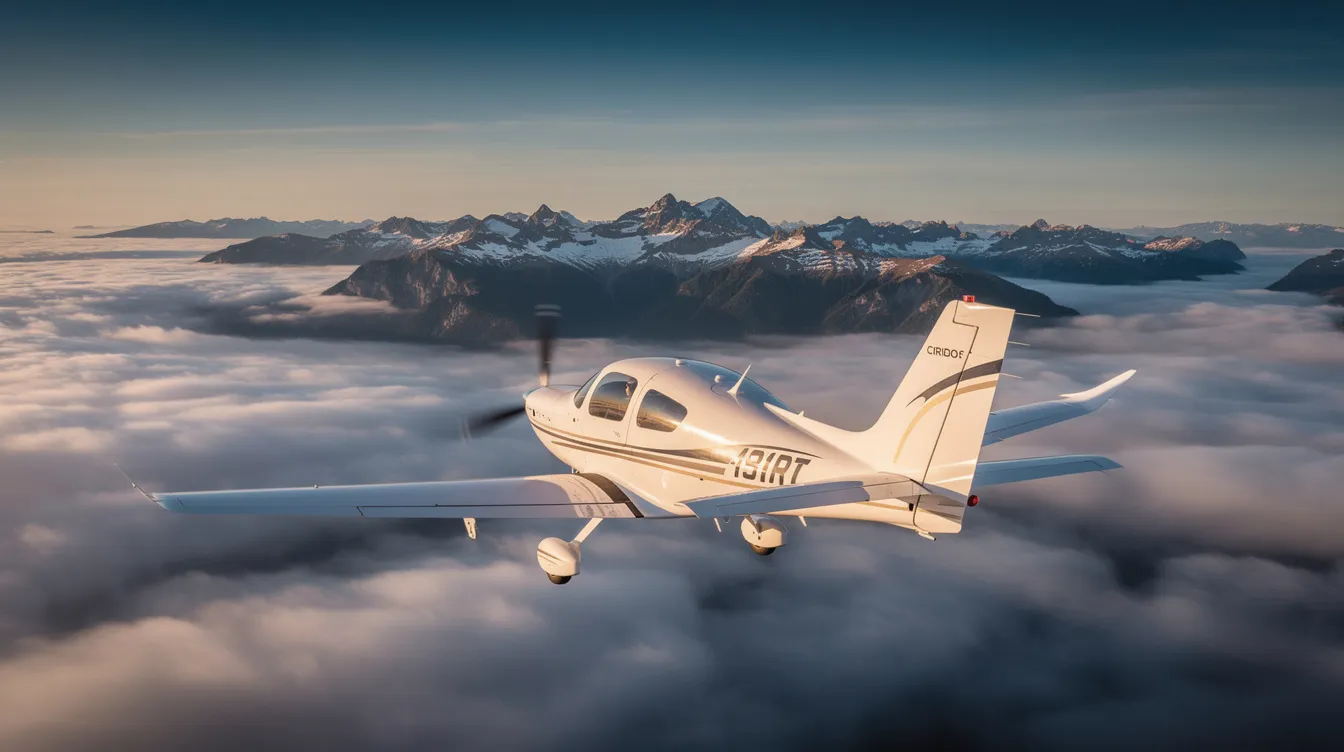
The Cirrus SR22T sits at the pinnacle of piston-powered general aviation—a turbocharged, parachute-equipped airplane that can cruise at 213 knots above 20,000 feet. It's also one of the most expensive single-engine planes to buy and operate. If you're evaluating the cost of Cirrus SR22T ownership, the sticker price is only where the conversation begins. This guide breaks down every dollar you'll spend—and then compares that investment against smarter alternatives for the discerning traveler.
SR22T Cost Overview: Purchase Price vs. Real-World Budget
The SR22 has been the best-selling GA airplane since 2003, and over the past two decades the platform has evolved from a relatively affordable composite single into a million-dollar machine. Here's where the market sits today:
Acquisition Price Breakdown
Aircraft/market segment | Typical price range | Key considerations |
|---|
New 2026 SR22T G7+ | Approximately $1,069,900 base; up to $1.2M–$1.3M with options | FIKI, four-blade propeller, and premium interior packages add to the price. |
New G7 models | $938,000–$1.17M | Configuration and selected options determine the final price. |
Late-model used SR22T (G6, 2018–2022) | $670,000–$900,000 | Condition, equipment, and maintenance records influence value. |
Older SR22T (G3–G5, 2010–2016) | $440,000–$650,000 | Engine time, avionics, and CAPS status drive the spread. |
A new 2026 SR22T G7+ lists at approximately US$1,069,900 base, climbing toward $1.2M–$1.3M with FIKI, 4-blade propeller, and premium interior packages.
New G7 models range from $938k to $1.17M depending on configuration and options selected.
Late-model used SR22Ts (G6, 2018–2022) typically trade between $670,000 and $900,000.
Older G3–G5 SR22Ts (2010–2016) are commonly sold between $440,000 and $650,000, with engine time, avionics, and CAPS status driving the spread.
But the real cost of Cirrus SR22T ownership must account for far more than the acquisition price:
Annual Fixed Costs
Cost category | Typical annual / lifecycle estimate | What it covers |
|---|
Capital outlay | $600,000–$1.2M tied up | Cash purchase or aircraft financing. |
Annual fixed costs | $35,000–$60,000 per year | Hangar, insurance, subscriptions, and inspections. |
Hourly variable costs | $250–$400 per flight hour | Fuel, oil, maintenance, and engine reserves. |
Major lifecycle events | $150,000–$250,000 over a decade | CAPS repacks, engine overhauls, and avionics upgrades. |
Capital outlay—whether cash or financed, you're tying up $600K–$1.2M in a single asset.
Annual fixed costs—hangar, insurance, subscriptions, and inspections run $35,000–$60,000 per year before you burn a gallon of fuel.
Hourly Variable Costs
Major Lifecycle Events
Major lifecycle events—CAPS repacks, engine overhauls, and avionics upgrades can total $150,000–$250,000 over a decade.
From a capital allocation perspective, contrast locking $1M+ into a depreciating airplane versus deploying that capital in markets while using a Jet Card for premium private access when you actually need to fly, especially once you understand the broader private jet price list and access models.
New vs. Used Cirrus SR22T Pricing (2024–2026 Market Snapshot)
Model year, generation, and equipment define SR22T prices more than total airframe hours alone. Newer generations of aircraft generally command higher prices due to improvements in technology, safety, and connectivity. Cirrus aircraft hold their value exceptionally well over time, but there is still meaningful spread across the fleet. Aircraft prices are influenced by supply, demand, interest rates, and operating expenses.
Here's how the market segments:
Generation/model years | Typical market price | Typical attributes |
|---|
2010–2013 SR22T G3/G5 | $440,000–$600,000 | Well-kept, FIKI-equipped aircraft with mid-time engines; capable Garmin-based Perspective avionics. |
2014–2017 SR22T G5/G6 | $580,000–$700,000+ | Updated avionics and interior features. |
2018–2021 SR22T G6 GTS | $670,000–$800,000 | Perspective+ avionics; FIKI is standard on many examples. |
2022–2023 SR22T G6 GTS | $815,000–$900,000 | Carbon and Xi/Arrivée editions may include Global Connect. |
2024–2025 SR22T G7/G7 GTS | Near or above $1,000,000 | Perspective Touch+, FIKI, and upgraded connectivity. |
2026 SR22T G7+ | Approaching $1.2M+ with options | Safe Return emergency autoland and premium equipment. |
2010–2013 SR22T G3/G5: roughly $440,000–$600,000 for well-kept, FIKI-equipped aircraft with mid-time engines. These earlier generations use Cirrus Perspective avionics (Garmin-based) that remain capable but lack modern features.
2014–2017 SR22T G5/G6: updated avionics and interior upgrades pull prices into the $580,000–$700,000+ range.
2018–2021 SR22T G6 GTS: commonly $670,000–$800,000, with Perspective+ avionics and FIKI as standard on many examples.
2022–2023 SR22T G6 GTS: often $815,000–$900,000, especially Carbon and Xi/Arrivée editions with Global Connect.
2024–2025 SR22T G7/G7 GTS: list prices near or above $1,000,000, featuring Perspective Touch+, FIKI, and upgraded connectivity.
2026 SR22T G7+: Safe Return emergency autoland, premium pricing approaching $1.2M+ with full options.
Used Cirrus SR22 models typically sell for $350k to $700k across the broader SR22 lineup. A new Cirrus SR22 G7+ costs around $938k to $1.17M.
Factors that move prices 5–10% in either direction:
CAPS repack recent versus coming due (a freshly repacked airframe commands a premium).
Engine and propeller time since overhaul or factory new.
Known icing (FIKI) and built-in oxygen versus "clean-wing" aircraft.
Cosmetic condition, Xi/Carbon schemes, and interior quality.
Maintenance history and aircraft condition significantly affect resale value—always search the logbooks before making an offer.
SR22T Ownership Costs: Fixed Annual Expenses
These are the costs that hit every year whether the airplane flies 50 hours or 300. For any prospective owner building a budget, these fixed ownership costs are essential to quantify before signing:
Fixed expense | Typical annual cost | Important variables |
|---|
Hangar or tiedown | $8,000–$18,000 | Location, heated storage, security, and maintenance access. |
Insurance | $15,000–$25,000 | Hull value, pilot experience, instrument rating, and transition training. |
Annual inspection | $5,000–$10,000 typical | Repairs or unexpected findings can raise the bill. |
Avionics subscriptions | $2,000–$5,000 | Database, weather, and connectivity packages. |
Property tax and registration | $3,000–$10,000 where applicable | State and aircraft value. |
Hangar and Storage
Hangar or tiedown: $8,000–$18,000 per year. Metro airports and heated hangars in places like California or the Northeast command the top of this range; regional fields cost less but may lack air conditioning, security, or maintenance access.
Insurance
Insurance: $15,000–$25,000 annually for a $900k–$1.1M hull value SR22T. Insurance for a Cirrus SR22 can exceed $20k per year, heavily influenced by pilot time, instrument rating, and completion of formal transition training with a CSIP instructor.
Annual Inspection
Annual inspection: typically $5,000–$10,000 on a well-maintained SR22T, with the caveat that cylinder, exhaust, or avionics surprises can double that in a bad year. Annual maintenance costs for a Cirrus SR22 range from $10k to $15k across the fleet.
Avionics Subscriptions
Avionics databases and subscriptions (Garmin, Jeppesen, XM weather, Global Connect data plans): $2,000–$5,000 per year depending on IFR usage and connectivity packages.
Property Tax and Registration
Realistic fixed costs land in the $35,000–$60,000 per year band before a single gallon of fuel is burned. A professionally managed, business-use SR22T may carry higher insurance and management fees but can gain tax advantages and streamlined flying finance that partially offset the load, much like the structured tax benefits of fractional jet ownership.
Hourly Operating Costs: Fuel, Maintenance, and Engine Reserves
The SR22T is a 200+ knot, 25,000-foot machine—and its fuel burn and maintenance profile reflect that performance. Here are the variable costs that scale with every hour you fly:
Variable cost | Planning estimate | Notes |
|---|
Fuel | $120–$160 per flight hour | Based on 16–18 gph at $7–$8 per gallon. |
Routine maintenance and unscheduled items | $70–$120 per hour | Tires, brakes, oxygen, exhaust repairs, cylinders, and oil changes. |
Engine reserve | $35–$45 per hour | TSIO-550-K TBO is approximately 2,200 hours. |
Propeller reserve | $5–$10 per hour | Varies by propeller and overhaul interval. |
Total variable costs | $250–$400 per flight hour | Excludes fixed costs and capital costs. |
Fuel Burn
Fuel burn: the G3 model introduced a 92-gallon fuel capacity that carries forward through current production. Typical cruise fuel consumption runs 17–20 gallons per hour at higher power settings in the flight levels. At reduced power, fuel consumption is approximately 13.5 gallons per hour on the naturally aspirated SR22 side, while the turbocharged SR22T burns closer to 16–18 gph at 75%–85% cruise. At $7–$8/gallon avgas, fuel alone runs $120–$160 per flight hour.
Routine Maintenance
Routine maintenance and unscheduled items: tires, brakes, oxygen system refills, exhaust repairs, cylinder work, and oil changes average $70–$120 per hour when smoothed over several years.
Engine Reserve
Engine reserve: the Continental TSIO-550-K has a Time Between Overhaul of approximately 2,200 hours. With overhaul costs running $65,000–$85,000, owners should set aside roughly $35–$45 per hour.
Propeller Reserve
Roll it up: many owners end up at $250–$400 per flight hour in variable costs for the SR22T, before counting fixed expenses. Aggressive high-altitude flying, poorly managed cylinder head temperatures, and deferred maintenance can push these numbers higher over the life of the engine.
Major Lifecycle Events: CAPS, Engine, Propeller, and Avionics
Lump-sum events define long-term ownership costs and materially impact resale value. These are the big-ticket items every SR22T owner must plan for:
Lifecycle item | Planning estimate | Timing/cost drivers |
|---|
CAPS repack | $13,000–$16,000 | Required every 10 years, plus line-cutter intervals. |
Engine overhaul | $65,000–$85,000 | TSIO-550-K TBO is approximately 2,200 hours. |
Propeller overhaul or replacement | $10,000–$20,000 | Roughly 6–10-year intervals, depending on equipment. |
Avionics upgrades | $10,000–$40,000 over a decade | Connectivity, transponder, and software updates. |
Combined lifecycle events | $150,000–$250,000 over a decade | Actual spend depends on utilization and condition. |
CAPS Repack
Cirrus Airframe Parachute System (CAPS) repack: required every 10 years, plus line cutter intervals. CAPS repack costs between $13k and $16k every 10 years at current pricing. Aircraft with a repack due "this year" are routinely discounted versus freshly repacked examples—a pattern savvy buyers exploit.
Engine Overhaul
Engine overhaul: the TSIO-550-K TBO is approximately 2,200 hours. Many owners choose a proactive top-overhaul before full TBO if cylinders show wear. Full overhaul typically runs $65,000–$85,000 in 2026 dollars with reputable shops; factory reman options can cost more.
Propeller Overhaul
Propeller overhaul or replacement: 4-blade composite props on later G6/G7 models involve different overhaul cycles than earlier 3-blade Hartzell props. Budget $10,000–$20,000 at 6–10-year intervals to replace or overhaul.
Avionics Upgrades
Avionics upgrades: Perspective to Perspective+ retrofits are rare and expensive. More typical upgrades include Flight Stream, ADS-B transponders, autopilot software updates, and enhanced connectivity equipment. Allow $10,000–$40,000 over a decade for keeping a cross-country SR22T stack modern.
Over a 10-year horizon, these events can easily add $150,000–$250,000 to total ownership costs—a figure that must be on every prospective buyer's account ledger.
Performance, Mission Profile, and Why People Pay SR22T Money
You're paying SR22T money for altitude, weather capability, and speed that the naturally aspirated Cirrus SR22 simply cannot match. The specifications tell the story:
Engine and Performance Specs
Specification | SR22 | SR22T |
|---|
Engine | 310-hp Continental | 315-hp Continental TSIO-550-K turbocharged |
Maximum cruise speed | 183 knots | Up to 213 knots |
Service ceiling | 17,500 feet | 25,000 feet |
Typical mission range | Approximately 1,169 nm | Approximately 800–1,000 nm, depending on power and payload |
Fuel consumption reference | Approximately 13.5 gph | Approximately 16–18 gph at 75%–85% cruise |
Engine and Performance Specs
The SR22T is powered by a 315 hp Continental TSIO-550-K turbocharged engine. By comparison, the standard SR22 is powered by a 310-hp Continental engine with a service ceiling of 17,500 feet and a max cruise speed of 183 knots.
The turbocharged SR22T can cruise at 213 knots at FL250, with practical cruise regimes of 190–205 knots.
Range and Altitude
Service ceiling of 25,000 feet allows flying above weather and terrain that naturally aspirated models cannot clear.
The SR22 has a range of approximately 1,169 nautical miles; the SR22T trades some of that range for altitude performance, with a typical mission range of 800–1,000 nm depending on power settings and payload.
FIKI and Weather Capability
Real-world mission examples illustrate why owners accept the higher prices:
Typical Mission Profiles
An owner-pilot commuting from New York to South Florida non-stop above most weather in February.
A West Coast entrepreneur flying from Los Angeles to Aspen at higher altitudes to clear terrain and handle summer density altitude.
A corporate flight department using the SR22T as a regional executive shuttle within 500–700 nm of headquarters—a mission that would be impractical in a naturally aspirated plane at lower altitudes.
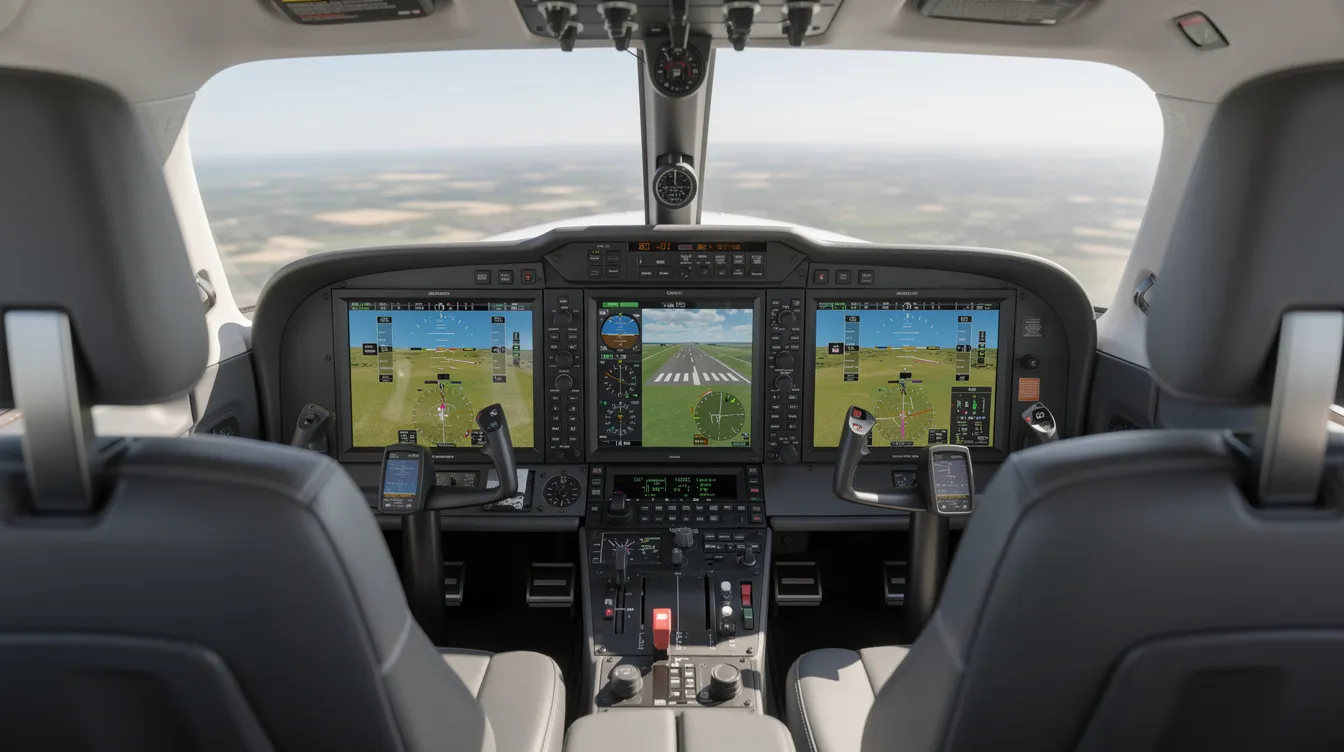
FIKI and turbocharging together are why many pilots step up from the SR22 to the SR22T, despite the premium. The flight deck of a modern G7 SR22T—with synthetic vision, weather data overlay, and advanced autopilot—is among the most capable in general aviation.
Safety Technology: CAPS, Known Icing, and Safe Return Emergency Autoland
A major part of SR22T pricing reflects its embedded safety ecosystem rather than raw speed alone.
Cirrus Airframe Parachute System (CAPS): standard across the SR-series, the CAPS has saved over 200 lives since its introduction. The SR22's fatal accident rate fell meaningfully after CAPS training began emphasizing early deployment—a record that has helped the platform achieve some of the industry's lowest fatal accident rates among high-performance singles. The parachute provides a level of protection that no other piston single offers.
Flight Into Known Icing (FIKI): The TKS-based system has been certified since 2009. Many SR22T G3–G7 aircraft carry full FIKI, while some "clean wing" versions do not. FIKI significantly increases dispatch reliability in winter but adds maintenance load and acquisition cost—a tradeoff owners must weigh against their mission.
Safe Return Emergency Autoland: the G7+ model features Safe Return emergency autoland as standard equipment. This makes Cirrus the first piston platform with safe return emergency autoland capability. A passenger can push one button; the aircraft communicates with ATC, navigates to a suitable runway, executes the landing, and shuts down autonomously if the pilot is incapacitated. In addition, newer Cirrus cockpits include Electronic Stability and Protection (ESP), Runway Occupancy Awareness, and enhanced synthetic vision.
These technologies push SR22T pricing well above older high-performance singles, but they underpin the airplane's appeal for family travel—particularly for non-pilot spouses who value Safe Return and CAPS as a safety win that justifies the cost.
What It Really Takes to Afford an SR22T: Income, Utilization, and Risk
Honest finance conversations matter more than aspirational marketing. Here's what the data suggests:
Purchase: tying up $600k–$1.2M in a depreciating, capital-intensive asset generally implies net worth in the multi-million range to remain prudent. Financing terms for a Cirrus SR22 can extend up to 20 years, and a down payment of at least 15% is typically required—meaning you need substantial credit and liquidity. For some buyers, comparing these numbers with the cheapest private aircraft and access pathways or even localized solutions such as private jet charters in Karachi can clarify which model truly fits their lifestyle and travel pattern.
Annual cost example for an owner flying 150 hours per year:
Fixed costs: $40,000–$60,000.
Variable costs: $40,000–$60,000 (150 hours × roughly $275–$400/hour).
Realistic total annual budget: $80,000–$120,000, excluding payment on any loan.
Income heuristic: many financial advisors suggest aircraft ownership makes sense when total annual aircraft cost stays under 5–10% of gross income, implying $800,000+ household income for comfort at the higher end.
Pilot training and time: insurance typically demands an instrument rating and formal Cirrus transition training. Recurrent training—such as an annual CSIP checkout—is essential for safety and insurability, adding both cost and scheduling obligations that owners must account for.
Sharing ownership through partnerships, or using charter and Jet Card programs, can deliver similar travel outcomes without singularly carrying this budget burden—a reality that many in the world of private aviation are increasingly embracing, particularly when you understand Jet Card cost and membership pricing.
SR22T Ownership Costs vs. Charter and Jet Card Programs
For executives and high-net-worth travelers who fly irregularly or on multi-city missions, comparing full ownership costs against buying access on demand is not optional—it's essential. Frequent business or high-net-worth leisure travelers seek flexibility and luxury in private aviation, and a Jet Card offers exactly that.
Ownership Sweet Spot
Jet Card Comparison
Capital Outlay vs. Flexibility
BlackJet's premium private Jet Card programs model lets members pre-purchase hours across multiple cabin classes—turning what might have been a $1M+ commitment to a single aircraft into flexible access to light jets, midsize jets, and large-cabin aircraft. BlackJet flights are carbon-neutral and operated under rigorous safety certification, providing a fundamentally different risk profile than personally flying through marginal weather in a piston single, and you can even buy a seat on a private jet rather than chartering the whole aircraft for some missions.
Consider a scenario: a client who previously owned an SR22T for regional trips now uses a 25-hour Jet Card to fly New York–Miami, Los Angeles–Aspen, and London–Geneva with professional pilots, jet-class cabins, and zero maintenance surprises, leveraging the advantages outlined in our complete guide to the 25-hour Jet Card. The capital freed from aircraft ownership is now deployed in markets generating returns rather than absorbing depreciation.
This is not anti-SR22T: for some, owning a Cirrus and holding a Jet Card for longer or international missions is the optimal blend, especially when you understand Jet Card pricing structures and benefits.
Private Jet Capability vs. Cirrus SR22T: Time, Range, and Comfort
Private jet travelers value safety and convenience in their travel options. Here's how the SR22T stacks up against what a light or midsize jet via BlackJet can deliver:
Travel consideration | Cirrus SR22T | Light or midsize jet via BlackJet |
|---|
Typical cruise speed | Approximately 200–213 knots | Approximately 390–450 knots for light jets. |
Typical range | Approximately 800–1,000 nm by mission | About 1,200–1,800 nm for light jets. |
Cabin | Pilot plus up to three passengers in a compact cabin | More room; midsize and larger cabins can offer stand-up space and enclosed lavatories. |
Crew and workload | Owner-pilot manages flying, ATC, weather, and systems | Professional crew lets travelers work, rest, or meet. |
Access model | Purchase, finance, and operate an aircraft | Jet Card access across aircraft categories without ownership responsibilities. |
Speed and Range
Speed and range: the SR22T cruises at approximately 200–213 knots with 800–1,000 nm typical missions. A light jet accessible through BlackJet delivers 390–450 knots and 1,200–1,800 nm range, cutting block times nearly in half, which is central to understanding 100-hour Jet Card cost and value.
Cabin Comfort
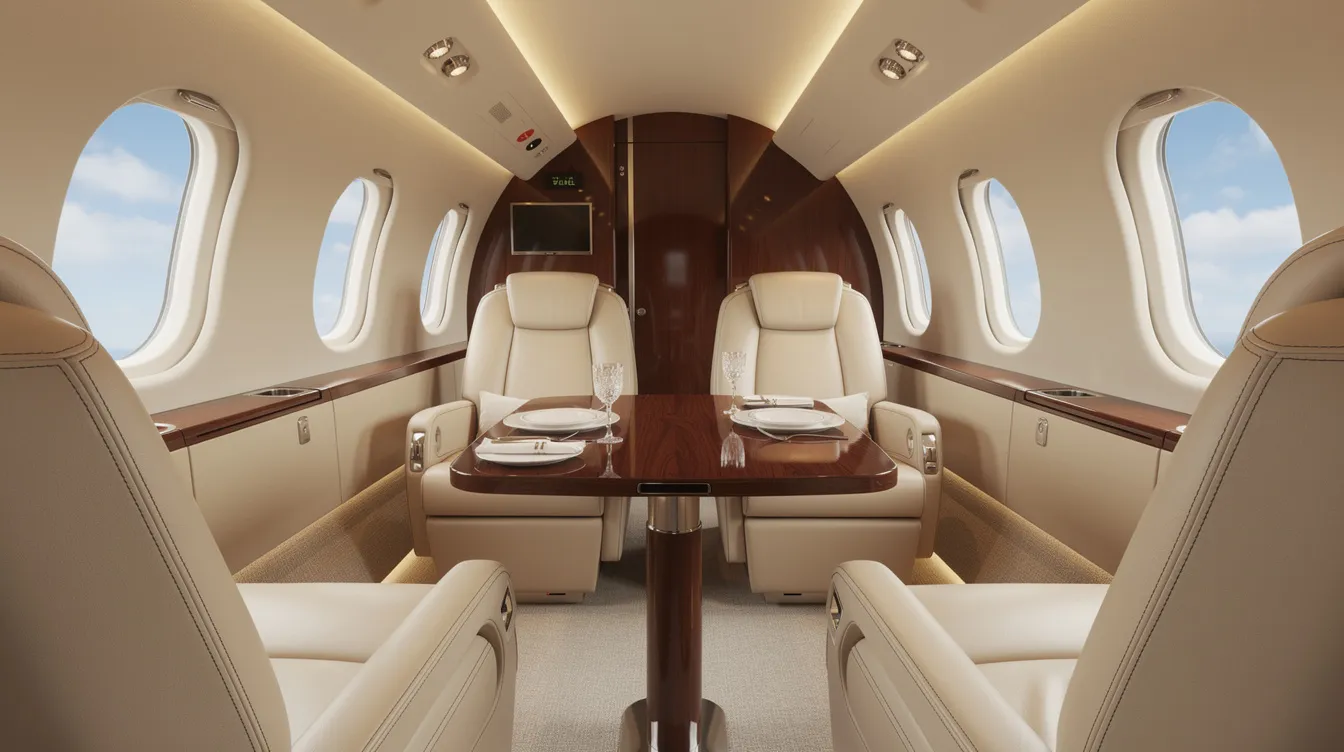
Cabin and comfort: the SR22T carries 1 pilot plus 3 passengers in a compact cabin—excellent for 2–3 hour hops but no walk-around space or air conditioning on older models. Light and midsize jets offer stand-up cabins, enclosed lavatories, and full work and dining environments, while larger aircraft can even serve as the best private jet for 20 passengers.
Weather and Redundancy
Weather and redundancy: the SR22T relies on a single engine, FIKI, and CAPS—safe when flown well, but inherently single-string. Jets provide multi-engine redundancy, higher cruise altitudes, and advanced autoland systems in the newest types, and large-group charters can even leverage private jets for up to 50 passengers.
Productivity
Productivity: in an SR22T, the pilot is fully occupied flying—managing ATC, weather, terrain, and systems. In a BlackJet charter, the traveler spends the entire flight working, resting, or meeting.
For many high-net-worth travelers, the total value of time, comfort, and safety argues for Jet Card use on primary business missions while the SR22T is retained purely as a passion aircraft—if at all.
Sustainability and ESG Considerations: SR22T vs. Carbon-Neutral Jet Access
The cost of Cirrus SR22T ownership now extends to environmental accountability—a consideration that matters to modern business leaders and family offices alike.
SR22T realities:
Avgas-burning piston operation with no inherent carbon offset built into ownership.
While fuel burn (~17–20 gph) is lower than most jets, emissions accountability rests solely on the owner to offset voluntarily.
Upgrading to newer SR22T models does not fundamentally change the emissions profile.
BlackJet approach:
The financial and reputational cost of flying is no longer just about purchase price and hourly burn—environmental accountability is now part of the equation, and structured private jet programs can outshine ad hoc single-aircraft ownership on this front.
Strategic Alternatives to Buying an SR22T Outright
High-net-worth individuals have several paths to Cirrus-level or jet-level capability without absorbing 100% of SR22T ownership costs, including exploring the cheapest private aircraft and access options:
Renting or Leasing
Partnerships
Fractional Ownership
Jet Card Programs
BlackJet Jet Card: pre-purchase hours across multiple aircraft categories. No maintenance, no hangar, no insurance—per-hour rates visible up front with 24/7 booking and real-time support, enabling last-minute trips that a personally managed SR22T may not support due to pilot rest, weather, or availability, and aligning with what many consider the best Jet Cards for frequent flyers.
Define your mission profile—average leg length, passengers, frequency—and match it to the most capital-efficient model, rather than defaulting to SR22T purchase purely because it is aspirational.
How BlackJet Fits Into a Cirrus Owner's Travel Strategy
BlackJet is designed as a complement or alternative to Cirrus SR22T ownership for discerning travelers who refuse to compromise.
For existing SR22 or SR22T owners: use the Cirrus for regional, good-weather, or personal-passion flights. Use a BlackJet Jet Card for high-stakes business travel, long-range trips, or when schedule, weather, or fatigue make single-pilot piston operations less than ideal.
For prospective buyers considering an SR22T primarily to avoid airline hassles: BlackJet provides that freedom and schedule control without committing $1M+ in capital and $80k–$120k/year in ownership costs. BlackJet offers aircraft choice—light jet, midsize, large cabin—on a per-mission basis, something an SR22T can never match, particularly through the BlackJet 25+ Hour Jet Card.
Safety and technology: BlackJet partners with top-rated operators meeting leading safety audit standards (ARGUS, IS-BAO). Real-time support and digital booking tools provide clarity, control, and situational awareness for the traveler—a "glass cockpit" equivalent on the ground.
Elevate your travel—effortlessly. With BlackJet, private flight is accessible on your terms through Jet Card programs complete with rigorous safety, carbon-neutral performance, and unmatched flexibility. Explore BlackJet's Jet Card programs and discover how refined, meaningful travel becomes your new standard. Join BlackJet for seamless, premium private travel—safety, sustainability, and flexibility built in.
SR22T Cost and Ownership FAQ
These are the questions sophisticated buyers ask most frequently when evaluating the cost of Cirrus SR22T ownership.
How much does a new Cirrus SR22T cost in 2024–2026?
Base price for a 2026 G7+ starts at approximately $1,069,900. With full options including FIKI, premium interiors, and Safe Return, prices can exceed $1.2M. New G7 models range from $938k to $1.17M depending on specifications and trim.
What are typical annual ownership costs for an SR22T flying 150–200 hours per year?
Expect $80,000–$120,000 annually when combining fixed costs ($35,000–$60,000) with variable flight-hour costs ($40,000–$70,000). This excludes loan payments or opportunity cost of capital.
What are SR22T ownership costs per flight hour all-in?
When fixed and variable costs are blended over 150–200 hours of annual utilization, the all-in cost per flight hour typically falls between $400 and $700.
How do ownership costs of an SR22T compare with chartering or using a Jet Card?
At 100–150 hours per year, SR22T all-in hourly costs often exceed premium Jet Card rates for light jets—which also eliminate capital risk, maintenance surprises, and pilot responsibility.
Does Safe Return emergency autoland really affect resale value and insurance?
Yes. G7+ models with Safe Return are commanding premiums on the used market, and underwriters are beginning to credit the system's risk reduction in hull coverage—a trend expected to accelerate.
Is owning a Cirrus SR22T cheaper than owning a light jet?
Capital and hourly operating costs are lower, but mission capability and comfort differ dramatically. For many travelers, the relevant comparison is not "cheaper" but "which model delivers greater value per dollar for my actual travel needs."
Conclusion: Choose Access That Fits Your Mission
The cost of Cirrus SR22T ownership extends well beyond its purchase price. Insurance, hangarage, maintenance, fuel, engine reserves, and scheduled CAPS service can bring annual expenses to $80,000–$120,000 for an owner flying around 150 hours—before loan payments and the opportunity cost of tying up significant capital. In return, owners gain direct control of a capable, fast, safety-equipped aircraft, but also take on pilot training, maintenance planning, and operating responsibility.
For frequent owner-pilots whose missions suit a single-engine aircraft, that trade may be worthwhile. For travelers who fly less often, need larger cabins or longer range, or prioritize professional crews and predictable access, charter or a Jet Card may be a more practical alternative to ownership. BlackJet’s prepaid Jet Card programs offer access across aircraft categories, with 24/7 booking support, rigorous operator safety standards, and carbon-neutral flights—without the fixed costs of owning a Cirrus.
The best choice depends on your routes, annual flight hours, passenger needs, and appetite for ownership responsibilities. Compare the full cost of ownership with the value of flexible private jet access, then choose the model that supports your travel with confidence.


 Sign up with google
 Sign up with Apple