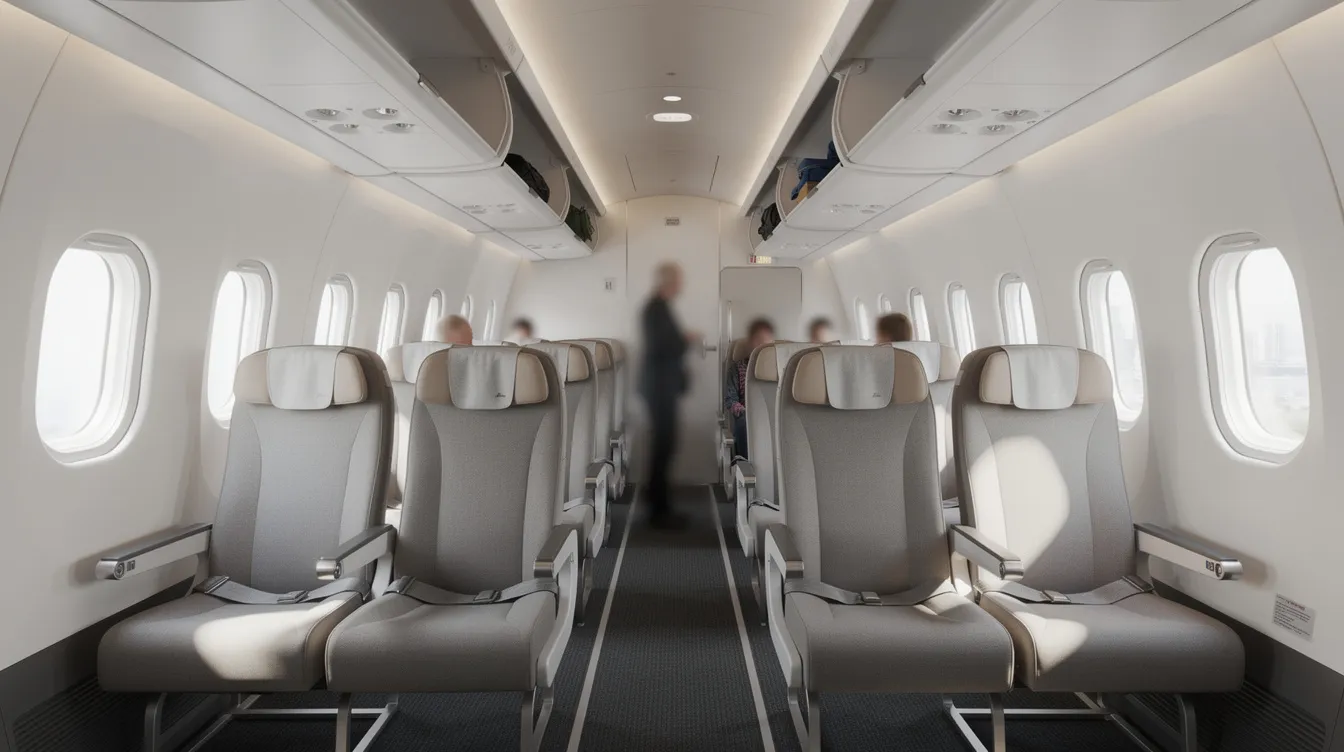
For frequent flyers who value time and predictability, few things are more frustrating than rolling a perfectly packed carry-on down the jet bridge of a regional flight only to hear a gate agent announce that overhead bins are full. The Embraer E175 is one of the most common regional jets in the United States, and its overhead bin dimensions are a recurring source of confusion and inconvenience. Here is what actually fits, what has changed, and why a growing number of high-value travelers are sidestepping the problem entirely.

Embraer E175 overhead bin size: quick answers for carry-on bags
The standard carry-on size accepted by most U.S. airlines measures 22 × 14 × 9 inches (56 × 36 × 23 cm), including wheels and handles. E175 overhead compartments accommodate a standard U.S. carry-on suitcase of about 22 × 14 × 9 inches, though how the bag must be oriented depends on whether you are flying an older or newer-generation aircraft.
Overhead bins on the Embraer 175 are generally smaller than those on larger aircraft like the Boeing 737 or Airbus A320. Embraer does not publish the internal dimensions of the E175 overhead bins in its technical manuals, but the Airport Planning Manual lists overhead bin stowage at approximately 0.06 m³ per passenger-roughly 2.0 cubic feet-which is notably less room than mainline aircraft provide.
Key Points for Fitting Carry-Ons on the E175
Here is what you need to know about fitting carry-on bags on an E175:
Standard 22-inch roller bags generally fit in the overhead bins of an Embraer 175, but on older aircraft the bag often must go in sideways or flat, consuming more space per bag and reducing overall capacity.
The overhead bins on the single-seat side are smaller than those on the two-seat side. Specifically, the left-side bins above the single-seat side are often smaller than the other bins, so passengers in A seats may find less space above them.
If boarding late on a full flight, passengers may need to gate-check their roller bags regardless of whether the bag technically fits-space simply runs out.
Overstuffed hard-shell cases, bags with thick wheel housings, or soft-sided bags expanded past their limits may not fit at all.
For travelers flying on regional jets between cities like Chicago and Houston, this creates a real planning challenge. And for anyone carrying sensitive equipment, luxury goods, or work essentials, the uncertainty can be costly.
By contrast, private jet cabins-such as the light and midsize jets available through BlackJet's Jet Card programs and broader premium private jet card membership options-handle luggage through dedicated baggage holds. The crew loads your bags directly, and there is no competition for overhead space. The experience is more predictable in every way.
United Airlines' larger overhead bins on the E175: what changed and why it matters
Overview of United's Overhead Bin Upgrade
In March 2024, United Airlines announced it had become the first airline to install new, larger overhead bins on its United Express Embraer 175 fleet-a move that addressed one of the most persistent complaints in regional air travel. The program, operated by SkyWest, began retrofitting E175 aircraft in a 76-seat configuration. United estimates the new bins will be installed on 50 planes by year-end, with more than 150 aircraft expected by the end of 2026.
The numbers are significant:
Metric | Before Upgrade | After Upgrade |
|---|
Carry-on roller capacity | Limited; many gate checks | Larger bins accommodate every passenger's carry-on roller |
Bin capacity increase | Baseline | New overhead bins increase capacity by 80% |
Additional bags per plane | - | Up to 29 more carry-on bags per flight |
Passengers affected annually | - | ~1 million fewer gate checks across ~150,000 flights |
The new bins are designed to accommodate bags wheels-first, similar to those found on Embraer's newer E2-generation jets. This seemingly small change transforms the boarding experience-passengers no longer need to wrestle bags sideways or flat, and flight attendants spend less time rearranging luggage to create more room.
Impact on Boarding and Passenger Experience
Linda Jojo, United's chief customer officer, has described the upgrade as just the latest way United is working to create an industry-leading experience for all our customers. Early customer sentiment around the retrofitted aircraft has been extremely positive, with measurable improvements in gate and boarding satisfaction scores. United has found that helping people board faster and stow bags more efficiently lifts boarding satisfaction across the entire plane.
The new interiors also include details like signature interiors with braille and tactile placards-small touches that expand accessibility and signal a broader commitment to passenger comfort, even if they do not address predictable jet card pricing and private membership benefits. Installing these features alongside the new overhead bins means that the upgrade addresses more than just bags; it is about the end-to-end experience of flying on a regional jet.
Still, even with the upgrade, there are limits, and some travelers begin exploring more affordable strategies for flying private once the inconveniences pile up. Full flights during peak times can still fill bins before later boarding groups reach their seats. The bins have a fixed volume, and once every passenger's roller is stowed, space for additional items is finite. And for international or regional flight connections requiring quick deplaning, the boarding process on a commercial plane still involves variables outside any single passenger's control.
For travelers who need certainty, this is where private aviation offers a structural advantage. With a BlackJet Jet Card or a dedicated BlackJet 25+ Hour Jet Card, luggage is loaded directly by the ground crew-no boarding group, no overhead bin lottery. Your bags are handled with care before you ever board the aircraft, and sensitive items stay within arm's reach in the cabin. Beyond the luggage question, private jet access through BlackJet also means bypassing TSA lines, flying on your schedule, and knowing exactly which aircraft you will be on before you leave for the airport.
Gate check realities on the E175-and why BlackJet travelers sidestep the problem entirely
Gate checking means your carry-on is tagged at the gate, stowed in the belly cargo hold, and returned to you either at the jet bridge or at baggage claim, a process that contrasts sharply with the flexibility offered by different types of private jets for every traveler. It is free, but it is not without cost: you lose access to your belongings during the flight, risk damage to fragile items, and add time to your arrival-sometimes five to fifteen minutes waiting at a carousel that was supposed to be unnecessary- delays that can be particularly painful for groups who could instead consider private jets for up to 50 passengers.
When Gate Checking Happens
On an Embraer E175, passengers may be required to gate check bags on full flights due to limited overhead bin capacity, which is one reason some flyers investigate buying a single seat on a private jet instead of committing to the full cabin. The most common scenarios include:
Late boarding groups on full flights. If you are in boarding group 5 or later on a popular business route, there may simply be no space left.
Oversized or overstuffed bags. Hard-shell suitcases with expansion zippers or thick wheel housings may not fit wheels-first, and a gate agent may flag them before you reach the door.
Older aircraft without retrofitted bins. Not every E175 in the United or SkyWest fleet has received the upgrade yet. If your plane still has the original bins, the likelihood of needing to check bags rises substantially, nudging some passengers to compare Flexjet jet card costs and alternatives in search of more control.
Strict enforcement on capacity-constrained routes. On high-demand routes, airlines may offer to gate-check voluntarily or require it, prompting some travelers in major markets-from New York to Karachi private jet charter hubs-to look for alternatives.
Tips for Commercial Passengers
Stick to a suitcase that measures no more than 22 × 14 × 9 inches, and verify the dimensions include wheels and handles; beyond that, some flyers run the numbers on comprehensive private jet price lists and access models to see if private aviation makes sense for their routes.
Avoid overpacking or using expansion zippers-those extra two inches of depth can be the difference between fitting and not fitting, and for some travelers, the cheapest private jet options available become appealing once they factor in the time lost to repeated gate checks.
Board as early as your fare class allows. Elite status or premium cabin seating helps, but occasional private travelers may instead opt for a predictable 25-hour jet card with fixed features and costs.
Keep essential items-laptop, documents, medication-in a personal item that fits under the seat, so even if your roller is gate-checked, you are not separated from what matters, while considering budget-friendly private aircraft options for trips where access to your belongings is critical.
How private aviation eliminates the hassle
On a private aircraft, there is no competition for overhead space, and passengers concerned about comfort in choppy air can also take reassurance from data on turbulence levels in private jets versus airlines. There are no boarding groups. The crew handles your baggage directly, with the care and attention that commercial operations cannot provide at scale, and many travelers compare this experience with NetJets jet card costs and programs when evaluating long-term options.
BlackJet Jet Card members can select from multiple aircraft categories-light jets, midsize, super midsize-and, by understanding different private jet sizes and cabin capacities, discuss luggage needs with 24/7 support in advance. Every flight is operated by safety-certified operators and is carbon neutral at no extra cost to the traveler, while adhering to the rigorous standards outlined in our guide on private jet safety and risk management. There is no world in which a BlackJet member needs to worry about whether a bin lid will close or whether a gate check will cause a missed connection.
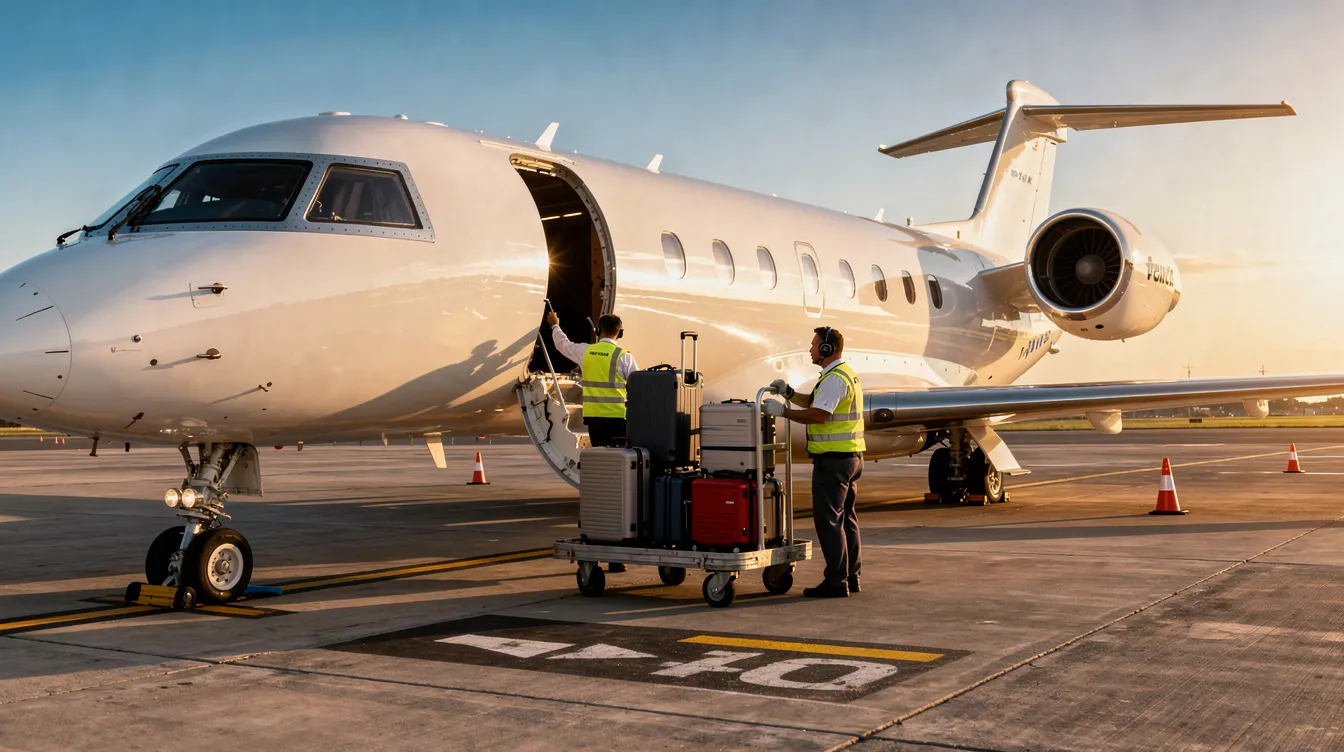
For people who have spent enough time navigating the overhead bin constraints of regional jets, the calculus is straightforward: predictable pricing through jet card membership cost structures often matters as much as cabin comfort. The benefits of flying privately extend well beyond luggage-but luggage is often where the frustration starts, especially for frequent travelers who can benefit from the best jet cards for regular flyers.
If recurring gate checks, tight bins, and unpredictable boarding experiences on the E175 have you rethinking how you travel, it may be time to explore a different approach. Discover how BlackJet's Jet Card programs can provide the space, certainty, and seamless experience that commercial flying was never designed to offer.
Conclusion: Elevate Your Travel Experience Beyond Overhead Bin Limitations
Navigating the overhead bin size constraints of the Embraer 175 can be a persistent challenge for frequent travelers, especially on busy routes and full flights. While upgrades like United Airlines’ larger bins have significantly improved the boarding experience by increasing capacity by 80% and reducing gate checks, limitations remain inherent to commercial regional jets. For discerning travelers who value certainty, efficiency, and seamless service, private aviation offers a compelling alternative.
BlackJet’s Jet Card programs provide unparalleled access to private jets with dedicated baggage handling, eliminating the stress of overhead bin competition and gate checks. With safety-certified operators, carbon-neutral flights, and 24/7 personalized support, BlackJet delivers a travel experience designed for the high-net-worth and corporate traveler who demands more than just a seat on a plane. By choosing private jet access, you gain not only space and flexibility but also a strategic advantage—saving time, reducing hassle, and traveling on your terms.
Explore how BlackJet can transform your journeys and provide the effortless, premier travel experience you deserve. Join our Jet Card program today and discover a new standard in private aviation.


 Sign up with google
 Sign up with Apple