Executive air is no longer a symbol reserved for rare occasions. For modern leaders, founders, family offices, and high-net-worth travelers, private aviation is a practical tool for reclaiming time, protecting privacy, and moving with precision. This guide is designed for executives, founders, family offices, and high-net-worth travelers seeking greater control and efficiency in their travel.
Executive air services provide on-demand, non-scheduled air transportation using private jets, turbo-props, or helicopters.
This article explains how BlackJet structures private jet access through Jet Card programs, vetted aircraft, real-time support, safety-first operations, and carbon-neutral flights. If your calendar demands more control than commercial aviation can offer, executive air travel may be the choice that changes how you use your time every week.
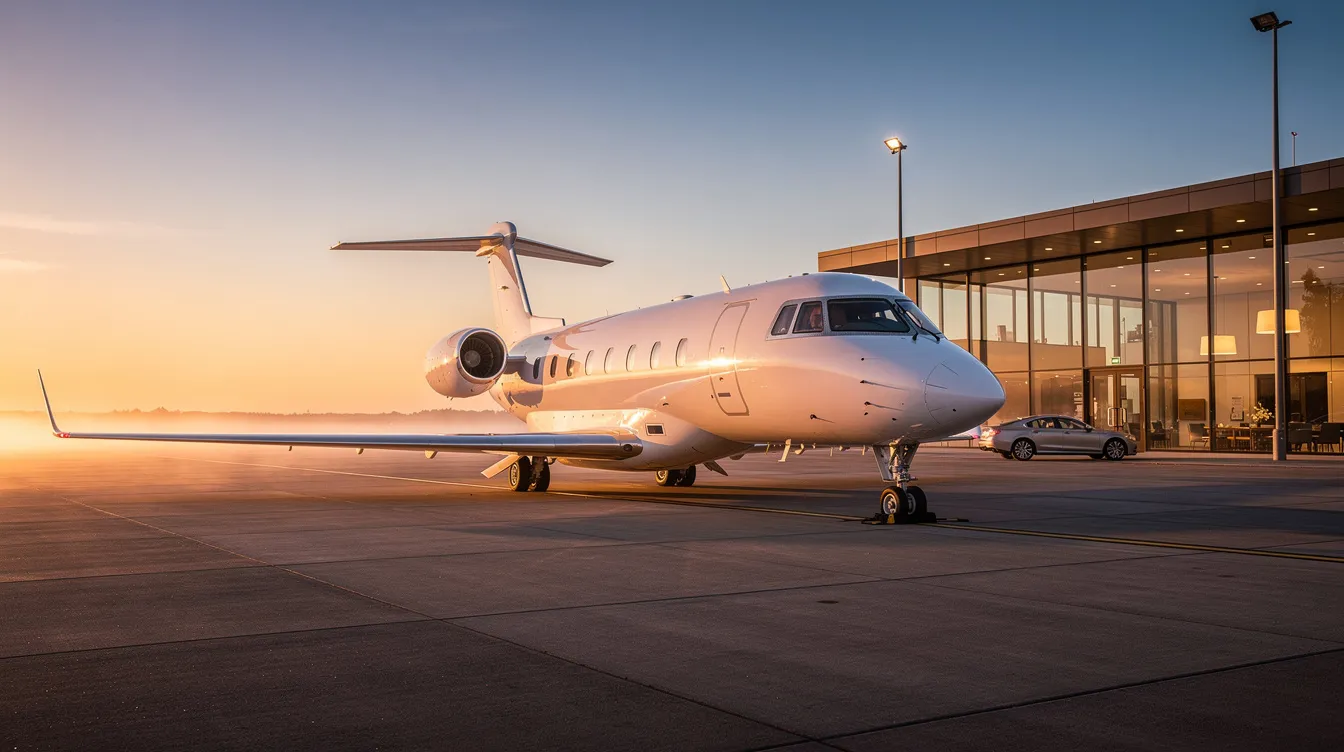
Why Executive Air Travel Is a Strategic Advantage, Not Just a Luxury
Commercial first and business class can improve comfort, but they rarely change the structure of travel. You still work around airline schedules, public terminals, TSA queues, boarding groups, hub connections, and delays that can make a short flight consume half a day.
Executive air changes the equation. On a route like New York–Miami, the flight time may be similar to a commercial aircraft in the sky, but the total journey can be dramatically shorter. Passengers using executive air services can typically arrive 10 to 15 minutes before departure and bypass long security queues, rather than arriving 90 minutes to two hours early.
The same advantage appears on short European routes such as London–Geneva. Instead of adapting your meeting to the airline timetable, you set your own departure schedule, use private terminals, and land closer to where you need to be.
Executive air services offer bespoke scheduling, access to thousands of smaller regional airports, and significantly faster boarding times compared to commercial airlines. In the United States, private aviation can reach over 5,000 airports nationwide, compared to the roughly 500 served by commercial carriers. Executive air services can utilize thousands of smaller regional airports, which commercial airlines cannot access.
That access matters. A CEO flying into a manufacturing site, a president attending a board meeting outside a major city, or a family office principal heading to a remote estate can often land closer to the destination instead of routing through a commercial hub.
Consider a same-day Boston–Chicago–Dallas roadshow. On commercial flights, the executive may need an early airport arrival, a connection risk, a late hotel check-in, and another travel day. With BlackJet, that same itinerary can be planned around the meetings themselves, with direct segments, private terminals, and in-flight preparation time.
Executive flights function as secure, flying boardrooms where confidential documents can be reviewed and meetings held without interruptions. Board-level discussions, M&A comments, investor calls, and strategic planning can happen without exposure to surrounding passengers.
BlackJet’s executive air model is designed for high-frequency travelers: CEOs, founders, family offices, institutional executives, and ultra-high-net-worth leisure travelers who need flexible private aircraft access without the obligations of full ownership. Through 25-hour and 50-hour Jet Card programs, members receive predictable prepaid access across multiple cabin classes.
Compared with owning a jet, BlackJet members avoid hangar commitments, permanent crew costs, maintenance management, depreciation, insurance administration, and operational control burdens. The result is not simply convenience. It is a strategic tool for reclaiming time, protecting personal security, and making travel serve the calendar rather than the other way around.
Executive Air with BlackJet: How Our Jet Card Model Works
At BlackJet, executive air means structured, on-demand access to private aircraft through Jet Card membership and related private aviation services rather than relying only on ad-hoc charter or committing to ownership. Members prepay for flight hours, select the cabin category that fits the mission, and book through BlackJet’s digital platform or concierge team.
BlackJet’s primary Jet Card options include 25-hour and 50-hour programs, following jet card pricing structures that are designed to be transparent and predictable. Hours are typically debited per flight segment based on the planned aircraft category and block time, giving members a clearer view of usage than constantly changing one-off charter quotes.
Members can choose from several aircraft categories:
Cabin category | Best for | Typical use |
|---|
Light jet | Short regional trips | Boston–Toronto, Los Angeles–Las Vegas |
Midsize jet | Regional and medium-range travel | New York–Nassau, Dallas–Chicago |
Super-midsize jet | Longer domestic missions | New York–Los Angeles, Miami–Aspen |
Large cabin jet | Intercontinental or high-capacity travel | New York–London, Dubai–Nice |
Instead of negotiating every trip from scratch, members benefit from fixed or capped hourly rates, transparent terms, and defined policies around surcharges. This provides more predictability when fuel prices shift or demand increases during peak travel periods.
Flights can be requested 24/7 through BlackJet’s website, mobile tools, or a dedicated concierge team. For most routes, travelers should book 24–48 hours in advance. On key business corridors, shorter-notice departures may be possible, while major holidays, global events, and peak leisure periods may require more lead time.
Here is the practical difference:
On-demand charter: Flexible with no long-term commitment, but prices and availability can fluctuate by day, aircraft position, demand, and fuel costs.
BlackJet Jet Card: Prepaid hours, clearer rates, defined availability, access to multiple cabin classes, and no need to manage crews or maintenance.
Whole aircraft ownership: Maximum control over one aircraft, but with the highest fixed costs, including crew, hangar, insurance, maintenance, and depreciation.
For frequent flyers, BlackJet positions executive air as a financial planning tool, similar in intent to broader jet card solutions for frequent travelers. It allows an executive, assistant, or family office team to forecast private aviation spend with far more confidence than ad-hoc charter, while avoiding the complexity of ownership.
Our Private Aircraft Network: Cabin Classes and Use Cases
BlackJet does not limit members to a single tail number. Instead, the company provides access to a vetted fleet network of private aircraft matched to each mission. That flexibility is central to modern executive air travel because the right aircraft for a two-hour meeting trip may not be the right jet for a transatlantic family journey.

Light jets are ideal for short hops such as Los Angeles–Las Vegas or Boston–Toronto. They often seat approximately 5–8 passengers and are efficient for quick business trips where speed and access matter more than large-cabin amenities.
Midsize jets work well for regional missions such as New York–Nassau or Dallas–Palm Beach. They generally offer more cabin space, greater baggage capacity, and improved comfort for flights of several hours.
Super-midsize jets suit coast-to-coast US travel, with enough range and cabin volume for executives who need to work, rest, or meet in the air. Large cabin jets, including 16-seat private jet options, support international travel such as New York–London or Dubai–Nice, with larger seating areas, more baggage capacity, lie-flat options, and enhanced onboard service.
A founder may use a light jet for a 7 a.m. Boston–Toronto negotiation and return home before dinner. The same member might use a super-midsize aircraft the following week for a West Coast investor meeting. In February, a family could choose a large cabin jet for St. Barts or another Caribbean destination, or even explore large-group private jet options for up to 20 passengers, with children, pets, luggage, and sporting equipment accommodated more comfortably.
Larger cabins may include full standing headroom, conference seating, enclosed lavatories, more generous baggage space, and sleeping configurations similar to many of the largest private jets available for charter or sale. Smaller jets can be more cost-effective and agile for short routes.
BlackJet’s experienced professionals bring expertise to each itinerary. They evaluate passenger count, baggage, range, airport performance, schedule, comfort expectations, and budget before recommending an aircraft type. This prevents travelers from under-specifying a jet that feels cramped or over-specifying an aircraft that adds unnecessary cost.
Every partner aircraft is reviewed against safety and maintenance expectations. That standard is expanded below, but the principle is simple: flexibility should never come at the expense of professionalism, compliance, or passenger confidence.
Onboard Executive Experience and Productivity
The onboard environment is where executive air becomes more than transportation. Quiet cabins, Wi-Fi connectivity, power outlets, USB-C access, and seating that can convert into workspaces help travelers use the flight rather than lose it.
Unlike commercial cabins, private aircraft allow confidential conversations to continue in the air. A legal team can review sensitive documents, a board chair can speak with advisors, and a sales leader can prepare for a closing meeting without worrying about being overheard.
Food and beverage service can be adapted to the day. A working breakfast between New York and Chicago, a protein-focused lunch before a presentation, or a late-evening meal after a San Francisco return flight can be arranged in advance. Many luxury air travel options provide amenities such as gourmet catering, spacious seating, and in-flight entertainment to enhance the passenger experience.
Luxury air travel often includes personalized services such as concierge assistance, tailored itineraries, and exclusive access to private terminals. The luxury air travel market has seen significant growth, with an increasing number of travelers seeking bespoke experiences and high levels of comfort during their flights.
The aircraft recommendation also considers the purpose of the journey. A cabin configured for a board meeting is different from one selected for family rest. A founder leaving at 6 a.m. can finalize a pitch deck, call a European COO, land in Austin before lunch, and walk into the meeting ready.
Another member may fly Los Angeles–San Diego–Los Angeles in a single day, using the cabin as a private workspace and returning home without a hotel night. Done well, the experience can feel effortless, productive, and unforgettable.
Safety, Certification, and Experienced Professionals Behind Every Flight
Safety is the non-negotiable foundation of executive air travel with BlackJet. It ranks above convenience, luxury, schedule flexibility, and even price.
In the United States, on-demand charter operators are generally governed by FAA Part 135 requirements, which cover operational, maintenance, and crew standards. BlackJet works with partner operators that meet applicable certification requirements, including FAA Part 135 or equivalent rules outside the US, and may require recognized third-party safety ratings such as ARG/US, Wyvern, or IS-BAO.
Experienced professionals are behind every mission. Pilots are expected to meet flight-hour thresholds, hold appropriate type ratings for the aircraft they operate, complete recurrent training, and follow strict duty-time and crew-pairing protocols. A professional flight operation depends on discipline before the passenger ever reaches the ramp.
For example, a January New York–Aspen flight requires far more than a route request. Weather systems, icing, mountain winds, runway length, aircraft performance, alternate airports, and operational limits must be reviewed before departure. That detail reduces risk and helps avoid preventable accidents.
Each mission is supported by a 24/7 operations team that monitors flight progress, coordinates slots, manages schedule changes, and prepares contingency plans for diversions or disruptions. If weather shifts or a meeting runs late, BlackJet’s team helps protect both the itinerary and the traveler.
Passenger security also matters. Private terminals, often called FBOs, reduce exposure to crowded public areas. Discreet ground transfers, limited public visibility, and careful handling of itinerary information are valuable for high-profile travelers, corporate leaders, and families.
This safety culture differentiates BlackJet from casual or purely price-driven charter options found online. A lower quote means little if the operator, aircraft history, crew training, or maintenance documentation cannot withstand scrutiny.
It is also worth noting that aviation safety standards extend beyond passenger travel. Cargo transportation by air is essential for moving high-value and sensitive goods quickly and efficiently, especially in time-critical situations. Air cargo services often include specialized handling for various types of freight, including aviation and automotive cargo, to ensure safety and compliance with regulations. The air cargo industry is governed by strict regulations to ensure the safe transport of goods, including guidelines for packaging, labeling, and documentation.
That broader culture of regulated aviation is one reason process matters. Whether moving people or sensitive materials, compliance is not decoration. It is the system that keeps the journey safe.
Managing Cost, Fuel Prices, and Value in Executive Air Travel
Executive air is a premium service, but BlackJet’s model is built to deliver predictable value over a full year of travel. The objective is not to make private aviation inexpensive. The objective is to make it clear, controlled, and aligned with how frequently you fly.
Jet Card pricing can help cushion members from volatility in fuel prices through fixed or capped hourly rates and transparent surcharges disclosed upfront. That structure gives executives and family offices more reliable information for budgeting.
An ad-hoc charter can be less predictable. Quotes may change based on aircraft availability, repositioning legs, airport fees, crew overnight expenses, seasonal demand, de-icing, and changing fuel costs. A route that looks straightforward on Monday may produce different prices by Friday.
Aircraft selection is another major cost lever. A light jet may be the better choice for a short two-passenger regional meeting. A super-midsize or large cabin jet may be justified when range, baggage, passenger count, or onboard productivity matters. Matching the aircraft to the mission preserves comfort without paying for capacity you do not need.
Consider a CFO who flies 30–40 hours per year across 8–10 city pairs. A 25-hour Jet Card can cover the highest-priority trips with prepaid access, while a 50-hour card may create better planning for a heavier travel calendar. The CFO’s assistant can forecast usage, anticipate renewal timing, and avoid a new negotiation for every flight.
The value is not only the aircraft. It is the executive time saved by arriving rested, compressing multi-city trips into a single day, avoiding unnecessary overnight stays, and preserving decision quality. For many leaders, the ability to add one meeting, return home sooner, or avoid a missed opportunity offsets much of the flight investment.
For qualified prospects, BlackJet’s team can provide indicative annual comparisons against fractional ownership and full ownership, similar in spirit to broader analyses of private jet options for a $10 million ownership budget. This can include estimated hours, likely routes, passenger profiles, service expectations, and administrative burden.
Sustainable Executive Air: Carbon-Neutral Flights and Responsibility
Executive air travel has an environmental impact. Sophisticated clients know this, and they increasingly expect private aviation providers to address it with transparency rather than vague promises.
BlackJet provides carbon-neutral flights as standard. Emissions are calculated per flight and offset through verified programs designed to account for the carbon impact of the journey. Members do not need to opt in, request a separate add-on, or manage the process themselves.
Offset projects may include reforestation initiatives launched after 2020, renewable energy installations in emerging markets, and other verified environmental programs. The important point is accountability: emissions should be calculated, offset activity should be traceable, and members should be able to understand the impact.
Sustainability does not compromise convenience. Offsets are built into the service. When appropriate, BlackJet also favors newer, more fuel-efficient private aircraft models available for the route and mission profile, including many of the newest private jet designs emphasizing innovation and efficiency.
Private jets typically have a different per-passenger emissions profile than commercial flights. That reality should be acknowledged, not hidden. BlackJet’s transparent carbon-neutral commitment sets a higher bar for responsible private aviation by making environmental action part of the default service, a factor increasingly considered when comparing leading private jet companies and their service models.
For executives, sustainability is also a leadership issue. Travel choices are increasingly visible to stakeholders, employees, boards, and families. Responsible executive air is part of protecting not only time, but legacy.
Executive Air Use Cases: Business, Leisure, and Medical Scenarios
A single BlackJet Jet Card can support several domains of life: intense business travel, family escapes, urgent wellness needs, and complex itineraries that commercial schedules do not serve well, and some travelers may even evaluate a 100-hour jet card structure when their usage grows significantly.
For business, imagine a European executive flying from London to Zurich to Milan in one day. The morning is reserved for a board meeting in Zurich, the afternoon for investor discussions in Milan, and the evening for returning home. Commercial schedules could force compromises. Executive air allows the day to be designed around outcomes, particularly when using some of the top-performing private jets in the world.
For leisure, a family may depart New York for Turks and Caicos at 4 p.m. on a Friday, with luggage, golf clubs, diving gear, and children’s items loaded directly. A Monday dawn return keeps the school and work week intact. Private charter services provide flexibility in travel schedules, allowing clients to choose departure times and routes that best suit their needs, whether booking full-aircraft missions or individual seats on private jets through shared and semi-private options.
Private charters often offer a higher level of privacy and comfort compared to commercial flights, making them a preferred choice for business and leisure travelers alike. Charter services can accommodate a variety of passenger needs, including pet-friendly options, ensuring a comfortable travel experience for all. Many partner aircraft welcome pets in the cabin, with staff attentive to their comfort and safety, and some travelers also explore more affordable private jet options such as VLJs and turboprops for shorter or budget-conscious missions.
Executive air services provide on-demand, non-scheduled air transportation using private jets, turbo-props, or helicopters. That flexibility can be useful for regional business travel, island transfers, mountain airports, or time-sensitive personal travel.
Medical and wellness-related travel requires a careful distinction. BlackJet can help arrange private aviation for travel to a specialist consultation in Houston, Mayo Clinic, or another medical destination when schedule control and privacy are important. However, dedicated emergency medical transport is a separate category, distinct from the highly customized experiences described in many ultra-expensive private jet solutions for luxury travel.
Medevac services are critical for providing swift and safe air transport during medical emergencies, ensuring patients receive timely care. These services often involve seamless coordination and expert in-flight care, which are essential for patient stability during transport. Medevac operations typically require specialized aircraft equipped with medical equipment and staffed by trained medical personnel to handle emergencies effectively.
BlackJet’s operations team can also coordinate ground transportation, hotel arrivals, in-flight catering, and other details that create an end-to-end executive air experience. The result is a journey shaped around the traveler, not the limits of a public timetable.
Technology, Booking Experience, and Real-Time Support
BlackJet’s digital platform gives members web and mobile tools to request flights, review aircraft options, confirm itineraries, and track trip details. The goal is simple: make private aviation easier to manage without removing the human expertise that complex travel requires.
An executive assistant can submit a Paris–Geneva request for 3 June, with a departure window between 9–11 a.m. The platform can return options by aircraft category, estimated flight time, and total hours debited. From there, the assistant can coordinate catering, passenger information, ground transport, and schedule notes.
Calendar integrations and notifications help travelers stay informed. Email, SMS, and in-app alerts may include confirmation details, crew information, departure updates, ground transport status, and operational changes.
Technology is backed by real-time human support. BlackJet flight advisors and dispatchers are available 24/7 to manage weather disruptions, aircraft substitutions, short-notice changes, and operational questions. This combination is especially valuable for assistants handling multiple travelers, changing meetings, and sensitive itineraries.
Data protection also matters. Passenger identities, travel schedules, corporate information, and payment details should be handled with discretion. Robust digital systems, limited itinerary exposure, and careful communications help preserve privacy.
The best technology becomes nearly invisible. You book, adjust, receive confirmation, and fly. Behind the scenes, the system, concierge team, and operations professionals keep the experience reliable.
If you need assistance, you can contact BlackJet through a discreet inquiry form, direct phone line, or email. A dedicated sales advisor can help you find the right program, while member services can address trip-specific questions. For general information, the relevant website page should make the next steps clear. This is not a careers portal or public comments board; it is a private access point for travelers who are ready to move with greater control.
Frequently Asked Questions About Executive Air with BlackJet
How far in advance do I need to book?
For most routes, 24–48 hours is recommended. Key business corridors may support shorter-notice requests, while peak seasons, major sporting events, holidays, and high-demand leisure destinations may require 96 hours or more.
What happens if my meeting runs late?
BlackJet’s operations team should be notified as early as possible. Waiting time allowances, schedule adjustments, or revised departures may be available depending on crew duty limits, airport slots, and aircraft scheduling.
Can I choose the exact aircraft model?
Jet Card programs generally guarantee a cabin category rather than a specific tail number. A specific aircraft model can often be requested, but availability depends on route, timing, fleet positioning, and operational suitability.
How are safety and maintenance records verified?
BlackJet works with certified partner operators and reviews applicable safety standards, maintenance documentation, aircraft suitability, crew qualifications, and third-party audit status where available.
Are flights always carbon neutral?
Yes. BlackJet provides carbon-neutral flights as standard, with emissions calculated per flight and offset through verified programs. Members may request information about the carbon impact and offset approach.
Can my team or family use my Jet Card hours?
In many cases, approved users can access Jet Card hours for corporate or personal travel. Corporate accounts, family offices, and household memberships can define permitted travelers, approval flows, and billing preferences during onboarding.
Can BlackJet serve both business and leisure travel?
Yes. A member may use the same Jet Card for an executive meeting on Wednesday, a family flight on Friday, and a private return on Monday morning.
Is executive air safe for frequent weekly travel?
Yes, when operated through certified providers with proper standards. Safety depends on operator certification, aircraft maintenance, pilot training, weather review, operational control, and dispatch oversight.
How to Start: Elevate Your Executive Air Experience with BlackJet
Imagine the next 12 months of travel with fewer airport queues, fewer forced overnights, more direct routes, and more usable hours. That is the purpose of structured executive air with BlackJet.
The onboarding process is straightforward:
Consultation call: BlackJet reviews your travel patterns, priorities, and expected usage.
Travel history analysis: You prepare 6–12 months of routes, passenger counts, timing, and preferred airports.
Program recommendation: BlackJet advises whether a 25-hour or 50-hour Jet Card better fits your needs.
Membership review: You review rates, surcharges, peak-day policies, aircraft categories, and usage terms.
Activation: Your membership is activated, your digital access is established, and your first flight can be planned.
BlackJet’s differentiators are clear: safety-first operations, carbon-neutral flights, multi-cabin private aircraft access, responsive technology, and human support from experienced professionals who understand the expectations of discerning travelers.
Executive air travel allows business leaders to bypass airport terminals, set their own departure schedules, and maximize time efficiency. When thoughtfully structured through BlackJet, it becomes more than a premium service. It becomes a strategic asset.
Explore BlackJet’s Jet Card programs and discover how executive air travel can redefine your time, security, and freedom.
Conclusion: Redefine Your Travel with BlackJet Executive Air
Executive air travel with BlackJet is not merely a luxury—it is a strategic advantage that empowers modern leaders to enjoy unparalleled convenience, privacy, and efficiency. By leveraging BlackJet’s Jet Card programs, vetted aircraft network, and safety-first operations, executives and high-net-worth travelers gain control over their schedules and elevate every journey.
With seamless booking technology, real-time support, and built-in carbon-neutral flights, BlackJet ensures that sustainability and sophistication coexist effortlessly. Whether for critical business missions, family leisure escapes, or urgent medical travel, BlackJet’s executive air services deliver flexibility and excellence without compromise.
Elevate your travel experience and enjoy the freedom to move on your terms. Discover how BlackJet can transform your executive air travel into a refined, productive, and responsible journey—where every flight is tailored to your life and legacy.


 Sign up with google
 Sign up with Apple


