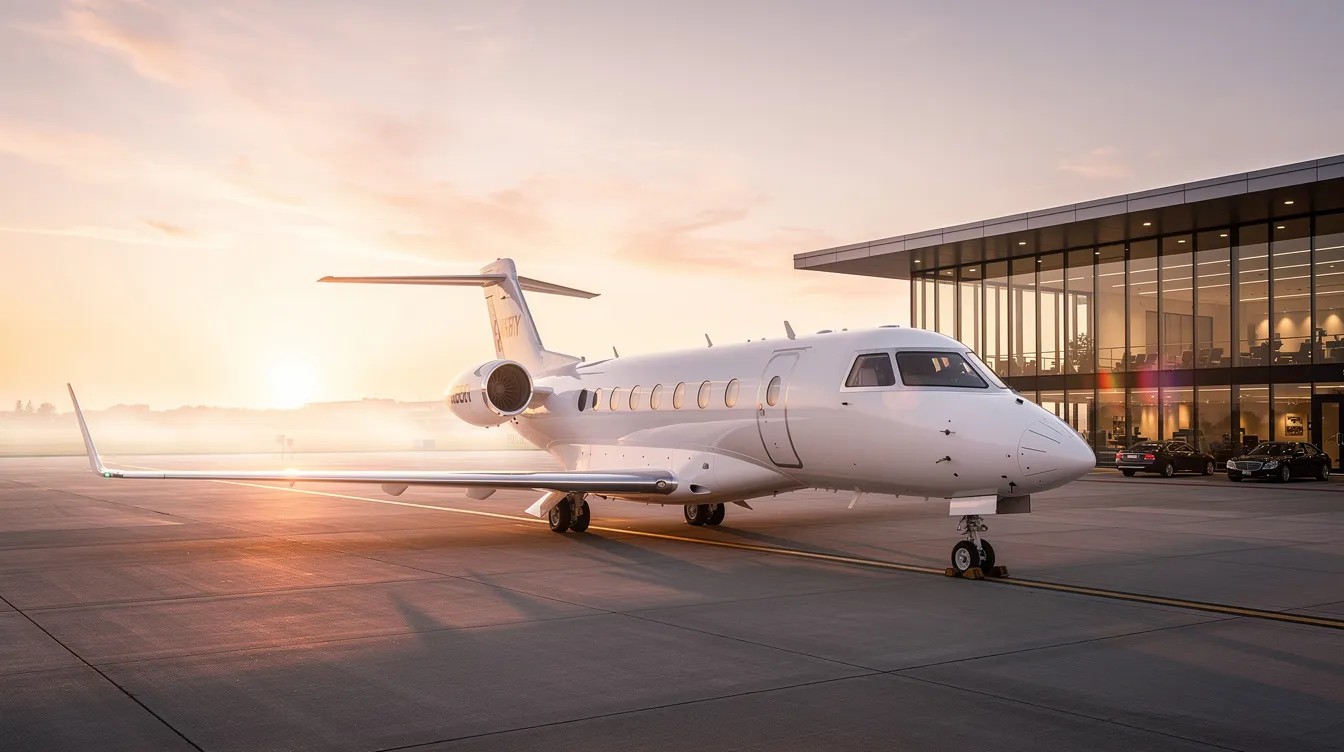
Executive jet rental is transforming the way executives and high-net-worth travelers approach business and leisure travel. In today’s fast-paced world, time is the most valuable asset, and the ability to travel efficiently, flexibly, and comfortably is a strategic advantage. This article is designed for executives, corporate teams, family offices, and discerning travelers who demand more from their travel experience.
Here, we cover every critical aspect of executive jet rental: from the fundamentals of on-demand private jet access and the benefits of Jet Card programs, to detailed comparisons of aircraft categories, safety standards, and sustainability initiatives. We also explore real-world use cases, pricing structures, and the technology that powers seamless booking and in-flight productivity.
Whether you’re seeking to maximize efficiency on multi-city business trips, ensure privacy and comfort for your family, or understand the cost and operational differences between charter, Jet Cards, and ownership, this guide provides the insights you need. Discover how executive jet rental with BlackJet can save you hours on every trip, offer unmatched flexibility, and elevate your travel experience to a new standard of excellence.
Key Takeaways
Executive jet rental provides on-demand access to private aircraft—from light jets to ultra-long-range cabins—without ownership commitments. A same-day New York–Chicago–New York roundtrip that would consume 12+ hours via commercial first class can be completed by 7:30 PM with productive in-flight work time intact. Private jet travel can save business travelers an average of 127 minutes per flight by utilizing private terminals and smaller airports, enhancing overall efficiency.
BlackJet’s Jet Card programs (25-hour and 50-hour options) offer fixed hourly rates, guaranteed availability, and carbon-neutral flights as standard. Traveling by private jet allows for direct access to over 5,000 airports worldwide, significantly increasing the number of available destinations compared to commercial airlines.
Safety is non-negotiable: every BlackJet-arranged flight operates under strict regulatory standards (FAA Part 135 or equivalent), with operators vetted through independent safety audits and internal criteria covering pilot experience, training, and maintenance records.
Core use cases span corporate travel (multi-city deal tours, board retreats, investor roadshows), international long-range missions (transatlantic and transpacific nonstop), and high-end leisure trips on popular routes like New York–Miami, New York–Aspen, or New York–London.
Sustainability Aviation Fuel (SAF) is a key component in the aviation industry’s efforts to reduce carbon emissions, with the potential to lower lifecycle greenhouse gas emissions by up to 80% compared to conventional jet fuel. BlackJet integrates SAF where available and applies verified carbon offsets to every Jet Card flight at no additional cost.
What Is Executive Jet Rental – And Why It Matters Now
Executive jet rental refers to on-demand access to private aircraft—spanning light jets through large-cabin and long-range jets—without the capital commitment of ownership or fractional shares. This model has evolved significantly since the early days of ad-hoc private jet charter, with structured solutions like Jet Card programs emerging to serve frequent flyers who need predictability alongside flexibility. Today, executives and discerning travelers can fly with ease and luxury, enjoying seamless booking and a premium experience from departure to arrival.
The productivity differential versus commercial aviation is substantial. Consider a New York-based executive with morning meetings in Boston and afternoon commitments in Washington, D.C. Departing from Teterboro at 7:00 AM, they can hold an in-air briefing, land in Boston by 8:15 AM, complete their meeting, depart by noon for D.C., conclude business by 5:00 PM, and be home by 8:00 PM. This schedule is impossible on standard airlines, where security lines, connections, and layovers would extend the same trip across two days. Private jet charters dramatically cut travel time, often saving passengers between 90 and 180 minutes on many business routes by offering expedited check-in and access to smaller airports.
For frequent travelers completing 10 or more trips per year, structured solutions like BlackJet’s Jet Card pricing provide more predictable pricing and guaranteed availability than ad-hoc private charter alone. Choosing to fly private offers unmatched convenience and prestige, allowing executives and high-net-worth individuals to access exclusive aircraft, flexible schedules, and a superior level of comfort. Using private jets can transform travel time into productive work environments, as many aircraft are equipped with conference facilities and high-speed internet.
The typical profile of users includes CEOs, founders, investment professionals, family offices, and ultra-high-net-worth families balancing corporate travel with leisure itineraries. For these individuals, the value proposition extends beyond convenience—private aviation can provide a higher return on investment for corporate teams by reclaiming hours of productive time that would otherwise disappear in airport queues and connection delays.

How Executive Jet Rental Works with BlackJet
The private jet booking process generally includes four key steps: outlining trip details, choosing an aircraft, confirming safety credentials, and finalizing the booking.. With BlackJet, this process is streamlined through Jet Card membership.
The journey begins with Jet Card selection. Members choose a program—typically 25-hour Jet Card blocks or 50-hour blocks—and fund their hours at transparent, fixed rates per cabin category. From there, aircraft selection follows: light jets for regional hops, midsize or super midsize for coast-to-coast routes, or heavy and long-range jets for international missions. Flight confirmation happens via BlackJet’s digital platform or through the 24/7 aviation support team.
BlackJet partners with vetted air carriers operating under strict safety standards rather than owning all aircraft. This approach gives members access to a global network of private aircraft and more flexible charter options while maintaining rigorous quality control. Travelers can access a wide range of aircraft through digital platforms, which streamline the booking process and provide instant pricing.
Here’s a concrete example: A client needs a New York–Miami round trip on a light jet. They submit the request 48 hours in advance via the app, specifying departure from Teterboro. The BlackJet team confirms availability from a vetted Part 135 operator, locks in the fixed hourly rate from their Jet Card, and handles all coordination—no repositioning fees on this high-traffic route. Private flights often require booking in advance, especially during holidays or major events, to ensure aircraft availability, but for established routes, the process moves quickly.
The distinction between a pure on-demand private charter and a pre-paid Jet Card cost per hour is important. On-demand charters allow you to rent a specific aircraft for a one-off trip without long-term contracts, but pricing fluctuates with demand, fuel costs, and availability. Jet Card members lock in rates and receive priority access, eliminating the variability that makes ad-hoc charter unpredictable.
Executive Jet Categories: From Light Jets to Ultra Long-Range
Selecting the right size of jet is critical for both comfort and efficiency, as cabin size directly impacts spaciousness, passenger capacity, and overall travel experience. BlackJet Jet Cards can be tailored by cabin class or provide multi-cabin flexibility, allowing members to match aircraft to mission requirements and desired cabin dimensions.
Jet Category | Passenger Capacity | Typical Range (miles) | Ideal Use Cases | Example Aircraft | Cabin Features |
|---|
Light Jets | 4–7 | 1,500–2,000 | Regional corporate travel, short hops | Citation CJ4 | Stand-up headroom, WiFi, compact cabin |
Midsize Jets | 6–9 | 2,000–3,200 | Coast-to-coast U.S. routes | Citation XLS+ | Enclosed lavatory, larger baggage |
Super Midsize Jets | 8–10 | Up to 3,200 | Transcontinental flights | Challenger 350 | Lie-flat seats, full galley |
Heavy Jets | 10–16 | 3,000–4,500 | Intercontinental travel | Gulfstream G600 | Multi-zone cabins, conference centers |
Ultra Long-Range Jets | 12–19+ | 4,500–7,500+ | Global nonstop flights | Gulfstream G650ER, A318 Elite | Private suites, lounge areas |
Light jets typically accommodate 4–7 passengers and excel at regional corporate travel and air taxi-style hops. Routes like New York–Boston (200 nautical miles, approximately 45 minutes) or Los Angeles–Las Vegas fit this category perfectly. Aircraft in this class—similar to the Citation CJ4—offer stand-up headroom in some configurations, WiFi connectivity, and capacity for 300–500 pounds of luggage. Non-stop range typically extends to 1,500–2,000 miles, making them ideal for business travelers covering regional territories. The compact cabin size of light jets is best suited for short trips with smaller groups, prioritizing efficiency and agility.
Midsize and super midsize jets occupy the sweet spot for coast-to-coast U.S. routes, offering a balance between cabin size and operational charter cost. The midsize category (think Citation XLS+ or similar) handles trips like New York–Dallas or Chicago–San Francisco with cabin heights around 5’8”, enclosed lavatories, and baggage capacity approaching 1,000 pounds. Super midsize aircraft—comparable to the Challenger 350—push range to 3,200 miles, enabling nonstop transcontinental service with lie-flat seat options and full galleys for catered meals. These aircraft serve aviation enthusiasts who appreciate the balance of efficiency and cabin comfort, with larger cabin dimensions allowing for more spacious seating and enhanced amenities.
Heavy jets and ultra-long-range aircraft open intercontinental possibilities with significantly larger cabin sizes, providing ample room for work, relaxation, and privacy. A Gulfstream G600-class heavy jet covers New York–London (approximately 3,000 miles) nonstop, while ultra-long-range models similar to the Gulfstream G650ER extend to 7,500+ miles—sufficient for Los Angeles–Tokyo without refueling stops. Long-range executive jets offer luxurious settings for work and relaxation, often equipped with conference centers, lounge areas, and private suites. Multi-zone cabins allow passengers to separate work areas from rest spaces, transforming overnight flights into productive or restorative experiences. VIP converted airliners provide a penthouse suite-style experience at high altitudes, featuring expansive cabin spaces, bedroom suites, and indulgent amenities, making them among the best private jets for 20 passengers. Popular executive jets include the Airbus A318 Elite, which can accommodate up to 19 passengers and has a range of approximately 4,847 miles. The A318 Elite is considered a cost-effective alternative to larger executive jets, offering similar comfort and range at a lower cost. The Airbus A319 CJ offers various interior configurations for up to 48 passengers, with flexible layouts to suit different travel needs.
Use Cases: Corporate Travel, Deals, and Discreet Leisure
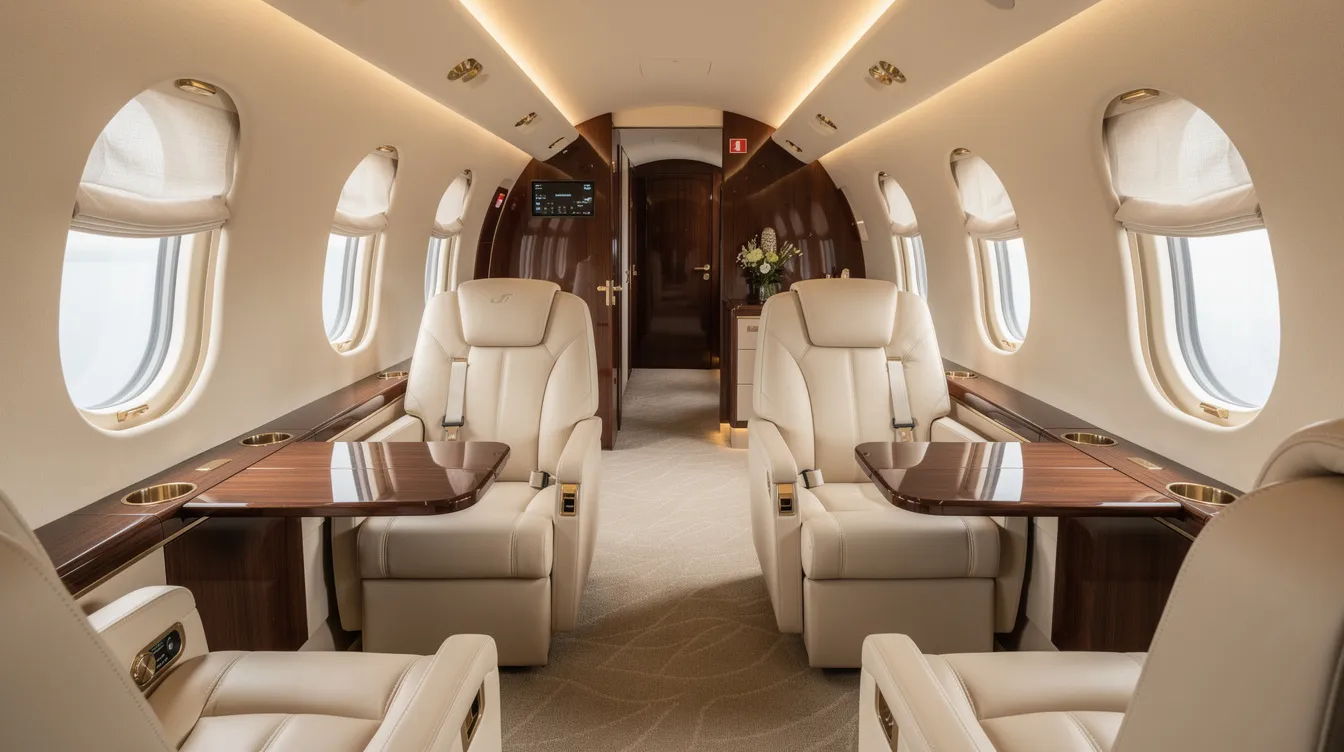
Executive jet rental supports corporate travel by enabling executives to visit multiple cities in one day, hold confidential meetings in-flight, and arrive rested and prepared for negotiations. The cabin becomes an extension of the office—secure, private, and free from the distractions of commercial terminals.
Consider a private equity team evaluating portfolio assets across three cities. They depart New York at 6:00 AM on a super midsize jet, land in Houston by 9:30 AM local time, tour a facility, and reboard by 1:00 PM. By 3:30 PM, they’re on the ground in Denver for a second site visit. A working dinner in the cabin during the return flight allows deal discussions before landing back in New York by 11:00 PM. The aircraft serves as a mobile data room throughout, with confidential documents reviewed away from prying eyes. Private jet charters for group travel can save 40-70% on costs when the total charter price is split among 4-12 travelers, making it a cost-effective option compared to flying solo, especially when you buy a seat on a private jet through shared or semi-private options. Additionally, shared flights allow multiple passengers to split the cost of a private jet, making executive jet rental more affordable and accessible while still maintaining the flexibility and privacy that private aviation offers.
Leisure scenarios require equal attention to detail. Families flying private from New York to Aspen can bring ski gear, pets, and tailored catering without the logistics nightmares of commercial baggage claims. Privacy extends from the FBO lounge through landing—no crowds, no paparazzi, no interruptions. Utilizing private jets allows groups to access over 5,000 airports worldwide, significantly increasing travel options and reducing transit times compared to commercial flights.
Special missions demonstrate the full flexibility of private flight. Board retreats might require a multi-leg European itinerary: London to Geneva, Geneva to Monaco, Monaco to New York, with each segment coordinated by BlackJet to optimize crew rest, catering, and ground logistics. Investor roadshows, film tours, and major sporting events like the Super Bowl or Monaco Grand Prix create surge demand that Jet Card holders navigate with priority access. Group private jet charters enable teams to arrive just 10-30 minutes before departure, avoiding long security lines and enhancing overall travel efficiency, even when using large private jets for up to 50 passengers.
Safety and Certification: The Non-Negotiable Foundation
Every BlackJet-arranged private jet flight is operated by rigorously vetted air carriers meeting or exceeding national regulatory standards. In the United States, this means FAA Part 135 certification; internationally, equivalent standards from EASA or other national aviation authorities apply. All private jet flights should be operated by FAA Part 135 certified providers, which ensures that the aircraft and crew meet or exceed industry-leading safety standards.
Independent rating frameworks add layers of verification. BlackJet evaluates operators against criteria similar to ARGUS Platinum, Wyvern Wingman, and IS-BAO Stage certifications—standards that assess pilot minimums (typically 5,000+ flight hours), recurrent training schedules (every 6–12 months), and maintenance protocols (100-hour inspections plus phase maintenance). Verify the operator holds a Part 135 certificate and look for third-party safety audits from reputable firms. Safety credentials include verifying the operator’s safety ratings and the pilot’s experience.
Aircraft maintenance receives particular scrutiny. BlackJet’s aviation experts review operator safety data before adding aircraft to the network, examining maintenance records, incident history, and operational performance. Private jet charter operators are required to adhere to strict safety standards set by regulatory bodies such as the FAA, ensuring that all flights are conducted under rigorous safety protocols. A comprehensive safety risk assessment is typically conducted before each charter flight, which includes evaluating potential risks and implementing measures to mitigate them.
Real-time monitoring enhances each flight. Weather data from NOAA, NOTAMs (Notices to Airmen), and dispatch risk assessments inform go/no-go decisions. BlackJet’s 24/7 operations team tracks every flight and maintains direct communication with crews.
Security and privacy measures round out the offering. Discreet FBOs (Fixed Base Operators), secure ground transfers, NDA-friendly environments, and optional coordination with personal security teams serve high-profile clients who require confidentiality. Whether transporting sensitive deal documents or traveling with family, the private aviation experience prioritizes discretion.
Technology and On-Demand Flexibility
BlackJet’s digital platform puts flight control in members’ hands. Mobile and web tools allow Jet Card holders to request private charter, view balances in real time, and confirm flights within minutes, day or night. The interface simplifies what was historically a phone-intensive process into a seamless travel experience.
Technology enables on-demand scheduling with remarkable speed. Same-day or next-day departures are achievable on key popular routes like New York–Washington D.C., New York–Chicago, or Los Angeles–San Francisco. Private jets provide the flexibility to adjust travel schedules on short notice, which is particularly beneficial for business executives with changing commitments. Booking a private jet can save travelers significant time, typically between 2 and 9 hours per trip, by avoiding commercial flight bottlenecks like long check-ins and layovers.
Technology complements, rather than replaces, human expertise. Aviation experts are available 24/7 to advise on aircraft selection, weather contingencies, and airport choices. For New York departures, this might mean weighing Teterboro’s 15-minute drive from Midtown against Westchester’s proximity to Fairfield County clients. Private jet rentals offer flexibility, allowing travelers to choose departure times and access more airports.
Practical flexibility manifests in real-world adjustments. A client en route to a meeting might need to shift departure time by two hours due to negotiations running long. Via the app, they submit the modification request; the BlackJet team re-coordinates crew scheduling, catering updates, and ground transport—often confirming the change within 30 minutes. This adaptive capability defines the modern air charter experience.
BlackJet maintains an unwavering commitment to continual upgrades in user experience, flight tracking, and communication tools. As the private jet charter industry evolves, technology investments ensure members benefit from increasingly efficient and personalized service.
Jet Cards vs. One-Off Executive Jet Rental
A Jet Card is prepaid blocks of flight time—such as a 100-hour Jet Card program—with fixed hourly rates and service standards. BlackJet’s core offering centers on these programs—typically 25-hour and 50-hour options—designed for frequent flyers who value predictability.
Comparing Jet Cards to ad-hoc, one-off executive jet rental reveals meaningful differences. Jet Card members lock in hourly rates that remain stable regardless of peak-season surcharges that can add 20–30% to charter quotes. Guaranteed availability during high-demand periods (think Christmas week or major events) eliminates the scramble for aircraft. Consistent service standards—vetted operators, premium aircraft, dedicated support—come standard rather than varying by broker.
The contrast with ownership and fractional programs is equally clear. Fractional ownership involves purchasing a share of an aircraft, which entitles you to a set number of flight hours per year—but also commits capital (often $1M+), incurs fractional jet ownership depreciation (jets lose 5–10% value annually), and locks owners into multi-year agreements. Full ownership multiplies these commitments: $5–110M acquisition costs plus $2M+ annual fixed expenses. Jet Cards avoid capital expenditure, depreciation risk, and long-term commitments while delivering consistent premium service.
Consider pricing transparency: a Jet Card provides a known cost per flight hour for each cabin class, with Jet Card pricing structures clearly defining hourly rates and fees, while one-off charters present variable quotes influenced by fuel prices, positioning requirements, and seasonal demand. Factors influencing private jet charter pricing include aircraft type, route length, seasonal demand, and additional fees, which can add 20-40% to the base rate. Empty leg flights can offer one-way travel at discounted prices when positioning flights are necessary, but availability is unpredictable, and they are often used by travelers seeking the cheapest private jet options. For short-haul or regional travel, propeller planes—such as turboprops and light aircraft—are a cost-effective alternative to jets, offering efficiency and the ability to access smaller or remote airports, while frequent flyers might instead consider unlimited private jet flight memberships to manage recurring travel needs.
Many BlackJet clients start with an on-demand private charter for occasional trips, then graduate to Jet Card membership once their flight volume reaches 10–15 trips annually—the threshold where structured access delivers clear economic and service advantages.

Sustainable Executive Jet Rental and Carbon-Neutral Flights
BlackJet’s stance on sustainability is straightforward: every Jet Card flight is carbon neutral, with offsets automatically applied at no extra cost to the member, aligning with many of the best Jet Cards for frequent flyers that emphasize responsible travel alongside convenience. This commitment reflects broader industry movement—the global aviation industry is committed to achieving net-zero carbon emissions by 2050, with various initiatives and technologies being developed to enhance fuel efficiency and reduce environmental impact.
Carbon offset programs are increasingly being adopted by private aviation companies, allowing travelers to compensate for their flight emissions by investing in environmental projects that reduce carbon footprints. BlackJet partners with verified offset providers supporting projects like reforestation, renewable energy development, and methane capture. Third-party verification ensures credibility—members can trust that their environmental contributions deliver measurable impact.
Sustainable Aviation Fuel represents the technological frontier, complementing innovations found on many of the top private jets in the world that integrate efficiency and performance upgrades. Sustainable Aviation Fuel blends reduce lifecycle greenhouse gas emissions by as much as 80% compared to conventional jet fuel. Where available at departure airports, BlackJet prioritizes SAF use, reducing the offset burden and advancing cleaner aviation.
Operational measures compound these benefits. Intelligent aircraft matching places the right aircraft on each route—avoiding oversized jets for short hops that burn excess fuel. Routing optimization minimizes repositioning flights (so-called “empty legs”), and preference for modern, fuel-efficient aircraft types drives fleet-wide efficiency gains.
A practical example: A New York–London long-range charter might depart with a SAF blend, reducing direct emissions by 15–20%. Residual emissions (approximately 50 tons of CO2 for this route) are offset through verified programs at no additional member cost. This combination of fuel innovation, operational efficiency, and verified offsets defines responsible private air travel.
Popular Routes and Pricing Factors
Certain routes dominate executive jet rental demand, driven by business corridors and leisure preferences. New York–Miami ranks among the highest-volume private flight routes, serving finance and real estate executives alongside seasonal travelers. New York–Los Angeles connects entertainment, technology, and finance centers. New York–London addresses transatlantic business needs, while intra-Europe hops like Paris–Geneva cater to corporate and leisure clients accessing Alpine destinations or Swiss financial services.
Several variables influence flight cost. Aircraft category creates the primary differentiation: light jets operate at the lower end, heavy and long-range jets at the top, and different Jet Card cost structures reflect these cabin-class distinctions. Private jet charter costs typically range from $1,200 to $4,000 per flight hour for turboprops and light jets, influenced by factors such as aircraft type, route length, and seasonal demand. Typical one-way prices for international private jet charters range from $8,000 to $140,000, depending on aircraft type and distance.
Seasonal demand significantly affects pricing. Christmas–New Year, Spring Break, and major sporting events create premium periods where ad-hoc charter quotes spike. Special requests—in-flight chefs, additional crew, specific catering—add to the base rate. De-icing in winter months passes through as a legitimate operational cost ($1,000–$5,000 depending on aircraft size and conditions).
Jet Card programs simplify this complexity. Locking in Jet Card hourly rates for each cabin class shields members from market volatility. A same-day New York–Boston–New York trip on a light jet might typically fall in the mid-four figures per hour, depending on aircraft and season—but Jet Card holders know their rate in advance.
BlackJet’s aviation experts provide tailored estimates for complex or multi-leg itineraries before clients commit to 50-hour Jet Card blocks. Whether structuring a European investor roadshow or a Caribbean island-hopping vacation, personalized service ensures clients make informed decisions before departure.
How BlackJet Elevates the Executive Jet Rental Experience
BlackJet’s differentiators coalesce into a distinct value proposition: BlackJet 25+ Hour Jet Card membership focus, safety-driven carrier selection, 24/7 aviation experts, carbon-neutral flights, and a seamless digital booking experience.
Consider a New York-based hedge fund partner who relies on BlackJet’s 50-hour Jet Card for quarterly transatlantic travel. London meetings, Geneva client visits, and occasional Frankfurt summits are coordinated through a single platform, with consistent service standards regardless of which vetted operator provides the aircraft. The Jet Card balance depletes predictably, finance teams appreciate the cost transparency, and the partner arrives at each destination rested and prepared.
A different profile illustrates leisure applications: a family based in Connecticut uses a 25-hour Card for regular New York–Florida and Caribbean trips. Winter escapes to Palm Beach, spring break in the Bahamas, and summer visits to remote areas in the Caribbean unfold without commercial airline constraints. Pet-friendly policies accommodate the family dog; customized catering addresses dietary preferences; and direct access to smaller airports brings them closer to final destinations.
BlackJet’s model balances the prestige and comfort of flying private with transparent, predictable structures suitable for serious business users. The service caters to a diverse range of needs—from corporate travel requiring efficient multi-leg coordination to personal travel demanding privacy and flexibility. In addition to jets, helicopters are also available for executive travel, offering efficient point-to-point transportation and access to locations not served by jets, and clients can compare these options with top private jet companies that offer diverse access models.
Elevate your travel experience with ease. BlackJet makes private flight accessible on your terms through our Jet Card programs, offering stringent safety measures, carbon-neutral flights, and unparalleled flexibility. Discover BlackJet’s offerings and see how sophisticated, purposeful travel can become your everyday standard.
FAQ: Executive Jet Rental with BlackJet
How far in advance do I need to book an executive jet with BlackJet?
Jet Card members can typically confirm flights with 24–48 hours’ notice on most routes, with faster turnaround often possible on major city pairs like New York–Miami or New York–Chicago. Private jet charters allow travelers to depart at their convenience, often with the ability to book flights on short notice, which is a significant advantage over commercial airlines that operate on fixed schedules.
More notice is recommended for peak holiday periods or large-cabin long-range aircraft, where demand compresses availability. BlackJet’s aviation experts can advise on realistic lead times for specific trips—particularly for international missions requiring overflight permits or custom catering.
True last-minute on-demand requests are evaluated case-by-case, depending on aircraft and crew availability. The wide selection of aircraft in BlackJet’s network increases the probability of finding options even on compressed timelines.
Can I choose the exact aircraft model for my trip?
Clients can request specific aircraft categories (light jets, midsize, super midsize, heavy/long range) and, where available, particular models that fit their preferences for cabin layout, baggage needs, or range. Understanding aircraft types and aircraft comparisons helps members communicate their requirements effectively, especially when evaluating options like NetJets Jet Card costs against other membership models.
Final assignment depends on safety, operational factors, and availability, but BlackJet will always match or exceed the promised cabin class and quality standards. The best aircraft for a given mission balances passenger count, route distance, and cabin requirements.
Repeat clients can work with their advisor to build a “preferred aircraft” profile used for future trips—streamlining the selection process and ensuring consistent experiences across multiple journeys.
Which airports can I use when flying private to or from New York?
The main private aviation gateways include Teterboro (TEB), White Plains/Westchester (HPN), and Farmingdale/Republic (FRG). Private operations at JFK or Newark are available for specific missions, though FBO access differs from dedicated private fields.
BlackJet helps clients choose the optimal airport based on proximity to meetings or home, runway length requirements for different jet types, and anticipated ground traffic. Teterboro offers a 15-minute drive from Midtown Manhattan, but has runway limitations for the largest aircraft. Travelers using private jets can access over 5,000 airports worldwide, compared to the limited number of airports served by commercial airlines, enhancing travel flexibility and options.
Similar advisory services are available for other cities worldwide, from London and Paris to Miami and Los Angeles, as well as remote locations not served by commercial aviation, including dedicated private jet charters in Karachi.
Are pets allowed on BlackJet-arranged flights?
Many executive jets in BlackJet’s network are pet-friendly, subject to operator policies, international regulations, and any destination-specific quarantine rules. The private aircraft environment often proves far less stressful for pets than commercial cargo holds.
Clients should disclose pet details (species, size, documentation) at booking so BlackJet can select a suitable aircraft and ensure proper cabin preparation. Additional cleaning or handling fees may apply depending on operator policies—these are communicated transparently during the booking process.
For international travel, BlackJet’s team can advise on health certificate requirements and coordinate with ground handlers at destination airports to facilitate smooth arrival.
What happens if my schedule changes at the last minute?
BlackJet’s approach to schedule flexibility prioritizes client needs within operational constraints. Clients contact their advisor or use the app to request time changes, routing adjustments, or date shifts. The team then re-confirms aircraft and crew availability, often providing alternatives within minutes.
Change and cancellation terms vary by Jet Card program and timing, but the service is designed to accommodate the realities of dynamic corporate travel whenever operationally possible. Secure communication channels ensure that changes are documented and confirmed.
Proactive communication with BlackJet’s 24/7 team usually results in workable alternatives, even on busy days. The convenience of flexible scheduling—combined with operated aircraft from trusted partners and dedicated pilots—defines the private charter advantage for business travelers who cannot predict every twist in their schedules.
Conclusion: Elevate Your Travel with BlackJet Executive Jet Rental
Executive jet rental with BlackJet transcends traditional notions of luxury travel, offering a strategic advantage for executives, high-net-worth individuals, and discerning travelers who demand efficiency, safety, and sustainability. Through BlackJet’s innovative Jet Card programs, you gain seamless access to a global fleet of meticulously vetted private jets, enabling you to reclaim valuable time, enhance productivity, and travel on your own terms. With uncompromising safety standards, carbon-neutral flights, and 24/7 expert support, BlackJet ensures every journey is as refined as it is reliable.
Discover how BlackJet can transform your travel experience by visiting blackjet.com. Explore premium private jet access and join the Jet Card program that aligns with your lifestyle—where effortless, meaningful travel becomes your new standard.
Elevate your travel experience with ease. BlackJet makes private flying accessible to all, offering Jet Card programs that combine uncompromising safety, carbon-neutral operations, and exceptional flexibility. Discover our services and see how sophisticated, purposeful travel can become your everyday standard.


 Sign up with google
 Sign up with Apple