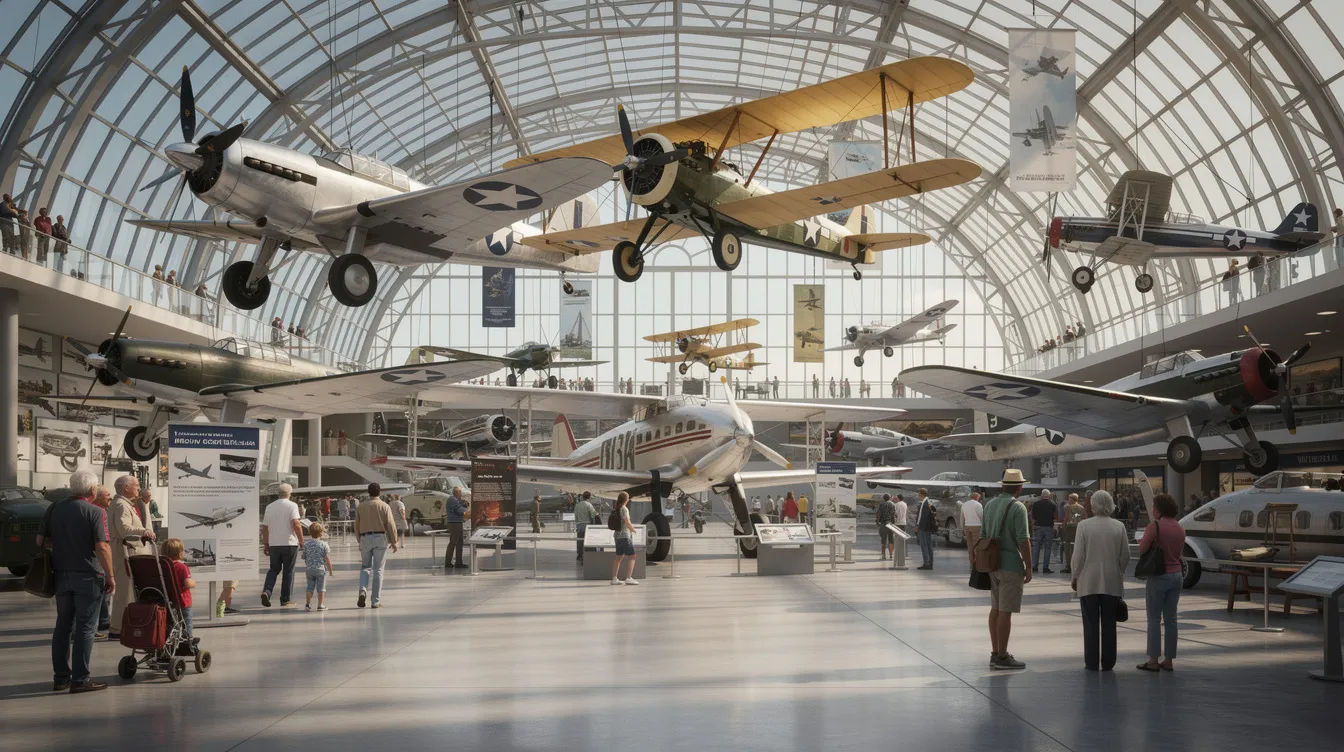
Introduction: Why Famous Aircraft Still Matter in a Private Jet World
The most famous airplanes in aviation history did more than capture headlines—they reshaped the fundamental expectations we hold for speed, safety, and global connectivity. From the Wright Flyer's first tentative hop above the sand dunes to the Bell X-1 shattering the sound barrier, each milestone aircraft expanded what was possible in the sky.
This article is designed for private jet travelers, aviation enthusiasts, and anyone interested in how historic aircraft innovations shape today's luxury flight experience. In this article, a "famous airplane" refers to an aircraft that achieved a significant milestone, set a record, or had a major impact on aviation history.
Today, those same pillars define what high-net-worth travelers expect when they step aboard a private jet: to cross a continent in hours, arrive rested in a pressurized cabin, and trust that rigorous safety certification backs every flight. BlackJet, a carbon-neutral private aviation company, positions its Jet Card programs and private aviation services as the modern, on-demand counterpart to those historic game-changers, delivering prepaid access to private jets across multiple cabin types with 24/7 digital booking and real-time support.
This article presents a journey through the most famous aircraft ever built—airliners, military jets, experimental test planes, helicopters, and even the Space Shuttle—and draws direct lines from their innovations to the private jet experience you can access today. Without further ado, let's trace the arc of powered flight from a beach in North Carolina to the edge of Earth's atmosphere.
The Wright Flyer and the Birth of Powered Flight
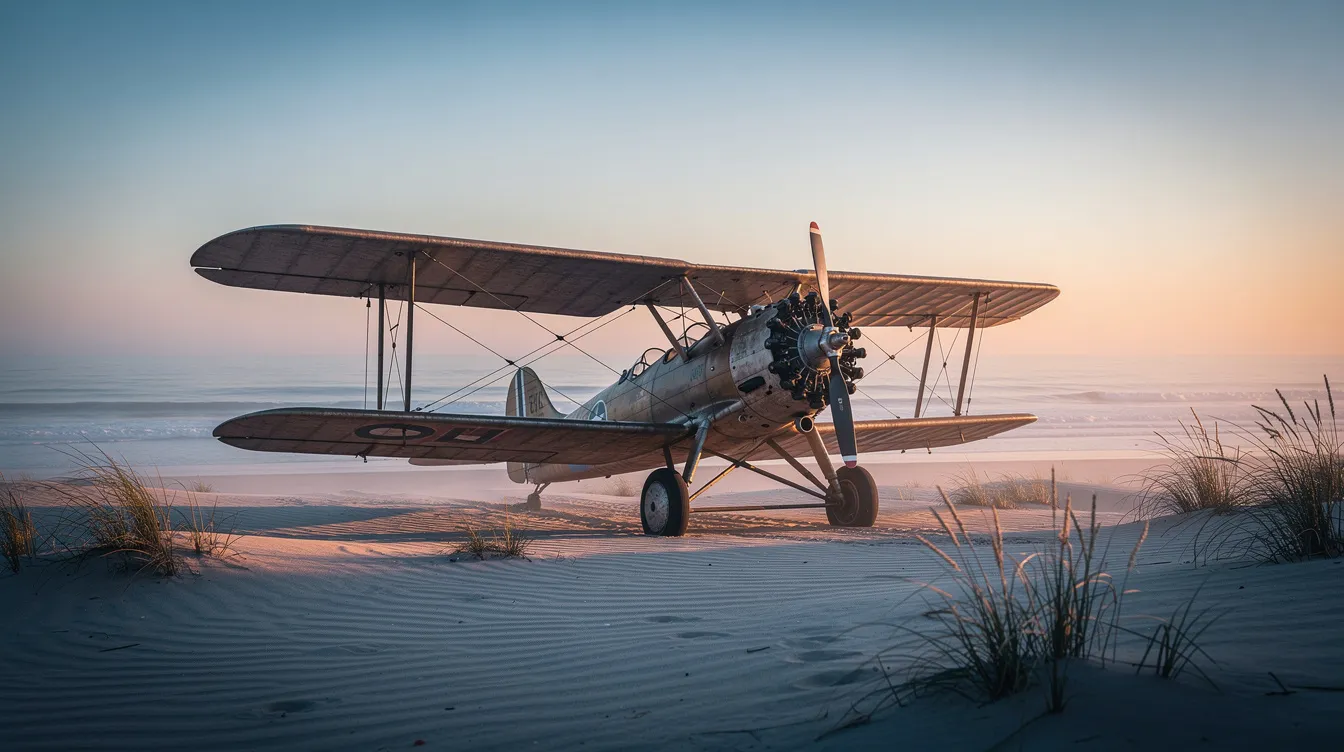
On December 17, 1903, Orville Wright piloted the Wright Flyer above the dunes of Kitty Hawk, North Carolina, achieving the first powered, controlled, heavier-than-air craft flight in history. That first flight covered roughly 120 feet in about 12 seconds-a distance shorter than the wingspan of a modern Boeing 747. By the fourth attempt that day, Wilbur Wright extended the record to 852 feet in 59 seconds.
The first airplane was remarkably simple by today's standards: a wooden frame of spruce and ash covered in muslin fabric, propelled by a 12-horsepower gasoline engine driving two contra-rotating propellers via chain-and-sprocket transmission. Its wingspan stretched about 40 feet, and it weighed roughly 605 pounds empty. Yet the Wright Brothers introduced something revolutionary-control in three axes through wing warping, a forward elevator for pitch, and a rear rudder for yaw. These principles underpin every modern flight control system, from ailerons to fly-by-wire.
The Wright Flyer is often called the most famous aircraft in history, and for good reason: every business jet, airliner, and fighter that followed owes its existence to those 12 seconds. Today, the original Wright Flyer is preserved at the Smithsonian National Air and Space Museum in Washington, D.C.-a destination worth pairing with a private weekend in the capital.
Early Icons of Distance: Louis Blériot, Lindbergh and the First Long-Haul Flights
Early distance records turned aviation from a local novelty into a global force and made the transatlantic private jet itineraries of today conceivable.
On July 25, 1909, Louis Blériot crossed the English Channel in his monoplane, the Blériot XI, covering roughly 22 miles from Calais to Dover. The flight proved that a light aircraft with an internal combustion engine could reliably traverse open water. The Blériot XI also popularized the tractor configuration (engine at the front pulling the plane forward) and tail-dragger landing gear, features that became standard across aviation.
Eighteen years later, Charles Lindbergh took distance flying to an entirely different scale. On May 20–21, 1927, Lindbergh flew solo and nonstop from Roosevelt Field on Long Island to Le Bourget Airport in Paris aboard the Spirit of St. Louis, covering approximately 3,600 statute miles in about 33.5 hours. The Spirit of St. Louis completed the first solo nonstop transatlantic flight in 1927, and its design was dominated by range: extra fuel tanks replaced forward visibility, there was only one pilot and no room for passengers, and crew comforts were nonexistent. Every trade-off Lindbergh accepted-lightweight structure, minimal payload, maximum fuel-echoes in the engineering calculus that gives modern long-range business jets their intercontinental reach.
Both the Blériot XI and the Spirit of St. Louis are preserved at the Smithsonian National Air and Space Museum, making Washington, D.C., a compelling stop for aviation-minded BlackJet clients. What once demanded 33.5 hours of open-cockpit endurance can now be accomplished overnight on a large-cabin jet with lie-flat seating and gourmet catering.
From DC-3 to Jet Age: The Commercial Workhorses That Shaped Air Travel
A handful of famous planes turned aviation from an adventure into a reliable global network. This section traces that transformation.
The Boeing 247 is considered the first modern airliner, introducing features like retractable landing gear, variable pitch propellers, and an all-metal monoplane design in the early 1930s. But it was the Douglas DC-3 that truly changed everything. First flown in 1935, the DC-3 revolutionized commercial aviation in the 1930s, with over 16,000 produced. Powered by two Wright Cyclone radial engines producing roughly 1,200 horsepower each, it cruised at about 192 mph and could fly coast to coast across the continental United States with stops. Its rugged design was so enduring that some DC-3s still operate today in cargo and bush-flying roles-the grandfather of modern air travel.
The de Havilland Comet was the first jet airliner ever built, entering service with BOAC in 1952. It offered smoother, faster, higher-altitude flight than any propeller plane, but early catastrophic accidents caused by metal fatigue at squared window corners forced a redesign. The resulting safety standards—fatigue testing, damage-tolerant design, oval windows—became the foundation for the certification regimes that every private jet operator must meet today.
The Boeing 707 was the first commercially successful jetliner introduced in 1958, making intercontinental business travel mainstream and compressing schedules in ways that foreshadowed the private jet era. Shortly after, the Boeing 737 became the world's most-produced jet airliner and the short-haul workhorse still dominating airports today. The Boeing 747 was the first jumbo jet, introduced in the 1960s to meet surging global demand with its iconic double-deck configuration, enlarged airports, and pushed the development of high-bypass turbofan engines. Understanding how aeroplane jet engines evolved from these programs helps explain why modern private jets deliver such remarkable efficiency.
These mass-transport icons scaled up the same qualities BlackJet clients expect in miniature: reliability, redundancy, pressurization, and cabin comfort, delivered through tailored small-cabin to large-cabin fleets reminiscent of the largest private jets for sale and charter.
Warbirds and Air Power: P-51 Mustang, Spitfire and the Boeing B-Series
Famous planes of World War II and the Cold War advanced aviation technology at extraordinary speed, and many of those innovations still underpin the safety and performance standards of modern business aviation.
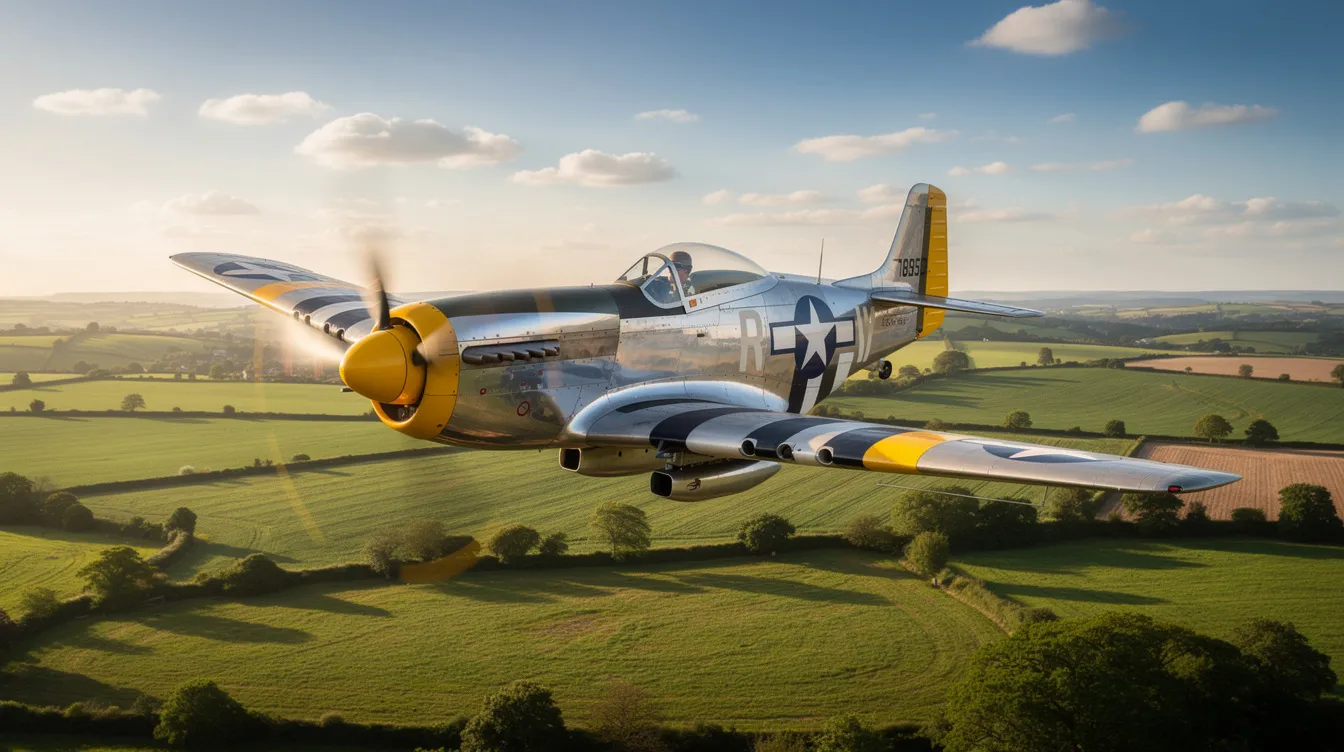
The North American P-51 Mustang, first flown in 1940, became a key fighter in World War II. Equipped with a Packard-built Rolls-Royce Merlin engine producing roughly 1,695 horsepower, the P-51D could reach about 437 mph and escort bombers deep into Nazi Germany-something no previous fighter could sustain. The P-51 Mustang was crucial in World War II air battles, reducing bomber losses dramatically over Europe. Its advanced design featured a laminar flow wing for aerodynamic efficiency, and today it remains one of the most celebrated warbirds at airshows worldwide.
The Supermarine Spitfire, with its distinctive elliptical wing, played a pivotal role in the Battle of Britain during World War II. Originally powered by a Rolls-Royce Merlin producing about 1,030 horsepower, later variants reached speeds exceeding 400 mph. Fewer than 100 Spitfires remain airworthy today, underlining their rarity and prestige.
The Boeing B-17 Flying Fortress pioneered multi-engine redundancy and crew systems for strategic bombing missions over Europe, while the Boeing B-29 Superfortress enabled long-range missions over Japan with innovations including pressurized cabins and remote gun turrets. The B-29 also delivered the atomic bomb, ending World War II in the Pacific Ocean theater. The McDonnell Douglas F-4 Phantom II, another important aircraft, served for 36 years in combat across multiple conflicts, including the Korean War. Meanwhile, the F-22 Raptor can supercruise at Mach 1.85 without afterburners-a direct descendant of wartime engine development.
The rigorous testing, redundancy, and safety certification standards born in this era directly inform how BlackJet selects operators and aircraft for its members.
Breaking Barriers: Bell X-1, North American X-15 and the Edge of Space
Experimental X-planes pushed the boundaries of speed and altitude into territory that seemed impossible, and their data directly influenced both high-altitude jets and spacecraft.
On October 14, 1947, Chuck Yeager flew the Bell X-1, nicknamed "Glamorous Glennis," past Mach 1 in level flight, making it the first aircraft to break the sound barrier. Its bullet-shaped fuselage and rocket propulsion provided engineers with critical data about transonic drag, shock waves, and stability at supersonic speeds.
The North American X-15 program (1959–1968) went further still. This rocket-powered plane, launched from a Boeing B-52 mothership, achieved a record speed of Mach 6.72—approximately 4,520 mph—and reached altitudes above 354,200 feet, well past the boundary where pilots like Neil Armstrong earned astronaut wings. The X-15's Inconel-X nickel-chrome skin was engineered to withstand extreme heat, and its flight data fed directly into the design of the Space Shuttle and the best aircraft of 2026 that continue this innovation arc.
Technical highlights:
Bell X-1: first supersonic level flight, October 1947
X-15: top speed Mach 6.72, maximum altitude ~354,200 ft (over 67 miles)
Private jets rarely approach Mach 1 for regulatory and economic reasons, but the pressurization, thermal control, and aerodynamic refinement that make high-altitude cruise comfortable at 45,000 feet trace directly to these programs. BlackJet emphasizes this heritage through rigorous safety protocols applied to every operator in its network.
Space Shuttle and Apollo Lunar Module: When "Aircraft" Left the Atmosphere
While spacecraft are not aircraft in the classical sense, the Space Shuttle and the Apollo Lunar Module sit at the frontier between air and space travel-and both proudly present engineering achievements that trickled down into modern aviation.
The Apollo Lunar Module, built by Grumman, carried Neil Armstrong and Buzz Aldrin to the lunar surface in July 1969. It was the first and only crewed vehicle to land on another celestial body, operating entirely in a vacuum with rocket propulsion and no wings. Its precision guidance, life-support redundancy, and structural design under extreme constraints set benchmarks for reliability that aerospace engineers still reference.
The Space Shuttle orbiter served as a reusable spaceplane from its first launch in 1981 through its final mission in 2011, completing 135 missions. It carried payloads to the International Space Station, deployed satellites, and re-entered Earth's atmosphere as an unpowered glider, landing like a conventional airplane on a steep approach. Advanced materials (heat-resistant tiles), fly-by-wire avionics, and redundant systems pioneered for the shuttle have since influenced modern business jet design.
Travelers can see both vehicles at sites including the Smithsonian's National Air and Space Museum, the Kennedy Space Center, and various space museum locations worldwide-each a compelling destination for a curated private trip.
Presidential Power: Air Force One and the Symbolism of Flight
Air Force One is arguably the single most recognizable specific airplane in the world-a flying symbol of American executive power.
Technically, "Air Force One" is the call sign for any United States Air Force aircraft carrying the president. In practice, it refers to two Boeing VC-25A aircraft, specially configured 747-200B variants, operated since 1990. Each is powered by four GE CF6-80C2B1 engines producing about 56,700 pounds of thrust, enabling a cruise speed of roughly 630 mph and a range of approximately 7,800 statute miles. On-board features include hardened communications (EMP-resistant), in-flight refueling capability, a medical suite, and an executive stateroom.
The first jet Air Force One was a Boeing VC-137B (a 707 variant) that entered service in the 1960s, transforming presidential travel with speed and global reach. Retired presidential aircraft can be viewed at the National Museum of the United States Air Force in Dayton, Ohio, and the Ronald Reagan Presidential Library, destinations that pair well with the Udvar-Hazy Center near Washington for a comprehensive aviation itinerary.
For presidents and for private jet travelers alike, aircraft serve as tools of strategy: enabling rapid, secure, point-to-point movement that commercial first class simply cannot replicate.
Record Holders: Concorde, Antonov An-225 and Other Superlatives
Some famous aircraft earned their status by pushing a single dimension-speed, size, or endurance-to an absolute extreme.
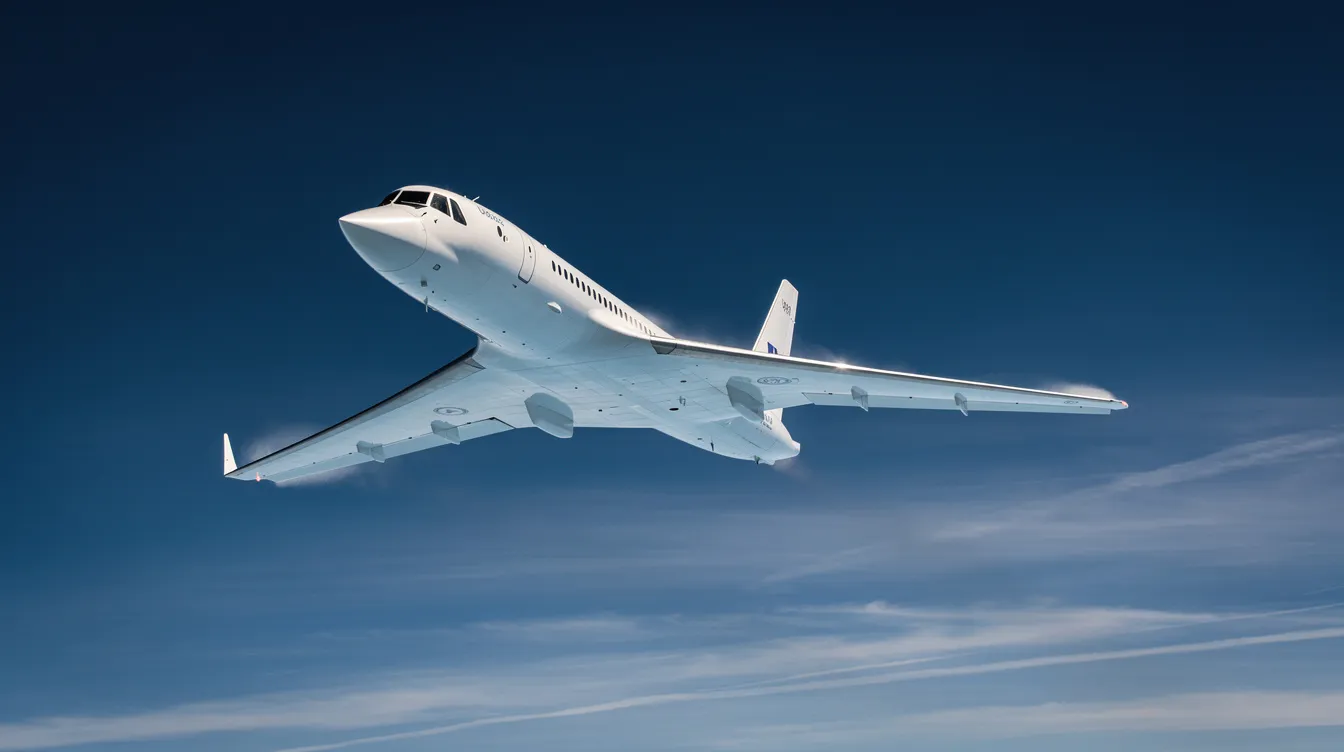
Concorde was a supersonic passenger airliner that operated from 1976 to 2003. Concorde was the world's only supersonic commercial airliner, cruising at around Mach 2 (approximately 1,350 mph) at altitudes above 60,000 feet. Supersonic passenger travel compressed a London–New York schedule into about 3.5 hours. Its four Olympus 593 turbojets with afterburners, limited ~100-seat capacity, and restricted route network highlighted the trade-offs between speed and economics—challenges that current supersonic development programs still face.
The Antonov An-225 Mriya, originally designed to carry the Soviet Buran space shuttle, was the largest aircraft and the biggest airplane ever built. First flown in 1988, this six-engine cargo giant could haul up to approximately 545,000 pounds-an engineering marvel of structural strength and lifting capacity. For context, the Antonov An-2 Colt, a much smaller biplane transport, had a 45-year production run and served in dozens of air force and civilian roles, proving that longevity can be as notable as size.
The Lockheed SR-71 Blackbird is the fastest air-breathing airplane ever, operating at sustained supersonic speeds above Mach 3 and altitudes near 85,000 feet. The C-130 Hercules first flew in 1954 and remains operational today across dozens of nations-one of the longest service life records for any military transport. And the flying boat era, exemplified by aircraft like the Spruce Goose (Hughes H-4 Hercules) at the Evergreen Aviation and Space Museum, reminds us that aviation's most important aircraft often solved problems no one else was willing to tackle.
Private flyers don't need the world's biggest or fastest plane, but they benefit daily from the materials science, engine efficiency, and structural knowledge these record-holders made mainstream—traits now embedded in the best features of a 20-million-dollar private jet.
Helicopters and Vertical Pioneers: Sikorsky, Bell UH-1 and VS-300
Rotary-wing aircraft matter because they deliver access where fixed-wing jets cannot: city centers, remote airstrips, offshore platforms, and short runways.
Igor Sikorsky's VS-300, first flown in 1939, was the first practical helicopter with a single main rotor and tail rotor-a configuration that remains the global standard. Its cyclic and collective controls established the foundation for every helicopter that followed, from corporate transports to military gunships.
The Bell UH-1 Iroquois, universally known as the "Huey," was used extensively during the Vietnam War in troop transport, medevac, and gunship roles. It remains one of the most famous aircraft in rotary-wing history, and upgraded variants still serve worldwide in air force, emergency medical, and offshore support missions. The Bendix radio direction finder and Western Electric communications radio equipment fitted to many military helicopters of that era helped establish the avionics standards that modern aircraft inherit.
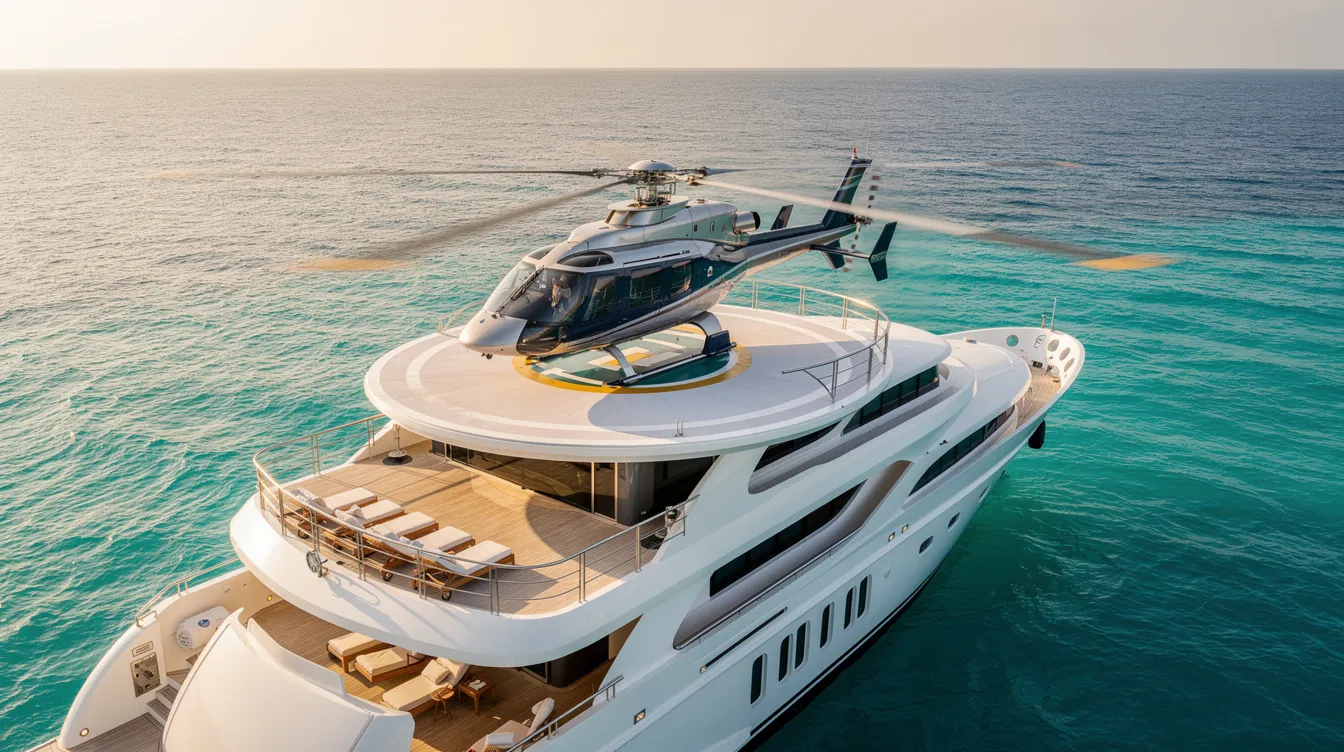
For high-net-worth travelers, helicopter transfers complement private jet flights seamlessly—covering the last mile from airport to yacht, estate, or remote resort. BlackJet clients can coordinate these connections for a truly door-to-destination experience, often pairing them with top private jets in the world that maximize luxury and performance.
Famous Civil Icons of Personal Flying: Piper Cub, Learjet, and Cirrus
A few famous civil aircraft democratized personal flight and then elevated it into the business aviation category we know today.
The Piper J-3 Cub, produced from the late 1930s through the 1940s, brought aviation down to earth. With simple controls, fabric construction, and minimal cost, the Piper Cub introduced thousands of new pilots to the sky-many of whom flew in World War II and later built careers across South America, the mainland United States, and beyond.
The Learjet 23, first flown in 1963, launched the dedicated business jet era. Small, fast, and pressurized, it offered executives jet-speed travel with cabin comfort-the direct ancestor of the private jet fleets that BlackJet accesses today. It proved that two aircraft categories (commercial and military) were not enough; there was a market for personal, on-demand jet travel that continues with the newest private jet innovations in luxury and efficiency.
Modern icons like the Cirrus SR22 have introduced integrated safety systems, including a whole-aircraft parachute (CAPS) and glass cockpit avionics, into personal aviation. While these are smaller than corporate jets, their safety-first philosophy mirrors the culture BlackJet promotes through ARG/US safety ratings and Wyvern Wingman standards applied across its operator network. Design innovations originally aimed at owner-pilots' comfort, situational awareness, and redundancy are now standard expectations for every private jet customer, even those exploring the most affordable private jet options and entry-level aircraft.
Where to See Famous Aircraft: National Air and Space Museum and Beyond
Many BlackJet clients enjoy pairing luxury travel with curated museum visits focused on aviation history. Here are the world's premier destinations:
Museum | Location | Flagship Exhibits |
|---|
Smithsonian National Air and Space Museum | Washington, D.C. | Wright Flyer, Spirit of St. Louis, Apollo Lunar Module, Bell X-1 |
Steven F. Udvar-Hazy Center | Chantilly, VA | Concorde (concorde photo opportunities abound), SR-71, Space Shuttle Discovery |
National Museum of the United States Air Force | Dayton, OH | Air Force One (SAM 26000), B-29, XB-70 Valkyrie |
Imperial War Museum Duxford | Cambridge, UK | Spitfire collection, B-17, warbird flights |
Musée de l'Air et de l'Espace | Le Bourget, Paris | Concorde prototype, Blériot XI, Ariane rocket |
Evergreen Aviation & Space Museum | McMinnville, OR | Spruce Goose (Hughes H-4 Hercules) |
A sample trip: fly coast to coast on a BlackJet Jet Card from New York to Washington, D.C., for a long weekend. Arrive at a private terminal, transfer to a premium hotel near the National Mall, spend a morning at the National Air and Space Museum, and return on your own schedule—no security lines, no layovers. The same model works for Paris via Le Bourget or the UK via Duxford, and for buyers considering museum stops while evaluating premium UK private jets for sale.
From Iconic Aircraft to Elite Access: How BlackJet Fits into Aviation's Legacy
From the Wright Brothers' 12-second flight to Louis Blériot's channel crossing, from Air Force One's global command post to the Space Shuttle re-entering Earth's atmosphere at Mach 225, every milestone aircraft expanded what travelers could demand from the sky. Higher speeds, safer structures, advanced navigation, more efficient engines, and world records in every dimension have all found their way into the modern private jets that BlackJet's partner fleet operates daily and into the offerings of top private jet companies for luxury travel.
A BlackJet Jet Card distills that legacy into a practical tool: prepaid flight hours (25- or 50-hour programs), choice of cabin size from light to large, a 24/7 booking app, and real-time concierge support. It's how a Jet Card works for the traveler who values flexibility and refuses to compromise on safety ocomfortrt,and aligns with comprehensive guides to Jet Card costs and membership pricing.
BlackJet also carries aviation's legacy into its next frontier: sustainability. Every flight is carbon-neutral through verified offsets and efficient aircraft selection-a commitment that positions green private jet travel not as a compromise, but as the standard for responsible luxury aviation, even as travelers analyze jet card cost per hour to optimize value.
The famous airplanes in this article changed the world by proving that impossible distances, speeds, and altitudes were within reach. BlackJet exists to make those capabilities part of your everyday strategic advantage.
Discover how BlackJet can reshape your travel. Explore premium jet access and join a membership built on 120 years of aviation innovation.


 Sign up with google
 Sign up with Apple