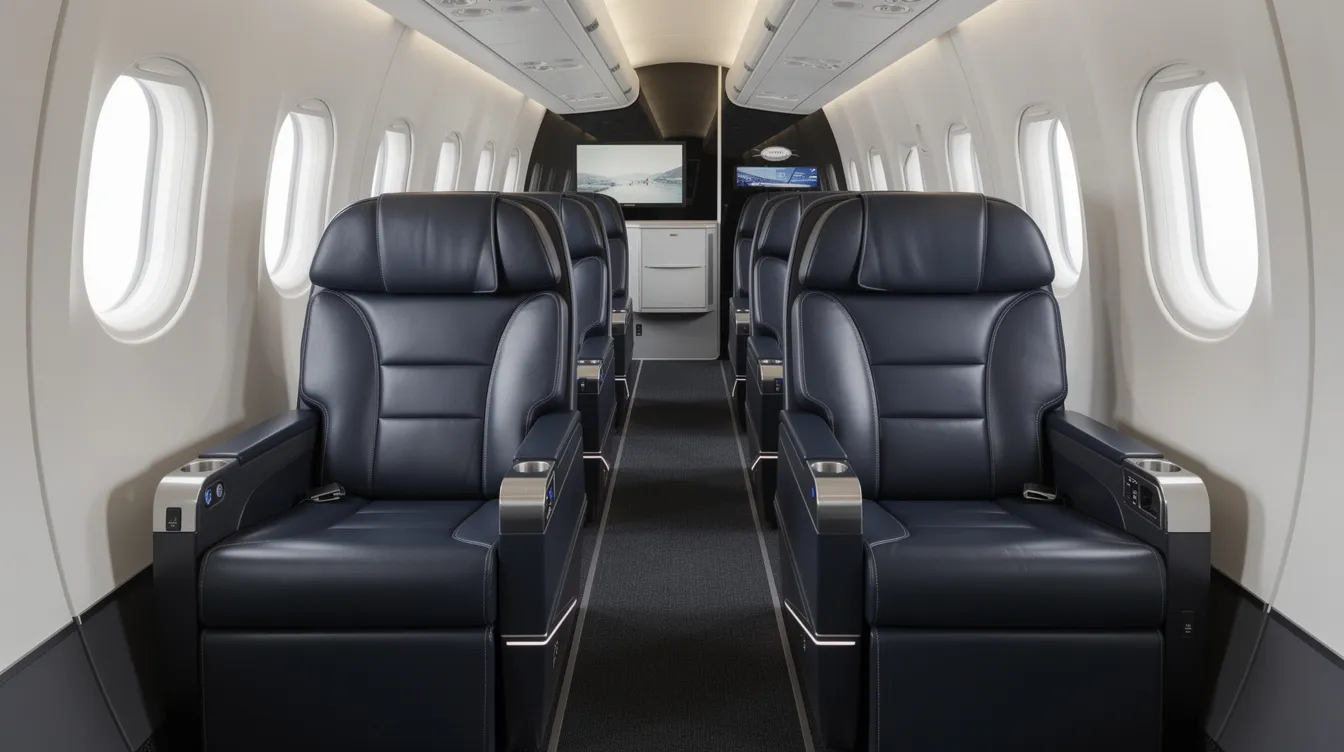
First class on an airplane has long been the benchmark for premium air travel. But in 2025–2026, the gap between what commercial airlines call "first class" and what private aviation delivers has never been wider. This guide breaks down exactly what you get in every cabin tier, what it costs, and when it makes sense to step beyond the airline terminal entirely.
This guide is for frequent flyers, business travelers, and anyone considering an upgrade to first class or private aviation. With premium travel options evolving rapidly, understanding the real differences between first class and private jets is more important than ever.
Executive overview: Is First Class worth it compared to a private jet?
The calculus around flying first class has shifted. Business class now offers lie-flat beds and direct aisle access on most long-haul aircraft, compressing the incremental value of a first class cabin on airlines like American Airlines. Meanwhile, true international first class is disappearing from U.S. carriers altogether-American Airlines is removing Flagship First from its 777-300ER fleet as of November 2026, and from the A321T transcontinental by March 2027.
For travelers who value time above all else, the numbers are stark. A commercial first class flight from New York to Los Angeles typically requires six to seven hours door-to-door, with 90 to 120 minutes consumed at each end by check-in, security, and boarding. A private jet covers the same route in roughly four hours total, with passengers arriving at the terminal just 15 to 30 minutes before departure.
Private aviation companies offer jet card programs for prepaid access to private jets, turning what was once an ad hoc luxury into a strategic tool. BlackJet's model delivers carbon-neutral flights by default, rigorous safety certification, and app-based booking-all without requiring jet ownership. Here is how the two options compare at a glance:
Key Differences at a Glance:
Time savings: Private jets eliminate two to three hours of airport overhead per trip compared to commercial first class
Privacy and control: First class passengers share a cabin with other passengers; a private jet cabin is exclusively yours
Schedule flexibility: Commercial flights run on fixed timetables; Jet Cards allow departure when you're ready
Sustainability: BlackJet includes carbon-neutral operations on every flight, while airlines typically offer optional paid offsets
Cost structure: First class tickets price per seat; Jet Cards lock in predictable hourly rates per aircraft
Private aviation is popular among frequent business travelers and high-net-worth individuals who recognize that the real luxury isn't a bigger seat-it's reclaimed time.
Understanding airline cabin classes: Economy to First Class
To evaluate whether first class is worth it, you need to understand what each cabin tier actually delivers. Here are the two types of commercial cabins that matter most, alongside the private alternative:
Cabin Class Comparison:
Economy class / Main cabin: Minimal legroom, no complimentary meals on domestic flights, basic entertainment options. The baseline experience for most passengers.
Premium economy: Improved seat pitch, sometimes a separate cabin, slightly better meals and amenity kits. A moderate step up without lie flat capability.
Business class: On international routes, typically includes lie flat seats, direct aisle access, premium dining, and lounge access. Many carriers now offer suites with doors in business.
First class (domestic): Recliner-style class seats in a 2–2 layout on narrowbody aircraft like the American Airlines A321 or 737. Better than economy, but far from a suite.
First class (international): Private suites, closing doors, full lie flat beds, and personalized service. Increasingly rare-only a handful of carriers still offer it.
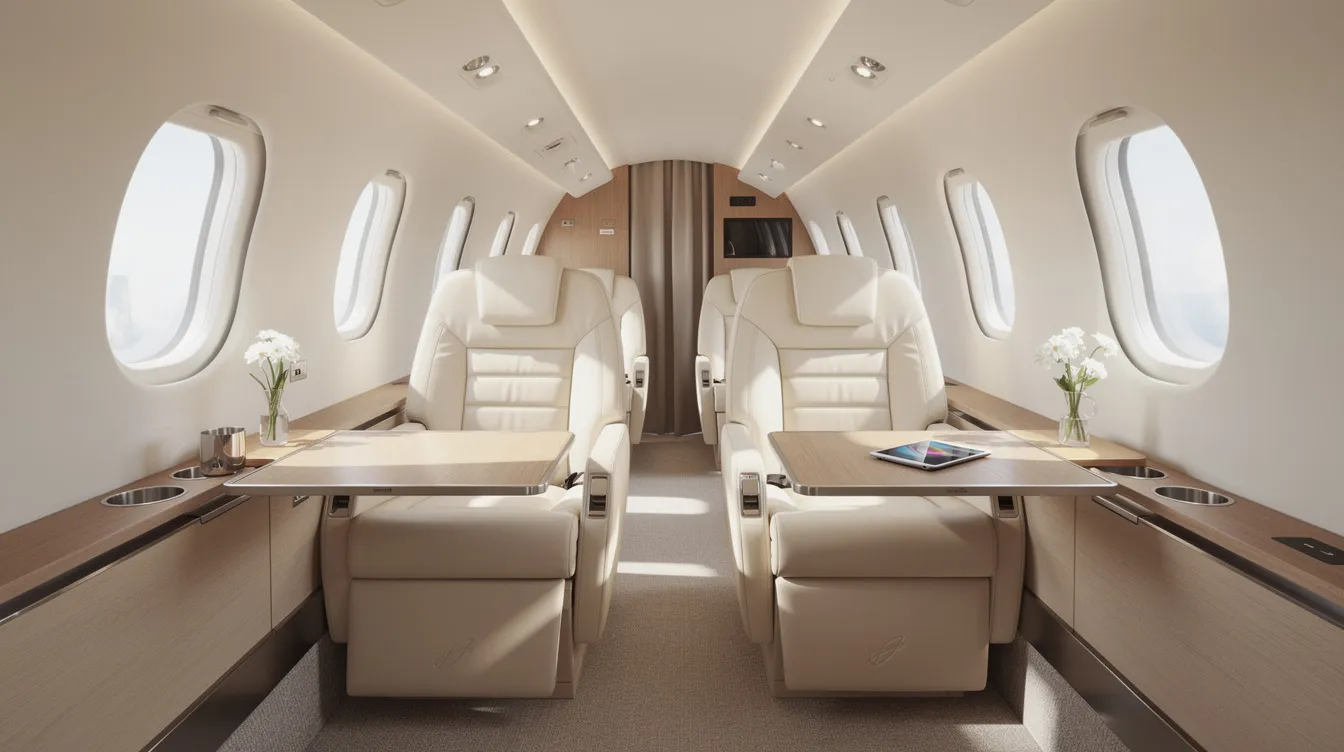
Private jets: Aircraft categories from light jets to midsize and large cabin jets function as their own classes, with capacity ranging from four to nineteen passengers and complete cabin privacy on every flight; understanding private jet sizes helps match aircraft to trip length, group size, and budget.
Domestic First Class: What you actually get on U.S. and short-haul routes
Domestic first class is a comfort upgrade, not a luxury transformation. If you're expecting suites and multi course meals on a three-hour American Airlines flight from Dallas to Miami, recalibrate. Here's what you're actually paying for.
First class seats on American Airlines domestic narrowbody aircraft-A319, A320, A321, 737-800, and MAX variants-typically offer 37 to 40 inches of pitch and seat widths around 20 to 21 inches, arranged in a 2–2 layout. These are spacious seats with ample legroom and generous recline, but they remain recliners, not lie flat beds.
Domestic First Class Features:
Priority services: First class passengers enjoy priority boarding and check-in, plus first class passengers can check two bags free of charge on domestic flights
Dining: Complimentary meals are limited to longer flights (generally over 900 miles); shorter sectors receive snacks, mixed nuts, and complimentary drinks including alcohol
Entertainment and technology: Seatback screens are inconsistent across the fleet; many aircraft rely on streaming to personal devices. Power outlets and USB ports vary by aircraft age and type-some have full AC outlets, others only USB-C
Lounge access: Domestic first class lacks lounge access and offers simpler meals than its international counterpart; you'll need elite status or a paid membership to enter an Admirals Club
Wi fi: Available on most aircraft, though speed and reliability still lag behind what you'd experience on the ground
Domestic first class delivers a noticeably more enjoyable journey than the main cabin-more personal space, better food, faster boarding-but it's not remotely comparable to a private jet or even international first class. For domestic flights under five hours where lie flat isn't essential, it's a reasonable upgrade. Beyond that, its limitations become apparent.
International First Class: Suites, service, and real luxury in the sky
True international first class is where commercial aviation reaches its ceiling. Fewer seats in first class cabins result in quieter, more exclusive environments-on a Boeing 777-300ER, business class typically has 52 seats compared to 8 in first class.
Airlines like Emirates, Singapore Airlines (Suites), and Air France (La Première) still deliver a class product that justifies the price for some travelers. Here is what distinguishes it from business class:
International First Class Features:
Suites and privacy: Enclosed suites with closing doors, multiple windows, and separate seat-and-bed configurations on select carriers
Lie flat beds: Full lie flat seats with premium mattress pads, duvets, and luxury linens-a significant sleep-quality advantage on longer flights
Dining: In-flight dining experiences in first class often feature multi course meals with caviar, fine wines, and chef-designed menus; first class dining features chef-designed menus and curated wines
Service ratio: Private aviation offers a higher crew-to-passenger ratio for personalized service, but international first class approaches this standard with dedicated flight attendants for a small cabin of six to eight passengers
Amenity kit: Designer-brand kits with premium skincare, noise cancelling headphones, slippers, and pajamas on select carriers
The trend, however, is undeniable. Airlines are increasingly phasing out first class in favor of enhanced business class and premium economy, making these premium cabins rarer with each fleet refresh. If you want to experience this class of product on international flights, the window is narrowing.
American Airlines First Class in detail: Domestic vs. international
American Airlines operates two types of first class, and they are fundamentally different products. Understanding the distinction matters if you choose American Airlines for premium travel.
American Airlines has two aircraft with first class suites: the A321T (transcontinental) and the 777-300ER. Flagship First is available on Boeing 777-300ER aircraft and select A321T transcon routes, offering lie flat seats, 1–2–1 configurations with direct aisle access, and a world apart from domestic first class. Flagship First offers lie flat seats and multi course meals on these routes, with Casper-branded bedding, large entertainment screens, and premium headphones.
Comparison Table: Domestic vs. Flagship First
Feature | Domestic First Class | Flagship First |
|---|
Seats | Recliners at ~37" pitch | Lie flat seats on select routes with significantly more personal space |
Dining | Complimentary meals on select sectors | Multi-course meals and curated wine lists |
Baggage | First class passengers can check two bags free of charge domestically | First class passengers can check up to three bags free internationally |
Amenity kit | Minimal or nonexistent | Upscale toiletries, eye mask, socks, and skincare in a branded bag |
Lounge access | No automatic lounge access on American Airlines domestic first class | Access to exclusive lounges with premium dining, including dedicated Flagship Lounges |
Availability | American Airlines has been gradually shrinking its true first class footprint and investing heavily in flagship business class, with retrofits removing first class seats and adding more business and premium economy configurations | Available on select aircraft and routes; the true first class footprint is being phased out |
After March 2027, no U.S. airline will offer a true international-style first class cabin, making American Airlines international first class a product with an expiration date.
What first class tickets really cost in 2025–2026
Understanding the real cost of a first class flight requires looking beyond the sticker price.
Cost Breakdown:
Domestic pricing: Booking first class flights can cost six times economy fares on major U.S. carriers. A NYC–Miami economy ticket might run $300–$700, while first class tickets on the same route range from $700 to $4,000+ one-way depending on demand and timing
International pricing: International routes in Flagship First or equivalent cabins commonly run $6,000–$15,000+ one-way on routes like New York–London or Los Angeles–Dubai
Award strategies: Using travel rewards credit cards can help secure first class seats at dramatically lower cash outlay, though availability is scarce. Checking in early may offer low-cost first class upgrades on select flights, and discount sites can offer first class tickets up to 70% cheaper than published fares
Private jet comparison: A light jet charter from NYC to Miami runs approximately $17,000–$24,000 per aircraft-expensive for a solo traveler, but split among four to six class passengers the per-person cost approaches commercial first class while delivering full privacy and schedule control. For a deeper breakdown of how much it costs to rent a private jet, Understanding Jet Card costs shows how prepaid hourly rates convert unpredictable fares into fixed, transparent pricing
Cost drivers: Route popularity, booking window, aircraft type, season, and whether a first class cabin exists on that route at all
Is First Class worth it? Comfort, productivity, and privacy vs. Business Class and private jets
The class worth question depends entirely on what you're optimizing for. Consider an executive flying from New York to London for a 9 AM meeting. In international first class, she boards at JFK after a 90-minute airport sequence, sleeps reasonably well in a lie flat seat, arrives at Heathrow, clears customs, and reaches central London-total trip time roughly 12 to 13 hours. On a BlackJet private flight, she departs from a nearby airport 20 minutes before wheels-up, works undisturbed for the first three hours, sleeps, and arrives at a less congested destination airport closer to her meeting.
Here is how each option stacks up across the dimensions that matter:
Comparison by Key Factors:
Sleep quality: International first class and business class both offer lie flat beds; private jets allow fully customized rest without other passengers or cabin announcements
Productivity: First class offers more space, power outlets, and wi fi; private jets allow confidential calls, board presentations, and uninterrupted focus
Privacy: Even the best first class cabin is shared space; on a private aircraft, the cabin is exclusively yours
Schedule control: Commercial flights run on fixed timetables; customers value flexibility, privacy, safety, and luxury-and Jet Cards deliver all four
Flying first class makes sense on predictable, high-frequency routes where you value loyalty earnings and premium seating. Private aviation wins when time savings, confidentiality, or multi-stop itineraries drive the trip, and a detailed look at whether chartering a private jet is worth it can clarify when the trade-offs make sense.
Ground experience: Lounges, terminals, and the BlackJet contrast
The journey starts long before you board. On commercial airlines, even first class passengers must navigate crowded terminals. First class provides access to exclusive lounges with premium amenities on international routes-American Airlines' Flagship Lounges offer restaurant-style dining, showers, and quiet rooms. But on American Airlines domestic first class, you get priority boarding and faster check-in without automatic class lounges access.
International first class lounges on select carriers include fine dining, spa showers, and sometimes private cars to the aircraft gate. These are genuine luxuries-but they exist because you're spending 90 to 120 minutes at the airport before departure.
Ground Experience Comparison:
Commercial first class ground time: 90–120 minutes pre-departure for check-in, security, and boarding; similar wait on arrival for baggage and ground transport
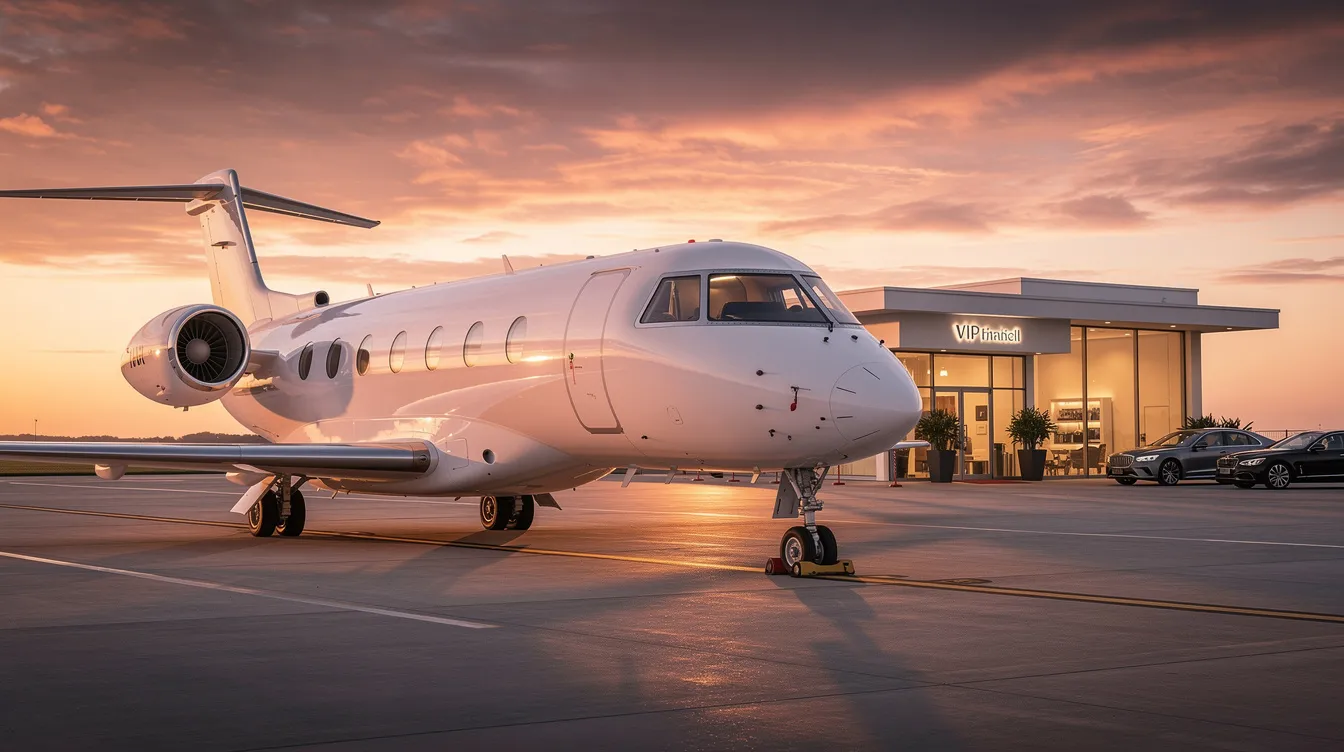
BlackJet FBO experience: Arrive 15–30 minutes before departure at a private terminal with no TSA lines, discreet screening, and direct ramp-to-car transfers, backed by rigorous private jet safety standards
Door-to-door comparison: A JFK–LAX first class journey runs 6–7+ hours door-to-door; a private flight using less congested airports completes the same trip in roughly 4–5 hours
Arrival advantage: No baggage carousel wait, no customs queue on domestic private flights-step off the aircraft and into a waiting car
First Class amenities and etiquette: Amenity kit, dining, and how to behave up front
First class amenities vary dramatically by airline and route. On international flights, expect designer amenity kits with premium skincare, noise cancelling headphones, slippers, and sometimes pajamas. Dining features multi course meals with pre-selectable main courses and curated wine and spirits lists. Even mixed nuts arrive warm and in a proper dish.
On domestic routes, amenities scale down: complimentary drinks, basic snack or meal service, and entertainment options limited to streaming on personal devices or inconsistent seatback screens.
First Class Amenities Overview:
Dining: Flagship First includes multi-course meals; domestic first class offers simpler complimentary meals based on sector length
Bedding: International first class provides mattress pads, duvets, and full-size pillows; domestic first class offers a standard blanket at best
Etiquette in a shared cabin: Keep noise low, manage recline considerately, respect overhead bin space, and allow flight attendants to maintain their service flow without rushed requests
Private jet contrast: BlackJet's premium private jet service means clients effectively own the cabin for the duration of the journey-set your own noise levels, hold calls freely, and customize catering to your preferences rather than selecting from a fixed menu
From First Class to private: When to choose American Airlines First Class and when to choose BlackJet
Smart travelers don't choose one mode exclusively-they build a portfolio. Here is a practical framework:
When to Choose Each Option:
Choose airline first class when:
You're flying a predictable hub-to-hub route on a fixed schedule (e.g., quarterly board meetings in Dallas on an American Airlines flight)
You want to earn AAdvantage miles and maintain elite status
You're traveling solo on a route where first class offers genuine value over business
Choose BlackJet when:
You need last-minute departure flexibility or multi-city itineraries across secondary airports
Confidentiality matters-deal roadshows, sensitive negotiations, or simply uninterrupted focus
You're traveling with a group where per-person cost on a large private jet for around 20 passengers approaches or beats individual first class tickets
You want BlackJet Certified safety standards, carbon-neutral operations, and 24/7 digital booking tools
Jet cards allow flexible access to multiple cabin types without jet ownership, and travelers appreciate 24/7 flight support in private aviation services; a complete guide to Jet Card pricing explains how different structures impact real-world cost. Mobile booking platforms support real-time flight arrangements, meaning schedule changes happen in minutes, not hours on hold. BlackJet's Jet Card programs convert unpredictable travel spending into prepaid blocks of guaranteed access, and a comparison of the best Jet Cards for frequent flyers can help you evaluate which model fits your pattern.
If you already spend heavily on first class tickets each year, consider whether reallocating a portion of that budget into a 25-hour or 50-hour Jet Card could deliver better time control and privacy on the trips that matter most; our guides to the 25-hour Jet Card features and costs and 50-hour Jet Card pricing and value walk through who each level is best for.
FAQ: First Class vs. Business Class vs. private jets in 2025–2026
Are first class and business class the same?
No. Business class now offers lie-flat beds, direct aisle access, and premium dining on most international routes, but first class still provides larger suites, more personal space, higher staff ratios, and softer product details like designer amenity kits. That said, the gap is narrowing—and with airlines like American Airlines removing Flagship First, business class is becoming the commercial ceiling.
Is domestic first class worth it on a 2-hour flight?
It depends on your priorities. You get priority boarding, a wider seat, free drinks, and two bags checked free—but no lie-flat seat, no lounge access, and minimal meal service. For short domestic flights, the marginal comfort may not justify a 3–6x fare premium unless purchased with miles or via a low-cost upgrade.
How do private jet Jet Cards compare to buying first class tickets?
Jet Cards deliver a fixed hourly rate for the entire aircraft, full privacy, flexible scheduling, and access to thousands of airports. The per-passenger cost is higher for solo travelers but becomes competitive for groups. The real value is in time saved and schedule control, not just cabin luxury, and understanding Jet Card cost per hour helps you benchmark against premium cabin fares.
Does American Airlines domestic first class include lounge access?
Typically, no. You'll need Admirals Club membership, AAdvantage elite status, or an international first or business class ticket on the same day to access lounges.
Can I be more productive in first class than in economy?
Yes—there's more space to spread out work, reliable power outlets, and a quieter environment. But a private jet takes productivity further: hold confidential calls, run team meetings, and eliminate hours of unproductive airport time entirely.
How does sustainability factor into private aviation?
Carbon-neutral flights are increasingly important for private aviation companies. BlackJet includes carbon-neutral operations on every flight at no additional cost, while most airlines offer only optional paid offset programs. Sustainable aviation practices include carbon offsetting for private flights as a standard, not an add-on, and an overview of the private jet price landscape shows how greener access models like Jet Cards compare with full ownership.
When does it make sense to move from first class to private flying?
For some travelers, exploring the cheapest private aircraft options is part of deciding when private aviation becomes viable. If you fly first class more than ten times per year, frequently adjust travel plans, need multi-stop itineraries, or prioritize confidentiality, a Jet Card model is likely a better fit. For heavy users, a 100-hour Jet Card cost guide and a breakdown of how much it costs to charter a small plane can help you compare Jet Cards against ad hoc charter or commercial premium cabins. Learn what a Jet Card is and how it compares to ad hoc charter or commercial premium cabins.
Conclusion: Redefining "First Class" with BlackJet
First class on an airplane in 2025–2026 remains a meaningful upgrade over economy and premium economy-but the world of commercial aviation is consolidating around business class as its top-tier product. For travelers who already appreciate the difference that premium cabins make, the logical next question is whether the airline's best is truly the best available to you.
BlackJet exists for those who've answered that question. With safety-first operations, carbon-neutral flights on every journey, and seamless digital booking, private aviation becomes less an indulgence and more a strategic asset-one that returns hours to your week and puts you in control of every detail of your trip. A broad overview of types of private jets for every traveler and insight into NetJets Jet Card costs can help you benchmark BlackJet’s offering against the wider market.
Elevate your travel on your terms. Explore BlackJet's Jet Card programs and discover how the next step beyond first class can reshape the way you move through the world, whether you prefer small private jets for flexible luxury travel, want to compare top private jet companies for exceptional service, or are curious about the most affordable private jet options.


 Sign up with google
 Sign up with Apple