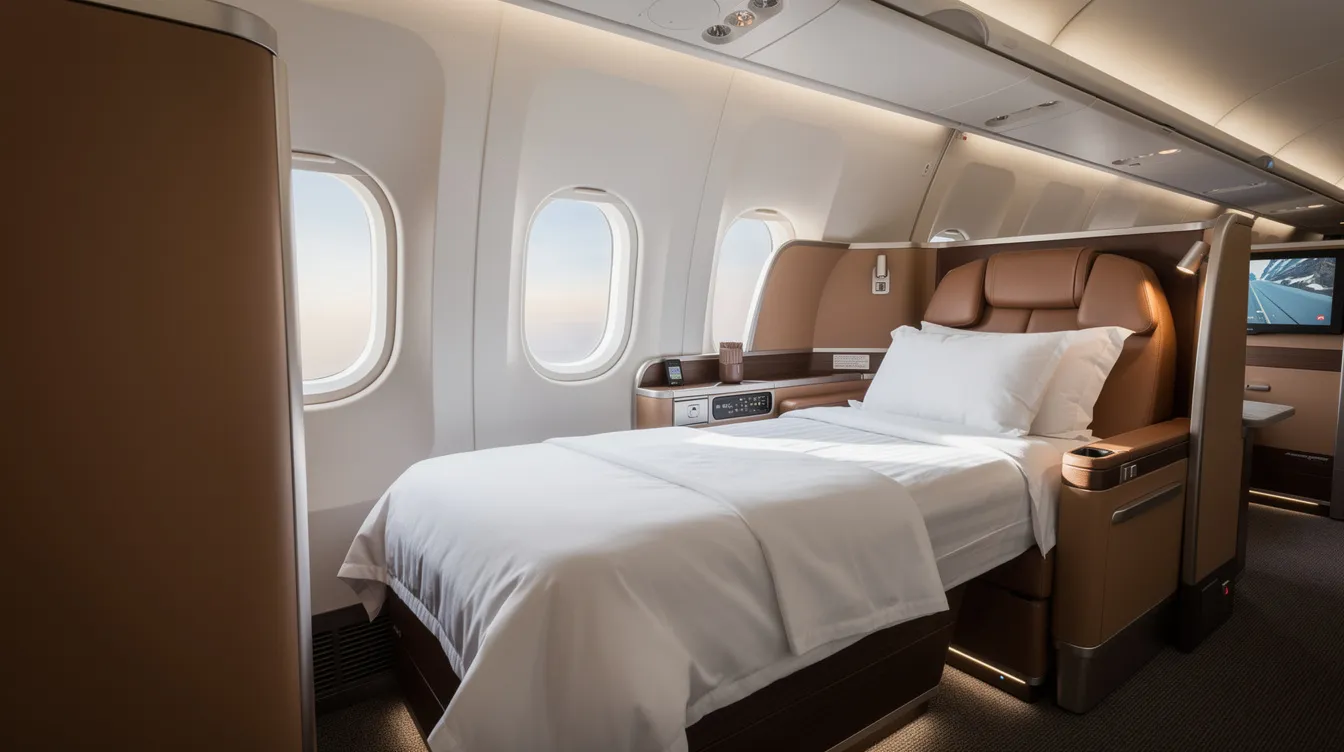
The first class seat on a plane has undergone a radical transformation over the past decade. What once meant a wider recliner and a glass of champagne now means enclosed suites with doors, lie-flat beds, and multi-course gourmet meals served on fine china. Yet even the most spectacular first-class cabin still operates within the constraints of commercial aviation: fixed schedules, crowded hubs, and rigid routing through major airports.
This guide is designed for frequent flyers, executives, and luxury travelers seeking to understand the latest in first-class seating and how private jet solutions like BlackJet compare.
For high-net-worth travelers and executives who fly frequently, those constraints increasingly erode the premium they pay for. This guide walks through what commercial first class delivers today, profiles the best first class suites in the sky, and explains how BlackJet's Jet Card programs can give you a private first class experience on every flight - with full control over your schedule, your privacy, and your time.
Why First Class Seats Matter – And Why Many Travelers Are Moving to Private Jets
Consider a concrete scenario: a 2026 overnight flight from New York to London. In a top-tier first class cabin, the flight itself takes roughly seven to eight hours. Add 90 to 120 minutes for check-in, security, and immigration at a major hub, plus ground transport on both ends. Door-to-door, you're looking at 10 to 12 hours. A first-class ticket on that route typically runs $12,000 to $25,000 one way, a range that invites comparison with jet card cost per hour and even a full 100-hour jet card cost guide for truly frequent flyers.
On a BlackJet private jet, you depart from a private terminal, arrive 20 to 30 minutes before takeoff, fly direct, and clear customs at a smaller facility on landing. Total door-to-door time drops to six or seven hours. The cabin is entirely yours - no other passengers, no shared space, no compromise on confidentiality or productivity.
For executives running multi-city schedules and families seeking discretion, access now matters more than amenities alone. Flexible departure times, direct routes to secondary cities, and the ability to change plans same-day are advantages no first-class section can match. This is why many travelers who have already experienced the ultimate first-class experience are now exploring Jet Card programs as a strategic upgrade, starting with options like a 50-hour jet card and its cost before committing to larger blocks of time.
What Defines a First Class Seat on a Plane Today?
First-class air travel has evolved from wide recliners near the front of the aircraft into fully enclosed suites with separate beds, wardrobes, and dine-on-demand service, mirroring innovations seen in the top 10 best private jets worldwide where cabin design focuses on privacy and bespoke comfort. First-class seating is typically wider and more spacious than in economy, but the gap between a basic class seat and a top-tier suite is now enormous. Several airlines have invested billions to create flagship products that resemble private hotel rooms at 40,000 feet, just as manufacturers roll out the newest private jet models with wellness-focused cabins, ultra-long range, and advanced safety systems.
Key terms to understand:
First class cabin: the physical section of the aircraft housing the airline's highest-tier product, often with just four to eight seats
First class seat: the individual seat or suite within that cabin
First class suites: enclosed by doors, featuring large flat beds, wardrobes, and personal entertainment systems - the current standard on flagship long-haul routes
Business class seats: the tier below first, now increasingly featuring lie-flat seats and direct aisle access, but with less space and fewer exclusives
Naming varies by airline and region. Some carriers brand their top business class product as a "suite," while others reserve that label strictly for first class.
Concrete 2024–2026 examples illustrate how far things have come:
Singapore Airlines offers 50 square feet in its Airbus A380 Suites, with double suites that convert into the largest bed in commercial aviation
Emirates features virtual reality windows in its Boeing 777 first class and an onboard shower spa on the A380 upper deck
Japan Airlines has six individual first class suites on the A350-1000, each with a 43-inch TV screen and speakers built into the headrest for cinematic audio
Lufthansa's new Allegris first class features double-bedded suites with nearly floor-to-ceiling partitions
Air France La Première offers just four seats per aircraft on the 777-300ER, with Michelin-crafted dining and chaise longue seating
A quick visual guide to premium seat types:
Recliner: traditional wide seat with extra legroom and recline; common on domestic flights
Lie flat: converts to a flat bed, open or with partial dividers
Suite with door: fully enclosed, large bed, wardrobe, personal screen; the standard for international first class
Multi-room apartment: separate armchair and bed zones, sometimes a lounge or dining area (e.g., Etihad's The Residence)
First Class vs Business Class: How Big Is the Real Difference?
Business class has improved so dramatically that many airlines now use it as their flagship premium travel product. On most flights, modern business class offers lie-flat beds, direct aisle access, and high-end dining. This compression is pushing various airlines to either eliminate first class or make it far more exclusive.
Here's how the two compare:
Space: first class suites provide 50+ square feet, spacious seats with wide beds, and wardrobes; business class typically offers 30 to 40 square feet with narrower beds
Privacy: first class cabins may feature private suites with doors; business class seats generally use open shells or curtains, though some newer class suites add sliding doors
Dining: first class passengers often receive gourmet meals designed by top chefs with a full meal service, dine-on-demand flexibility, a curated wine list, and premium champagne; business class has quality meal service but with fixed times and a shorter beverage service menu - still better food than economy seats or premium economy, but less bespoke
Ground services: first class passengers enjoy private check-in and boarding areas, first class lounge access with spa services and fine dining options, and sometimes chauffeur transfers; business class gets priority boarding and lounge access, but less exclusive
Price: first class tickets often exceed $10,000 for long-haul flights, while business class typically costs $4,000 to $5,000 for international flights; business class seats recline less than first class seats, but the gap is narrowing
American Airlines is removing dedicated first class from retrofitted 777-300ER fleets in favor of 70 business class suites. Many European airlines have already phased out first class on shorter routes. The first-class experience can vary greatly depending on the airline and route, much like how NetJets jet card costs and structures differ from other providers in the private aviation space.
Under a Jet Card model, the distinction between class cabins becomes irrelevant. Every flight is effectively first class in space, privacy, and service - because the entire cabin belongs to you, especially with BlackJet premium private jet cards that standardize a top-tier onboard experience.
Inside the First Class Cabin: What You Actually Get
A modern first-class cabin holds just four to eight passengers. First-class passengers usually enjoy a higher staff-to-passenger ratio, hushed lighting, bespoke materials, and personalized first-class service from a dedicated flight crew. Every flight attendant in the first class section is trained to anticipate needs rather than react to requests.
What's typically included before you board:
Priority services include dedicated check-in areas and fast-track security
First class passengers enjoy expedited check-in and security, with priority check lanes
Privileged services include priority baggage handling and faster access to immigration
First-class travel provides a high-end experience before boarding, including a welcome drink in the first-class lounge
Passengers can check in up to two free bags in first class
Chauffeur or private transfers with airlines like Air France
First class passengers can board the aircraft before others through early boarding and priority boarding lanes
Onboard, the class product includes amenities that echo those found in the most expensive private jet options, from elevated dining to bespoke bedding and entertainment systems:
International first-class cabins often feature lie-flat beds; some first-class seats convert into flat beds measuring 80 inches or longer
First class typically includes complimentary gourmet meals and drinks; dining often includes multi-course gourmet meals served on fine china with real silverware.
First class often features larger seats with more legroom and more space than any other cabin
Luxury amenity kits include high-end skincare products and toiletries
Some airlines offer personal minibars in first class
First class suites can include in-flight showers on select aircraft
Large entertainment screens, noise-cancelling headphones, and premium bedding
Despite all this, you're still bound by big-airport congestion, fixed schedules, and shared terminals. Private aviation through BlackJet delivers the same or better comfort with bespoke timing and quieter terminals.
The Best First Class Suites in the Sky (2024–2026)
We're in a golden age of commercial cabin design. Airlines are in an arms race to create the ultimate first class experience on a handful of flagship routes. Here are the marquee products:
Singapore Airlines A380 Suites: Singapore Airlines' first class suites measure 50 square feet per suite, with a separate bed and swivel chair, double suites for couples, Krug or Dom Pérignon, and "Book the Cook" offering lobster Thermidor. Singapore Airlines announced a further S$2 billion cabin investment in late 2026.
Air France La Première (Boeing 777-300ER): a four-seat first class cabin with floor-to-ceiling curtains, chaise longue seating, Michelin-crafted menus, and private car transfers in Paris. Voted World's Best First Class by Skytrax in 2026.
Emirates First Class (Boeing 777-300ER and A380): fully enclosed suites, "zero-gravity" seats, Emirates features virtual reality windows in first class suites on the 777, and a shower spa on the A380 with a bar lounge on the upper deck.
Etihad A380 First Class Apartments and The Residence: Etihad offers nine first class apartments on the A380 with sliding doors, separate beds and armchairs, and an onboard shower. The Residence is a two-room suite with a butler on select ultra-long-haul flights.
Japan Airlines A350-1000 First Class Suites: six suites with sofa-style seating, ottomans, 43-inch 4K screens, and headrest speakers built into the seat for immersive audio. Refined Japanese and Western menus with meticulous hospitality.
Qantas: Qantas will launch new first-class suites by 2026, joining the upper tier of international first-class products.
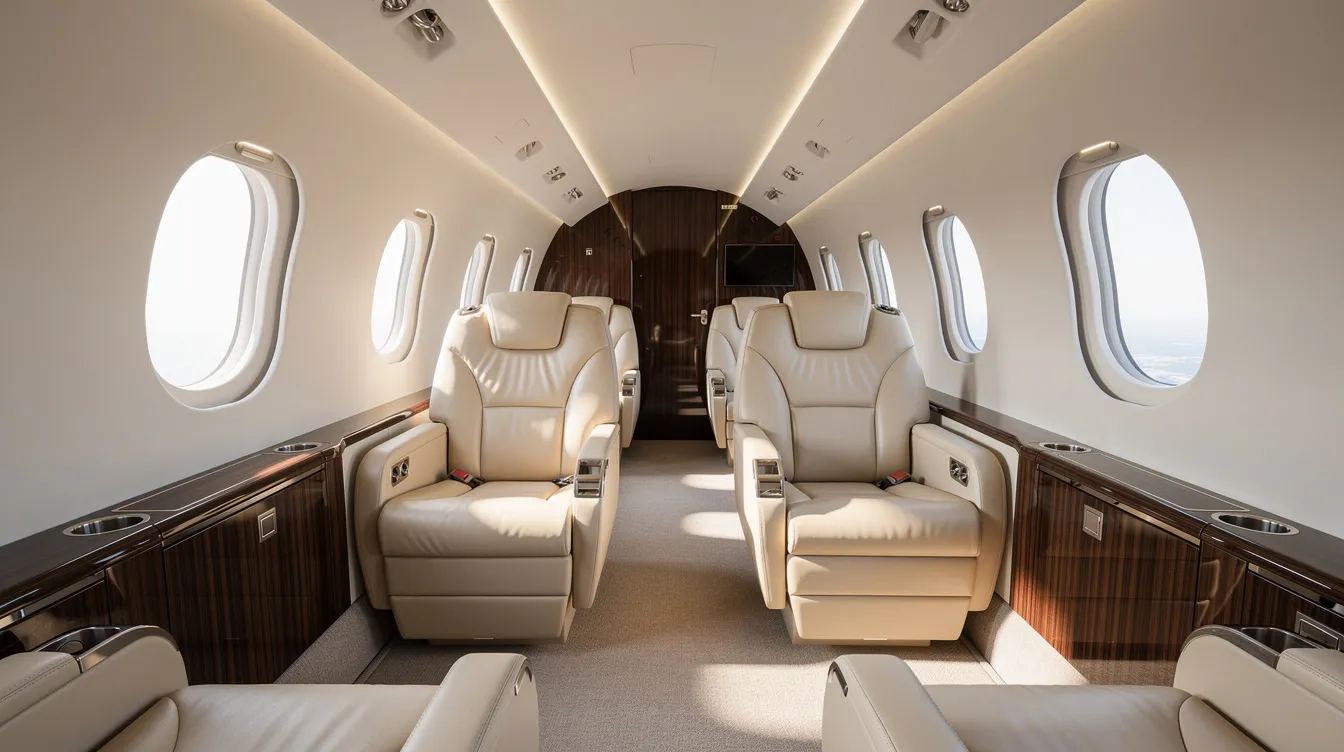
These products are limited to select long-haul routes - Paris to Tokyo, Singapore to London, Dubai to New York - not on every aircraft or departure. On a BlackJet private jet, the whole aircraft becomes your suite. No neighboring class passengers, no scheduling constraints, and no route limitations—benefits that even owners weighing 10 million dollar private jet options consider when comparing full ownership to flexible access programs.
Domestic First Class vs Long-Haul Flagship First
In the United States and Canada, domestic first class is really closer to enhanced business class seats than true flagship first. On domestic flights and shorter routes, you get wider recliner seats with extra legroom, upgraded meals and drinks, and priority boarding - but rarely a lie-flat bed or enclosed suite.
Transcontinental flight products are the exception. Routes like New York to Los Angeles or New York to San Francisco may offer lie-flat configurations with enhanced dining and upgraded bedding. Delta One, United Polaris (a Polaris business product positioned as flagship), and American Airlines' Flagship First all compete on these routes. United Airlines and Cathay Pacific also offer elevated premium select products on certain trans-Pacific services, while Virgin Atlantic provides its own upper class experience on transatlantic routes.
On a BlackJet light or midsize jet, every class seat is equal or superior to domestic first class, with privacy, schedule control, and access to smaller airports - often within one mile of your actual destination rather than an hour's drive from a distant hub- advantages that scale up even further with the largest private jets for sale or charter for intercontinental group travel. Travelers who don’t yet need a whole aircraft can also buy a seat on a private jet through shared and semi-private models that still reduce travel friction compared with commercial first.
Notable Airlines and Their Signature First Class Cabins
Only a limited group of airlines still invest heavily in first class seats, positioning them as halo products:
Singapore Airlines: pioneering Suites class, renowned for service consistency, generous space, premium champagne; flagship routes include Singapore–London and Singapore–New York
Air France: La Première as one of the most exclusive first class cabins in the world, very limited seats per flight, bespoke French gastronomy
Lufthansa: Allegris first class on select routes, a dedicated first class terminal in Frankfurt, chauffeured tarmac transfers, and understated German design; Lufthansa's new Allegris first class features double-bedded suites
Qatar Airways and Emirates: Gulf carriers focused on ultra-luxury, onboard bars, showers on the Emirates A380, and flashy yet highly functional class suites
Japan Airlines and ANA: refined, minimalist first class suites with speakers built into headrests, Japanese and Western menus, and meticulous hospitality
Many airlines maintain these products on only a handful of routes. The class experience is extraordinary when available, but availability itself is the constraint of scheduled commercial air travel.
How First Class Seats Compare to Flying Private with BlackJet
Consider a CEO flying from Los Angeles to New York. In a top first class cabin, she arrives two hours early at LAX, navigates a busy terminal, shares the first class section with seven other passengers, and lands at JFK on the airline's schedule. On a BlackJet midsize jet using a 25-hour Jet Card, she arrives 20 minutes before departure at a private terminal, holds confidential calls in-flight with zero other passengers, and lands at Teterboro - 12 miles from Midtown Manhattan.
Key contrasts: holders of a BlackJet 25+ Hour Jet Card in particular can lock in fixed hourly rates while comparing the end-to-end experience with commercial first.
Time: commercial first requires early arrival, queues, and hub airports; BlackJet travelers use private FBO terminals with minimal wait
Privacy: the first class cabin is quiet but shared; BlackJet flights are fully private, ideal for board meetings, family travel, or high-profile individuals
Flexibility: first class schedules are fixed by airline timetables; Jet Card members choose departure time, change plans same day subject to availability, and access hundreds of airports closer to final destinations
Cost structure: a round trip in commercial first class on this route runs $6,000 to $16,000 per person; for a team of four to eight, a Jet Card becomes competitive on a per-person basis, especially factoring in time savings
While first class suites can match or exceed private jets in certain onboard amenities, BlackJet wins on end-to-end control, discretion, and total journey time. Private aviation offers flexibility and luxury without owning a jet.
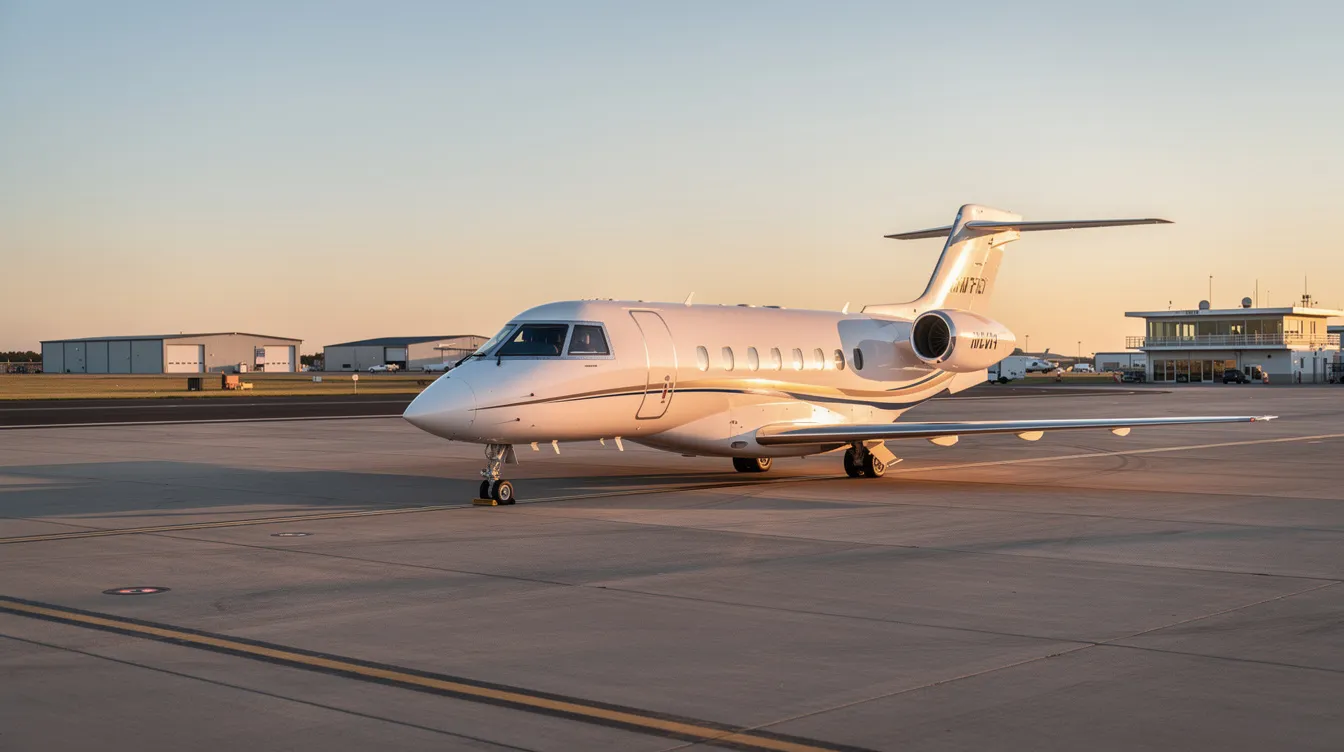
BlackJet Jet Cards: Turning Every Flight into a Private First Class Experience
BlackJet's Jet Card programs are designed for frequent business and leisure travelers who want the reliability of prepaid flight hours without the commitment of aircraft ownership. Jet Card programs provide prepaid access to private jets across various cabin types. Cards are available in 25-hour and 50-hour increments, covering light, midsize, super-midsize, and large cabin aircraft. Hours never expire, and hourly rates are fixed for 12 months.
What members get:
Guaranteed access to vetted private jets across multiple class cabins, each delivering a consistent, premium cabin experience
24/7 digital booking and real-time support, enabling same-day or short-notice flights when commercial first class is sold out
Transparent hourly rates - no negotiation on individual charters, no hidden surcharges
Carbon-neutral flights at no additional cost
Compared to jet ownership, a Jet Card carries far lower commitment. Compared to ad-hoc charter, it delivers more predictability and service consistency. For frequent travelers, understanding the best jet cards for frequent flyers helps clarify which model fits their pattern. Compared to buying first class tickets on most flights throughout the year, a single card can cover regional and international flights with superior comfort.
Safety, Certification, and Technology: Beyond What a First Class Cabin Shows You
First class passengers rarely think about the operational side of aviation. For BlackJet clients, rigorous safety and certification are central to the value proposition. BlackJet uses only top-tier operators, conducts third-party safety audits, and maintains flight crew standards at or above commercial airline benchmarks through its proprietary "BlackJet Certified" program, positioning it alongside top private jet companies for luxury travel in safety expectations and service culture.
Technology and support highlights:
Mobile booking and flight management with the convenience premium travelers expect
Real-time flight support and proactive rerouting during weather disruptions - no commercial rebooking queues
Data-driven fleet matching: pairing travelers with the right aircraft category for each mission
These are invisible upgrades, but they matter more than cabin décor.
Sustainability in Premium Air Travel: From First Class to Carbon-Neutral Private Flights
Both first class and private aviation carry high per-passenger carbon footprints. Sustainable aviation includes practices like carbon offsets and carbon-neutral flights, and leading providers must actively address their impact.
Some commercial airlines are taking steps: sustainable aviation fuel trials, fleet renewal with more efficient aircraft like the Airbus A350, and newer class product designs that reduce weight. But these efforts are inconsistent and rarely transparent at the passenger level.
BlackJet's approach:
Every flight has been carbon neutral through verified offset programs since 2021, at no additional cost to the member, demonstrating that even those exploring the cheapest private aircraft options can prioritize responsible operations
Active preference for modern, fuel-efficient aircraft within each cabin category
Clear reporting so corporate clients can include private flights in ESG disclosures
This is an evolution from simply enjoying a luxurious first class seat to making informed, responsible choices about how premium air travel is delivered.
Planning Your Next Trip: When to Choose First Class and When to Go Private
Both top-tier first class seats and private jets have their place. Choosing the right option is strategic, not merely a matter of taste.
Ideal for commercial first class:
Ideal for private with BlackJet:
Multi-city roadshows with a small executive team across secondary cities without first-class service, where a private jet for 20 passengers or a smaller large-cabin option can keep the group together efficiently
Last-minute client visits or family holidays to destinations near smaller airports, where even those considering the cheapest private jet options can benefit from the time savings and point-to-point routing
Any trip where confidentiality, schedule control, or group size makes commercial impractical
Mixed approach:
Decision checklist:
How flexible is your schedule?
Do you need airports that lack first-class service?
How many travelers are flying together?
Is confidentiality critical?
How frequently do you travel per quarter?
BlackJet is designed for travelers who have already experienced the best commercial first-class cabins and now want control over their entire travel day - not just their seat.
FAQ: First Class Seats on Planes and BlackJet Private Jet Access
Is first class much better than business class on international flights?
On flagship routes, yes. First class provides substantially more space, fully enclosed suites, dine-on-demand with a wine list featuring prestige labels, and dedicated ground services. However, on routes where airlines have phased out first class, top business class products with lie-flat seats and doors come close.
Which airlines have the most luxurious first class suites in 2025–2026?
Singapore Airlines, Air France, Emirates, Etihad, Japan Airlines, Lufthansa, and ANA consistently rank at the top. Each offers a distinct class experience—from Singapore's 50-square-foot suites to Air France's Michelin-crafted La Première.
How expensive is a long-haul first class ticket compared with a private jet charter?
A long-haul first-class ticket typically exceeds $10,000 one way, with premium routes reaching $25,000. Private jet charter costs are higher for solo travelers but become competitive for groups of three to eight, especially when factoring in time savings and secondary airport access. Evaluating jet card cost per hour alongside these fares can clarify when a prepaid private model offers better value.
What is a Jet Card and how does it differ from buying first class tickets each trip?
A Jet Card is a prepaid block of flight hours—typically 25 or 50 hours—that gives you on-demand access to private jets at fixed hourly rates. Unlike booking individual first-class tickets, a Jet Card provides schedule flexibility, airport choice, and consistent privacy on every trip, with Jet Card pricing structures that bundle hourly rates, membership fees, and surcharges into a predictable model.
How does BlackJet ensure safety compared with major airlines?
BlackJet's proprietary "BlackJet Certified" program uses top-tier operators, third-party audits, experienced flight crews, and maintenance standards that meet or exceed commercial airline benchmarks.
Are BlackJet flights really carbon neutral, and how are offsets calculated?
Yes. Every BlackJet flight has been carbon neutral since 2021 through verified offset programs at no additional cost to members. Offsets are calculated based on actual fuel burn per mission and applied through accredited environmental programs. For travelers comparing models, some also explore unlimited private jet flight memberships, weighing sustainability commitments alongside usage patterns.
Elevate Your Travel Beyond First Class with BlackJet
The world's best first class seats and suites are genuine achievements in design, comfort, and service. But they still operate on someone else's schedule, at someone else's airport, on someone else's timeline. For travelers who value their time as highly as their comfort, a Jet Card offers a fundamentally different proposition: the same level of luxury with total control.
BlackJet's Jet Card programs give members reliable access to private aircraft across cabin categories, with safety, technology, and carbon-neutral performance built into every flight. Whether you're replacing a dozen annual first-class tickets or supplementing commercial travel with private access for time-critical trips, the math - and the experience - increasingly favors going private.
Explore BlackJet's Jet Card programs and the dedicated BlackJet 25+ Hour Jet Card to see how your current first and business class spend compares to Jet Card membership, or speak with an advisor to design a travel plan around your schedule. For those who have already experienced the best of commercial aviation, BlackJet is the natural next step - where you stop renting someone else's idea of luxury and start owning your time in the air.


 Sign up with google
 Sign up with Apple