Answering the Big Question: What Is the Greatest Fighter Jet Ever?
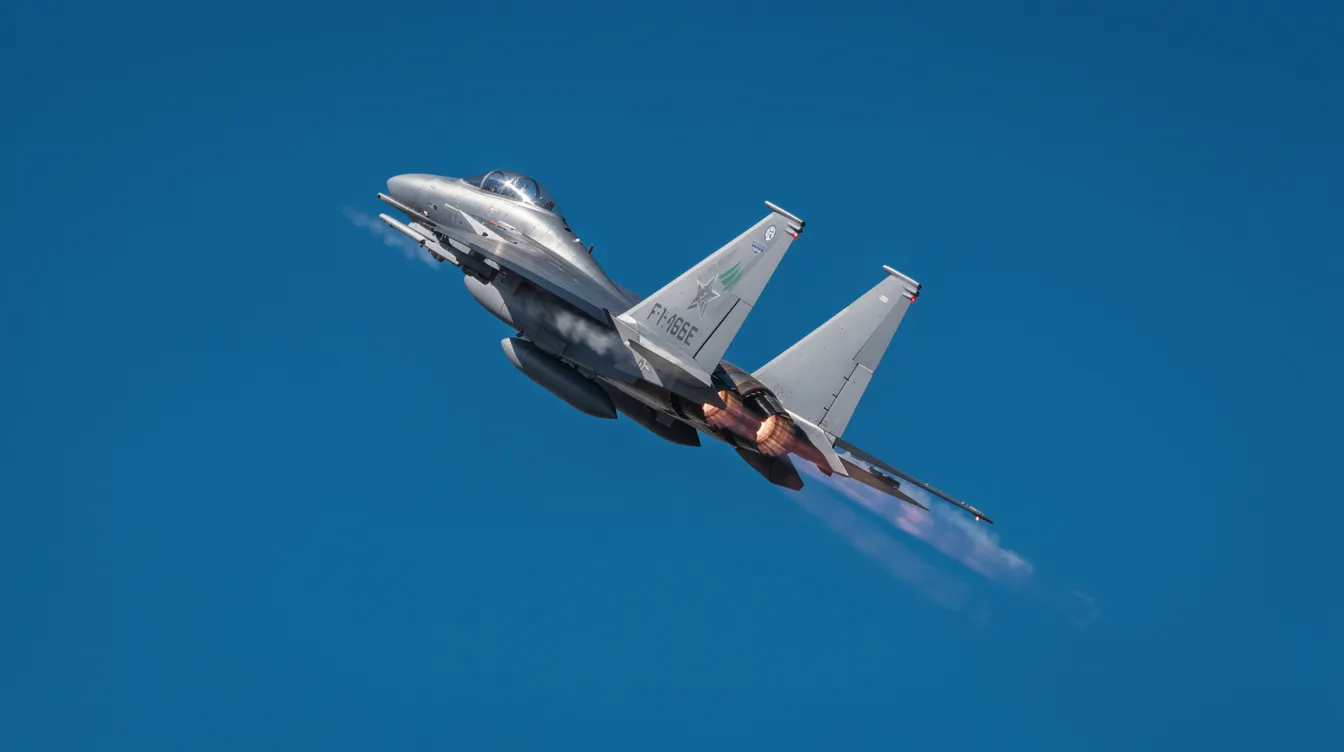
Defining the greatest fighter jet is no easy task. Dozens of fighter planes have earned legendary status over the past eight decades, each dominating a different era or excelling along a different axis of performance. Yet when the question is framed around proven air combat results, one aircraft stands apart from all other fighters: the F-15 Eagle, with a kill ratio of 104:0 across numerous air forces and multiple decades of active service.
This article is for aviation enthusiasts, military historians, and anyone curious about how fighter jets are ranked and what makes one truly great. Understanding these criteria helps both professionals and the general public appreciate the evolution and impact of air combat technology.
That said, "greatest" shifts depending on which metric you prioritize. The F-22 Raptor is widely considered the most advanced air superiority fighter ever flown. The F-35 Lightning II may be the best overall combat system in the sky today, with over 880 units in active service and unmatched sensor fusion. And the F-16 Fighting Falcon, with more than 2,100 units in active service worldwide, remains the best value multirole workhorse ever built. No single jet wins every category-but comparing them reveals what makes a fighter aircraft truly exceptional.
Although BlackJet operates in private aviation rather than the air force, many of the same principles that define a great fighter-safety, technology, range, and mission fit-also define what makes a private aircraft outstanding. The parallels between military precision and private jet excellence run deeper than most travelers realize.
How Do We Decide Which Fighter Jet Is the "Best"?
Fighter jets are evaluated based on their ability to detect threats and understand their environment, but that is only one dimension. The full picture includes stealth design, which minimizes radar cross-sections using specialized airframe shapes; air combat maneuverability, measured through thrust-to-weight ratios and sustained G-force capability; weapons payload and range; top speed; and survivability through redundancy and electronic warfare systems.
Key fighter-jet concepts include:
Stealth design minimizes radar cross-sections using specialized airframe shapes.
Thrust-to-weight ratio refers to the engine's ability to provide rapid acceleration and vertical climbs.
Fly-by-wire systems ensure control surface adjustments occur faster than human reflexes.
Sensor fusion integrates data from multiple radar and sensor systems into a unified display.
AESA radar tracks multiple air and ground targets while resisting jamming.
Advanced electronic warfare systems can jam enemy radar networks.
Low-probability-of-intercept datalinks allow secure communication in stealth operations.
Thrust vectoring enhances agility through movable engine nozzles.
Radar-absorbing materials are essential for reducing the visibility of fighter jets to radar.
Network-centric warfare enables real-time sharing of tactical data without revealing positions.
Electronic warfare capabilities enhance survivability by countering potential electronic threats.
The combination of stealth and sensor integration is crucial for operational effectiveness in modern aircraft.
Some analysts use weighted scoring, rating each aircraft 1–10 across categories, while others argue that nothing matters more than a proven combat record. An aircraft that dominates in exercises but has never been flown in actual air war is harder to compare against one with decades of confirmed kills.
It is also essential to distinguish between air superiority fighters like the F-15, the F-22, and the Eurofighter Typhoon, which are purpose-built to control the skies, and multirole jets like the F-16, the F-35, and the Dassault Rafale, which balance air combat with the ability to destroy ground targets. The best fighter jets in any ranking depend entirely on the mission, the threat environment, and the support network behind the aircraft.
The F-15 Eagle: The Greatest Air Combat Record in Aviation History
The McDonnell Douglas (now Boeing) F-15 Eagle holds the most dominant air-to-air combat record in aviation history. With a combat record of 104 victories without loss across the United States Air Force, the Israeli Air Force, and the Royal Saudi Air Force, no other aircraft comes close to its proven lethality. This is not a simulation result or a manufacturer's claim-it is a verified tally compiled across real conflicts spanning nearly five decades.
The F-15 first flew on 27 July 1972 and entered US Air Force service in 1974 as the primary air superiority fighter of the Cold War era. More than 1,200 air-superiority variants have been built, including hundreds of the F-15E Strike Eagle multirole derivative. The aircraft serves in several air forces today, including those of South Korea, Japan, Singapore, and Saudi Arabia, and will continue flying well into the 2030s.
Its combat dominance traces to specific engagements. During the 1982 Lebanon air war, Israeli F-15s destroyed dozens of Syrian MiGs over the Bekaa Valley using beyond-visual-range missiles coordinated through AWACS. In Operation Desert Storm in 1991, F-15Cs scored the majority of the USAF's 37 air-to-air kills, with zero losses in those engagements. The jet's powerful radar systems, heavy weapons load, strong twin engines, and long range made it the defining air superiority platform of its generation.
The lineage continues. The F-15E Strike Eagle proved the airframe could handle ground attack missions alongside its air-to-air role, and Boeing's F-15EX Eagle II- the first delivered to the USAF in 2021-carries the platform into the modern era. The F-15EX can carry almost 30,000 lbs of weapons, making it one of the heaviest-armed fighter aircraft in the world. With advanced avionics, a digital fly-by-wire flight control system, and continuous upgrades to radar and electronic warfare suites, the Eagle II ensures the F-15 family remains among the best fighter jets of any era.
The F-16 Fighting Falcon: The World's Most Successful Multirole Workhorse
The General Dynamics / Lockheed Martin F-16 Fighting Falcon is the most widely produced Western fighter jet since the Second World War. The F-16 Fighting Falcon first flew on 2 February 1974, entered US Air Force service in 1979, and has since amassed over 4,600 airframes built. Today, the F-16 Fighting Falcon has 2,102 units in operation globally, serving in more than 25 nations-a testament to its versatility and affordability.
The F-16 pioneered relaxed static stability and fly-by-wire systems, which ensure control surface adjustments occur faster than human reflexes. These innovations gave the aircraft exceptional agility that surprised pilots accustomed to heavier, less responsive planes. Its bubble canopy delivered unmatched visibility, and its single-engine design kept acquisition and maintenance costs low compared to twin-engine alternatives.
Combat use has been extensive. During Desert Storm, F-16s flew over 1,300 sorties in both air-to-air and air-to-ground roles. Israeli F-16s executed Operation Opera in 1981, striking Iraq's Osirak nuclear reactor in a mission that demonstrated the aircraft's precision strike capability. The type has also seen action across the Balkans, Southeast Asia support operations, and numerous Middle East engagements.
Through ongoing upgrades-including AESA radar, modern electronic warfare suites, and compatibility with weapons like JASSM-ER-the F-16 now functions as a 4.5-generation platform. Block 70/72 variants remain in production today. For many nations' air forces, the F-16 represents the best fighter in terms of cost, availability, and mission flexibility, and new aircraft continue to roll off the line.
The F-22 Raptor: Ultimate Air Superiority and Stealth
The Lockheed Martin F-22 Raptor represents the pinnacle of air superiority fighter design. It was the first true 5th-generation fighter, combining stealth, supercruise capability that allows sustaining supersonic flight without afterburners, thrust vectoring that enhances agility through movable engine nozzles, and advanced sensor fusion into one airframe.
The F-22 Raptor first flew on 7 September 1997, entered USAF active service in 2005, and production ended after 195 airframes-approximately 187 of which remain operational. The Martin F-22 Raptor was never exported, a restriction imposed by U.S. law in 1998 to protect its stealth and sensor technologies.
Performance figures are striking. The F-22 Raptor has a top speed of Mach 2.25, with supercruise capability around Mach 1.8. High thrust-to-weight ratios enable rapid acceleration and vertical climbs. Stealth design and radar-absorbing materials are essential for reducing the visibility of fighter jets to radar, and the F-22's radar cross-section is famously compared to a marble. Its AESA radar tracks multiple air and ground targets while resisting jamming, giving pilots unmatched maneuverability paired with unmatched situational awareness.
Despite these capabilities, the F-22 Raptor has no confirmed air-to-air kills in traditional combat. Its most notable engagement was shooting down a Chinese surveillance balloon over U.S. airspace in February 2023. However, pilots who have faced the Raptor in training exercises at Red Flag and similar events consistently report being "killed" before they even detected the F-22. In pure air-to-air combat terms, many experts consider the Lockheed Martin F-22 the best fighter ever built-though its small fleet and extreme operating costs limit its global strategic impact.
The F-35 Lightning II: The Best Overall Combat System Today
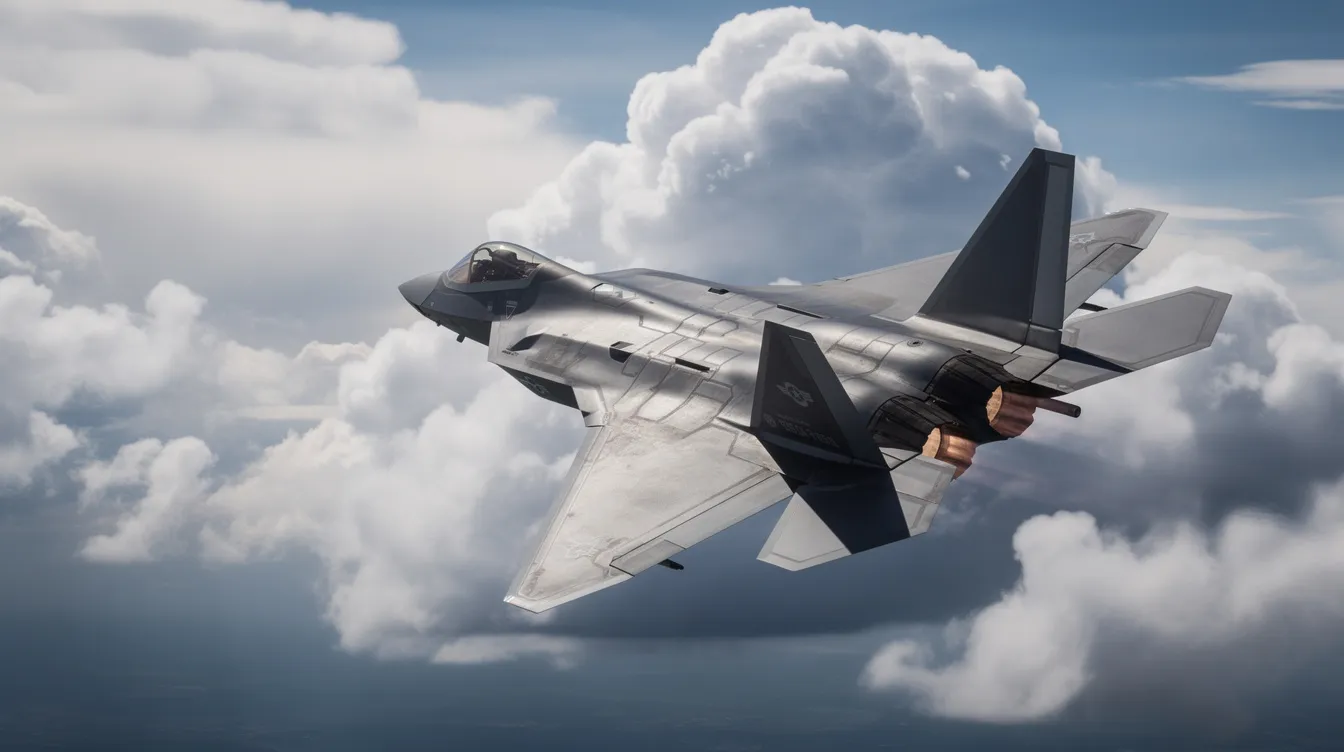
The Lockheed Martin F-35 Lightning II is the most advanced multirole fighter in service today, designed around a philosophy of first-look, first-shot, first-kill. It exists in three variants: the F-35A for conventional runways, the F-35B for short takeoff and vertical landing (supporting the Marine Corps and carrier-based operations on amphibious assault ships), and the F-35C for US Navy carrier-based operations.
First flown in 2006 and reaching initial operational capability with the US Air Force in 2016, the F-35 has over 880 units in active service worldwide as of 2026, with production rates around 156 aircraft per year under a 10-year framework agreement. The F-35 has a radar cross section equivalent to a golf ball-far smaller than any 4th-generation platform.
What sets the F-35 apart is how it processes information. Sensor fusion integrates data from multiple radar and sensor systems into a unified display, giving pilots a god's-eye view of the battlespace. Low-probability-of-intercept datalinks allow secure communication in stealth operations, while advanced electronic warfare systems can jam enemy radar networks. Modern jets like the F-35 function as connected aerial supercomputers in networked combat environments, and the combination of stealth and sensor integration is crucial for operational effectiveness in modern aircraft.
The F-35's combat record includes confirmed strikes, intelligence missions, and at least one air-to-air kill. Compared to the F-22, which wins in raw air superiority speed and agility, the F-35 leads in multirole flexibility and networked warfare. Compared to the Eurofighter Typhoon, the F-35 sacrifices some close-in turning performance for stealth dominance and situational awareness.
For those curious about how similar technology principles-real-time data, advanced avionics, digital planning-translate to private aviation, BlackJet's approach to aircraft categories mirrors the same emphasis on matching the right platform to the right mission.
The Eurofighter Typhoon and Dassault Rafale: European Masters of Air Combat
The Eurofighter Typhoon is a twin-engine, canard-delta fighter originally optimized for air superiority. First flown in 1994 and entering service in the early 2000s with the RAF and partner nations, it has earned respect for raw agility and energy retention at altitude. The Eurofighter Typhoon can supercruise at Mach 1.5 fully loaded, a capability that few other aircraft in its class can match. In well-publicized exercises-including engagements against F-22s-Typhoon pilots have demonstrated the aircraft's strengths in close-range turning fights, particularly above 10,000 feet.
The Dassault Rafale takes a different path, positioning itself as an "omnirole" fighter capable of every mission type: air-to-air, strike, reconnaissance, and nuclear deterrent. Its SPECTRA electronic warfare suite provides electronic warfare capabilities that enhance survivability by countering potential electronic threats. The Rafale's combat record is extensive-operations in Afghanistan, Libya, Mali, Syria, and Iraq-and exports to Egypt, India, Greece, and Indonesia demonstrate broad international trust. Many pilots rate the Rafale as superior at lower altitudes, where its handling and sensor suite excel.
Neither the Typhoon nor the Rafale is a stealth aircraft, which limits their effectiveness in the most heavily contested airspace. But for nations seeking a proven, agile, and versatile supersonic jet without the cost or complexity of 5th-generation stealth, both remain among the best fighter jets available today.
Su-27, Su-35, Su-57 and J-20: Eastern Challengers in the Best Fighter Debate
The Sukhoi Su-27 Flanker was the Soviet Union's answer to the F-15 and F-14-a large, highly maneuverable, long-range air superiority fighter. First flown in 1977 and entering service in the mid-1980s, it spawned a family of derivatives: the Su-30, Su-34 strike variant, and the Su-35. The Sukhoi Su-35 features thrust-vectoring engines, powerful radar, and infrared search-and-track systems, with over 100 in service and exports to China and Egypt.
Russia's 5th-generation contender, the Su-57 Felon, first flew in 2010 but has seen limited production. The Su-57 has approximately 30 units in service as of 2026, and while it offers impressive agility and some stealth shaping, its low-observable characteristics are generally considered less mature than Western counterparts. Engine development and stealth maintenance remain ongoing challenges.
China's Chengdu J-20 Mighty Dragon represents a different strategic priority: long-range interception and strike in the Pacific theater. First flown in 2011 and operational with the PLAAF by the late 2010s, China's J-20 has 250 units in active service. The Chengdu J-20 can carry a weapons payload of 24,000 lbs in its internal bays, making it a significant threat in contested airspace.
Neither the Su-57 nor the J-20 has a publicly confirmed air-to-air kill, so their standing among the greatest fighter aircraft remains partly theoretical compared to proven platforms like the F-15 or F-16. Until these jets are tested in real combat, their ranking relies on estimated specifications rather than battlefield results.
From Spitfire to F-22: How Fighter Jets Evolved to Dominate Air Combat
Aviation history begins with piston-engine fighter planes like the Supermarine Spitfire and Messerschmitt Bf 109, which defined the Second World War's air battles. The first jet fighters-the Me 262 and Gloster Meteor-arrived late in World War II but signaled a revolution that would transform every aspect of air combat.
The Korean War brought the first true jet-versus-jet engagements. F-86 Sabre pilots downed 792 MiG-15s during the Korean War, establishing American jet air superiority doctrine that persists today. By the 1960s, the multirole revolution arrived: the F-4 Phantom II, produced in 5,195 units, served the US Air Force, US Navy, and Marine Corps across the Vietnam War and beyond. The F-4 Phantom II had five American aces during the Vietnam War, proving that missiles and radar were becoming as important as guns and agility. On the opposing side, the MiG-21 was produced in over 10,000 units, making it the most-produced supersonic jet in history-flown by allied fighters and adversaries alike across dozens of conflicts.
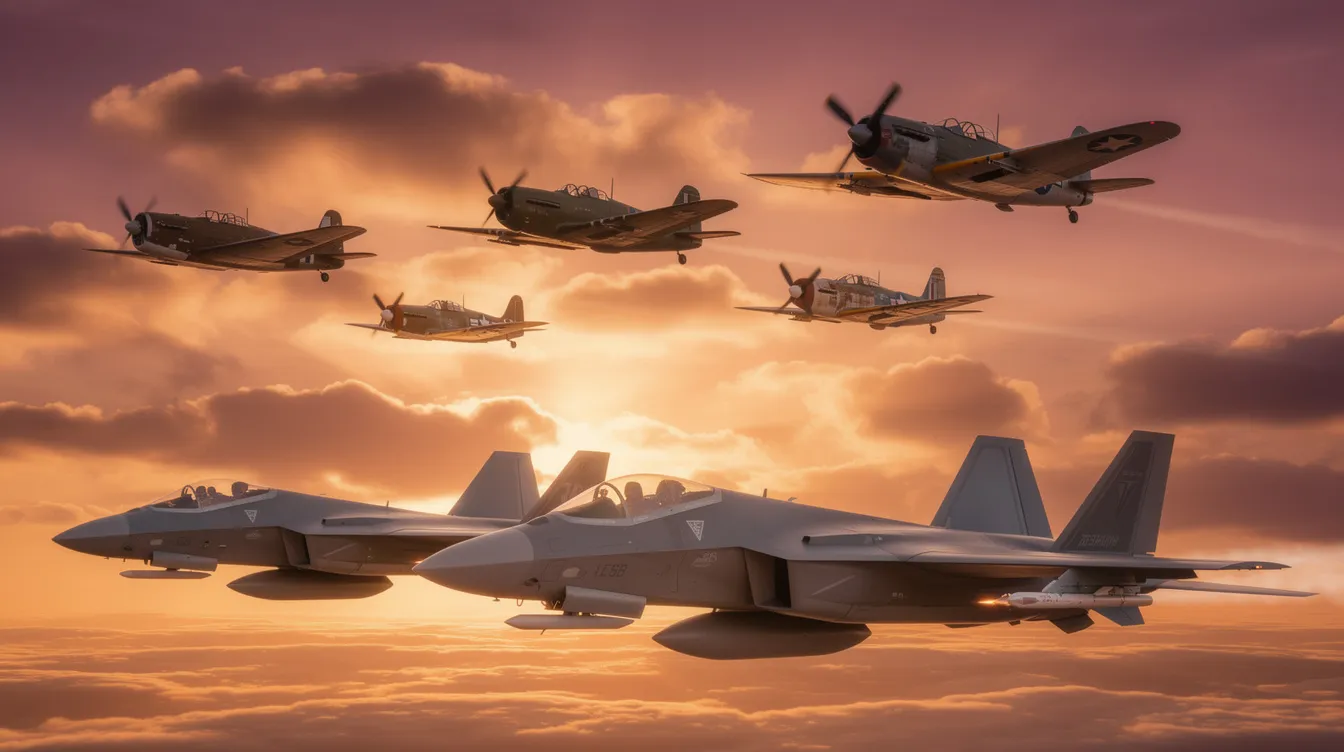
The 1970s and 1980s brought the aircraft that still define modern air superiority: the F-15, the F-16, and the Su-27, combining powerful radar systems, longer-range missiles, and fly-by-wire controls with raw performance. Then came stealth. The F-22 and F-35 shifted the paradigm from speed and altitude to information dominance-where the aircraft that sees first and shares data fastest wins. Real-time data sharing is becoming essential for modern interactions between crewed and uncrewed aircraft, pointing toward a future where network-centric warfare enables real-time sharing of tactical data without revealing positions.
The Role of Pilot Skill, Tactics and Support Systems
No fighter aircraft is truly the "best" without skilled pilots, sound tactics, and robust support infrastructure. The F-15's dominance in Desert Storm was inseparable from AWACS guidance that directed allied fighters to targets before visual contact. In the Bekaa Valley, Israeli pilots exploited electronic warfare, decoys, and coordinated strikes in ways that turned good aircraft into devastating weapons systems.
Training exercises routinely show that pilot skill can overcome hardware advantages. In Red Flag and NATO exercises, experienced Typhoon and Rafale pilots have scored simulated kills against nominally superior opponents through superior energy management and tactical creativity. The lesson is consistent: the platform matters, but the people and systems behind it matter just as much.
This principle extends beyond military aviation. In private jet travel, safety protocols, crew experience, and operational support define the quality of every journey-paralleling how the best fighter jet still depends on the humans and networks behind it. Choosing among the top private jet companies therefore becomes as strategic as selecting the right aircraft itself.
Where the USAF's Greatest Fighters Fit: F-86, F-4, F-15, F-16 and F-22
The United States Air Force has fielded five fighter aircraft that fundamentally shaped air combat doctrine across seven decades.
The F-86 Sabre entered service in 1949 and became the West's primary air superiority fighter over Korea, where American pilots established a decisive kill ratio against Soviet-built MiG-15s. It proved that training, tactics, and cockpit visibility could overcome raw performance parity.
The F-4 Phantom II entered USAF service in 1963 and became the defining jet of the Vietnam War-a large, fast, missile-armed platform that could operate from both land bases and carriers. Its early lack of an internal gun taught the Air Force hard lessons about the importance of close-range air combat capability.
The F-15 Eagle arrived in 1974 as the USAF's direct response to the perceived threat of the MiG-25 and the lessons of Southeast Asia. It became the gold standard of air superiority and remains in active service today through the F-15EX Eagle II program, which incorporates continuous upgrades to keep one airframe family relevant across five decades.
The F-16 entered service in 1979 as a lightweight, agile complement to the F-15 and evolved into the world's premier multirole workhorse. And the F-22, arriving in 2005, pushed the USAF into the stealth era as its exclusive 5th-generation air superiority platform-a jet so advanced that production ended at just 195 units and export was forbidden.
Together, these five aircraft trace the USAF's evolution from guns-and-guts dogfighting to networked, stealth-enabled dominance of contested airspace.
From Military Masterpieces to Private Jet Excellence: What "Greatness" Means in Civil Aviation
The qualities that define a great fighter-performance, reliability, survivability, and mission effectiveness-translate directly to what discerning private aviation clients demand. A high-net-worth traveler choosing between different types of planes faces a decision strikingly similar to an air force selecting between fighter platforms: what is the right aircraft for this specific mission? Entry-level flyers might instead explore affordable private jet choices that balance cost with time savings and privacy. Others may prioritize value and look at the cheapest private aircraft options that still meet their range and comfort needs. Those seeking the pinnacle of comfort and technology might explore the top 10 best private jets in the world before deciding.
BlackJet applies rigorous safety and certification standards that mirror the maintenance oversight found in top-tier military aviation, whether arranging private jet charters in Karachi or flights across other global hubs. Every operator is vetted, every crew is qualified, and every flight meets uncompromising safety benchmarks, while clients can consult a detailed private jet price list and cost breakdown to align safety and service with budget. Modern business jets also use advanced avionics, real-time weather integration, collision avoidance, and digital flight planning tools conceptually similar to the systems that give the F-35 its superior situational awareness.
Just as an air force chooses its best fighter for a given mission-short-range intercept, long-range strike, or carrier-based operations- BlackJet helps members choose the right private jet category for each trip, whether it is a regional hop, a transcontinental journey, or a long-range international flight, by explaining the types of private jets for every traveler.
How BlackJet's Jet Card Programs Deliver Fighter-Level Readiness for Private Flyers
BlackJet's Jet Card model is the private aviation equivalent of having aircraft on call-ready when you need them, maintained to the highest standards, and matched to your mission profile, with premium private jet card programs designed around safety, comfort, and flexibility. Just as an air force maintains readiness with its best fighter jets, BlackJet ensures its members have guaranteed access to multiple aircraft categories through prepaid blocks of flight time, such as 25-hour or 50-hour Jet Card programs.
Key features include 24/7 booking support through a digital platform, guaranteed category availability, professional crews, and rigorous operational checks before every departure, which are especially valuable for travelers considering a 100-hour jet card cost and commitment. For frequent flyers, understanding jet card cost and membership pricing is central to planning budgets and comparing programs. Sustainable aviation practices include the use of carbon-neutral flights-BlackJet provides verified carbon offsets at no additional cost, reflecting the broader aviation industry's shift toward environmental responsibility.
Consider a scenario: a business leader flying New York to London multiple times per year uses a BlackJet Jet Card to schedule last-minute departures, adjust itineraries mid-trip, and arrive rested and secure-or, for more occasional trips, learns how to buy a seat on a private jet via shared or semi-private options. Understanding jet card pricing structures and fees helps travelers like this choose the right program. The same principles of readiness, flexibility, and mission fit that define the greatest fighter aircraft apply to private jet travel built for demanding schedules.
Frequently Asked Questions About the Greatest Fighter Jets
Which fighter has the best air-to-air combat record?
The F-15 Eagle holds the greatest fighter aircraft record in air-to-air combat, with 104 confirmed kills and zero losses across multiple air forces over nearly five decades of service.
What is the difference between the F-22, F-35, and Eurofighter Typhoon?
The Lockheed Martin F-22 is a dedicated air superiority fighter with stealth and supercruise. The F-35 is a multirole stealth platform optimized for sensor fusion and networked warfare. The Eurofighter Typhoon is a highly agile non-stealth fighter that excels in traditional air combat, especially at higher altitudes.
Why is the F-16 still in service after so many decades?
The F-16's combination of low cost, ease of maintenance, ongoing upgrades with AESA radars and modern avionics, and proven combat performance keeps it relevant. It remains in production in Block 70/72 variants and will continue flying into the 2040s.
What makes the F-35 one of the best fighter jets today?
The F-35 combines all-aspect stealth, sensor fusion, and network-centric warfare capabilities into a single multirole platform. With over 880 units in active service, it is the most widely deployed 5th-generation fighter in the world.
What role did the F-16 Fighting Falcon play in Operation Desert Storm?
F-16s flew over 1,300 sorties during Desert Storm, performing both air-to-air and air-to-ground missions. The aircraft proved its multirole versatility against Iraqi air defenses and ground targets across the theater.
How does the F-15EX Eagle II update the original F-15 design?
The F-15EX Eagle II adds modern digital flight controls, updated avionics architecture, new weapons compatibility, and the ability to carry almost 30,000 lbs of ordnance while preserving the range and payload advantages that made the original Eagle legendary.
Do any fighter technologies influence modern private jets?
Yes. Advanced avionics, fly-by-wire controls, collision avoidance systems, real-time weather integration, and composite materials all trace their origins to military fighter development. Private jets benefit directly from decades of defense aviation innovation.
Conclusion: The Greatest Fighter Jet-and Choosing the Best Aircraft for Your Missions
Historically, the F-15 Eagle stands as the greatest fighter jet in air combat based on its undefeated record and decades of service across numerous air forces. The F-22 and F-35 set the current technological standard-one for pure air superiority, the other for multirole dominance in networked warfare. Meanwhile, the F-16, the Eurofighter Typhoon, and the Rafale prove that non-stealth aircraft still excel when matched to the right mission and supported by skilled pilots.
The deeper insight is this: the best fighter has always been the one precisely matched to its mission, its support network, and the people who operate it. The same principle defines excellence in private aviation.
Elevate your travel-effortlessly. With BlackJet, private flight is accessible on your terms through our Jet Card programs, complete with rigorous safety, carbon-neutral performance, and unmatched flexibility. Explore our offerings and discover how refined, purposeful travel becomes your new standard.


 Sign up with google
 Sign up with Apple