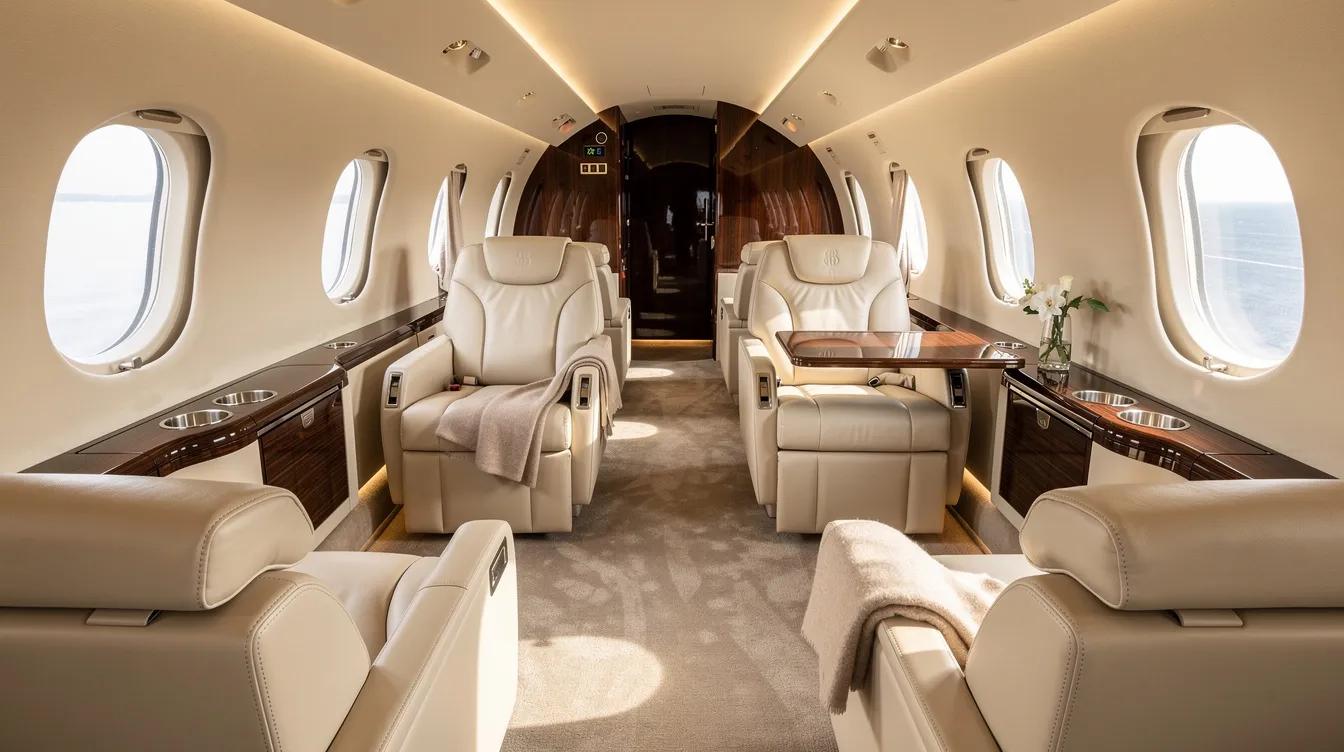
For the discerning traveler who measures success in hours reclaimed, deals closed at altitude, and the quality of rest between time zones, Gulfstream interiors represent far more than aesthetics. They are a strategic asset—one that transforms a private jet from a mode of transport into a mobile boardroom, a sanctuary, and a competitive edge. This is how BlackJet brings that advantage to every member, on every flight, without the burden of ownership.
Why Gulfstream Aircraft Interiors Are a Strategic Advantage for Private Flyers
Consider a New York–to–London trip. Commercial first class means navigating terminal security, waiting in lounges, boarding with hundreds of passengers, and arriving at the other end roughly eleven hours after you left your office—factoring in check-in, customs, and ground transport. The cabin altitude on a wide-body airliner sits between 6,000 and 8,000 feet, quietly sapping your energy and sharpening jet lag before you've even landed.
Now run the same route on a Gulfstream G650ER. You arrive at a private terminal minutes before departure. The aircraft cruises at Mach 0.85, often at 41,000 feet, where Gulfstream emphasizes low cabin altitudes to reduce fatigue during long flights-pressurization equivalent to just 2,800 feet above sea level. There is no shared cabin. No queue. No compromise. Gulfstream's interiors blend luxury with high-altitude functionality in a way that turns the transatlantic crossing into productive work time or genuine rest, depending on what you need.
This is the difference that interior design and aircraft interior engineering make at the highest level of private aviation. Cabin layout, lighting, and material selection directly affect sleep quality, jet lag recovery, and the ability to work with focus during flight. These are not decorative concerns-they are performance variables for anyone whose time carries real economic weight.
BlackJet members access these Gulfstream aircraft through premium private jet card programs and on-demand charter, without the capital lock-up, crew management, maintenance schedules, or depreciation risk of whole ownership. The result: top-tier cabin environments matched to specific missions, with the flexibility and predictability that business aviation demands.
Gulfstream Aerospace has long set the benchmark in cabin comfort and long-range performance. BlackJet serves as the expert partner, creating the bridge-through tailored services that match the right aircraft, the right interior, and the right flight profile for each member's journey.
Inside a Modern Gulfstream: Interior Design, Cabin Layouts, Design Philosophy, and Signature Details
Step aboard a G650ER and the first thing you register is space. The cabin stretches roughly 46 feet 10 inches in length, with a width of 8 feet 2 inches and a standing height of 6 feet 3 inches-dimensions that allow passengers to move freely between zones without the crouch-and-shuffle of narrower aircraft. Sixteen panoramic oval windows line the fuselage, flooding the cabin with natural light. Gulfstream is known for its large panoramic oval windows positioned for maximum natural light, and the effect is immediate: the aircraft feels less like a tube and more like a residence—illustrative of how the newest generation of private jets merges wellness-focused design with high performance.
Cabin interiors are configured into multiple living areas for various functions. A typical G650ER floor plan includes three or four distinct zones. Forward, you'll find club seating-pairs of facing seats with fold-out work surfaces ideal for conversation or solo productivity. The mid-cabin often serves as a conference or dining area, with a fixed table large enough for presentations, documents, or a multi-course meal. The aft section can house a private suite with a divan that converts to a full bed, or a partitioned sleeping area with blackout capability. Designers create flexible spaces for various functions in jets, and this zoning is what makes a Gulfstream cabin genuinelymulti-modal—a place where interiors must accommodate both work and relaxation needs on the same flight.
In the world of business aviation, Gulfstream's interior design philosophy draws from three worlds: the home, the office, and the hotel suite, all engineered to perform at altitudes between 41,000 and 51,000 feet. Gulfstream aircraft interiors blend high-end residential luxury with precision aerospace ergonomics. Seats are designed for ergonomic comfort and can convert into flat beds, with push-button adjustment and wide armrests. Work surfaces sit at the right height. Storage is generous and concealed. The space feels designed rather than assembled.
The signature details are what separate Gulfstream from the field. Advanced LED circadian lighting systems help passengers adjust to new time zones by simulating sunrise, daylight, dusk, or nighttime conditions. Lighting systems can simulate natural conditions to help passengers manage sleep cycles-a detail that matters enormously on routes like Los Angeles–Tokyo or London–Singapore. Acoustic engineering techniques make Gulfstream cabins exceptionally quiet for passenger comfort, with cabin noise levels in the range of 47–55 dB depending on model and configuration-quiet enough for uninterrupted conversation, focused work, or deep sleep. The cabin features a 100% fresh air system that replenishes air every few minutes, a meaningful advantage over recirculated-air environments. Gulfstream aircraft maintain a very low cabin altitude to enhance passenger comfort: at a cruise altitude of 45,000 feet, the G650ER maintains a cabin altitude of approximately 4,060 feet, still far below what you'd experience on a commercial airliner.
Cabins often include high-end galleys designed for functionality and luxury, equipped for full-service catering from light refreshments to multi-course dining. Gulfstream offers several core interior design elements across its flagship models, including European leather upholstery, bespoke veneer cabinetry, and custom carpeting that blends wools and silks for durability and comfort.
Technology integration is seamless. The Integrated Cabin Management System allows control over the cabin environment through smart devices-passengers adjust lighting, window shades, and temperature from their seats using touchscreens or personal phones, with preferences also captured in written trip or cabin specifications. Ultra-fast Ka-band Wi-Fi supports real-time video calls, large file transfers, and streaming. HDMI and USB-C ports are built into work surfaces, and 4K monitors serve double duty for presentations and entertainment. For a deeper look at how private plane layouts differ across categories, the configuration options on Gulfstream aircraft represent the gold standard.
Case Study: G650ER Business Suite Layout A Fortune 500 CFO flying New York–Dubai uses the forward club area as a working office for the first four hours, transitions to the mid-cabin for a dinner service, and retires to the aft suite-where the divan converts to a lie-flat bed with full blackout lighting-for six hours of uninterrupted sleep. She lands rested, operating in the destination time zone before wheels touch the runway.
Gulfstream's G600 features opulent interiors designed for luxury travel across its impressive range, offering a similar multi-zone philosophy in a slightly shorter cabin. Whether the mission calls for a G650ER or a G600, the underlying vision remains the same: a private jet that adapts to you, not the other way around.
Materials, Craftsmanship, and Durability at 51,000 Feet
There is a quiet tension at the heart of every Gulfstream aircraft interior: everything must pass stringent FAA and EASA flammability and safety tests—covering seat cushions, panels, insulation, adhesives, and fabrics under 14 CFR Part 25.853-while feeling like a space you'd find in a private residence or five-star hotel. Aircraft interiors must comply with aviation certification standards, and materials must comply with aviation standards for safety. The artistry lies in meeting both demands without the passenger ever sensing the engineering beneath the surface.
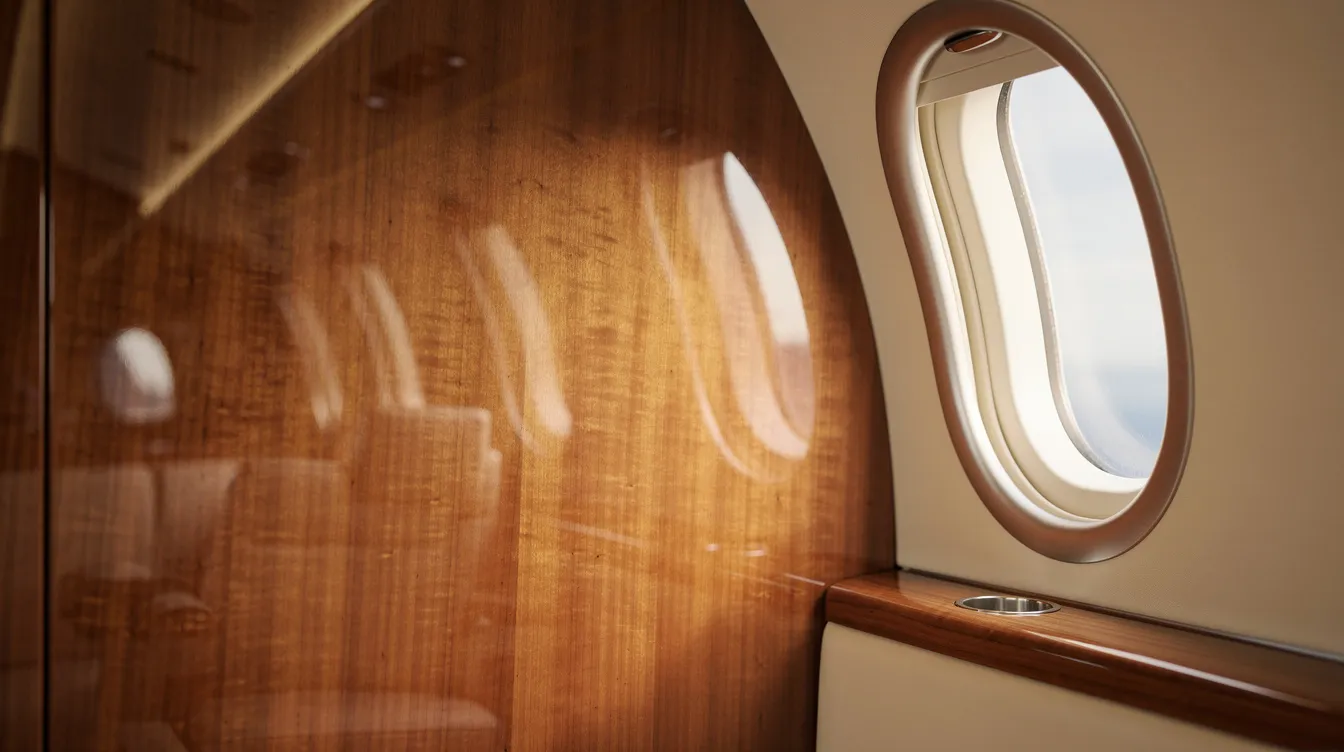
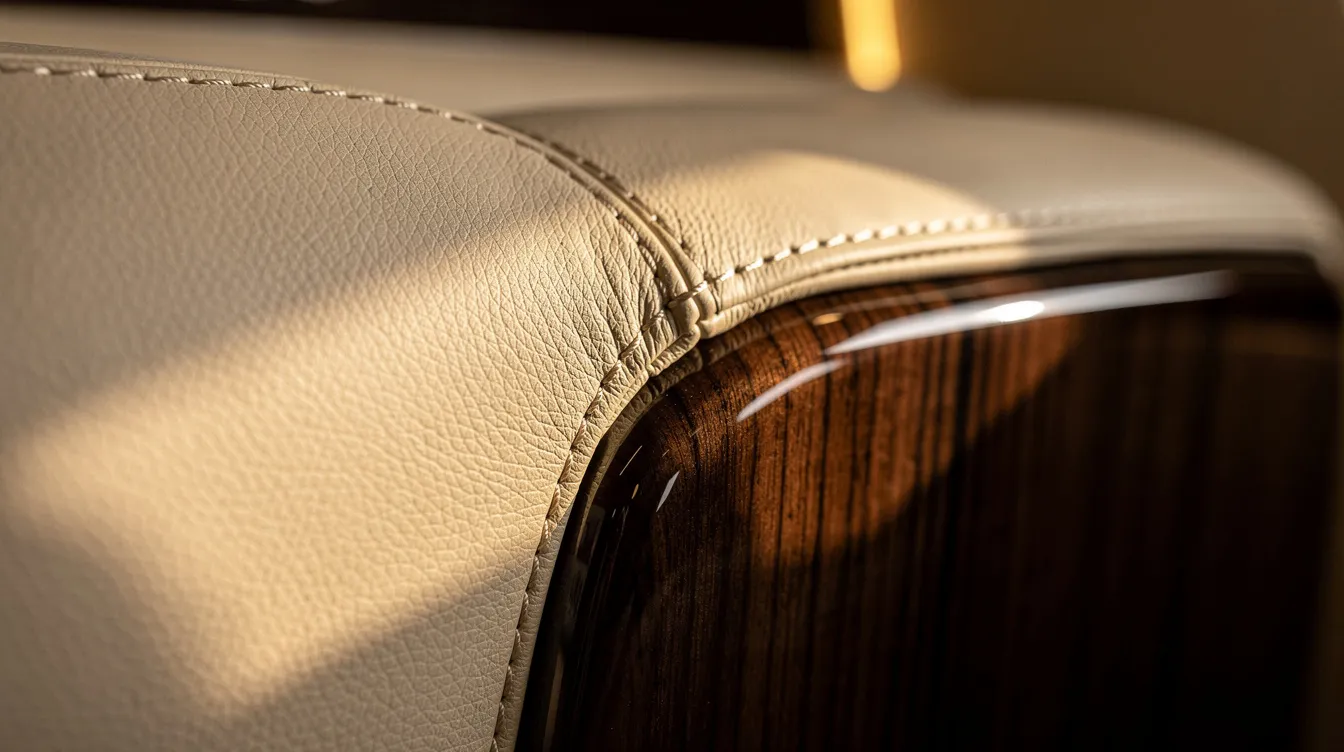
The material palette in a modern Gulfstream interior reads like a curated portfolio of the world's finest surfaces. Gulfstream interiors feature premium European leathers selected for suppleness, grain consistency, and resistance to wear. Gulfstream uses exotic wood veneers in interiors—hand-selected burl, walnut, and other rare species chosen for visual depth and warmth. Gulfstream reserves approximately 100 logs for exclusive client use, ensuring that clients who desire a specific grain pattern or wood species have access to inventory that is not available to the broader market. This level of material selection supports deeper customization of the finished cabin. Carbon fiber accents, brushed metal inlays, and stone or wood-look surfaces in galley and bar areas add contrast. Underfoot, custom carpeting blends wools and silks for durability and comfort, with thick pile engineered to absorb sound and withstand the traffic of repeated use.
These materials are not chosen for beauty alone. Every fabric, leather, and veneer must resist stains from catering spills, withstand UV exposure near those large oval windows, and maintain appearance through hundreds of flight hours. Upholstery is stitched with reinforced seams. Cabinetry is modular, allowing efficient refurbishment when wear dictates it. Carpets and seat covers are replaceable without full interior teardowns—a critical consideration for aircraft that serve multiple BlackJet clients across different missions throughout the year.
Sustainability is becoming a non-negotiable expectation rather than a grey area. Many completion centers now prioritize responsibly sourced woods, including FSC-certified veneers, along with low-VOC finishes and adhesives. Newer Gulfstream models incorporate plasma ionization air purification systems, and the broader industry is experimenting with recycled and sustainable fabric options. These shifts align with BlackJet's commitment to carbon-neutral private aviation.
Craftsmanship shows up in the details that frequent travelers notice after dozens of flights: grain matching across adjacent veneer panels so the wood appears to flow as a single surface, stitching in leather seats aligned with geometric precision, concealed storage compartments that open with a press of flush-mount hardware, and customized cabinetry sized to secure fine glassware, china, and personal devices. It is a testament to the quality of Gulfstream's completion process that these details hold up not just on delivery day, but across years of service and thousands of hours at altitude.
How BlackJet Uses Gulfstream Interiors for Different Missions and Jet Card Members
Not every Gulfstream interior is identical, and that variability is an advantage when it's managed well. BlackJet matches members to specific aircraft interiors based on trip profile—number of passengers, business versus leisure purpose, day versus overnight schedule, and the length and complexity of the routing.
Gulfstream interiors can transition from conference rooms to dining suites on the same flight, making them ideal among top 16-seat private jet options. For an executive roadshow requiring stops in three cities over 48 hours, the priority is connectivity, a conference-ready mid-cabin, and privacy partitions. For an overnight transatlantic crossing, the focus shifts to sleeping berths, blackout lighting, and a galley stocked with sleep-friendly amenities. For a family holiday, the cabin needs entertainment systems, flexible seating for children, and catering that accommodates varied tastes and dietary needs. Gulfstream interiors can adapt for business meetings or dining experiences depending on the mission, and BlackJet's advisory team ensures the right configuration is in place before wheels-up—whether the requirement resembles the best private jet options for 15 passengers or a more intimate setup.
Scenario: Executive, 25-Hour Jet Card A BlackJet 25-hour Jet Card member departs New York at 7 p.m. bound for London, connecting onward to Zurich the following afternoon. The G550 cabin is set to boardroom mode: forward club seating faces a conference table where the member finalizes a presentation with two colleagues, using the onboard Wi-Fi and 4K monitor. By 11 p.m. Eastern, the aft divan has been converted to a lie-flat bed. The LED lighting shifts to a warm amber and then dims to near-darkness. Six hours later, circadian-tuned dawn lighting begins the wake cycle timed to London's morning. The member steps off the aircraft rested, having gained what amounts to an extra working day compared to a commercial routing with a layover.
Scenario: Family, Leisure Travel. A family of six boards a Gulfstream cabin in Los Angeles for a direct flight to Maui. The seating layout includes side-facing divans alongside individual seats, providing more options for how younger passengers settle in. A large monitor plays a film while the galley produces a customized lunch service. The cabin divider creates a quiet zone for the adults in front. The entire experience-from departure lounge to landing—takes under six hours, with no security lines, no connections, and no lost luggage.
The difference between this flexible access model and full aircraft ownership is significant. Purchasing a Gulfstream G650ER or comparable "$15 million" class private jet requires a substantial capital outlay, plus annual fixed costs for crew, hangar, insurance, maintenance, and the certainty of depreciation. Ad-hoc charter can deliver a Gulfstream cabin, but interior quality and layout vary unpredictably from one tail number to the next. Through a BlackJet Large Cabin Jet Card, clients enjoy curated Gulfstream aircraft interiors with fixed hourly rates, guaranteed availability, and consistent cabin standards-without long-term commitments or asset risk, similar in structure to the BlackJet 25+ Hour Jet Card available across categories. For travelers logging between 25 and 100 hours per year, Jet Cards consistently deliver the best blend of cost efficiency and flexibility.
Safety, Certification, and Comfort: Beyond Aesthetics in Aircraft Interiors
In private aviation, a beautiful interior is only as good as its safety engineering. Every seat, divan, bulkhead, and panel in a Gulfstream is part of a rigorously certified aircraft interior. The design process is constrained—deliberately—by standards that ensure passengers are protected in the unlikely event of an emergency.
Safety standards shape interior design in ways most passengers never see. Seat anchoring systems must withstand specific g-loads. Fire-blocking foams sit beneath every leather cover. Emergency lighting illuminates clear evacuation paths. Galley equipment is certified for turbulence loads. Insulation materials meet thermal and acoustic requirements under FAA Part 25.856. The result is a cabin where excellence in comfort and excellence in safety are not competing priorities but integrated disciplines.
BlackJet vets every operating partner and aircraft in its network against third-party safety benchmarks, reflecting the broader realities of how safe private jets are in practice. Programs like ARGUS Platinum involve on-site audits covering safety management systems, maintenance practices, and pilot qualifications. Wyvern Wingman PRO adds culture assessments and trip-level validation. IS-BAO Stage 3 certification reflects full operational maturity of safety culture. BlackJet requires these credentials-not as marketing signals, but as minimum standards for every flight. Interior condition is part of the audit: cabins are inspected not just for cosmetic wear but for seat anchoring integrity, emergency system visibility, and lavatory compliance.
Health and comfort systems work in concert with the cabin's physical design. Gulfstream's pressurization keeps cabin altitude far below commercial norms, reducing blood oxygen depletion and the headaches, dry skin, and fatigue that come with it, while also mitigating how turbulence is experienced on private jets at typical cruise altitudes. Humidity control—while still a challenge in all business jets—has improved in newer Gulfstream models. Noise reduction through advanced insulation and vibration damping creates a cabin environment where passengers can hold quiet conversations, take calls, or sleep without earplugs.
Compared to commercial first class, which offers lie-flat seats and premium service but within a shared cabin at higher cabin altitude, with limited environmental control and no ability to customize layout, Gulfstream private jet cabins meet or exceed airline safety benchmarks while adding personalization, privacy, and the physiological advantages of flying at higher altitudes with lower cabin pressure.
Customizing the Experience Without Owning the Jet: BlackJet's Approach
You don't need to buy a Gulfstream aircraft—starting at tens of millions of dollars—to enjoy a tailored cabin experience. Each Gulfstream interior is customizable, allowing for personalized layouts and materials, and BlackJet's Jet Cards and digital tools give members meaningful choice and control over the environment they fly in, flight after flight.
BlackJet captures member preferences in advance. Seat configuration desires, lighting style, catering requirements, onboard amenities—these details are logged so that crews can prepare the Gulfstream interior to feel familiar on repeat trips. A member who always prefers the forward club seat with a specific workspace arrangement, a particular ambient lighting tone, and a cold-brew coffee waiting at the seat will find that consistency, even across different tail numbers. Gulfstream's design process involves real-time visualization technology, and Gulfstream uses cutting-edge technology for real-time interior visualizations—including real-time computer-generated renderings—that allow customers to preview and refine cabin configurations before completion. BlackJet leverages this level of detail orientation across its curated fleet.
Technology is central to the experience. BlackJet's mobile booking platform and real-time support tools allow clients to specify interior-related requests at the time of booking: workspace setup for a mid-flight board meeting, a children's entertainment pack for a family trip, dietary needs for the galley, or a luxury bedroom configuration for an overnight crossing—whether the member has a full Jet Card or has simply purchased a seat on a private jet for a specific route. Trip briefing documents confirm every detail before departure.
Within its operator network, BlackJet curates specific aircraft interiors—selecting partners whose Gulfstream cabins are modern, recently completed or refurbished, and equipped with current-generation connectivity and cabin management systems. Fleet quality metrics, including cabin age, interior hours, and member feedback scores, are continuously monitored. This is how BlackJet ensures interior consistency, which is increasingly a differentiator in the Jet Card market—valued at approximately $5.98 billion in 2025 and projected to reach $10.41 billion by 2034 — where understanding 50-hour jet card pricing and value has become central for frequent travelers.
Carbon-neutral flights are automatic. BlackJet offsets emissions from every Gulfstream flight at no additional cost to the member, and where sustainable aviation fuel is available, it is incorporated into the fueling plan. High-end aircraft interiors and responsible, sustainable private aviation are not mutually exclusive—they are expectations that BlackJet meets simultaneously.
The contrast with traditional charter is worth noting. On an ad-hoc charter, cabin quality and layout can vary dramatically from one booking to the next. A grey, dated interior with worn fabric and outdated connectivity is a real possibility, even on a technically capable aircraft. BlackJet's structured programs-with curated fleets, preference mapping, and continuous interior auditing—deliver more reliable Gulfstream interior experiences. For members who have flown enough to know the difference, that consistency is not a luxury. It is a requirement.
When to Choose a Gulfstream Private Jet Over Other Private Jets in the BlackJet Network
BlackJet offers access across multiple aircraft categories—light jets, midsize jets, super-midsize jets, and large-cabin jets. Gulfstream aircraft generally sit in the large-cabin, long-range tier, and they command a higher hourly rate. The question is not whether a Gulfstream is impressive—it always is—but whether it's the right tool for a given mission.
A Gulfstream interior provides the most value in these situations:
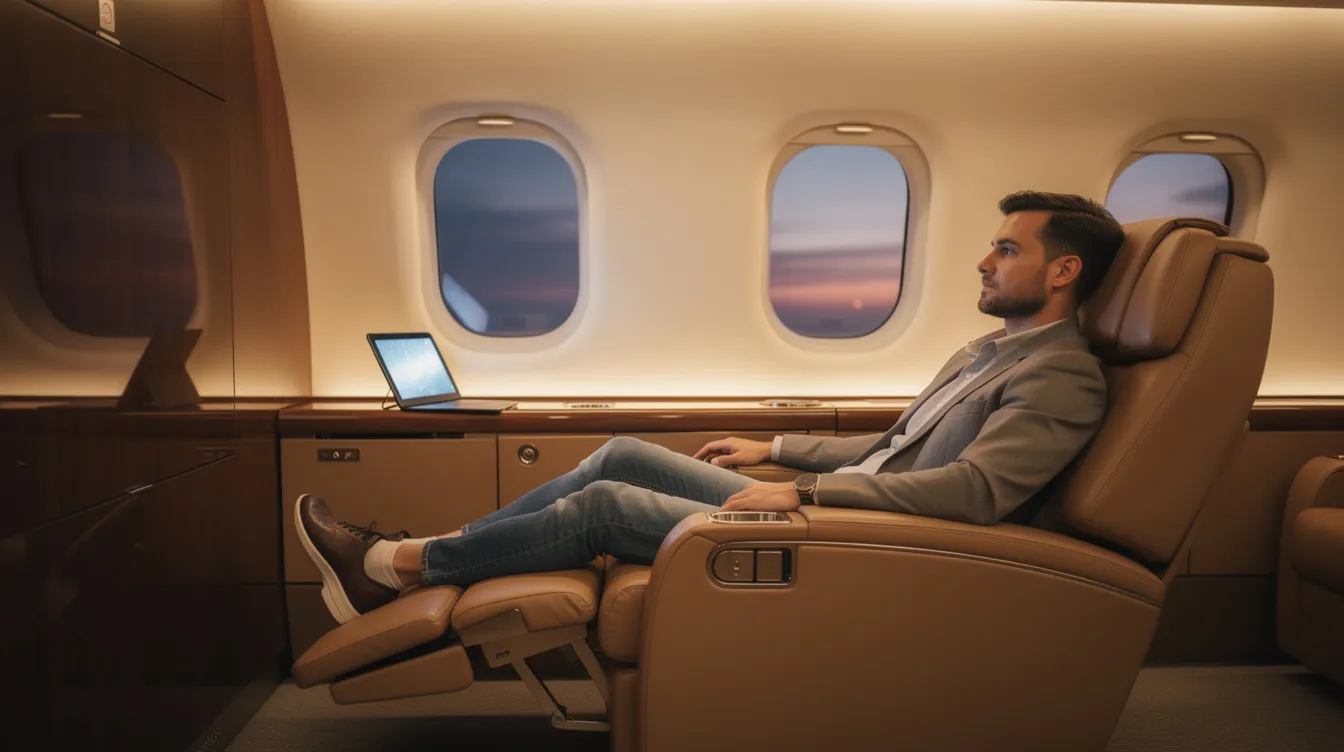
Intercontinental trips (7–14+ hours) where rest quality and productivity directly affect performance upon arrival, especially when you might otherwise consider the largest private jets on the market
Flights with 8–14 passengers who need separate zones for work, dining, and sleep—typical of travelers evaluating whether a 100-hour Jet Card commitment aligns with their annual flying pattern
Missions requiring onboard meetings with conference-table setups, presentation screens, and reliable high-speed connectivity, or even larger-group itineraries that point toward private jets configured for around 20 passengers
High-altitude or hot-climate departures where Gulfstream's performance envelope and pressurization provide a meaningful efficiency and comfort edge
For a three-hour regional hop with two passengers, a super-midsize or midsize jet is the smarter, more cost-efficient choice, often drawing from the top private jets in the world rather than ultra-long-range flagships. But when the sector stretches to seven or twelve hours—say, New York to Dubai or San Francisco to London—the G550 or G650ER becomes the strategic play. The additional cost per hour is offset by the speed of the aircraft, the ability to arrive rested and ready, and the elimination of fuel stops that add hours to the itinerary.
If you fly longer sectors more than a few times per year, carry teams or family groups, or need the cabin to serve as both office and bedroom on the same flight, your travel profile aligns with Gulfstream and other top 16-seat private jet configurations. A brief consultation with a BlackJet advisor can map your annual travel pattern to the right aircraft category, ensuring you access Gulfstream's creativity and capability only when it delivers genuine ROI-and choose more efficient options when it doesn't.
FAQ: Gulfstream Interiors, Jet Cards, and Private Aviation With BlackJet
Below are answers to the questions BlackJet clients and prospective members most frequently ask about Gulfstream interiors and how to access them, whether through ad-hoc charter or structured options like the BlackJet 25+ Hour Jet Card.
What makes Gulfstream aircraft interiors different from other private jets?
Gulfstream aircraft deliver a combination that no single competitor matches across the board: cabin dimensions wide and tall enough for true freedom of movement (8 ft 2 in wide, 6 ft 3 in tall in the G650ER), class-leading low cabin altitudes that reduce fatigue, the industry's largest panoramic oval windows for natural light, 100% fresh air replenished every two to three minutes, and advanced circadian lighting. Add in Mach 0.85–0.90 cruise speeds and ranges up to 7,500 nautical miles, and the interior advantage is inseparable from the performance advantage seen across the best-performing private jets globally. Gulfstream offers several core interior design elements—premium leathers, exotic veneers, ergonomic seating—that set the standard for interior designers in business aviation.
Do I need to own a Gulfstream to experience these interiors?
No. BlackJet's Jet Card programs—available in structures like 25-hour and 50-hour commitments—provide prepaid access to Gulfstream cabins with fixed hourly rates and guaranteed availability, with cost structures similar to those outlined in 50-hour Jet Card pricing guides. You gain the experience without the purchase price associated with a $20 million private jet, crew salaries, maintenance overhead, or depreciation that come with ownership.
How customizable is the cabin if I'm not the aircraft owner?
More than most people expect. BlackJet captures your preferences—seating arrangement, workspace configuration, lighting tone, catering style, preferred amenities—and communicates them to the flight crew before departure. While you won't redesign the hard interior, the soft experience (how the cabin is set, stocked, and lit) can be tailored to your desires on every flight. The Gulfstream cabin management system makes real-time adjustments easy from your own device.
Are Gulfstream interiors suitable for overnight or ultra-long-range flights?
Absolutely. Gulfstream seats convert to flat beds, aft suites include full-length divans with bedding, and the lighting system transitions through circadian modes that support sleep onset and natural waking. BlackJet recommends specific cabin layouts for long sectors—prioritizing sleeping berths, blackout capability, and galley configurations that support both dinner service and a morning breakfast, so members arrive at their destination having genuinely rested.
How does BlackJet ensure Gulfstream cabins are safe and well maintained?
Every operator in the BlackJet network holds current third-party safety certifications—ARGUS Platinum, Wyvern Wingman, or IS-BAO Stage 2/3. Aircraft undergo regular audits that include interior condition assessments: seat anchoring, emergency systems, material compliance, and overall cabin presentation. BlackJet does not fly members on aircraft that meet only minimum standards. The bar is set at the highest level the industry offers.
Can flying Gulfstream private jets be environmentally responsible?
It can, and BlackJet ensures it is. Every flight is carbon neutral—emissions are automatically offset at no additional cost to the member, even for itineraries that might otherwise be associated with the most expensive private jet experiences. Where sustainable aviation fuel is available, BlackJet incorporates it. Interior materials increasingly come from sustainable sources, and the future of cabin completions is trending toward low-VOC, recyclable, and responsibly certified materials. Visit the BlackJet sustainability page for details on how these commitments are implemented.
How do I choose the right Gulfstream for my travel profile?
Start with three variables: how far you typically fly, how many people travel with you, and what you need the cabin to do (work, rest, entertain, or all three). A BlackJet advisor will map those inputs against the fleet-recommending a G550 or G600 for mid-range missions, a G650ER for ultra-long-haul, or a different category entirely if a smaller jet delivers better value. The goal is not to sell you the most expensive option but to bring you the right one, whether that's a practical workhorse or an aircraft approaching the most expensive private jet tier.
The interior of a Gulfstream is not a backdrop to your flight. It is the reason the flight works—the reason you land sharper, sleep deeper, and arrive with hours reclaimed that would have been lost to commercial terminals, recirculated air, and cabin altitude headaches. Whether your inspiration is a transatlantic deal, a family milestone, or simply the conviction that travel should never feel like compromise, the cabin around you should be engineered for exactly that purpose.
Conclusion: Elevate Your Travel Experience with Gulfstream Interiors and BlackJet
Gulfstream interiors are more than a showcase of luxury—they are a strategic component of high-performance travel that blends safety, comfort, and cutting-edge technology. For the discerning traveler, the cabin is a dynamic environment engineered to optimize productivity, rest, and well-being at altitude. BlackJet’s curated access to these iconic aircraft through flexible Jet Card programs offers the best of both worlds: the exclusivity and customization of a private Gulfstream interior without the complexities and costs of ownership.
Whether your mission demands a mobile boardroom, a restful sanctuary, or a seamless blend of both, Gulfstream’s design excellence and BlackJet’s meticulous service ensure every flight is a competitive advantage. From advanced circadian lighting to ultra-quiet cabins, from bespoke materials to real-time digital control, the Gulfstream cabin is a testament to what private aviation can and should be.
Discover how BlackJet can transform your travel with Gulfstream interiors tailored to your unique needs. Elevate your journey beyond transportation—make it a statement of success, comfort, and sustainability. Your next flight awaits, redefined by precision, luxury, and purpose.
Explore how BlackJet's Jet Card programs can place you inside a Gulfstream interior tailored to your next mission, or compare them with offerings from other top private jet companies as you evaluate your options. Your step into a different kind of travel starts with a single conversation.


 Sign up with google
 Sign up with Apple