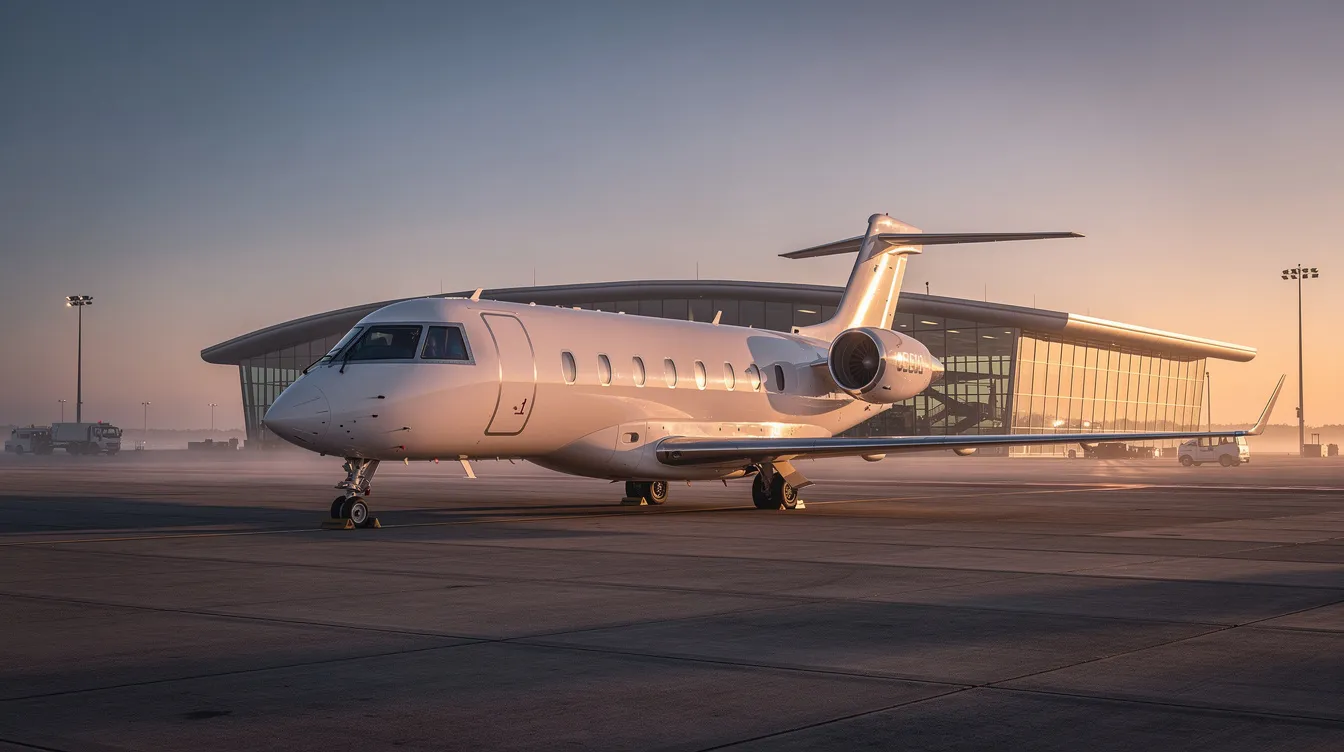
Private jet access is not simply a luxury purchase. For executives, founders, family offices, and discerning travelers, it is a way to control time, protect privacy, and reach places commercial aviation cannot serve efficiently.
This guide is for executives, business travelers, and individuals considering private aviation options. Understanding private airplane costs is crucial for making informed decisions about travel efficiency, budgeting, and the value of time, privacy, and flexibility that private aviation provides.
A “private airplane” refers to any aircraft owned or chartered for exclusive use, including jets, turboprops, and piston planes. Jets are powered by jet engines and are typically faster, with higher operating costs and longer ranges. Turboprops use turbine engines to drive propellers, offering a balance of speed and efficiency, especially for shorter regional flights. Piston planes are powered by piston engines and are generally the most economical, suitable for short distances and fewer passengers. The initial purchase price of an aircraft heavily depends on the size, age, and propulsion system, and older models of private jets can depreciate to below $2 million, making them a viable option for budget-conscious buyers looking for entry-level luxury without the high costs.
Private Jet Cost at a Glance (Answer This First)
In 2026, private jet rental prices typically range from $2,000 to $14,000+ per billable hour, depending on aircraft size, distance, and logistics. Chartering a private jet can start at approximately $2,000 to $4,000 per hour for turboprops and Very Light Jets (VLJs), making them the most economical options for on-demand private travel. Very light jets often run about $2,500–$4,500 per hour, a light jet about $3,500–$6,500, a midsize jet about $5,000–$8,500, and a large jet or ultra-long-range aircraft about $9,000–$18,000+.
The private jet charter cost is built from flight duration, aircraft positioning, federal excise tax, segment charges, landing fees, fuel surcharges, crew expenses, and optional add-ons. A same-day New York–Miami trip on a light jet may start around $14,000–$22,000 in base aircraft cost, but the all-in total cost often lands near $18,000–$28,000+ once taxes, handling, and logistics are included.
A premium commercial flight on the same route may cost a few thousand dollars, but it may also require seven to eight door-to-door hours. When you fly private, that trip can often be compressed to three or four hours with direct FBO access, fewer delays, and no public terminal process, underscoring why chartering a private jet can be worth it for time‑sensitive travelers. BlackJet’s premium private jet card programs give frequent flyers fixed, transparent hourly rates across cabin classes, helping reduce the surprises that often come with ad hoc private jet charter quotes.
Why Private Jet Access Is a Strategic Advantage
Private aviation becomes strategic when schedule control is worth more than the incremental fare. A CEO flying Los Angeles–San Francisco–Seattle–Los Angeles in one day can hold three meetings, return home that night, and avoid the lost productivity of commercial connections or overnight stays.
If a deal team values executive time at $2,500–$5,000 per hour, saving five or six hours per day can offset a meaningful part of the private jet cost. For a board meeting, acquisition negotiation, or confidential family trip, the value is not only speed; it is control over who is onboard, when the aircraft departs, and which smaller airports or regional airports can be used.
BlackJet builds this advantage around safety certification, carbon-neutral flights, and real-time digital booking. The experience feels effortless, but behind it are vetted operators, live support, technology-driven availability, and a private jet service model designed for precision rather than guesswork—core factors to weigh when comparing top private jet companies and access models.
How Much Does It Cost to Rent a Private Jet? Key Drivers
Private jet pricing is multifactorial. Aircraft type, distance, airport pair, time of year, crew needs, and service level all shape the total cost. Importantly, the “per-hour” number usually refers to the entire aircraft, not a seat, and usually includes the aircraft, crew, standard insurance, and basic operations.
That means sharing the cost of a private jet with fellow passengers or utilizing jet card programs can significantly reduce the overall expense of flying privately, making it more accessible to a wider range of travelers. For some, buying a seat on a private jet via shared and semi-private services provides an additional path into private aviation.
Flight Time, Distance, and Trip Profile
Most trips are priced by billable flight time, which includes taxi, climb, cruise, descent, and operational minimums. Very light jets may have 1.0–1.5 hour minimums, while midsize and larger aircraft may require 2.0–3.0+ hours even on shorter flights.
This is why short-haul flights can be expensive on a per-mile basis. A New York–Boston route may fly roughly 1.1–1.5 hours, but a light jet category aircraft could be billed closer to a two-hour minimum, producing an all-in figure near $8,000–$12,000 after taxes and fees.
A New York–Los Angeles trip is different. A midsize jet or super-midsize aircraft may fly about 5.5 hours, with base pricing near $35,000–$55,000 and all-in costs often moving above $45,000–$60,000 depending on aircraft positioning, airport authority charges, catering, and demand, which aligns with broader benchmarks for how much it costs to rent a private jet.
Aircraft Type: Very Light Jets vs Light, Midsize, and Large Jets
Very light jets are engineered for efficiency, typically accommodating 2–5 passengers on short regional flights with ranges up to approximately 1,200 nautical miles. Very light jets such as:
Cirrus Vision Jet SF50
Embraer Phenom 100
appeal to travelers seeking budget-friendly private aircraft options with low fuel burn and a lower price point.
Light jets, including:
Cessna Citation Mustang
Embraer Phenom 100/300
HondaJet HA-420
Cessna Citation CJ3+
usually carry 6–8 passengers and offer better cabin space compared with VLJs. Light jets like the Cessna Citation Mustang and Embraer Phenom 100 strike a balance between luxury, comfort, and affordability, making them well-suited for short- to medium-distance flights.
Midsize jets, such as:
provide more cabin space and longer range compared to light jets, making them suitable for business trips and family travel. A large jet such as:
Gulfstream G450
Gulfstream G650
Bombardier Global 6000
Falcon 7X
adds a spacious cabin, more cabin zones, higher passenger capacity, and true international flight capability.
BlackJet members can select the right aircraft size for each mission, from economical private jets for shorter flights to larger business jets for long-range travel, with predefined rates rather than one-off negotiations.
Charter Destination, Airports, and Peak-Demand Timing
Where you fly matters. Aspen, Teterboro, Miami-Opa Locka, Van Nuys, and similar high-demand destinations can push private jet rental rates higher because of congestion, limited ramp space, premium fixed base operators, and scarce aircraft availability.
Using smaller airports can reduce taxi time, lower some handling costs, and keep the journey more discreet. But the airport choice still affects landing fees, crew timing, and ground support.
Peak periods such as Thanksgiving, Christmas–New Year, the Super Bowl, Art Basel, or Davos can lift private jet charter costs by 10–30% or more. Booking early, staying flexible by a day or even a few hours, and using BlackJet’s 24/7 booking platform can improve aircraft availability and cost control.
Aircraft Positioning, Empty Legs, and Short Leg Fees
Aircraft positioning occurs when a jet must fly empty to pick you up or reposition after drop-off. These leg flights add billable time, and they can materially change the total private jet price.
Short leg fees also apply on some routes under 45–60 minutes because takeoff, climb, maintenance cycles, and crew time are expensive even when the flight is brief. Operators may price these segments with minimums rather than true airtime.
Empty leg flights, which are return trips flown without passengers, can be sold at discounts of up to 75% off standard charter rates, making them a cost-effective option for flexible travelers. A Los Angeles–Las Vegas light jet empty leg might appear around $4,000–$6,000, though timing and route flexibility are essential, especially when applying broader fly private cheap strategies like shared charters and last‑minute deals.
Taxes, Fees, and “Hidden” Charges in Private Jet Service
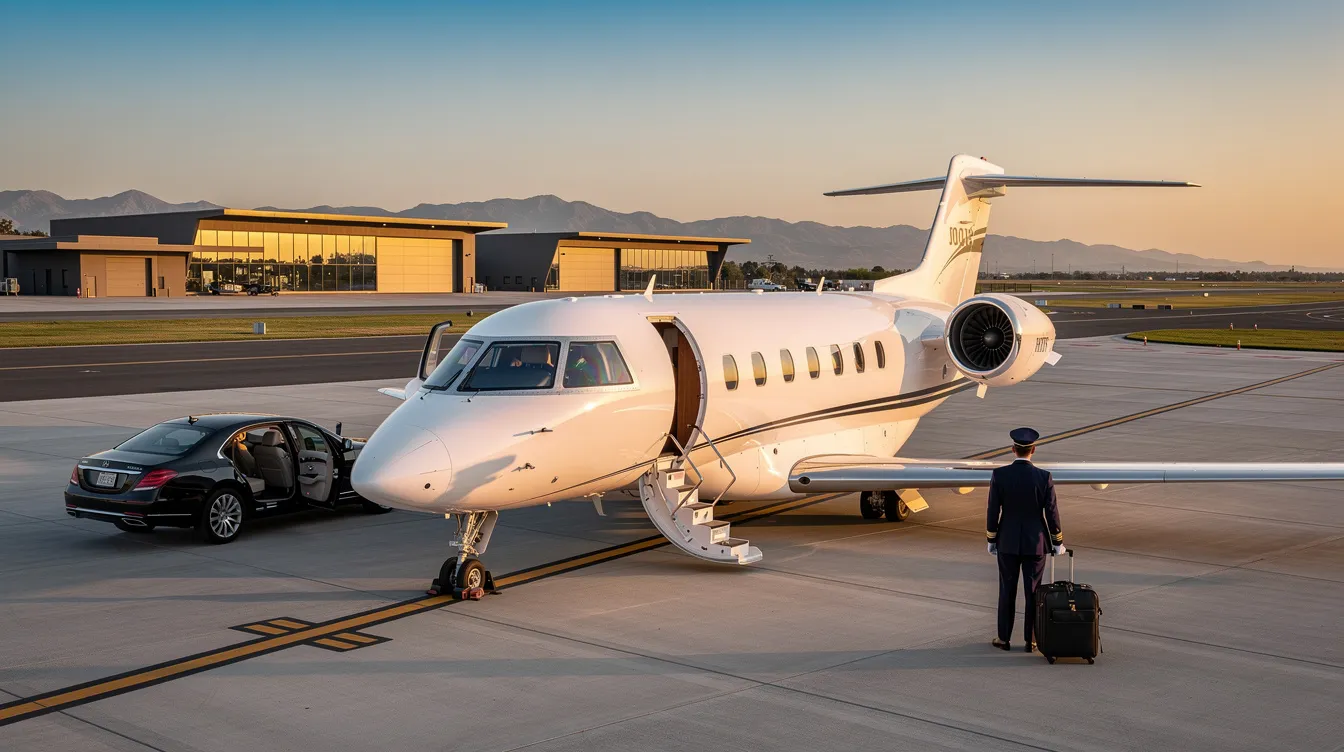
Additional expenses beyond the hourly rate may include overnight parking fees, specialized catering services, international handling charges, and federal excise taxes. These are not always “hidden,” but they must be itemized to compare any charter company or jet card quote accurately.
BlackJet’s model is designed to clarify the all-in number before departure, so clients understand what is included, what is optional, and what may vary by season or destination.
Federal Excise Tax and Segment-Based Charges
In the U.S., domestic private jet charter is generally subject to a 7.5% federal excise tax on the transportation portion of the trip. According to the 2026 guidance summarized by the National Air Transportation Association, segment fees are also assessed per passenger, often around $4.50–$5.30 per segment.
International head taxes for flights to and from the U.S. are approximately $23.40 per passenger in 2026, with Alaska and Hawaii-related fees around $11.30 in certain cases. BlackJet quotes itemize these taxes and fees so clients do not discover them after invoicing.
Landing, Ramp, and Handling Fees
Landing fees vary by airport and aircraft size. A small regional field may charge $100–$300 for a light jet, while Teterboro or another major executive airport can charge $1,000–$1,500+ for larger aircraft.
Ramp and handling fees from fixed base operators often range from several hundred dollars to $1,500+ per stop, depending on fuel purchase, aircraft class, and service level. On a multi-leg trip, these items can add $500–$2,000+ while also providing the premium ground experience: lounges, discreet boarding, quick baggage handling, and private access.
Overnights, Deicing, Hangar, and International Fees
Crew overnight costs often run $200–$600 per crew member per night, especially for multi-day itineraries or early departures after late arrivals. Pilot and crew salaries also influence overall economics, whether you charter or own.
In winter, deicing in Chicago, Denver, Aspen, or similar markets can range from $1,500 to $15,000, depending on severity and aircraft size. Hangar fees may run $500–$1,500 per day for weather protection, while hangar fees for private jets can range from $1,000 to $3,000 per month, depending on the location and type of hangar.
International flights may require overflight permits, landing permits, customs support, immigration coordination, and local handling. A Europe or Caribbean itinerary can add $500–$5,000+ in international fees, which BlackJet’s operations team plans for in advance, just as it does for location‑specific services like private jet charters in Karachi.
Optional Add-Ons: Catering, Wi‑Fi, and Ground Transportation
Basic drinks and snacks are often included. Custom catering, dietary-specific menus, or Michelin-level meals may cost $250–$2,000+ per leg.
Wi‑Fi may be complimentary on some aircraft, while others charge based on use or a flat rate. Heavy streaming on a longer leg may add $100–$600+.
Ground transportation, including chauffeured SUVs, premium sedans, and sprinters, commonly ranges from $200–$1,000+ per reservation. A $25,000 itinerary can become $28,000+ once premium catering, Wi‑Fi, transfers, and special requests are confirmed.
Private Jet Ownership vs Charter vs Jet Cards: The 150–200 Hour Rule
Below roughly 150–200 flight hours per year, private jet ownership is rarely the most economical route. Ownership delivers control, but fixed costs accumulate regardless of whether the aircraft is flown or remains in a hangar, which is why a clear view of the broader private jet price list and access models is essential before committing.
The three main access models are full ownership, on-demand chartering, and jet card membership. Charter is flexible, ownership is maximum control, and BlackJet’s jet card sits between them with prepaid access, predictable rates, and premium service oversight.
The Real Cost of Private Jet Ownership
Private jet ownership includes fixed costs such as crew salaries, maintenance, insurance, management, hangar, subscriptions, training, and compliance. Pilot and crew salaries for private jet ownership can range from $60,000 to $200,000 per year, significantly impacting the overall cost of ownership; larger aircraft may require higher pilot and crew salaries and additional staffing.
Typical ongoing expenses for private jet ownership include:
Fuel costs: $300 to $700 per flight hour
Maintenance costs: $50,000 to $200,000 annually
Insurance costs: $15,000 to $30,000 per year
Fuel consumption is the largest single variable expense for aircraft operations, with a single-engine piston plane burning roughly 8–12 gallons of Avgas per hour and light jets burning around 70–120 gallons of Jet-A per hour.
Fuel prices can fluctuate with the market, materially changing year-to-year operating costs through higher direct fuel spend and related surcharges.
Small piston plane (100 hours/year): $15,000 to $30,000 annually in upkeep and fuel
Private jet: $500,000 to $1.2 million annual operating budget
Total annual operational costs: $20,000 for small piston planes to over $1 million for private business jets
The initial purchase price of an aircraft heavily depends on the size, age, and propulsion system. Pre-owned private jets often depreciate to below $2 million, presenting an attractive option for budget-conscious buyers seeking entry-level luxury without the significant expense. A Gulfstream G200 or similar large jet purchased around $4–$6 million may still require about $1.1M–$1.25M annually at 200 hours and $1.9M+ at 400 hours, according to ownership cost models such as PRIJET.
Annual operating costs for a midsize jet can total hundreds of thousands of dollars, which includes fixed costs like maintenance and crew salaries, as well as variable costs like fuel and landing fees. Variable expenses for operating an aircraft scale directly with the number of hours flown. Ownership generally becomes financially rational above 300–400 hours annually, or when branding, dispatch control, and aircraft availability justify the premium—especially for organizations that might otherwise charter or acquire a 12-seater private jet for executive teams or family travel.
On-Demand Charter: Flexibility Without Fixed Costs
On-demand private jet rental is best for occasional travelers flying under 50–75 hours per year. It lets you choose from thousands of private jets globally without the purchase price, management complexity, or ongoing costs of ownership, and is ideal once you understand how much it costs to rent a private jet and in which scenarios chartering a private jet is worth it.
A New York–Palm Beach winter getaway on a light jet may start near $14,000–$18,000 one way before taxes and fees, then settle around $18,000–$22,000 all-in, depending on peak demand, aircraft positioning, and FBO charges. Private jet charter costs can vary significantly based on factors such as flight time, distance, aircraft type, and peak demand scheduling, with rates starting around $4,000 per hour and exceeding $15,000 per hour for larger jets.
The trade-off is volatility. A low quote may not include repositioning, short leg fees, deicing, or premium handling, while a reputable operator will show those details upfront.
Jet Card Membership: Predictable Private Jet Cost with Premium Access
A jet card allows members to pre-purchase flight hours, often in 25-hour or 50-hour blocks, at fixed hourly rates on selected cabin classes. This model reduces ad hoc negotiation, improves aircraft access, and helps cap private jet cost volatility, which is why many travelers start by reviewing a comprehensive guide to jet card costs before choosing a program.
BlackJet’s 25+ Hour Jet Card offers access from very light jets through large jets, 24/7 digital booking, real-time support, and carbon-neutral flights included as standard. For travelers flying roughly 50–200 hours annually, it provides private jet service quality without the obligations of ownership or the unpredictability of one-off charter, while detailed jet card pricing guides help benchmark total membership value against alternatives.

Aircraft Categories and Example Private Jet Prices
Different private airplanes cost different amounts because range, cabin volume, runway performance, fuel burn, and passenger capacity change the economics. The initial purchase price of an aircraft heavily depends on the size, age, and propulsion system. Older models of private jets can depreciate to below $2 million, making them a viable option for budget-conscious buyers looking for entry-level luxury without the high costs. The figures below are directional 2024–2026 ranges, but they give practical benchmarks for private aviation enthusiasts, first-time jet owners, and frequent flyers comparing charter, jet card, fractional ownership, or purchase.
Aircraft Category | Typical Passengers | Range (nautical miles) | Charter Cost Per Hour (USD) | Purchase Price Range (USD) | Notes |
|---|
Very Light Jets (VLJs) | 2–5 | Up to ~1,200 | $2,000–$3,500 | $1.5M–$5M | Efficient, low fuel burn, single-pilot ops |
Turboprops (Private alternatives) | 4–8 | Short regional | $2,000–$3,000 | Used models from ~$50,000 | Most economical for short trips |
Light Jets | 6–8 | 1,500–2,000 | $3,500–$6,500 | $2M–$6M+ | Balance of cost, range, and comfort |
Midsize Jets | 7–10 | 2,000–3,500+ | $5,000–$8,500 | $7M–$20M+ | More cabin space and longer range |
Large / Ultra-Long-Range Jets | 10–16+ | 3,500+ | $9,000–$18,000+ | $20M–$70M+ | Spacious cabins, international capability |
Safety, Sustainability, and Technology: Cost Drivers You Actually Want
Not all private jet services are equal. Safety oversight, maintenance discipline, sustainability programs, and operational technology affect reliability, experience, and the total cost of travel.
Some providers compete only on price. BlackJet prioritizes vetted aircraft, audit-conscious operations, digital booking, and carbon-neutral private jet travel because a lower hourly number means little if the trip is delayed, poorly supported, or operationally fragile, and because informed travelers rightly ask whether private jets are safe before focusing on cost alone.
Why Safety Protocols Matter More Than a Slightly Lower Hourly Rate
Serious providers look at third-party standards such as ARGUS, Wyvern, and IS-BAO, along with internal checks on pilot experience, maintenance records, insurance, and operator history. These processes can raise direct operating costs, but they reduce operational and reputational risk.
BlackJet partners with audit-compliant operators, applies strict pilot standards, and uses continuous safety monitoring tools. Safety should be part of any private jet cost comparison, not an afterthought.
Sustainable, Carbon-Neutral Private Jet Travel
Private jets carry a higher per-passenger carbon footprint than commercial aviation, so modern operators must address emissions with efficient aircraft, sustainable aviation fuel where available, and verified offset programs. Offsets are typically priced per tonne of CO₂ equivalent and add a modest per-hour cost.
Every BlackJet Jet Card flight is carbon-neutral by default, with offsets sourced from vetted environmental projects at no additional fee to the member. For a 50-hour Jet Card member, the cost includes fixed hourly rates that cover aircraft use, crew, maintenance, and carbon offsets, providing predictable budgeting and premium service. Members benefit from BlackJet’s proprietary certification and real-time flight support, ensuring every trip is seamless and secure. This approach contrasts with on-demand charter, where prices can fluctuate based on availability and operational variables.
Jet Card programs are ideal for frequent travelers who want to avoid ownership’s complexities but desire more control and consistency than typical chartering offers; for very active flyers, a detailed look at a 100-hour jet card cost can clarify when scaling up makes sense. For example, a business executive flying regularly between New York and London can leverage a 50-hour Jet Card to secure preferred aircraft types at locked-in rates, simplifying expense management and guaranteeing availability during peak times.
In summary, a 50-hour Jet Card with BlackJet delivers strategic access to private aviation with transparent costs, high safety standards, and sustainability built in—making private jet travel not just a luxury, but a smart, responsible choice.
Conclusion: Elevate Your Travel with Smart Private Jet Access
Private airplanes cost more than just dollars—they represent a strategic investment in time, privacy, and seamless mobility. Whether choosing on-demand charter, jet card membership, or ownership, understanding the full spectrum of expenses and benefits is essential. BlackJet’s approach combines rigorous safety protocols, carbon-neutral flights, and transparent pricing to deliver unparalleled value and peace of mind.
For frequent travelers, jet cards offer predictable costs and premium access without ownership burdens. For occasional flyers, chartering provides flexibility and choice. And for those seeking complete control, ownership remains an option with careful budgeting for fixed and variable costs.
Ultimately, private jet access is about more than luxury—it is about unlocking time, convenience, and bespoke service that commercial aviation cannot match. Discover how BlackJet can transform your travel experience with effortless, sustainable, and secure private flight solutions tailored to your needs.
Elevate your travel—explore BlackJet’s Jet Card programs and private aviation services today.


 Sign up with google
 Sign up with Apple