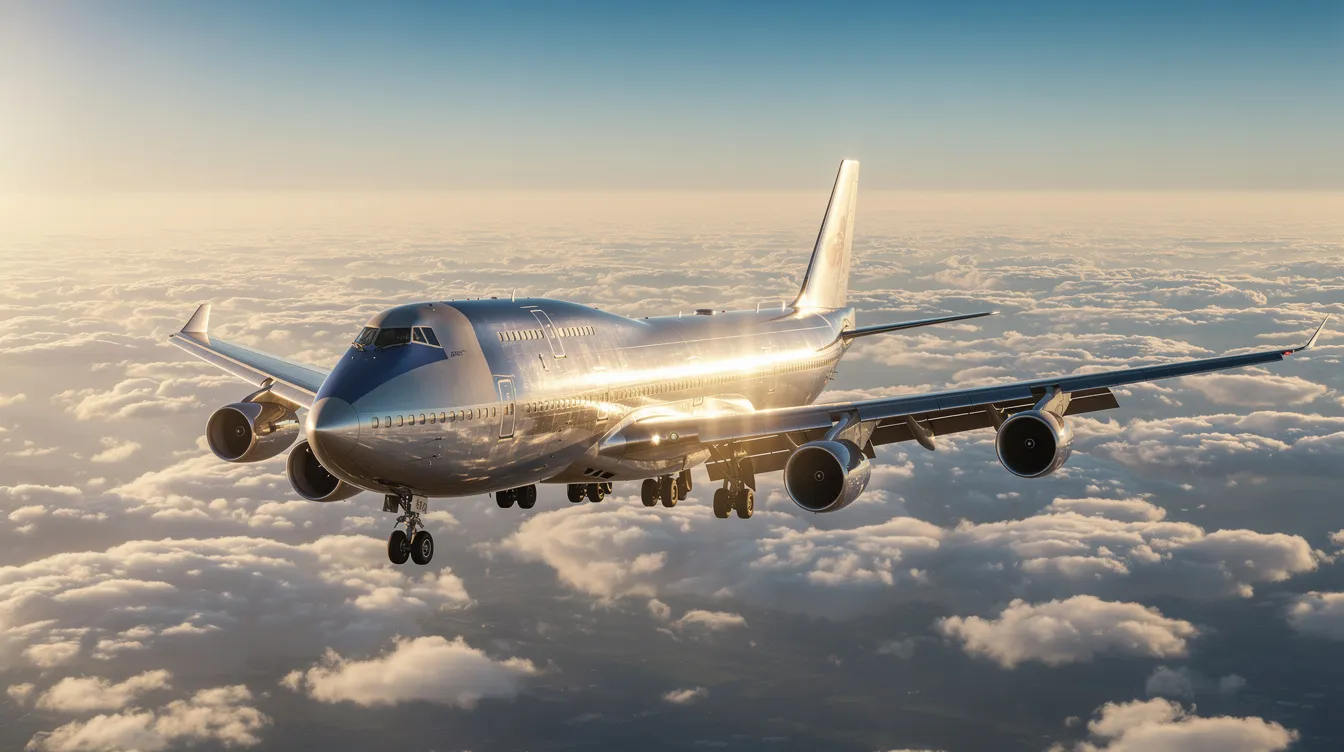
The Boeing 747 remains one of the most recognizable aircraft ever built, and its fuel capacity is enormous: depending on the variant, a 747 holds about 48,400 gallons (183,380 liters) in the early 747-100 up to roughly 63,034 gallons (238,610 liters) in the 747-8 Intercontinental. A variant refers to a specific model or generation of the Boeing 747, each with different design features and fuel capacities. Here, 'fuel capacity' refers to the maximum amount of fuel a specific 747 model can hold. Even as the jumbo jet era winds down, that number still fascinates pilots, engineers, frequent flyers, and private aviation travelers comparing long-range options.
The answer says a great deal about the economics, engineering, and sheer ambition behind long-range air travel. For business travelers and high-net-worth leisure flyers who value flexibility, privacy, safety, and luxury, it also puts the scale of commercial aviation into perspective against private jet travel. Below, we break down 747 fuel capacity by variant, what that fuel load means for range, consumption rates, fueling cost and time, tank layout and safety, how it compares with private jets, and how environmental and sustainability efforts shape operations today.
Quick Answer: How Much Fuel Does a Boeing 747 Hold?
A Boeing 747 can carry an extraordinary volume of jet fuel — enough to fill a residential swimming pool several times over. The exact fuel capacity depends on the variant, but every generation of this jumbo jet holds tens of thousands of gallons of fuel in its wings and fuselage tanks.
Here are the key numbers across major 747 variants:
The 747-100, the original model that entered production in the late 1960s, has a fuel capacity of roughly 48,400 gallons (about 183,380 liters). The 747-200 model can carry approximately 50,000 gallons (around 199,160 liters), reflecting incremental improvements in tank design and range demand.
The 747-400, the workhorse variant that dominated long-haul commercial flights from 1989 onward, holds about 57,000 gallons of fuel. That translates to a maximum fuel capacity of 238,604 liters when accounting for all usable tank volume, including optional stabilizer tanks.
The newest passenger variant, the Boeing 747-8 Intercontinental, can carry 63,034 gallons of fuel — over 238,610 liters. At full capacity, the fuel weight of a fully fueled Boeing 747 can be up to 400,000 pounds (approximately 181,572 kilograms). That fuel load alone weighs more than many smaller airliners like the Boeing 737 at maximum takeoff weight.
These figures make the 747 one of the largest fuel-carrying commercial aircraft in history. For context, only the Airbus A380 holds more, with a capacity of about 85,472 US gallons. The fuel capacity of a Boeing 747 varies by generation and variant, but every version was designed for the same purpose: making ultra-long-range, nonstop flight possible at scale.
Variant | Fuel Capacity (U.S. Gallons) | Fuel Capacity (Liters) | Typical Max Range |
|---|
747-100 | ~48,400 gal | ~183,380 L | ~4,600–5,300 nm |
747-400 | ~57,000 gal | ~216,840 L | ~7,285–7,670 nm |
747-8 Intercontinental | ~63,034 gal | ~238,610 L | ~7,730 nm |
Why 747 Fuel Capacity Matters to Long-Range Travelers
Fuel Capacity and Range
How much fuel a 747 holds translates directly into the routes it can fly without stopping. That massive capacity is what enables nonstop commercial flights on prestige routes like New York to London, Los Angeles to Tokyo, and Dubai to Sydney — journeys spanning 3,200 to 7,500 nautical miles depending on winds and loading.
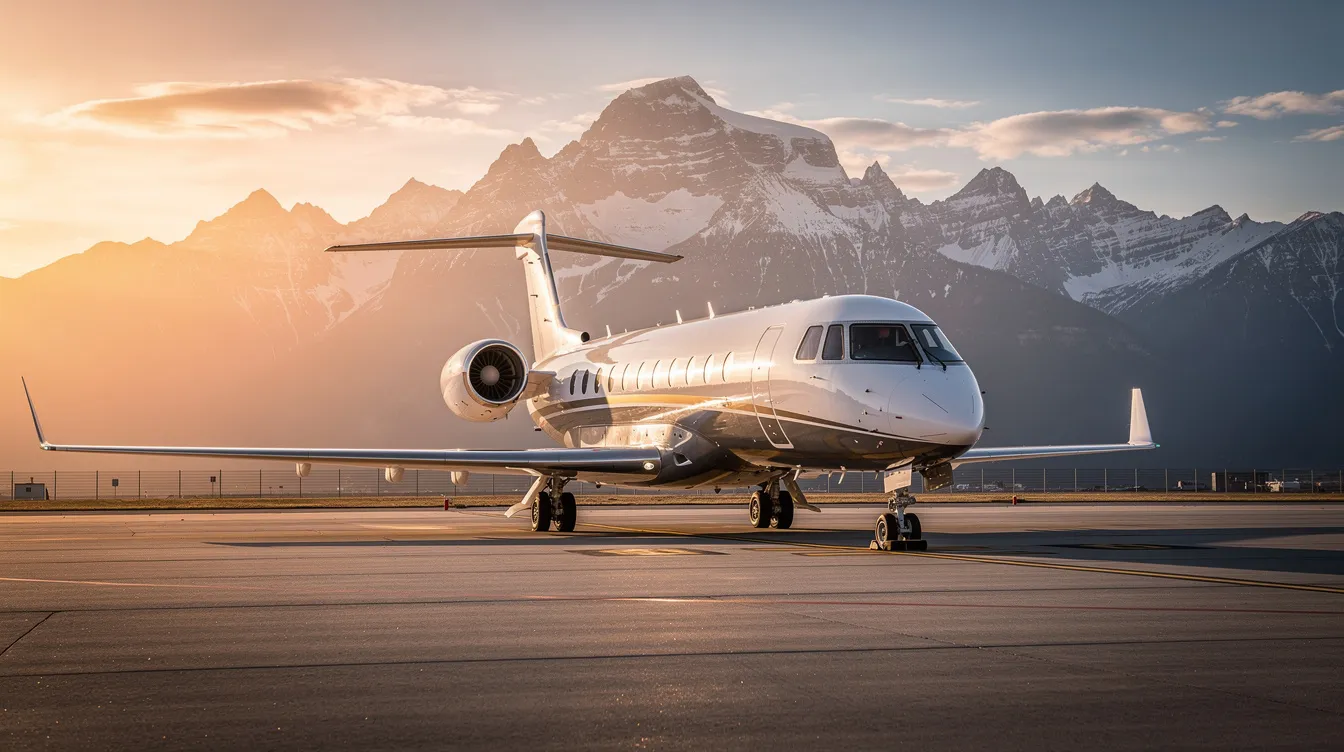
Contrast that with the private jet world. A long-range large-cabin private jet typically holds between 3,500 and 7,000 gallons — a fraction of what the 747 carries. Yet through advanced aerodynamics, lighter airframes, and fewer passengers, those jets can still cross the Atlantic nonstop.
For BlackJet members planning transatlantic or transcontinental itineraries, the 747's fuel capacity provides a useful benchmark. A fully loaded 747-8 can fly roughly 7,700 nautical miles on a single tank. A high-net-worth traveler heading from New York to London (about 3,000 nautical miles) doesn't need a jumbo jet's tank — but they do need an airplane with enough range and reserves to make the trip without compromise. Understanding fuel capacity across aircraft types helps frame why certain private jets are chosen for certain missions.
Fuel Tank Layout on the Boeing 747
The 747's fuel tanks are primarily located in the wings, which is true of most large commercial aircraft. The wings serve double duty: their internal structure provides massive volume for fuel storage while the weight of the fuel reduces bending stress during flight.
Fuel is stored in multiple locations in a Boeing 747, including main wing tanks and center wing tanks. Here is how the system breaks down:
Main wing tanks: Hold the bulk of fuel, distributed across multiple bays between the front and rear wing spars.
Center wing tank (CWT): Installed between the wing roots beneath the fuselage, typically used early in the flight during climb and initial cruise phases.
Horizontal stabilizer tank: On variants like the 747-400 and 747-8, a tank in the horizontal stabilizer can be added to extend total usable fuel by 6–7%.
For a typical 747-400, the wing and center tanks account for roughly 93–94% of total fuel volume. Engineers designed the fuel system so that fuel is consumed in a specific sequence, keeping the airplane's center of gravity within safe limits during every phase of flight — from takeoff through cruise to landing.
Visualize a top-down outline of a 747 with the wings shaded to represent the main tanks, a smaller shaded region in the center fuselage for the CWT, and a sliver at the tail for the stabilizer tank. That distribution is critical for balance and safety.
How Much Fuel Does a 747 Use Per Hour and Per Flight?
Fuel Consumption on Typical Routes
A Boeing 747-400 burns about 10 to 11 tonnes of fuel per hour during cruise. That equates to roughly 3,300 to 3,800 gallons per hour, or — here's the number that sticks - a 747 consumes approximately 1 gallon of fuel every second during cruise.
To put that in perspective, consider a 747-400 flying from London to New York:
Distance: ~3,000 nautical miles
Flight time: approximately 7.5–8 hours (dependent on winds)
Total fuel burn: a 747-400 operating from London to New York consumes approximately 70,000 kilograms of fuel
Proportion of tank used: roughly 40–50% of total fuel capacity, leaving reserves for contingency and alternate airport diversions
Fuel consumption is not even across a flight. Takeoff and climb demand disproportionately high fuel flow — engines operate near maximum thrust, and the plane is at its heaviest. Cruise is more efficient as weight drops. Descent and landing use relatively little fuel.
On cost, fuel for a 747-400 on the London to New York route runs approximately £18,500 at current benchmark pricing. Using a U.S. average of around $5.50–$6.50 per gallon, burning 25,000–30,000 gallons translates to $137,000–$195,000 per flight depending on fuel prices at the departure airport. These are numbers that airline fuel cost strategies must constantly manage.
Fuel Capacity Across 747 Variants
How much fuel does a 747 hold? The answer depends entirely on which variant you're asking about. Each generation brought larger tanks, more efficient turbofan engines, and greater range.
Variant | Entry into Service | Fuel Capacity (U.S. Gallons) | Fuel Capacity (Liters) | Max Range (nm) |
|---|
747-100 | 1969 | ~48,400 gal | ~183,380 L | ~4,600–5,300 |
747-200 | Early 1970s | ~50,000 gal | ~199,160 L | ~6,500–6,600 |
747-400 | 1989 | ~57,000 gal | ~216,840 L | ~7,285–7,670 |
747-8I | 2012 | ~63,034 gal | ~238,610 L | ~7,730 |
The jump from the 747-100 to the 747-400 added nearly 9,000 gallons of usable fuel and over 2,500 nautical miles of range. The 747-8 pushed capacity further, and notably, the 747-8 carries roughly 30% more fuel than a Boeing 777-300ER, despite both being wide-body long-haul platforms.
Freighter versions of the 747 use the same tank architecture, but operators typically load less fuel to maximize cargo payload on shorter sectors. Newer aircraft configurations can affect usable fuel capacity and volume based on design and purpose — a 747-400ER (Extended Range) variant, for instance, added body fuel tanks to push total capacity above 63,000 gallons.
Fuel Economy: MPG and Per-Passenger Efficiency of a Jumbo Jet
Translating a 747's fuel burn into miles per gallon reveals a sobering vehicle-level number. Fuel economy for a 747 is about 0.18 miles per gallon — meaning the airplane moves less than a fifth of a mile on each gallon of jet fuel. That sounds terrible until you consider how many people are on board.
Here is a worked example: a 747-8 cruising at roughly 575 mph burns about 3,500 gallons per hour. Over a 500-mile segment, it consumes approximately 3,000 gallons. With 400 passengers, that works out to about 7.5 gallons per passenger - or roughly 67 passenger-miles per gallon.
Compare that to cars: a single person driving an SUV at 25 MPG on the highway is less fuel-efficient per passenger on a per-mile basis than a 747 flying close to full passenger capacity.
Airlines care deeply about this metric, expressed as cost per available seat mile (CASM). It is the reason carriers in economy class pack seats tightly and why fuel-efficient modern aircraft like the Boeing 787 and Airbus A350 - which achieve 20–30% better per-seat fuel economy than the 747 — have largely replaced the jumbo jet on most routes.
Jet Fuel Basics: What Powers a Boeing 747?
A Boeing 747 burns kerosene-based jet fuel, typically Jet A in the United States or Jet A-1 internationally. This is not gasoline, not automotive diesel, and not the AvGas used in small piston-engine aircraft. The turbofan engines on a 747 are designed specifically for kerosene's combustion characteristics.
Key properties of jet fuel that matter at altitude and speed:
Weight per gallon: Approximately 6.7 pounds per U.S. gallon at standard temperature. Jet fuel expands and contracts with temperature, so fuel is loaded by weight rather than by the same volume every time.
Energy density: About 43 MJ/kg (lower heating value), giving it the power density needed to sustain flight at cruise altitude.
Freezing point: Jet A-1 freezes at around -47°C, critical when flying at 35,000 feet where temperatures regularly drop below -50°C.
Flash point: Tightly regulated for safety during fueling, storage, and operation.
Jet fuel differs significantly from diesel in refining process and combustion behavior, though both originate from crude oil distillation. Sustainable aviation fuel (SAF) blends — already certified by ASTM for up to 50% blending — offer similar energy content with substantially reduced lifecycle CO₂ emissions.
How Weight and Fuel Capacity Shape 747 Range
Payload vs. Fuel Trade-offs
Aircraft payload and maximum takeoff weight influence how much fuel a Boeing 747 can carry on any given flight. The 747-8 Intercontinental has a maximum takeoff weight of approximately 987,000 pounds. Every pound of fuel, passengers, cargo, and the aircraft's own empty weight must fit within that ceiling.
This creates a fundamental trade-off:
More fuel: More range but also more weight, higher drag, and increased fuel burn just to carry the fuel itself.
More payload: (Passengers and cargo) means less room for fuel, potentially limiting range.
Shorter routes: Allow airlines to carry less fuel, improving efficiency and freeing weight for revenue-generating cargo.
Consider a 747-400 on a 3,000-nautical-mile route (say, New York to London). It might load 30,000–35,000 gallons - roughly 60% of capacity. On a 6,000-nautical-mile route (such as Los Angeles to Hong Kong), the same plane needs nearly 55,000 gallons, which may force the airline to reduce cargo or passenger count to stay under maximum takeoff weight.
The Boeing 747's fuel load often weighs more than smaller airliners like the Boeing 737 weigh fully loaded — a striking illustration of the scale involved.
From 747 to Private Jet: How Fuel Capacity Scales Down
For BlackJet clients, the 747's fuel capacity is fascinating context, but the real question is: how much fuel does a private jet use to accomplish similar missions?
The answer: far less, but with carefully engineered efficiency that still delivers intercontinental range.
Category | Typical Fuel Capacity | Typical Max Range | Passenger Count |
|---|
Light Jet | ~1,000–2,000 gal | ~1,500–2,000 nm | 6–10 |
Super-Midsize Jet | ~2,500–3,500 gal | ~3,500–4,500 nm | 8–12 |
Long-Range Large Cabin | ~5,000–7,000 gal | ~5,000–6,500 nm | 12–18 |
747-8 Jumbo Jet | ~63,000 gal | ~7,730 nm | 400–500 |
A long-range private jet with 6,000 gallons can fly New York to London nonstop — the same route that uses roughly half a 747's tanks. The difference is that the private jet achieves this with advanced wing designs, lightweight composite structures, and modern high-bypass engines optimized for a much smaller airframe.
BlackJet's aircraft access offers 747-style intercontinental reach in a format built for individuals and small groups through some of the largest private jets available — without needing 60,000 gallons to get there.
Environmental Impact: Fuel Burn, Emissions, and Modern Alternatives
Every kilogram of jet fuel burned produces approximately 3.16 kilograms of CO₂. For a long-haul 747 flight burning 70,000–80,000 kilograms of fuel, that translates to roughly 220–250 tonnes of CO₂ per flight. Spread across 400 passengers, each traveler accounts for about 0.55–0.65 tonnes of CO₂ on a single transatlantic leg.
Modern twin-engine long-haul jets like the Boeing 777 and Airbus A350 carry less fuel than the Boeing 747 and achieve better per-seat emissions — one of the core reasons airlines are transitioning away from four-engine widebodies. SAF blends offer additional reductions, cutting lifecycle emissions by up to 80% compared to conventional jet fuel depending on the feedstock.
BlackJet applies carbon-neutral flight practices as a default across every flight hour, grounded in a deep understanding of the different types of jet fuel used in aviation. Verified carbon offsets are integrated automatically into every booking, and SAF is utilized where available. For an executive team flying New York to London on a long-range private jet through BlackJet, carbon offset calculations are embedded in the trip cost — a contrast to commercial passengers who must typically seek out offset programs on their own.
Operational Reality: Airlines Rarely Top Off the Tanks
Despite the impressive capacity figures, commercial operators seldom fill a 747's tanks to absolute maximum. Carrying excess gallons of fuel increases weight and paradoxically burns more fuel, so dispatchers carefully calculate the optimal load for each route.
International regulations require extra contingency fuel for aircraft during flights, but the categories are specific:
Trip fuel: The fuel needed to fly from departure to destination under planned conditions.
Contingency fuel: Typically 5% of trip fuel, covering unexpected deviations or weather.
Alternate fuel: Enough to divert from the destination to a designated alternate airport.
Final reserve fuel: The legally mandated minimum, usually 30 minutes of holding fuel at 1,500 feet above the alternate.
A 747-400 with total tank capacity above 57,000 gallons might load only 40,000–45,000 gallons for a 4,000-nautical-mile route. The unused capacity exists for the handful of ultra-long routes where every gallon matters.
How Long Does It Take to Fuel a 747?
Fueling a jumbo jet is a coordinated operation involving ground crews, fuel trucks or hydrant systems, and constant communication with the cockpit crew. For an uplift of 50,000–60,000 gallons, the process typically takes 30 to 60 minutes at a major hub airport equipped with high-flow hydrant systems.
The procedure begins with grounding and bonding the airplane to the fuel truck, preventing static discharge that could ignite fumes. Crews confirm the fuel type — Jet A or Jet A-1 — and program the exact uplift volume into the fueling controls. During the transfer, technicians monitor gauges for flow rate, pressure, and any anomalies.
At a large airport like London Heathrow or JFK, multiple fueling points and high-capacity pumps keep turnaround times efficient. At a regional airport with limited infrastructure, flow rates drop and fueling can stretch to 60–90 minutes or longer. For airlines operating tight schedules on high-demand routes, ground fueling speed is a critical factor in on-time performance.
Safety measures never pause: no-smoking zones are enforced, spill containment equipment stands ready, and a trained observer watches every connection point. It is a routine operation that happens thousands of times per day worldwide, but one where a single error can have serious consequences.
Cost to Fill a 747 vs a Private Jet
Using a benchmark of $6.00 per gallon for Jet A:
747-400 (~57,000 gallons): approximately $342,000 to fill near capacity.
747-8 (~63,000 gallons): approximately $378,000–$400,000 for a full load.
Now compare a long-range private jet with a 5,000-gallon fuel capacity at the same price per gallon: roughly $30,000 for a full tank. The 747's fuel bill is an order of magnitude higher, but spread across 400+ passengers in first class and economy class seating, the per-seat cost becomes competitive with or even lower than a private jet's per-person cost.
The difference is in what you get for the money. Airlines manage fuel cost risk through hedging programs, fuel surcharges passed to ticket holders, and fleet-wide efficiency initiatives. BlackJet's Jet Card model takes a different approach: hourly rates already bundle fuel, crew, and operational costs, protecting members from volatile fuel price swings and simplifying travel budgeting entirely for travelers comparing jet card membership pricing and structures.
Safety, Redundancy, and Fuel Systems on the 747
The 747's fuel system is engineered with multiple layers of redundancy to maintain safety under virtually any failure scenario. Key features include:
Multiple independent tanks and pumps: If one pump fails, fuel can be drawn from other tanks through crossfeed valves.
Crossfeed system: Any engine can receive fuel from any tank, ensuring balanced fuel distribution and continuous power even if one side of the airplane loses a fuel pump.
Surge and vent tanks: Manage fuel expansion at altitude, prevent spillage during unusual flight attitudes, and handle pressure differentials.
Automated monitoring: Modern 747 cockpit displays show real-time fuel quantity, flow rates, temperature, and system status for every tank, giving pilots complete situational awareness.
Fuel systems must pass rigorous certification tests for tolerance to pump failures, lightning strikes, extreme temperatures, and emergency scenarios. These standards are set by the FAA and EASA and are non-negotiable.
BlackJet applies a parallel philosophy to private aviation. Through the BlackJet Certified program, every operator in the network undergoes third-party safety audits, maintenance verification, and continuous monitoring — ensuring that the same culture of redundancy and safety extends from commercial aviation to every private flight.
Technology Evolution: From Early 747s to Efficient Long-Range Jets
The original 747-100 flew on Pratt & Whitney JT9D engines — groundbreaking for their era but thirsty by modern standards. Each generation of the 747 brought better fuel burn per pound of thrust meaningfully.
The 747-400, introduced in 1989, switched to a choice of improved high-bypass turbofan engines (Rolls-Royce RB211, GE CF6, or Pratt & Whitney PW4000) and added winglets that reduced induced drag. Between the 747-200 and the 747-400, airlines gained roughly 15–20% improvement in fuel burn per seat-mile, depending on engine and configuration.
The 747-8 pushed further with entirely new GEnx-2B67 engines and raked wingtips instead of traditional winglets, rather than relying on upgrades built from existing aircraft technology. Boeing reported a further 5–10% improvement in specific fuel consumption over the 747-400, largely from engine efficiency and refined wing profiles that cut drag at cruise speed and altitude.
These same principles — high-bypass engines, advanced wing designs, lightweight composite materials — now power the generation of long-range private jets that BlackJet clients fly, and underpin modern tools like private jet flight time calculators for accurate planning. The technology that made a 63,000-gallon jumbo jet efficient enough to operate profitably is the same technology that lets a 6,000-gallon private jet cross the Atlantic with fuel to spare.
Planning Long-Range Routes Around Fuel Capacity
Airline dispatchers plan every 747 flight by balancing fuel capacity against forecast winds, payload, and regulatory reserves. The fuel needed for any given route is never a fixed number — it shifts with weather, air traffic control, and operational demands.
Consider a marginally long route like Hong Kong to New York, roughly 7,000 nautical miles. A 747-8 can theoretically cover this distance, but strong headwinds on the Pacific routing could push actual fuel requirements beyond what remains after accounting for full passenger and cargo loading. In that scenario, the airline might reduce payload, choose an alternate routing, or schedule a fuel stop in Anchorage.
Private jet flight planning follows the same principles but at a more personalized scale. BlackJet's planning teams factor in preferred departure times, VIP handling at the destination airport, and specific aircraft selection to match the mission, whether it's a transatlantic crossing or a tailored private jet charter from Karachi. If a particular route demands a fuel stop -—say, a super-midsize jet flying London to Dubai with heavy headwinds — the team identifies an efficient intermediate stop and arranges ground handling in advance.
The difference for private travelers is flexibility. A 747 commits to its route and schedule weeks in advance. A private jet adapts to the traveler.
Historic Role of the 747: Making Long-Haul Travel Mainstream
When Pan Am inaugurated 747 service from New York to London in January 1970, the airplane's massive fuel capacity and seat count fundamentally changed international air travel. For the first time, airlines could carry over 350 passengers nonstop across the Atlantic, dramatically lowering the cost per seat and opening routes that smaller aircraft couldn't serve economically.
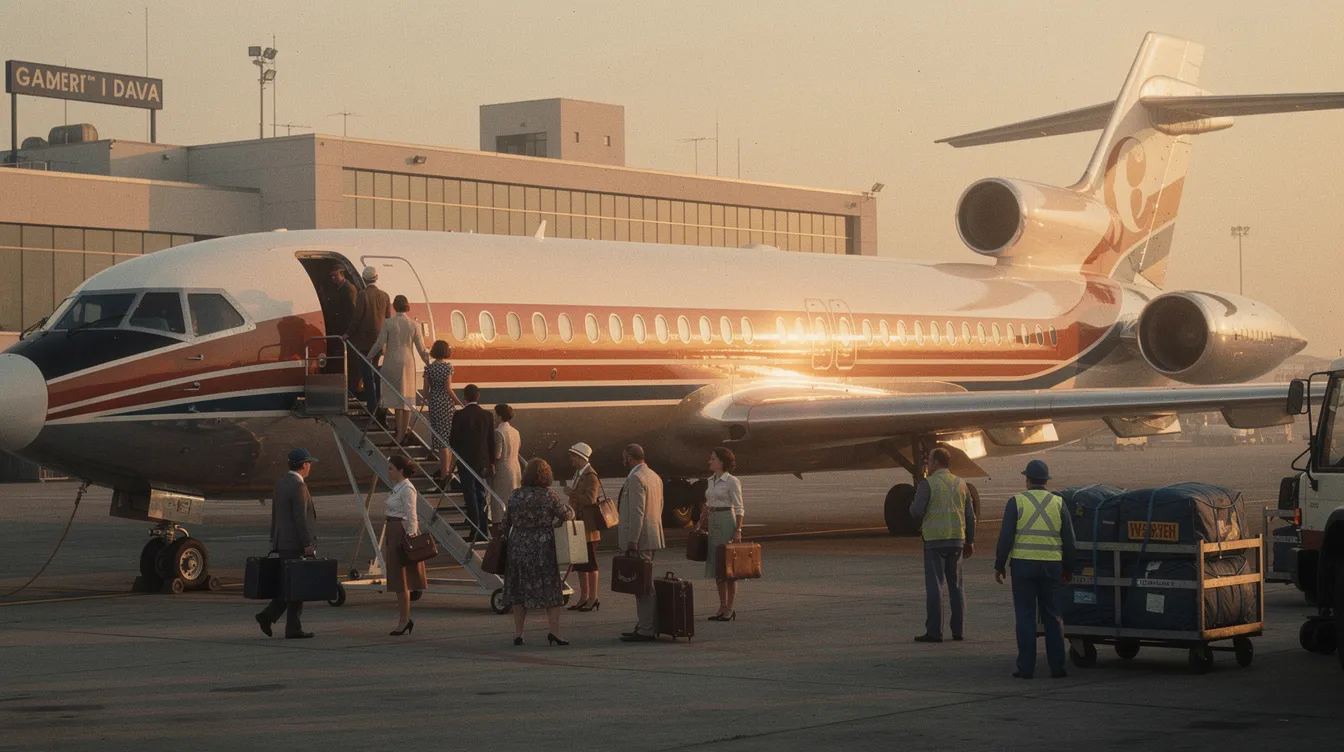
Throughout the 1970s and 1980s, the 747 became the workhorse of trans-Pacific services for companies like Japan Airlines and the backbone of European routes for British Airways and Lufthansa. Its four-engine design gave it the range and reliability to operate over water on routes where twin-engine jets were not yet permitted.
The jumbo jet democratized long-haul flight. But for today's high-net-worth travelers, the calculus has shifted. The experience of boarding a 400-seat plane through a crowded terminal contrasts sharply with stepping directly from car to cabin on a BlackJet-arranged private flight, or even buying a single seat on a private jet via shared and semi-private options — no queues, no connections, no compromise.
Decline of the Jumbo Jet in Commercial Fleets
The 747's dominance was never going to last forever. British Airways retired its 747 fleet in 2020, accelerated by the collapse in long-haul demand during COVID-19. Qantas followed suit the same year. Airlines across the globe concluded that four-engine jumbo jets could no longer compete economically with efficient twin-engine widebodies on most routes.
The final production 747 was delivered in January 2023 to Atlas Air, closing a manufacturing run that began in 1968. A limited number still fly as freighters, and select airlines like Lufthansa continue to operate the 747-8 on premium routes - but the era of the passenger jumbo jet is effectively over.
Rising fuel prices made the math unavoidable. Modern twin-engine long-haul jets like the Boeing 777 and Airbus A350 carry less fuel than the Boeing 747 yet deliver comparable or superior range with significantly lower operating cost per seat. The 747 redefined what "long-range" meant for air travel, but its legacy lives on in the efficient, purpose-built aircraft that replaced it — including the large-cabin private jets that now serve the world's most discerning travelers.
How BlackJet Clients Think About Range, Not Just Fuel Capacity
For a private traveler, the question isn't really "how much fuel does a 747 hold" — it's "how far can I go, and how comfortably?" BlackJet's Jet Card model, including the BlackJet 25+ Hour Jet Card for frequent flyers, abstracts away fuel calculations entirely. Members choose aircraft by range, cabin class, and mission profile, not by gallons.
Consider a few example itineraries:
New York to London: A large-cabin jet with roughly 6,000 gallons of fuel capacity handles this 3,000-nautical-mile route nonstop with reserves to spare — the same route that uses only half a 747's tanks but with a fraction of the boarding time and zero terminal congestion, especially when choosing from top 16-seat private jet options for group comfort.
Los Angeles to Honolulu: At about 2,200 nautical miles, a super-midsize jet with 3,000 gallons is more than sufficient. The traveler arrives at a smaller, more convenient airport rather than navigating a busy international hub, and larger parties can opt for private jets designed for around 20 passengers when group size or mission profile demands more capacity.
Intra-European or intra-US city pairs: Routes like Miami to New York or Paris to Geneva are ideal for light or midsize jets, where convenience, speed, and access to smaller airports closer to final destinations deliver value no jumbo jet can match, especially once you understand how much it costs to rent a private jet on these routes.
The strategic advantage is clear: private travelers skip the big-hub terminals that were designed for aircraft types like the 747 and operate from airports that put them minutes—not hours— from their destination.
Jet Cards, Budgeting, and Fuel Transparency
While 747 operators manage vast fuel budgets through complex hedging strategies, BlackJet's Jet Card members operate under a simpler model. Hourly rates are locked in at the time of purchase, already accounting for fuel costs and typical price volatility. This protects high-frequency travelers from sudden swings in jet fuel prices and makes annual travel budgeting straightforward, whether they're evaluating the cost of a 100-hour jet card program or other membership options.
BlackJet's platform provides clear trip cost estimates before every booking, including any fuel-related surcharges for unusual repositioning legs or remote fuel locations. There are no hidden add-ons buried in fine print, which is especially valuable when comparing options like 50-hour jet card costs and value across providers.
Contrast this with ad-hoc chartering, where fuel surcharges can appear after booking, or commercial airline tickets where fuel surcharges are separated from base fares and fluctuate quarterly. For travelers who fly dozens of hours per year, the predictability of a Jet Card isn't just convenient — it is a financial planning tool, especially once you understand how jet card pricing is structured and what drives total cost.
Sustainability in Private Aviation vs Massive Jumbo Jets
A single 747 long-haul flight can burn 25,000 to 30,000 gallons of fuel on a transatlantic crossing. Even when efficient per passenger, the total emissions footprint is substantial. When a jumbo jet operates at less than full capacity — as many did in the years before retirement — per-passenger emissions climb sharply.
Flying smaller, modern, fuel-efficient jets for right-sized groups can reduce total emissions compared to operating a partially full wide-body on the same route. A family of six heading from New York to London produces less total CO₂ on a green private jet carrying only their party than their proportional share of a half-empty 747, particularly when using the best jet cards for frequent flyers to reserve modern, fuel-efficient aircraft.
BlackJet's sustainability approach goes further. Every flight hour includes verified carbon offsets applied automatically — at no extra cost to the member. Where SAF is available at departure airports, it is utilized to reduce lifecycle emissions at the source. For travelers exploring the cheapest private jet options and more efficient aircraft types, this combination of right-sized aircraft selection, carbon offsets, and SAF adoption represents a more intentional approach to sustainable air travel than anything a legacy jumbo jet fleet could offer.
Frequently Asked Questions About 747 Fuel Capacity
How much fuel does a 747 hold in gallons and liters? It depends on the variant. The
The Boeing 747's fuel capacity is a marvel of engineering — a testament to what it takes to move hundreds of people across oceans without stopping. But for the modern traveler who values time, privacy, and precision, the real question is no longer about how many gallons fit in a jumbo jet's wings. It is about having access to the right aircraft, the right range, and the right experience for every journey.
Conclusion: The Legacy and Future of 747 Fuel Capacity in Luxury Travel
The Boeing 747's immense fuel capacity symbolizes a golden era of commercial aviation, enabling unprecedented long-range travel for hundreds of passengers at once. This engineering marvel made nonstop intercontinental flights routine and accessible, setting benchmarks in range, payload, and operational reliability. Yet, as aviation technology evolves, the 747's fuel demands and four-engine design have given way to more fuel-efficient, twin-engine modern aircraft that better align with today's economic and environmental priorities.
For discerning travelers and BlackJet members, the story of the 747's fuel capacity is more than just numbers. It represents the scale of commercial aviation's ambition and the contrast with the tailored, efficient, and flexible private jet experience. Today, private aviation delivers comparable range with far less fuel and emissions, without the compromises of crowded terminals or fixed schedules.
Understanding the 747's fuel systems, consumption, and operational context enriches appreciation for the technological advances that shape modern luxury air travel. BlackJet's Jet Card programs leverage these innovations, offering exclusive access to right-sized aircraft designed for comfort, efficiency, and sustainability.
As the jumbo jet era winds down, the legacy of the 747 lives on in the seamless, carbon-neutral private flights that define the future of premium travel. Whether crossing oceans or continents, the focus for the modern traveler is on range, reliability, and an elevated experience — all delivered without compromise.
Discover how BlackJet's Jet Card programs deliver intercontinental reach with none of the compromises, starting with premium private jet cards and membership options that simplify every aspect of flying private. Whether you're comparing Flexjet jet card costs and features, evaluating NetJets jet card pricing, or exploring large-group private jet solutions for up to 50 passengers, BlackJet also helps you benchmark the top private jet companies for luxury travel and service so you can choose the model that fits your missions best. Explore premium jet access today.


 Sign up with google
 Sign up with Apple