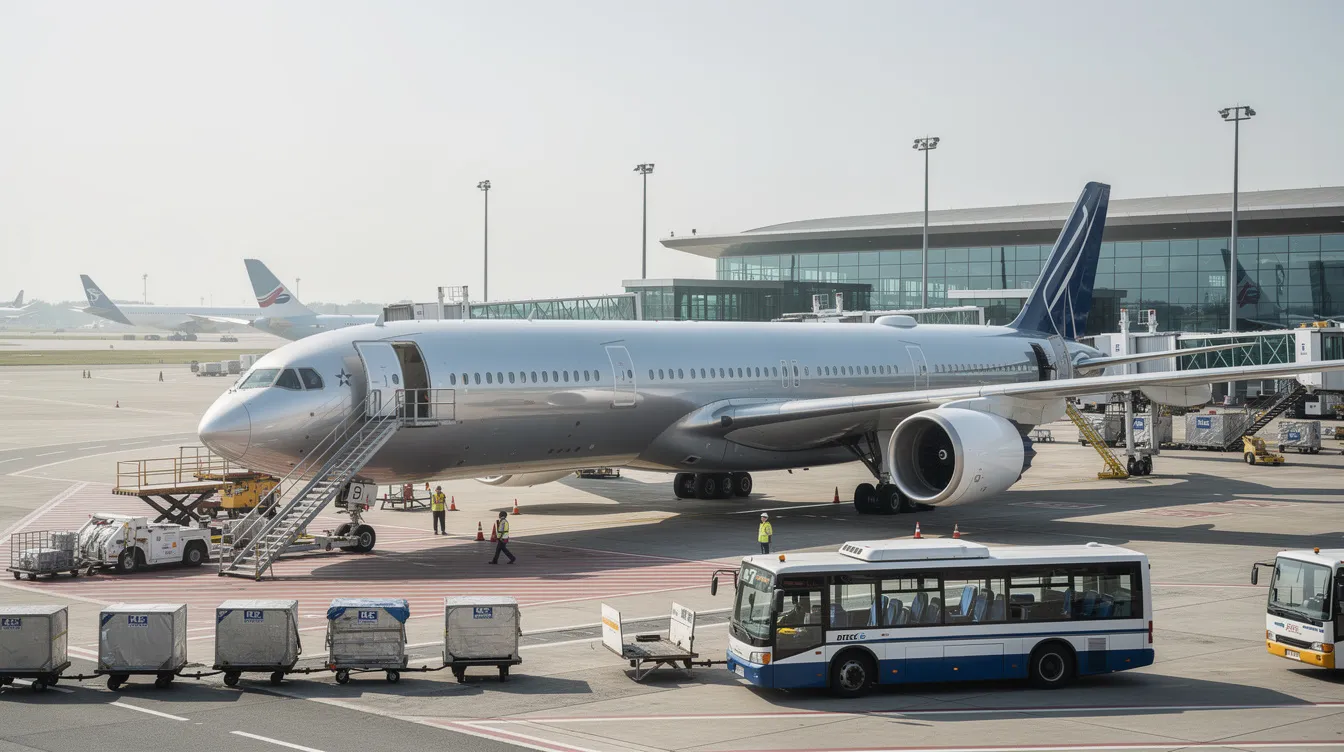
International airlines are major scheduled carriers such as Qatar Airways, Singapore Airlines, and Cathay Pacific, renowned for their extensive global networks, multiple cabin classes, and alliance connectivity across more than 1,000 destinations worldwide. This guide is designed for frequent international travelers, senior executives, and high-net-worth individuals seeking to optimize their global travel strategy. Understanding the evolving landscape of international airlines versus private jets is essential for those who value flexibility, privacy, and efficiency in their journeys.
Key Takeaways: Elevating Global Travel with International Airlines and Private Jets
International airlines provide extensive global networks, multiple cabin classes, and alliance connectivity, making them ideal for predictable schedules and economical travel on major routes.
Private jets, accessed via Jet Card programs like BlackJet’s, offer unmatched flexibility, privacy, and time savings, especially for complex, urgent, or multi-city itineraries.
Combining commercial flights with private jet legs unlocks seamless travel to secondary airports and remote destinations, reducing ground transfers and enhancing convenience.
Safety, certification, and sustainability are pillars in private aviation, with BlackJet ensuring carbon-neutral flights and rigorous operator audits for peace of mind.
For frequent international travelers, prepaid Jet Cards deliver predictable pricing, priority availability, and tailored aircraft options, transforming travel into a strategic advantage rather than a routine necessity.
Explore how integrating international airlines and private jet access can reshape your global travel experience—effortless, efficient, and exclusively yours.
Why International Airlines Are No Longer the Only Strategic Option
For travelers crossing routes like New York–London, Amsterdam–Bangkok, or Singapore–Zurich multiple times per year, the calculus has changed. A BlackJet private jet service Jet Card—prepaid flight hours across multiple aircraft categories—offers something airlines structurally cannot: complete control over schedule, routing, and privacy. This isn't merely luxury. It's a strategic upgrade for anyone whose time, confidentiality, and flexibility carry real value.
Consider the overhead. A typical transatlantic departure on a major airline involves 2–3 hours of check-in, security screening, and boarding before you reach your seat. A private jet departure through an FBO cuts that to 30–45 minutes. Over six round trips a year, that difference compounds into days recovered.
Key advantages of private access vs airlines:
Time saved: Eliminate terminal overhead and overnight layovers
Flexibility: Depart on your schedule, adjust plans same-day, land at secondary airports
Privacy: Exclusive cabin, private terminals, fewer touchpoints
Next, let's examine how international airlines continue to shape global travel today.
How International Airlines Shape Global Travel Today
Global Reach and Destinations
Commercial aviation's scale is undeniable. In 2025, global air passenger traffic grew 5.7% year-over-year, with international demand rising 7.1%. The worldwide fleet stood at approximately 35,550 aircraft, and the global private jet fleet alone accounts for roughly 23,000 aircraft. Airlines serve over 1,000 destinations worldwide. Turkish Airlines operates the largest country network in the world, spanning roughly 129 countries. KLM serves over 170 destinations globally, Air Canada serves more than 220 destinations, and EVA Air connects to over 60 destinations worldwide. Even a single hub like Dulles International Airport hosts over 50 airlines.
Cabin Classes and Alliances
Major airlines typically provide multiple cabin classes: Economy, Premium Economy, Business, and sometimes First Class. Cabin classes refer to the different levels of service and comfort offered on board, ranging from basic seating and amenities in Economy to luxurious suites and enhanced services in First Class. Many major airlines are members of the three major alliances—Star Alliance, SkyTeam, and oneworld—which enable seamless connectivity and coordinated schedules across partner airlines. Alliance membership allows travelers to benefit from shared lounges, coordinated baggage handling, and easier connections.
Market Performance and Recognition
Market capitalization data, available as of June 2026, shows airlines are ranked by market capitalization in the industry, and that figure reflects the financial performance of airlines across the world. Qatar Airways was named World's Best Airline 2025 by Skytrax, with Singapore Airlines and Cathay Pacific rounding out the top list.
What international airlines excel at:
Predictable schedules and daily frequency on flagship routes
Extensive hub-and-spoke networks connecting global continents
Tiered cabin classes and alliance connectivity
Economies of scale that keep per-seat prices competitive
Transitioning from the broad strengths of international airlines, let's explore when scheduled service makes sense and when private jets deliver superior value.
Direct Comparison: Main Features and Advantages of International Airlines
International airlines distinguish themselves by offering premium cabin luxuries, such as lie-flat seats, private suites, and gourmet dining, especially in Business and First Class. They focus on connecting global continents through vast hub-and-spoke networks, ensuring travelers can reach over 1,000 destinations worldwide. Ticket price, including hidden fees and variable baggage policies, is a top priority for travelers and can significantly affect total trip costs.
Personalized amenities—such as tailored meal options, amenity kits, and in-flight entertainment—are key factors in differentiating airline services. Asian carriers often excel in personalized service and hospitality, while Middle Eastern carriers focus on luxury, including premium business and first-class products. Safety records and punctuality are crucial factors for travelers when selecting airlines, and direct flights are generally more reliable and faster than itineraries with layovers.
Major airlines typically provide multiple cabin classes: Economy, Premium Economy, Business, and sometimes First Class, catering to a range of budgets and comfort preferences. Many major airlines are members of the three major alliances: Star Alliance, SkyTeam, and oneworld, which facilitate seamless global connectivity and shared benefits. Frequent-flyer programs allow passengers to earn and redeem miles for flights and upgrades, adding value for loyal customers.
Customer service is vital during delays or cancellations, and comfort on long-haul flights is determined by factors like seat pitch and cabin layout. Airline service quality can vary significantly across different routes and aircraft types, so experiences may differ even within the same airline. Regional strengths are notable: Asian carriers are renowned for hospitality, while Middle Eastern airlines set benchmarks in luxury. Airlines like Turkish Airlines, KLM, Air Canada, and EVA Air exemplify global reach, serving hundreds of destinations and offering robust frequent-flyer programs.
With these features in mind, travelers can better assess when international airlines are the optimal choice and when private aviation may offer greater advantages.
When International Airlines Make Sense – And When Private Jets Win
A Qatar Airways business class fare from Amsterdam to Bangkok runs approximately EUR 843.07 for an adult round trip. That's compelling when schedules align, and the destination is a major hub. But when travel becomes complex—multi-city, time-sensitive, or off the beaten path—different types of private jets give you options in range, cabin size, and access that airlines can’t match, so private aviation wins decisively.
Example fare comparisons from Amsterdam:
Destination | Round-Trip Fare (EUR, per adult) |
|---|
Koh Samui | 1,178.68 |
Phuket | 1,420.24 |
Taipei | 1,199.12 |
Hanoi | 1,078.62 |
Scenario 1: Board meeting circuit. An executive needs New York–London–Frankfurt within 36–48 hours. Airline timetables force overnight stays and connection risks. A BlackJet-arranged trip eliminates layovers and lands at airports minutes from each meeting.
Scenario 2: Family holiday from the Netherlands. These fares get you to the origin hub, but onward connections to islands or remote resorts add hours of ground travel, which is where buying a seat on a private jet can compress the journey dramatically. Private jets can fly internationally to smaller airstrips that airlines simply don't reach.
Scenario 3: Same-day deal negotiation. A one-way turnaround from London to Riyadh and back doesn't fit standard airline schedules. Private aviation makes it routine.
Top international airlines prioritize ticket price, including hidden fees, when choosing an airline, but booking options and baggage policies can vary widely among airlines, affecting total trip costs. Safety records and punctuality are crucial factors for travelers when selecting airlines. Direct flights are more reliable and faster than layovers, yet airlines rarely offer non-stop service on secondary routes.
Airlines remain optimal for leisure travelers whose schedules align with published timetables. BlackJet becomes more compelling as frequency, complexity, and urgency increase.
To better understand the in-flight experience, let's compare the cabins, classes, and service of international airlines with the private jet experience.
Inside International Airlines: Cabins, Classes, and Service vs Private Jet Experience
Premium Cabin Luxuries and Personalized Amenities
Major international airlines distinguish themselves by offering premium cabin luxuries—Qatar Airways' Qsuite, Singapore Airlines Suites on the A380, Cathay Pacific's new Aria Suite. Personalized amenities are key factors in differentiating airline services, with Asian carriers often excelling in personalized service and hospitality, and Middle Eastern carriers focusing on luxury, including premium business and first-class products.
Cabin Classes and Service Quality
Major airlines typically provide multiple cabin classes: Economy, Premium Economy, Business, and sometimes First Class. Comfort on long-haul flights is determined by factors like seat pitch and cabin layout, and personalized amenities are key factors in differentiating airline services. Airline service quality can vary significantly across different routes and aircraft types, and what you find on a brand's flagship route may differ sharply from a secondary sector.
Private Jet Experience
BlackJet structures access differently—by aircraft category rather than seat class, including 16-seat private jet options for larger groups:
Light jets for regional hops: Paris–Geneva, New York–Toronto
Midsize jets for 4–5-hour legs: Dubai–Athens, Los Angeles–Chicago
Long-range private jets (super-midsize and large-cabin) for international routes: New York–London, Miami–São Paulo, London–Dubai
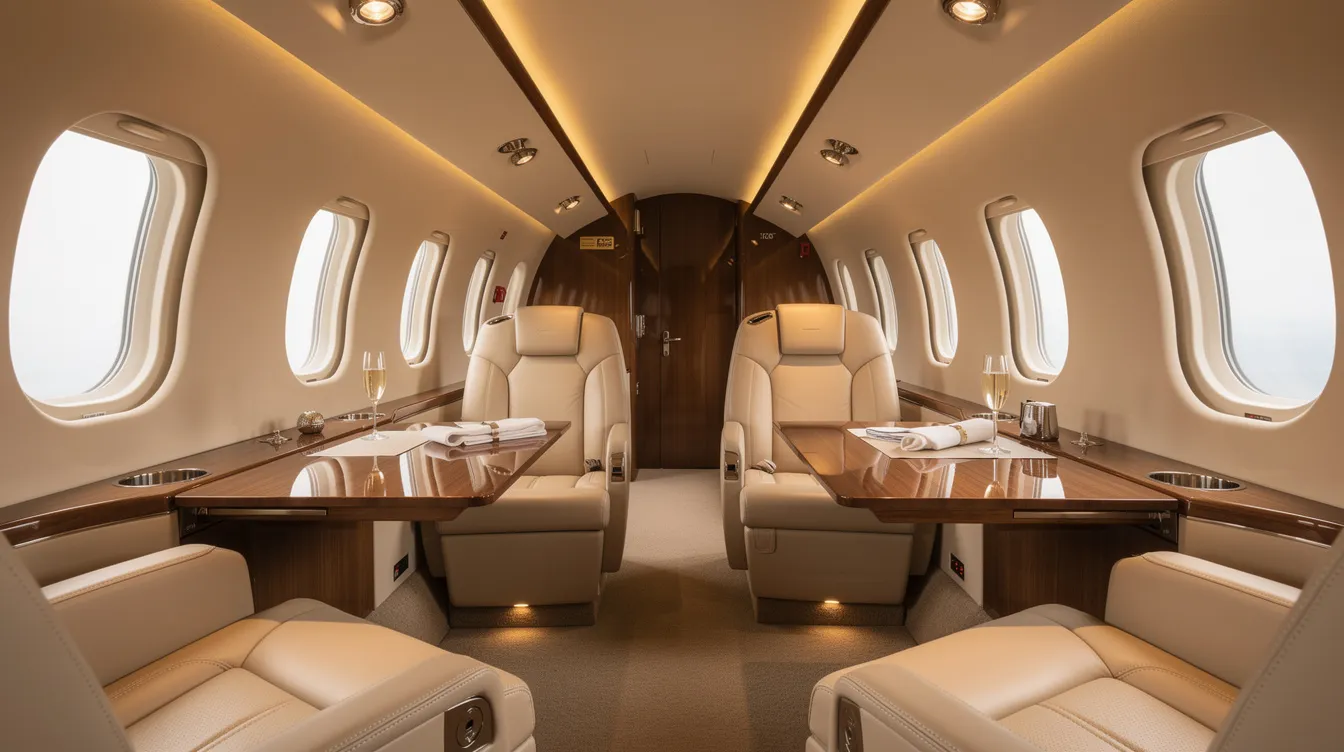
Where airlines offer standardized meals and dozens of premium-cabin passengers sharing a cabin, BlackJet delivers bespoke catering, a cabin configured for a single party, and the ability to hold confidential discussions or work uninterrupted throughout the flight, with access to large private jets for up to 50 passengers when group size demands it.
With a clear understanding of the in-flight experience, let's look at how Jet Cards and private aviation offer a global alternative to international airlines.
Jet Cards and Private Aviation as a Global Alternative to International Airlines
What Is a Jet Card?
A Jet Card is a prepaid membership that gives you access to private aviation without owning an aircraft, and a detailed guide to Jet Card costs helps clarify how pricing and value compare to buying individual charters or airline tickets. You book prepaid hours—typically in 25-hour Jet Card programs or 50-hour programs—across multiple aircraft categories for flights between global cities.
Predictable Pricing and Flexibility
Example: A BlackJet member flying New York–London six times annually, plus regional European and US trips, might select a 50-hour Jet Card to lock in predictable access and pricing. Heavy-jet hourly rates for transatlantic legs range from approximately US$12,000–$20,000 per hour; midsize rates for regional flights run US$5,000–$8,000 per hour, and understanding Jet Card cost per hour is essential to comparing these figures with premium airline cabins. Compared to repeatedly purchasing business-class airline tickets at fluctuating prices, the Jet Card delivers predictable costing and priority scheduling—especially on peak-date travel- and the best Jet Card programs for frequent flyers are designed around that need for reliability.
Safety, Service, and Sustainability
Customer service is vital during delays or cancellations. BlackJet provides 24/7 real-time support and digital booking tools that let you book a private jet with instant quotes for routes like London–Dubai or Zurich–Riyadh, underpinned by transparent Jet Card pricing structures that spell out hourly rates and fees in advance.
Safety is non-negotiable. BlackJet uses audited operators verified through third-party ratings from bodies like ARGUS, Wyvern, and 4AIR. For oceanic and polar routes, additional certifications, including ETOPS ratings and crew experience thresholds, are included. BlackJet ensures every journey is carbon neutral through verified offset programs calculated per tonne of CO₂ based on aircraft type and route length, at no extra cost to you, while also advising on the cheapest private aircraft and access models for travelers focused on budget efficiency as well as sustainability.
Why frequent international flyers choose a Jet Card over relying solely on airlines:
Predictable hourly rates vs volatile fare spikes, underpinned by a clear understanding of Jet Card cost per hour and the broader private jet price list
Aircraft flexibility across light, midsize, and heavy categories, ranging from ultra-luxury cabins to the cheapest private jet options that still outperform airlines on time and access
Priority availability on peak travel days, which becomes especially compelling at 100-hour Jet Card commitment levels for ultra-frequent international flyers
Transparent safety auditing and sustainability standards, plus emerging unlimited private jet membership models for those whose usage goes beyond traditional hourly blocks
With Jet Cards and private aviation explained, let's see how combining these options with international airlines can maximize your travel advantage.
Planning International Itineraries: Combining Airlines and BlackJet for Maximum Advantage
The most sophisticated travelers don't choose between airlines and private jets—they combine both. In China, the Middle East, and Southeast Asia, secondary airports often sit closer to the actual destination than the international hub.
Mixed itinerary 1: Fly commercial from New York to Doha on Qatar Airways. Then use a BlackJet-arranged private jet from Doha to smaller Gulf cities, oil hubs, private meetings, and locations not found on any airline's published page.
Mixed itinerary 2: Take a top-rated airline from Amsterdam to Bangkok. From Bangkok, a BlackJet light jet reaches Koh Samui, Krabi, or private islands via smaller airstrips, eliminating hours of ground and ferry transfers. Understanding how private jets clear customs at these secondary airports makes the process seamless.
Practical considerations:
Build buffer time between airline arrivals and private departures to account for delays
Use private terminals (FBOs) near major hubs—London Luton, Teterboro for the NYC area, Paris Le Bourget, or regional gateways like private jet charters in Karachi—to reduce ground transfer times.
Coordinate with BlackJet's support team on permit clearance and crew positioning for the international leg.
The most effective international travel strategy isn't choosing between airlines and private jets. It's knowing when to deploy each. When you're ready to reshape your international travel beyond what airline schedules alone can offer, explore how a BlackJet Jet Card membership can elevate every journey—on your terms.
Frequently Asked Questions About International Airlines and Private Jets
Q1: What are the main differences between international airlines and private jets?
International airlines operate scheduled flights with multiple cabin classes and extensive global networks, ideal for predictable travel and economies of scale. Private jets offer unmatched flexibility, privacy, and time savings, especially for complex or urgent itineraries, with access to secondary airports and bespoke services.
Q2: How do Jet Cards work for international travelers?
Jet Cards are prepaid memberships granting access to private jets across various aircraft categories. They provide predictable hourly rates, priority availability, and flexible scheduling, making them ideal for frequent international travelers seeking control beyond commercial airline schedules.
Q3: Can private jets fly internationally?
Yes, private jets can operate international flights, including to smaller or remote airports that commercial airlines don’t serve. BlackJet ensures all international private flights comply with safety and regulatory standards, including customs and border clearance.
Q4: How does safety compare between international airlines and private jet operators?
Both international airlines and reputable private jet operators adhere to strict safety standards. BlackJet partners exclusively with audited operators certified by third-party bodies like ARGUS and Wyvern, ensuring rigorous safety protocols on every flight.
Q5: Are private jet flights carbon neutral?
BlackJet guarantees every private jet journey is carbon neutral through verified offset programs calculated based on aircraft type and flight distance, at no additional cost to the traveler, supporting sustainable aviation practices.
Q6: How can combining international airlines with private jets enhance travel?
Combining commercial flights with private jet legs enables seamless access to secondary airports closer to final destinations, reduces ground transfer times, and offers greater itinerary flexibility, especially for multi-city or remote travel.
Q7: What should travelers consider when booking mixed itineraries?
Travelers should build buffer time between commercial and private flights, use private terminals near major hubs to minimize transfers, and coordinate with support teams for permits and crew logistics to ensure smooth connections.
Q8: What types of private jets are available for international travel?
Private jets range from light jets for short regional hops to long-range heavy jets capable of transcontinental flights. BlackJet offers access to multiple categories tailored to trip length, passenger count, and comfort preferences.
Conclusion: Elevate Your Global Travel with Strategic Private Jet Access
In today’s fast-evolving international travel landscape, relying solely on scheduled airlines limits flexibility, privacy, and time efficiency. For high-net-worth individuals and frequent global travelers, integrating private jets through Jet Card programs like BlackJet’s transforms travel from a routine necessity into a strategic advantage. By combining the extensive networks and economies of scale of international airlines with the bespoke convenience, safety, and sustainability of private aviation, you unlock seamless journeys tailored to your unique needs.
Whether navigating complex multi-city business trips, escaping to remote leisure destinations, or securing last-minute travel, private jets offer unparalleled control over your schedule and environment. BlackJet’s commitment to rigorous certification, carbon-neutral flights, and 24/7 personalized support ensures every journey is not only premier but responsible and secure.
Discover how blending international airlines with BlackJet’s private jet access can redefine your global travel experience—effortless, exclusive, and precisely on your terms. Explore premium jet access today and elevate every flight into an opportunity for efficiency, comfort, and distinction.


 Sign up with google
 Sign up with Apple