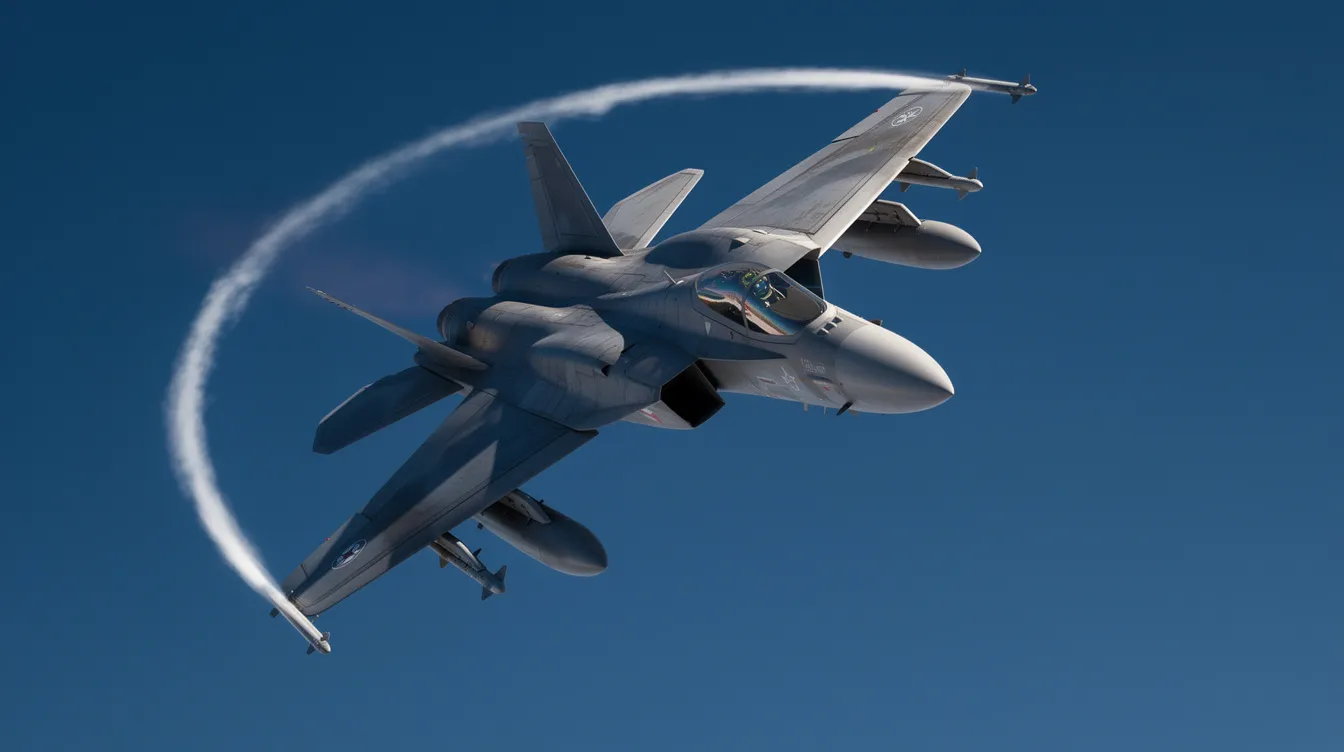
Military Fighter Airplane: Power, Technology, and How They Differ from Private Jets
A military fighter airplane is a high-performance combat aircraft built for air superiority, precision strikes, and threat interception, with extreme speed, maneuverability, and advanced avionics at the center of its design. Single- or twin-engine, these aircraft are engineered for rapid climb, violent maneuvering, and survival in contested airspace, and while they began as air-to-air platforms, modern fighters now operate across a much broader mission set.
For frequent business travelers, high-net-worth leisure flyers, and BlackJet members who want to understand the aviation technology behind the aircraft they choose, fighter jets offer a useful benchmark. This guide looks at the main types and generations of military fighter airplanes, the technology and performance that define them, the roles they serve, how military operations differ from private jet operations, and where fighter-era innovations show up in business aviation, including safety systems and cockpit technology.
Fighter jets represent the absolute cutting edge of aerospace technology. Every generation pushes the boundaries of what materials can withstand, what radars can detect, and what a human pilot can endure. The engineering that goes into a single airframe—stealth coatings, sensor fusion, thrust-vectoring nozzles—often costs billions in research before a prototype ever leaves the ground. These are machines where every gram of weight and every square centimeter of surface area is optimized for survival in contested airspace.
Private jets occupy the opposite end of the spectrum. Aircraft in the BlackJet network, for example, optimize for range, cabin comfort, efficiency, schedule flexibility, and civilian safety standards rather than weapons systems or extreme maneuvering. The goal is not to outrun a missile but to deliver a passenger from New York to London in seamless comfort, on their timeline, with minimal friction.
Consider the contrast. A Eurofighter Typhoon on quick reaction alert scrambles from base, fully armed with radar-guided missiles, accelerating supersonically toward an unidentified aircraft. The pilot endures crushing G-forces in a single-seat cockpit. The entire sortie might last 45 minutes. Meanwhile, a BlackJet member boards a large-cabin private jet for a transatlantic business mission—pre-booked, non-stop, full cabin service, arriving rested and productive after six or seven hours in the air, or may even charter a large private jet for 20 passengers when traveling with a full team. Two entirely different worlds of aviation, shaped by the same fundamental physics.
That contrast is exactly why the subject is relevant to discerning private aviation travelers. Understanding military fighter airplanes gives you sharper context for the engineering, safety protocols, avionics, and materials that migrated into private jets over time, helping explain the precision, reliability, and confidence travelers expect from services like BlackJet.
Key Takeaways
Military fighter airplanes are engineered for extreme speed, maneuverability, and advanced avionics to dominate airspace and perform multiple combat roles, including air superiority, interception, and ground attack.
Modern fighters such as the Eurofighter Typhoon, Dassault Rafale, and Saab Gripen E showcase cutting-edge technology like AESA radars, sensor fusion, and stealth capabilities, just as the newest private jets showcase parallel advances in civil aviation.
5th-generation fighters like the F-22 Raptor and F-35 Lightning II emphasize stealth, supercruise, and integrated sensor networks for superior survivability and situational awareness.
Many innovations from military aviation, including fly-by-wire controls and glass cockpits, have migrated into private jets, enhancing safety and pilot situational awareness.
Private jets, such as those accessible through BlackJet’s Jet Card programs, prioritize passenger comfort, range, and schedule flexibility rather than combat performance, and travelers often evaluate jet card cost per hour to balance flexibility with budget.
BlackJet ensures carbon-neutral private jet flights supported by digital booking tools and real-time operational precision, reflecting a modern approach to sustainable luxury travel that aligns with more affordable private jet options entering the market.
The logistics and operational discipline of military aviation find parallels in private jet charter services and the best jet card programs for frequent flyers, emphasizing readiness, coordination, and reliability.
Understanding military fighter technology offers valuable insight into the engineering and safety standards that underpin premier private jet experiences.
Explore BlackJet's Jet Card membership and discover how premier private jet access can reshape the way you travel. No ownership burden. No compromise on safety or comfort. Just seamless, elevated flight.
Key Types of Modern Military Aircraft Fighter Airplanes
Today's fighters are overwhelmingly "multi-role" platforms. The era of a single-purpose interceptor or dedicated bomber escort is largely over. Multirole fighters can perform both air-to-air and air-to-ground missions, shifting between roles with a change of payload and software configuration. Military fighters are categorized based on their mission, design philosophy, and performance envelope—and the distinctions between generations reveal how rapidly this technology evolves.
4th and 4.5-Generation Fighters
These warplanes defined air power from the late Cold War through today and remain the backbone of most air forces across the world. 4th generation fighters are characterized by high performance and maneuverability, with fly-by-wire controls, beyond-visual-range missile capability, and increasingly sophisticated avionics.
Dassault Rafale (France)
First operational in the early 2000s; in service with France, India, Egypt, Greece, Croatia, and Qatar
The Dassault Rafale features an advanced radar system—the RBE2 AESA—providing multi-target tracking and resistance to electronic jamming
The Rafale can carry long-range air-to-air missiles, including MICA and Meteor, giving it lethal reach well beyond visual range
Carrier-based fighters are modified for operations on aircraft carriers, and the Rafale M variant is a prime example, serving aboard the French Navy's Charles de Gaulle
Maximum speed approximately Mach 1.8; limit load factors of +9 / −3.2 g; maximum takeoff weight around 24.5 metric tons
France has deployed the Rafale in expeditionary operations across the Middle East and Africa
Eurofighter Typhoon (Germany, Italy, Spain, UK)
The Eurofighter Typhoon entered service in 2003 and has since become one of Europe's premier combat platforms
Renowned for agility thanks to its delta-canard configuration and low wing loading, the Eurofighter Typhoon has a high thrust-to-weight ratio courtesy of twin Eurojet EJ200 engines
Capable of carrying Meteor and AMRAAM missiles; operated by air forces in Europe, the Middle East, and beyond
Top speed around Mach 1.6 with afterburner; service ceiling approximately 55,000 feet
Payload determines how many weapons and other stores a fighter can carry, and the Typhoon's thirteen hardpoints allow a flexible mix of ordnance for diverse missions
Saab Gripen E/F (Sweden, Brazil)
Focused on digital architecture and software-driven upgrades, making it one of the most future-proof platforms in production
The Saab Gripen E has a modern cockpit display built around a wide-area touchscreen, reducing pilot workload and improving situational awareness
The Saab Gripen E has a high degree of sensor fusion, integrating radar, infrared search and track, and electronic warfare data into a single tactical picture
The Gripen E can share sensor data within tactical air units via advanced datalinks, enabling networked combat operations
Lower acquisition and operating costs compared to Rafale and Typhoon, with flyaway costs around US$85 million versus US$115 million for the Rafale
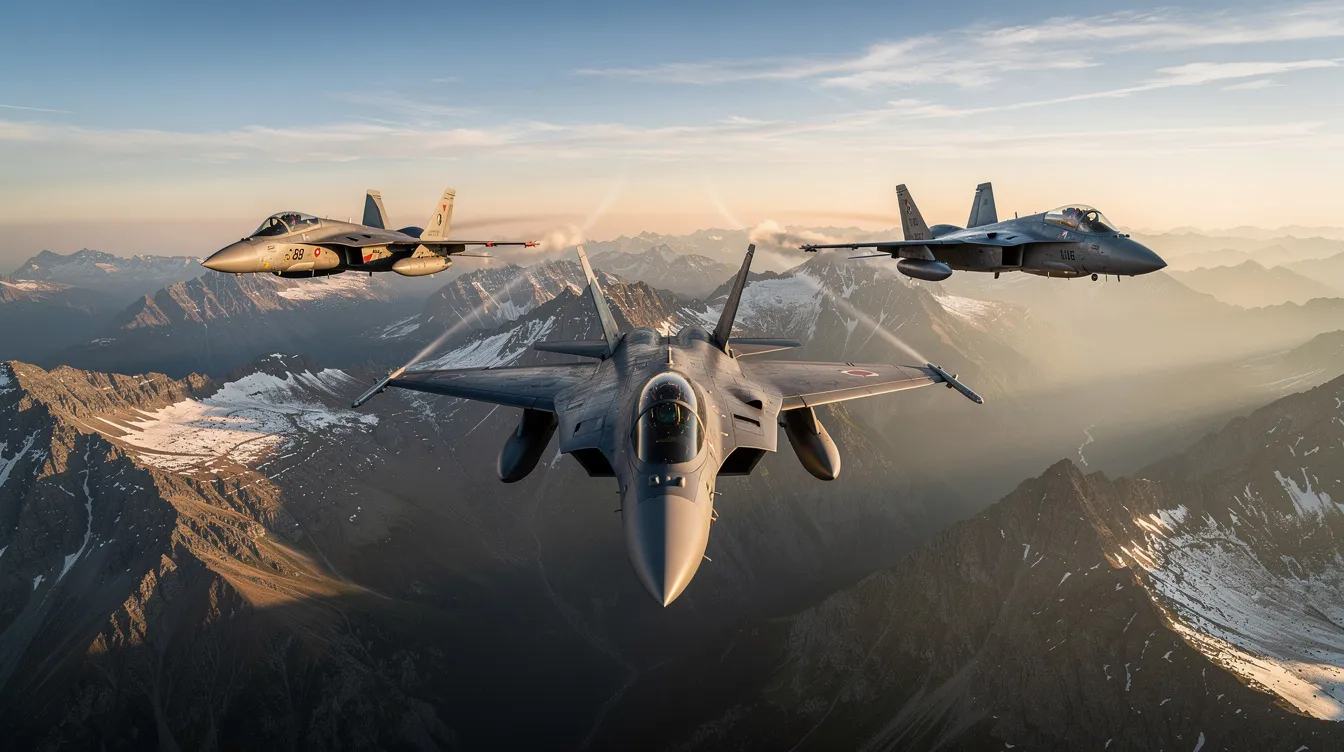
5th-Generation Stealth Fighters
5th generation fighters incorporate stealth features and advanced sensor capabilities, representing a generational leap in survivability and information dominance. For readers curious about the top fighter jets in US service, these two platforms define the category.
Lockheed Martin F-22 Raptor - Operational since the mid-2000s, optimized for air superiority and stealth. Air superiority fighters are built to dominate airspace by destroying enemy aircraft, and the F-22 was designed from the ground up for that purpose. Twin Pratt & Whitney F119 engines enable supercruise above Mach 1.5 and a top speed exceeding Mach 2 with afterburners. Service ceiling above 50,000 feet; thrust-vectoring nozzles provide extreme agility.
Lockheed Martin F-35 Lightning II - A multi-role stealth fighter with first deliveries in the mid-2010s, now in service with multiple NATO and allied nations. Emphasis on low observability, integrated sensors (Distributed Aperture System, electro-optical targeting), and the ability to network with other platforms across the battlespace.
Operational Roles at a Glance
Air superiority – Gaining and maintaining control of the skies; the F-22's primary mission
Interception – Intercepting enemy aircraft involves quickly scrambling to stop incoming threats; the Typhoon frequently performs Quick Reaction Alert duties over NATO airspace
Close air support – Military fighter jets can execute close air support and strike missions against ground targets, providing direct firepower for troops on the ground
Deep strike – Penetrating hostile territory to deliver precision ordnance; the Rafale and F-35 excel in this role
Reconnaissance – Using advanced sensors and pods to gather intelligence across air, sea, and land domains
Technology, Performance, and Safety in Fighter Jets
Fighter aircraft prioritize speed and maneuverability to achieve air superiority, and the technologies required to deliver that performance sit at the absolute frontier of aerospace engineering. Many of these innovations—fly-by-wire controls, composite materials, sensor integration—eventually migrate into civil and private aviation, improving safety and capability for every passenger who steps aboard a modern business jet.
Performance by the Numbers
Key statistics for modern fighter jets:
Top Speeds:
Dassault Rafale: Mach 1.8
Saab Gripen E: Mach 2.0 (clean configuration)
F-22 Raptor: Supercruise above Mach 1.5 (without afterburners), top speed exceeding Mach 2 (with afterburners)
G-Loads:
Pilots routinely sustain 7–9 g in air combat maneuvering
Structural limits: +9 g on platforms like the Rafale and Typhoon
Private jet passengers: 1.2–1.5 g during a normal turn
Runway Requirements:
Onboard Systems and Avionics
Modern fighter jets are equipped with advanced avionics and radar systems for target detection. Key systems include:
AESA Radars:
Rafale's RBE2 AESA radar provides simultaneous air-to-air and air-to-ground tracking with high resistance to jamming
Typhoon's Captor-E and Gripen E's RAVEN ES-05 deliver similar multi-mode search capabilities
Saab GlobalEye AEW&C platform offers 360-degree situational awareness with detection ranges exceeding 350 nautical miles
Sensor Fusion:
Advanced avionics improve situational awareness through sensor fusion and data integration
F-35 combines radar, infrared search and track, distributed aperture cameras, and datalink information into a single tactical picture
Gripen E achieves a similar effect through its integrated architecture
Defensive Aids:
Rafale's SPECTRA suite includes radar warning receivers, missile approach warning, active jamming, and decoy dispensers
Stealth technology helps fighters minimize radar detection by absorbing or deflecting radar signals
Non-stealth platforms rely heavily on electronic warfare to survive
Targeting:
How This Connects to Private Aviation
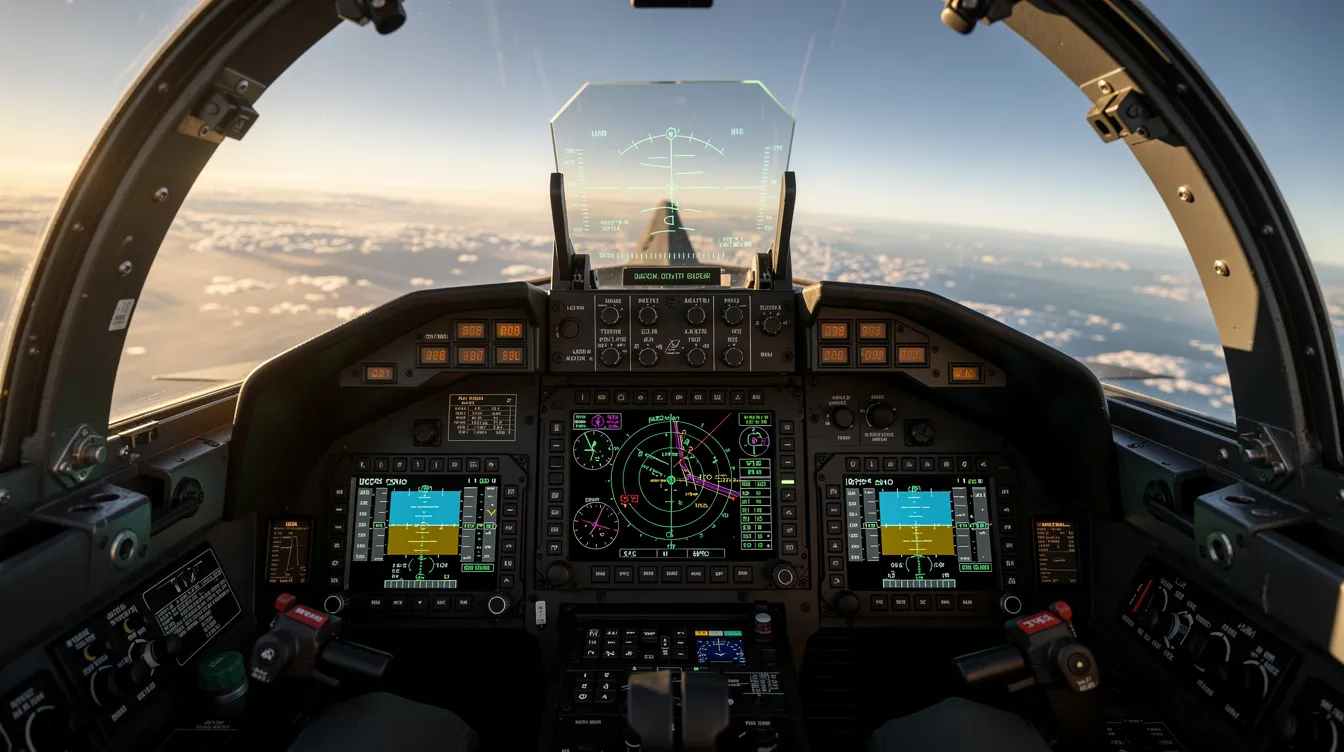
The glass cockpits and fly-by-wire flight controls tested in fighters like the F-16 and F/A-18 paved the way for the highly automated, safer cockpits found in modern business jets. When you step into a private jet today, the multifunction displays, digital flight management systems, and stability augmentation all trace their lineage back to military R&D programs.
Private jets in BlackJet's network are certified to rigorous civil safety standards under FAA Part 135 and EASA regulations rather than military combat standards. But they benefit indirectly from decades of military innovation in avionics, navigation, and materials science. Fighter jets serve critical defense roles by intercepting enemy aircraft and missiles—private jets serve a different purpose entirely, but the engineering discipline is shared.
Safety Culture
Fighter operations accept higher inherent mission risk—low-level flight, combat, extreme maneuvering—but they operate within strict training, maintenance, and checklist disciplines. According to McKinsey research, military aircraft average 40–50 days per year in scheduled maintenance plus 30–40 days of unscheduled maintenance, compared to 25–35 scheduled and 10–20 unscheduled days for commercial aircraft. That intensity reflects the demands of high-performance flight envelopes.
BlackJet mirrors this discipline—without the combat risk—through its insistence on audited operators, rigorous maintenance standards, and experienced flight crews. The same culture of checklists, recurrent simulator training, and proactive safety management that keeps fighter pilots alive keeps private jet passengers secure.
Fighter Aircraft Logistics vs. Private Jet Operations
Behind the drama of air combat, modern air forces rely on complex logistical aircraft—tankers, trainers, and airborne early warning platforms—that quietly resemble and sometimes share airframes with large business jets. This intersection of military logistics and civil aviation design is one of the most fascinating and least discussed aspects of the aerospace history connecting both worlds.
Support Aircraft That Bridge the Gap
Airbus A330 MRTT (Multi Role Tanker Transport)
Based on the civil Airbus A330 airliner, adapted for military refueling and transport
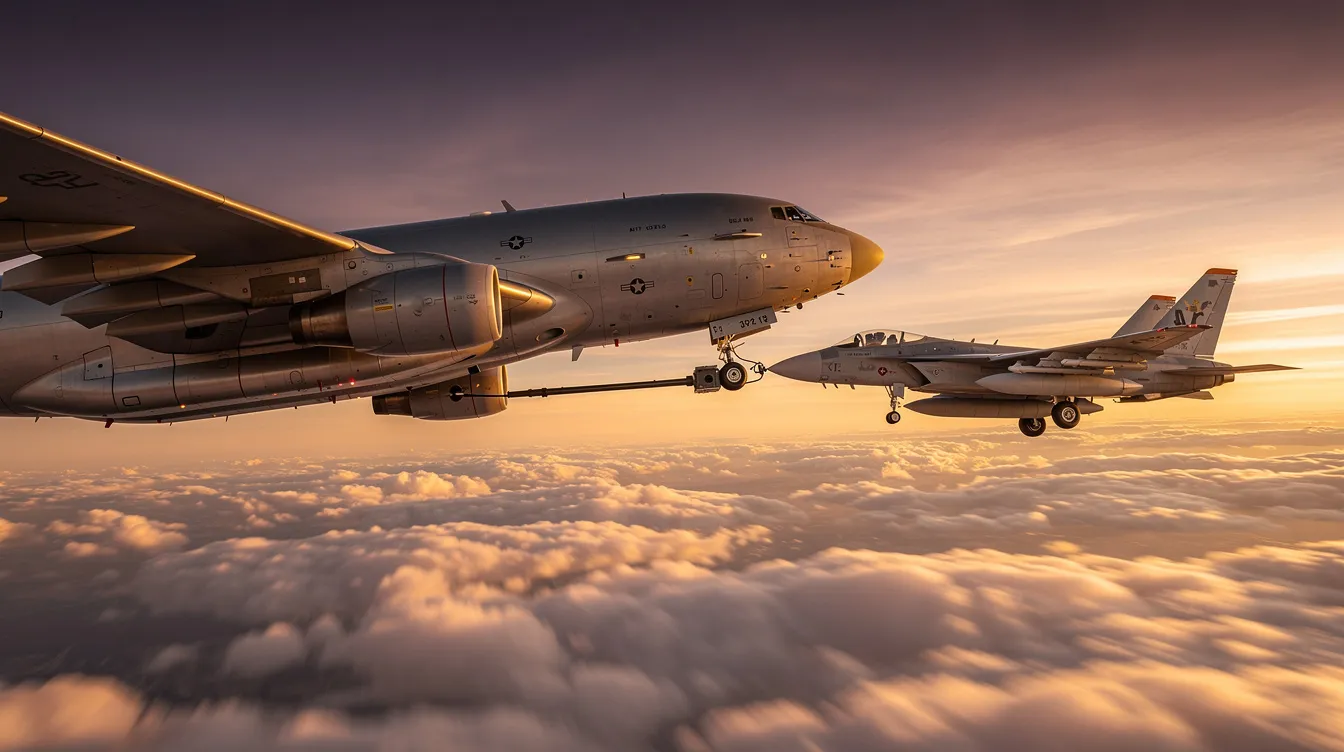
The Airbus A330 MRTT can carry 111,000 kg of fuel for aerial refueling operations, extending the reach of fighters like the Typhoon and Rafale across entire continents
It is simultaneously capable of transporting up to 300 troops or 130 medical evacuees
Ferry range up to 8,700 nautical miles; maximum takeoff weight approximately 233,000 kg
Operated by Australia, the UK, France, Saudi Arabia, and over a dozen other nations
Saab GlobalEye AEW&C
The mission system is mounted on a Bombardier Global 6000 airframe—a close cousin of popular long-range business jets you might find if you search through any major private aviation fleet or among the most expensive private jet options favored by ultra-high-net-worth travelers
Endurance up to 12 hours; detection ranges exceeding 350 nautical miles in certain modes via the Erieye ER AESA radar
The cabin accommodates mission crew at workstations that resemble a corporate office more than a combat cockpit
Advanced Trainers
Before a pilot ever climbs into a Typhoon or Rafale cockpit, they spend hundreds of hours in trainers designed to bridge basic flight training and fast-jet operations.
Pilatus PC-21 - A turboprop trainer with over 250 units sold globally; lower fuel burn than jet trainers while preparing pilots for high-G, high-speed combat environments
Leonardo M-346 - The Leonardo M-346 is considered one of the best advanced trainers in the world, featuring embedded simulation systems and a digital cockpit that mirrors frontline fighters. The Leonardo M-346 has seven external hard points for weapons, giving it secondary light combat capability. It is in service with Italy, Israel, Poland, Singapore, Qatar, and Greece.
Comparing Military Logistics to BlackJet Operations
The parallels are more striking than they first appear. Mission planning, aircraft availability, and crew scheduling in an air force mirror how BlackJet coordinates private jet charter and Jet Card flights across multiple aircraft categories, whether arranging a full-aircraft mission or helping a traveler buy a seat on a private jet.
Militaries optimize for readiness and combat capacity – Every aircraft must be mission-capable within defined alert windows; fuel, spares, and trained crews must be forward-staged
BlackJet optimizes for traveler convenience, schedule assurance, and personalized routing – Guaranteed availability windows, repositioning efficiency, and cabin class selection replace weapons loadouts and threat assessments
Consider the comparison: aerial refueling from an A330 MRTT extending a Typhoon's reach on a transcontinental sortie versus a BlackJet member booking a non-stop, carbon-neutral private flight on a long-range jet across the Atlantic via a mobile platform. Both require precision logistics. Both demand real-time coordination, whether you are orchestrating a multinational fighter deployment or planning a private jet charter from Karachi. The difference is that one ends in a combat air patrol and the other ends with you stepping onto the ground at your destination, rested and ready.
From Military Innovation to Private Jet Experience with BlackJet
Innovations tested in the most demanding military environments—advanced materials, avionics architectures, human-machine interfaces, and safety protocols—eventually benefit discerning travelers through more capable, reliable private jets. The wing designs, composite structures, and navigation systems refined across generations of fighter development form an invisible but essential foundation beneath every modern business jet flight.
Engineering Heritage in the Cabin
Many business jets are built by manufacturers with deep military portfolios. Dassault produces both the Rafale and the Falcon family of business jets, several of which appear among premium private jets for sale in the UK. Airbus builds the A330 MRTT and the ACJ corporate jet line. Bombardier's Global platform serves as both an ultra-long-range business jet and the foundation for Saab's GlobalEye military surveillance aircraft, and similar ultra-large platforms underpin private jets for up to 50 passengers used for group missions and VIP delegations. This cross-pollination is not incidental—it ensures that battle-tested engineering philosophies flow directly into the cabin you fly in.
BlackJet insists on operators that adopt advanced safety management systems and modern cockpit technology derived, in part, from these military practices. Every operator in the network meets stringent safety certification standards, including ARGUS ratings and rigorous maintenance audit protocols.
BlackJet's Jet Card Model
BlackJet's Jet Card programs—available in 25-hour and 50-hour increments—provide prepaid access to multiple cabin classes (light, midsize, super-midsize, large-cabin) without the capital burden of owning a jet or the rigidity of a single-aircraft solution, aligning closely with how travelers evaluate 50-hour jet card cost and value.
Here is what that looks like in practice: a client who appreciates the precision engineering of aircraft like the Dassault Rafale chooses to fly for business between London, Dubai, and New York using a large-cabin private jet accessed through BlackJet, perhaps after comparing 100-hour jet card costs to match their travel pattern. Guaranteed availability, transparent hourly rates, no ownership headaches—just seamless, premier travel matched to their schedule.
Sustainability and Technology
Military operations are inherently fuel-intensive, with environmental impact secondary to combat mission requirements. Private aviation can do better. BlackJet ensures every flight is carbon neutral through verified carbon offset programs—at no extra cost to you.
Digital booking tools and real-time flight support provide what amounts to a "mission control" experience, but one focused entirely on comfort, privacy, and punctuality rather than combat, supported by transparent jet card pricing structures that make costs easy to predict. You can manage your entire travel program from a mobile platform with 24/7 concierge support—a level of operational precision that would feel familiar to anyone who has watched a military operations center coordinate a complex sortie.
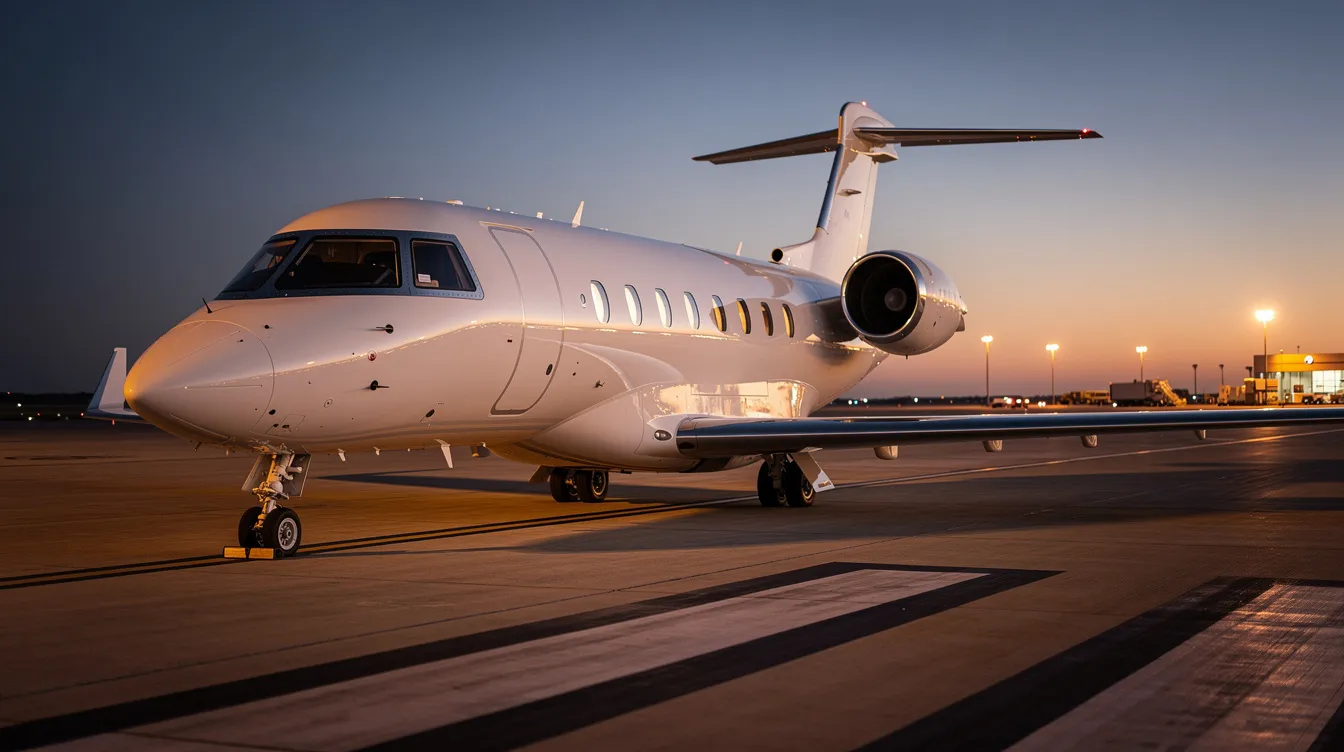
Experience Precision, Without the G-Forces
If you appreciate the discipline, performance, and technical excellence behind every military fighter airplane that takes to the air, you already understand what matters in aviation: precision, reliability, and uncompromising standards. BlackJet delivers exactly that—in a context designed around you.
Explore BlackJet's Jet Card membership and discover how premier private jet access can reshape the way you travel. No ownership burden. No compromise on safety or comfort. Just seamless, elevated flight.
Frequently Asked Questions about Military Fighter Airplanes and Private Jets
What distinguishes a military fighter airplane from a private jet?
Military fighter airplanes are designed for speed, agility, and combat missions, including air superiority and ground attack, and are equipped with advanced weaponry and stealth technology. Private jets prioritize passenger comfort, range, and schedule flexibility, focusing on safe and luxurious travel rather than combat.
How do military fighter jets influence private jet technology?
Many innovations from military aviation, such as fly-by-wire controls, glass cockpits, advanced avionics, and composite materials, have migrated into private jets, enhancing safety, reliability, and pilot situational awareness.
What are the main generations of military fighter airplanes?
4th and 4.5-generation fighters emphasize high maneuverability and advanced avionics, while 5th-generation fighters add stealth features, supercruise capabilities, and integrated sensor networks for superior survivability.
Can private jets match the speed of military fighter jets?
No. Military fighters can exceed Mach 2 speeds and endure high G-forces, while private jets typically cruise at subsonic speeds optimized for comfort and efficiency.
What role does sustainability play in private jet travel?
Companies like BlackJet ensure carbon-neutral private jet flights through verified carbon offset programs, combining luxury travel with environmental responsibility without extra cost.
How does BlackJet’s Jet Card program work?
BlackJet offers prepaid access to a variety of private jets across multiple cabin classes with guaranteed availability, flexible scheduling, and no ownership burdens, ideal for frequent travelers seeking convenience and luxury while managing their jet card cost per hour effectively.
Are military logistics aircraft related to private jets?
Yes. Some military support aircraft, like the Airbus A330 MRTT and Saab GlobalEye, share airframes or design principles with large business jets, highlighting the crossover between military and civil aviation technologies.
What safety standards do private jets follow compared to military fighters?
Private jets operate under rigorous civil safety certifications such as FAA Part 135 and EASA regulations, focusing on passenger safety and reliability, while military fighters prioritize mission survivability under combat conditions.
Conclusion
Military fighter airplanes represent the pinnacle of aerospace engineering, designed for unmatched speed, agility, and combat effectiveness. Their advanced technologies—from stealth and sensor fusion to fly-by-wire controls—have not only shaped modern warfare but also influenced the evolution of private aviation. For discerning travelers using services like BlackJet, understanding these innovations provides deeper appreciation for the precision, safety, and reliability embedded in every private jet journey and for selecting among top private jet companies when comparing access models.
While fighter jets focus on mission success under extreme conditions, private jets prioritize passenger comfort, schedule flexibility, and sustainability. BlackJet’s Jet Card programs, including the flexible BlackJet 25+ Hour Jet Card, offer seamless access to a diverse fleet of private jets, combining cutting-edge technology with personalized service and carbon-neutral operations. This fusion of military-grade engineering heritage and luxury travel ensures an elevated experience without compromise.
Explore how BlackJet can transform your travel with premier private jet access—where precision meets comfort, and innovation meets exclusivity.


 Sign up with google
 Sign up with Apple