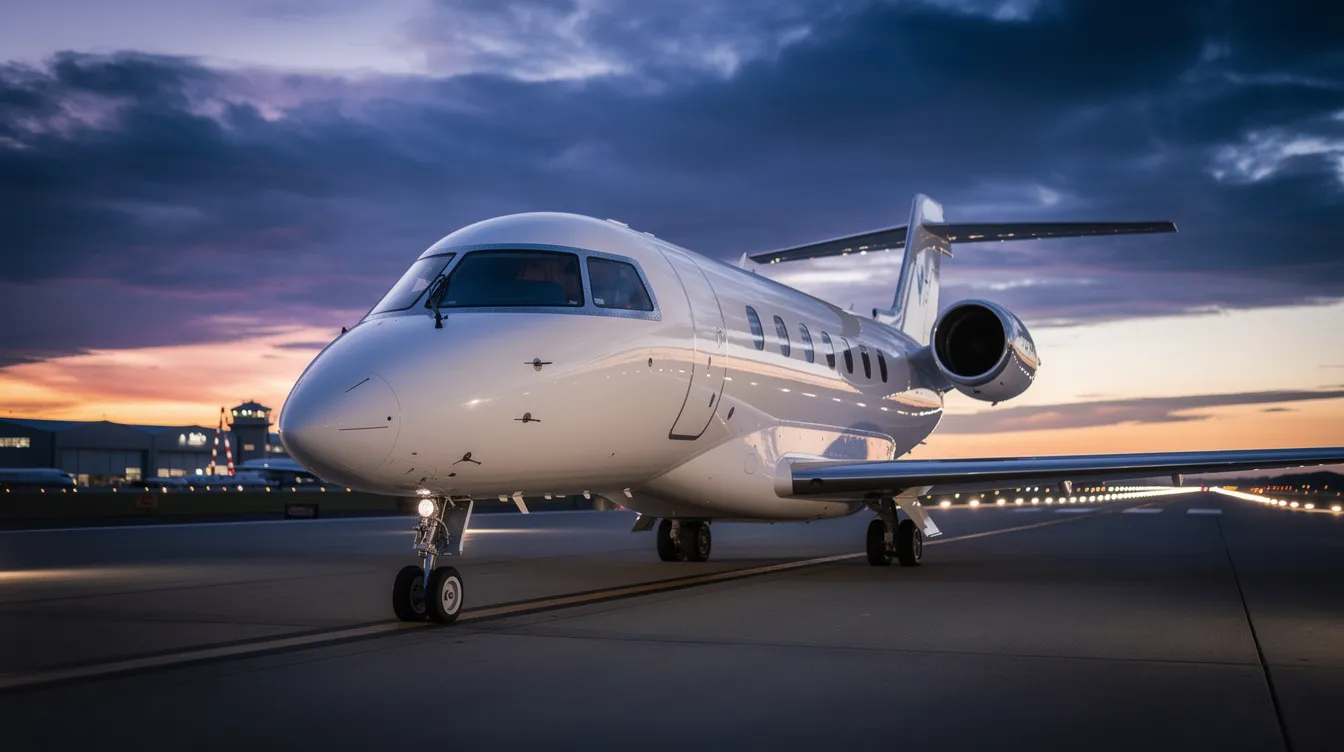
Private jet access is more than luxury. For executives, founders, family offices, and discerning global travelers, it is a strategic advantage: fewer wasted hours, tighter control of schedules, direct access to more airports, and the ability to move when commercial aviation cannot.
This article is intended for executives, frequent travelers, and aviation enthusiasts interested in how military jet technology and operational principles influence modern private aviation.
Military jets occupy the most demanding end of aviation. They secure air superiority, deliver precision strike capability, support reconnaissance, and shape the technologies that later improve civilian flight. From the F-22 Raptor to the F-35 Lightning II, modern military aircraft set benchmarks in avionics, engines, stealth, and mission readiness.
Understanding the evolution and roles of military jets provides valuable insight into the safety, technology, and reliability standards that shape today’s private jet experience.
At BlackJet, we view that legacy through a private aviation lens. The same priorities that make a fighter jet dependable in complex conditions-redundancy, planning, all-weather capability, maintenance discipline, and cockpit technology-also inform safer, more seamless private jet operations for Jet Card members.
Core Missions of Military Jets: From Air Superiority to Precision Strike
Modern military jets are categorized by combat functions, not simply by speed or appearance. Fighters are designed to gain and maintain air control, while bombers, attack aircraft, reconnaissance platforms, and electronic warfare jets serve different parts of the mission.
Air superiority ensures friendly forces operate without threat from enemy aircraft. An air superiority fighter is specifically designed to dominate air combat, intercept hostile fighters, and control the skies. The F-15 Eagle is an air superiority fighter, and aircraft like the F-15C and Eurofighter Typhoon have long served in air policing and quick-reaction roles across the European theater.
Multirole fighters perform both air-to-air and air-to-ground missions. The F-16 Fighting Falcon is a multi-role fighter jet, and the Fighting Falcon remains one of the most influential jet fighters ever built. The F-16 Fighting Falcon has over 2,100 units in operation, which reflects how useful a flexible fighter aircraft can be for allies around the world.
Attack aircraft provide close air support for ground troops. Close air support provides direct attack support to ground troops, often at low altitude and under difficult battlefield conditions. The A-10 Thunderbolt II is heavily armed, armored, and optimized for ground attack rather than supersonic speeds. The F/A-18E/F Super Hornet, built by Boeing, also performs strike, fleet defense, and attack missions for the Navy.
Electronic warfare jets disrupt enemy radar and communications. Suppression of enemy air defenses involves destroying ground-based missile systems, often before other aircraft enter contested airspace. The EA-18G Growler, derived from the McDonnell Douglas and Boeing F/A-18 lineage, is a leading example of a platform built to jam, deceive, and suppress hostile radar networks.
Strategic bombing destroys the enemy’s capability to wage war. Bombers deliver heavy payloads against strategic ground targets, while maritime patrol jets are designed to track submarines and attack ships. Unmanned combat aerial vehicles are used for surveillance and precision strikes, and manned-unmanned teaming integrates crews with autonomous uncrewed drones for reconnaissance.
These mission profiles force trade-offs:
Speed vs. long range, because afterburning supersonic flight consumes fuel quickly.
Stealth vs. payload, because external weapons increase radar visibility.
Agility vs. endurance, because high-G maneuvering and fuel efficiency pull design in different directions.
Sensor capability vs. maintenance complexity, because advanced radar and electronic systems require cooling, power, software, and support.
Private aviation has a different mission. A BlackJet aircraft does not need to fight, evade missiles, or carry weapons. But executive transport still depends on capable avionics, reliable engines, disciplined control procedures, and the ability to operate safely when weather or logistics become complex.
Summary Table: Military Jet Roles and Private Aviation Parallels
Military Jet Role | Primary Function | Key Design Trade-offs | Private Aviation Parallel |
|---|
Air Superiority Fighter | Control airspace, defeat enemy aircraft | Agility, stealth vs. endurance | Flight safety, reliable avionics, operational readiness |
Multirole Fighter | Air-to-air and air-to-ground missions | Flexibility vs. specialization | Versatile aircraft for varied travel needs |
Attack Aircraft | Close air support, ground attack | Armor and firepower vs. speed | Comfort and safety in challenging conditions |
Electronic Warfare Jets | Radar jamming, communications disruption | Advanced electronics vs. maintenance complexity | Advanced avionics and communications systems |
Strategic Bombers | Long-range heavy payload delivery | Payload vs. stealth and range | Long-range capability and payload for passengers and luggage |
Unmanned Combat Aerial Vehicles | Surveillance and precision strikes | Autonomy vs. control | Automation and remote flight support |
Evolution of Jet Fighters: From First-Generation Jets to Stealth
The history of military jets begins before the modern air force structure existed. The U.S. Army Air Corps was established in 1926, and the U.S. Air Force became an independent service on September 18, 1947. Before that separation, the Army Air Forces peaked at 2.4 million personnel during World War II, showing how aviation had become central to national power.
Early Military Aviation and World War II
World War I introduced aviation as a military tool, but World War II made air power decisive. In the European theater, fighters protected bombers, attacked ground forces, and fought for control of the air. The B-29 Superfortress dropped atomic bombs on Japan in 1945, demonstrating how aircraft could alter the course of war at the strategic level.
The Jet Age Begins: First-Generation Fighters
First-generation jet fighters arrived in the late 1940s, and their early operational history showed both the promise and limits of the jet era. The German Me 262, British Gloster Meteor, and early American jets showed that jet propulsion could change high-speed flight, even though early engines were thirsty and reliability was limited. These early production aircraft were often armed with guns, had basic radar or none at all, and were still learning how to break from piston-era thinking.
Korean War and Advances in Jet Technology
The Korean War accelerated jet development. The F-86 Saber was used in the Korean War for air-to-air combat, most famously against MiG-15s backed by the USAF. The swept wing became essential for better performance near the sound barrier, and pilots began to understand that the jet age required new tactics, new training command systems, and new maintenance practices.
Supersonic Performance: Second- and Third-Generation Fighters
Second- and third-generation fighters of the 1950s through 1970s pushed into supersonic performance. Aircraft such as the F-100 Super Saber, MiG-21, and F-4 Phantom II introduced powerful engines, radar-guided missiles, and higher top speeds. The Vietnam War exposed both the promise and limitations of missile-centric air combat, leading air forces to refine dogfighting training and weapons integration.
Fourth-Generation Fighters: Maneuverability and Multirole Capability
Fourth-generation fighters shifted emphasis toward maneuverability, digital controls, and multirole capability. The F-16, F/A-18 Hornet, and Su-27 combined advanced aerodynamics, fly-by-wire control, improved radar, and flexible weapons carriage. The pilot in a modern cockpit could now manage air-to-air, ground attack, reconnaissance, and strike functions in various forms.
Fifth-Generation Stealth Fighters and Sensor Fusion
Fifth-generation stealth fighters changed the model again. The F-35 Lightning II is a stealth multirole combat aircraft, and the Sukhoi Su-57 is a fifth-generation stealth fighter. The Chengdu J-20 is China's first fifth-generation stealth fighter. These new aircraft focus less on raw speed alone and more on low observability, fused sensors, networked intelligence, and survivability.
The Future: Sixth-Generation Programs and Emerging Technologies
Military jet technology has shifted focus from speed to stealth and sensor fusion. Stealth technology evolves from radar evasion to low-observable materials, advanced shaping, and integrated mission systems. Ongoing sixth-generation programs such as NGAD in the U.S., FCAS in Europe, and Tempest in the UK are expected to enter service in the 2030s, with artificial intelligence, adaptive engines, and deeper autonomous teaming.
Lessons for Business Aviation
For business aviation, the lesson is clear. Military development in jet engines, composites, navigation, and avionics eventually finds its way into civilian aircraft. The result is a safer, quieter, more capable private flight, exactly the kind of progress BlackJet looks for when evaluating aircraft access for members.
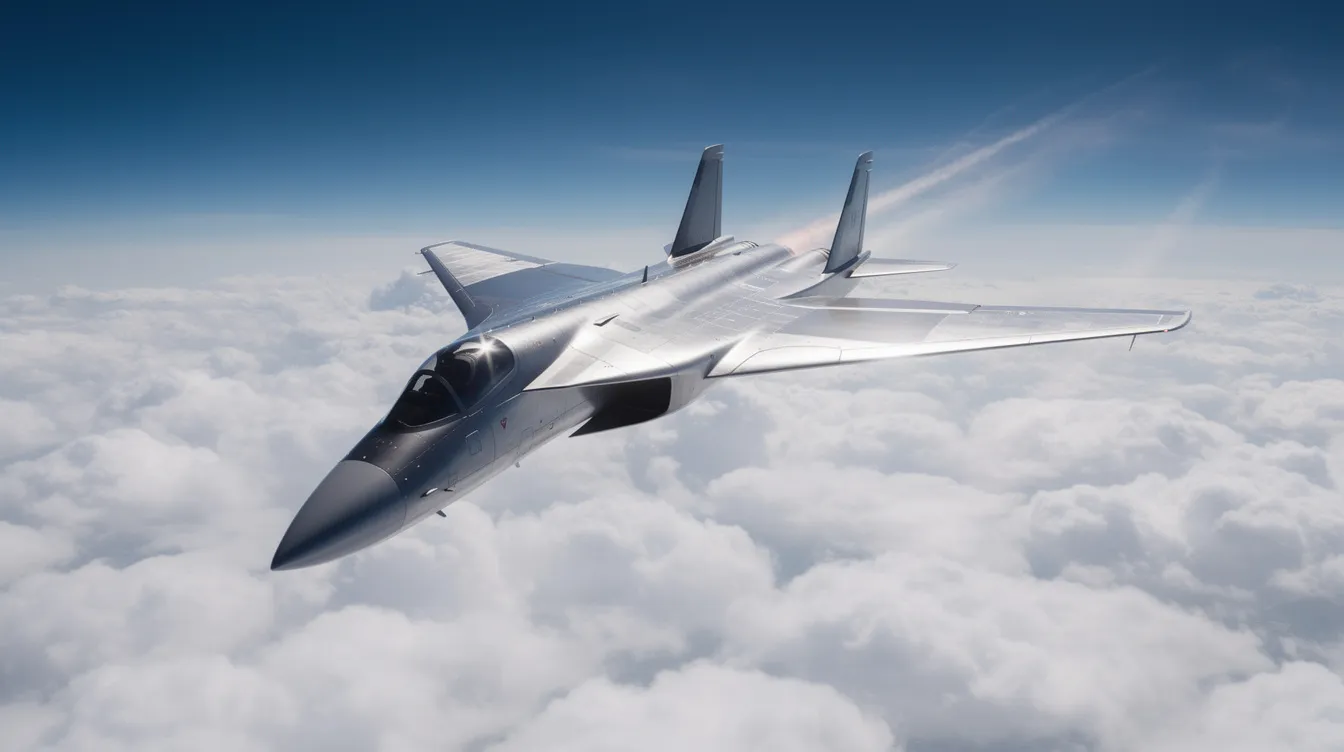
Today’s Leading Fighter Jets and Their Roles in Global Air Forces
The F-35 Lightning II: Stealth and Sensor Fusion Leading 2026
The F-35 Lightning II is the best fighter jet in 2026 when measured by its combination of stealth, sensor fusion, global adoption, software-driven upgrades, and multirole capability. Built by Lockheed Martin, the F-35 family includes the conventional F-35A for Air Force use, the short-takeoff/vertical-landing F-35B, and the carrier-capable F-35C for Navy operations. According to the program’s public F-35 fast facts, more than 1,000 aircraft have been delivered to global operators.
The F-35 has a radar cross-section equivalent to a golf ball, and its value is not only stealth. Sensor fusion allows aircraft to automatically share data across networks, giving the pilot a clearer tactical picture. Network-centric warfare improves situational awareness through interconnected data sharing, and information dominance is a focus in modern military jet technology advancements.
The F-22 Raptor: Air Dominance Benchmark
The F-22 Raptor remains a pure air dominance benchmark. The F-22 Raptor has a radar cross-section comparable to a marble, and the F-22 can supercruise at Mach 1.8 without afterburner. In active service only with the US Air Force, the Raptor blends stealth, agility, altitude, and air-to-air weapons to secure control of contested skies.
European Fighters: Versatility and Upgrades
European fighters remain highly relevant. The Eurofighter Typhoon can supercruise at Mach 1.5, and the Dassault Rafale is respected for strike, air policing, and electronic self-protection. Both aircraft continue to receive upgrades in radar, weapons, and electronic warfare systems so they can operate alongside fifth-generation fighters.
Emerging Challenges: Russian and Chinese Developments
Russia and China are developing capabilities that challenge Western air superiority. The Su-57 is Russia's flagship fighter jet with high agility, and the Su-57 features 3D thrust-vectoring nozzles for agility. The Chengdu J-20 has a weapons payload of 24,000 lbs, making it a significant long-range stealth platform for China’s air force modernization.
The F-15EX Eagle II: Modernizing Proven Platforms
The F-15EX Eagle II illustrates another strategy: modernize proven aircraft rather than replace everything at once. The F-15EX can carry nearly 30,000 lbs of weapons, giving it major value as a weapons truck supporting stealth aircraft. In layered operations, stealth aircraft may penetrate first, while upgraded fourth-generation fighters add numbers, range, and firepower.
Lessons from Operation Desert Storm and Modern Air Power
Operation Desert Storm in 1991 was the most intensive air campaign to date, showing how coordinated air power, precision strike, electronic attack, and command networks could shape an entire conflict. Today, that model has become more digital, more distributed, and more reliant on software.
Modern air forces do not rely on one perfect fighter. They combine stealth platforms, upgraded fighters, bombers, tankers, reconnaissance assets, drones, and command aircraft. The goal is not simply to fly fast, but to see first, decide first, and act first.
Military Jet Technology: Avionics, Stealth, and Electronic Warfare
Advanced Avionics and Sensor Fusion
Military aircraft technology is now defined by information as much as propulsion. A modern fighter jet is not just a fast jet; it is a flying sensor, communications node, weapons platform, and data processor.
Advanced avionics combine AESA radar, infrared search and track, helmet-mounted displays, electronic support systems, and glass cockpit interfaces. Instead of forcing a pilot to interpret isolated screens, sensor fusion creates a unified view of threats, targets, allies, and mission options.
Stealth Design Principles
Stealth designs use radar-absorbent materials and internal weapons bays. Stealth fundamentals also include aligned edges, carefully shaped inlets, reduced infrared signatures, and coatings that lower detectability. The F-22 and F-35 show how low-observable design can help aircraft enter dangerous airspace before an enemy can track or target them effectively.
Electronic Warfare Capabilities
Electronic warfare is equally important. Rafale’s SPECTRA suite, the F-35’s integrated EW systems, and the EA-18G Growler’s jamming equipment show how modern air combat depends on confusing or degrading enemy sensors. The U.S. Navy describes the Growler as an airborne electronic attack aircraft built for escort jamming and suppression missions in contested environments, as outlined in its EA-18G Growler fact file.
Networked Data Links and Artificial Intelligence
Data links connect fighters, drones, command centers, and other assets. Link 16 and proprietary tactical networks allow aircraft to pass targeting data, radar tracks, and threat warnings in near real time. Artificial intelligence is influencing combat decisions in military jets by helping sort data, identify patterns, and reduce pilot workload.
Engine Innovations and Hypersonic Technologies
Advanced engine technology enhances fuel efficiency and thrust in military jets. Adaptive cycle engines can shift between thrust settings for different missions, improving range or power depending on the requirement. Hypersonic technology allows systems to travel greater than five times the speed of sound, shaping the future of missiles, interceptors, and perhaps high-speed reconnaissance.
Civilian Aviation Impact
These innovations matter to civilian aviation because technology rarely stays in one domain forever. Satellite navigation, inertial systems, head-up displays, advanced weather radar, fly-by-wire, and redundant avionics all have military roots or defense-driven acceleration. In private jet charter, that translates to better situational awareness, safer routing, improved communications, and stronger dispatch reliability.
BlackJet prioritizes aircraft and operators that reflect this modern standard: proven avionics, rigorous maintenance, qualified crews, and all-weather planning. The passenger sees a seamless flight. Behind that experience is a disciplined system of technology, planning, and oversight.
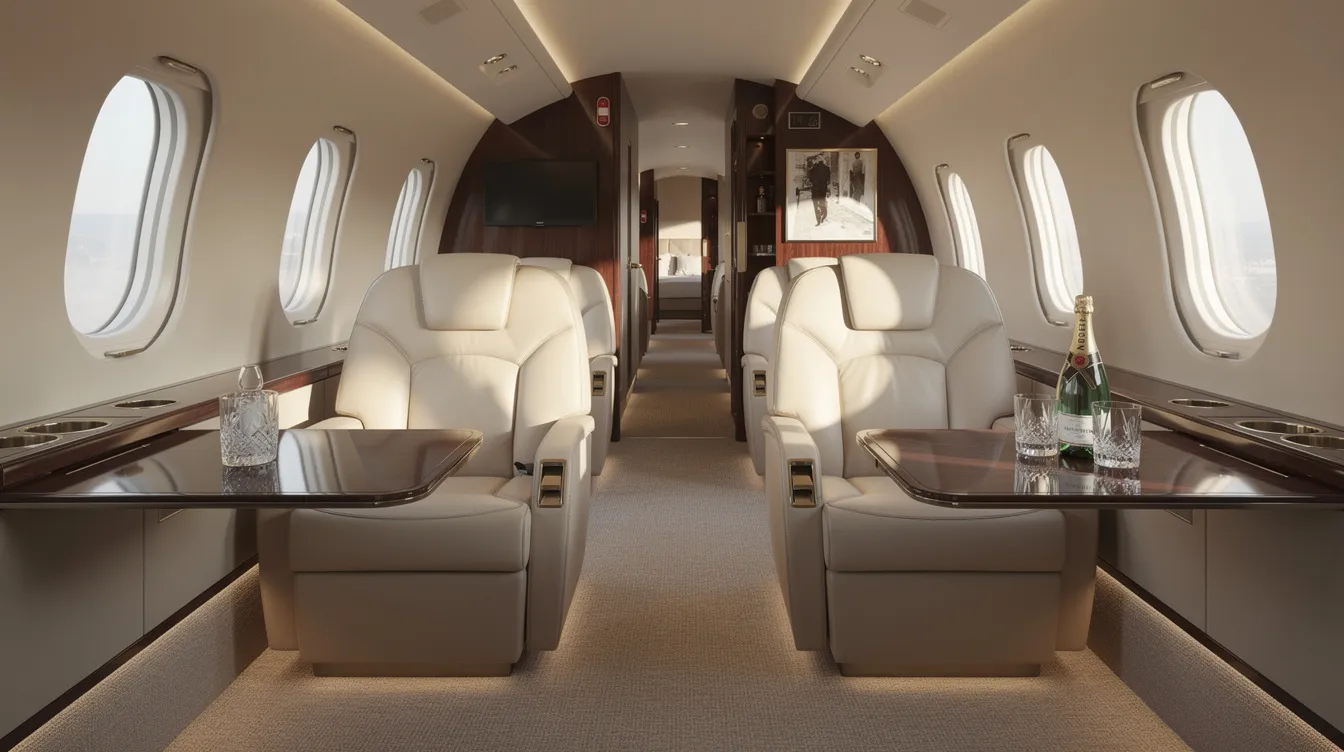
From Combat to Comfort: How Military Jet Innovation Shapes Private Aviation
The connection between combat aviation and private aviation is practical, not theatrical. Military jets are designed for extreme conditions. Business jets are designed for comfort, range, efficiency, and reliability. But both depend on the same fundamentals: airframe integrity, engine performance, avionics precision, and disciplined operations.
Advanced engine technology that improves thrust and fuel efficiency in fighters also influences civilian engine design. High-bypass turbofans, digital engine controls, lighter materials, and better thermal management make long-range private jets more efficient and dependable. For a BlackJet member flying from New York to London, that means reliable oceanic routing, strong reserve planning, and a smoother operational experience.
Military long-range strike missions demand planning around weather, refueling, alternates, communications, and contingencies. A transatlantic business flight requires a different objective, but the planning mindset is similar. The mission is not to strike a target; it is to deliver the traveler safely, privately, and on schedule.
BlackJet’s 24/7 flight support and digital booking tools turn that planning discipline into convenience. A member can request aircraft access, review options, and coordinate travel without managing ownership complexity using premium private jet card programs that streamline frequent flying. The technology reduces friction while human support handles the details that matter.
Safety is where the military mindset is most valuable. Aviation rewards checklists, training, redundancy, and conservative decision-making. BlackJet’s proprietary safety vetting and certification of operators are built around those same principles: use qualified crews, verified aircraft, audited providers, and clear operational standards.
Sustainability is also part of modern aviation leadership. While fighter jets are not models of fuel economy, military research increasingly studies fuel efficiency, alternative fuels, logistics resilience, and lighter materials. BlackJet ensures every journey is carbon neutral through offset programs built into Jet Card usage, with sustainable aviation fuel trends becoming increasingly important across the industry.
Consider a managing partner who must reposition from London to Geneva, then to Milan, and return to New York within days. Commercial first class may be comfortable, but it cannot match the schedule control. Ownership may provide access, but it adds capital exposure and operational burden. A BlackJet 25-hour Jet Card program gives precision access without requiring the traveler to run an aviation department.
BlackJet Jet Cards vs Owning or Chartering: Precision Access Inspired by Military Readiness
A Jet Card is prepaid private jet access, typically organized around a set number of flight hours. BlackJet offers programs such as its 25+ Hour Jet Card and 50-hour options across multiple cabin categories, giving frequent travelers a more predictable way to access private aircraft.
Here is how Jet Card membership pricing and access compare:
Ad hoc private jet charter: useful for occasional travel, but pricing and availability can vary by market, aircraft type, and timing compared with other models on a broader private jet price list.
Full ownership: maximum control, but high capital commitment, depreciation risk, crew costs, maintenance oversight, hangar expenses, and limited fleet flexibility, though some owners may pursue jet card tax deductions when structuring their usage.
Fractional ownership: more structured than charter, but still involves longer commitments and shared asset complexity, and many travelers compare these arrangements with options such as NetJets jet card costs before deciding.
BlackJet Jet Cards: prepaid access, simplified booking, carbon-neutral flights, safety-vetted operators, and flexibility across aircraft categories, with jet card pricing structures designed for predictable hourly rates.
The parallel to air force readiness is straightforward. An air force keeps aircraft ready to respond when national interests require it. BlackJet keeps private aviation access ready so members can move when business or lifestyle demands it.
This does not mean private aircraft are military assets. It means the readiness principle is valuable. Fast response, clear processes, reliable partners, and contingency planning create confidence.
Technology-driven scheduling, routing optimization, and all-weather operational planning improve reliability. If the weather moves across the Northeast, routing and timing can be adjusted. If a larger cabin is more appropriate for a long-range family trip or a group of 20, large-cabin private jets can be selected. If a business day shifts, support teams help adapt the flight plan.
For travelers who want to elevate their own air superiority in the practical sense, control over time, access, privacy, and movement, Jett Card membership is often more efficient than commercial first class and less burdensome than ownership, especially when aligned with the best jet cards for frequent flyers.
Safety, Certification, and Sustainability: Civil Standards with a Military Mindset
Military aviation is built on discipline. Checklists, standard operating procedures, simulator training, maintenance documentation, and redundancy are not formalities. They are how complex aircraft operate safely.
BlackJet applies that mindset to private aviation. Members are not buying only a seat on an aircraft. They are accessing a managed system of safety review, operator vetting, flight support, and service standards that align with how safe private jets are in practice.
Key safety and sustainability pillars include, alongside clear visibility into jet card cost per hour for predictable planning:
Operator selection: BlackJet works with vetted operators that meet or exceed leading private aviation safety benchmarks.
Third-party ratings and audits: Safety is strengthened through independent verification, documented standards, and continuous review.
Crew qualifications: Experienced crews, recurrent training, and disciplined procedures help reduce operational risk.
Aircraft oversight: Maintenance history, aircraft suitability, and dispatch reliability are central to trip planning.
Weather planning: De-icing, alternates, conservative weather minima, and route adjustments support risk management.
Carbon-neutral flights: Every BlackJet flight is offset, helping members reduce the net carbon impact of private travel while still considering budget-friendly private aircraft options when appropriate.
Carbon offsets typically fund verified projects that reduce, capture, or avoid emissions, such as reforestation, renewable energy, or methane capture. BlackJet integrates carbon-neutral performance into the member experience rather than treating it as an afterthought.
Picture a winter business trip from Teterboro to Chicago during storm conditions. A less disciplined process might focus only on departure. A stronger process reviews de-icing, alternate airports, crew duty time, runway conditions, fuel reserves, and onward ground coordination, whether the traveler charters an entire aircraft or simply buys a seat on a private jet. The result is not drama; it is calm execution.
That is the standard BlackJet pursues: the rigor associated with military flight operations, repurposed for safe, seamless, responsible private journeys.

FAQs: Military Jets, Air Superiority, and Private Jet Access with BlackJet
What defines an air superiority fighter?
An air superiority fighter is built to gain and hold control of airspace by defeating enemy fighters. It differs from multirole or attack aircraft because its main mission is air combat rather than ground attack, bombing, or close support.
How do multirole fighters differ from attack aircraft?
Multirole fighters perform both air-to-air and air-to-ground missions, giving an air force more flexibility from one platform. Attack aircraft are more focused on ground attack and close air support for troops.
Can civilians fly in fighter jets?
In limited cases, civilians may fly in a demilitarized trainer or experience aircraft under strict safety rules. Active combat fighters, military weapons systems, and operational jet fighter platforms are normally restricted to military service personnel.
Can private jets match fighter jet speed?
Private jets are not designed to match fighters at supersonic speeds. A fighter prioritizes raw performance, combat maneuvering, weapons, and survivability, while a business jet prioritizes comfort, range, cabin experience, efficiency, and safe flight planning.
How does military technology end up in private jets?
Military aviation accelerates development in radar, navigation, communications, composites, engine control, and cockpit design. Over time, these technologies influence civilian aircraft certification and private aviation systems.
How does BlackJet ensure safety compared with commercial airlines?
Commercial airlines operate under strict regulations, and private aviation must be held to a similarly serious safety mindset. BlackJet uses operator vetting, certification standards, third-party safety ratings, audits, and real-time support to help ensure every aircraft and crew is appropriate for the mission.
How do BlackJet Jet Card programs work for international travelers?
A frequent international traveler can purchase prepaid hours, such as a 25-hour, 50-hour, or even 100-hour Jet Card, then use those hours across appropriate aircraft categories. BlackJet coordinates booking, routing, aircraft selection, support, and carbon-neutral flights automatically as part of the member experience.
Why do aircraft payload numbers matter in military comparisons?
Payload shows how many weapons or mission equipment an aircraft can carry. The Chengdu J-20 has a weapons payload of 24,000 lbs, while the F-15EX can carry nearly 30,000 lbs of weapons, demonstrating two different approaches to modern combat capacity, much as different 50-hour Jet Card options reflect varying approaches to capacity and flexibility in private aviation.
What role do non-fighter aviation services play in national security?
Military aviation is broader than fighters. The army, navy, US Air Force, United States Coast Guard, and allied services rely on tankers, transports, maritime patrol aircraft, helicopters, trainers, and intelligence platforms to operate effectively across the world, just as travelers compare specialized access programs such as Flexjet jet card costs when evaluating private options.
Glossary of Key Military Aviation Concepts
Electronic warfare jets: Electronic warfare jets disrupt enemy radar and communications.
Suppression of enemy air defenses: Suppression of enemy air defenses involves destroying ground-based missile systems.
Maritime patrol jets: Maritime patrol jets are designed to track submarines and attack ships.
Unmanned combat aerial vehicles: Unmanned combat aerial vehicles are used for surveillance and precision strikes.
Manned-unmanned teaming: Manned-unmanned teaming integrates crews with autonomous uncrewed drones for reconnaissance.
Conclusion: Commanding the Skies-From National Defense to Personal Mobility
Military jets secure national interests through speed, stealth, air superiority, strike power, reconnaissance, and information dominance. Private aircraft serve a different purpose, but the strategic idea is similar: control movement, reduce friction, and protect valuable time.
BlackJet applies lessons from decades of aviation development-rigorous safety, advanced technology, mission-level planning, and responsible sustainability-to private jet access. Through Jet Card membership, travelers gain the practical advantage of private aviation without the burden of ownership.
Elevate your travel with precision. Explore BlackJet’s Jet Card programs and discover how seamless, carbon-neutral, safety-vetted private flights can become your new standard, whether you prioritize affordable private jet options or dedicated private jet charters in Karachi.


 Sign up with google
 Sign up with Apple