Private Flight Club Membership Cost: What You Really Pay For When You Fly With BlackJet
June 15, 2026
Private aviation is no longer defined by aircraft ownership. Today, a growing number of executives and high-net-worth travelers gain access to private jets through club membership and jet card programs that deliver the full experience of flying private without the capital burden of owning or even co-owning an aircraft. But what does private flight club membership cost actually look like when you add up every line item?
This guide breaks down the real numbers, the structures behind them, and how to determine whether a membership makes strategic sense for your travel patterns.
Quick Answer: Typical Private Flight Club Membership Costs in 2024
Membership costs for private flight clubs can range from $50,000 to $500,000 or more annually, depending on hours flown, aircraft type, and service level. At the lower end, subscription-style membership programs with limited access may carry membership fees as low as $370 to $9,997 annually. At the serious end, a 25-hour fixed-rate jet card for light jets in 2026 runs approximately $150,000 to $200,000 all-in, while midsize cards push into the $280,000 to $320,000 range. Large-cabin or ultra-long-range cards routinely exceed $400,000 for 25 to 50 hours.
Compare this to commercial business class on a route like New York to Chicago: a round trip runs $1,500 to $3,000, but the real cost is the 2 to 3 hours lost per trip navigating terminals, security, and delays. For executives flying 20 or more trips per year, those hours compound into weeks of lost productivity.
"Membership cost" typically breaks into three components: a membership fee for the initiation or recurring charge, ongoing dues or deposits (including jet card prepayments), and per-flight fees or hourly rates, plus clearly defined additional expenses such as taxes, de-icing, and catering upgrades. Private flight clubs often require annual or monthly dues for membership, and private flight club memberships require upfront capital and ongoing fees.
BlackJet's jet card memberships are structured as prepaid 25-hour and 50-hour blocks, with hourly rates that include crew, standard catering, and carbon-neutral offsets at no additional cost. For example, BlackJet's 25-hour mid-cabin card carries a base price of approximately $224,625, with a per-hour rate of $8,985 before fuel surcharge and Federal Excise Tax. The 50-hour large-cabin card crosses $12,000 per flight hour fully loaded.
What drives these price differences? Usage profile, aircraft category, safety standards, and service level. The sections below unpack each one.
Why Consider Private Flight Club Membership?
Private jet membership is not simply a luxury purchase. It is a strategic asset for frequent flyers and senior executives who measure time in billable hours, deal closures, or competitive advantage. When you fly privately, you convert dead travel time into productive or restorative hours.
Consider a CEO shuttling between New York and Miami 20 times per year. Each commercial round trip burns roughly 10 hours door-to-door. The same route via private jet takes under 6 hours, including ground transportation. Over 20 trips, that is 80 recovered hours, roughly two extra working weeks per year.
Private jet travel through a club membership also eliminates the unpredictability of commercial flights: guaranteed availability, predictable membership costs, and tailored scheduling improve both lifestyle and business outcomes. BlackJet amplifies this with exclusive access to multiple aircraft categories on a single jet card, digital booking, 24/7 real-time support, and proactive safety and sustainability measures embedded in every membership.
How Private Flight Club Memberships Work
A private flight club membership or jet card program provides prepaid or subscription-style access to a curated fleet of private jets without the responsibilities of aircraft ownership. Private jet club memberships provide access to a fleet of jets, allowing members to book flights without long waits or security checks. Members can bypass long security lines at airports and step directly onto their aircraft at private terminals.
Most clubs and jet card providers, including BlackJet, allow members to book flights across multiple aircraft types, from light jets for regional hops to large-cabin jets for longer flights, all with fixed or capped hourly rates. Private jet membership pricing and the best jet cards for frequent flyers vary, and private jet memberships include personal and corporate options, giving both individuals and organizations the ability to fly privately on their own terms.
Common membership structures include:
Hours-based jet cards (e.g., 25-hour or 50-hour blocks) with fixed pricing
Deposit-based models where members place six-figure sums on account and draw down against published rates
Subscription programs with lower annual fees but higher per-flight costs, aimed at occasional travelers
Fractional ownership, where buyers purchase a share of an aircraft, is relevant for comparison but a different model entirely.
BlackJet operates as a B2C jet card provider, giving members carbon-neutral flights, safety-certified operators, and digital booking tools as part of every membership. Its premium private jet cards follow standard jet card pricing structures. Some private flight memberships allow members to buy a block of flight hours, which is exactly how BlackJet's core programs work.
How a Private Flight Club Membership Works in Practice
The process is straightforward. A prospective member selects their membership level and funds a jet card (25 or 50 hours in a chosen cabin class). Once onboarded, the member logs into the app or portal, selects departure and arrival airports, dates, and aircraft type, and then receives confirmation.
The operator coordinates crew, flight planning, and safety checks. Private jet clubs offer personalized concierge services for travel arrangements, handling everything from chauffeured transfers to catering preferences and special requests. Members also enjoy members' access to luxury lounges and fine dining options at partner FBOs.
Billing is simple: hours are debited from the jet card balance, with itemized statements showing base hourly cost and clearly labeled additional expenses such as tax, surcharges, or situational extras. BlackJet members can typically book within fixed notice periods and enjoy guaranteed availability within their contracted service area and aircraft category.
Private Jet Membership vs On-Demand Charter Flights
On-demand charter works well for a handful of trips per year. But as flight frequency increases, charter flights become less cost-effective and far less predictable.
Consider a scenario: a client flying from New York to Miami 20 times annually. At peak charter rates of roughly $12,000 per hour for a midsize jet (4 hours round trip), that totals approximately $960,000 per year. A 50-hour BlackJet mid-cabin card covering the same flights comes in at roughly $500,000 to $600,000, delivering significant savings plus consistent service and priority access during peak periods.
Charter for non-members often incurs higher positioning fees, less transparent additional costs, and inconsistent aircraft quality. Membership consolidates these variables into a predictable structure. A clear understanding of private jet charter pricing and whether chartering a private jet is worth it helps frame why BlackJet jet cards represent a middle ground between full ownership and sporadic charter, delivering cost efficiency, control, and consistency for regular private flyers.
Membership Benefits and Value Drivers
Membership benefits are not cosmetic additions. They materially affect cost efficiency, time savings, and the value derived from every dollar spent on luxury travel. The core pillars include:
Cost efficiency compared to ownership and charter
Convenience, flexibility, and time savings
Luxurious amenities and aircraft variety
Safety standards and certification
Sustainability and technology
BlackJet structures these membership benefits to make frequent private flying both predictable and strategically advantageous. Each benefit ties back to either direct financial impact or indirect value like saved time, improved privacy, and better productivity.
Cost Efficiency Compared to Ownership, Fractional, and Charter
Private jet membership programs compress the fixed costs of aircraft ownership (hangar, crew, insurance, maintenance) into a known hourly rate paid only when you fly. Fractional ownership through providers requires a multi-year commitment, a capital purchase of a share (a 1/16th share of a light jet runs approximately $360,000), plus monthly management fees of $8,000 to $12,000 regardless of flight activity.
Predictable hourly rates protect members from spot market volatility in charter pricing. During peak holiday periods or limited-supply events, charter rates can spike 25% or more. A fixed-rate jet card absorbs that volatility.
For most individuals and small firms, membership wins on total cost of ownership unless you are consistently flying 100+ hours per year, at which point a 100-hour jet card may become a relevant benchmark. Understanding the jet card cost per hour makes it easier to compare options. BlackJet's transparent pricing minimizes surprise additional expenses, making budgeting straightforward.
Convenience, Flexibility, and Time Savings
Private flight clubs enable door-to-door efficiency. Members arrive at private terminals 20 to 30 minutes before departure, board immediately, and access a wider network of airports than commercial carriers. Flying into Westchester instead of JFK, or Teterboro instead of Newark, often cuts total journey time by over an hour each way.
Flexible flight options include same-day schedule shifts, last-minute departures, and complex multi-city itineraries. Picture a CEO visiting three cities in 36 hours: that is impractical with commercial flights but routine with a membership. For some travelers, unlimited private jet flights on fixed-fee programs are another way to achieve this flexibility. BlackJet supports 24/7 itinerary adjustments and real-time flight support through its digital platform and human concierge team, providing unparalleled service.
Luxurious Amenities and Aircraft Variety
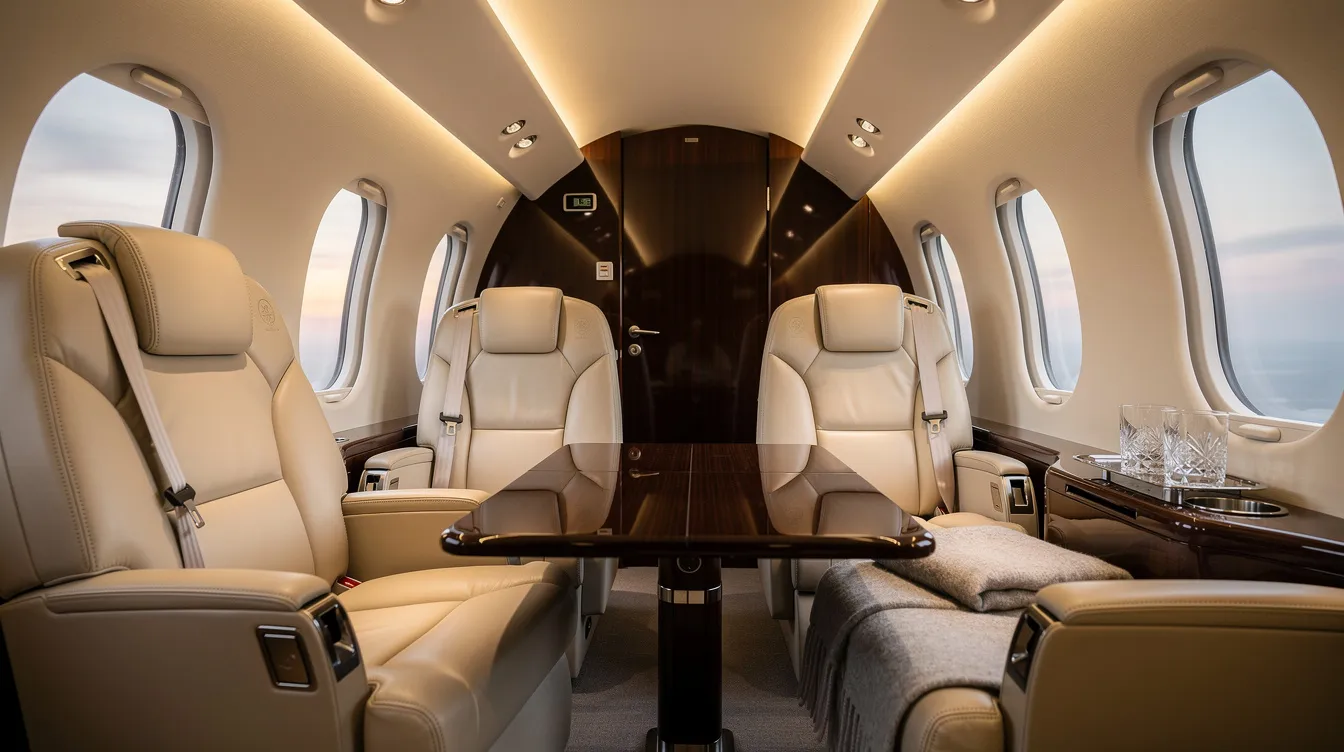
The cabin experience defines private travel: spacious seating, lie-flat configurations, premium catering, quiet cabins, and complimentary Wi-Fi. Members can choose different aircraft types per trip, drawing from the same jet card balance. A light jet handles Boston to Washington; a super midsize jet covers Los Angeles to New York.
BlackJet emphasizes modern, safety-certified aircraft categories with consistent onboard amenities. Standard in-flight services are included in hourly pricing. Higher cabin classes, including options like the best private jet for 20 passengers, carry higher hourly membership costs but reduce travel fatigue and enable productivity, luxury amenities that deliver strategic returns.
Safety, Certification, and Service Standards
A major reason for membership costs is the rigorous safety infrastructure behind every flight. Leading industry certifications like ARGUS, WYVERN, and IS-BAO indicate consistently high safety standards and performance. BlackJet partners only with vetted operators that meet or exceed these standards.
Safety is a top priority. Pilot training, duty-time limits, and strict operational protocols are built into the cost structure. Dedicated member services include trip monitoring, proactive weather rerouting, backup aircraft sourcing, and 24/7 personalized support. These are not add-ons; they are core, engineered values that justify premium pricing.
Sustainability and Technology as Built-In Value
Modern private aviation clubs increasingly integrate sustainability into their membership models. BlackJet ensures every member's flight is carbon neutral through third-party verified offsets at no additional cost to the member.
Digital tools, including mobile apps, real-time tracking, instant quoting, and automated confirmations, streamline the booking experience and minimize delays. BlackJet's technology platform supports booking, post-flight reporting, spend analytics, and centralized documentation, particularly useful for corporate memberships. These investments add to operational cost but deliver tangible value and should be understood as part of the monthly dues fund.
Key Cost Factors in Private Flight Club Memberships
Membership costs are determined by several factors: membership tier, flight usage, aircraft type, geography, and included additional services. Understanding these levers allows prospective members to tailor a program that matches their travel patterns and avoid overpaying for unused benefits.
Membership Tiers and Levels
Membership tiers often provide varying levels of benefits. Common membership levels include:
Entry-level or regional cards: 10 to 25 hours per year, higher per-hour rates
Core tiers: 25 to 50 hours with better hourly rates, fewer blackout dates, and priority booking
Premium or corporate tiers: 75 to 200+ hours with the most competitive pricing and most generous policies
Monthly fees can vary based on the chosen membership level. Initiation fees for private flight clubs can range from $5,000 to $25,000. Entry fees for private jet memberships can range from $2,995 to $29,500. BlackJet's core products are 25-hour and 50-hour jet cards across multiple cabin classes, designed for frequent flyers who want predictable pricing. Corporate memberships offer flexible flight options for businesses, and multi-user access can spread membership costs across departments.
Flight Usage and Frequency
Private jet club membership costs vary based on flight usage. The more a member flies, the more a higher-tier card makes sense, because fixed costs are amortized over more flight hours. Members who need last-minute departures weekly will likely pay more than those with flexible scheduling. Members enjoy unlimited flights throughout the year on unlimited memberships, and unlimited memberships allow for unlimited bookings each month.
BlackJet advisers can model total annual spend under different usage assumptions, helping you find the most value from your membership plans.
Aircraft Type and Cabin Class
Aircraft type significantly influences private jet membership costs. Hourly rates for flights can vary based on aircraft category and size, and understanding the cheapest private aircraft or most affordable private jet options can help align aircraft choice with budget:
Category
Typical Use Case
Hourly Rate Range
Light jets
2-3 hour regional trips
$6,000 - $8,500/hr
Midsize
Coast-to-coast U.S.
$8,500 - $11,000/hr
Super midsize jets
Transcontinental, intra-Europe
$10,000 - $13,000/hr
Large cabin
Intercontinental
$12,000 - $25,000/hr
BlackJet's jet cards are structured around cabin classes with transparent pricing for each. A single membership can provide access to multiple categories, allowing members to upgrade or downsize per trip. Fuel burn, crew requirements, and maintenance intensity differ by aircraft type, which is why larger jets carry significantly higher costs per hour.
Additional Services and Included Benefits
Common additional services include chauffeured ground transportation, premium in-flight catering, bespoke itinerary planning, and concierge services. BlackJet includes core concierge and flight support as part of its jet card programs, with optional upgrades (high-end catering, multi-vehicle transfers, security services) at transparent incremental cost. These additional perks and exclusive benefits should be viewed as part of the total value, not just cost, since they offload extensive planning from the member, especially on complex itineraries or large group charter flights for around 100 passengers.
Detailed Breakdown of Membership Costs
Membership costs break into three buckets: one-time entry or initiation fees, recurring or prepaid membership funding, and variable per-flight expenses. BlackJet emphasizes transparent pricing and upfront communication of all cost components before any booking is confirmed.
Entry Fees and Initiation Costs
Initiation fees cover application processing, onboarding, and platform access. Entry fees for private jet memberships can be non-refundable. Some programs charge modest initiation fees with higher per-flight margins; others require significant deposits but offer lower hourly rates. BlackJet focuses on simple, transparent structures aligned with jet card purchase amounts rather than complex joining charges. Always confirm whether initiation fees are refundable or creditable toward flight time before committing to any club membership.
Deposits, Jet Cards, and Ongoing Membership Funding
Hours-based jet cards work by prepaying for a fixed number of flight hours on a specified cabin class, then debiting hours as you fly. Deposit-based models require members to place significant sums on account, drawn down against published rates. Private flight clubs often require annual or monthly dues for membership. The monthly fee for personal memberships averages around $370. Business memberships can cost $670 monthly or $7,152 annually. Annual fees for private jet memberships can exceed $9,997. Jettly's personal membership costs $370 per month as a reference point in the broader market. Traditional flying clubs generally have much lower monthly dues compared to private jets.
BlackJet's jet cards are structured around fully funded time blocks, avoiding complex monthly invoices and giving members a clear sense of available flight time. Important contract details include validity periods (typically 12 to 24 months), refund policies, and renewal terms. Notably, BlackJet's 50-hour cards feature hours with no expiration, a premium feature in this market.
Additional Expenses and Variable Flight Costs
Members may be charged for landing, repositioning, and overnight parking fees. Many private flight clubs apply additional fees based on changing fuel prices. Airport fees, such as ramp fees and landing fees,s may apply to private flights. Common additional cost items include:
Federal Excise Tax (7.5% on U.S. domestic flights)
Fuel surcharges (variable with market fuel prices)
De-icing and high-altitude operations
International handling and overflight permits
Daily minimums (often 96 minutes, meaning short hops are billed as longer)
BlackJet aims for upfront transparency by quoting expected all-in costs during booking. Review sample invoices before joining any program to understand how hidden fees and additional expenses are treated.
Is Membership Worth It? Evaluating Value
For travelers logging 25 or more hours of private flying per year, a well-structured jet card like BlackJet's is typically more cost-effective and operationally seamless than pay-as-you-go charter. Ask yourself: how many annual flight hours do you need? What are your typical routes? How much do you value privacy, schedule control, and arriving rested?
The ability to make an informed decision about membership starts with mapping your current flying solution against what a structured membership would deliver. Reviewing an overarching private jet price list and access options can also help frame where memberships fit. "Worth" is not purely financial: schedule control, privacy, and arriving prepared can be decisive advantages in high-stakes business and personal life.
How to Choose the Right Membership
Finding the right membership requires evaluating several categories:
Safety and operator quality - certifications, pilot training standards
Cost transparency - are all costs involved clearly itemized?
Fleet size and aircraft availability - geographic coverage, cabin classes
Technology and booking experience - can you book flights seamlessly via an app?
Sustainability commitments - carbon-neutral by default or at additional cost?
Member services quality - personalized service, concierge, 24/7 support
Request sample contracts and invoices. Ask about peak-day surcharges and blackout dates. Clarify repositioning policies. Compare effective hourly rates across realistic scenarios. BlackJet advisers help prospective members model different usage scenarios against jet card options to determine the most cost-efficient structure for their travel patterns.
Comparing Membership Costs with Other Private Flight Options
Commercial business/first: Lowest capital commitment, but limited access to schedule control, privacy, and airport flexibility. Best for long-haul intercontinental with one or two travelers.
On-demand charter: No commitment, but the highest per-trip cost and variable quality. Works for fewer than 15 hours per year.
Jet card/club membership: Moderate capital commitment with predictable hourly rates, priority access, and standardized safety. Ideal for 25 to 100+ hours per year.
Fractional ownership: Highest capital requirement with monthly management fees. Only competitive above 50 to 100 hours annually over multiple years.
BlackJet sits in the membership and jet card segment, offering affordable access relative to ownership while delivering the safety, sustainability, and cost efficiency that serious private flyers require.
Questions to Ask Before You Commit
Before joining any program, ask:
What is the all-in effective hourly rate on my typical routes?
How are peak-day surcharges calculated, and are there blackout dates?
What are cancellation or change fees?
Which certifications do your operating partners hold?
Are flights carbon-neutral by default, and is there any additional cost?
What are renewal terms, and do unused hours roll over or expire?
Can I see a sample invoice from a recent member trip?
BlackJet can walk prospective members through each of these questions with tailored, route-specific answers.
Frequently Asked Questions (FAQ)
Membership options vary based on structure. Some programs offer low monthly dues (membership fees can range from $370 to $9,997 annually) plus per-flight charges. Others use large prepaid deposits or fixed-hour jet cards requiring five- to six-figure commitments. BlackJet focuses on jet card models with known hourly rates across cabin classes, rather than teaser memberships with limited access. Map your expected annual flying hours and typical routes before choosing a model.
What Is the Expected Cost of a 25-Hour Private Jet Card?
The total cost of a 25-hour card is primarily driven by aircraft category. Even at the light-jet level, a fully burdened 25-hour card sits in the high five- to low six-figure range once taxes and standard surcharges are included. Members should confirm whether hours are billed "wheels-up to wheels-down" only or include taxi time, as this effectively changes the cost per usable flight time. BlackJet quotes tailored 25-hour card pricing based on cabin class and region, including safety, support, and carbon offsets.
Are There More Affordable Membership Options for Occasional Private Flyers?
Some membership programs offer entry-level access with low monthly fees, but these often come with higher per-flight fees and limited access to aircraft categories or exclusive events. For travelers flying private only a few hours per year, on-demand charter may be more cost-effective. BlackJet is designed for individuals and businesses expecting to fly at least into the mid-double-digit hours annually. Cost efficiency improves substantially as annual flight hours rise, making robust memberships more appealing for frequent flyers.
How Do Additional Services and Amenities Affect Membership Cost?
Luxurious amenities such as fine dining, complex multi-stop itineraries, bespoke ground transportation, and specialized onboard equipment can add incremental costs. BlackJet bundles a high standard of baseline comfort into the hourly price, reserving charges for requested upgrades. Clarify in writing which amenities are standard and which carry additional cost. Lifestyle partnerships with hotels or resorts can provide additional benefits without increasing flight costs.
Does Carbon-Neutral Flying Increase Membership Costs?
Carbon offset programs calculate emissions per flight and purchase verified offsets from accredited environmental projects. Some providers charge an annual fee for sustainability, while others incorporate it into standard pricing. BlackJet includes carbon-neutral performance as a standard feature of its jet card memberships without separate line-item charges. For sustainability-conscious travelers and ESG-focused organizations, this built-in approach simplifies compliance and should be considered a meaningful part of the value proposition.
Conclusion: Evaluating Private Flight Club Membership with BlackJet
Private flight club membership cost is best understood not as a single number, but as an investment in time, control, safety, and a consistently high standard of private travel. For frequent flyers, a well-structured jet card is more cost-efficient and predictable than ad-hoc charter or fractional ownership.
BlackJet delivers safety-led, carbon-neutral jet card memberships with transparent pricing, multi-cabin access, and a technology-enabled booking experience. Map your past 12 to 24 months of travel and model what that would look like under a BlackJet membership to understand the potential savings and lifestyle gains.
Elevate your travel, effortlessly. Explore BlackJet's jet card programs and discover how refined, meaningful private aviation becomes your new standard.


 Sign up with google
 Sign up with Apple