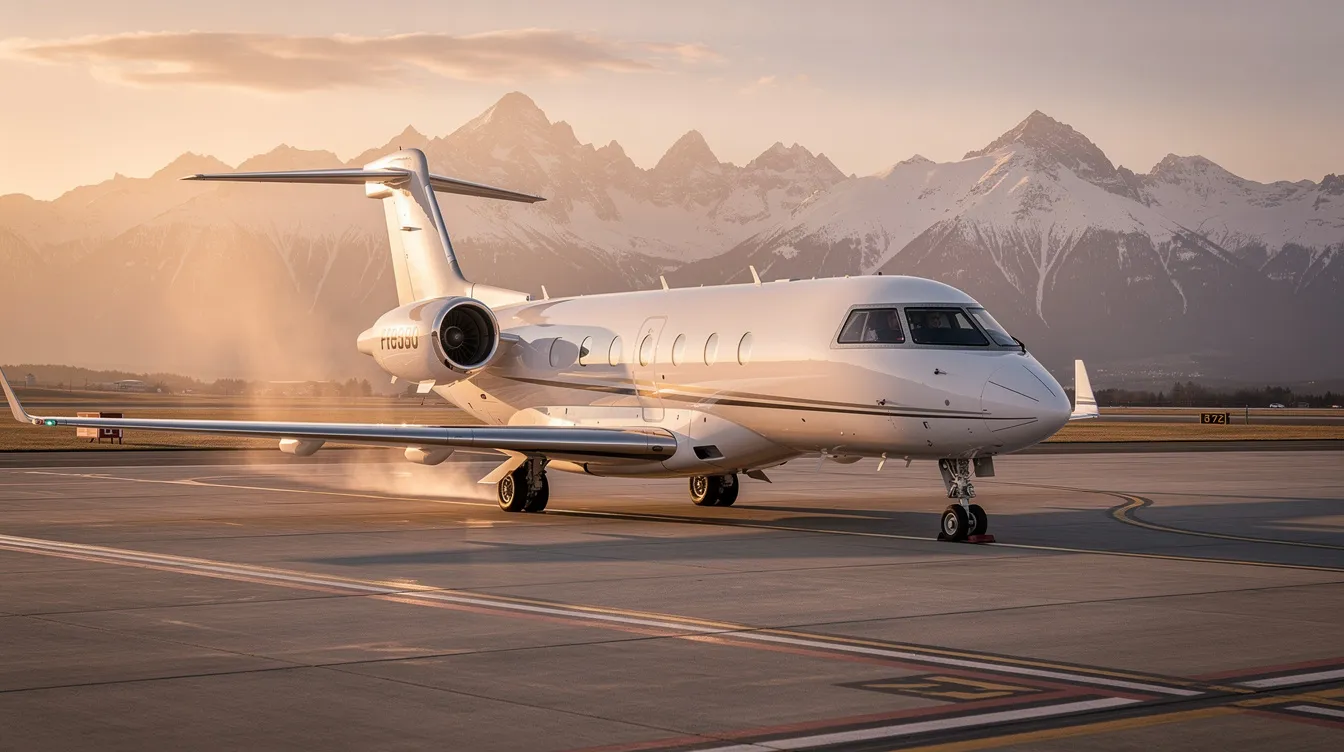
Private jet builders design and construct custom aircraft for specific client needs, traditionally requiring significant investment and long lead times. This article explores the modern private jet builder concept—how BlackJet empowers executives, high-net-worth travelers, and family offices to fully customize their private jet experience without the need for ownership. Discover how BlackJet’s Jet Card model delivers the luxury, flexibility, and efficiency of a bespoke aircraft, while maximizing time savings and eliminating the risks and costs of asset ownership. Whether you’re seeking tailored cabin interiors, advanced flight deck technology, or carbon-neutral operations, this guide explains how you can design your ideal private jet journey—trip by trip—on your terms.
For high-net-worth travelers and executives, private jets represent more than luxury-they are strategic instruments that reclaim 2.5 to 4 hours per trip compared to commercial first class. When you factor in skipped security lines, direct ramp access at smaller airports, and zero connection delays, the compounding time savings across a year of travel become difficult to ignore. Private jet builders design and construct custom aircraft for specific client needs, but commissioning a bespoke airframe is a commitment measured in tens of millions of dollars and years of delivery lead time. This article answers a different question: how can you effectively design and "build" your private jet experience-flight deck technology, cabin interior design, connectivity, carbon-neutral operations, and all, without buying an aircraft? The answer lies in a Jet Card model that gives CEOs, founders, and family offices the personalization of ownership with none of the asset risk.
From Ownership to Access: Rethinking the Private Jet Builder Concept
Redefining what it means to be a private jet builder starts with a mind shift: instead of commissioning a $70M aircraft from the beginning, you design a fully tailored experience through membership. Aircraft manufacturers handle the production of physical airframes, engines, and avionics, but that step is already done for you. With BlackJet, you step into the role of architect rather than factory owner.
Consider three models side by side:
Full ownership: Maximum control, but aircraft operating costs include maintenance, fuel, crew salaries, and hangarage-often $5–10M annually before you fly a single mile. Depreciation is relentless.
On-demand charter: Low commitment, but variable pricing, inconsistent service, and no way to standardize your cabin or crew preferences from flight to flight.
BlackJet Jet Card: Prepaid hours at fixed rates, access across cabin classes, stored preferences, and carbon-neutral operations. Unlike ownership, there is no capital tied to a depreciating asset.
A concrete picture: a tech founder flying from New York to London 12 times a year, plus 20 regional U.S. hops. Owning a large-cabin business jet means paying for an idle aircraft during months of low travel. With BlackJet, the same founder uses a large cabin for transatlantic sectors and a light jet for Boston shuttle runs, building an ideal fleet mix on demand, trip by trip.
Comparison Table: Private Jet Experience Models
Feature | Full Ownership | On-Demand Charter | BlackJet Jet Card |
|---|
Control over Aircraft | Complete livery, interior, crew | Minimal, varies by operator | High, with stored preferences |
Upfront Cost | $70M+ for aircraft purchase | None | Prepaid hours ($225K+ for 25 hours) |
Operating Costs | $5–10M annually | Variable, often higher per flight | Fixed hourly rates, no management fees |
Flexibility | Limited by ownership | High, but no consistency | High, with cabin class options |
Cabin Customization | Full customization | None or minimal | Tailored per flight, personal preferences stored |
Safety Certification | FAA/EASA, operator-dependent | Varies widely | FAA/EASA plus BlackJet vetting |
Carbon Neutral Flights | Not standard | Rare | Standard, included at no extra cost |
Booking Convenience | Owner-managed | Operator-dependent | 24/7 digital platform, real-time support |
Asset Risk | High (depreciation, maintenance) | None | None |
Step 1 – Choose Your Ideal Business Jet Platform
A real private jet builder process starts with aircraft selection. Range and payload are critical factors when selecting a private jet, and mission profiles should align with aircraft range and passenger capacity requirements, especially when comparing the top private jets in the world by luxury and performance. Here is how the categories break down:
Light jets: Handle regional trips up to 2,000 nautical miles. Models like the Citation CJ3+ offer agile runway performance and access to smaller airports closer to city centers.
Midsize jets: The Cessna Citation Ascend recently entered service as a midsize option, and Cessna offers three new executive interior schemes for customization in this class. Typical range sits around 2,500 NM.
Super-midsize jets: The Challenger 3500 delivers roughly 3,400 NM of range with stand-up cabins, making it ideal for coast-to-coast or intra-European missions and a stepping stone toward 16-seat large-cabin private jet options for bigger groups.
Large cabin / ultra-long-range jets: The Bombardier Global 8000 has a range of 8,000 nautical miles and is the fastest business jet with a top speed of Mach 0.95. Ultra-long-range jets can fly over 7,500 nautical miles nonstop, and Boeing Business Jets offer superior range for nonstop travel across continents, making them strong candidates when evaluating the best private jet for 20 passengers or even private aircraft configured for up to 50 passengers.
Private jets can access over 9,000 airports globally, and the Global 8000 can access 30% more airports than competitors,s thanks to its field performance. A BlackJet advisor helps translate your lifestyle and route patterns-Miami to Aspen, London to Dubai-into the right cabin class mix on your Jet Card, ensuring every flight meets Part 135 safety requirements (or EASA equivalents) while cutting total door-to-door time by 60 to 90 minutes versus departing from major hubs, reinforcing the realities outlined in guides on how safe private jets are compared to other air travel.
Step 2 – Designing the Cabin: Private Jets as Haute Couture
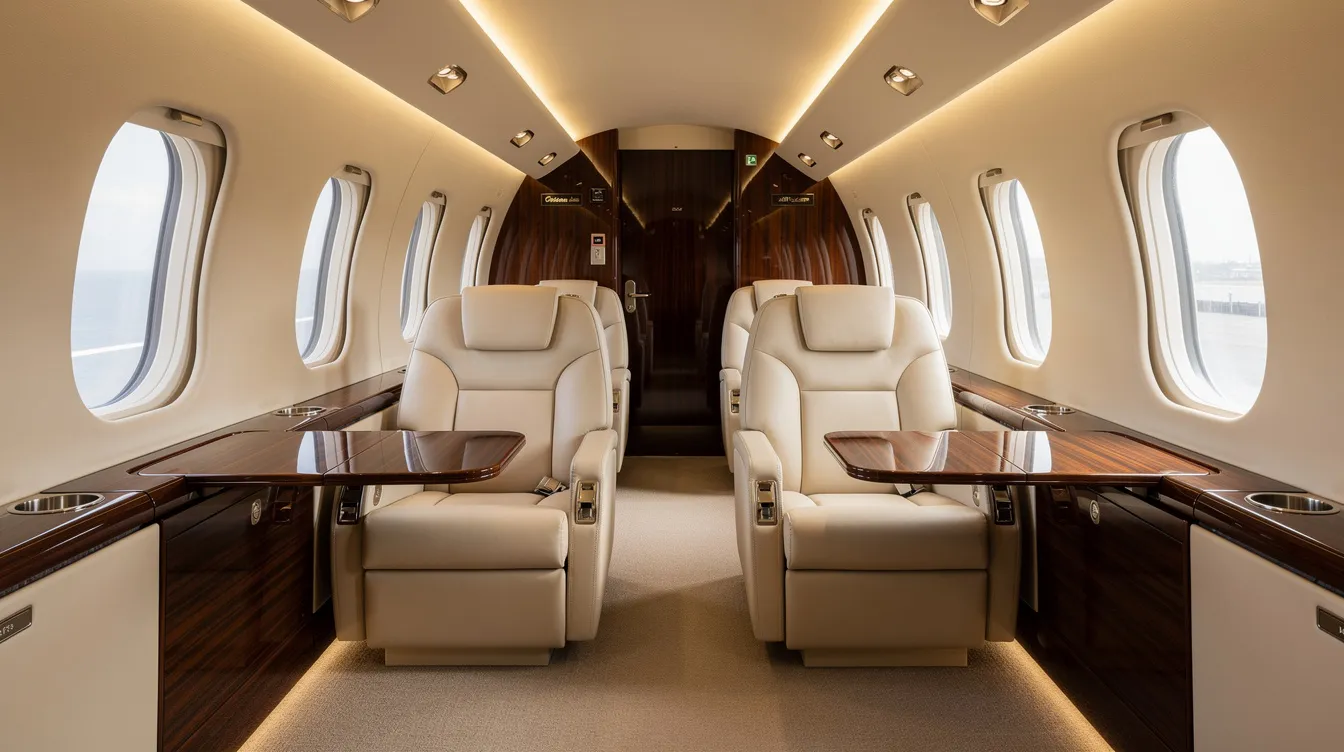
Today's top private jets are the aviation world's haute couture: each cabin can be tailored from layout to stitching, and customization capabilities vary among manufacturers from standard to ultra-luxury options. Leading manufacturers offer custom completion programs for aircraft interiors, and customization features include cabin layout, interior materials, and in-flight entertainment systems.
BlackJet members specify preferences even on non-owned aircraft:
Seating and layout: Club-four arrangements for conversation, conference tables for work, divans for rest. Bombardier's Nuage seat offers a zero-gravity seating position on select large-cabin types. The Global 8000 features four spacious living suites, while Boeing Business Jets provide multiple living spaces for comfort and offer personalized spaces with full-sized amenities.
Interior design details: Leather textures, wood veneers, refined lighting schemes, curated amenities such as fine glassware and linen standards. Falcon interiors can be customized with multiple lounges and galleys, and Bombardier's Global 8000 allows selection of floorplan and interior design. Dassault provides a 3D virtual reality system for cabin design so clients can walk through their space before delivery.
Wellness factors: Cabin altitude can impact passenger comfort during long flights. The Global 8000 has the industry's lowest cabin altitude at 2,691 feet, significantly lower than older jets pressurized to 6,000+ feet. The Global 8000 also includes a hospital-grade HEPA filter for clean air, and HEPA-filtered air combined with low cabin altitude dramatically reduces fatigue on 7- to 10-hour sectors.
Brand alignment: BlackJet can match aircraft interiors to corporate livery for business trips or shift to resort-inspired palettes for family travel, so every window seat feels intentional.
Step 3 – The Flight Deck and Technology Behind a Seamless Journey
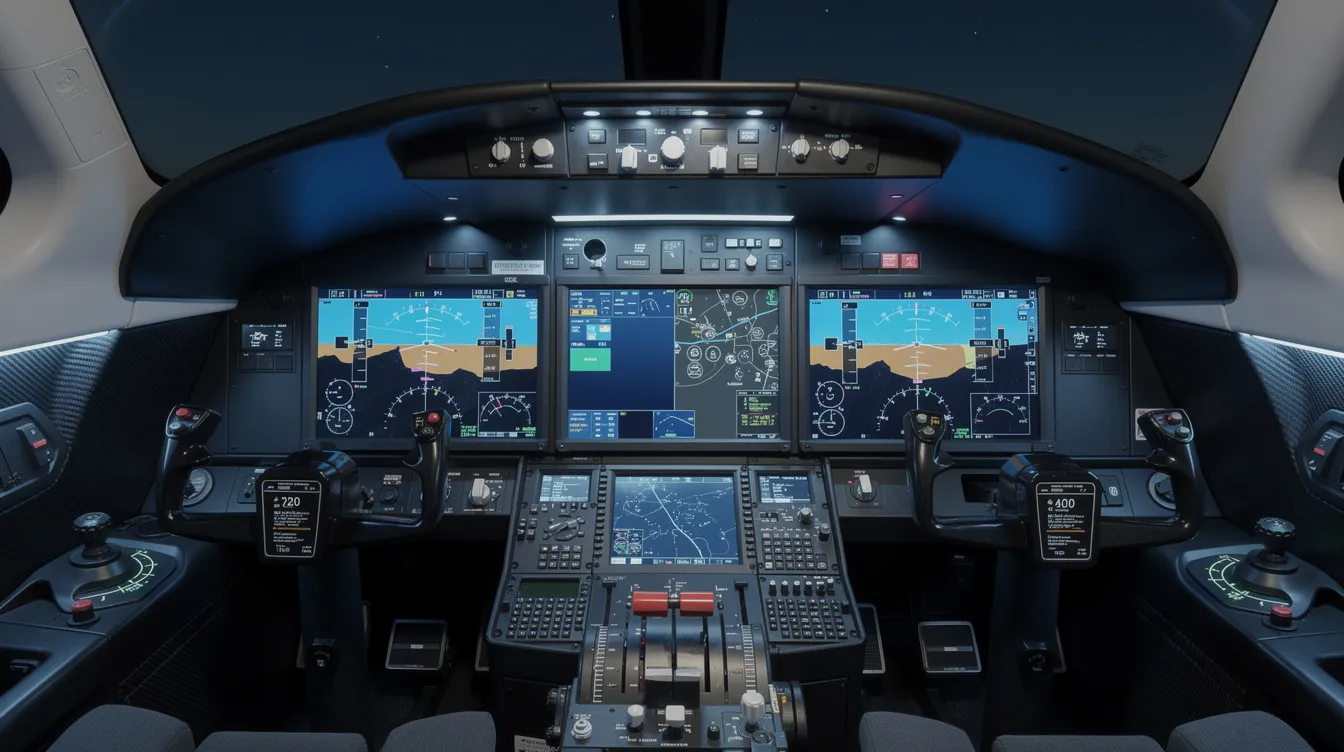
The flight deck is the brain of every aircraft-where safety, efficiency, and comfort originate. Advanced avionics and connectivity are key technology aspects in private jets, and modern business jet flight decks feature fly-by-wire systems, synthetic vision, and navigation suites that support smoother approaches and more direct routing.
Operator vetting: BlackJet requires minimum flight-hour thresholds, type ratings on specific aircraft, and recurrent simulator training at leading centers. Builders must ensure aircraft comply with FAA or EASA safety standards, and BlackJet holds its operators to those same requirements.
Manufacturer innovation: Boeing Business Jets offers state-of-the-art technology for VIP travel, while Dassault's Falcon features advanced communications and cabin systems that keep passengers connected across oceans.
In-flight connectivity: Ku/Ka-band satellite internet, and options like Starlink on large-cabin aircraft, enable secure VPN access, HD video calls, and real-time work in the air.
The benefit is tangible: an executive can leave Teterboro at 18:00, finalize a board presentation over the Atlantic, sleep in a fully flat seat, and land in London ready for a 09:00 meeting. That is how technology transforms a flight into productive time.
Step 4 – Personalization Beyond the Cabin: Service, Menus, and Ground Experience
Moving from hardware to hospitality, the private jet builder concept extends to crew, cuisine, and ground logistics-the chapters of your journey that live beyond the cabin.
Crew preferences: Preferred cabin attendants, language skills, and service style-discreet or highly interactive-all captured in a BlackJet member profile.
Menus: A plant-based tasting menu departing Los Angeles, a Michelin-inspired Japanese breakfast ex-Tokyo, vintage champagne selected by name, or children's menus on leisure trips. Every detail is stored, so the experience does not need to be rebuilt each time.
Ground experience: Chauffeured transfers timed to wheels-down, luggage pre-tagging into the baggage compartment, and direct ramp access where airport rules allow.
BlackJet stores these preferences so every trip feels like stepping back into "your" aircraft, even when you fly different tails and cabin classes.
Safety, Certification, and the Invisible Architecture of Trust
No amount of luxury matters without rigorous safety. Manufacturers' reputation includes adherence to safety audits and operator certificates, and BlackJet layers its own vetting on top of industry standards.
Regulatory baseline: FAA Part 135 certification in the U.S., EASA equivalents in Europe, plus third-party audits such as ARGUS (Gold or Platinum) or Wyver,n where applicable.
Fleet and maintenance: Preference for aircraft under 15 years of age, OEM-approved maintenance facilities, and strict inspection cycles, standards shared by many of the top private jet companies for luxury travel. Client support services may include maintenance programs and dedicated aviation advisors who monitor each tail number.
Crew protocols: Two-pilot crews on all turbine aircraft, recurrent training every 6–12 months, and SOPs for weather diversions and alternates.
24/7 flight support: Real-time monitoring of weather, NOTAMs, and slot restrictions, with proactive re-routing to keep you on schedule.
Sustainable Private Aviation: Building a Carbon-Neutral Flight Profile
"Building" a private jet experience also means building a responsible footprint. Since 2021, all BlackJet Jet Card flights have been structured to be carbon neutral, with integrated carbon offset programs at no additional cost.
How offsets work: Fuel burn is calculated per route using manufacturer data, and investments flow into verified projects-reforestation, renewable energy-certified under standards like Gold Standard or VCS, complementing strategies for choosing the cheapest private aircraft and budget-friendly options, and navigating affordable private jet choices for entry-level travelers.
Operational efficiency: Choosing optimally sized aircraft, minimizing repositioning legs, and selecting modern, fuel-efficient jets reduce emissions at the source before offsets even enter the equation.
Reporting: Members can review sustainability reports per quarter or year, aligning BlackJet use with corporate ESG disclosures or family office sustainability goals.
How Jet Cards Turn You Into Your Own Private Jet Builder
A Jet Card is a prepaid block of flight time across multiple cabin types. BlackJet offers 25-hour and 50-hour Jet Cards (approximately $225,000 and $450,000, respectively) with fixed hourly rates starting around $5,484 per hour for select classes, and readers can explore a complete guide to the 25-hour Jet Card as well as a comprehensive overview of the 50-hour Jet Card cost and value for deeper pricing details. Hours do not expire.
Ownership-level control: Guaranteed availability within set notice windows, fixed hourly rates, and known standards for cabin and crew.
Trip-by-trip configuration: Choose cabin class, seating preferences, catering level, and ground transport through BlackJet's booking tools or concierge.
Financial clarity: One upfront purchase, predictable hourly debits, no surprise repositioning charges on qualifying flights, and zero aircraft management fees.
Scenario: A European family uses a 50-hour BlackJet Jet Card for Geneva-to-Malaga holidays on a midsize jet, Paris-to-New York business trips on a large cabin, and short hops to London on a light jet, adjusting aircraft size for each mission with no change in service standards.
Digital Tools: Building Your Ideal Flight in Minutes
BlackJet's digital booking and premium Jet Card platform functions as a configurator where members assemble each journey in real time-a design studio for travel.
Core interface: Route entry, date and time selection, automatic aircraft class suggestions, and live visibility into flight time and Jet Card hour usage. The platform's modal window for route details lets you review options before confirming, and you can close modal dialog screens with a simple tap or by pressing the escape key if using a desktop browser. A close button on each overlay and a close modal dialog end confirmation keep the flow intuitive, so you never lose your selected preferences.
Mobile functionality: Secure app access with biometric login. Confirm a flight from your smartphone in under five minutes for qualified routes. Need to cancel and rebook? The process takes seconds.
Real-time support: In-app chat or dedicated phone lines let you fine-tune special requests-pets, last-minute passengers, specific wines, or onboard equipment. Think of it as a live search through your travel options with a concierge standing by, ready to help. Features like video pause on briefing content, and data-driven personalization mean the platform learns your preferences over time, pre-loading favorite airports, aircraft categories, and service standards for future bookings.
Comparing Your Options: Builder vs. Buyer vs. Book-and-Go
Sophisticated travelers should evaluate three paths before committing capital or time, and understanding the broader private jet price list and access options alongside detailed Jet Card cost structures and Jet Card pricing models can clarify which model fits best:
Full ownership: Maximum control over livery, interior, crew, and schedule. But the highest fixed costs in the industry-crew salaries, hangarage, insurance, and depreciation run whether you fly or not. Best for those logging 400+ hours annually, and resources like premium UK private jets for sale illustrate how ownership is positioned for dedicated flyers.
Ad-hoc charter: Lowest commitment, but variable pricing makes budgeting difficult. Service levels shift from operator to operator, and there is no way to ensure consistent cabin quality or crew style, though guides on how to buy a seat on a private jet or explore city-specific private jet charters in Karachi can help travelers navigate this space.
BlackJet Jet Card (the "builder" model): Predictable pricing, consistent safety and service framework, deep personalization stored across flights, carbon-neutral performance, and freedom from asset management, aligning with broader Jet Card cost and membership pricing guidance. You learn what works, and the platform remembers.
Who suits each model: Occasional leisure flyers may find charter sufficient. Heavy corporate users with 400+ hours may justify ownership. For executives and family offices flying 50–200 hours per year who want a flagship-level experience without tying up capital, the Jet Card is the most efficient way forward.
Use Cases: How Clients "Build" Their Private Jet Experience with BlackJet
These real-world-style scenarios show the private jet builder concept in action:
US-based CEO, 25-hour Jet Card: Quarterly New York-to-London flights on a large-cabin jet with night-flight sleeping setup and early-morning chauffeur pickups. Monthly regional meetings on a super-midsize with conference-table seating, keeping work uninterrupted.
Family office, 50-hour Jet Card: Seasonal moves between Dubai, the South of France, and the Maldives. Large-cabin jets with bespoke interior ambiance, kid-friendly catering, and extra baggage capacity for extended stays.
Private equity team: A multi-city diligence tour across Europe-London, Frankfurt, Milan, Madrid-over two days. Super-midsize jets with onboard data-room access, conference layouts, and loading of deal documents before wheels-up. Every flight is carbon neutral, and every report is filed for ESG compliance.
Each scenario was "built" through BlackJet rather than through custom-building an aircraft-the secret is that the same level of precision is achievable without ownership.
FAQs: Private Jet Builder, Jet Cards, and BlackJet Membership
Do I need to own a jet to customize my experience?
No. BlackJet Jet Card members specify cabin class, seating style, catering, crew preferences, and ground logistics on every trip, with ownership-level personalization without the asset.
How flexible is a 25-hour vs. 50-hour Jet Card?
Both offer the same cabin classes and service standards. The 50-hour card suits heavier travelers and provides more hours to allocate across a mix of light, midsize, and large-cabin flights, similar to the structures explained in a comprehensive guide to 50-hour Jet Card cost and extended further in resources on 100-hour Jet Card pricing and value. Hours do not expire in either option.
Can I specify aircraft model or only cabin class?
You choose cabin class. BlackJet then matches your needs to available, vetted aircraft within that class. If a specific model matters-say, for a particular cabin size or range-discuss it with your advisor.
How does BlackJet ensure safety and carbon neutrality?
Every operator meets FAA Part 135 (or EASA equivalent) certification plus BlackJet's internal vetting. Carbon neutrality has been standard since 2021, with verified offset projects covering every flight at no extra cost.
What is included in the hourly rate?
Base rate, fuel surcharges, and federal excise tax. Peak-day or complex international operations may involve additional handling or customs fees-your advisor clarifies these before booking.
Can I bring pets, golf clubs, or skis?
Yes. These items influence aircraft selection due to baggage compartment size and cabin space. Inform your advisor during booking so the right aircraft is selected.
How do I contact a BlackJet advisor?
Reach out through the digital platform, by phone, or by requesting a consultation to discuss aircraft options and operational details with a dedicated aviation advisor.
Conclusion: How to Start Building Your Private Jet Experience with BlackJet
If you have read this far, you are ready to move from research to a concrete, personalized flight plan. The step is simple:
Schedule a consultation. Contact BlackJet to meet with an advisor who maps your typical routes, travel frequency, and preferences.
Map your profile. Identify the cabin classes, service standards, and sustainability requirements that meet your needs.
Select your Jet Card. Choose between 25 and 50 hours, matched to your travel patterns, and discover what it means to fly on your own terms.
Every BlackJet flight is underpinned by strict safety vetting, digital ease of booking through our premium Jet Card platform, fully carbon-neutral operations, and a cabin experience that feels personally built. The latest in aviation technology, the rights to personalize every detail, and a commitment to work alongside you, flight after flight.
Elevate your travel effortlessly. With BlackJet, private flight is not reserved for a few. It is accessible on your terms, with rigorous safety, carbon-neutral performance, and unmatched flexibility. Explore premium jet access and find out how refined, meaningful travel becomes your new standard.


 Sign up with google
 Sign up with Apple