When a high-value shipment cannot afford to wait in a commercial freight queue, small cargo planes deliver the strategic edge that no hub-and-spoke airline network can replicate—mirroring how a 25-hour jet card program offers guaranteed access when scheduled airlines fall short.
Introduction: Why Small Cargo Planes Matter for High-End, Time-Critical Transport
Small cargo planes are designed for short-haul and regional logistics, enabling same-day or next-day movement of luxury retail stock, critical spare parts, and urgent medical supplies. These cargo aircraft can access areas with limited infrastructure and operate from smaller or secondary airports, cutting transit times dramatically. On an 800–1,500 km sector such as Paris to Prague, a dedicated small freighter flying direct completes door-to-door delivery in roughly eight to twelve hours, while commercial cargo consignments routed through hubs often take eighteen to thirty hours, leaving clients waiting through schedule gaps and truck transfers.
At BlackJet, we specialize in passenger private jets through our Jet Card programs, yet our members frequently require supporting logistics that mirror the precision of their travel. Small cargo planes offer point-to-point delivery for regional routes, moving promotional materials, event equipment, and spare parts, parallel to a client's premium private jet travel with BlackJet. The terminology matters: "small cargo planes" and "feeder freighters" refer to aircraft generally under ten tonnes payload, often turboprops optimized for easy loading and rapid turnarounds, distinct from large widebody freighters like the 777F that serve intercontinental trunk routes.
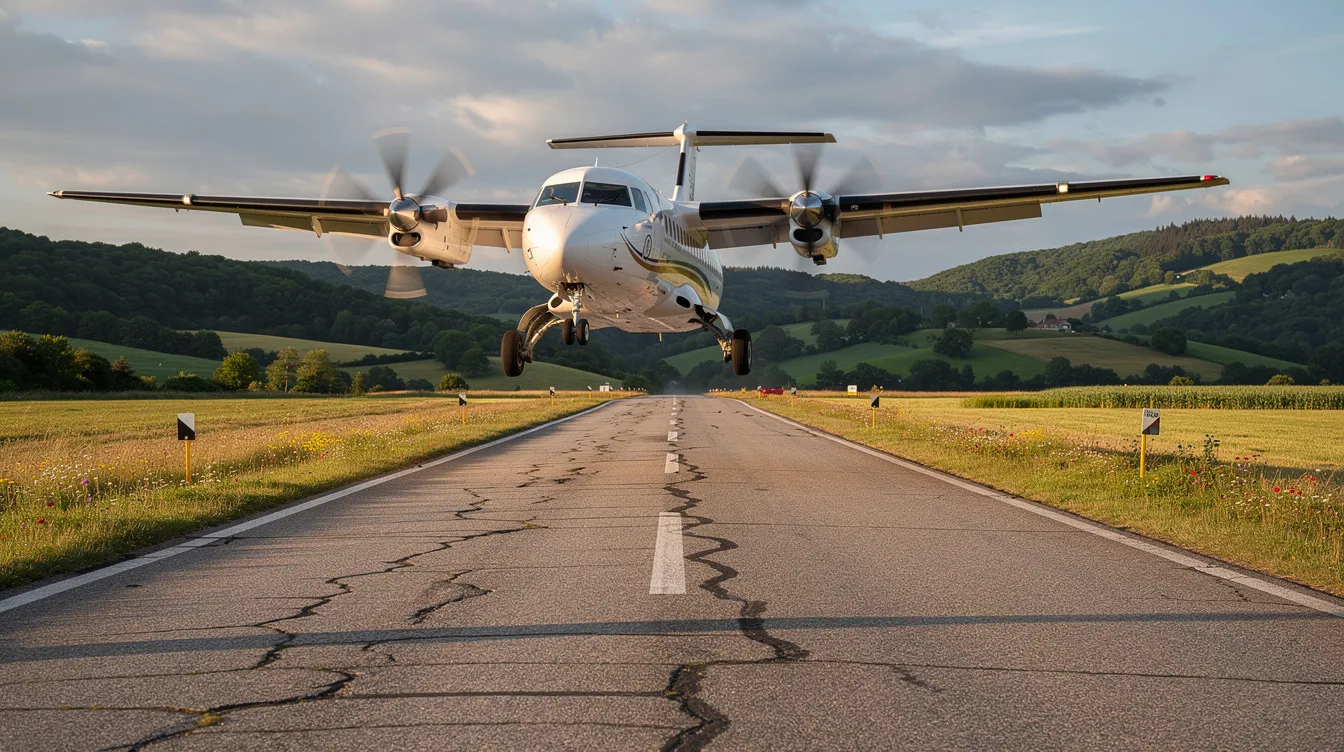
Standard Small Propeller Cargo Aircraft: Core Specifications & Use Cases
Small propeller cargo aircraft typically carry payloads under three metric tons, fly ranges up to roughly 2,300 km, and excel at reaching remote locations thanks to short runway requirements. Cargo planes often feature high-mounted wings for landing in remote areas, and many small freighters are equipped with temperature-controlled holds for sensitive items.
Comparison Table: Popular Small Cargo Aircraft
Aircraft Model | Payload Capacity | Range | Cargo Volume | Takeoff Distance | Notable Features |
|---|
Cessna SkyCourier | 6,000 lb (2,722 kg) | Up to 900 nm (1,667 km) | 884 cu ft (25 m³) | ~2,700 ft (823 m) | Large cargo door, high-wing |
Let L-410 UVP-E | 2,300 kg | Up to 1,380 nm (2,556 km) | 17.9 m³ | 510 m | Short runway, rugged design |
Beechcraft 1900D | 2,777 kg | 1,356 nm (2,511 km) | 17.3 m³ | ~3,000 ft (914 m) | Freighter conversion, reliable |
ATR 42-300F | 5,700 kg | 1,500 km | 52 m³ | ~1,100 m | Large volume, regional feeder |
Despite their versatility, small cargo planes have limited cargo capacity compared to large freighters and strict limits on weight and volume, with limited fuel capacity primarily for short-haul routes.
Key Features of Small Cargo Aircraft
Easy loading through large side or rear cargo doors
Low sill height for efficient ground handling
Roller floors for the rapid movement of cargo
High-mounted wings for remote and rough airstrips
Temperature-controlled holds for sensitive shipments
These aircraft feed regional hubs in Europe, North America, and Asia, in the same way that a 50-hour jet card framework underpins predictable regional access for passengers. For BlackJet clients, scenarios include urgent legal documents flown from Geneva to Milan or high-value watch inventory from Zurich to a boutique opening in Vienna—items found nowhere in a commercial freight schedule, yet benefiting from the same economics that shape affordable private jet options and turboprop operations.
Cargo Aircraft Types: Where Small Cargo Planes Fit in the Fleet
The cargo aircraft landscape spans converted passenger derivatives, dedicated freighters, civil-military designs, unpiloted systems, and experimental concepts. Most cargo aircraft are converted passenger aircraft: reconfigured passenger planes can hold cargo on the main deck after seats are removed and floors reinforced. Small planes generally have lower purchase costs than large cargo jets, and smaller airframes require significantly less upfront capital than jumbo freighters.
Narrow-body freighter aircraft like the 737-800BCF are used exclusively for cargo but demand major airports. Small cargo planes transport packages from regional hubs to major airports in feeder roles, or fly point-to-point niche routes to destinations where BlackJet passengers arrive by private jet, often connecting with routes offered by leading private jet companies worldwide. Despite their flexibility, small cargo planes face higher per-ton operating costs than wide-body freighters on volume-heavy routes.
Derivatives vs. Dedicated Small Freighters
Derivative cargo aircraft—like the Beechcraft 1900D conversion—begin as passenger airframes. Cargo aircraft conversions can take 90 days to four months and typically extend economic life by ten to fifteen years at a fraction of new-build cost. Dedicated cargo aircraft can reduce trip costs by 20% through optimized floor strength, cabin volume, and purpose-built loading features that support faster turnarounds and better handling of oversized items.
Unpiloted & Experimental Small Cargo Aircraft
Fixed-wing cargo UAVs are emerging for remote and island deliveries. The BZK-005 UAV can carry 1.2 tons over 1,200 km, and UAV freighters aim to lower airfreight costs by 60%. Hybrid-electric concepts and modular cargo pods promise reduced fuel burn and noise, just as innovators in private aviation re-examine models like NetJets jet card pricing and structure to align access with evolving sustainability goals. From BlackJet's perspective, manned aircraft with established certification will remain essential for high-value consignments requiring strict chain-of-custody, though unpiloted systems will increasingly complement them.
Easy Loading, Security Verification & Handling High-Value Cargo
Loading Features
Efficient loading and unloading are critical for time-sensitive and high-value shipments. Key loading features include:
Large cargo doors for oversized or palletized items
Low sill heights to minimize lifting and handling effort
Powered roller floors to speed up cargo movement and reduce manual labor
High-mounted wings for safe operations on rough or unpaved strips
These features reduce ground time and protect fragile items from handling damage.
Security Protocols
At smaller airports, the process of performing security verification includes:
Identity checks for all personnel involved in cargo handling
Cargo screening via X-ray and explosive trace detection
Physical inspection of sensitive or high-value items
Secure chain of custody from warehouse to aircraft
Documentation review and verification at each step
Loading supervision by certified personnel
Final verification and sign-off by the operator
Each security service provider along the chain verifies credentials against recognized frameworks. BlackJet requires cargo partners to hold certifications under EU or TSA regulated-agent rules.
Technology in Cargo Tracking
Technology reinforces security and transparency:
Barcode and RFID tracking for real-time cargo location updates
Digital proof-of-load displayed on tracking dashboards
Real-time status updates are delivered to a client's page within a mobile platform
Modern cargo tracking systems that protect against malicious bots and automated threats
Platforms respond with a ray ID to authenticate legitimate access, ensuring that every bot or unauthorized request is blocked—a measure as critical as physical security when sensitive shipment data is accessible via a partner's website or www portal.
Operational Advantages: Short Runways, Remote Access & Time-Critical Missions
Short Runway Operations
Small cargo planes deliver essential supplies to locations with short runways—strips of 800 to 1,200 meters that exclude larger aircraft. Proven turboprop airframes offer robust low-speed handling and reliable performance on wet or contaminated strips, balancing the trade-off for most regional missions.
Remote Access
These aircraft excel at reaching remote and underserved locations, such as:
They provide rapid transport for urgent medical supplies and suit time-critical shipments for communities that are otherwise hard to reach.
Time-Critical Missions
Small cargo planes allow for more frequent and dedicated flights, supporting just-in-time logistics with turnaround times as short as twenty minutes. Example scenarios include:
A BlackJet Jet Card member flying from London Farnborough to Corsica, with a small cargo aircraft departing Lyon carrying event staging and catering equipment, arriving at a nearby Corsican airfield on a synchronized schedule
Deliveries to Greek islands, Scottish Highlands, and Caribbean out-islands, where passengers arrive by jet but cargo needs a different aircraft type.
Smaller aircraft are more impacted by inclement weather and turbulence than heavy freighters, but their agility and reliability make them ideal for regional, time-sensitive missions.
Safety, Certification & Sustainability in Small Cargo Operations
For BlackJet clients, safety standards for any cargo linked to their travel must match the rigor applied to passenger operations on large-cabin private jets for 15 passengers. Operators must hold an Air Operator Certificate, maintain crew training for dangerous goods, and pass audits by national Civil Aviation Authorities or IATA frameworks. Weight and balance calculations are especially critical for small airframes, and certified cargo restraint systems, fire detection, and suppression requirements govern what can be loaded.
Performing security verification of personnel, systems, and facility access—including digital cargo tracking platforms—helps protect against tampering or theft. Small cargo planes are usually less fuel-efficient than larger aircraft on a per-ton basis, yet turboprop designs offer roughly 21% fuel savings over turbofan aircraft on shorter routes through advanced aerodynamic efficiency. BlackJet's carbon-neutral positioning extends to cargo: clients can mirror their carbon-neutral passenger flights with SAF contributions or verified offsets for associated cargo legs.
How Small Cargo Planes Complement BlackJet Jet Card Travel
BlackJet's Jet Card model—including 25-hour and 50-hour programs—gives members predictable access to private jets across multiple cabin types, with products like the BlackJet 25+ Hour Jet Card tailoring aircraft category and pricing to their typical missions. Often, their logistics needs demand synchronized freight movements: an executive roadshow across European capitals where promotional materials fly ahead via small freighter, or a product launch tour across U.S. cities where display equipment arrives before the client's jet touches down—scenarios where an accurate private jet flight time calculator is essential for coordinating passenger and cargo legs.
BlackJet does not operate small cargo planes directly but coordinates with vetted cargo operators whose safety certifications, schedule discipline, and service quality align with our standards. Real-time flight support and 24/7 assistance mirror what clients expect, with cargo partners providing tracking consignment updates through integrated mobile tools. Compared to owning a dedicated aircraft or relying on commercial freight, this approach offers flexibility, no asset risk, and the ability to match aircraft size to each mission—advantages similar to well-structured jet card programs for frequent flyers. Small cargo planes support next-day or same-day deliveries without the overhead of fleet ownership, much as jet card membership pricing structures remove the need for outright aircraft ownership in the passenger world.
Frequently Asked Questions About Small Cargo Planes
What is the typical payload capacity of small cargo planes?
Small cargo planes generally carry payloads under ten tonnes, with popular models like the Cessna SkyCourier offering around 6,000 lb (2,722 kg), complementing ultra-long-range private jets for intercontinental travel that handle the passenger side of a global logistics chain. This capacity suits regional logistics and time-critical shipments.
How do small cargo planes differ from large freighters?
Small cargo planes operate shorter routes, access smaller airports with limited infrastructure, and provide point-to-point delivery, all of which must be factored into any private jet flight time and routing calculation. They have lower cargo volume and fuel capacity but offer faster turnaround and flexibility for urgent deliveries.
Are small cargo planes safe for high-value shipments?
Yes. Operators must hold Air Operator Certificates and comply with strict safety protocols, including certified cargo restraint systems and security verification processes to protect sensitive cargo—standards comparable to those governing large private jets for up to 50 passengers.
Can small cargo planes operate from short runways?
Absolutely. Many small turboprop cargo aircraft are designed for short takeoff and landing distances, enabling access to remote or secondary airports with runways as short as 800 to 1,200 meters.
How does BlackJet integrate small cargo planes with its Jet Card services?
Jet card pricing structures and benefits are central to how BlackJet designs programs that can be paired with dedicated cargo support.
While BlackJet does not operate cargo planes directly, it coordinates with vetted cargo operators to synchronize freight with private jet travel, ensuring seamless logistics support for members’ time-sensitive shipments—much like how unlimited private jet membership models synchronize multiple trips under a single, predictable framework.
What sustainability measures apply to small cargo plane operations?
For frequent flyers using both passenger and cargo services, understanding the cost structure of a 100-hour jet card is often part of a broader strategy that includes sustainability trade-offs.
Despite lower fuel efficiency per ton compared to larger jets, turboprop small cargo planes offer roughly 21% fuel savings on short routes, a consideration that sits alongside evaluating Flexjet jet card pricing and options or other membership models when clients map their overall aviation footprint. BlackJet encourages carbon-neutral practices through sustainable aviation fuel contributions and verified offsets for cargo legs, just as it helps members balance budgets and emissions when assessing jet card cost per flight hour.
Conclusion: Small Cargo Planes—A Vital Component of Premium, Time-Sensitive Logistics
Small cargo planes provide a strategic advantage for high-net-worth and corporate clients who demand rapid, flexible, and secure regional freight solutions. Their ability to operate from short runways, access remote locations, and deliver time-critical shipments complements the seamless private jet travel experience that BlackJet offers through its Jet Card programs. With rigorous safety certifications, advanced loading and tracking technologies, and a growing focus on sustainability, small cargo aircraft form an essential part of a sophisticated logistics ecosystem.
For discerning travelers, integrating small cargo planes into their travel plans ensures that every element—from passengers to parcels—arrives on time, intact, and aligned with the highest standards of service and environmental responsibility. Discover how BlackJet’s curated network of cargo operators can elevate your logistics alongside your private jet journeys.


 Sign up with google
 Sign up with Apple