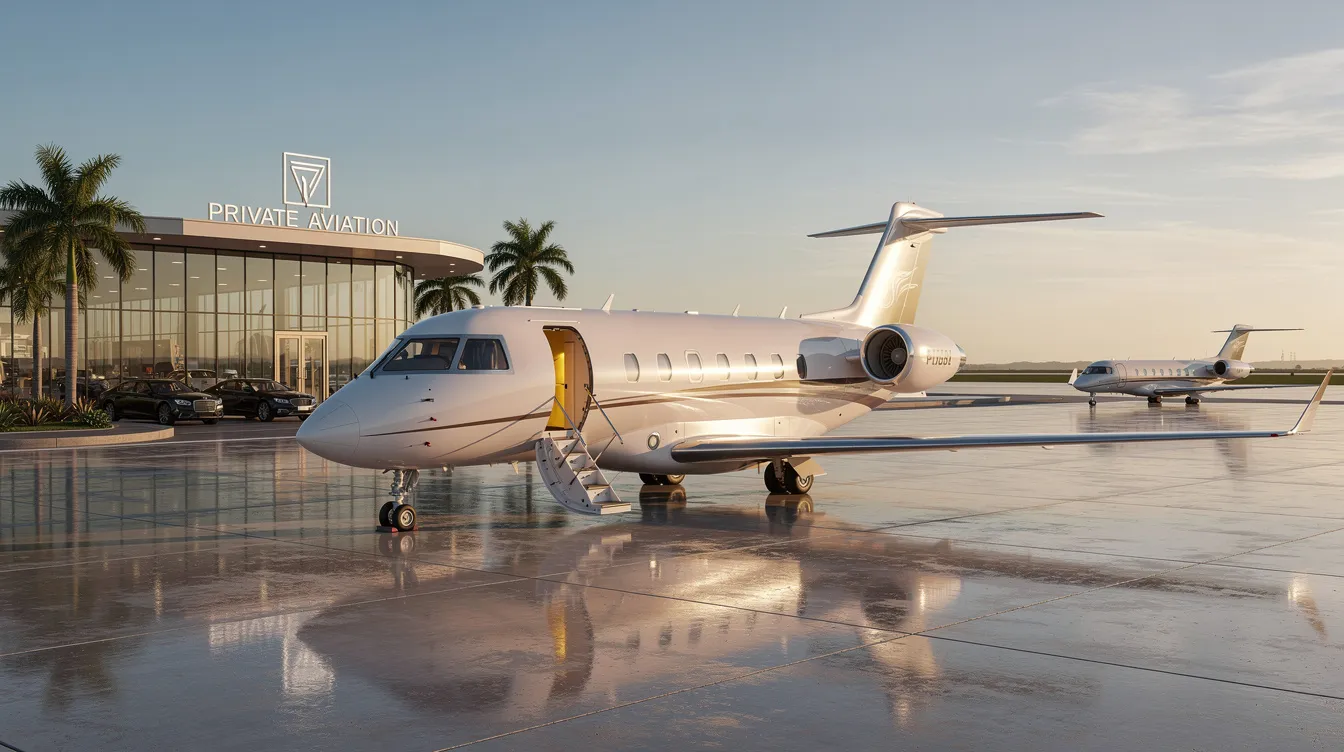
The phrase “types of plane” is not merely an aviation enthusiast’s curiosity—it represents a practical framework for choosing how to fly. This guide is designed for business travelers, aviation enthusiasts, and anyone interested in understanding the different types of planes and their uses. In this article, we focus primarily on airplanes—fixed-wing aircraft powered by engines and fuel—distinguishing them from other flying vehicles such as rotorcraft and lighter-than-air aircraft. Understanding each type of aircraft is essential, as it provides a key framework for exploring the various categories, designs, and operational capabilities discussed throughout the article. Whether you’re evaluating commercial airlines, considering cargo conversions, or exploring private jets, understanding aircraft categories directly impacts your time, comfort, and cost.
Aircraft Classification Criteria
Aircraft can be classified by different criteria, such as lift type, propulsion, and usage. Airplanes are broadly classified into commercial, military, and general aviation based on their purpose. Aircraft can also be grouped into broad categories such as civil aircraft and military aircraft.
Consider a New York–London business traveler: using a heavy jet through a jet card program saves 3–5 hours door-to-door compared to commercial first class, thanks to access to smaller airports like Teterboro and faster boarding through private terminals. That time translates to productivity, rest, or simply being present for critical meetings.
Matching aircraft type to mission profile is where strategic advantage emerges. A light jet handles Paris–Geneva efficiently at lower hourly rates, while a heavy jet makes nonstop service between Los Angeles and Tokyo possible with onboard meeting space and rest facilities. Safety, certification, and sustainability—themes we’ll explore throughout—apply differently across aircraft categories. Commercial aircraft operate under one set of federal aviation administration regulations; private jets under another. Modern aircraft designs increasingly incorporate fuel-efficient engines and carbon-offset programs, making environmental responsibility achievable across the spectrum.
Key Takeaways
Understanding different types of planes is a strategic advantage for high-net-worth and corporate travelers, enabling smarter decisions between commercial, private, and charter options
Aircraft fall into distinct categories—commercial airliners, cargo planes, private jets, propeller aircraft, lighter-than-air aircraft, and gliders—each serving specific missions with unique performance characteristics
Private jets range from very light jets for regional hops to ultra-long-range aircraft like the Gulfstream G700, capable of non-stop flights exceeding 7,000 nautical miles
Safety standards, carbon-neutral initiatives, and advanced technology apply differently across aircraft categories, with reputable operators maintaining third-party certifications (ARGUS, Wyvern, IS-BAO)
Jet cards offer flexible access to multiple aircraft types without ownership burdens, matching the right plane to each mission while prioritizing safety and sustainability. A detailed understanding of jet card pricing structures and typical costs complements the best jet card programs for frequent flyers, further optimizing cost predictability and availability.
Main Categories of Planes in Civil Aviation
When we discuss “plane” in aviation, we typically mean fixed-wing aircraft—heavier-than-air machines that generate lift through wings as they move through surrounding air. Heavier-than-air aircraft rely on aerodynamic lift to achieve flight and include airplanes, gliders, and rotorcraft, which generate lift through wings or rotors, in contrast to lighter-than-air aircraft that rely on buoyancy. In everyday language, people classify aircraft by use rather than technical specification.
Major civil aviation categories include:
Commercial passenger airliners: Boeing 737, Airbus A320, and widebody aircraft such as the Boeing 777 and the Airbus A380, which can accommodate an astounding number of passengers, ranging from approximately 500 to over 850, depending on the airline's seating configuration.
Dedicated cargo aircraft: Freighters such as the Boeing 747-8F and Boeing 777F, adapted from their passenger counterparts to fulfill cargo transportation needs.
Business and private jets: From light jets like the Cessna Citation CJ series and the Phenom 300, favored by regional airlines for their efficiency and versatility, to ultra-long-range aircraft.
Turboprops: Turbine-powered propeller aircraft such as the Cessna Caravan and Pilatus PC-12, known for their high efficiency and power, are perfect for reaching remote areas.
Piston-engine propeller planes: Training aircraft and general aviation workhorses like the Cessna 172
The FAA and other aviation organizations use categories to broadly classify aircraft based on their intended use and operating environment. Airplanes are broadly classified into commercial, military, and general aviation based on their purpose.
These categories differ dramatically in range, speed, runway requirements, and onboard experience. A regional jet might cruise at 450 knots for 1,500 nautical miles, while a turboprop covers similar distances at 280 knots but accesses shorter runways. Understanding these distinctions prepares you for informed decisions about flight options.
Commercial Airliners
Commercial airliners are designed for high-capacity, long-distance passenger travel and form the backbone of global air transport, moving over 4 billion passengers annually before 2020 and recovering strongly through 2025–2026. These powered aircraft operate scheduled routes, connecting cities through hub-and-spoke networks that maximize efficiency for commercial airlines.
The main commercial subtypes break down by size and mission:
Regional jets: Short routes, typically 50–100 passengers
Narrowbody single-aisle jets: Short to medium-haul, 100–240 passengers, often used for domestic or short-haul flights
Widebody twin-aisle jets: Long-haul flights, 250–400+ passengers
The commercial experience means fixed schedules, security queues, and limited customization. You board when the airline dictates, share cabin space with hundreds of strangers, and conform to predetermined routing. Technological advances—composite materials in the Boeing 787 and Airbus A350, modern avionics, and more efficient engines—improve fuel burn and reduce environmental impact, but the fundamental constraints remain.
Jumbo and Widebody Jets
Widebody jets feature two aisles and are designed for long-distance routes with high passenger density. These aircraft support premium cabins, lie-flat business seats, and extensive galley facilities for international service.
Key examples include:
Boeing 747: First flown in 1969, this aircraft type established mass long-haul travel
Airbus A380: Delivered starting 2007, double-deck design accommodating up to 850 passengers in an all-economy configuration
Boeing 777 and Airbus A350: Modern twin-engine widebodies with ranges of 7,000–8,000 nautical miles
These aircraft excel at efficiently moving hundreds of people. The 777-300ER and A350-900 can fly non-stop between most major international city pairs. However, compared to private heavy jets, widebodies mean shared space—even in first class, you’re one of 8–12 passengers in the premium cabin, not 12 passengers with an entire aircraft.
Narrowbody and Regional Jets
Narrowbody jets are single-aisle commercial airliners typically seating 100–240 passengers, optimized for short to medium-haul routes.
Concrete examples include:
Boeing 737 family: In service since the late 1960s, with current MAX variants
Airbus A320 family: A319, A320, A321, including neo models with newer engines
Regional jets: Embraer E-Jets and Bombardier CRJ series
These aircraft typically range 2,000–3,500 nautical miles, feeding major hubs from secondary cities in hub-and-spoke networks. While passenger capacity might match a corporate shuttle configuration, the boarding experience, schedule flexibility, and cabin privacy differ entirely from private jets. Commercial airliners operate on airline timelines; private jets operate on yours.
Cargo and Special-Mission Planes
Some aircraft are built or converted specifically for non-passenger missions—moving freight, outsized cargo, firefighting, medical evacuation, or surveillance. These specialized roles demonstrate aviation’s versatility.
Dedicated freighters include:
Boeing 747-8F and Boeing 777F: Modern freighters adapted from passenger models with large payload capacities
Airbus Beluga XL: Purpose-designed for transporting large aircraft components
Antonov An-124 Ruslan: Strategic airlifter with exceptional 150+ metric ton capacity
The Antonov An-225 Mriya deserves mention as the heaviest aircraft built to date, with a maximum loaded weight of 550–700 tons. Delivered in the late 1980s, it was destroyed in 2022 during the conflict in Ukraine, significantly reducing global heavy-lift capacity.
Special-mission planes include aerial firefighting aircraft like the Canadair CL-415 amphibious scooper, air ambulances based on business jets, and maritime patrol aircraft derived from commercial platforms. Firefighting aircraft are specially equipped to carry and drop large volumes of water or fire retardant on wildfires. While high-net-worth travelers rarely fly on cargo aircraft, understanding this ecosystem reinforces that aviation safety and reliability standards extend across all operations—the same rigor that governs cargo operations benefits private aviation.
Private Jets: Classes, Use Cases, and Strategic Benefits
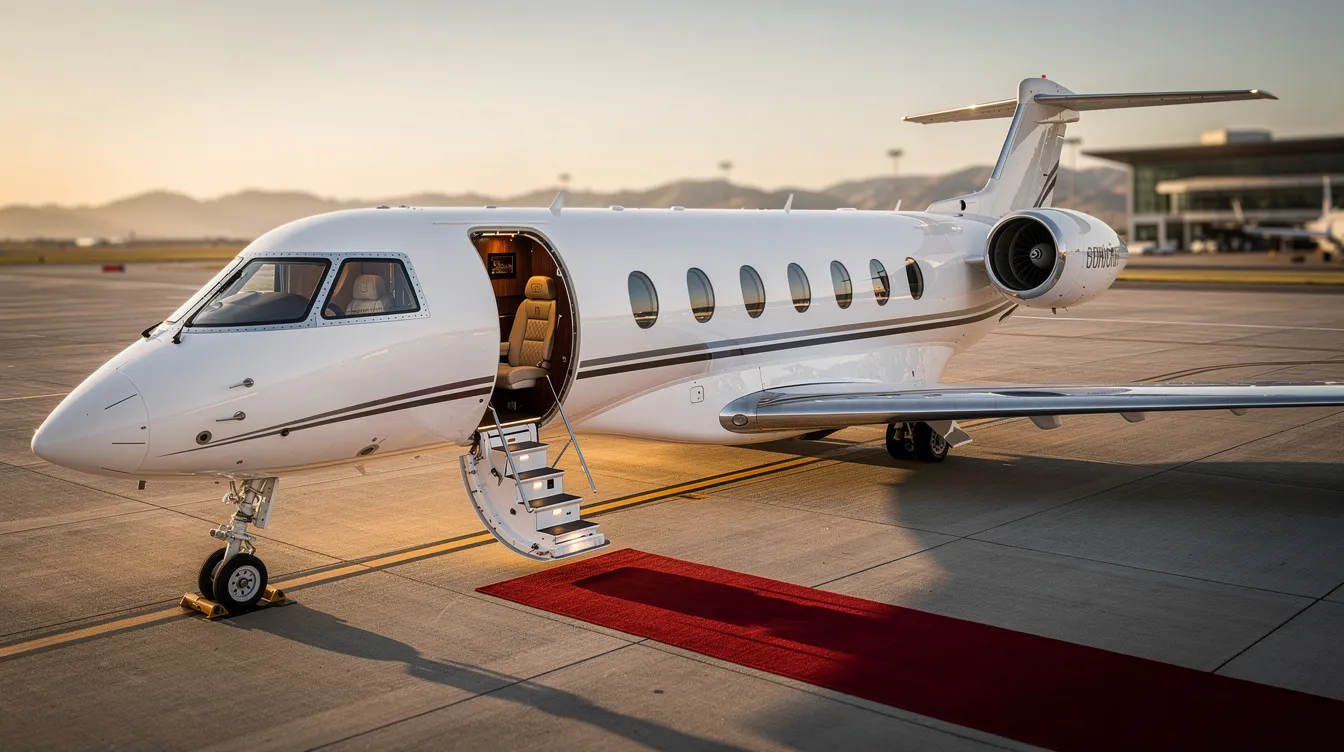
Private jets serve as strategic tools for time-sensitive executives, family offices, and ultra-high-net-worth travelers. These are not merely luxury toys—they’re instruments for multiplying productivity and protecting valuable time, and understanding the different types of private jets for every traveler helps align aircraft capabilities with specific mission profiles.
The most common types of private jets are grouped by size and range, and a deeper look at private jet sizes and cabin categories can further clarify which class best fits your comfort and budget expectations:
Very light jets (VLJs): 4–6 passengers, 600–1,200 nautical miles
Light jets: 5–9 passengers, 1,000–1,800 nautical miles, including models like the Cessna Citation CJ series and the Phenom 300, which exemplify small private jet luxury travel options favored for their efficiency and versatility
Midsize and super-midsize jets: 7–10 passengers, 2,000–3,500+ nautical miles
Heavy and ultra-long-range jets: 10–16 passengers, 4,000–7,500+ nautical miles. Notable examples include the Gulfstream G650, which has an impressive range of approximately 7,000 nautical miles and is a favorite among ultra-high-net-worth individuals, and the Bombardier Global 7500, which has an unprecedented range of approximately 7,700 nautical miles, making it the longest-range business jet available.
The comparison with commercial first class is straightforward: private wins on total door-to-door time, direct access to smaller airports, privacy for confidential meetings, and tailored service. First class may cost less per seat for solo travelers, but it cannot match the flexibility. When a board meeting shifts by four hours, your private jet departs when you’re ready, and understanding when chartering a private jet is worth the cost helps clarify when that flexibility justifies the premium over commercial fares.
Leading operators and jet card providers emphasize safety through third-party audits, sustainability through carbon-neutral commitments, and technology through advanced flight planning and onboard connectivity. These pillars apply regardless of the size of the jet aircraft.
Very Light and Light Jets
Very light jets are compact aircraft certified for single-pilot operation, seating typically 4–6 passengers, and optimized for short hops.
VLJ examples:
These aircraft access shorter runways and smaller airports, perfect for regional flights where major hubs add unnecessary ground time.
Light jets step up to approximately 20,000 pounds maximum takeoff weight, seating 5–9 passengers with ranges around 1,000–1,800 nautical miles:
Light jets handle regional business trips efficiently—London–Zurich, New York–Miami, or similar city pairs. Operating costs are lower than those of midsize and heavy jets, making them suitable for jet card programs focused on regional travel. For travelers comparing pistons, turboprops, VLJs, and light jets, a guide to the best small private aircraft for different missions can clarify trade-offs in performance, comfort, and cost. Pairing that with a comprehensive private jet price list by aircraft category and access model gives a fuller picture of budget implications. Quick turns, efficient fuel burn, and access to secondary airports define their value proposition.
Midsize and Super-Midsize Jets
Midsize jets provide increased cabin volume and range, usually seating 7–10 passengers with stand-up cabins on many models, and can range from 2,000 to 3,000 nautical miles.
Midsize examples:
These aircraft handle U.S. coast-to-coast or intra-Europe flights comfortably—Paris–Moscow, New York–Los Angeles with stops, or similar routes.
Super-midsize jets extend range to 3,000–3,500+ nautical miles with more spacious cabins:
A practical use case: a small executive team uses a super-midsize jet under a jet card program for regular meetings between New York and Los Angeles, or between London and Dubai. They depart late in the evening, work onboard using Ka-band satellite Wi-Fi, and arrive ready for morning meetings—same-day turnarounds that commercial aviation simply cannot support, especially compared to chartering smaller private planes for shorter missions, where trip profiles and costs look very different.
Heavy and Ultra-Long-Range Jets
Heavy jets represent large-cabin aircraft seating 10–16 passengers with full stand-up cabins, separate zones for lounging, conferencing, and rest, and range around 4,000–6,000 nautical miles.
Heavy jet examples:
Gulfstream G450/G550 (entered service 1990s–2000s)
Bombardier Global 5000/6000
Dassault Falcon 900/2000 series
Ultra-long-range jets define the pinnacle of business aviation, capable of non-stop flights exceeding 7,000 nautical miles:
These aircraft connect Singapore–Los Angeles or New York–Tokyo without fuel stops. Cabin features include master suites with shower facilities, multiple entertainment zones, advanced avionics like the Gulfstream Symmetry Flight Deck, and cabin altitudes that reduce fatigue on long-haul flights.
Multinational boards travel intercontinentally with full privacy, in-flight conferencing, and rest facilities—often through structured access solutions like jet cards or long-term charter arrangements, such as the BlackJet 25+ Hour Jet Card, for predictable access to mid-, super-midsize, and large-cabin aircraft or 100-hour jet card programs tailored to very frequent flyers.
Safety, Technology, and Sustainability in Private Jets
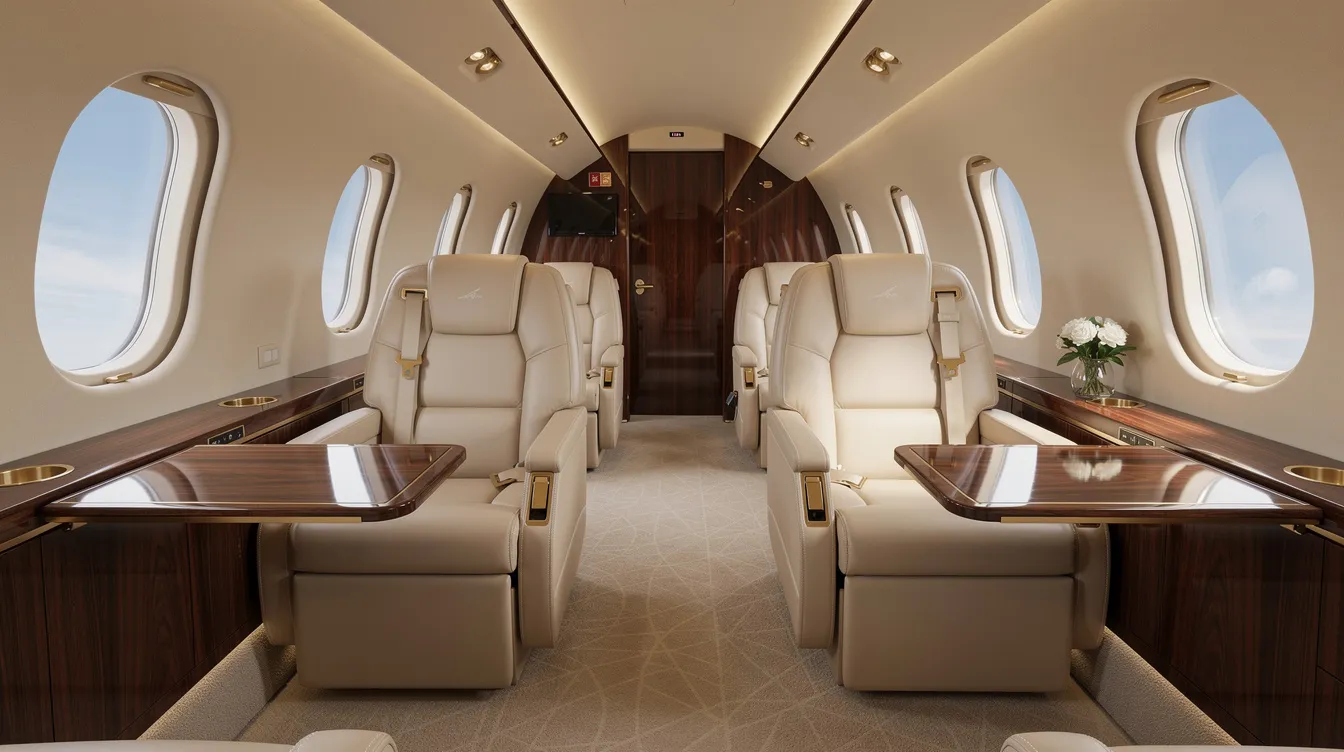
Across all private jet classes, three pillars define operational excellence: safety, technology, and environmental responsibility.
Safety elements:
Dual-qualified crews on larger jet aircraft
Rigorous maintenance under Part 135 or equivalent regulations
Independent audits through ARGUS, Wyvern, and IS-BAO certifications
Modern glass cockpits with synthetic vision technology
An aircraft's weight influences its certification category (such as 'Normal' or 'Utility'), which determines operational restrictions and design considerations.
Pilots may require a type rating on their license to operate specific aircraft types, especially larger or more complex jets.
Technology integration:
Gulfstream Symmetry Flight Deck and Bombardier Vision avionics
Satellite communications with Ka-band Wi-Fi for video conferencing
Flight-planning software optimizing routes for efficiency and weather avoidance
Real-time engine monitoring for predictive maintenance
Sustainability measures:
Newer engines with 15–25% fuel burn reduction compared to aircraft from 10–15 years prior
Standard carbon-offset programs are making flights carbon-neutral
Emerging sustainable aviation fuel (SAF) usage reduces lifecycle emissions 50–80%
Advanced winglet designs improve aerodynamic efficiency
When choosing an aircraft type for a private mission, discerning travelers increasingly weigh not only size and range but also safety credentials, connectivity options, and environmental impact, as well as broader access strategies, such as leasing a private jet with tailored terms and costs.
Propeller Planes and Turboprops
Not all planes are jet aircraft. Many use propeller-driven aircraft, powered by internal combustion engines or turbines, which remain vital for flight training, regional transport, and access to remote areas with short or rough runways, even though premium services like BlackJet private jet cards and charter solutions focus primarily on turbine-powered business aircraft.
Propeller aircraft generally cruise at lower speeds and altitudes than jets but prove more economical for short sectors and utility missions. The distinction between piston-engine aircraft (common in general aviation and flight schools) and turboprops (turbine engines driving rotating blades) matters for understanding performance and operating costs.
Common missions include pilot training toward a pilot’s license, recreational pilots flying for pleasure, sightseeing tours, feeder routes to larger hubs, cargo delivery to remote locations, and short-haul corporate shuttles where runway limitations preclude jets; when these needs evolve into private jet usage, understanding how much it costs to rent a private jet or charter a small private plane for specific trips becomes central to budgeting.
Single-Engine Private Planes
Single-engine piston planes represent the entry point to powered flight for most pilots. Their simplicity, affordability, and widespread availability make them central to flight training and recreational flying.
Well-known examples:
Cessna 172 Skyhawk (in continuous production since the 1950s, the most-produced aircraft in history)
Piper PA-28 Cherokee/Archer series
Cirrus SR22 (modern composite design with whole-aircraft parachute system)
Typical performance includes seating for 2–4 people, cruising at 110–180 knots, ranges of 400–800 nautical miles, and operation from smaller airfields. These aircraft serve personal travel and local business trips effectively, but lack the speed, cabin comfort, and safety redundancy that corporate travelers demand for critical missions. General aviation thrives on these workhorses, even as they remain distinct from business aviation’s higher speeds and operational flexibility.
Turboprops and Utility Aircraft
Turboprops use turbine engines to drive propellers, offering higher reliability and power-to-weight ratio than piston engines. This proves especially valuable on hot-and-high airfields and short runways where jet aircraft struggle.
Concrete examples:
Pilatus PC-12: Single-engine Swiss turboprop popular for executive and cargo use
Beechcraft King Air series: Iconic twin turboprops introduced in the 1960s
Cessna Caravan: Workhorse for cargo and remote passenger services
Typical numbers include cruise speeds of 250–320 knots, ranges around 1,000–1,800 nautical miles, and flexible cabin configurations for passengers, cargo, or medevac setups.
Use cases include regional corporate trips into airports too short for jets, humanitarian missions, and charter operations where runway constraints matter more than raw speed. Compared to light jets flying similar distances, turboprops cruise at lower speeds but can be more cost-effective and can access rougher strips that jets cannot, while larger missions—such as moving 20 passengers—may call for heavy jets and VIP airliners optimized for 20 travelers.
Amphibious and Special-Role Propeller Planes
Amphibious aircraft operate on both water and standard runways, using hulls or floats paired with retractable landing gear. These flying boats and their modern descendants serve specialized missions.
Examples include:
ICON A5: Light sport amphibious aircraft launched in the 2010s
de Havilland Canada DHC-2 Beaver and DHC-6 Twin Otter: Classic bush and seaplane models
Canadair CL-415: Modern amphibious firefighting aircraft
Roles range from serving remote island communities and tourism in coastal regions to firefighting operations (scooping water from lakes) and search-and-rescue missions, where runways may be unavailable. While rarely the first choice for corporate executives, these aircraft prove strategically valuable for site visits to remote projects, mines, or resorts where conventional infrastructure is lacking.
Rotorcraft: Helicopters and Gyroplanes
Rotorcraft include helicopters and autogyros, which use rotating blades to generate lift, enabling vertical takeoff and landing capabilities. Helicopters are widely used for search and rescue, law enforcement, medical evacuation, and transportation in restricted or urban areas where fixed-wing aircraft cannot operate effectively.
Lighter-Than-Air Aircraft and Gliders
Not all aircraft intended for flight rely on dynamic lift from wings. Some use buoyancy (lighter than air) while others glide unpowered. These represent distinct, historically important approaches to aviation.
While balloons, blimps, and airships are not “planes” in the strict fixed-wing sense, they frequently appear in discussions about aircraft categories and showcase flight’s diversity. Gliders contributed to early aeronautical understanding during scientific exploration and remain central to sport aviation.
Lighter-Than-Air: Balloons, Blimps, and Airships
Lighter-than-air aircraft use gases lighter than the surrounding air—such as hot air or helium—to generate static lift, enabling flight without relying on forward speed or wings.
Key types:
Hot air balloons: Free-floating, recreational, and tourism flights
Non-rigid blimps: Like Goodyear blimps used for advertising and event coverage
Rigid airships: Historic Zeppelins of the early 20th century
The Hindenburg disaster in 1937 effectively ended passenger airship travel, though modern hybrid concepts like the Airlander 10 (first flights mid-2010s) explore potential roles in cargo and surveillance. Current uses include tourism flights, aerial advertising, and experimental aircraft concepts. Speeds are modest, and the missions are niche compared to fixed-wing aircraft—most business travelers and jet card users will rarely encounter them as practical transport.
Gliders and Sailplanes
Gliders (sailplanes) are unpowered fixed-wing aircraft gaining altitude using rising air currents—thermals and ridge lift—after launch by aerotow, winch, or self-launch systems.
Physical characteristics include long, high-aspect-ratio wings, smooth composite structures, and highly efficient aerodynamics minimizing drag. While many gliders are pure sailplanes, some modern aircraft have small, retractable engines for self-launch, providing low-speed flight capability when needed.
Main uses include sport and competition flying, basic flight training in energy management, and aerodynamics research. Epic Flight Academy and similar institutions use gliders to teach fundamental aircraft control surfaces and attitude management. However, gliders remain sport and training tools rather than transport solutions for time-sensitive business travel.
Experimental and Military Aircraft
Experimental and military aircraft represent some of the most dynamic and innovative segments within the aviation industry. While most aircraft intended for commercial or private use follow established designs and certification standards, experimental aircraft push the boundaries of what’s possible in aviation. These unique machines serve as testbeds for new technologies, materials, and aerodynamic concepts that can eventually transform the efficiency, safety, and performance of future aircraft across all categories.
Experimental aircraft come in many forms, from small, unmanned aerial vehicles (UAVs) exploring autonomous flight to large, manned jets equipped with cutting-edge propulsion systems or advanced avionics. These aircraft are often used by manufacturers, research institutions, and government agencies to validate new ideas before they are adopted by mainstream aviation. For example, innovations like fly-by-wire control systems, composite airframes, and next-generation jet engines often debut in experimental aircraft before becoming standard in modern commercial or business jets. The lessons learned from these projects drive progress throughout the aviation industry, influencing everything from flight training to the design of lighter, more efficient airframes.
Military aircraft, meanwhile, are purpose-built for a wide range of missions that go far beyond civilian transport. These include combat operations, surveillance and reconnaissance, troop and cargo transport, aerial refueling, and pilot training. Military aircraft include bombers, fighter jets, stealth aircraft, transport planes, trainers, and warbirds. Fighter aircraft are fast, agile planes designed primarily for air-to-air combat and maintaining air superiority. Bomber aircraft are large aircraft designed to carry heavy payloads and drop bombs or missiles on ground targets. Transport and tanker aircraft are used to move troops and cargo, or to provide in-flight refueling to extend the range of other aircraft. Unmanned aerial vehicles (drones) are remote-controlled or autonomous aircraft used for surveillance, photography, or military operations.
The influence of military aviation extends well beyond the battlefield. Many technological breakthroughs—such as radar, jet engines, and stealth materials—originated in military aircraft programs before finding their way into civil aviation and commercial aircraft. The ongoing development and deployment of military aircraft ensure that the aviation industry remains at the forefront of innovation, with benefits that ultimately enhance safety, performance, and operational flexibility for all types of aircraft, and they also shape the career paths and compensation structures for private jet pilots and the cost of employing them.
The Lockheed SR-71 Blackbird is notable as the fastest manned, air-breathing powered airplane, having reached 3,530 km/h (2,193 mph), showcasing the advanced capabilities developed in military aviation.
By understanding the unique roles of experimental and military aircraft, aviation enthusiasts and industry professionals alike gain a deeper appreciation for the technological advancements and strategic capabilities that shape the modern world of flight. Whether driving scientific exploration or supporting military purposes, these aircraft types are essential to the continued evolution of aviation.
How to Choose the Right Type of Plane for Your Mission
Matching aircraft type to mission profile requires evaluating several key variables. Understanding the type of aircraft is crucial for matching mission requirements, as each type offers different capabilities and operational profiles:
Route length:
Under 1,500 nm: light jet or turboprop
1,500–3,500 nm: midsize/super-midsize
Over 3,500 nm: heavy or ultra-long-range
Runway constraints:
Passenger count:
1–4: VLJ/light jets
5–8: midsize jets
9–16: heavy jets
Onboard needs:
Cost sensitivity:
Practical examples:
500–800 nm regional hop: Light jet or turboprop between secondary cities
Cross-country with 6–8 passengers: Midsize or super-midsize jet
Non-stop intercontinental board meeting: Heavy or ultra-long-range jet with privacy and rest facilities
Access models matter too. Full aircraft ownership requires $20M–$80M+ capital plus annual fixed costs regardless of utilization. On-demand charter offers flexibility but pricing variability. Jet cards provide predictable hourly rates, guaranteed availability, and access to multiple aircraft types — without the ownership burden — matching the right plane to each mission. A clear overview of jet card costs and private jet membership pricing, along with specific breakdowns such as 50-hour jet card pricing and value considerations and NetJets jet card cost structures, helps evaluate these programs versus on-demand charter or ownership. Different types of aircraft may also require specific pilot's license endorsements or certifications, so regulatory considerations are important when selecting an aircraft.
Top-tier providers prioritize safety audits, modern fleets for better fuel efficiency, and carbon-neutral operations as standard. These factors should inform both aircraft and provider selection.
Summary: The Evolving Landscape of Plane Types
The aviation industry encompasses remarkable diversity—from commercial airliners moving billions of passengers annually to specialized cargo aircraft, private jets serving executives and families, propeller planes enabling general aviation, and lighter-than-air aircraft pursuing niche missions.
Technological improvements and sustainability pressures continue to reshape aircraft design. More efficient twin-engine widebodies replace older four-engine jets for both military and civil aviation. Advanced avionics enhance safety across all aircraft categories. Electric and hybrid concepts show promise for shorter routes, potentially transforming regional flights within a decade. Advanced aircraft types, such as powered-lift vehicles, including those capable of vertical takeoff, like the Bell Boeing V-22 Osprey, demonstrate how modern designs combine helicopter-like flexibility with fixed-wing performance. The development of digital electronics in the latter half of the 20th century led to major advances in flight instrumentation and 'fly-by-wire' systems. The 21st century has seen the widespread use of pilotless drones for military, commercial, and recreational purposes.
For discerning travelers and corporate decision-makers, understanding these types is not academic—it determines how quickly, comfortably, and responsibly you move key people and assets across the world. The right aircraft selection, matched to specific tasks, multiplies productivity rather than merely providing transport.
Explore premium private jet access solutions that provide flexible access to different plane types, with safety, technology, and carbon-neutral standards built in from the start.
Elevate your travel—effortlessly. With private aviation access through jet card programs, flight isn’t reserved for aircraft owners alone. It’s accessible on your terms, complete with rigorous safety certification, carbon-neutral performance, and unmatched operational flexibility. Discover how refined, meaningful travel becomes your new standard.
FAQ: Types of Plane and Private Jet Access
What is the practical difference between a light jet and a turboprop for business travel?
Both serve similar regional ranges—roughly 500–1,500 nautical miles—but their performance characteristics differ meaningfully. Light jets typically fly faster (400–450 knots vs. 250–320 knots) and higher with better cabin altitude, reducing fatigue on longer sectors. Turboprops can operate from shorter or rougher runways and may be more economical for very short sectors where jet speed advantages diminish.
The choice often comes down to runway limitations, weather considerations, passenger comfort expectations, and hourly budget rather than safety—both categories can meet rigorous certification standards. Recreational pilots and business travelers frequently mix both types via flexible access programs, using turboprops for infrastructure-limited trips and light jets when time and higher speeds matter most.
How do jet cards relate to different types of planes?
Jet cards function as pre-paid or membership-style programs granting access to a curated fleet across multiple size classes—typically light, midsize, and heavy jets—at fixed or semi-fixed hourly rates. Cardholders select aircraft category per trip, matching mission needs without owning a specific plane.
Benefits include standardized safety protocols, consistent service standards, and often automatic carbon-neutral commitments across all flights. For travelers using multiple aircraft types throughout the year—a light jet for regional meetings, a super-midsize for transcontinental trips—jet cards simplify planning and budgeting compared to searching for ad hoc charter quotes each time, whether through broad-market offerings or more specialized options like Flexjet jet card programs focused on specific fleets.
Are private jets safer than commercial airliners?
Commercial airlines operate under stringent regulations and maintain extremely strong safety records—approximately one accident per 11 million flight hours. Private jets operating under reputable charter and jet card programs achieve comparable safety through strict maintenance schedules, experienced multi-crew operations, and third-party audits.
The key is choosing operators with recognized safety certifications (ARGUS, Wyvern, IS-BAO) and modern aircraft equipped with advanced avionics and control system redundancy. Smaller airports and flexible schedules can reduce some operational stresses, such as hub congestion, but risk management depends primarily on operator standards rather than on whether the plane is private or commercial.
Which type of plane is best for an overnight intercontinental business trip?
Heavy or ultra-long-range business jets are ideal for overnight intercontinental missions. Aircraft such as the Gulfstream G650ER, Gulfstream G700, and Bombardier Global 7500 combine nonstop range (often 6,500–7,500+ nautical miles) with lay-flat beds, private cabins, and meeting areas.
This enables executives to depart late evening from one continent, sleep onboard in a proper bedroom suite, and arrive ready for meetings the next morning—minimizing jet lag compared to multi-segment commercial itineraries. The broader category of ultra-long-range jets also offers advanced cabin altitude management, reducing fatigue from hours at higher altitude compared to World War-era pressurization standards.
How is sustainability addressed across different types of planes?
Modern aircraft design incorporates more efficient jet engine technology, composite materials reducing aircraft’s weight, and aerodynamic improvements that cut fuel burn and emissions per flight hour. Newer jets burn 15–25% less fuel than aircraft from 10–15 years prior.
Additionally, carbon offset programs have become standard among premium operators, making flights effectively carbon neutral at no additional cost. Sustainable aviation fuel (SAF), derived from renewable feedstocks, can reduce lifecycle CO₂ emissions by 50–80% compared to conventional jet fuel. Discerning travelers and corporations can prioritize providers committed to these initiatives, aligning aviation choices with broader ESG and sustainability goals while maintaining access to efficient air transport solutions.
Conclusion
Understanding the various types of planes—from commercial airliners and cargo aircraft to private jets and experimental models—is essential for making informed decisions about travel and aviation investments. Each aircraft type offers unique advantages suited to different missions, whether it's the efficiency and capacity of commercial airliners, the flexibility of turboprops and light jets, or the cutting-edge innovation found in experimental and military aircraft. As sustainability becomes increasingly important, modern advancements and programs, such as those offered by BlackJet, demonstrate how the aviation industry is evolving to meet environmental goals without compromising performance or convenience. Whether you are an aviation enthusiast, a business traveler, or a pilot in training, a solid grasp of aircraft categories and capabilities empowers smarter, safer, and more sustainable choices in the skies.


 Sign up with google
 Sign up with Apple