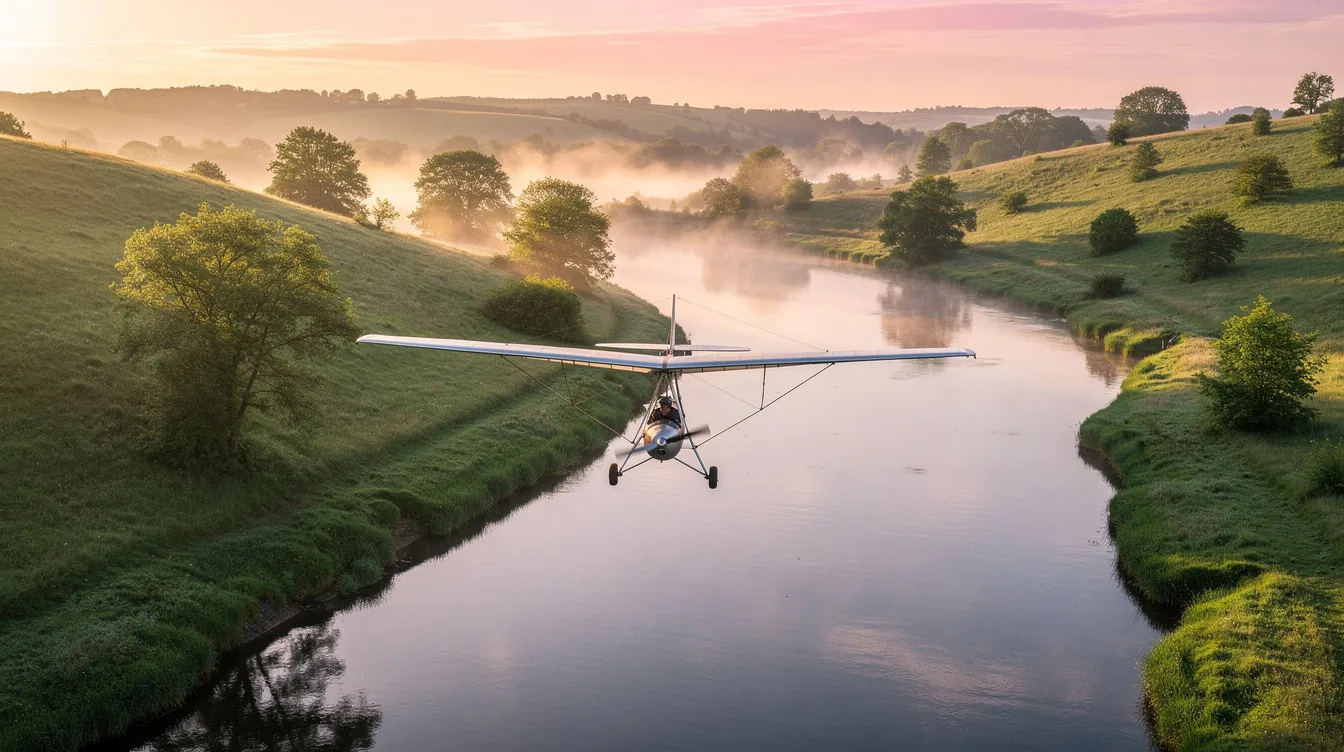
The world of aviation spans an extraordinary range-from a single-seat ultralight drifting over farmland at dawn to a pressurized cabin crossing the Atlantic at 45,000 feet. Both experiences belong to the same sky, yet they serve entirely different purposes. Here is how ultralight flight fits alongside private jet access in a modern, well-rounded aviation lifestyle.
Ultralight Flight in the Age of Private Jets
Picture two Saturday mornings. In one, a pilot climbs into an open-cockpit ultralight on a grass strip, lifts off at 40 knots, and spends an hour tracing a river valley at low altitude. In the other, an executive boards a BlackJet-catered Gulfstream at Teterboro, settles into a flat-bed seat, and lands in London seven hours later. Ultralight flight involves very small single-seat aircraft used exclusively for recreation or sport, while private jets serve strategic business and luxury travel needs across continents.
The numbers make the contrast vivid:
Ultralight aircraft cruise at 30–60 knots; midsize private jets cruise at 350–500+ knots.
Ultralights typically fly 80–150 miles on a tank of fuel; long-range jets cover 3,000+ nautical miles nonstop.
Ultralights can only carry one occupant; private jets can carry 4 to 19+ passengers with luggage, catering, and connectivity.
Many BlackJet members are aviation fans who fly ultralights on weekends for fun and adventure, then rely on premium private jet cards and Jet Card programs for time-critical travel.
Ultralight aviation is accessible, affordable, and deeply personal. Private jet access is about speed, reliability, and productivity. Together, they form a portfolio of flight experiences.
What Is an Ultralight Aircraft? Definitions, Types, and Experience
An ultralight aircraft is a very light, minimally equipped airplane built for one purpose: the pure enjoyment of flight. In the U.S., the FAA defines ultralights under Part 103 with specific limits:
Ultralight aircraft must have an empty weight under 254 pounds, excluding floats and safety equipment.
Maximum fuel capacity of 5 U.S. gallons.
Top speed at full power of 63 mph (55 knots); stall speed under 24 knots.
Single seaters only-no passengers, no commercial use.
Major types of ultralight vehicles include:
Fixed-wing ultralights: minimal structure, open cockpit, cruise speeds between 45 and 60 knots. Open cockpits in ultralights provide unmatched visibility during flight.
Trikes (weight-shift control): similar to a powered hang glider with cruise speeds of 35 to 60 knots.
Powered parachutes: a parafoil wing with a wheeled cart; powered parachutes excel for low-altitude scenic flights and are among the easiest to learn.
Gyroplanes: autorotating rotor for lift, propeller for thrust. Gyroplanes offer better wind tolerance than lighter ultralights and stronger performance in variable air.
Amphibious variants: equipped with floats for water operations, though added weight can challenge Part 103 compliance.
The flying experience is unlike anything in a pressurized cabin. You feel the wind, smell the ground below, and manage every control surface by hand. It is amazing in its simplicity-closer to a powered glider than an airplane in the traditional sense.
Ultralight Aviation Regulations, Part 103, and Pilot License Requirements
One of the most common questions about ultralight aviation: Do you need a license? In the U.S., ultralight pilots do not need a pilot license, pilot certificate, or medical certificate to fly under FAA Part 103. Ultralights have minimal regulatory requirements under this framework, but the rules are still strict:
Ultralights can only carry one occupant under FAA regulations—no passengers.
Ultralight operations are restricted to recreational flying only; no business or commercial use.
Daylight and VFR only; ultralights must maintain visual reference to the surface during flight.
FAA Part 103 imposes operational restrictions on ultralights including flying in congested areas and controlled airspace without prior permission.
No registration is required for aircraft that meet Part 103 limits.
Once an aircraft exceeds these weight, speed, or fuel limits, it becomes subject to Light Sport Aircraft or general aviation regulations, requiring a sport or private pilot license, an airworthiness certificate, and registration.
Internationally, European ones and other jurisdictions differ. In Canada, the UK, and much of Europe, microlight or ultralight pilots typically need a national permit or license-especially for two-seat aircraft or carrying passengers. Commercial sightseeing operations are not permitted under Part 103, which is why business travel and premium aerial experiences use certified aircraft and Part 135 operators.
Training, Safety, and How to Start Flying Ultralights
Even though no pilot license is required for many ultralights, professional pilot training is strongly recommended. Training costs for ultralight flying vary from hundreds to thousands of dollars depending on location and aircraft type, but the investment builds confidence and saves lives.
A realistic path to your first solo flight:
Introductory test flight with a local instructor at an ultralight school or club to decide if it suits you.
5–10 hours of dual instruction covering takeoffs and landings from grass strips, basic maneuvers, and emergency procedures like engine failure response.
Focus areas: weather assessment, turbulence awareness, preflight inspections, and maintenance knowledge. Ultralights are sensitive to wind, turbulence, and rapidly changing weather, making conservative decision-making essential.
Supervised solo practice in calm conditions before flying independently.
Many ultralights can operate from small private fields or specialized flight parks, and ultralights provide less structural protection compared to conventional aircraft, so disciplined habits matter more than in enclosed cockpits.
How does this compare to private jet safety? BlackJet's programs use ATP-rated crews under rigorous third-party safety audits, scheduled maintenance, and dual-crew operations. Ultralight safety relies on personal responsibility and community standards. Many private jet pilots began in grassroots ultralight aviation, using it as a stepping stone to build stick-and-rudder skills before moving into business aviation careers.
Costs of Ultralight Flight vs. Private Jet Access
Ultralight flight emphasizes inexpensive and simple recreational flying-a sharp contrast to the efficiency and scale of private jet travel. Here are concrete examples:
Ultralight ownership costs:
Used single-seat ultralights cost around $8,000–$20,000.
New ultralight kits range from $12,000 to $35,000; ready-to-fly models can exceed $25,000 (some available for sale through manufacturers or community forums).
Ultralights burn as low as 5 liters of fuel per hour, keeping each hour in the air remarkably cheap.
Hangar or tie-down fees at small airfields, modest insurance, and periodic engine overhauls round out ongoing costs.
Ultralights have a fuel limit that restricts their range, but for local flying, this is rarely a worry.
Private jet access costs:
On-demand charter for occasional trips, or BlackJet Jet Card programs-such as a prepaid 25-hour block-for frequent travelers who want guaranteed access across multiple cabin classes.
Midsize jet cards average roughly $9,500–$10,500 per hour, including fuel and surcharges; understanding jet card cost per hour helps compare programs accurately.
Ultralights provide lower costs compared to traditional aviation at every level. Someone might spend $15,000 building an ultralight for local weekend flying, then use a BlackJet Jet Card for quarterly New York–Miami and Los Angeles–Aspen trips; a solid grasp of jet card membership pricing makes it easier to budget those hours. Each optimizes for a different need: freedom and affordability versus time saved, privacy, and guaranteed performance.
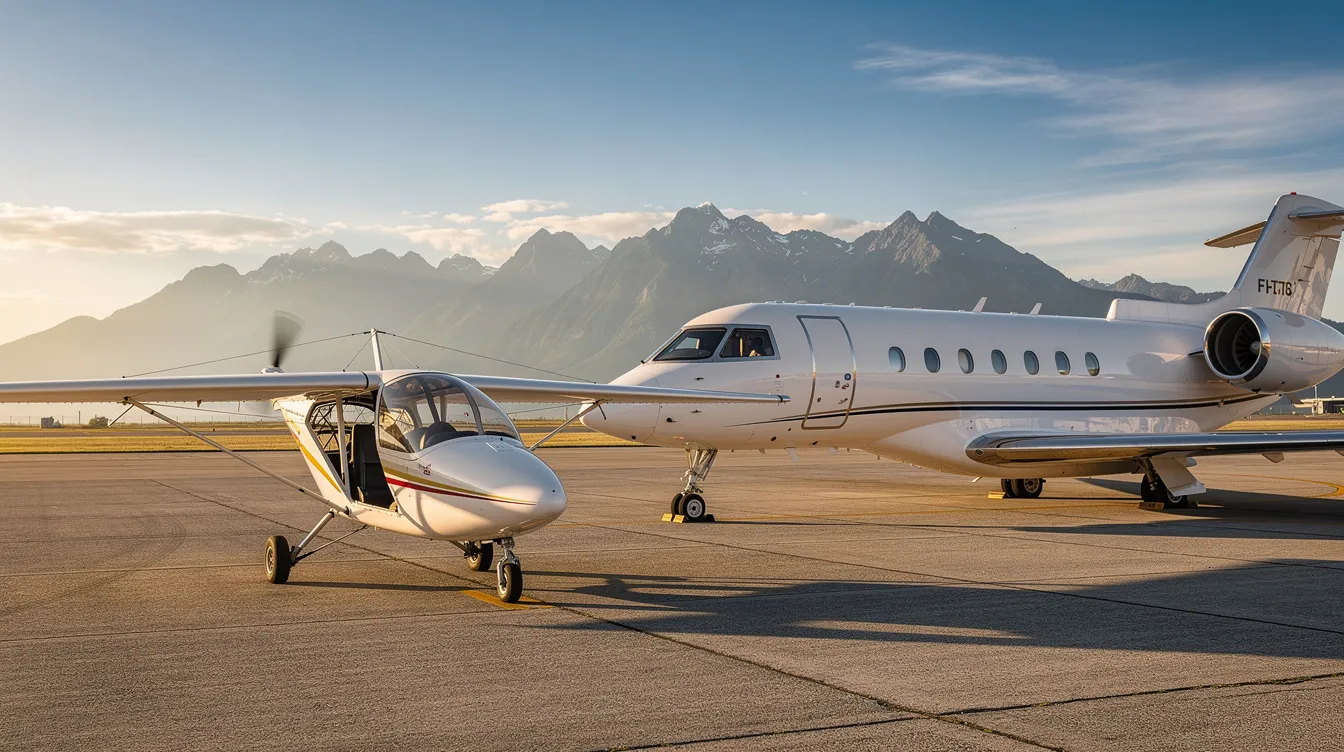
Ultralight Aircraft Ownership, Kits, and Community
Imagine a weekend morning: you roll your ultralight out of a small hangar on a trailer, complete a preflight check, and take off from a grass strip for a 45-minute flight over nearby mountains. That experience-spontaneous, personal, hands-on-is what ultralight ownership delivers.
Kit-built vs. factory-built: Building a kit ultralight requires between 200 and 700 hours of assembly, depending on the complexity of the model. Constructing your own experimental aircraft demands basic workshop skills and patience, but the reward of flying an aircraft you personally assembled is unparalleled. This experience is somewhat akin to selecting among budget-friendly private aircraft options when advancing to certified airplanes.
Building your own experimental aircraft demands basic workshop skills and patience, but the satisfaction of flying something you assembled is unmatched, much like choosing among budget-friendly private aircraft options when you move up to certified airplanes.
Community: Local ultralight clubs host builder workshops and group flights. Annual AirVenture Oshkosh features dedicated ultralight areas where ultralight events bring together dozens of homebuilt aircraft. EAA chapters provide mentorship, safety briefings, and an active site for peer knowledge exchange.
Grassroots culture: Grassroots aviation emphasizes affordability and peer mentorship. Experienced ultralight pilots guide newcomers through aircraft selection, maintenance, and safe flying practices.
This peer-driven safety culture parallels what BlackJet builds at a different scale: both ultralight clubs and premium jet membership programs rely on trusted networks, standards, and shared knowledge to create a confident, efficient flight experience, especially for frequent flyers comparing the best jet cards for their needs.
When to Choose Ultralight Flight and When to Choose a Private Jet
The answer depends on your mission:
Choose ultralight aviation when:
You want local recreational flying, hands-on piloting, and the pure enjoyment of being in the sky at low altitude.
Your goal is a 30-minute dawn flight in a powered parachute over farmland-solo, unhurried, close to the ground.
You value style, freedom, and personal adventure over speed or range.
Choose a private jet when:
You need to reach back-to-back meetings in three cities in a single day.
You are traveling with colleagues, family, or luggage from New York to the Caribbean or across the Atlantic, where understanding the cost to charter a small plane or a larger jet helps you choose the right option.
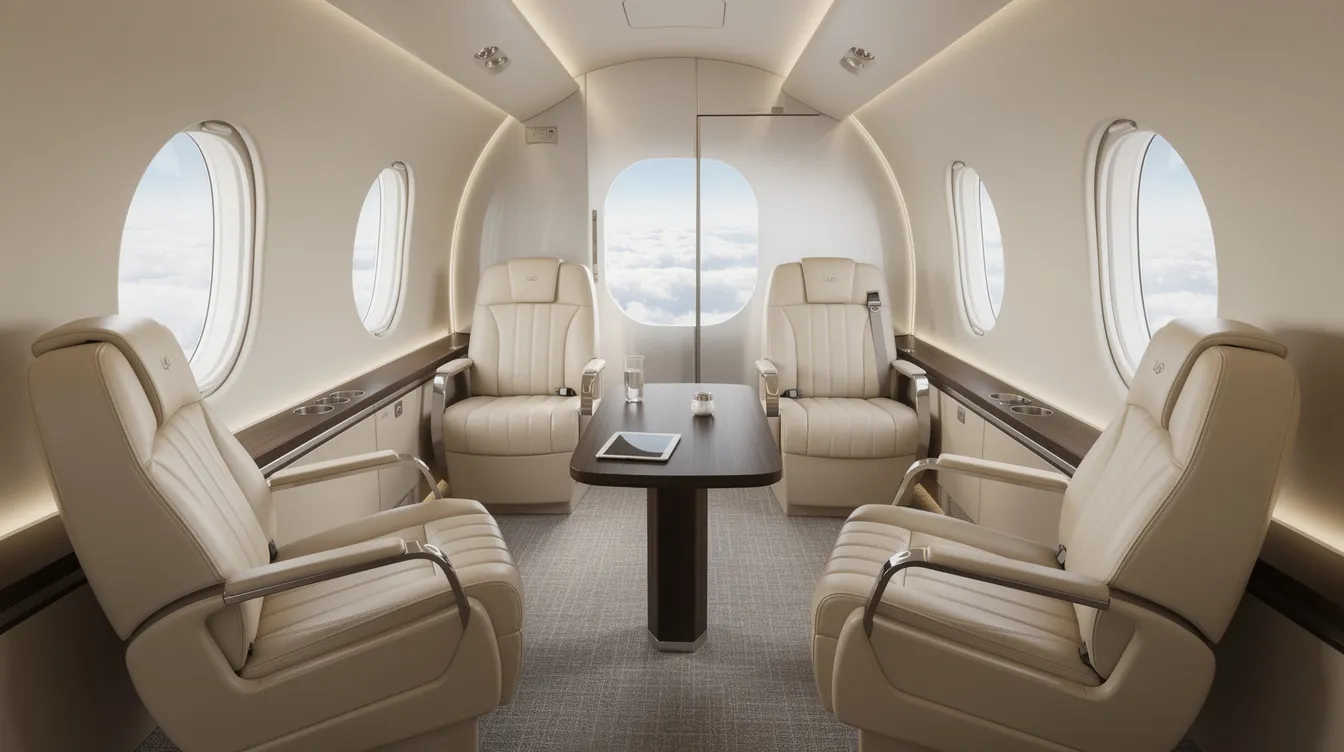
Speed, comfort, and reliability are non-negotiable. A midsize jet covers New York to Miami in under three hours with Wi-Fi, catering, and privacy, and you can estimate the budget by looking at how much it costs to rent a private jet.
Many affluent travelers decide to maintain both: ultralights for weekend enjoyment, and a BlackJet Jet Card for serious, time-sensitive, or long-range trips. The two are complementary, not competing.
Safety, Sustainability, and Technology: From Grass Strips to Jet Cards
Ultralight aviation keeps energy use low by design-burning 1–2 gallons of fuel per hour at slow speeds—but operates under looser safety oversight than business aviation.
Safety: BlackJet's partner operators hold certifications like ARG/US, Wyvern, or IS-BAO, fly with dual crews, and follow scheduled maintenance programs. Ultralights rely on pilot discipline and community standards. For a deeper look, visit BlackJet's safety and certification standards and consider the broader cost of hiring private jet pilots and crews.
Technology: Private aviation features digital booking platforms, real-time flight tracking, and 24/7 support, which also power modern unlimited private jet flight memberships. Ultralight flying remains more analog-handheld GPS, wind socks, a confident hand on the stick.
Sustainability: A Saturday morning ultralight flight burns a few gallons of fuel and produces minimal emissions. A carbon-neutral, long-range BlackJet flight for an international board meeting offsets its footprint through verified carbon programs or sustainable aviation fuel, ensuring every journey meets modern environmental expectations while still fitting within a thoughtful private jet price and access strategy.
Frequently Asked Questions About Ultralight Flight and Private Jet Alternatives
Do I really not need a pilot license to fly ultralights? In the U.S., no. Under FAA Part 103, single seat ultralights meeting weight, speed, and fuel limits require no license, no certificate, and no medical. Outside the U.S., check local regulations-most countries require at least a national permit.
How far can an ultralight aircraft fly? Typically 80–150 miles on 5 gallons of fuel. Flights are usually planned as local recreational hops, not cross-country travel.
Can I use an ultralight aircraft for business or to carry passengers? No. Part 103 ultralights are limited to a single occupant and non-commercial, recreational use only.
How safe are ultralight aircraft compared to private jets? Ultralights have lower speed and energy in any incident, but less redundancy and regulatory oversight. Private jets in BlackJet's programs, including structured products like the BlackJet 25+ Hour Jet Card, are professionally crewed, safety-audited, and maintained under strict schedules-statistically safer per passenger-mile.
What should I choose if I need to get from New York to Miami with colleagues? A private jet charter or BlackJet Jet Card—especially if you are considering a larger commitment like a 100-hour jet card. Ultralights cannot carry passengers, lack range, and are weather-dependent. A midsize jet makes that trip in about two and a half hours with comfort, luggage capacity, and scheduling flexibility.
Conclusion
Ultralight flight and private jet access represent two distinct yet complementary facets of modern aviation. Ultralight aircraft offer an intimate, affordable, and exhilarating way to experience the pure joy of flying close to nature, ideal for recreational pilots who value simplicity and personal freedom. In contrast, private jets provide unparalleled speed, comfort, and reliability for business and luxury travelers seeking seamless global reach and premium service.
Together, these options enrich an aviation lifestyle by catering to diverse needs—from weekend adventures in an ultralight over scenic landscapes to efficient, time-sensitive corporate travel across continents with BlackJet's Jet Card programs. Embracing both allows enthusiasts and professionals alike to enjoy the best of both worlds: the hands-on thrill of ultralight flying and the strategic advantage of private jet access.
Explore how BlackJet’s exclusive Jet Card memberships can elevate your travel experience, offering premier safety, sustainability, and technology-driven convenience. Whether your journey begins on a quiet grass strip or a bustling international airport, BlackJet invites you to discover the future of private aviation tailored to your lifestyle.
Whether you land on a grass strip after a quiet sunrise flight or step off a jet after crossing an ocean, aviation rewards those who respect the sky. Ultralight flight and private jet access each offer something irreplaceable-one rooted in simplicity and personal freedom, the other in seamless global reach that can include everything from affordable private jet options and entry-level budget-friendly aircraft to 50-hour jet card programs, regional and global jet card pricing structures, or even large-cabin solutions like 12-seater private jets and 20-passenger or 50-passenger private jets.


 Sign up with google
 Sign up with Apple