For executives and discerning travelers flying United Airlines in 2026, the difference between first class and business class isn't always intuitive. The names overlap, the routes diverge, and the onboard experience can range from a standard recliner to a fully enclosed suite with lie flat beds and premium bedding. This detailed comparison breaks down exactly what you get in each premium cabin, where Polaris fits into the picture, and when stepping off the commercial grid entirely with a private Jet Card program delivers a strategic advantage that neither first nor business class can match.
Quick Answer: United First vs Business – And Where Private Jets Win
The core distinction is straightforward. United First Class is a domestic product available on U.S. and Canada routes, featuring recliner seats in a 2-2 layout on narrowbody aircraft. United business class and Polaris business class serve international routes-short-haul to Latin America and the Caribbean, transcontinental flights, and long-haul international flights on widebodies with lie-flat seats and direct aisle access.
If you want lie-flat beds on United, you are almost always looking at international business class (Polaris), not domestic first class. Here is how the three tiers break down:
First class seats on United are recliner seats on domestic narrowbodies like the 737 and A320 families-more space than economy but not flat
Business class seats on short-haul international routes can be recliners or semi-flat, depending on the aircraft
Polaris business class on long-haul international flights features fully lie-flat beds with direct aisle access in a 1-2-1 configuration.
Private jet services are preferred for their flexibility and privacy, and a BlackJet Jet Card can outperform both commercial options for schedule control, total door-to-door time, and complete cabin privacy.y
Private jet travel saves significant time compared to commercial flights-on a route like New York to Chicago, a BlackJet charter from Teterboro eliminates terminal wait times, security lines, and boarding queues.
Private jets provide schedule control for travelers who need same-day multi-city loops or peak-season access to airports underserved by first and business class, especially when leveraging BlackJet premium private jet cards and Jet Card programs.ams
Understanding United's Premium Cabins: Terminology & Fare Class Basics
United uses several distinct cabin names-United First, United Business, and Polaris-and each maps to specific routes, aircraft, and fare class codes. Understanding these distinctions helps you avoid booking a premium cabin ticket expecting a lie flat bed and instead getting a standard recliner.
A fare class is simply the booking code letter (such as J, C, D, P, or F) assigned to your ticket. It determines your upgrade priority, mileage earning rate, change and refund flexibility, and how many PlusPoints you need for an upgrade. Here is how United's premium cabins break down in 2026:
United First: domestic first class seats on U.S. and Canada routes, flown on narrowbody aircraft like the 737, A319/A320, and Embraer E175
United Business: short-haul international business class to Latin America, the Caribbean, and some premium transcontinental routes (e.g., Newark to Los Angeles, San Francisco to New York)
United Polaris business class: the airline’s premier long-haul international cabin, offered on widebody aircraft such as the Boeing 777 and 787 families. Often called Polaris, this is United’s top business-class experience—not a separate first-class cabin.
United does not operate a separate international first-class cabin- Polaris is its top long-haul premium cabin.
In the fare class hierarchy, full-fare J is the highest business class code; C and D follow; discounted Z and deep-discount P sit lower, with each step affecting upgrade eligibility and mile accrual.l
United First Class: Where You'll Find It and What You Get
United First Class is available only on U.S. routes and select cross-border flights to Canada. It is a comfort upgrade over economy, not a luxury sleep product-an important distinction for travelers comparing it to international business class offerings.
Typical aircraft operating United First include the Boeing 737-700, 737-800, 737-900, 737 MAX 8/9, Airbus A319 and A320, and some Embraer E175 regional jets. The forward cabin on these aircraft delivers a noticeably better experience than economy, but with clear physical limits:
2-2 recliner layout on mainline narrowbodies-no middle seats
Seat pitch of approximately 37 to 38 inches
Seat width around 20 to 21 inches, offering wider seats than economy but narrower than international business class seats
More recline than economy (typically 4 to 5 inches of additional travel) but no lie-flat capability.
United first class includes priority boarding (Group 1) and priority check-in via Premier Access.
First-class travelers may check up to two bags at no charge, and their luggage receives priority handling on arrival.
Complimentary drinks are available on all United first class flights, including alcoholic beverages.s
Full meal service is provided on flights over 2.5 hours-think routes like Newark to Denver or Houston to San Francisco.
Amenity kits are generally not provided on most purely domestic first class segments, with occasional exceptions on premium transcontinental or late-night routes.
For many travelers, domestic first class is a practical upgrade-extra legroom, a quieter cabin, better food, and faster boarding. But it is not a substitute for the premium experience found in true international business class cabins.
United Business Class (Non-Polaris): Short-Haul International & Premium Domestic
The "United Business" label appears primarily on flights between the U.S. and Latin America or the Caribbean, and on select premium transcontinental flights-such as Newark to Los Angeles or San Francisco to New York-when aircraft are not equipped with Polaris seats.
The business class product on these routes is a mixed bag, and what you get depends heavily on the specific aircraft:
Some flights to secondary destinations in Latin America feature recliner business class seats similar in hardware to domestic first class
Other routes-particularly high-demand transcontinental flights like EWR to SFO- may offer lie-flat business class seats resembling older Polaris configurations.
United business class includes complimentary alcoholic beverages and an upgraded meal service compared to economy, with hot meals on many flights to Mexico, Central America, and the Caribbean.
The ground experience includes Premier Access for check-in and security, early priority boarding, and two free checked bags on international itineraries.
Lounge access applies for international business class passengers, with United Club and partner lounge availability depending on route and fare class.s
On select transcontinental United business flights, passengers may get a true lie-flat seat, making the product competitive with dedicated business class cabin offerings on other carriers.
The distinction between United First and United Business is less about seat hardware (which can overlap) and more about route branding: United Business is marketed for international business travelers, while domestic first class targets the leisure and business markets within the U.S.
United Polaris Business Class: Flagship International Business Experience
Polaris is where United competes head-to-head with carriers like Singapore Airlines and Air France in the premium long-haul market. Available on routes such as Newark to London, San Francisco to Tokyo, Chicago to Frankfurt, and Washington Dulles to São Paulo, Polaris represents United's most ambitious business class product.
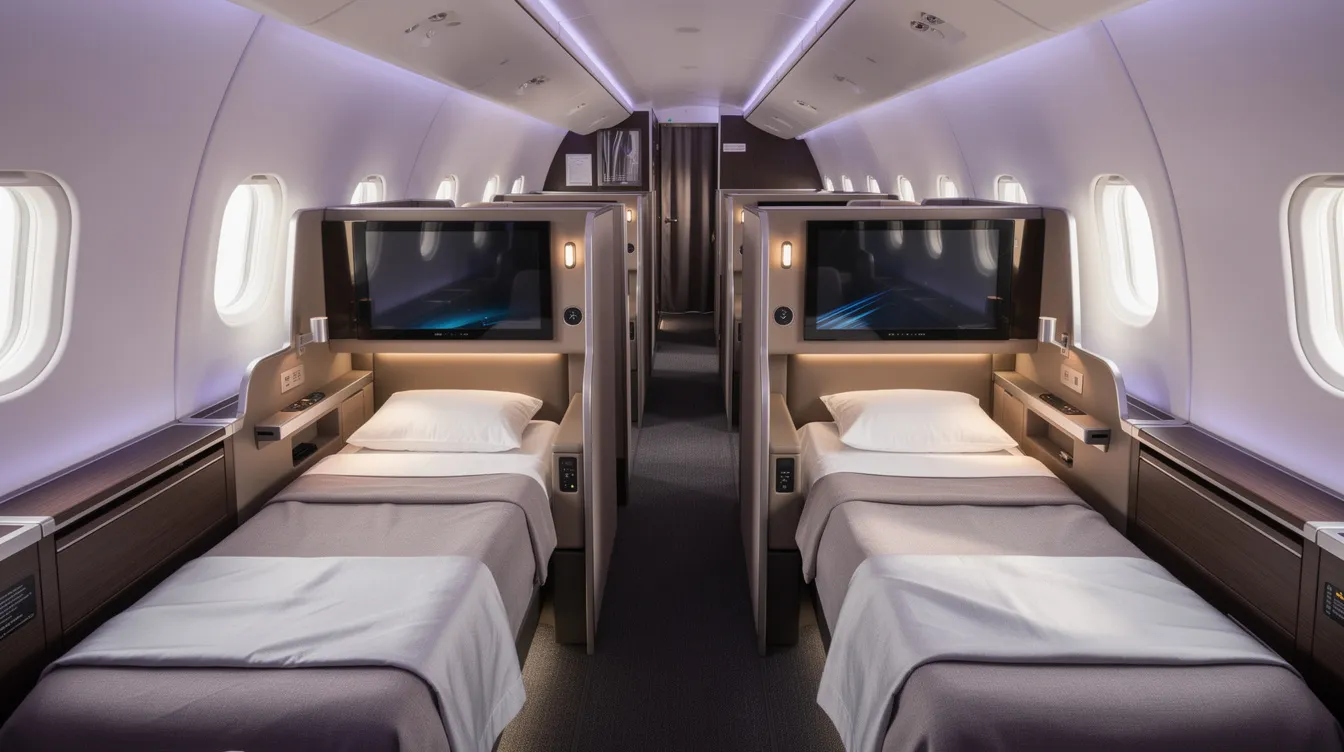
Polaris features 1-2-1 lie flat seats with direct aisle access on retrofitted 777-300ER, 777-200ER, and 787-8/9/10 aircraft
Polaris beds measure 6 feet 6 inches in length, creating a genuine sleep flat surface for tall travelers.
New Polaris Studio Suites, unveiled in mid-2025, feature sliding privacy doors and 27-inch 4K OLED screens-the largest seatback screens on any U.S. carrier-with standard Polaris suites offering a 19-inch display.s
United Polaris business class features Saks Fifth Avenue bedding, including duvet, pillow, and mattress pad, setting it apart from standard business class bedding.
Multi-course dining on overnight long-haul international flights includes appetizer, main, and dessert courses, paired with a curated wine and spirits selection.
Polaris provides complimentary drinks on all flights, including premium alcoholic beverages.s
United Polaris Lounges are rated five stars by Skytrax, available at hubs including Chicago O'Hare, Newark, Houston, San Francisco, Los Angeles, and Washington Dulles, featuring à la carte dining, shower suites, and quiet rooms; comparable ground experiences on the private side depend heavily on choosing among the top private jet companies worldwide.
By the end of 2027, approximately 30 Boeing 787-9 aircraft will feature the Elevated interior with Studio Suites, with first commercial flights launched from San Francisco to Singapore and London in 2026
For international business travelers, Polaris is the closest commercial equivalent to what many legacy carriers once reserved for their now-retired international first class products.
Seat Comfort: First Class Seats vs Business Class Seats vs Private Jet Cabins
This section directly compares physical comfort and privacy across the three tiers-because for travelers choosing between premium cabin tickets, what the seat actually does matters more than what the branding promises.
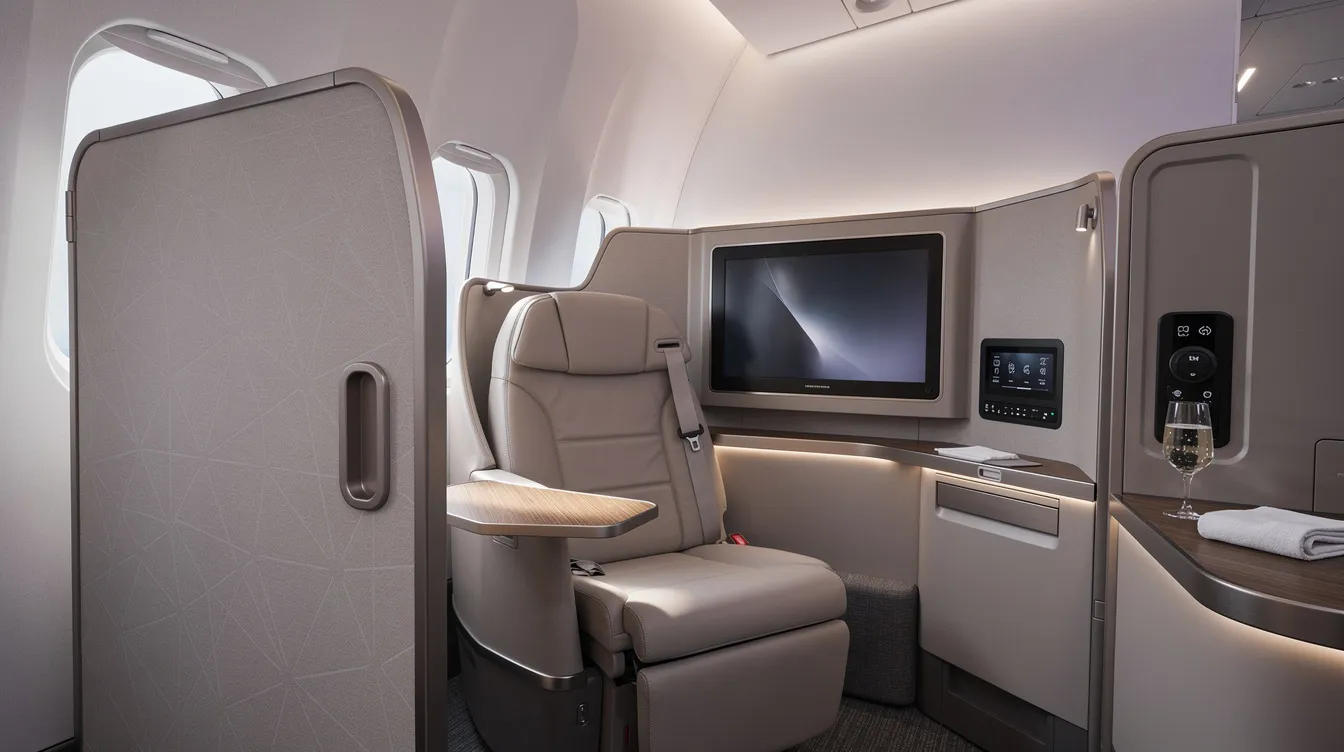
United First (domestic): 2-2 recliner layout with wider seats and more legroom than economy, but limited recline; no lie-flat capability makes overnight domestic flights significantly less restful than Polaris; on the upper deck of comfort versus economy, but still a recliner
United Business (short-haul international and transcontinental): mixed hardware depending on route-some routes feature recliners indistinguishable from domestic first, while premium routes offer lie-flat class seats; business class passengers on secondary Latin America destinations may not get beds
Polaris international business: fully lie-flat beds with superior seat controls, adjustable lighting, privacy dividers, and sleep flat surfaces; best seats are true window positions on the 777 and 787 where the shell creates near-suite-level seclusion; premium bedding and luxury amenity kits complete the experience
BlackJet private jet cabins: typical configurations include 6 to 8 club seats on light jets, 8 to 9 seats plus divans on super-midsize aircraft, and fully flat divan or berthable seats on larger cabin aircraft and other 16-seat private jet cabin options; the entire cabin is yours-recline however you want, hold a confidential meeting, or sleep without a stranger 18 inches away
Private jets offer unmatched privacy during travel-you can customize the cabin environment entirely: temperature, lighting, conversation volume, and work versus rest focus, none of which is possible in any first and business class commercial cabin with shared space and fixed layouts; this level of control is part of what drives some travelers toward 8-figure private jet ownership options or high-end Jet Cards like NetJets-style programs instead of relying solely on commercial premium cabins.
Airport Experience & Check-In: United Premium Cabins vs BlackJet
For many high-value travelers, the airport experience before the flight determines whether a trip feels seamless or stressful. A premium seat means little if you spend 90 minutes navigating terminals.
United First and Business / Polaris ground experience includes Premier Access check-in counters at major airports, priority security lanes where available, Group 1 early boarding for first and business class passengers, and priority baggage handling upon arrival.
First class typically includes private lounges and dedicated jet bridges at major hubs, though availability varies by airport size and configuration.
Premium counters are available at major hubs including Newark (EWR), Chicago (ORD), San Francisco (SFO), Houston (IAH), and Washington Dulles (IAD)
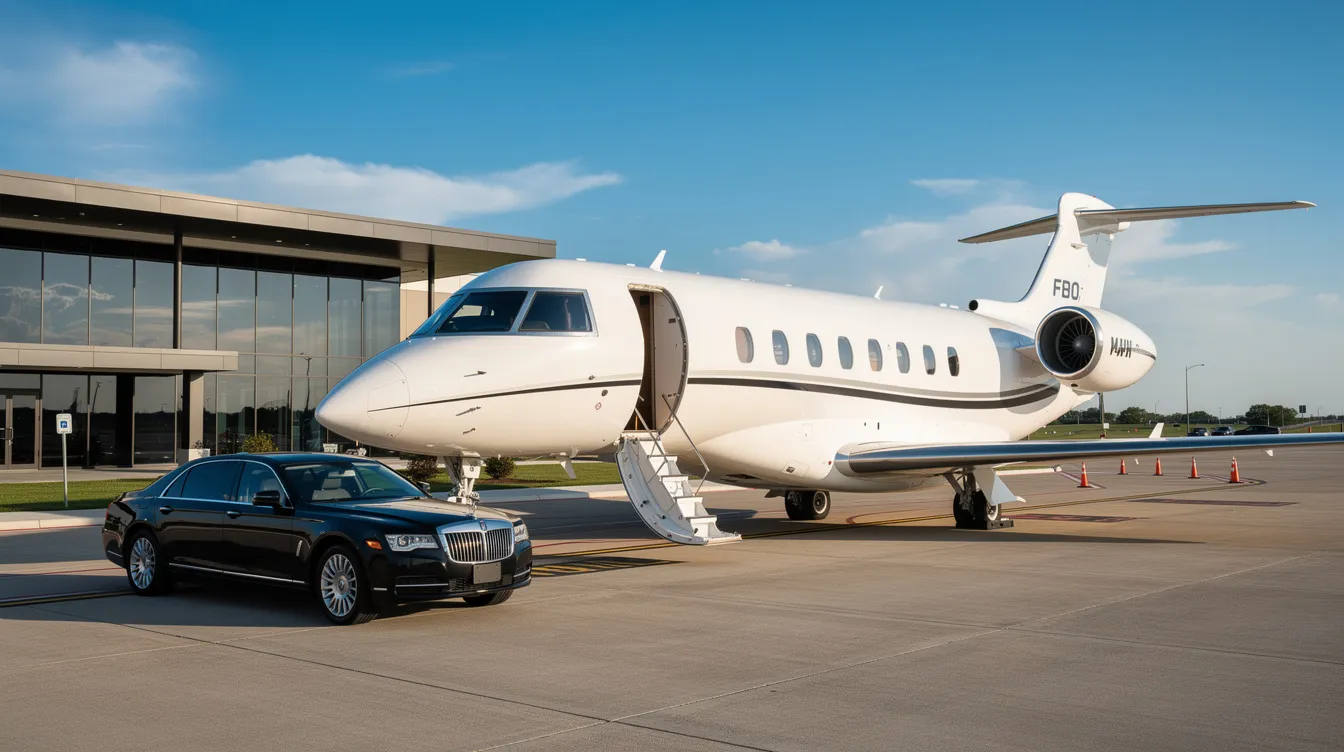
BlackJet operates from private terminals (FBOs) at airports like Teterboro (TEB), Van Nuys (VNY), and Westchester (HPN. Private jets can access secondary airports, avoiding congestion at crowded commercial hubs and accommodating everything from light jets to 20-passenger private jet charters.
Typical arrival at an FBO is 20 to 30 minutes before departure versus 60 to 90+ minutes for commercial first class; there is no TSA line-you walk directly from the lounge or your car to the aircraft steps, even when boarding large private jets for 50 passengers.
BlackJet members handlecheck-inn digitally via a mobile booking platform or concierge, with crew and ground team ready on arrival; real-time flight support is a standard feature in private jet services.
Sample scenario: an executive living in Greenwich, CT needs a same-day roundtrip to Chicago for a board meeting. Via United domestic first class from LaGuardia, the trip requires two hours of ground time on each end plus flight time. Via BlackJet from Westchester County Airport, the executive departs 20 minutes after arriving, lands at a private terminal near the Chicago Loop, and is home for dinner-saving roughly four hours door-to-door, especially if they leverage strategies to fly private cheaply and choose among the most affordable private jet options.
Onboard Service: Flight Attendants, Dining, and Amenity Kits
Soft service-flight attendants, food, beverage service, and amenity kits-often defines how "premium" a cabin actually feels beyond the seat hardware.
United First (domestic): dedicated flight attendants for the forward cabin on mainline flights; complimentary drinks including alcoholic beverages and enhanced snacks or meals depending on flight length; no amenity kits on most daytime domestic flights, with simple bedding on some late-night routes; first class passengers often receive better food options than business class on comparable domestic segments
United Business (short-haul international): generally a higher catering standard versus domestic first, with hot meals on many flights to Mexico, Central America, and the Caribbean; turn-down service and small amenity kits may appear on overnight segments or longer legs such as Houston to Lima.
Polaris business class: multi-course dining with appetizer, salad, main, and dessert on long-haul segments; premium wine list and spirits; Polaris business class features Saks Fifth Avenue bedding and branded luxury amenity kits with skincare, eye shades, socks, and travel essentials; American Airlines offers multi-course meals in Flagship First class as a competitor benchmark, but Polaris consistently ranks among the top U.S. carrier offerings
BlackJet: fully customized catering ordered before departure-cold-pressed juices, a specific Champagne, or a meal from a particular restaurant delivered directly to the aircraft; the ratio of crew to passengers far exceeds even first class seats in a commercial setting, making service entirely personal and non-scripted; no standard amenity kit, but high-end touches like plush blankets, noise-cancelling headsets, and curated cabin amenities tailored to the aircraft selection
While United business class and Polaris deliver impressive premium service versus an economy ticket, private jet charter lets you define everything-meal times, work versus rest focus, even cabin lighting-rather than accepting a standardized onboard service flow.
Domestic Flights: When United First Class Makes Sense – And When It Doesn't
Domestic first class is a practical upgrade for U.S. business and leisure travelers, but it has clear limitations versus true business or Polaris cabins-and versus private aviation.
United First on domestic flights is good value on frequent routes like Los Angeles to Chicago, Denver to Houston, or Newark to San Francisco during off-peak times, where first class fares often run $400 to $900 one-way.y
It works well for travelers seeking extra space, free checked bags, and a quieter cabin on daytime flights under four to five hours-a meaningful comfort upgrade without a massive price premium. um
Domestic first class is less compelling on short hops under 90 minutes (e.g., Chicago to Detroit), where the premium experience barely registers, or on overnight red-eye flights where recliner seats do not provide real rest compared with lie-flat business class.
For a group of 4 executives flying last-minute domestic first from New York to Dallas at roughly $900 each one-way ($3,600 total one-way), a light or midsize BlackJet charter from Teterboro to Dallas Love Field-with fixed hourly rates starting in the mid-$5,000s-delivers per-person costs that approach commercial first while gaining total schedule control and privacy; thoughtful use of affordable private flying strategies can tilt the math further
For travelers already using BlackJet Jet Card programs, domestic first class becomes a strategic choice mostly on dense trunk routes where private jets might not save as much terminal time.
Prepaid jet time avoids the necessity of owning a jet, making Jet Card programs a practical alternative to both fractional ownership and last-minute premium cabin tickets; for frequent flyers, the best Jet Card options and benefits can effectively replace many commercial premium fares.
International Business: Polaris vs Mixing Private Jet & Commercial
International business class- especially overnight long-haul international- is where United's Polaris competes seriously with global carriers. But BlackJet can fundamentally reframe how you reach or connect to those flights.
Ideal Polaris use cases include overnight transatlantic flights like Newark to London or Washington Dulles to Frankfurt, long-haul transpacific routes from San Francisco to Tokyo or Sydney, and connections from U.S. interior cities where Polaris is available from a hub.
For many BlackJet members, the optimal strategy combines private and commercial: take a BlackJet private flight from a secondary airport (Westchester, Napa County, or a personal device-friendly FBO) to a Polaris gateway like EWR, SFO, or IAD, then fly Polaris for the oceanic segment to maximize flat-lay rest and alliance miles.
Polaris business class seats rival or exceed many legacy international first class products-with amenity kits, full premium bedding, lounge access at five-star-rated Polaris Lounges, and upgraded dining; award availability through MileagePlus or Star Alliance partners adds further value, which is why many travelers choose business class on these routes for lie-flat rest, lounge access, and premium service without the cost of flying private
Pure private jet long-haul is available through BlackJet partners for nonstop missions such as New York to London, Miami to São Paulo, or Los Angeles to Honolulu-the cabin is entirely private, but per-hour cost is higher; it is optimal when privacy, schedule control, or security is mission-critical, and mirrors the capabilities of many long-range private jets for nonstop global travel.
Private aviation typically targets frequent business or high-net-worth leisure travelers who need this level of control, and the ability to blend both commercial business class airlines and private segments creates a genuinely optimized travel strategy, especially when you tap into top-tier private jet models worldwide.
Pricing & Value: Comparing First and Business Class Seats to Jet Card Economics
First and business class fares fluctuate with demand, season, and booking window. But by 2026, typical ranges allow a meaningful comparison with Jet Card pricing for travelers who fly frequently.
Domestic first class fares: $400 to $1,000 one-way on popular routes, higher during peak periods
Short-haul international business class ticket pricing: a paid United business ticket on routes like Houston to Bogotá or Newark to Cancún typically runs $900 to $2,000 one-way
Long-haul international business class round-trips: generally $2,500 to $8,000+
True international first class on foreign carriers (since United does not operate it): can exceed $10,000+ round-trip
Jet Card programs provide prepaid access to private jets through 25-hour and 50-hour packages with fixed hourly rates, starting in the mid-$5,000s for light and midsize private jets; heavy users may also evaluate a 100-hour Jet Card cost structure against their projected flight time; a detailed overview of Jet Card membership pricing and cost structure helps put these numbers in context.
No dynamic surge pricing and guaranteed access with proper notice-private aviation companies offer Jet Card programs specifically to eliminate the fare volatility that plagues commercial premium cabin tickets.
For 4 to 6 travelers on a 2- to 3-hour domestic flight, per-person cost on a private jet can rival or beat last-minute first and business class seats; for executives needing same-day out-and-back meetings, the productivity gains compound the value, especially when you understand Jet Card cost per flight hour.
Many corporate clients treat Jet Card hours as predictable line items versus volatile commercial fares, simplifying travel budgeting across quarters; a clear grasp of Jet Card pricing structures and fees is key for finance teams.
Safety Standards: United vs BlackJet's Private Aviation Network
For high-net-worth individuals and corporate leaders, safety is non-negotiable whether flying first and business class commercially or privately. Both United and BlackJet operate within rigorous frameworks-but the structures differ.
United Airlines operates under U.S. FAA Part 121 for scheduled carriers, with standardized pilot training, recurrent check rides, and a strong public safety record across mainline and regional operations.
BlackJet arranges all flights exclusively with audited Part 135 operators, with third-party safety ratings from leading audit firms such as ARG/US and Wyver.n
Private aviation companies ensure safety certification for flights through processes like BlackJet's proprietary safety protocols, which vet operator history, pilot hours, aircraft maintenance status, and training standards exceeding regulatory baselines.nes
BlackJet's Safety Advisory Board includes former FAA and NTSB leaders, and the company monitors risk using a proprietary dataset of over 300 million data points across operators, aircraft, and pilots.
In both commercial first and business class and private jets, travelers benefit from rigorous safety cultures-but BlackJet adds a private-sector review layer to charter operations that functions as an additional filter beyond what regulators require.
Sustainability: Comparing Commercial Premium Cabins and Carbon-Neutral Private Flights
Private jets typically produce higher emissions per passenger than full commercial widebodies. That is a fact. But the private aviation industry is becoming increasingly focused on sustainability and carbon offsetting, and the gap is narrowing through structural commitments.
United Airlines targets net-zero emissions by 2050, with investments in sustainable aviation fuel (SAF) and fleet renewal to more fuel-efficient aircraft like the 787 family and 737 MAX, mirroring sustainability progress on many ultra-long-range private jets and structured products like the BlackJet 25+ Hour Jet Card.
Business and first class seats on commercial flights share in those airline-level sustainability initiatives, but passengers do not usually see one-to-one carbon accounting for their specific .trip
Private jet flights are often carbon-neutral through offsets-BlackJet builds verified carbon offsets or direct SAF contributions into every Jet Card flight at no extra charge to members.
Example: a 2-hour light jet flight from Teterboro to Boston generates emissions that are offset through certified projects such as verified reforestation or methane capture, with the cost embedded in the hourly rate rather than charged as an add-on, even on some of the most expensive and luxurious private jets
Optional reporting is available for corporate ESG metrics, outlining emissions mitigated by BlackJet's green aviation program over a year-useful for companies with data practices and sustainability disclosure requirements.s
Technology & Booking Experience: Apps, Seat Selection, and BlackJet's Digital Platform
Technology underpins both commercial premium cabins and private jet access in 2026, but the booking experiences are fundamentally different in complexity and flexibility.
United's mobile app handles booking first and business class, selecting class seats (including Polaris layout), managing upgrades, digital boarding passes, real-time flight notifications, standby lists, and same-day change options; passengers can use a personal device to view seat maps showing first class cabin, business class cabin, and premium economy configurations.
BlackJet's digital platform offers 24/7 app or web access to request flights, view aircraft categories (light, midsize, super-midsize, large cabin), confirm itineraries, see instant pricing estimates, and monitor Jet Card hour balances in real time.
Mobile booking platforms are common in private aviation to provide convenience, and BlackJet blends automated tools with real-time human support for schedule changes and day-of-flight coordination.n
BlackJet's platform eliminates friction found in commercial bookings: no complex fare class charts, no upgrade waitlists, no need to chase limited award availability or compete for premium seats.
Both systems coexist for many travelers: clients can use United's app for occasional Polaris trips on long-haul international flights, and BlackJet's platform for core private flying, united within the same travel ecosystem.
Strategic Use Cases: When to Choose United First, United Business, or BlackJet
Premium travel is best understood as a portfolio of options. Domestic first, international business, and private jets each deliver optimal value in different scenarios.
Choose UnitedFirst Class when: flying solo or as a couple on medium-haul domestic flights; lounge access and lie-flat capability are less critical (daytime flights under 4 to 5 hours); routes with strong United frequency from your hub (e.g., Denver-centric travelers on United domestic routes)
Choose United Business or Polaris when: overnight international business trips where lie-flat sleep is essential; itineraries where Star Alliance status and miles matter for connections in Europe or Asia via partners; occasions when you do not need full aircraft privacy but do need space, a premium service experience, and high-quality rest.
Choose BlackJet when: same-day multi-city itineraries (e.g., New York to Cleveland to Detroit to New York); peak-season leisure trips to airports poorly served by first and business class (Aspen, Jackson Hole, Napa County); high-security or high-confidentiality journeys where sharing a business class cabin with strangers is undesirable; private jets provide schedule control that no commercial flight can replicate.e
Sample scenario: a small executive team of four flying from Westchester County to three Midwestern cities in one day via BlackJet charter versus trying to connect multiple first and business class segments on United-the commercial option requires overnight stays, airport transfers, and at least six total boarding processes, while the BlackJet itinerary completes in a single day with meetings in each city
FAQs: United First vs Business – And How BlackJet Fits In
What is the main difference between United First Class and United Business Class?
United First Class is a domestic product with recliner seats in a 2-2 layout on U.S. and Canada routes. United Business Class serves international routes to Latin America and the Caribbean, while Polaris Business Class covers long-haul international flights with fully lie-flat seats. The class product, class offerings, and ground perks differ meaningfully between the two.
Do United first class seats ever lie flat on domestic routes?
No. United domestic first class seats recline but do not convert to lie-flat beds. If you need to sleep flat on a United flight, you need a Polaris business class seat on an international or select transcontinental route. Some transcontinental flights branded as United business may offer older lie-flat configurations, but these are exceptions.
Is United Polaris worth the premium over standard business class for overnight flights?
Yes. Polaris delivers fully lie-flat beds, Saks Fifth Avenue premium bedding, luxury amenity kits, and multi-course meal service on long-haul international flights. United Polaris lounges are rated five stars by Skytrax, with shower suites and à la carte dining. For overnight flights, the difference between a Polaris suite and a standard business class recliner on a Latin America route is substantial.
How do domestic first class seats compare to international business class seats?
Domestic first class offers approximately 37 inches of pitch and 20 to 21 inches of width in a recliner format. International business class seats-especially Polaris-offer full lie-flat beds, direct aisle access, and privacy shells. First class passengers on domestic flights get priority boarding, complimentary drinks, and better food versus economy, but the physical seat is not comparable to a true lie-flat international product.
Can I combine private jet flights with United first and business class in one itinerary?
Absolutely. Many BlackJet members fly privately from a secondary airport to a major Polaris gateway, then connect onto a commercial long-haul flight. This hybrid approach maximizes comfort on the oceanic segment while eliminating the time and hassle of commercial connections.
How does BlackJet Jet Card pricing compare per person to buying last-minute United first or business class tickets for a group?
For a team of four to six on a 2- to 3-hour domestic route, a BlackJet light or midsize jet-with rates starting in the mid-$5,000s per hour-can bring per-person costs in line with or below last-minute first-class fares, while adding total privacy, schedule flexibility, and time savings.
Are private jets less sustainable than flying first and business class, and how does BlackJet mitigate this?
Private jets do produce higher per-passenger emissions compared to a full commercial flight. However, every BlackJet Jet Card flight is carbon-neutral through verified offsets or SAF contributions at no additional cost. The private aviation industry is increasingly focused on sustainability, and BlackJet builds environmental accountability directly into its pricing model rather than offering it as an optional add-on.
Conclusion: Designing Your Premium Travel Strategy for 2026 and Beyond
United First is a solid comfort upgrade on domestic flights-wider seats, priority boarding, complimentary drinks, and a quieter cabin. It is practical, reliable, and well-suited for daytime routes under five hours. United Business and Polaris represent genuinely competitive international business class products, with Polaris in particular rivaling the best business and first class offerings from global carriers through its lie-flat beds, Saks Fifth Avenue bedding, Studio Suites, and five-star lounges.
But for travelers who value complete control over schedule, privacy, routing, and time, BlackJet occupies a category that no commercial premium cabin can reach. Private jets can access secondary airports, depart on your timeline, and deliver an entirely private cabin. The smartest high-end travelers rarely rely on a single solution. They build a portfolio: Polaris for the overnight transatlantic, domestic first for the quick hub-to-hub hop, and a BlackJet Jet Card for the mission-critical multi-city day trip or the peak-season escape to Aspen.
Elevate your travel-effortlessly. With BlackJet, private flight is accessible on your terms through our Jet Card programs, complete with rigorous safety certification, carbon-neutral performance, and unmatched flexibility. Explore BlackJet's Jet Card program and discover how refined, meaningful travel becomes your new standard.


 Sign up with google
 Sign up with Apple