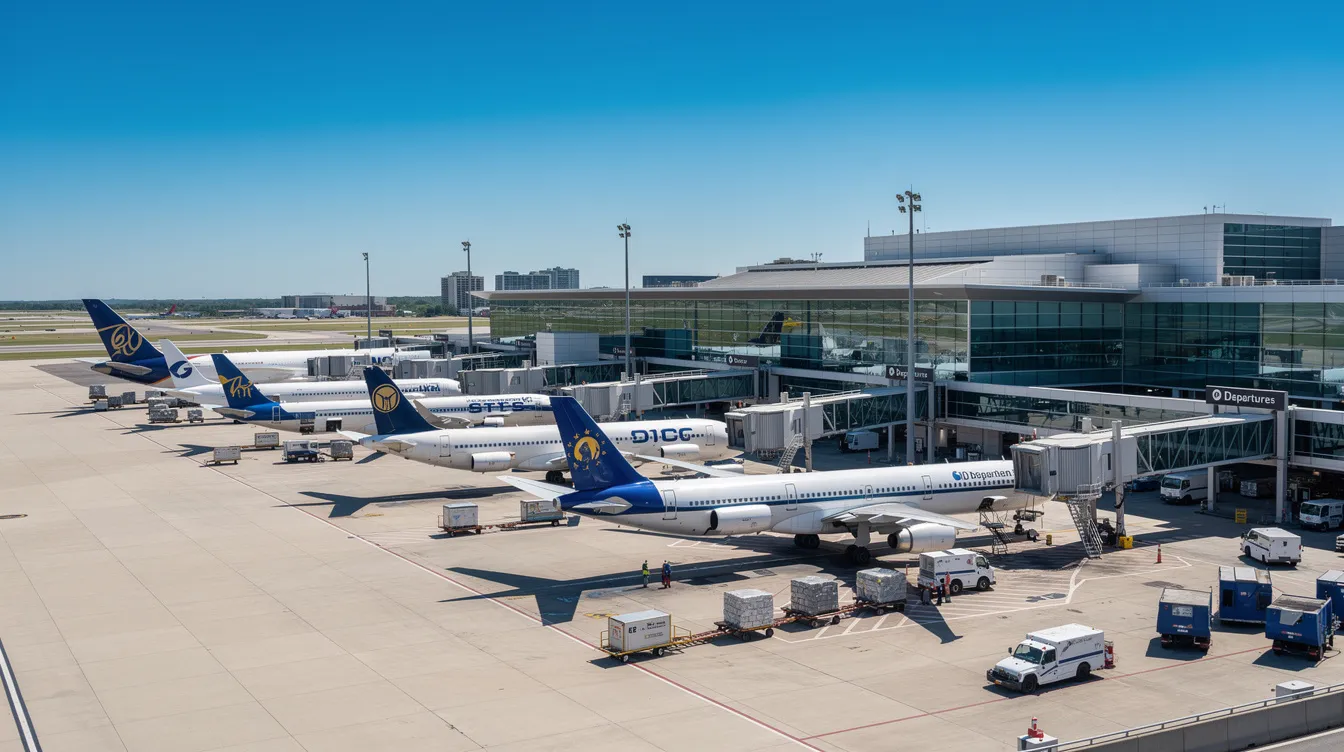
Boeing is one of the world's two dominant aircraft manufacturers, and commercial airlines worldwide operate Boeing aircraft on every continent. From dense domestic shuttle routes to premium long-haul services spanning oceans, Boeing aircraft like the 737 and 787 are prevalent in major airlines' fleets. Knowing which airlines use Boeing aircraft can help travelers make informed choices about safety, comfort, and route options.
This article is for frequent flyers, business travelers, and anyone interested in understanding which airlines operate Boeing aircraft worldwide.
Many airlines rely on Boeing aircraft for regional and international flights, making it nearly impossible to fly commercially without encountering a Boeing plane at some point.
But which carriers actually fly Boeing—and which specific models? This article maps out the global landscape of Boeing operators by region and aircraft type, covering the 737, 737 MAX, 787 Dreamliner, and 777. Whether you're a frequent business traveller researching what you'll be boarding next Tuesday or a BlackJet member who wants to understand the commercial fleet you're choosing to bypass, this is your definitive reference.
Why Boeing vs Airbus matters for high-end and business travellers
Aircraft choice directly shapes schedule reliability, cabin comfort, and route options. A Boeing 737 configured for 189 passengers on a short-range domestic hop delivers a fundamentally different experience than a Boeing 787 with lie-flat suites crossing the Pacific. For business travellers, the model on any given route determines seat width, premium cabin availability, and whether you can reach your destination nonstop.
Private travel emphasizes flexibility, privacy, and safety for its customers—qualities that commercial aircraft, even premium cabins, struggle to match, and services like BlackJet premium private jet cards are built specifically around those priorities. Executives often compare the time and comfort tradeoffs of a Boeing 737 or 737 MAX in first class against a private jet arranged via a Jet Card. While carriers like Southwest deploy dense Boeing 737 cabin layouts for efficiency, BlackJet clients opt for smaller private jets to avoid crowded cabins, fixed schedules, and connections. Both Boeing and the airlines operating its aircraft maintain strict safety oversight through bodies like the FAA, EASA, and UK CAA, and BlackJet adds its own safety vetting and carbon-neutral flight standards on top of those regulatory requirements.
U.S. airlines that rely heavily on Boeing
Boeing produced 58% of all planes in major U.S. airline fleets, making American carriers the manufacturer's largest customer base. Several airlines are almost entirely Boeing-focused.
Southwest Airlines
Southwest Airlines operates an all-Boeing fleet consisting solely of Boeing 737 variants—the 737-700, 737-800, and 737 MAX 8. With over 320 MAX 8s in service, Southwest is the single largest operator of that model in the world. This single-type fleet simplifies pilot training and maintenance, but ties the airline closely to Boeing's production quality and any 737 MAX issues.
Alaska Airlines
Alaska Airlines is historically a strong Boeing customer, primarily operating Boeing 737 NG variants (737-800 and 737-900) alongside the 737 MAX 9. Alaska Airlines operates Boeing 737 MAX aircraft in its fleet and has been phasing out Airbus A320s inherited from its Virgin America acquisition. In January 2024, Alaska Airlines Flight 1282 experienced a fuselage blowout when a door plug separated from a Boeing 737-9 MAX mid-flight shortly after departing from a California airport. Following this incident, the FAA grounded Boeing 737-9 MAX aircraft with that door plug configuration for inspections, affecting approximately 171 planes.
Other Major U.S. Boeing Users
Other major U.S. Boeing users include:
American Airlines, which operates hundreds of Boeing aircraft across various models including 737, 737 MAX, 777, and 787. American Airlines has Boeing 737 MAX planes in its fleet alongside Airbus narrowbodies.
United Airlines operates a mixed fleet featuring numerous Boeing aircraft including narrowbodies and widebodies—737 MAX, 777, and 787—plus Airbus A320 family jets.
Delta Air Lines historically weighted more toward Airbus for narrowbodies but flies Boeing 767 and 777 widebodies, with 737 MAX deliveries expected from the mid-2020s onward.
Non-Boeing U.S. Carriers
For contrast, carriers like JetBlue, Spirit, Frontier, Allegiant, and Breeze primarily fly Airbus and Embraer jets; JetBlue is also among the largest airlines in the country without Boeing aircraft in its fleet. Many BlackJet members are frequent flyers on these Boeing-heavy airlines but choose private jets on time-critical trips or even buy a single seat on a private jet when schedule disruptions, groundings, or crowded terminals make commercial service impractical.
European airlines using Boeing aircraft
Europe presents a mixed fleet landscape. According to Eurocontrol data, Boeing aircraft accounted for roughly 32% of European flights in 2025, compared to 42% for Airbus.
Major Boeing Narrowbody Operators
Ryanair operates a large all-Boeing 737 family fleet in Europe, flying hundreds of 737-800s alongside the 737 MAX 8-200 "Gamechanger" variant. Ryanair uses Boeing 737 MAX aircraft in its operations across routes spanning the continent and North Africa.
Norwegian, Icelandair, TUI Airways, Jet2.com, and SunExpress all operate Boeing 737 and 737 MAX variants for regional and medium-haul service.
Air Europa maintains a fleet that includes Boeing 737 and 787 models, serving routes within Europe and across the Atlantic.
Flagship Carriers with Boeing Widebodies
British Airways flies Boeing 777 and 787 Dreamliner aircraft on long-haul routes from the UK, combined with Airbus narrowbodies regionally.
KLM maintains a strong Boeing relationship, deploying 777 and 787 widebodies on transatlantic and global routes.
Turkish Airlines operates substantial Boeing 737, 737 MAX, 777, and 787 fleets alongside Airbus aircraft, serving markets across Europe, Asia, and Africa.
Airbus-Dominant Carriers
Airlines like Lufthansa, Air France, and others rely more heavily on Airbus narrowbodies (A320 family) for short and medium haul, even while operating Boeing widebodies on intercontinental service. European business travellers increasingly combine premium cabins on Boeing jets with private jet sizes tailored to each leg when connections, timing, or privacy become constraints.
Asia–Pacific airlines using Boeing, including Jeju Air
Asia-Pacific carriers operate a broad mix of Boeing 737, 737 MAX, 777, and 787 models. Fleet strategies vary depending on domestic density, regulatory timelines, and each country's approach to MAX recertification.
Key Boeing 737 and 737 MAX Operators
Jeju Air, a South Korean low-cost carrier, relies on Boeing 737-800s and has been introducing MAX variants. In December 2024, Jeju Air Flight 2216, a Boeing 737-800, crashed at Muan International Airport after a bird strike affected the landing gear deployment. This incident led to an investigation of pilot actions and emergency procedures, though it was unrelated to the MAX model or MCAS system. The incident triggered scrutiny of pilot procedures and emergency response, though it was not related to the MAX or MCAS design.
Flag Carriers and Widebody Use
Korean Air operates a mixed Boeing fleet including 737, 777, and 787 types on domestic, regional, and long-haul routes.
Singapore Airlines and subsidiaries like Scoot use Boeing 787 and 777 on premium long-haul routes, with narrowbody operations split between Boeing and Airbus.
Airbus-Focused Airlines
Airlines such as Japan Airlines have traditionally operated Boeing 737 and 777 aircraft but have been cautious on MAX adoption. Meanwhile, carriers like IndiGo and AirAsia are committed almost exclusively to Airbus narrowbodies. In the Pacific, Air Tahiti Nui operates Boeing 787 Dreamliners on long-range routes connecting Tahiti to international markets—a niche but important example of Boeing's reach.
Boeing 787 Dreamliner and 777 aircraft remain core to many Asian flag carriers on trans-Pacific and Europe-Asia routes. Executives travelling between Asian hubs and financial centers may fly these Boeing widebodies commercially, then connect to regional destinations by 16-seat private jets for team travel for schedule and privacy reasons.
Airlines in the Americas beyond the U.S. flying Boeing
Many Latin American and Canadian airlines operate mixed Boeing fleets, often centered on Boeing 737 and 737 MAX narrowbodies.
North American (non-U.S.) Operators
Air Canada operates Boeing 737 MAX aircraft in its fleet alongside Boeing 787 Dreamliners for long-haul flights, with its widebody fleet including 777-300ERs.
WestJet also flies Boeing 737 MAX narrowbodies on domestic and transborder routes.
Aeroméxico and Copa Airlines are strong Boeing 737 and 737 MAX operators. Copa Airlines operates an all-Boeing fleet primarily of Boeing 737 aircraft, linking North, Central, and South America.
South American Boeing Operators
GOL is a South American airline using Boeing 737 MAX aircraft as a core part of its fleet.
Aerolíneas Argentinas also operates 737 and 737 MAX types.
Others—LATAM, Avianca, Azul, and Sky Airline—lean more toward Airbus narrowbodies.
A typical business itinerary might involve flying New York to Mexico City on a Boeing 737 MAX with Aeroméxico, then arranging a private jet leg via BlackJet to a secondary city with no direct commercial service—a pattern that makes understanding the private jet price list and access options increasingly relevant for frequent travellers. Boeing fleet sizes and MAX adoption across the Americas can shift quickly as airlines adjust orders and deliveries, especially following safety investigations.
Africa, Middle East & Oceania: Boeing's global footprint
Boeing 737, 737 MAX, 777, and 787 aircraft are core to many airlines across Africa, the Gulf, and the Pacific.
Africa
Ethiopian Airlines and Royal Air Maroc are significant Boeing 737 and 737 MAX operators, with Boeing 787 and 777 serving long-haul routes to Europe and Asia. Other regional carriers operate Boeing 737 NGs, but adoption of MAX models has been limited, with slower uptake due to cost and parts supply.
Middle East
Emirates operates a major widebody fleet that includes Boeing 777 aircraft—one of the largest 777 fleets in the world—plus 777X orders for future deliveries. Qatar Airways runs Boeing 777 and 787 widebodies on intercontinental routes. These premium long-haul cabins serve high-net-worth passengers who might otherwise consider top private jets for ultimate luxury for shorter connecting legs.
Oceania
Virgin Australia, Air Niugini, and Fiji Airways operate Boeing 737 and 737 MAX aircraft, while Qantas and Air New Zealand rely on mixed Airbus and Boeing fleets—with Boeing 787 onlong-haull. MAX adoption across Oceania remains measured through the mid-2020s. For remote resort access, island destinations, or mining sites beyond scheduled Boeing operations, private aviation via BlackJet fills gaps that commercial service cannot, and large-group private jets for 20 passengers can efficiently move teams where airlines do not fly.
Airlines with all-Boeing or predominantly Boeing fleets
Airlines operate either all-Boeing fleets or mixed fleets with Airbus jets—but true all-Boeing operators are becoming rare. The most notable examples:
Airline | Fleet Composition | Primary Boeing Types |
|---|
Southwest Airlines | All-Boeing | 737 NG, 737 MAX 8 |
Ryanair | All-Boeing | 737-800, 737 MAX 8-200 |
Flydubai | All-Boeing | 737 NG, 737 MAX |
Copa Airlines | All-Boeing | 737 NG, 737 MAX 9 |
Air Europa | Predominantly Boeing | 737, 787 |
Flydubai utilizes an all-Boeing fleet comprising Boeing 737 and 737 MAX aircraft, serving routes across the Middle East, Africa, and Asia from its Dubai base.
The strategic logic is straightforward: pilot and crew training commonality, maintenance and parts simplification, and more predictable operations when everything is based on one aircraft family, though some corporate groups instead charter private jets for up to 50 passengers to decouple their schedules from any single airline. However, 737 MAX groundings and production delays revealed the challenge of depending solely on one manufacturer and raised fresh doubts about whether that strategy will ultimately pay off for airlines. Incidents involving Alaska Airlines and Jeju Air reminded operators that single-OEM strategies can magnify disruption when technical or regulatory issues arise. Private jet access via a BlackJet Jet Card provides a contingency option when all-Boeing airlines face capacity constraints or temporary groundings, and the BlackJet 25+ Hour Jet Card in particular is structured for executives who frequently alternate between commercial fleets and private cabins.
Boeing 737 vs Boeing 737 MAX vs other aircraft types
Boeing's naming convention includes models like 737 and 747, each with multiple generations. The 737, 737 MAX, 747, 777, and 787 are all part of Boeing's commercial aircraft lineup, with each number representing a different aircraft family and each family having several versions or generations. For example, the 737 family includes the Next Generation (NG) and MAX series, while the 777 and 787 are widebody aircraft designed for long-haul routes.
Boeing 737 NG (Next Generation): The 737-800 has operated since the late 1990s, and Boeing 737-800s account for about 4,400 passenger planes globally—making it one of the most widely operated commercial aircraft in the sky. It has a strong long-term safety record, with most incidents linked to human factors or environmental causes rather than systemic design flaws.
Boeing 737 MAX family (MAX 7, 8, 9, 10): Designed to improve fuel efficiency by roughly 20% over earlier 737 generations, the MAX introduced CFM LEAP engines and redesigned winglets. However, its safety history includes two fatal crashes that shook the industry. Lion Air Flight 610 crashed on October 29, 2018, killing 189 passengers and crew after an error occurred in the MCAS flight control system. Ethiopian Airlines Flight 302 crashed on March 10, 2019, killing 157. Following these two fatal crashes, the Boeing 737 MAX was grounded worldwide for nearly two years while Boeing redesigned MCAS software and regulators recertified the aircraft. As of July 2026, the FAA allowed Boeing to resume issuing airworthiness certificates for new 737 MAX and 787 production, a milestone in rebuilding trust. Some concerns remain: as of October 2026, several U.S. airlines are avoiding certain models of the latest MAX software version due to autopilot glitches during missed approach procedures—a reminder that vigilance is ongoing among pilots and operators.
Other aircraft in Boeing's portfolio:
The Boeing 787 Dreamliner is designed for long-distance markets, using composite materials for improved fuel efficiency on international routes.
The Boeing 777 is the largest aircraft produced by Boeing currently in passenger service, serving as a high-capacity long-range workhorse for flagship carriers. The upcoming 777X promises further improvements pending full certification.
While Boeing 737 and 737 MAX cabins can be configured with business and first class, private jets offer fully private cabins, with a wide range of private jet sizes for different missions, bespoke schedules, and even budget-friendly private aircraft options that keep costs in check—key reasons many BlackJet members step away from commercial Boeing flights for priority trips.
How to see whether your flight uses Boeing – and when to choose private instead
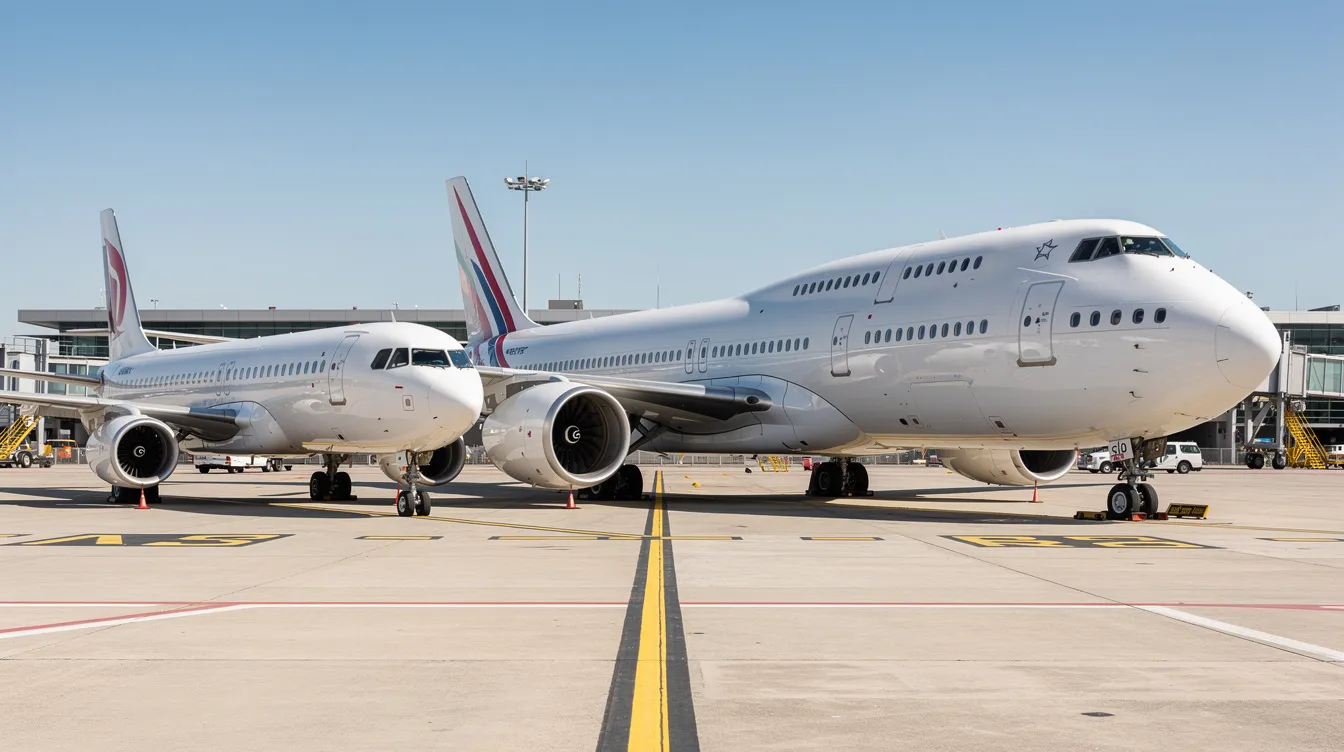
Passengers can identify aircraft types before boarding with a few practical steps:
Check during booking: Most airline booking pages list aircraft type for each flight on the booking page (e.g., "Boeing 737-800" or "737-8 MAX").
Use third-party tools: Sites like FlightRadar24, FlightAware, and SeatGuru let users confirm the model by flight number, and travelers can also verify it on a booking confirmation page. Search results will typically distinguish between 737-800 (NG) and 737-8 (MAX).
Filter out specific types: Some travel search engines allow filtering that excludes Boeing 737 MAX flights from results, though loading times for filtered searches may vary.
BlackJet members skip aircraft-type concerns entirely. Every private flight is arranged on vetted, safety-audited aircraft with clear cabin and range information before confirming. Private aviation companies offer 24/7 digital booking tools for private jet access, and BlackJet's Jet Card model—available in 25- or 50-hour blocks—gives travellers predictable hourly pricing, carbon-neutral flights, and the freedom to choose aircraft category rather than being constrained by airline route and equipment decisions; understanding overall jet card costs and membership models and diving into detailed jet card pricing structures helps travellers compare these benefits with premium Boeing fares.
Consider a CEO flying a commercial Boeing 787 from London to New York, then needing to reach three U.S. cities in two days. Instead of relying on multiple Boeing 737 segments with connection risk, she uses BlackJet for the domestic legs—arriving on her schedule, not the airline's.
FAQ: Boeing-using airlines, safety, and private aviation choices
Which airlines use the Boeing 737 MAX in 2026? Over 60 airlines globally operate the 737 MAX 8 alone, with Southwest Airlines leading at 323+ in service, followed by Ryanair (~210), United Airlines (~123), American Airlines (~103), and WestJet (~70). Other operators include Copa Airlines, Jeju Air, GOL, Air Canada, and flydubai, among many others across every region.
Are Boeing 737-800 planes safe? Yes. The 737-800 has a strong safety record across decades of service and billions of passengers carried, so frequent flyers instead focus on whether premium jet card programs for frequent travellers better match their risk tolerance and schedule needs than staying entirely on commercial fleets. While incidents like the Jeju Air Flight 2216 accident in September—correction, December 2024—do occur, investigations have pointed to environmental factors and landing gear issues rather than systemic airframe design flaws. No lives were lost due to inherent 737-800 design failures in that case's preliminary findings.
Should I avoid the Boeing 737 MAX? Regulators including the FAA, EASA, and authorities in August 2020 and beyond recertified the MAX after big technical changes. Some travellers still prefer to avoid it following concerns about the 2024 door plug incident or software issues. Tools exist to filter MAX flights from search results, and airlines that do not currently fly the MAX are available on most routes, while some travellers explore the cheapest private jet options as an alternative to reshuffling commercial Boeing segments.
Do major airlines rely only on Boeing? Very few carriers are 100% Boeing. Southwest and Ryanair come closest. Most major airlines diversify between Boeing and Airbus to spread risk across manufacturers and serve diverse route needs, just as private flyers compare top private jet companies and access models before committing to a long-term provider. In April 2026 and beyond, many airlines have committed to orders from both manufacturers.
How does BlackJet fit into this? BlackJet is not an airline and does not operate Boeing 737s or any scheduled commercial aircraft, but its clients often benchmark on-demand flying against the economics of a 100-hour private jet card commitment. Instead, jet cards provide prepaid access to private jets across multiple cabin types, vetted to high safety and sustainability standards. Frequent business travelers prefer the convenience of prepaid jet time without ownership, gaining control over schedule, security, aircraft size, and privacy beyond what commercial Boeing operators provide, and many compare NetJets jet card costs or Flexjet jet card pricing and options before deciding how much to rely on scheduled airlines.
Conclusion: Navigating Commercial Boeing Fleets and Private Jet Alternatives
Understanding which airlines use Boeing aircraft is essential for discerning travelers who prioritize safety, flexibility, and comfort. Boeing’s extensive global presence—from the ubiquitous 737 and its MAX variants to the long-range 787 Dreamliner and 777 widebodies—means that commercial travelers frequently encounter these aircraft. While the commercial aviation industry continues to evolve with ongoing safety improvements and fleet modernization, private jet access through programs like BlackJet’s Jet Card offers a compelling alternative.
For business executives and high-net-worth travelers, private aviation provides not only unparalleled convenience and privacy but also strategic advantages in schedule control and carbon-neutral travel options. Whether navigating complex international itineraries or seeking to avoid the unpredictability of commercial Boeing operations, private jet programs deliver seamless, premier experiences backed by rigorous safety standards and sustainability commitments.
As airlines worldwide balance Boeing and Airbus fleets, and as some continue to rely solely on Boeing’s aircraft, travelers have more choices than ever. Leveraging these insights can help you elevate your travel—whether by selecting a trusted Boeing operator or opting for the effortless luxury and flexibility of private jet access with BlackJet. Explore our Jet Card programs to understand prepaid private jet options, learn about private jet safety standards that exceed commercial aviation, discover the benefits of carbon-neutral flights for sustainable travel, compare private jet sizes to match your mission, and see how private jet charter offers ultimate flexibility beyond scheduled airlines.


 Sign up with google
 Sign up with Apple