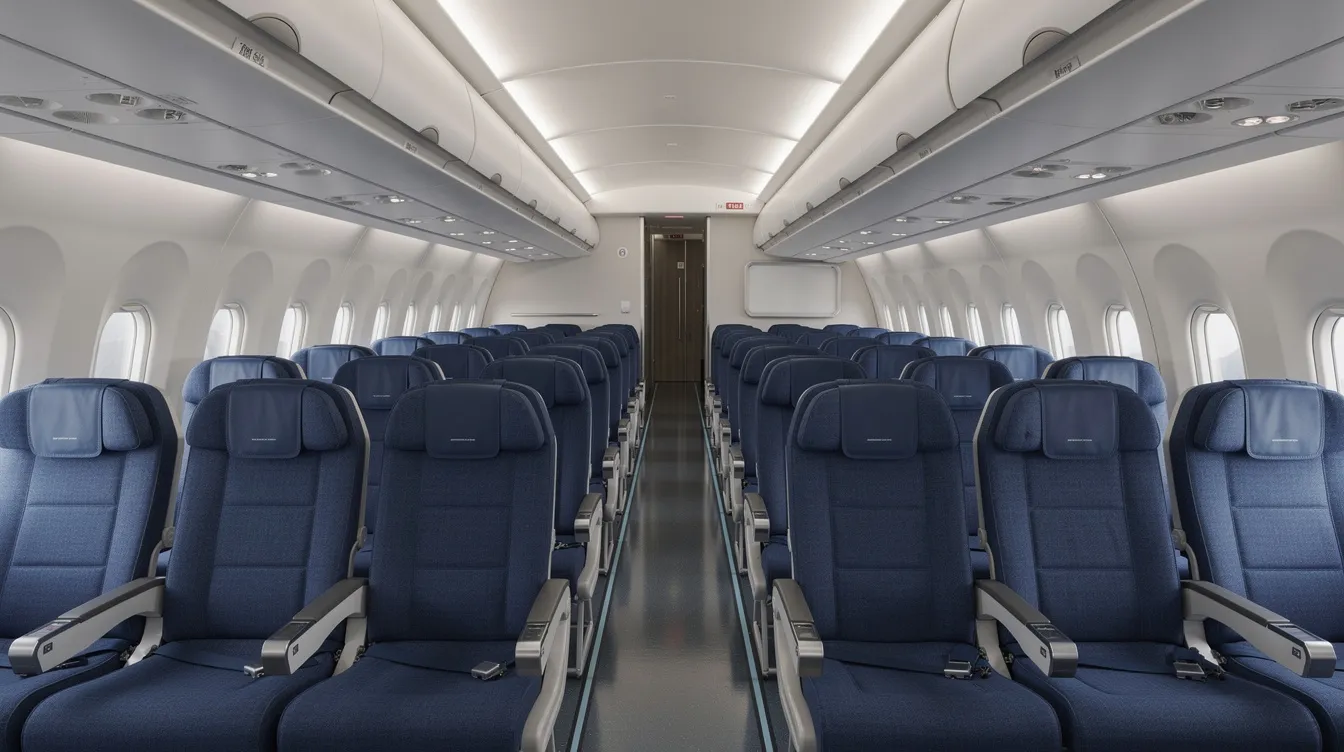
Choosing the right seat on a plane can shape your entire travel experience—from how well you rest to how quickly you deplane. This guide is for both commercial airline passengers and private jet travelers who want to optimize their seat selection for comfort, convenience, and efficiency. Understanding the exact location of seat 10F is crucial for those who value comfort, deplaning speed, and a strategic approach to seat selection. If you've ever searched for seat 10F and found conflicting answers, that's because the answer depends on the aircraft, the airline, and the cabin layout. Here's everything you need to know.
In a standard 3-3 cabin layout, seat 10F refers to the window seat on the right side of the aircraft.
Key Takeaways
On most narrow-body jets, seat 10F is a right-side window seat in economy or premium economy, but its exact location depends on the aircraft seat map for your specific flight.
Seat letters usually run A, B, C, D, E, F (skipping letters like I and O to avoid confusion) on single-aisle planes, with A on the left window and F on the right. On wide-body aircraft with more seats across, F may not be a window at all.
Row 10 is usually positioned near or slightly in front of the wing, which affects legroom, noise, and recline. The exact location of row 10 depends on the aircraft model and airline.
Aisle seats are typically C and D in the standard 3-3 seating arrangement, while economy seats usually have a 2-2, 2-3, or 3-3 configuration.
Business class layouts can vary significantly between airlines, often featuring staggered 1-2-1 seat layouts.
Some airlines skip row number 13 due to superstition, and specialized websites provide detailed aircraft seat maps to help you navigate these variations.
Being further forward in the cabin usually means quicker deplaning times, a valuable advantage for frequent travelers.
Amenities and storage near a seat depend on the specific aircraft model, such as the Boeing 737-700, which offers multiple cabin classes including Business, Economy Plus, and Economy.
Standard seat pitch measures legroom between seats, influencing comfort on longer flights.
Understanding aircraft seat layouts can greatly enhance your flying experience by helping you select the best seat for your needs.
Why Seat Position Matters More Than You Think
Seat selection is not a trivial decision. For frequent flyers, it's a strategic choice that directly affects productivity, sleep quality, and time-to-exit. Being further forward in the cabin usually means quicker deplaning times—a difference that compounds across dozens of trips per year.
Consider the contrast. A Boeing 737-800 carries over 180 passengers in a standard layout, with seat pitch as tight as 30 inches. The Boeing 737-700—cruising at 530 mph with a range of 3,850 nautical miles, a wingspan of 112 feet 7 inches, and a maximum seating capacity of 149 passengers—still packs people into narrow rows. Compare that to a private business jet with 8 to 14 seats, club-style seating facing forward or in conference arrangements, and no row number to worry about at all, especially when you consider the range of small private aircraft options available for different mission profiles.
This is where BlackJet's positioning becomes relevant. Through Jet Card programs, guaranteed carbon-neutral flights, and curated aircraft categories, BlackJet's premium private jet services replace the guesswork of commercial seat selection with a consistently premium experience. But if you are flying commercial on your next flight, understanding where 10F sits—and what it means for your comfort—is essential information.
Quick Answer: Where Is Seat 10F on Most Planes?
On most single-aisle commercial jets like the Boeing 737 or Airbus A320, seat 10F is a window seat on the right-hand side of the airplane, located around the front third of the economy or premium economy cabin. Seat 10F is typically a window seat on the right side of the aircraft.
In a standard 3-3 cabin layout, rows run as A, B, C, D, E, F from left to right. The seat letters break down like this:
A - left window
B - left middle
C - left aisle
D - right aisle
E - right middle
F - right window
Aisle seats are usually C and D in this standard seating arrangement. Economy seats typically have a 2-2, 2-3, or 3-3 configuration depending on the airplane. On six-across narrow-bodies, seat F is almost always a window seat on the right-hand side of the plane. Seat pitch measures legroom between seats, and on a Boeing 737-700, that standard pitch is 31 inches.
Row 10 is usually positioned near or slightly in front of the wing. On airlines like Delta, row 10 on an A320 falls in the Comfort+ zone with roughly 34 inches of pitch—notably more than standard economy. However, the exact location of row 10 depends on the aircraft model and airline, so you should always check before you select.
On wide-body aircraft with layouts like 2-4-2, 3-3-3, or 3-4-3 (sometimes described as four across per section or more), the letter F could land you in a middle or aisle position rather than at the window. This is a critical distinction that many passengers overlook.
Seat 10F Location Summary Table
Aircraft Type | Typical Cabin Layout | Seat 10F Location | Seat 10F Characteristics |
|---|
Narrow-body (e.g., Boeing 737, Airbus A320) | 3-3 | Right-side window seat | Near wing, economy, premium economy, standard, or extra legroom |
Wide-body (e.g., Boeing 777, Airbus A350) | 2-4-2, 3-3-3, 3-4-3 | Maybe a middle or aisle seat | Not always a window, it varies by airline and aircraft configuration |
Private Jet (various models) | Custom layouts | No seat 10F designation | Configured by cabin layout, personalized seating arrangements |
How Aircraft Seat Maps Help You Locate 10F Precisely
Aircraft seat maps are diagrams that show every row, seat letter, galley, lavatory, and exit for a specific airline and aircraft type. They are indispensable for anyone who wants to know exactly what they're getting before booking.
Here's how to read a standard seat map:
Identify the row number in the left margin of the diagram
Follow across to the "F" column to find the exact seat
Note icons for exit rows, bassinets, bulkheads, and restricted recline
For economy and premium economy, the layout presented varies by aircraft:
On a typical narrow-body (3-3 layout), 10F is the right window—straightforward
On a typical wide-body (2-3-2, 3-3-3, or 3-4-3), 10F might be center-right rather than at the window
Economy seats usually have a 2-2 or 3-3 configuration depending on the airplane. Business class layouts can vary significantly between airlines, often using 1-2-1 or 2-2-2 arrangements. First-class cabins usually have fewer seats than business class, and their seat numbers may restart at row 1 in a new cabin, so "10F" might only exist in economy. Seat letters often skip "I" and "O" to avoid confusion, meaning the sequence typically runs A through K (skipping I) on wider planes.
To find the right information, check these resources:
Airline websites and mobile apps remain the primary source for up-to-date seat maps
Specialist aircraft seat maps sites like ExpertFlyer or AeroLopa offer more detailed views, especially for first class and business class configurations
Keep in mind that seat maps may not show all aircraft configurations accurately, and most airlines publish seat maps for larger aircraft only. Aircraft swaps can also change the physical position of 10F even when the number stays the same, making some seat selections temporarily unavailable.
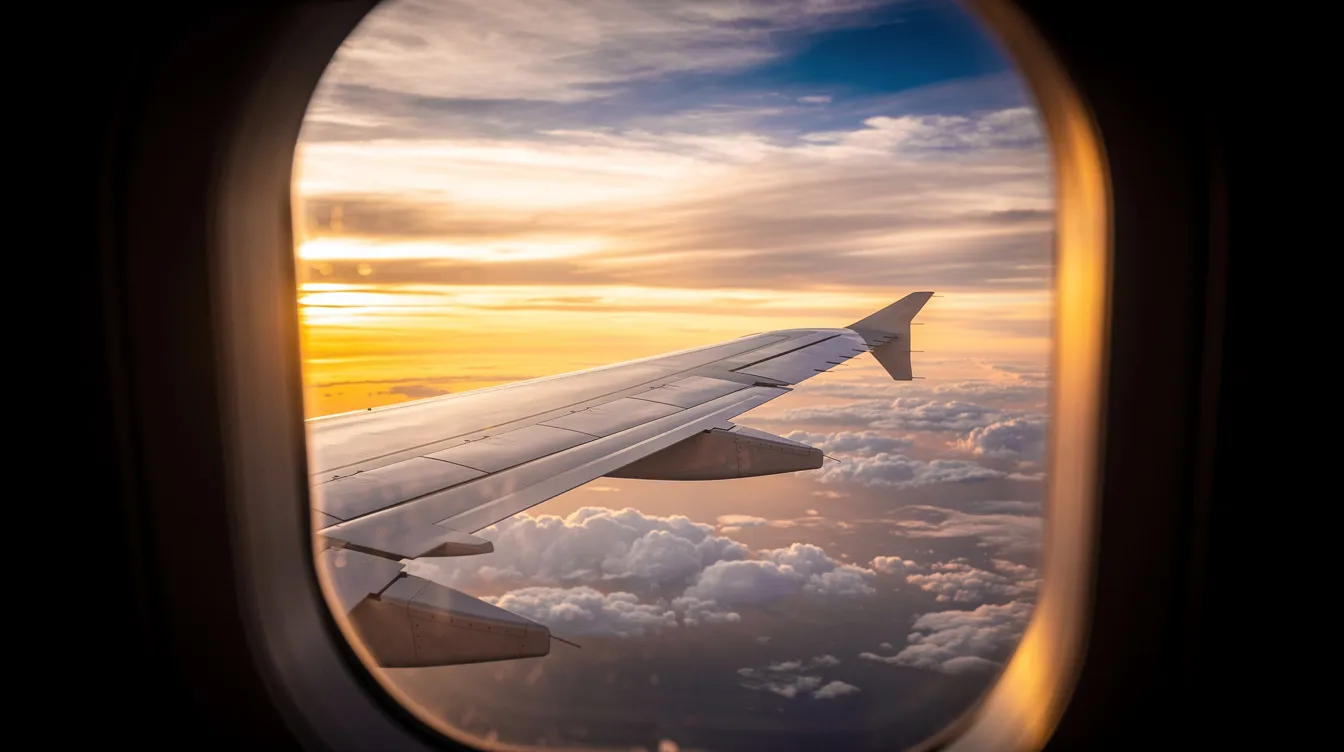
Row 10: Comfort, Noise, and Business-Class Proximity
Row 10's placement in the cabin is what makes it interesting—or frustrating, depending on the airplane. Here's where it typically falls:
On many 737-800s and A320neos, row 10 is near the front of the main cabin, sometimes right behind business class or a curtain divider
On US domestic flights, row 10 can be the first or second row of extra-legroom economy
Business class offers more legroom than economy class, and premium economy seats offer more comfort than standard economy seats—row 10 sometimes benefits from being at that boundary. Amenities and storage near a seat depend on the specific aircraft model.
Advantages of 10F:
Often quicker deplaning due to forward position
Potential extra legroom if it's a bulkhead or premium row
Quieter than rows near the rear galley
Disadvantages of 10F:
Limited recline if directly in front of an exit row
More foot traffic if near a forward lavatory
Possible wing obstruction of the view, since row 10 is usually near the leading edge of the wings
Slightly more engine noise if positioned over or just behind the wing
For commercial travelers, the practical advice is simple: check whether 10F is marked as "preferred," "extra legroom," or "standard" in the airline's seat selector. Use up-to-date aircraft seat maps based on your specific type of plane rather than generic diagrams, since some carriers renumber economy starting at row 5, 6, or 8 behind business class. Understanding aircraft seat layouts can enhance the flying experience considerably.
How This Translates in Private Aviation with BlackJet
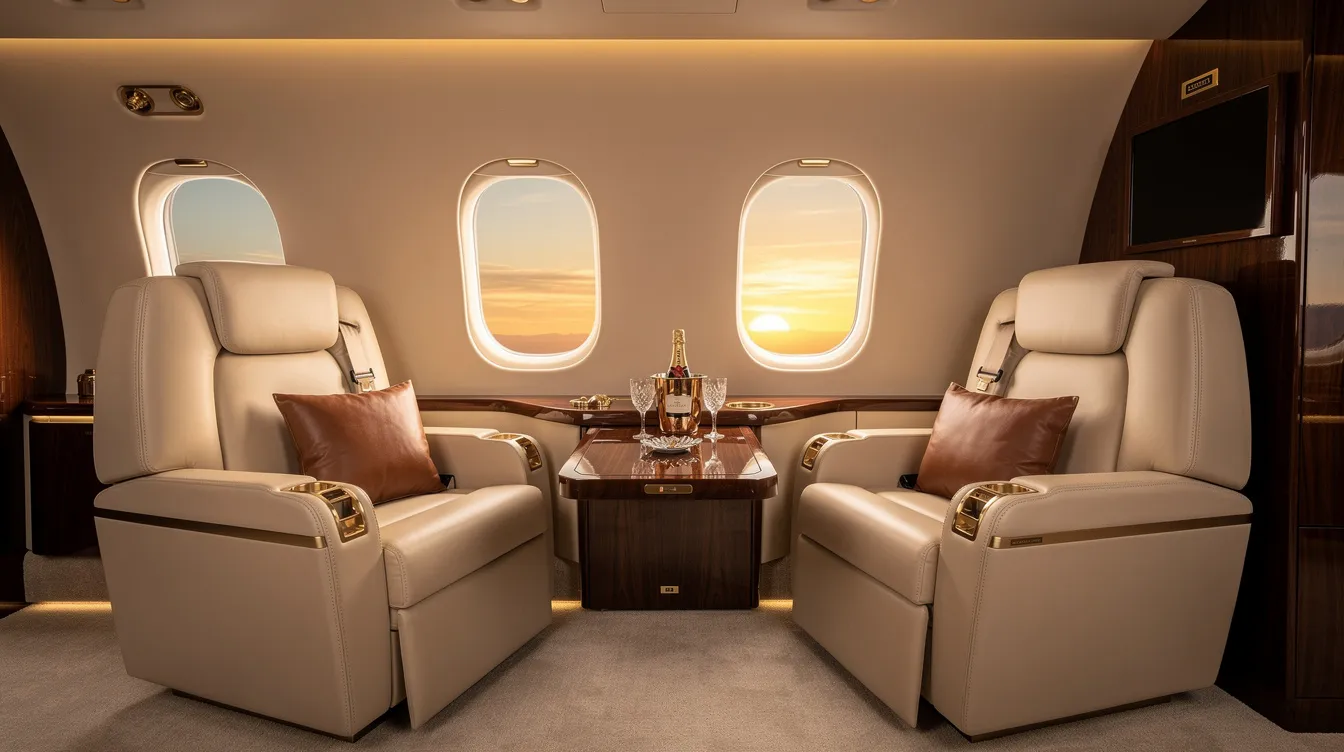
Private jets generally don't use commercial-style row and letter systems. There is no seat 10F on a typical light, midsize, or large-cabin business jet, and large-cabin models can even support 16-seat private jet configurations. Instead, seating is organized around how many seats the cabin holds and the mission at hand:
Club-four configurations with four seats facing forward or toward each other around a table
Divans and sofas along one side of the cabin for relaxed travel
Fully reclining or lie-flat seats in long-range cabins, similar to international business class but with complete privacy
The contrast is significant. Instead of worrying whether 10F is over the wing or has limited recline, BlackJet clients select aircraft categories and cabin layouts to match their mission—boardroom-style for a New York–Chicago day trip, lie-flat comfort for a New York to London overnight.
BlackJet's key pillars, including its flexible 25+ Hour Jet Card, make this seamless:
Consider this case: an executive who used to obsess over getting 10F on a 737 for a weekly route now flies via a BlackJet Jet Card, with a guaranteed aircraft category, consistent cabin layout, and the same preferred seat every trip, having first compared budget-friendly private aircraft options to decide how best to access private flying. No more checking airline websites, no more finding your selection unavailable, and no more middle seats. That's what happens when you replace seat-by-seat optimization with whole-cabin personalization—one driven by technology, 24/7 support, and a company that treats every booking as a date with excellence.
Elevate your travel—effortlessly. With BlackJet, private flight is accessible on your terms through our Jet Card programs, complete with rigorous safety, carbon-neutral performance, and unmatched flexibility, all underpinned by transparent jet card costs and membership pricing. Explore our Jet Card offerings and discover how refined travel becomes your new standard.
FAQ: Common Questions About Seat 10F and Private Jet Seating
Is seat 10F always a window seat?
On most narrow-body jets with a 3-3 layout—like the Boeing 737 or Airbus A320—10F is indeed a right-side window seat. However, on wide-body aircraft using a 2-4-2, 3-3-3, or 3-4-3 configuration, the letter F can land you in a middle or aisle position. Always verify with the seat map for your specific flight and aircraft before you continue with your selection.
Why do some planes skip row numbers like 10 or 13?
Many airlines globally omit row 13 for cultural or superstition-related reasons. Some also skip row 17. When rows are skipped, the physical position roughly equivalent to "row 10" may carry a different label on the aircraft seat map. The number itself doesn't change the seat's physical location—only its label. Related practices also include skipping certain letters like I and O to avoid confusion.
Can seat 10F be in business class?
On most modern configurations, business class uses lower row numbers (typically 1 through 5 or similar), so 10F is usually in economy or premium economy. Exceptions exist on some older or high-density layouts. The only way to know for certain is to check the specific aircraft seat map for your flight online.
How can I confirm the exact location of 10F before I fly?
Look up your flight's aircraft type in the airline app or confirmation email. Then open the corresponding seat map on the airline website or a trusted resource like ExpertFlyer to visualize exactly where 10F sits relative to exits, galleys, and the wings. People often discover that what looked like a standard seat is actually designated as preferred or extra-legroom once they see the full diagram.
Do private jets booked through BlackJet use seat numbers like 10F?
No. Private jets rarely use commercial-style seat numbering. BlackJet clients select aircraft categories—light, midsize, or large-cabin—and choose their preferred seat or side of the cabin. BlackJet's team handles all configuration details, so there is no need to track seat 10F or navigate complicated seat maps at all. The experience is called personalized for a reason.
Conclusion: Mastering Seat Selection for a Superior Travel Experience
Understanding where seat 10F is located on your specific aircraft can significantly enhance your comfort and convenience during commercial flights. Whether it offers a window view, extra legroom, or proximity to business class, knowing these details helps you make informed choices that align with your travel priorities. However, the variability in aircraft layouts and airline practices means that checking the exact seat map before booking is essential to avoid surprises.
For discerning travelers seeking to transcend the limitations of commercial seating, BlackJet offers a seamless alternative. Through our Jet Card programs, you gain access to meticulously curated cabin configurations where every seating detail is tailored to your preferences—eliminating the guesswork and lack of control common in commercial aviation. Alongside uncompromising safety standards and carbon-neutral flights, and insights into the world’s best private jets, BlackJet transforms private jet access into a strategic advantage, elevating your travel experience from the moment you step aboard.
Whether flying commercial or privately, embracing the nuances of seat selection empowers you to travel smarter, more comfortably, and with greater peace of mind—whether you’re learning how to buy a seat on a private jet, comparing NetJets jet card costs, evaluating the best private jet for 20 passengers or even 50-passenger private charters, reviewing the top private jet companies, exploring UK-based private jets for sale, or arranging tailored private jet charters in Karachi.


 Sign up with google
 Sign up with Apple