In private aviation, few names carry the weight of NetJets. NetJets is wholly owned by Warren Buffett’s Berkshire Hathaway, which acquired the company in 1998 and continues to operate it as a subsidiary. For frequent business travelers, high-net-worth leisure flyers, and investors comparing private aviation providers, that ownership matters because it speaks directly to NetJets’ scale, financial backing, and long-term operating model.
That context shapes more than the headline. NetJets’ Berkshire Hathaway ownership connects to how the company is structured, how its fractional ownership program differs from jet cards, how it manages fleet and safety standards, and how it compares with other private jet access options, including providers such as BlackJet. Understanding who owns NetJets is a practical starting point for judging whether its model fits your travel needs or investment interest before you commit to any private aviation service.
Quick Answer: Who Owns NetJets Today?
NetJets Inc. is a wholly owned subsidiary of Warren Buffett's Berkshire Hathaway, the Omaha-based conglomerate that also controls GEICO, BNSF Railway, and Dairy Queen. Berkshire Hathaway acquired NetJets in 1998 for $711 million, and the company has operated under that umbrella ever since.
Here is what you need to know at a glance:
NetJets is a private company and does not have its own stock ticker. To invest in NetJets' business, one must buy shares of Berkshire Hathaway (BRK.A or BRK.B).
NetJets operates as a subsidiary under Berkshire Hathaway's corporate umbrella, with its financial results consolidated into Berkshire's "Service and retailing" operations segment.
The company is headquartered in Columbus, Ohio, with NetJets Europe based in Lisbon, Portugal.
NetJets operates over 1,100 aircraft globally, conducts approximately 300,000 flights annually, flies to over 3,100 airports worldwide, and serves over 12,500 active customers — making it the operator of the world's largest fleet of privately owned aircraft.
NetJets holds a 13.3% market share in U.S. private aviation — a dominant position no competitor has matched.
A critical distinction: being a "NetJets owner" refers to fractional aircraft ownership in a specific aircraft, not equity ownership in NetJets as a company. Corporate ownership belongs entirely to the Berkshire Hathaway company.
NetJets and Berkshire Hathaway: How the Acquisition Happened
The story of how Berkshire Hathaway came to own NetJets begins not in a boardroom, but in the cabin of a private jet. Warren Buffett became a NetJets customer in 1995, flying fractional before acquiring the entire operation.
Impressed by the fractional ownership concept and the company's operational model, Buffett moved to acquire Executive Jet, Inc. - the parent entity running the NetJets program - in 1998. Berkshire Hathaway acquired the company for approximately $711 million, split roughly between cash and Berkshire Hathaway Class A and B stock.
The deal gave NetJets something few aviation companies possess: access to deep, patient capital from a holding company with no pressure to deliver quarterly earnings to public shareholders.
After the acquisition, NetJets faced significant financial challenges, including a $711 million loss in 2009 and a rise in debt from $102 million to $1.9 billion by 2010. By that year, cumulative pre-tax losses had reached $157 million.
Berkshire's backing proved decisive. Rather than divesting, Buffett supported restructuring efforts that eventually returned NetJets to profitability. By 2017, NetJets generated $11.249 billion in service revenues — a dramatic turnaround that validated Warren Buffett's Berkshire Hathaway approach of long-term ownership.
Today, NetJets' results are reported within Berkshire's service group, which posted approximately $23 billion in revenue in fiscal year 2025. Aviation services — NetJets chief among them — drove significant growth in that segment.
From Executive Jet Aviation to NetJets: Early History and Evolution
The private aviation history behind NetJets stretches back more than six decades. The company was founded in 1964 as Executive Jet Aviation, one of the first dedicated executive jet and aircraft management companies in the United States.
Early leadership came from military and commercial aviation backgrounds, and the initial business model focused on jet charter and aircraft management for corporate travelers — a niche market in the 1960s with limited competitors like Executive Jet Airways serving similar clientele.
The transformative moment came in the mid-1980s when Richard Santulli acquired Executive Jet. Santulli meticulously studied decades of pilot logbooks to understand how corporate jets were actually utilized — and discovered that most privately owned aircraft sat idle the vast majority of the time.
That analysis led Santulli to design and launch the first fractional ownership program in 1987 — a model where multiple owners each purchased a share of a specific aircraft, splitting fixed costs while receiving guaranteed access to flight time proportional to their investment.
The NetJets program launched under this fractional ownership concept, and the brand gained traction rapidly through the 1990s. The NetJets name was formally adopted in 2002, replacing the Executive Jet Aviation branding entirely. By then, the fractional ownership program had redefined how discerning travelers thought about private jet access.
Corporate Structure: How NetJets Is Organized Under Berkshire Hathaway
NetJets today is not a single entity but a multi-layered private aviation group operating under the Berkshire umbrella, with distinct legal entities and brands serving different customer segments.
NetJets Inc. oversees core programs: fractional ownership, leasing, and jet card programs. It maintains an extensive fleet across North America and Europe, managing the logistics of shared ownership at extraordinary scale.
Executive Jet Management (EJM) functions as a subsidiary of NetJets, specializing in charter services and aircraft management tailored for whole aircraft owners—offering a distinctly different service from the fractional ownership programs.
QS Partners acts as the internal brokerage and consulting division, managing aircraft sales, acquisitions, and fleet dispositions for both NetJets clients and external buyers.
NetJets Europe extends the company's offerings into EU jurisdictions, operating under its own regulatory frameworks while remaining part of the Berkshire corporate family.
Adam Johnson has served as the Chairman and CEO of NetJets since 2015, overseeing the company's fleet expansion, technology investments, and operational excellence initiatives across all business lines.
These entities interlock to create a full-lifecycle private aviation platform: from purchasing or leasing an aircraft share, to flying it, to eventually reselling it — all managed within one ecosystem.
What "Ownership" Means: NetJets Owners vs Company Ownership
One of the most persistent points of confusion in private aviation is the word "ownership." When someone says they are a NetJets owner, they do not hold equity in NetJets Inc. - that belongs exclusively to Berkshire Hathaway.
Fractional owners purchase interests — typically 1/16, 1/8, a quarter share, or 1/2 — in specific NetJets aircraft. Each share entitles the owner to a proportional number of flight hours per year. A 1/16 share generally corresponds to roughly 50 flight hours annually, a quarter share to approximately 200 hours, and a half share to 400 or more hours.
The cost structure involves three layers: an upfront acquisition or lease cost for the share itself, a monthly management fee covering crew salaries, insurance, hangar, and scheduling, and hourly occupied-flight charges for fuel, maintenance, and operational overhead, all of which mirror categories in a typical private jet price list.
Fractional contracts are generally multi-year commitments, often spanning three to five years. At contract end, the share's residual value is calculated, and QS Partners may assist with remarketing, making it important for owners to understand fractional jet ownership depreciation and how it affects total cost of ownership.
This model provides aircraft owners with guaranteed access and predictable costs — without the full financial burden of owning a jet outright or selecting from only the cheapest private aircraft options. It is a fundamentally different proposition from buying shares of Berkshire Hathaway stock.
Inside the NetJets Fleet: Scale, Types, and Fleet Strategy
NetJets operates the world's largest private jet fleet, with over 1,000 NetJets aircraft deployed across North America and Europe. That scale — unmatched by any competitor — enables seamless access and availability that smaller operators cannot replicate.
NetJets flies to over 3,100 airports worldwide, and the average age of the NetJets fleet is around five years — dramatically younger than industry averages, reflecting a continuous investment in fleet modernization.
The diverse private jet fleet spans multiple jet classes and aircraft types. Light jets include the Embraer Phenom 300. Midsize options feature the Cessna Citation Latitude. Super-midsize aircraft include the Challenger 350 and 3500. For long-range missions, the fleet includes Global 6000, Global 7500, and the incoming Global 8000 - for which NetJets is the fleet launch customer, and NetJets takes delivery in March 2026, as noted in the first delivery in March 2026, with plans to eventually operate 24 of these ultra-long-range larger jets.
The core fleet strategy limits NetJets to approximately ten aircraft types, balancing pilot training standardization, parts logistics, and mission coverage across different aircraft categories.
In 2012, NetJets made the largest aircraft purchase in private aviation history, totaling $17.6 billion — a testament to the fleet strategy and the financial firepower of its parent company.
Technology upgrades are ongoing: Starlink enhanced connectivity is rolling out to approximately 600 aircraft, alongside Gogo Galileo systems, improving in-flight productivity and the overall passenger experience when flying NetJets.
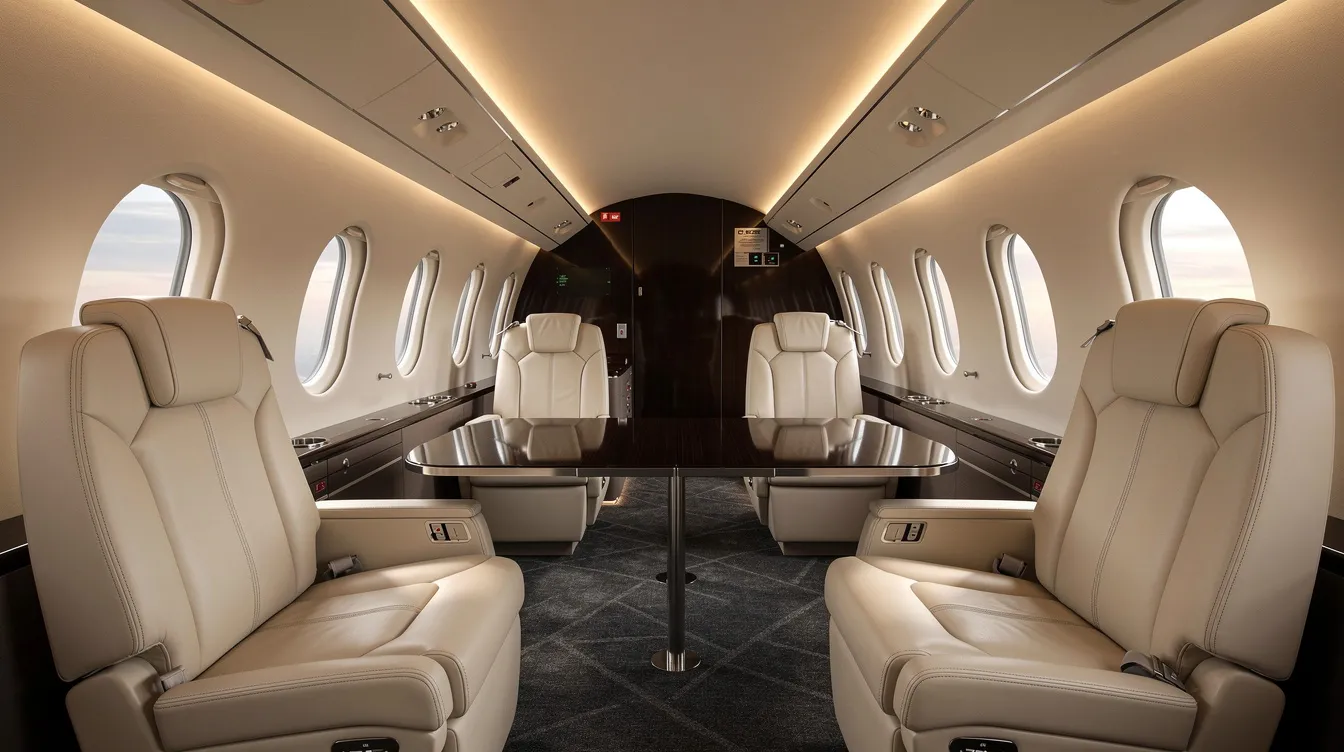
NetJets Business Lines: Fractional Ownership, Jet Cards, and Aircraft Management
NetJets serves different aircraft owners and private flyers through three primary business pillars, each designed for distinct usage patterns and financial preferences.
Fractional ownership NetJets is the flagship product. NetJets provides fractional ownership for private jets across 12 aircraft models, offering guaranteed access, stable hourly rates, and the ability to move between different aircraft depending on mission needs. This model suits frequent users flying 50 to 400+ flight hours per year and often appears in rankings of top private jet companies for luxury travel because of its scale and service standards.
NetJets Leases offer a related option for those who prefer not to make a capital purchase but want similar multi-year benefits, predictable pricing, and access to specific aircraft categories, while very frequent flyers may instead evaluate a 100-hour jet card cost guide to compare long-term prepaid access with leasing.
Jet cards provide access to the NetJets fleet in 25-hour blocks - a simpler entry point for travelers who fly several times a year but do not need or want the commitment of shared ownership. For many travelers, understanding jet card cost and pricing structures is essential before deciding whether this access model fits their budget and flying patterns. The legacy of the Marquis Jet Card, once operated through Marquis Jet Partners, laid the groundwork for these programs before being folded into NetJets' direct offerings.
Executive Jet Management handles aircraft management for whole-aircraft owners — covering crew recruitment, maintenance, scheduling, regulatory compliance, and charter services when aircraft are idle.
QS Partners supports the ecosystem by managing aircraft sales, remarketing fractional shares, and consulting on acquisitions — ensuring liquidity and lifecycle management for NetJets clients and complementing other access paths like buying a seat on a private jet for more occasional flyers.
Executive Jet Management: Aircraft Management and Charter Explained
Executive Jet Management (EJM) is a NetJets-owned aircraft management company that serves a fundamentally different customer than the fractional or jet card buyer.
EJM manages over 100 executive jets across the United States, providing daily operations management including crew staffing, training, maintenance coordination, and safety oversight for whole-aircraft owners.
The service is designed for corporate flight departments, high-net-worth individuals, and companies that prefer full aircraft ownership but want professional operational management — without building an in-house aviation department.
EJM offers charter services using managed aircraft when owners make them available for on-demand charter, helping offset fixed costs such as crew salaries, hangar fees, and insurance while maintaining the safety and service standards NetJets employs across its network for those analyzing how much it costs to rent a private jet.
Integration with NetJets' larger ecosystem provides economies of scale: fuel purchasing power, shared training infrastructure, and maintenance networks that individual aircraft owners cannot access independently.
NetJets Aviation, through EJM, effectively bridges the gap between outright ownership and fractional programs — making it one of the few operations that covers every segment of the private jet ownership spectrum, especially for travelers weighing whether chartering a private jet is worth it versus committing to ownership.
Jet Card Programs and Flying NetJets vs Using a Jet Card Provider like BlackJet
For travelers who fly several times a year privately— but not frequently enough to justify fractional ownership — jet cards offer a compelling middle ground. Prepaid flight time, fixed pricing, and no asset ownership make them increasingly popular among discerning travelers.
NetJets' jet card programs offer 25-hour blocks on specific aircraft types or categories, with set contractual hourly rates and certain minimum notice periods for booking. They deliver the consistency of the NetJets fleet without requiring multi-year fractional contracts, though prospective buyers should familiarize themselves with NetJets jet card cost details and how pricing varies by aircraft and route.
For private jet card comparisons, the differences between providers matter. Resources outlining the best jet cards for frequent flyers often highlight how NetJets ties its cards to its own fleet strategy and aircraft types, which provides predictability but limits flexibility to a single operator's network.
BlackJet's premium private jet card programs take a different approach: multi-cabin access across jet classes, carbon-neutral flights included by default, and a digital-first booking platform with real-time support — designed for travelers who value flexibility and sustainability alongside luxury travel.
Consider a practical scenario: a business executive flying San Francisco to Las Vegas monthly and New York to London quarterly. A 25-hour jet card from BlackJet provides access to the right aircraft for each leg without locking into a single fleet or aircraft type, while maintaining guaranteed cabin standards and transparent pricing that align with typical jet card cost per hour benchmarks.
BlackJet can complement or substitute NetJets for travelers who want the consistency of a jet card without entering a complex fractional ownership contract or tying themselves to a single operator's fleet dispositions.
Safety, Technology, and Sustainability in the NetJets Model
For high-net-worth and corporate travelers, safety is not a feature — it is a prerequisite. Evaluating providers like NetJets and BlackJet requires understanding how each approaches pilot training, regulatory compliance, and environmental responsibility.
NetJets maintains rigorous safety standards: it was the first private aviation company accepted into the FAA's Advanced Qualification Program for pilots, holds ARGUS Platinum certification, and has achieved IS-BAO Stage 3 status. NetJets employs type-specific pilot assignments, meaning each crew flies only one aircraft type for deep operational familiarity.
Fleet standardization across approximately ten core aircraft types supports consistent safety procedures across the approximately 300,000 flights NetJets conducts annually — a volume that generates extensive operational data for continuous improvement.
Technology investments extend beyond safety: advanced scheduling systems, real-time fleet tracking, and cabin connectivity (Starlink, Gogo Galileo) enhance both reliability and the passenger experience during private travel, whether on traditional programs or innovative unlimited private jet flight memberships.
Sustainability is an evolving priority across the industry. NetJets has explored SAF trials and efficiency gains through fleet modernization. BlackJet takes this further by ensuring every flight is carbon neutral at no extra cost to the traveler — a core commitment rather than an optional add-on.

Comparing Ownership Models: NetJets vs Jet Card and Charter Solutions
Understanding who owns NetJets is only part of the equation. The more consequential decision for most travelers is choosing the right access model: fractional ownership, jet cards, or on-demand charter.
Fractional ownership suits very frequent flyers (typically 100+ hours annually) who value guaranteed access, aircraft consistency, and are comfortable with multi-year commitments, management fees, and residual value risk. It is effectively a real-estate-style investment in an aviation asset — with all the complexity that implies.
Jet card solutions — from NetJets or providers like BlackJet — serve travelers who fly several times per year but do not want capital exposure to aircraft depreciation. A clear grasp of jet card pricing structures shows how prepaid hours, predictable pricing, and easier budgeting make jet cards the fastest-growing segment in private aviation.
On-demand charter through brokers or digital platforms offers maximum flexibility on a pay-per-trip basis, but comes with variable pricing, less consistent aircraft quality, and limited relationship-based service, even when selecting from the cheapest private jet options for individual trips.
A practical example: a corporate executive flying American Airlines commercially today but considering private travel. Flying 80 hours per year, fractional ownership with NetJets would require significant upfront capital. A BlackJet 50-hour jet card informed by a detailed look at 50-hour jet card cost and value paired with supplemental charter could deliver similar global access at a fraction of the commitment — with carbon-neutral flights and seamless access through a digital platform.
The right model depends on flight hours, routes, risk tolerance, and whether a traveler values asset ownership or operational simplicity.
Is NetJets Publicly Traded? Common Investor Questions Answered
NetJets is a private company under Berkshire Hathaway and has never conducted an IPO. Here are the most common investor questions, answered directly:
Can you buy NetJets stock? No. There is no separate NetJets stock ticker. The only way to gain financial exposure to NetJets' business is by purchasing Berkshire Hathaway shares (BRK.A or BRK.B).
Does Warren Buffett personally own NetJets? No. Ownership resides with the Berkshire Hathaway company as a corporate asset. Buffett is a long-time user of NetJets' services — and famously named his fractional share "The Indispensable" — but his personal ownership is of Berkshire stock, not NetJets directly.
Can you isolate NetJets' financials from Berkshire's reports? Only partially. NetJets' results are consolidated into Berkshire's service and retailing segment. While Berkshire's annual report provides some color on aviation services revenue growth and flight-hour trends, exact standalone profitability figures for NetJets alone are not publicly broken out.
What does Berkshire's backing mean for travelers? It means NetJets has access to capital for fleet investment, infrastructure development, and operational resilience that standalone operators cannot match. Key people within Berkshire view NetJets as a long-term asset, not a short-term financial play.

Frequently Asked Questions About NetJets Ownership
Q: Who owns NetJets?A: NetJets is wholly owned by Berkshire Hathaway, the conglomerate led by Warren Buffett, which acquired the company in 1998.
Q: Does owning a NetJets share mean owning part of the company?A: No. Owning a NetJets share means fractional ownership of a specific aircraft, not equity ownership in the NetJets company itself.
Q: Can I buy NetJets stock?A: No. NetJets is a private subsidiary of Berkshire Hathaway and does not have its own stock ticker. To invest indirectly, you must purchase Berkshire Hathaway shares (BRK.A or BRK.B).
Q: What is fractional ownership with NetJets?A: Fractional ownership allows clients to buy a share of a specific aircraft, giving them guaranteed flight hours proportional to their share, along with management and operational services.
Q: How do NetJets jet cards differ from fractional ownership?A: Jet cards provide prepaid blocks of flight hours without ownership commitments, offering flexibility for less frequent flyers, whereas fractional ownership involves multi-year contracts and capital investment.
Q: What types of aircraft does NetJets offer for fractional ownership?A: NetJets offers fractional ownership across 12 aircraft models, including light, midsize, super-midsize, and large-cabin jets.
Q: What are the benefits of NetJets being owned by Berkshire Hathaway?A: Berkshire Hathaway’s ownership provides NetJets with deep financial resources for fleet expansion, infrastructure investment, and operational stability, ensuring long-term service reliability.
Q: How many aircraft does NetJets operate?A: NetJets operates over 1,100 aircraft globally, making it the largest private jet fleet worldwide.
Q: Is NetJets publicly traded?A: No, NetJets is privately held within Berkshire Hathaway and does not trade on any stock exchange.
Q: How does NetJets ensure safety and quality?A: NetJets maintains rigorous safety standards, including FAA Advanced Qualification Program participation, ARGUS Platinum certification, and IS-BAO Stage 3 status, with specialized pilot training and fleet standardization.
Q: Can I use a NetJets jet card instead of fractional ownership?A: Yes, jet cards offer a simpler alternative for travelers who want access to the NetJets fleet without the long-term commitments of fractional ownership.
Q: How does NetJets compare to other private jet providers like BlackJet?A: NetJets offers fractional ownership and jet cards tied to its own fleet, while providers like BlackJet offer flexible multi-cabin jet cards with carbon-neutral flights and digital-first booking platforms.
Q: What does it mean to be a NetJets owner?A: Being a NetJets owner means holding a fractional share in a specific aircraft, granting flight access and associated services, but not ownership equity in the company.
Q: Are there alternatives to NetJets for private jet access?A: Yes, alternatives include other fractional providers, jet card programs, and on-demand charter platforms, each with different commitment levels and flexibility.
Q: How can I get started with NetJets or private jet access?A: Evaluate your flight frequency and needs, then choose between fractional ownership, jet cards, or charter services. Contact providers like NetJets or BlackJet to explore tailored options.
Key Takeaways for Private Flyers Evaluating NetJets Ownership
NetJets is wholly owned by Berkshire Hathaway — and has been since Warren Buffett's 1998 acquisition. When NetJets clients refer to "ownership," they mean fractional interests in corporate jets, not equity in the company itself.
NetJets' strategic advantages are clear: the scale of the world's largest fleet, integrated services spanning fractional ownership, jet cards, and aircraft management, and the operational reliability that comes from Berkshire's financial backing.
Fractional ownership remains best suited to very frequent users comfortable with multi-year contracts, monthly management fees, and the nuances of residual value and potential tax benefits of fractional jet ownership at contract end. It is a powerful model — but not the right one for every private flyer.
Jet card programs — both NetJets' own offerings and alternatives like BlackJet — provide a more flexible path to private jet charter and consistent private travel for executives and high-net-worth individuals who fly regularly but prefer simplicity over asset commitment.
For travelers exploring their options, the question is not just who owns NetJets, but which access model aligns with how you actually fly. Understanding the full landscape — from fractional to jet cards to charter — puts you in a position to make a decision grounded in data rather than marketing.
If you are ready to experience private aviation without the complexity of fractional ownership, explore how BlackJet's jet card programs deliver carbon-neutral flights, robust safety standards, and seamless digital booking — designed for the way discerning travelers fly today.


 Sign up with google
 Sign up with Apple